Sampling
Techniques
Sampling
Techniques
A tool that facilitates the selection of the number
of respondents necessary to establish the
reliability and validity of research findings.
1. Population – whole group
2. Samples – subject of observation
3. Respondents – individuals who are actually
involved in the study.
What is a Sampling Technique?
1. Random Sampling
A method of choosing a sample size from a target
population. Each member of the population has an
equal chance to be included in the sample.
2. Non-Random Sampling
Uses discretionary process. Selection of respondents
is merely based on the researchers personal
judgement.
Two General Forms of Sampling
Techniques
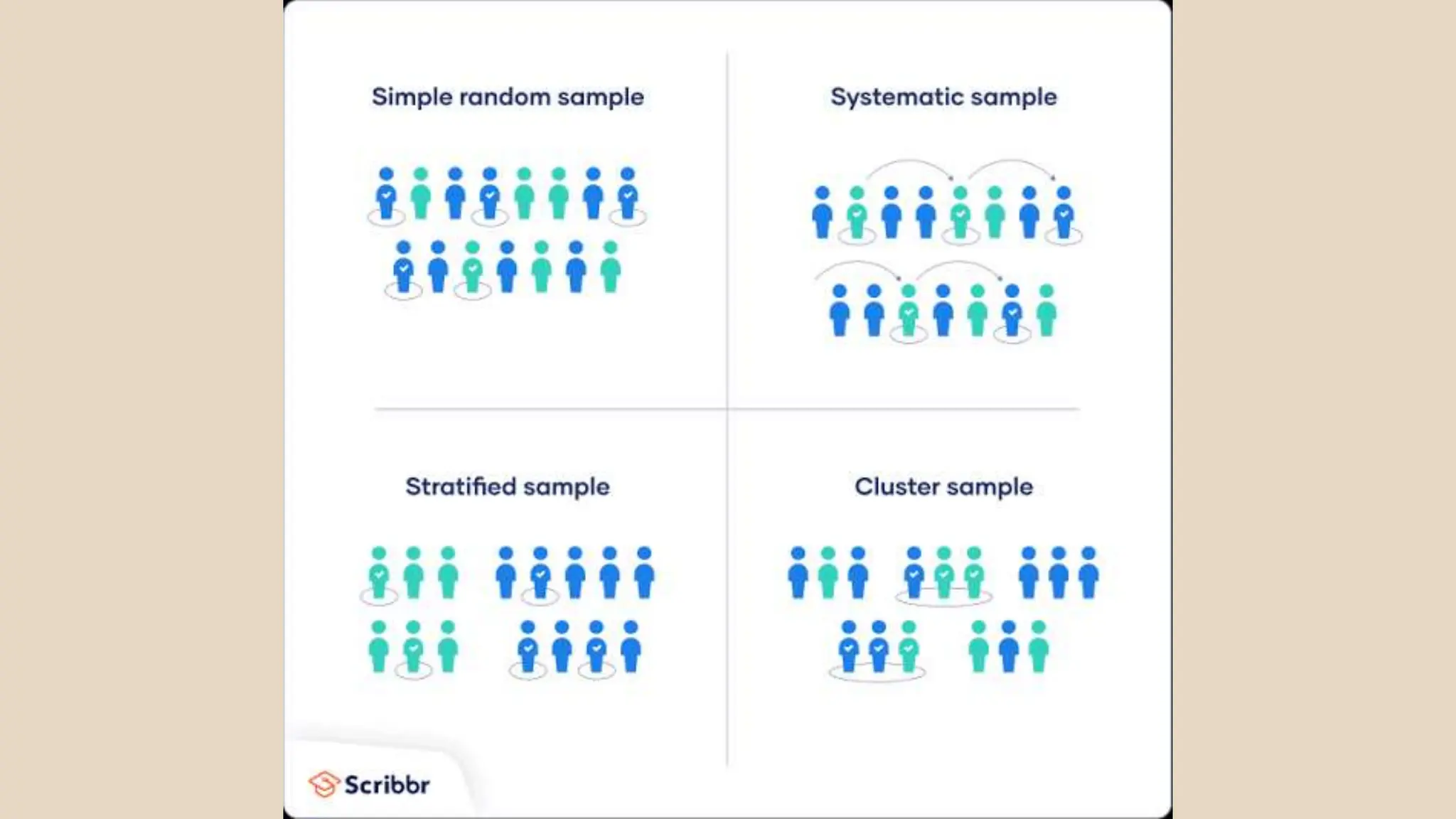
1. Fishbowl or Lottery
2. Systematic Sampling
3. Stratified Sampling
4. Cluster Sampling
Random Sampling
Fishbowl or Lottery
Sampling
Using a fishbowl, Researcher will write names of the
population and put it inside the fishbowl.
Systematic Sampling
Equal chances for each of them to be chosen using
a formula.
Stratified Sampling
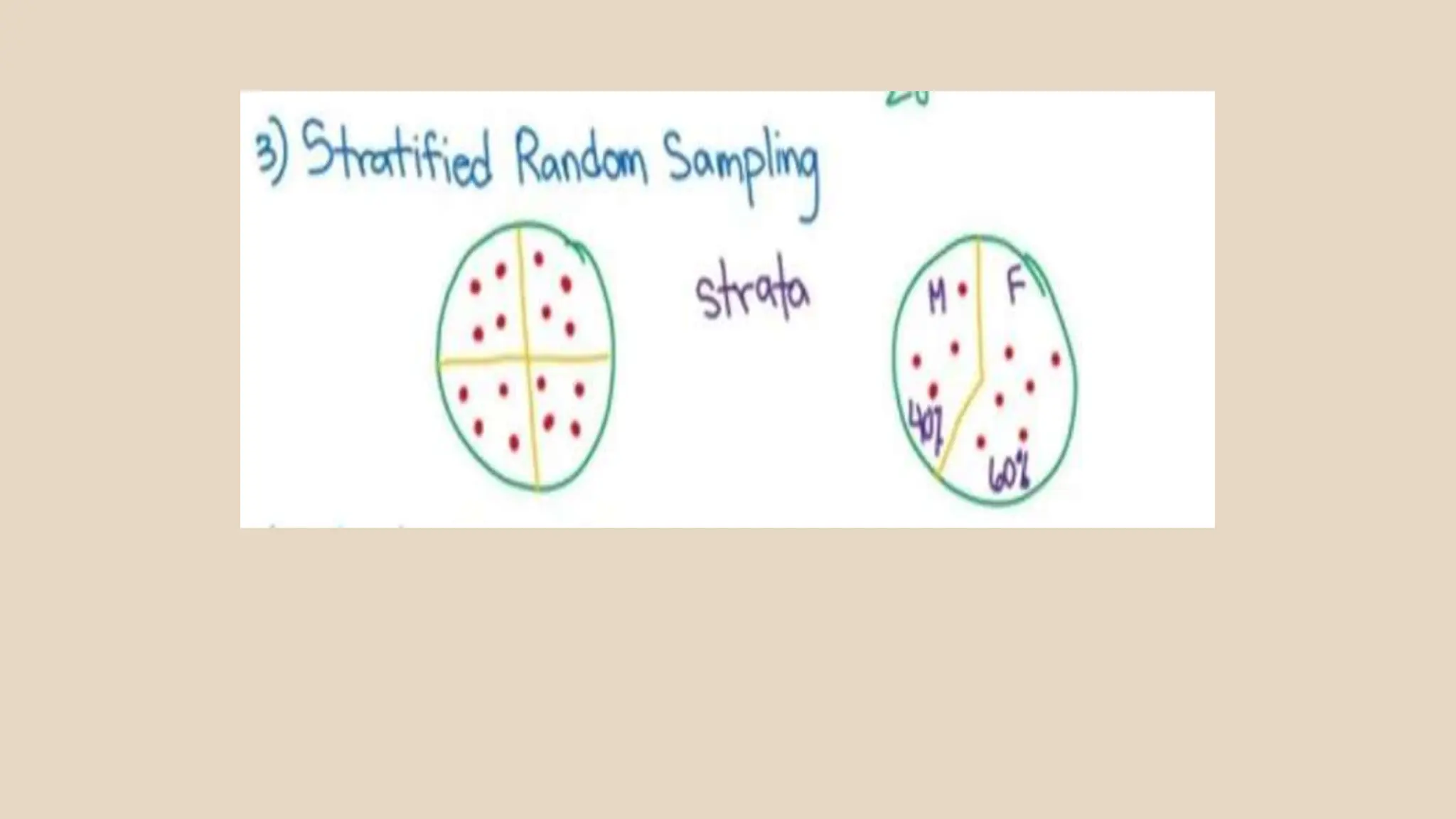
Process of selecting samples where a stratum will
have a sufficient number of representatives from the
target population.
The basis of stratification are as follows:
a. Geographical Location
b. Occupation or Profession
c. Sex or Age
d. Civil Status or Educational Attainment
Cluster Sampling
The process of choosing the
samples in Cluster rather than
separate individuals.
1. Purposive Sampling
2. Convenience Sampling
3. Incidental Sampling
4. Quota Sampling
5. Total Sampling
6. Snowball Sampling
Non Random Sampling
Purposive
Sampling
A technique where the researcher selects his
respondents on the basis of the common
characteristics of his samples.
Convenience Sampling
Selecting participants in a study on the basis
of the convenience of the researcher.
Incidental Sampling
A process of selecting respondents for a study
on the basis of the casual incidence of events.
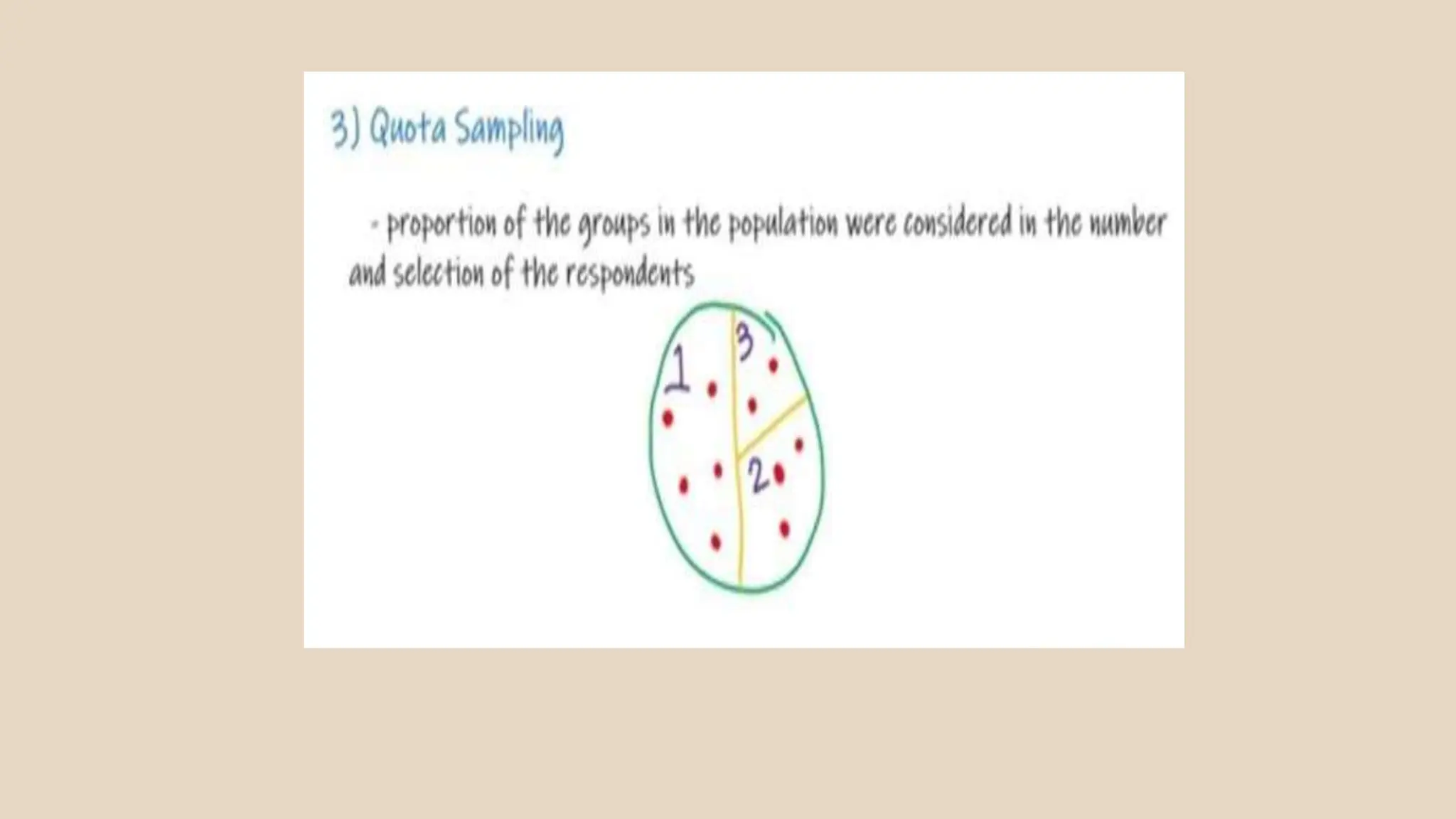
Quota Sampling
A strategy in the selection of identified
samples where the researcher beforehand
sets a number of participants believed to be
sufficient to establish reliability of the study.
Total Sampling
All samples are included
as respondents.
Snowball Sampling
Type of sampling that refers to the process of
identifying some key people for interview. The
interviewees would later recommend other
samples who may be aware of the subject for
research.
Thank
You!
Thank
You!

Lesson 6 Sampling Techniques practical research 2.pptx

  • 1.
  • 2.
    A tool thatfacilitates the selection of the number of respondents necessary to establish the reliability and validity of research findings. 1. Population – whole group 2. Samples – subject of observation 3. Respondents – individuals who are actually involved in the study. What is a Sampling Technique?
  • 3.
    1. Random Sampling Amethod of choosing a sample size from a target population. Each member of the population has an equal chance to be included in the sample. 2. Non-Random Sampling Uses discretionary process. Selection of respondents is merely based on the researchers personal judgement. Two General Forms of Sampling Techniques
  • 4.
    1. Fishbowl orLottery 2. Systematic Sampling 3. Stratified Sampling 4. Cluster Sampling Random Sampling
  • 5.
    Fishbowl or Lottery Sampling Usinga fishbowl, Researcher will write names of the population and put it inside the fishbowl. Systematic Sampling Equal chances for each of them to be chosen using a formula.
  • 6.
    Stratified Sampling Process ofselecting samples where a stratum will have a sufficient number of representatives from the target population. The basis of stratification are as follows: a. Geographical Location b. Occupation or Profession c. Sex or Age d. Civil Status or Educational Attainment
  • 9.
    Cluster Sampling The processof choosing the samples in Cluster rather than separate individuals.
  • 10.
    1. Purposive Sampling 2.Convenience Sampling 3. Incidental Sampling 4. Quota Sampling 5. Total Sampling 6. Snowball Sampling Non Random Sampling
  • 11.
    Purposive Sampling A technique wherethe researcher selects his respondents on the basis of the common characteristics of his samples. Convenience Sampling Selecting participants in a study on the basis of the convenience of the researcher.
  • 12.
    Incidental Sampling A processof selecting respondents for a study on the basis of the casual incidence of events. Quota Sampling A strategy in the selection of identified samples where the researcher beforehand sets a number of participants believed to be sufficient to establish reliability of the study.
  • 14.
    Total Sampling All samplesare included as respondents. Snowball Sampling Type of sampling that refers to the process of identifying some key people for interview. The interviewees would later recommend other samples who may be aware of the subject for research.
  • 15.