- A TYPE OF ACADEMIC WRITING THAT REPRESENTS ONE’S STANDING OR
VIEW POINT ON A PARTICULAR ISSUE.
- THE MAIN OBJECTIVE OF WRITING A POSITION PAPER IS TO TAKE PART
IN A LARGER DEBATE BY STATING YOUR ARGUMENTS AND PROPOSED
COURSE OF ACTION
- SHOULD BE SHORT, CONCISE AND INTERESTING
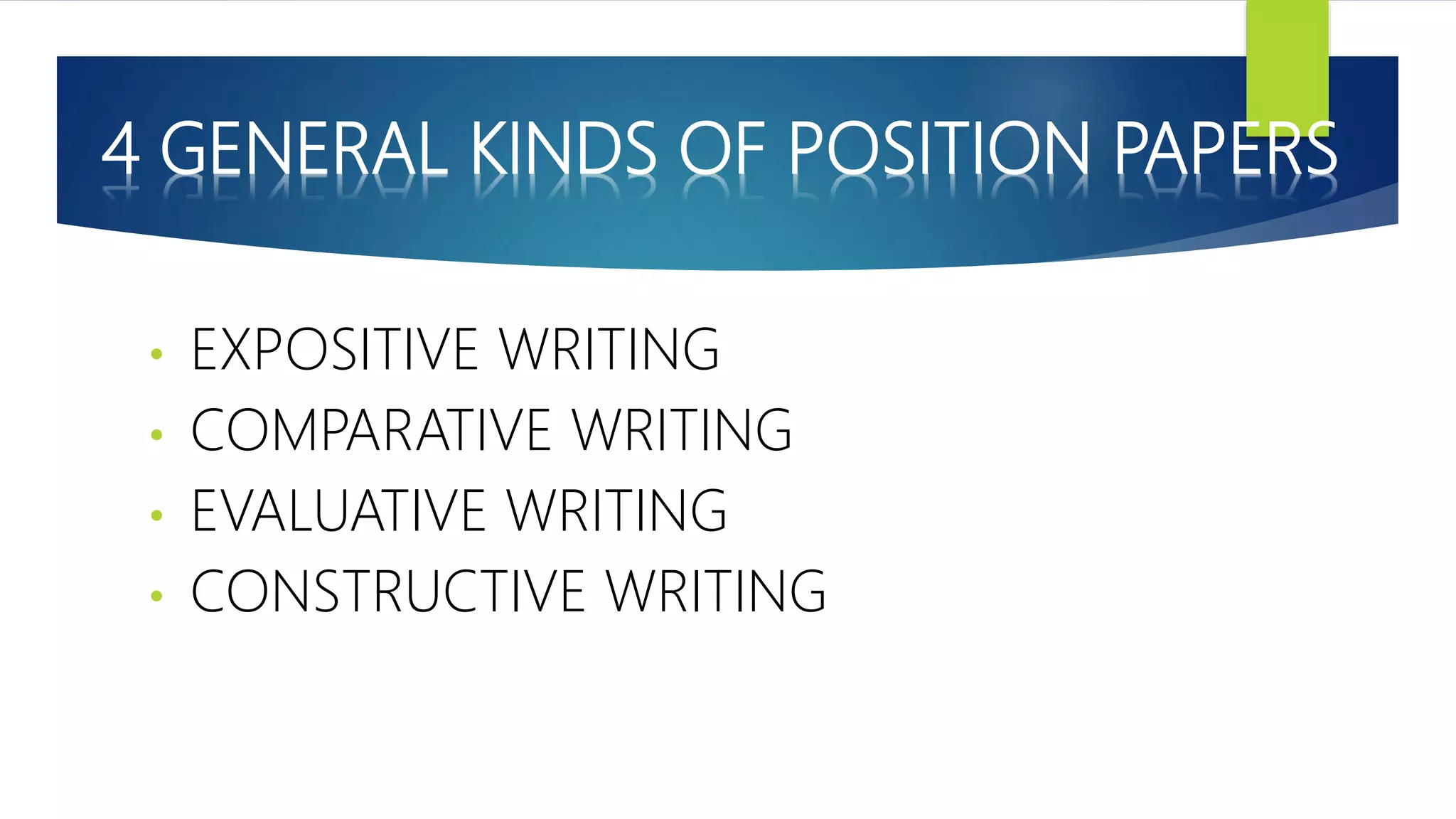
4 GENERAL KINDS OF POSITION PAPERS
• EXPOSITIVE WRITING
• COMPARATIVE WRITING
• EVALUATIVE WRITING
• CONSTRUCTIVE WRITING
EXPOSITIVE WRITING
 CONSISTS OF SUMMARIZING OR SETTING OUT
THE IDEAS OF A GIVEN PHILOSOPHER IN YOUR
OWN WORDS, IN ORDER TO HELP THE READER
TO UNDERSTAND MATERIAL THAT IS OTHERWISE
OBSCURE OR HARD TO FOLLOW
COMPARATIVE WRITING
 SETTING OUT THE ARGUMENTS AND POSITIONS
YOUR OWN WORDS
 REQUIRES YOU TO DEFEND YOUR CLAIMS OF
COMMONALITY AND DIFFERENCE
EVALUATIVE WRITING
 IF A POSITION SEEMS TO CONTRADICT WHAT WE
KNOW, OR IF WE CAN FIND CASE WHICH
CONTRADICT THE POSITON, THAT’S A MARK
AGAINST THE POSITION.
CONSTRUCTIVE WRITING
LESS DIRECTLY CONCERNED WITH
PRE-EXISTING POSITIONS OR
AGUMENTS
INTRODUCTION
BODY
CONCLUSION
 Uses a lead that grabs the attention of the
readers.
 Defines the issue and provide a thorough
background.
 Provides general statement of your position
through a thesis statement.
BODY
 States your main arguments and provide
sufficient evidence
(e.g., statistics, interviews with experts, and
testimonies) for each argument.
 Provides counterarguments against possible
weaknesses of your arguments
 Restates your position and main arguments.
 Suggests a course of action.
 Explains why your position is better than any other
position.
 Ends with a powerful closing statement (e.g., a
quotation, a challenge, or a question)
CHOOSING AN ISSUE
GUIDELINES IN WRITING A POSITION PAPER
1. Begin the writing process with an in-depth research about the issue at hand.
2. Be aware of the various positions about the issue and explain and analyze them
objectively.
3. Reflect on your position paper and identify its weaknesses
4. Establish your credibility by citing reliable sources.
5. Present a unique way of approaching the issue.
6. Limit your position paper to two pages.
7. Analyze your target readers and align your arguments to their beliefs, needs,
interests, and motivations.
8. Summarize the other side’s counterarguments and refuse them with evidence.
9. Define unfamiliar terms at first mention.
10.Use an active voice as much as possible. This will make your tone dynamic and firm.
11. Check your paper for fallacies and revise accordingly.
12.Use ethical, logical, and emotional appeals.

Position paper

  • 1.
    - A TYPEOF ACADEMIC WRITING THAT REPRESENTS ONE’S STANDING OR VIEW POINT ON A PARTICULAR ISSUE. - THE MAIN OBJECTIVE OF WRITING A POSITION PAPER IS TO TAKE PART IN A LARGER DEBATE BY STATING YOUR ARGUMENTS AND PROPOSED COURSE OF ACTION - SHOULD BE SHORT, CONCISE AND INTERESTING
  • 2.
    4 GENERAL KINDSOF POSITION PAPERS • EXPOSITIVE WRITING • COMPARATIVE WRITING • EVALUATIVE WRITING • CONSTRUCTIVE WRITING
  • 3.
    EXPOSITIVE WRITING  CONSISTSOF SUMMARIZING OR SETTING OUT THE IDEAS OF A GIVEN PHILOSOPHER IN YOUR OWN WORDS, IN ORDER TO HELP THE READER TO UNDERSTAND MATERIAL THAT IS OTHERWISE OBSCURE OR HARD TO FOLLOW
  • 4.
    COMPARATIVE WRITING  SETTINGOUT THE ARGUMENTS AND POSITIONS YOUR OWN WORDS  REQUIRES YOU TO DEFEND YOUR CLAIMS OF COMMONALITY AND DIFFERENCE
  • 5.
    EVALUATIVE WRITING  IFA POSITION SEEMS TO CONTRADICT WHAT WE KNOW, OR IF WE CAN FIND CASE WHICH CONTRADICT THE POSITON, THAT’S A MARK AGAINST THE POSITION.
  • 6.
    CONSTRUCTIVE WRITING LESS DIRECTLYCONCERNED WITH PRE-EXISTING POSITIONS OR AGUMENTS
  • 7.
  • 8.
     Uses alead that grabs the attention of the readers.  Defines the issue and provide a thorough background.  Provides general statement of your position through a thesis statement.
  • 9.
    BODY  States yourmain arguments and provide sufficient evidence (e.g., statistics, interviews with experts, and testimonies) for each argument.  Provides counterarguments against possible weaknesses of your arguments
  • 10.
     Restates yourposition and main arguments.  Suggests a course of action.  Explains why your position is better than any other position.  Ends with a powerful closing statement (e.g., a quotation, a challenge, or a question)
  • 11.
  • 12.
    GUIDELINES IN WRITINGA POSITION PAPER 1. Begin the writing process with an in-depth research about the issue at hand. 2. Be aware of the various positions about the issue and explain and analyze them objectively. 3. Reflect on your position paper and identify its weaknesses 4. Establish your credibility by citing reliable sources. 5. Present a unique way of approaching the issue. 6. Limit your position paper to two pages. 7. Analyze your target readers and align your arguments to their beliefs, needs, interests, and motivations. 8. Summarize the other side’s counterarguments and refuse them with evidence. 9. Define unfamiliar terms at first mention. 10.Use an active voice as much as possible. This will make your tone dynamic and firm. 11. Check your paper for fallacies and revise accordingly. 12.Use ethical, logical, and emotional appeals.