The Brain
   By the end of the lesson you should be
    able to
   Describe the structure and function of
    the brain
   State the function and location of
    cerebrum, cerebellum and all four lobes
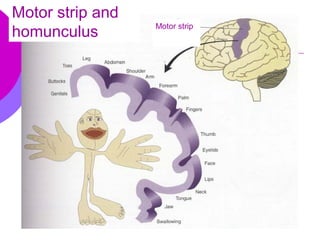
   State the location of sensory and motor
    strip
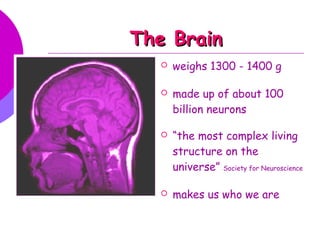
The Brain
     weighs 1300 - 1400 g

     made up of about 100
      billion neurons

     “the most complex living
      structure on the
      universe” Society for Neuroscience

     makes us who we are
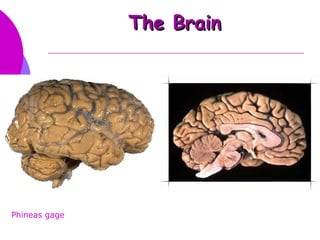
The Brain


Phineas gage
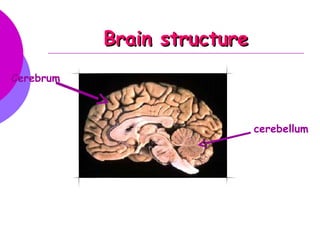
Brain structure
Cerebrum


                             cerebellum
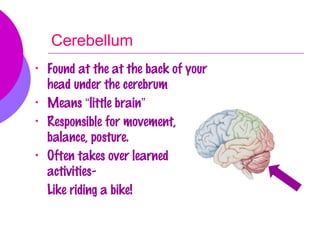
Cerebellum
•   Found at the at the back of your
    head under the cerebrum
•   Means “little brain”
•   Responsible for movement,
    balance, posture.
•   Often takes over learned
    activities-
    Like riding a bike!
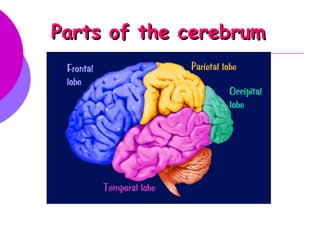
Parts of the cerebrum
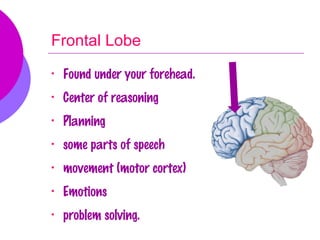
Frontal Lobe
•   Found under your forehead.
•   Center of reasoning
•   Planning
•   some parts of speech
•   movement (motor cortex)
•   Emotions
•   problem solving.
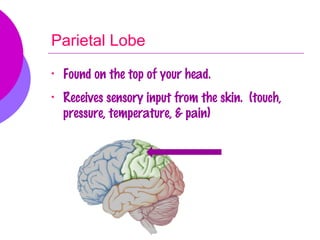
Parietal Lobe
•   Found on the top of your head.
•   Receives sensory input from the skin. (touch,
    pressure, temperature, & pain)
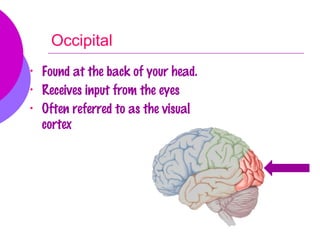
Occipital
•   Found at the back of your head.
•   Receives input from the eyes
•   Often referred to as the visual
    cortex
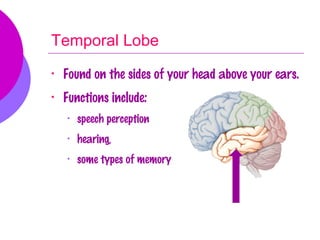
Temporal Lobe
•   Found on the sides of your head above your ears.
•   Functions include:
    •   speech perception
    •   hearing,
    •   some types of memory
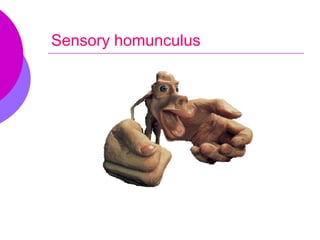
Sensory homunculus
Motor strip and
                  Motor strip
homunculus
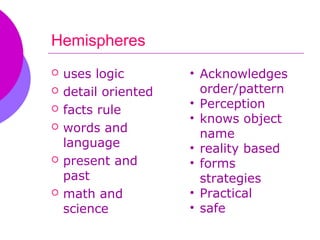
Hemispheres
   uses logic        • Acknowledges
   detail oriented     order/pattern
                      • Perception
   facts rule
                      • knows object
   words and           name
    language          • reality based
   present and       • forms
    past                strategies
   math and          • Practical
    science           • safe
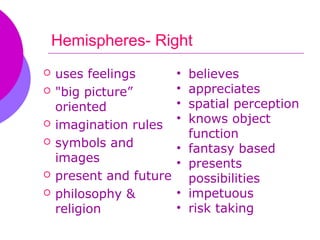
Hemispheres- Right
   uses feelings        •   believes
   "big picture”        •   appreciates
    oriented             •   spatial perception
   imagination rules
                         •   knows object
                             function
   symbols and          •   fantasy based
    images               •   presents
   present and future       possibilities
   philosophy &         •   impetuous
    religion             •   risk taking
Task
   You will need a Desktop or Netbook
   Research activities that are
    completed due to the brain
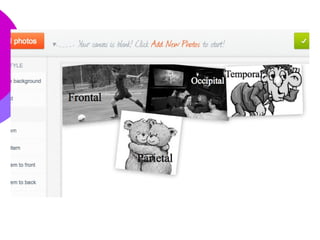
   Label that activity with the part of
    the brain
   You need to have 2-3 per lobe
   The website below should be used
   http://www.photovisi.com/collage/creat
   Screen shot the final product and
    post on your blog
Brain ppt

Brain ppt

  • 1.
    The Brain  By the end of the lesson you should be able to  Describe the structure and function of the brain  State the function and location of cerebrum, cerebellum and all four lobes  State the location of sensory and motor strip
  • 2.
    The Brain  weighs 1300 - 1400 g  made up of about 100 billion neurons  “the most complex living structure on the universe” Society for Neuroscience  makes us who we are
  • 3.
  • 4.
  • 5.
    Cerebellum • Found at the at the back of your head under the cerebrum • Means “little brain” • Responsible for movement, balance, posture. • Often takes over learned activities- Like riding a bike!
  • 6.
    Parts of thecerebrum
  • 7.
    Frontal Lobe • Found under your forehead. • Center of reasoning • Planning • some parts of speech • movement (motor cortex) • Emotions • problem solving.
  • 8.
    Parietal Lobe • Found on the top of your head. • Receives sensory input from the skin. (touch, pressure, temperature, & pain)
  • 9.
    Occipital • Found at the back of your head. • Receives input from the eyes • Often referred to as the visual cortex
  • 10.
    Temporal Lobe • Found on the sides of your head above your ears. • Functions include: • speech perception • hearing, • some types of memory
  • 11.
  • 12.
    Motor strip and Motor strip homunculus
  • 13.
    Hemispheres  uses logic • Acknowledges  detail oriented order/pattern • Perception  facts rule • knows object  words and name language • reality based  present and • forms past strategies  math and • Practical science • safe
  • 15.
    Hemispheres- Right  uses feelings • believes  "big picture” • appreciates oriented • spatial perception  imagination rules • knows object function  symbols and • fantasy based images • presents  present and future possibilities  philosophy & • impetuous religion • risk taking
  • 16.
    Task  You will need a Desktop or Netbook  Research activities that are completed due to the brain  Label that activity with the part of the brain  You need to have 2-3 per lobe  The website below should be used  http://www.photovisi.com/collage/creat  Screen shot the final product and post on your blog