What I Need to Know
• Fads and trends emerge
everywhere. They occur
in any given time and
context. How do they
differ? How do they
impact life?
• The interplay between
fads and trends issues
a number of challenges
in the 21st century. It
is imperative to gain a
keen analysis on this.
• At the end of this Lesson, you
should be able to:
1. differentiate a trend from a fad
(HUMSS_MCT12-Ia-b-3);
2. give examples of a trend and a
fad; and
3. explain the process on how to
spot a trend (HUMSS_MCT12-Ia-
b-2).
The 21st century is a deluge of
overwhelming demands from a digital
society; hence, enormous trends have
emerged. Global trends have been
increasingly given attention and
anchored to socio-cultural, economic,
and political dimensions. Unconsciously,
individuals like you do not realize that
they have been into certain trends.
TRENDS
• something that covers almost all of
human activities such as but not
limited to politics, beliefs, economics,
lifestyle, social life and the like
whether the individuals or groups of
people are aware of it or not.
• It is defined in various ways depending
on the orientation of these individuals
or groups.
In the fields of arts
• fashion and music for example,
it is a prevailing style or
preference such as realism
movement in art, emergence of
the miniskirt, and popularity of
certain genre of music like jazz,
classical and rock.
In the sphere of economics
• trends may come as a general
movement registering
statistical changes for a long
period such as the increasing
cost of living and rate of
unemployment.
In politics
• trends refer to a tendency, drift,
or bend toward a certain stance,
thought, or policy as when
democratic Southeast Asian
countries favored authoritarian
governments at a certain point
in their histories.
• Other areas also exhibit prevailing
preference such as in sports (wearable
devices that monitor training
performance), food (rise of oatmeal
products, inclusion of moringa or
malunggay in food products), medicine
(stem cell treatment), cosmetics (whitening
supplements), travel (paperless tickets and
online check-in), manufacturing (3-D
printing), environmental management
(home solar electric system).
To sum up,
Trend
• is a pattern of behavior
demonstrated by a big
number of people within a
particular period.
Some examples of trend:
• gadgets
• teleserye
• social networking sites
• social advocacies
• drone technology
• denim jeans
• business process outsourcing
• online ticketing
• cashless transactions
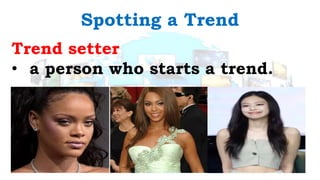
Spotting a Trend
Trend setter
• a person who starts a trend.
• The individual’s act or the
event has attracted
attention, earned acceptance,
and created strong interest
and influence on people
whose number keeps
increasing as days go by.
• It demonstrates an accelerated
spread among various sectors
and areas and creates a deep
and wide scope of influence on
people, sectors, and the
environment.
• It leads to change. (Urgel,
2017)
Futurist
• one who studies and predicts the
future, especially based on current
trends. Rehn and Lindkvist (2013)
Trend spotting
• refers to the study of trends and
the way they develop and affect
society.
Cool Hunting
• a hunt for those things that will become
popular before they are popular.
Trend analysis
• based on trendspotting but it extends
this into developing future scenarios and
so they say that to follow a trend, one
must not only be conscious of what is
currently happening but be wise enough
to predict the future. (Urgel, 2017)
FAD
Trending ngayon sa YouTube ang…
Trending sa Twitter ang… Trending
ngayon sa Facebook ang… You might get
confused at these headlines from the
News and ask, “how can these be
considered as trends based on the above
discussion?” This part now discusses
fads and how it differs from trends.
Fad
• something, such as an interest or
fashion, that is very popular for a
short time (Merriam– Webster’s
Learner’s Dictionary).
• a product that has little, if any, utility
but is characterized by a quick rise in
sales and popularity followed by a
quick decline in sales and popularity.
Fad
• an intense but short-lived fashion.
• It is a widely– shared enthusiasm
for something, especially one that
is short-lived.
• It is a temporary fashion, a craze,
interest, or activity that people
follow enthusiastically, but lasts for
a short period of time.
Now, if we will look back at the
first paragraph above, you will
now see that those things which
are advertised as “trending” in
YouTube, Twitter, Instagram,
Facebook or any popular social
media platforms are not actually
trends but are merely fads.
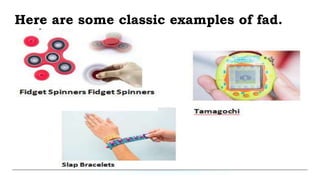
Here are some classic examples of fad.
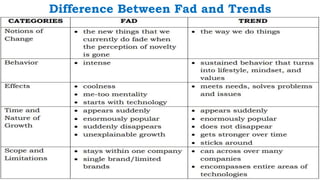
Difference Between Fad and Trends
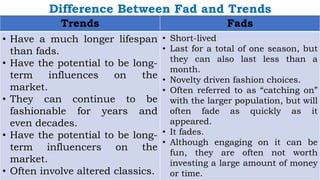
Trends Fads
• Have a much longer lifespan
than fads.
• Have the potential to be long-
term influences on the
market.
• They can continue to be
fashionable for years and
even decades.
• Have the potential to be long-
term influencers on the
market.
• Often involve altered classics.
• Short-lived
• Last for a total of one season, but
they can also last less than a
month.
• Novelty driven fashion choices.
• Often referred to as “catching on”
with the larger population, but will
often fade as quickly as it
appeared.
• It fades.
• Although engaging on it can be
fun, they are often not worth
investing a large amount of money
or time.
Difference Between Fad and Trends
Gadgets
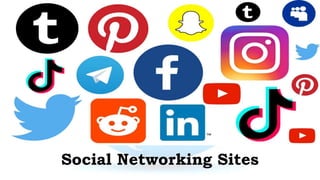
Social Networking Sites
ALDUB (Kalyeserye)
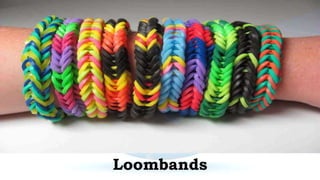
Loombands
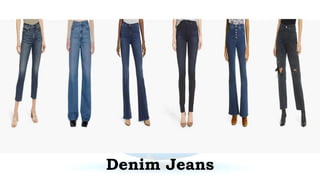
Denim Jeans
Activity 1: 100-Word Essay
In a yellow sheet of paper. Choose
one (1) from any of these lines and
give your opinion. Your Essay should
be 100 words above.
a. Which Fad or Trend Shall I Accept
or Reject?
b. How Do I Accept or Reject a Trend?
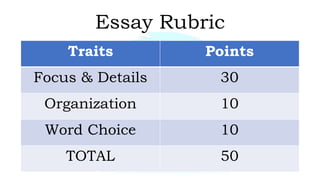
Essay Rubric
Traits Points
Focus & Details 30
Organization 10
Word Choice 10
TOTAL 50

Lesson 1 Fads vs. Trends.pptx

  • 2.
    What I Needto Know • Fads and trends emerge everywhere. They occur in any given time and context. How do they differ? How do they impact life?
  • 3.
    • The interplaybetween fads and trends issues a number of challenges in the 21st century. It is imperative to gain a keen analysis on this.
  • 4.
    • At theend of this Lesson, you should be able to: 1. differentiate a trend from a fad (HUMSS_MCT12-Ia-b-3); 2. give examples of a trend and a fad; and 3. explain the process on how to spot a trend (HUMSS_MCT12-Ia- b-2).
  • 8.
    The 21st centuryis a deluge of overwhelming demands from a digital society; hence, enormous trends have emerged. Global trends have been increasingly given attention and anchored to socio-cultural, economic, and political dimensions. Unconsciously, individuals like you do not realize that they have been into certain trends.
  • 9.
    TRENDS • something thatcovers almost all of human activities such as but not limited to politics, beliefs, economics, lifestyle, social life and the like whether the individuals or groups of people are aware of it or not. • It is defined in various ways depending on the orientation of these individuals or groups.
  • 10.
    In the fieldsof arts • fashion and music for example, it is a prevailing style or preference such as realism movement in art, emergence of the miniskirt, and popularity of certain genre of music like jazz, classical and rock.
  • 11.
    In the sphereof economics • trends may come as a general movement registering statistical changes for a long period such as the increasing cost of living and rate of unemployment.
  • 12.
    In politics • trendsrefer to a tendency, drift, or bend toward a certain stance, thought, or policy as when democratic Southeast Asian countries favored authoritarian governments at a certain point in their histories.
  • 13.
    • Other areasalso exhibit prevailing preference such as in sports (wearable devices that monitor training performance), food (rise of oatmeal products, inclusion of moringa or malunggay in food products), medicine (stem cell treatment), cosmetics (whitening supplements), travel (paperless tickets and online check-in), manufacturing (3-D printing), environmental management (home solar electric system).
  • 14.
    To sum up, Trend •is a pattern of behavior demonstrated by a big number of people within a particular period.
  • 15.
    Some examples oftrend: • gadgets • teleserye • social networking sites • social advocacies • drone technology • denim jeans • business process outsourcing • online ticketing • cashless transactions
  • 16.
    Spotting a Trend Trendsetter • a person who starts a trend.
  • 17.
    • The individual’sact or the event has attracted attention, earned acceptance, and created strong interest and influence on people whose number keeps increasing as days go by.
  • 18.
    • It demonstratesan accelerated spread among various sectors and areas and creates a deep and wide scope of influence on people, sectors, and the environment. • It leads to change. (Urgel, 2017)
  • 20.
    Futurist • one whostudies and predicts the future, especially based on current trends. Rehn and Lindkvist (2013) Trend spotting • refers to the study of trends and the way they develop and affect society.
  • 21.
    Cool Hunting • ahunt for those things that will become popular before they are popular. Trend analysis • based on trendspotting but it extends this into developing future scenarios and so they say that to follow a trend, one must not only be conscious of what is currently happening but be wise enough to predict the future. (Urgel, 2017)
  • 22.
    FAD Trending ngayon saYouTube ang… Trending sa Twitter ang… Trending ngayon sa Facebook ang… You might get confused at these headlines from the News and ask, “how can these be considered as trends based on the above discussion?” This part now discusses fads and how it differs from trends.
  • 23.
    Fad • something, suchas an interest or fashion, that is very popular for a short time (Merriam– Webster’s Learner’s Dictionary). • a product that has little, if any, utility but is characterized by a quick rise in sales and popularity followed by a quick decline in sales and popularity.
  • 24.
    Fad • an intensebut short-lived fashion. • It is a widely– shared enthusiasm for something, especially one that is short-lived. • It is a temporary fashion, a craze, interest, or activity that people follow enthusiastically, but lasts for a short period of time.
  • 25.
    Now, if wewill look back at the first paragraph above, you will now see that those things which are advertised as “trending” in YouTube, Twitter, Instagram, Facebook or any popular social media platforms are not actually trends but are merely fads.
  • 26.
    Here are someclassic examples of fad.
  • 27.
    Difference Between Fadand Trends Trends Fads • Have a much longer lifespan than fads. • Have the potential to be long- term influences on the market. • They can continue to be fashionable for years and even decades. • Have the potential to be long- term influencers on the market. • Often involve altered classics. • Short-lived • Last for a total of one season, but they can also last less than a month. • Novelty driven fashion choices. • Often referred to as “catching on” with the larger population, but will often fade as quickly as it appeared. • It fades. • Although engaging on it can be fun, they are often not worth investing a large amount of money or time.
  • 28.
  • 29.
  • 30.
  • 31.
  • 32.
  • 33.
  • 34.
    Activity 1: 100-WordEssay In a yellow sheet of paper. Choose one (1) from any of these lines and give your opinion. Your Essay should be 100 words above. a. Which Fad or Trend Shall I Accept or Reject? b. How Do I Accept or Reject a Trend?
  • 35.
    Essay Rubric Traits Points Focus& Details 30 Organization 10 Word Choice 10 TOTAL 50