Unit 2
UNDERSTANDING LOCAL NETWORKS
Trends, Networks, and Critical
Thinking in the 21st Century
Senior High School Grade 11
2.1 Strategic Analysis
2.2 Intuitive Thinking
Networks and Linkages: Introduction
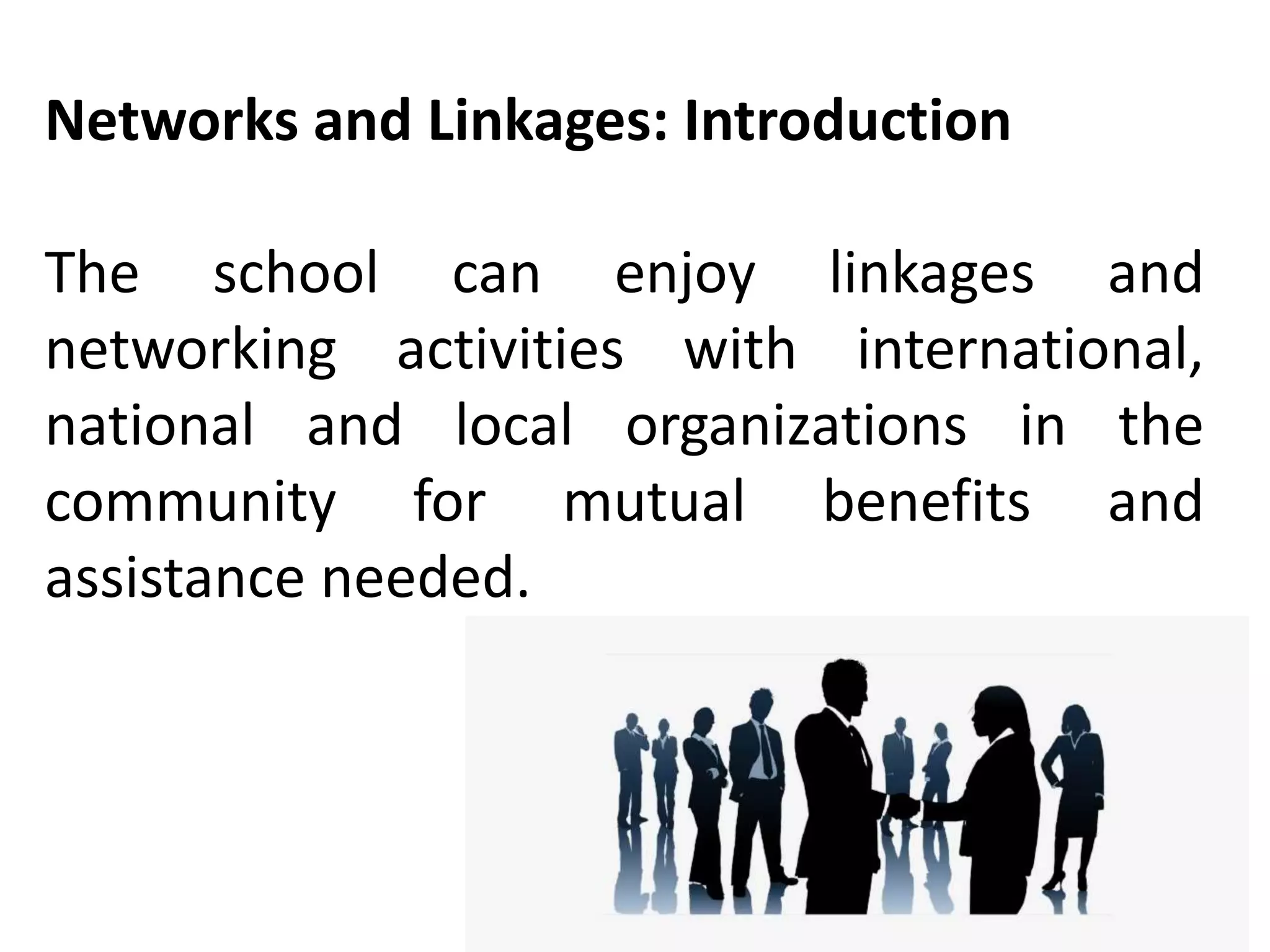
The school can enjoy linkages and
networking activities with international,
national and local organizations in the
community for mutual benefits and
assistance needed.
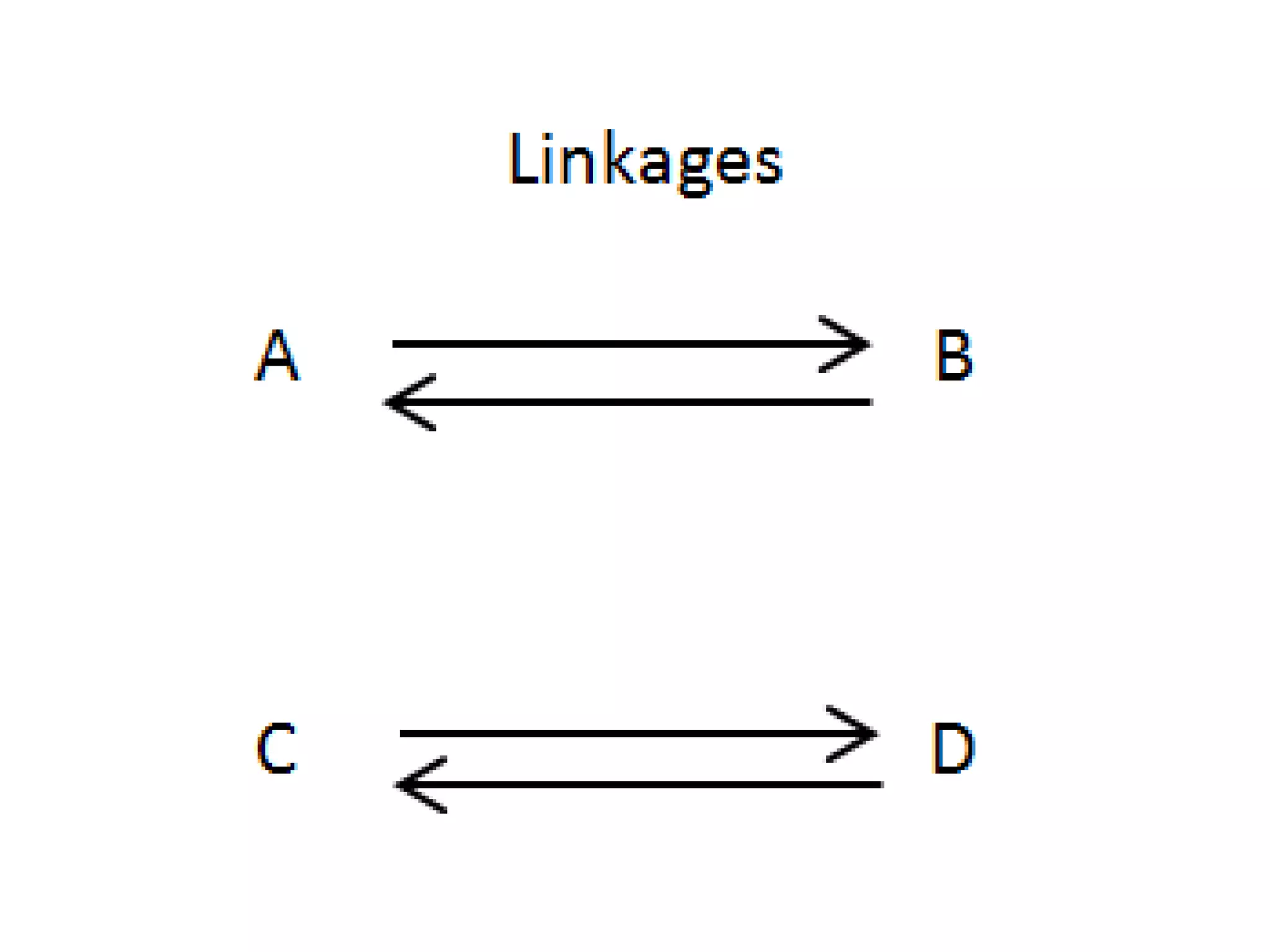
Linkage and networking are different in the
degree of commitment by the partners.
In linkage, the relationship between partner
organizations is quite loose, while in
networking, it is much stronger, usually because
the groups and agencies have common
objectives and beneficiaries. Networking is
basically extending the outreach of the
resources in different ways so as to increase the
effectiveness of the program.
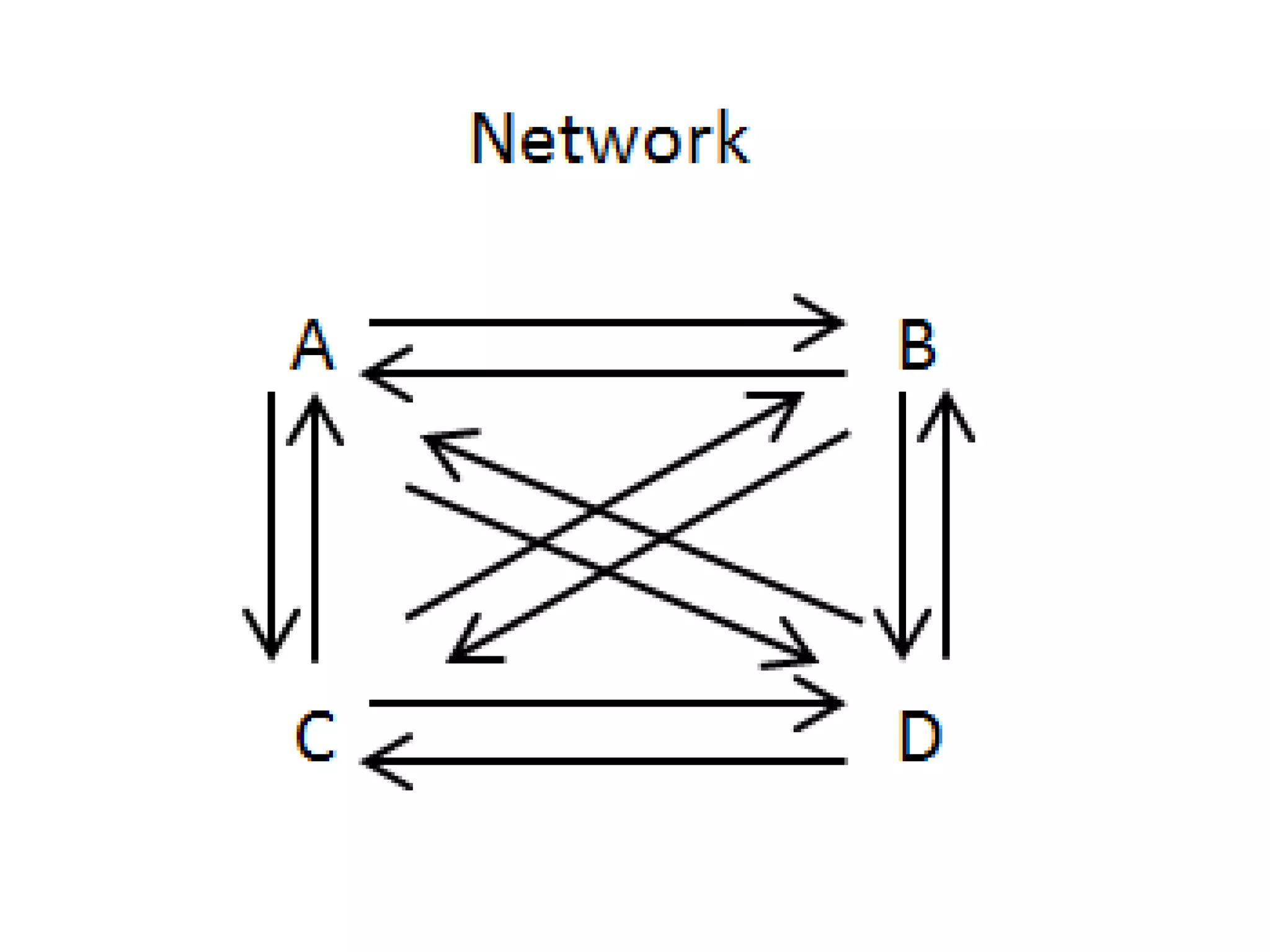
Networks
• A relationship structure wherein the members
of the network are able to share resources
with one another.
• A network is composed of several institutions
(consortium) of several colleges of different
universities that bind together for a common
goal.
• Work together to attain common objectives,
undertake innovative practices and update
members regarding breakthrough in different
disciplines.
Kinds of Networks:
1. Human Network
2. Knowledge Network
3. Computer Network
4. Trade Network
5. Ecological Network
Linkages
• Intends to serve members of both
sides according to their respective
needs, interest, and objectives
• Create bonds together to solicit
support and assistance for
purposeful activities
National and Local Linkages
• It is established between universities
and colleges offering identical degrees
in which cross-enrolment for subjects
needed for graduation is allowed.
• It is also a joint researches that could be
conducted by two or three universities
depending on their field of expertise
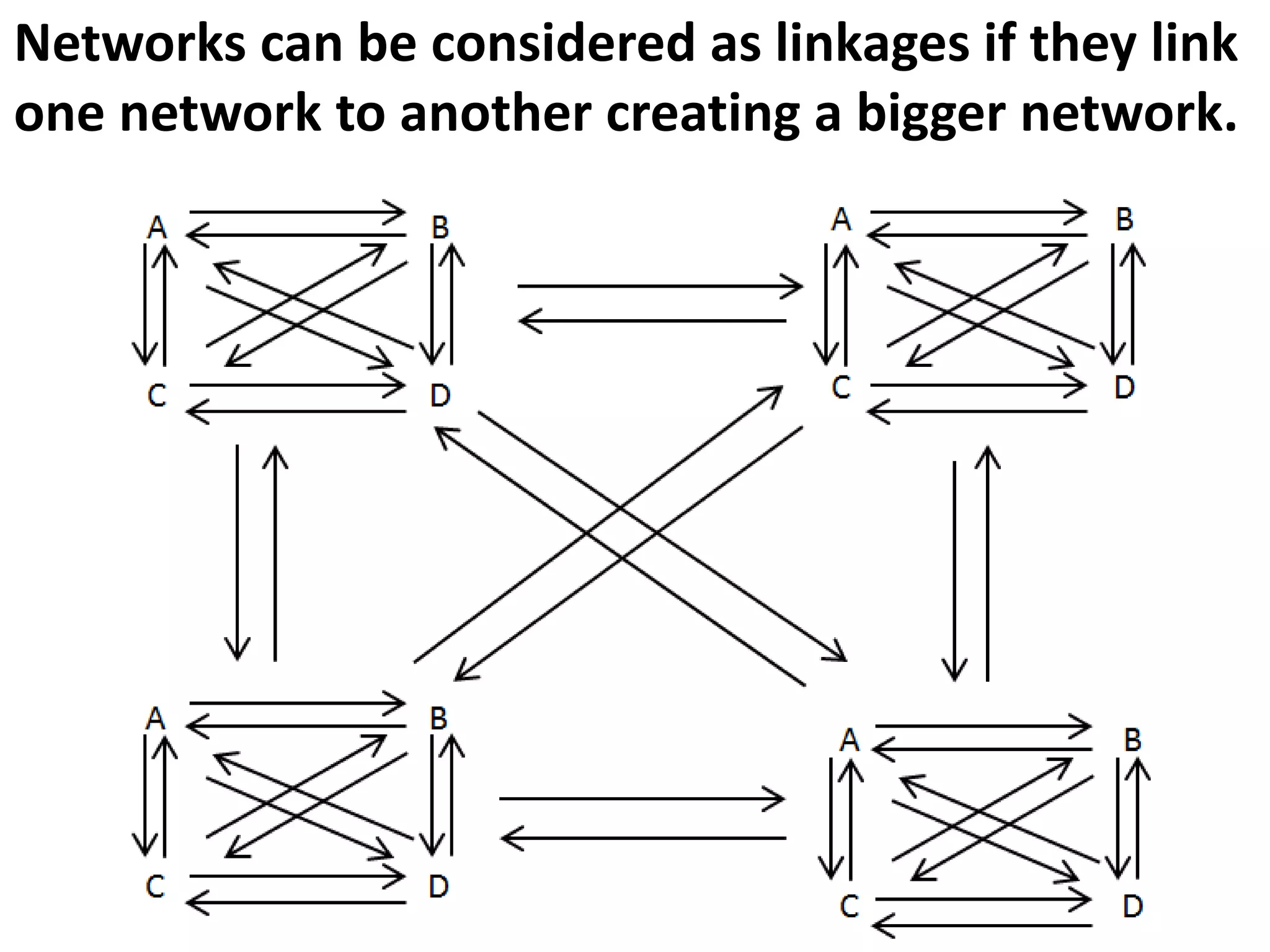
Networks can be considered as linkages if they link
one network to another creating a bigger network.
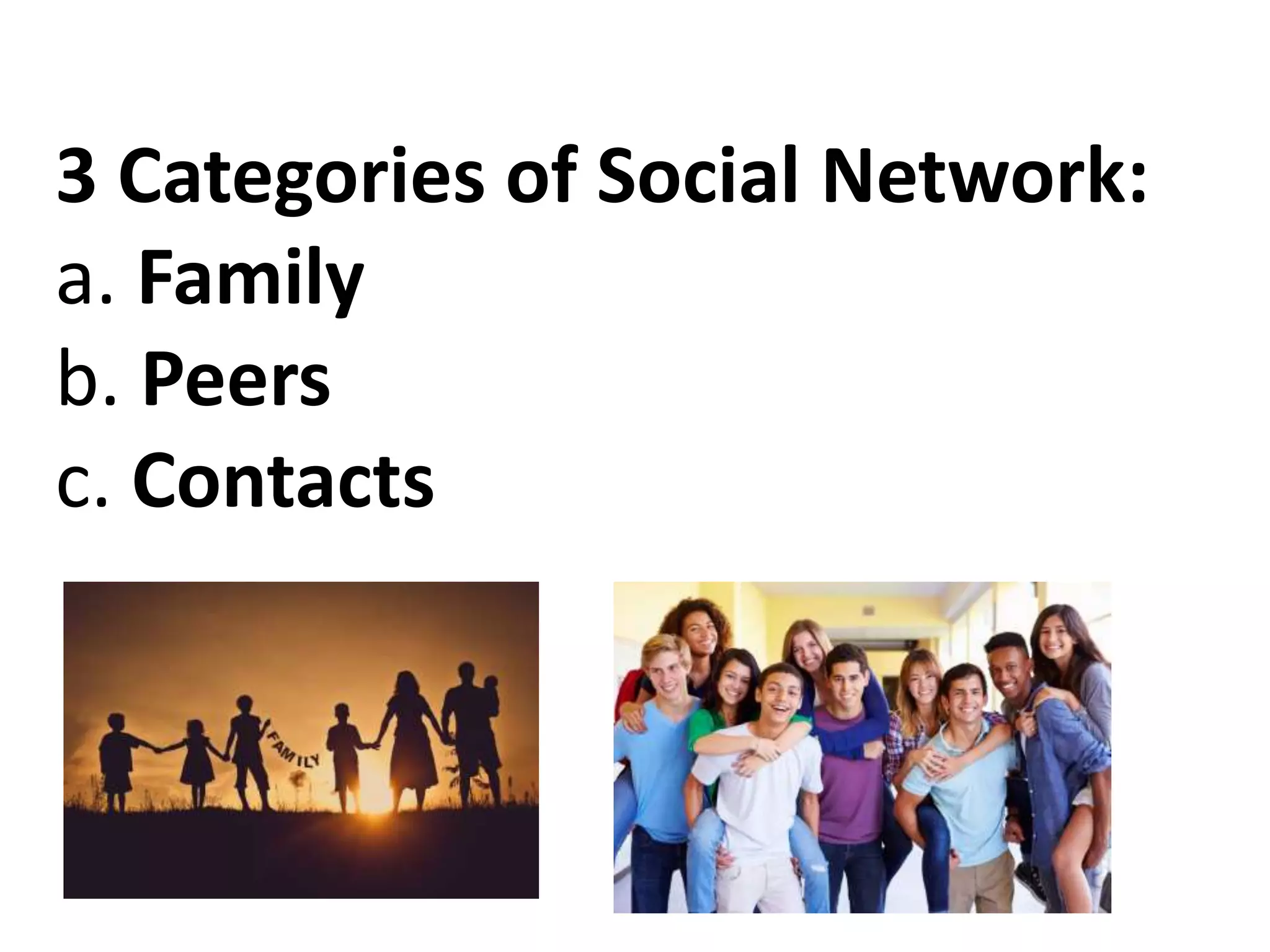
3 Categories of Social Network:
a. Family
b. Peers
c. Contacts
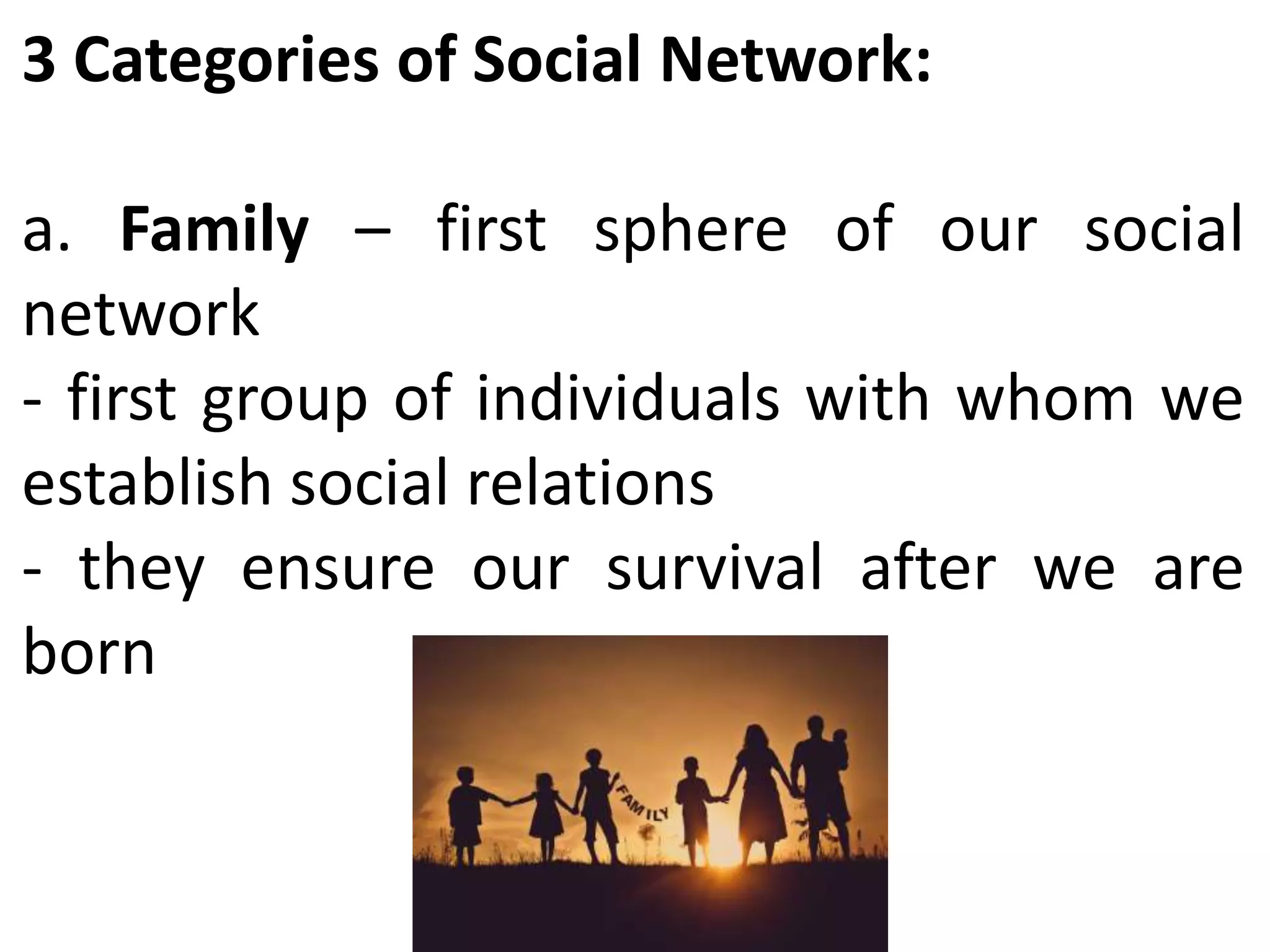
3 Categories of Social Network:
a. Family – first sphere of our social
network
- first group of individuals with whom we
establish social relations
- they ensure our survival after we are
born
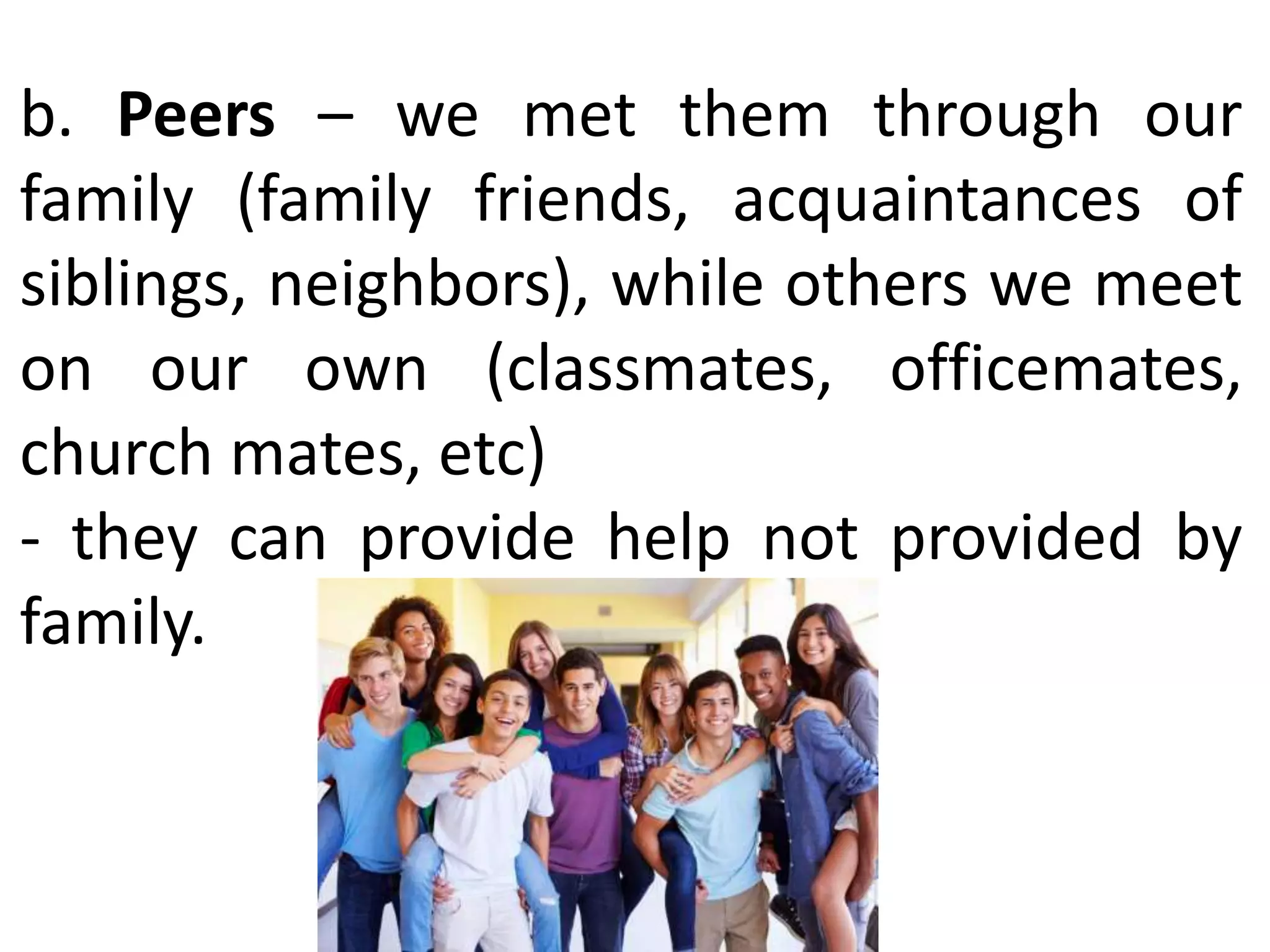
b. Peers – we met them through our
family (family friends, acquaintances of
siblings, neighbors), while others we meet
on our own (classmates, officemates,
church mates, etc)
- they can provide help not provided by
family.
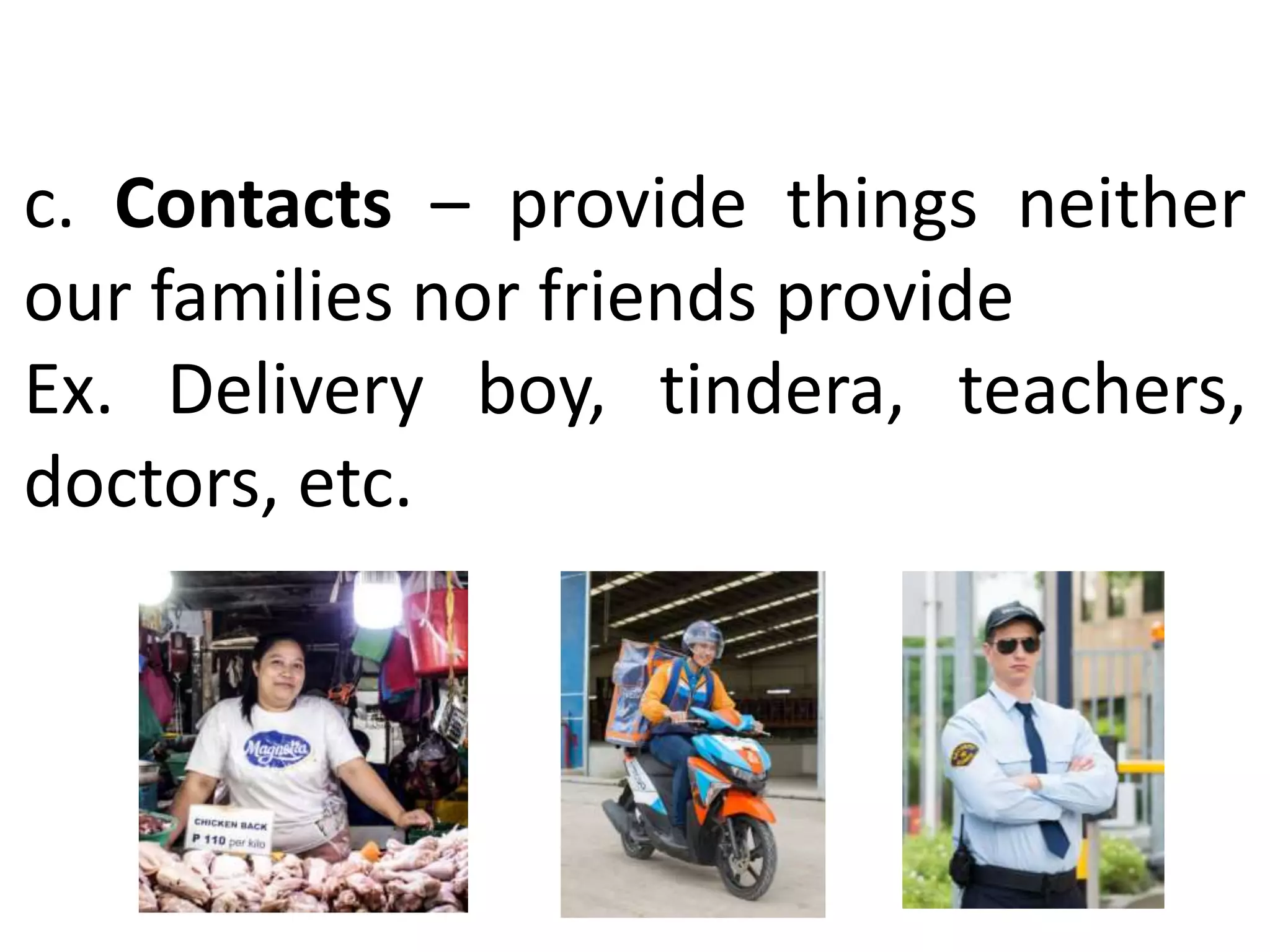
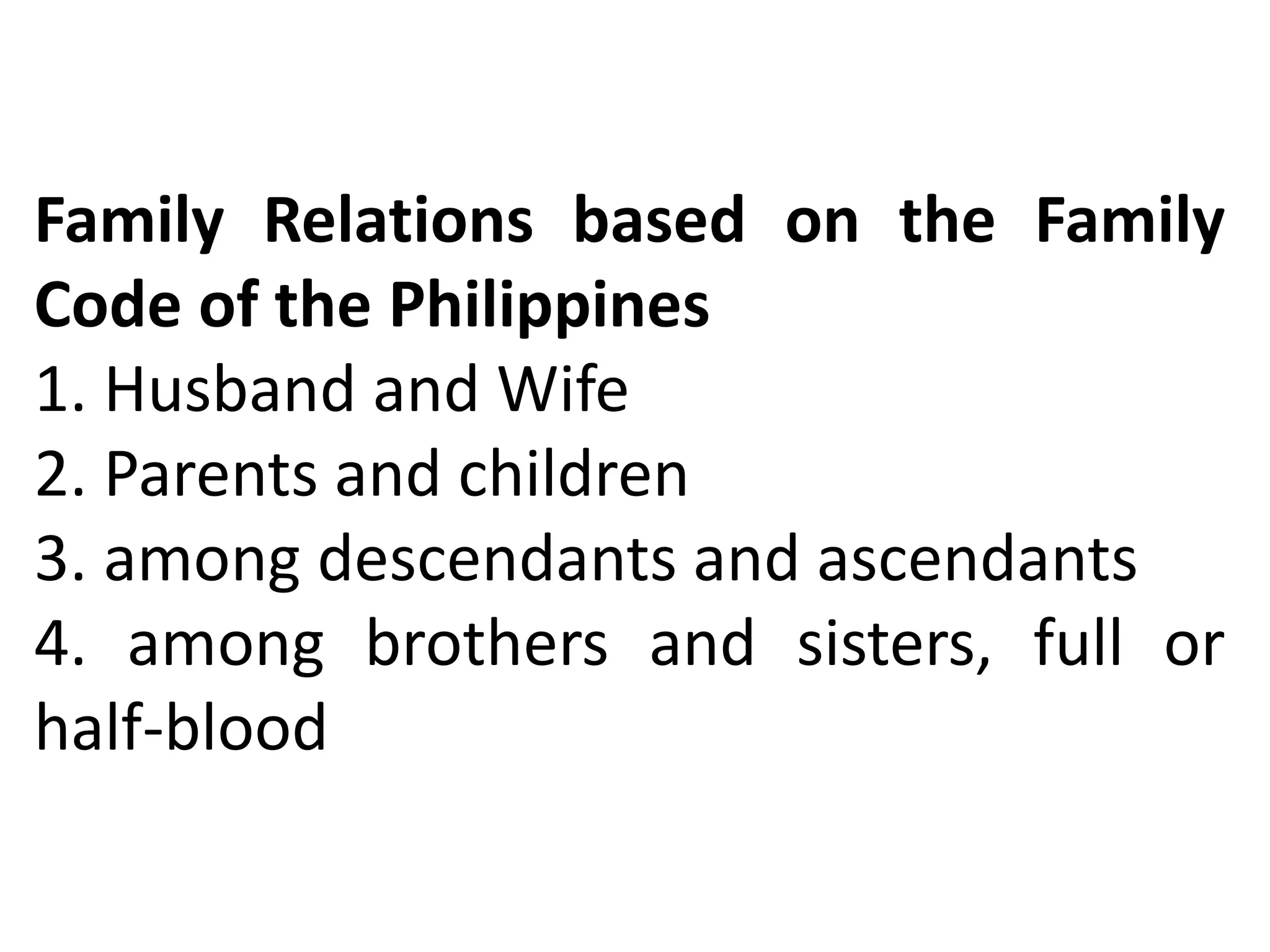
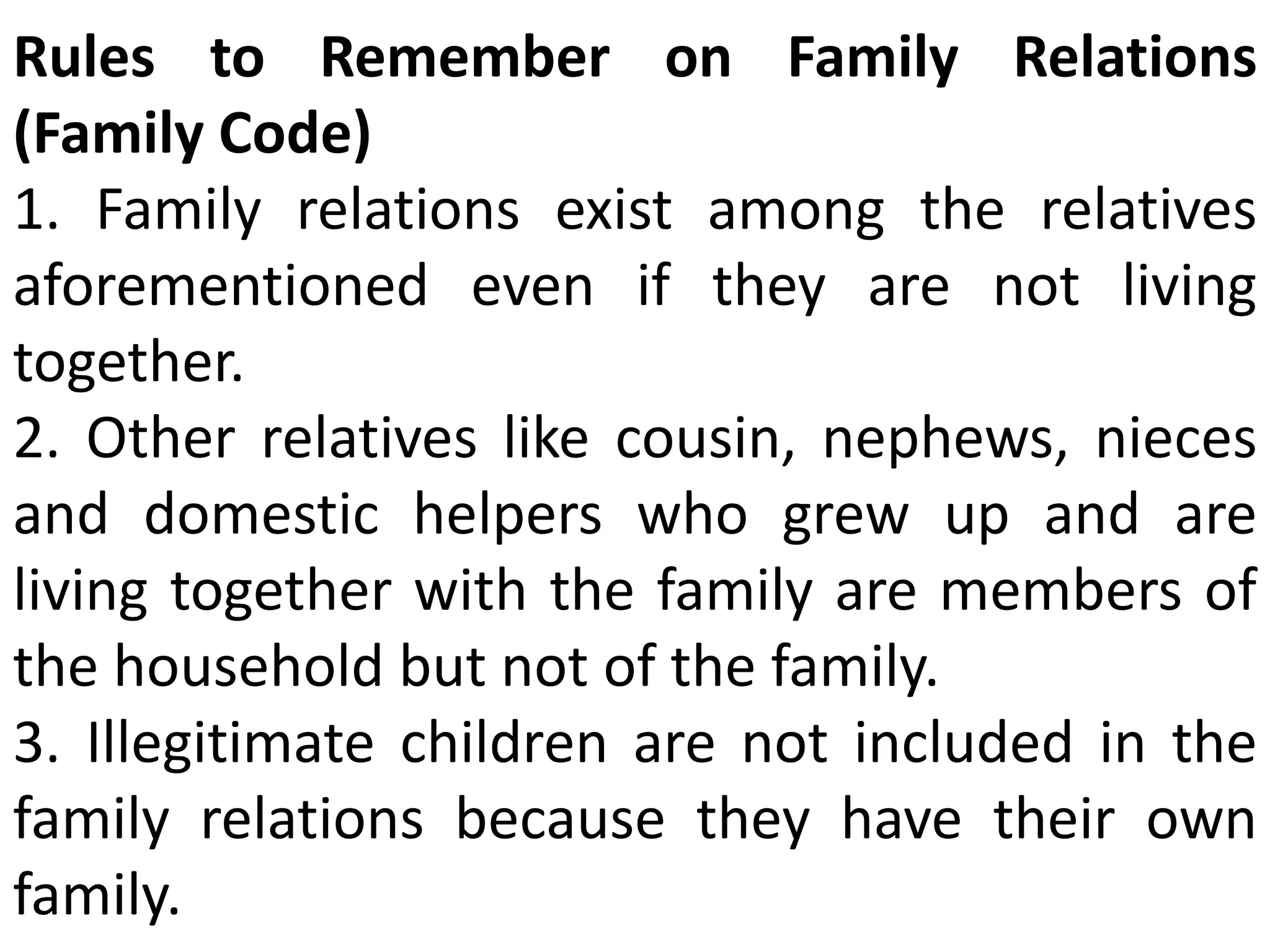
c. Contacts – provide things neither
our families nor friends provide
Ex. Delivery boy, tindera, teachers,
doctors, etc.
Family Relations based on the Family
Code of the Philippines
1. Husband and Wife
2. Parents and children
3. among descendants and ascendants
4. among brothers and sisters, full or
half-blood
Rules to Remember on Family Relations
(Family Code)
1. Family relations exist among the relatives
aforementioned even if they are not living
together.
2. Other relatives like cousin, nephews, nieces
and domestic helpers who grew up and are
living together with the family are members of
the household but not of the family.
3. Illegitimate children are not included in the
family relations because they have their own
family.
4. Adopted children being part of the family
are included.
5. Nephews and nieces, uncles and aunts are
not included because they have their own
families.
6. Relatives mentioned in the article include
those of the husband and wife.
The notion/idea of the family may include a
lot more than what is stipulated in the law
• Pets as part of the family
• Best friends
• Work place, colleagues, communities,
school, church etc.
STRATEGIC ANALYSIS
Strategy
- from Greek work “Strategia”, meaning skills
possessed by generals and are necessary to win
battles
Analysis
- careful study of each part of a whole and
understanding how each part and their
relationships with each other result in the
world.
Strategic Analysis
- involved examination and evaluation of
strengths, weakness, opportunities, threats,
environments and resources, with the purpose
of drawing up a strategy from the results of
the analysis to achieve certain goals over time.
- the use of Logic
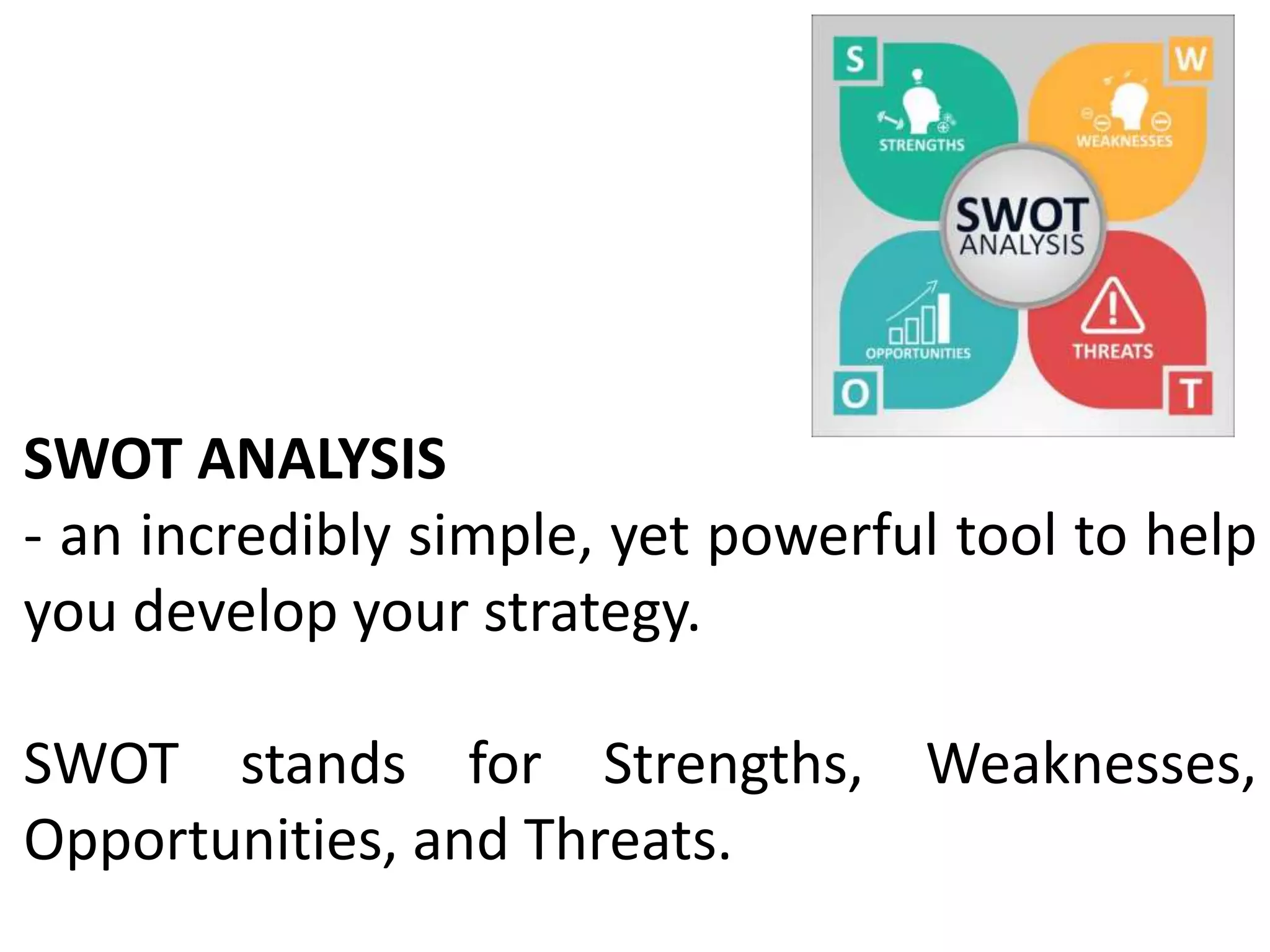
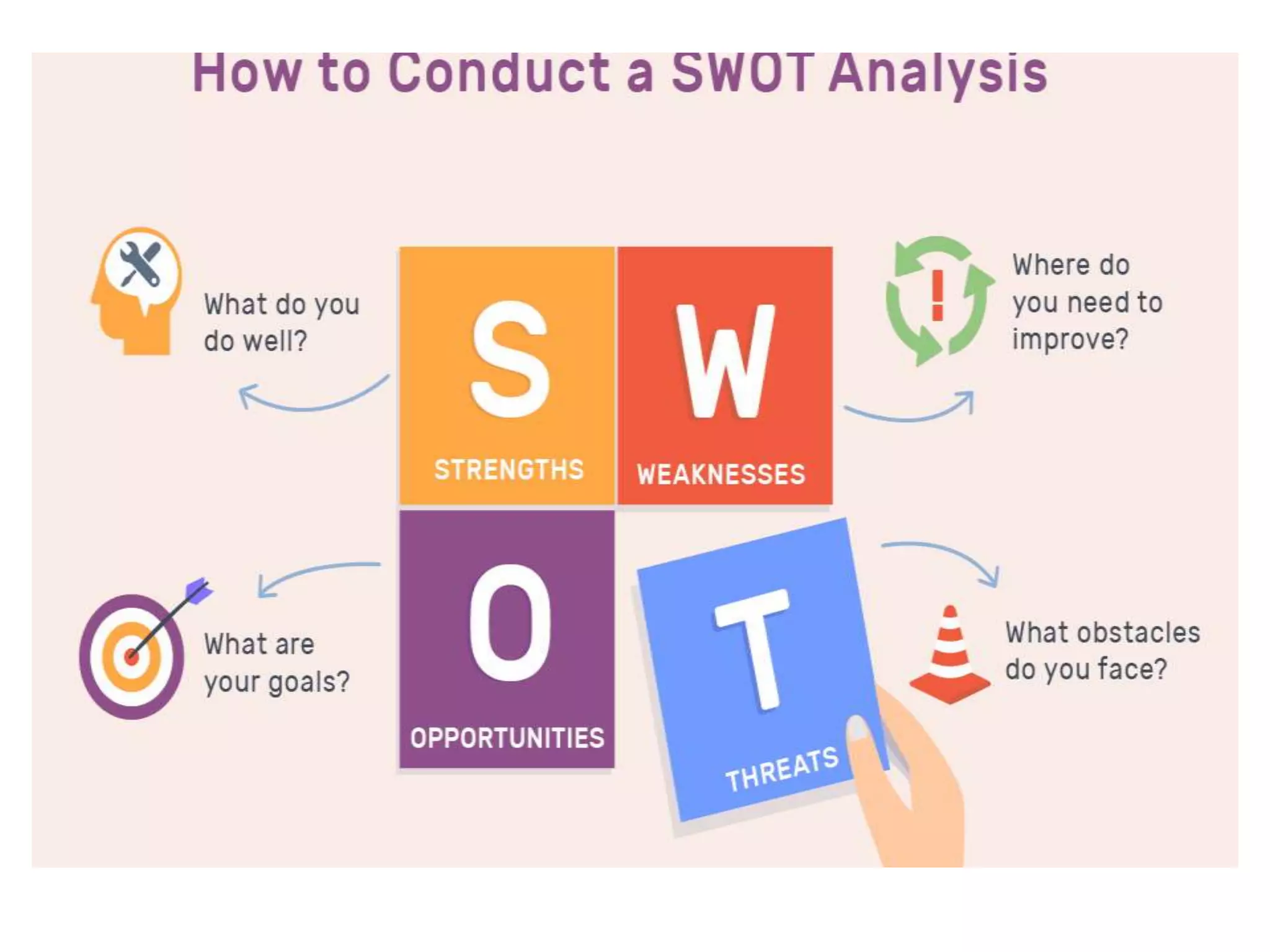
SWOT ANALYSIS
- an incredibly simple, yet powerful tool to help
you develop your strategy.
SWOT stands for Strengths, Weaknesses,
Opportunities, and Threats.
Strengths and Weaknesses—internal things
that you have some control over and can
change.
Opportunities and Threats — are external,
things that are on the outside. You can take
advantage of opportunities and protect
against threats, but you can’t change them.
Example:
Choosing which school to enroll in college
Use strategic analysis
- personal interest
- courses available
- strengths and weakness of the school
- capacity to pay
- distance
- etc.
INTUITIVE THINKING
- the kind of thinking that helps you understand
reality in the moment, without logic or analysis.
There's no language involved in it, either. It's
entirely about signs and sensations. Most of the
time, it goes against whatever we might think of
as “rational”. It is more of familiarity and
experience.
Intuition
- is a form of knowledge that appears in
consciousness without obvious deliberation.
Hunches (“kutob”) are generated by the
unconscious mind rapidly sifting through past
experience and cumulative knowledge.
- Not a result of a process of analysis and
deliberation but that of quick and reflexive
thinking to give immediate response.

Trends, Network and Critical Thinking 2 Understanding Local Networks

  • 1.
    Unit 2 UNDERSTANDING LOCALNETWORKS Trends, Networks, and Critical Thinking in the 21st Century Senior High School Grade 11 2.1 Strategic Analysis 2.2 Intuitive Thinking
  • 2.
    Networks and Linkages:Introduction The school can enjoy linkages and networking activities with international, national and local organizations in the community for mutual benefits and assistance needed.
  • 3.
    Linkage and networkingare different in the degree of commitment by the partners. In linkage, the relationship between partner organizations is quite loose, while in networking, it is much stronger, usually because the groups and agencies have common objectives and beneficiaries. Networking is basically extending the outreach of the resources in different ways so as to increase the effectiveness of the program.
  • 4.
    Networks • A relationshipstructure wherein the members of the network are able to share resources with one another. • A network is composed of several institutions (consortium) of several colleges of different universities that bind together for a common goal. • Work together to attain common objectives, undertake innovative practices and update members regarding breakthrough in different disciplines.
  • 5.
    Kinds of Networks: 1.Human Network 2. Knowledge Network 3. Computer Network 4. Trade Network 5. Ecological Network
  • 6.
    Linkages • Intends toserve members of both sides according to their respective needs, interest, and objectives • Create bonds together to solicit support and assistance for purposeful activities
  • 7.
    National and LocalLinkages • It is established between universities and colleges offering identical degrees in which cross-enrolment for subjects needed for graduation is allowed. • It is also a joint researches that could be conducted by two or three universities depending on their field of expertise
  • 10.
    Networks can beconsidered as linkages if they link one network to another creating a bigger network.
  • 11.
    3 Categories ofSocial Network: a. Family b. Peers c. Contacts
  • 12.
    3 Categories ofSocial Network: a. Family – first sphere of our social network - first group of individuals with whom we establish social relations - they ensure our survival after we are born
  • 13.
    b. Peers –we met them through our family (family friends, acquaintances of siblings, neighbors), while others we meet on our own (classmates, officemates, church mates, etc) - they can provide help not provided by family.
  • 14.
    c. Contacts –provide things neither our families nor friends provide Ex. Delivery boy, tindera, teachers, doctors, etc.
  • 15.
    Family Relations basedon the Family Code of the Philippines 1. Husband and Wife 2. Parents and children 3. among descendants and ascendants 4. among brothers and sisters, full or half-blood
  • 16.
    Rules to Rememberon Family Relations (Family Code) 1. Family relations exist among the relatives aforementioned even if they are not living together. 2. Other relatives like cousin, nephews, nieces and domestic helpers who grew up and are living together with the family are members of the household but not of the family. 3. Illegitimate children are not included in the family relations because they have their own family.
  • 17.
    4. Adopted childrenbeing part of the family are included. 5. Nephews and nieces, uncles and aunts are not included because they have their own families. 6. Relatives mentioned in the article include those of the husband and wife.
  • 18.
    The notion/idea ofthe family may include a lot more than what is stipulated in the law • Pets as part of the family • Best friends • Work place, colleagues, communities, school, church etc.
  • 19.
    STRATEGIC ANALYSIS Strategy - fromGreek work “Strategia”, meaning skills possessed by generals and are necessary to win battles Analysis - careful study of each part of a whole and understanding how each part and their relationships with each other result in the world.
  • 20.
    Strategic Analysis - involvedexamination and evaluation of strengths, weakness, opportunities, threats, environments and resources, with the purpose of drawing up a strategy from the results of the analysis to achieve certain goals over time. - the use of Logic
  • 21.
    SWOT ANALYSIS - anincredibly simple, yet powerful tool to help you develop your strategy. SWOT stands for Strengths, Weaknesses, Opportunities, and Threats.
  • 23.
    Strengths and Weaknesses—internalthings that you have some control over and can change. Opportunities and Threats — are external, things that are on the outside. You can take advantage of opportunities and protect against threats, but you can’t change them.
  • 24.
    Example: Choosing which schoolto enroll in college Use strategic analysis - personal interest - courses available - strengths and weakness of the school - capacity to pay - distance - etc.
  • 25.
    INTUITIVE THINKING - thekind of thinking that helps you understand reality in the moment, without logic or analysis. There's no language involved in it, either. It's entirely about signs and sensations. Most of the time, it goes against whatever we might think of as “rational”. It is more of familiarity and experience.
  • 26.
    Intuition - is aform of knowledge that appears in consciousness without obvious deliberation. Hunches (“kutob”) are generated by the unconscious mind rapidly sifting through past experience and cumulative knowledge. - Not a result of a process of analysis and deliberation but that of quick and reflexive thinking to give immediate response.