LEPROSY
 It is a non fatal slowly progressive chronic
granulomatous infection
 Causetive organism : Mycobacterium
leprae
 Incubation period : 2- 20 years
 Organs that infected : Nerves (nerve
schawann cells)
 Bacteria also invades either dermal nerve
or main peripheral nerve
 Cooler parts of the body is mainly affected
such as skin,mouth,eyes,peripheral
nerves,superficial lymph nodes and testes
MODE OF TRANSMISSION
 Direct contact with untreated leprosy patient
who shed numerous bacilli from damaged
skin,nasal secretion and from mouth
 Nasal droplet infection
 Infected soil
 Mother to infants by milk
 Materno –fetal transmission across the
placenta
ETIOLOGY
 Mycobacterium leprae – intracellular
parasite
 The organism is acid fast and
indistiguishable from other mycobacterium
 Detected in tissue sections by a modified
stain
CLASSIFICATION OF LEPROSY
 Tuberculoid leprosy (high resistance)
 Lepromatous leprosy (low resistance)
 Borderline leprosy
 Indeterminate leprosy
TUBERCULOID LEPROSY
 ORGAN INFECTED –Skin,PNS
 T.Leprosy patient have asymmetric enlargement
of one or few peripheral nerves
 Mainly affected – Posterior auricular,peroneal
and posterior tibial nerves,with associated
hypoesthesia and myopathy
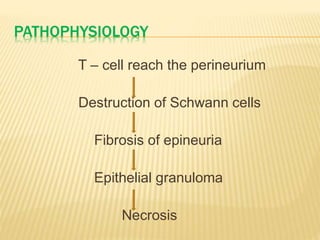
PATHOPHYSIOLOGY
T – cell reach the perineurium
Destruction of Schwann cells
Fibrosis of epineuria
Epithelial granuloma
Necrosis
LEPROMATUS LEPROSY
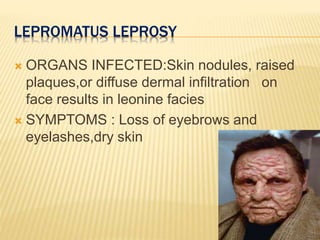
 ORGANS INFECTED:Skin nodules, raised
plaques,or diffuse dermal infiltration on
face results in leonine facies
 SYMPTOMS : Loss of eyebrows and
eyelashes,dry skin
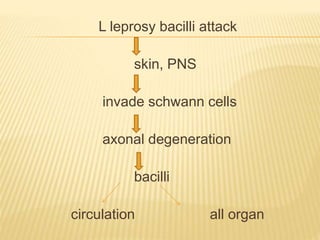
L leprosy bacilli attack
skin, PNS
invade schwann cells
axonal degeneration
bacilli
circulation all organ
BORDERLINE LEPROSY
 Shows all characteristics of tuberculoid and
lepromatous
INTERMEDIATE LEPROSY
 No specific dermatitis may be made
Pathogenesis
1st Stage:
Bacilli enter
skin or nasal mucosa
skin sensation delay
small patches developed
2nd Stage ( secondary stage)
bacteria invade
multiply in nerve fibre
skin becomes thick and wrinkled and ear
become swollen
nodules formed at skin and nose
nodules discharge fluid
3rd Stage:
bacteria burst out of nerve cells
peripheral tissues
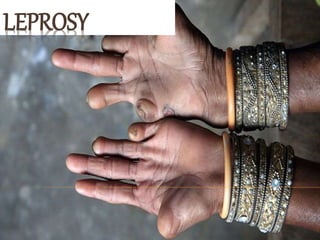
proliferate deformities of hand
DIAGNOSIS
Leprosy in most commonly presents with both
characteristic skin lesion and skin
histopathology
 Lipromen skin test: Skin smears by splitting
the skin. Scrapping from the cut edges of
dermis and nasal smears
1. Acid fast staining (Ziehl-Neelsen) staining
2. Fite- Faraco staining
3. Gamori methenamine silver staining
TREATMENT
 Antimicrobial therapy
 Dapsone (50-100 mg/dl)
MOA:Inhibits the synthesis of dihydrofolic acid
through competition with para-amino-
benzoate for the active site of
dihydropteroate synthetase
 Clofazimine (50-100 mg/dl)- 3 times weekly
MOA: Inhibits mycobacterial growth and binds
preferentially to mycobacterial DNA
 Rifampine (600mg daily or monthly)
MOA: Inhibits bacterial RNA polymerase, the
enzyme responsible for DNA transcription
 Bacillus Calmette–Guérin (BCG) vaccine
Leprosy

Leprosy

  • 1.
  • 2.
     It isa non fatal slowly progressive chronic granulomatous infection  Causetive organism : Mycobacterium leprae  Incubation period : 2- 20 years  Organs that infected : Nerves (nerve schawann cells)  Bacteria also invades either dermal nerve or main peripheral nerve  Cooler parts of the body is mainly affected such as skin,mouth,eyes,peripheral nerves,superficial lymph nodes and testes
  • 3.
    MODE OF TRANSMISSION Direct contact with untreated leprosy patient who shed numerous bacilli from damaged skin,nasal secretion and from mouth  Nasal droplet infection  Infected soil  Mother to infants by milk  Materno –fetal transmission across the placenta
  • 4.
    ETIOLOGY  Mycobacterium leprae– intracellular parasite  The organism is acid fast and indistiguishable from other mycobacterium  Detected in tissue sections by a modified stain
  • 5.
    CLASSIFICATION OF LEPROSY Tuberculoid leprosy (high resistance)  Lepromatous leprosy (low resistance)  Borderline leprosy  Indeterminate leprosy
  • 6.
    TUBERCULOID LEPROSY  ORGANINFECTED –Skin,PNS  T.Leprosy patient have asymmetric enlargement of one or few peripheral nerves  Mainly affected – Posterior auricular,peroneal and posterior tibial nerves,with associated hypoesthesia and myopathy
  • 7.
    PATHOPHYSIOLOGY T – cellreach the perineurium Destruction of Schwann cells Fibrosis of epineuria Epithelial granuloma Necrosis
  • 8.
    LEPROMATUS LEPROSY  ORGANSINFECTED:Skin nodules, raised plaques,or diffuse dermal infiltration on face results in leonine facies  SYMPTOMS : Loss of eyebrows and eyelashes,dry skin
  • 9.
    L leprosy bacilliattack skin, PNS invade schwann cells axonal degeneration bacilli circulation all organ
  • 10.
    BORDERLINE LEPROSY  Showsall characteristics of tuberculoid and lepromatous INTERMEDIATE LEPROSY  No specific dermatitis may be made
  • 11.
    Pathogenesis 1st Stage: Bacilli enter skinor nasal mucosa skin sensation delay small patches developed
  • 12.
    2nd Stage (secondary stage) bacteria invade multiply in nerve fibre skin becomes thick and wrinkled and ear become swollen nodules formed at skin and nose nodules discharge fluid
  • 13.
    3rd Stage: bacteria burstout of nerve cells peripheral tissues proliferate deformities of hand
  • 14.
    DIAGNOSIS Leprosy in mostcommonly presents with both characteristic skin lesion and skin histopathology  Lipromen skin test: Skin smears by splitting the skin. Scrapping from the cut edges of dermis and nasal smears 1. Acid fast staining (Ziehl-Neelsen) staining 2. Fite- Faraco staining 3. Gamori methenamine silver staining
  • 15.
    TREATMENT  Antimicrobial therapy Dapsone (50-100 mg/dl) MOA:Inhibits the synthesis of dihydrofolic acid through competition with para-amino- benzoate for the active site of dihydropteroate synthetase  Clofazimine (50-100 mg/dl)- 3 times weekly MOA: Inhibits mycobacterial growth and binds preferentially to mycobacterial DNA
  • 16.
     Rifampine (600mgdaily or monthly) MOA: Inhibits bacterial RNA polymerase, the enzyme responsible for DNA transcription  Bacillus Calmette–Guérin (BCG) vaccine