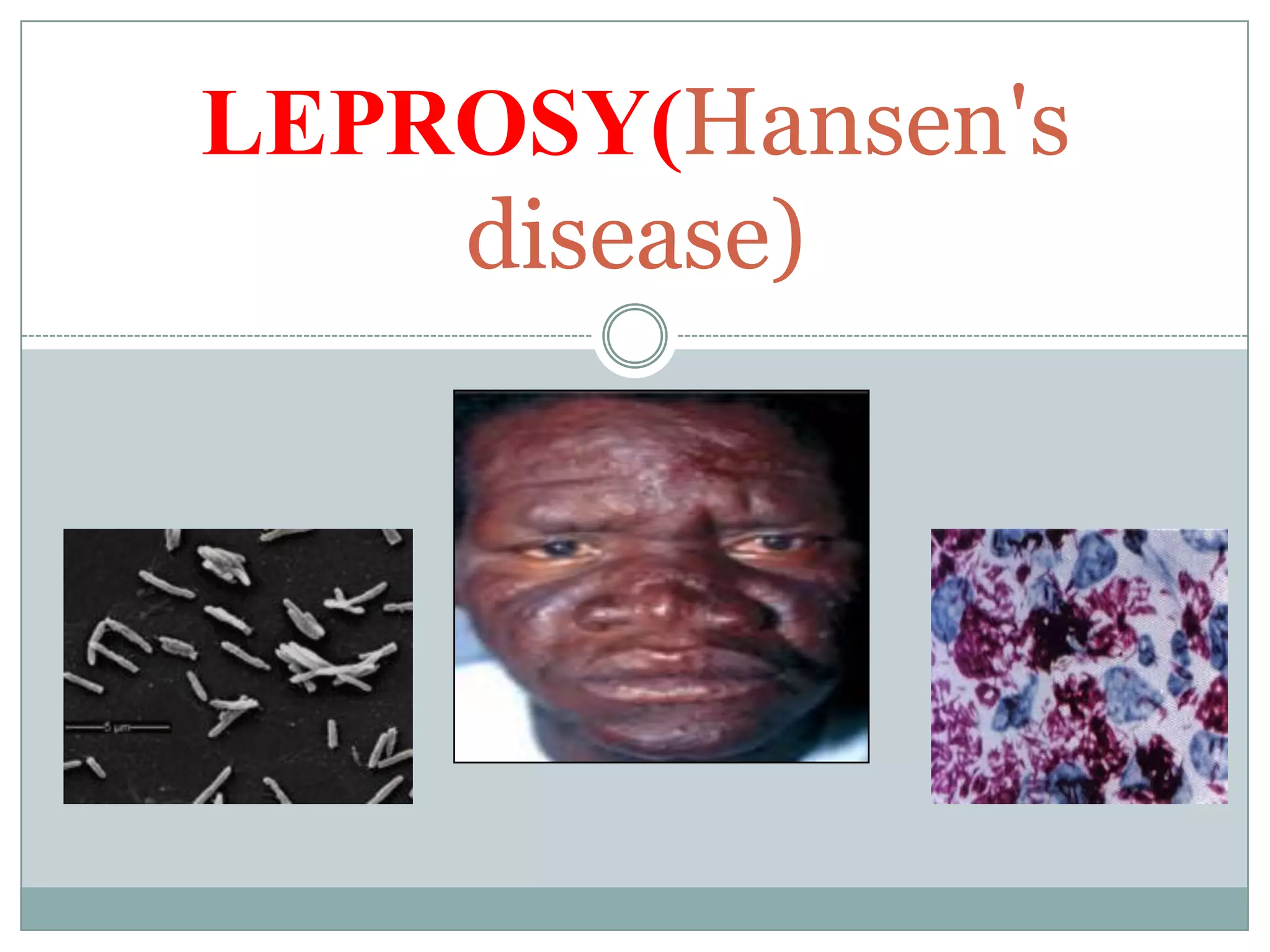
LEPROSY(Hansen's
disease)
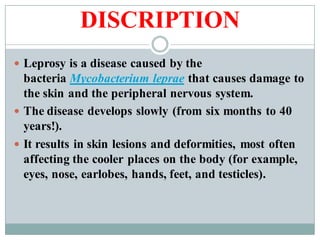
DISCRIPTION
 Leprosy is a disease caused by the
bacteria Mycobacterium leprae that causes damage to
the skin and the peripheral nervous system.
 The disease develops slowly (from six months to 40
years!).
 It results in skin lesions and deformities, most often
affecting the cooler places on the body (for example,
eyes, nose, earlobes, hands, feet, and testicles).
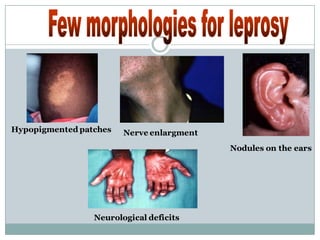
Hypopigmented patches
Nodules on the ears
Nerve enlargment
Neurological deficits
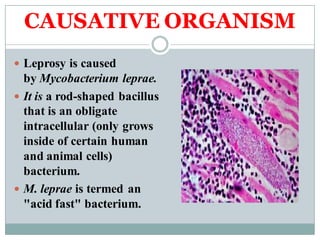
CAUSATIVE ORGANISM
 Leprosy is caused
by Mycobacterium leprae.
 It is a rod-shaped bacillus
that is an obligate
intracellular (only grows
inside of certain human
and animal cells)
bacterium.
 M. leprae is termed an
"acid fast" bacterium.
MODE OF SPREAD
 Leprosy is transmitted through
(a) prolonged skin contact with infected person
either directly (skin to skin) or indirectly through
foemites.
(b) droplet infection when the bacilli escape from the
cutaneous lessions, nasal and sputum secretions.
(c) The bacilli also can spread to infant from mother
through mothers milk.
INCUBATION PERIOD
 Incubation period is long varies from few
months to number of years.
 Commonly it varies from 6 months to 8 years.
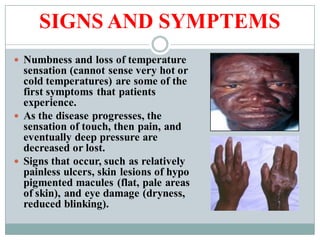
SIGNS AND SYMPTEMS
 Numbness and loss of temperature
sensation (cannot sense very hot or
cold temperatures) are some of the
first symptoms that patients
experience.
 As the disease progresses, the
sensation of touch, then pain, and
eventually deep pressure are
decreased or lost.
 Signs that occur, such as relatively
painless ulcers, skin lesions of hypo
pigmented macules (flat, pale areas
of skin), and eye damage (dryness,
reduced blinking).
DIAGNOSIS
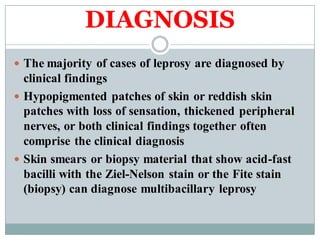
 The majority of cases of leprosy are diagnosed by
clinical findings
 Hypopigmented patches of skin or reddish skin
patches with loss of sensation, thickened peripheral
nerves, or both clinical findings together often
comprise the clinical diagnosis
 Skin smears or biopsy material that show acid-fast
bacilli with the Ziel-Nelson stain or the Fite stain
(biopsy) can diagnose multibacillary leprosy
TREATMENT
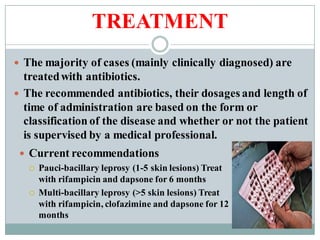
 The majority of cases (mainly clinically diagnosed) are
treatedwith antibiotics.
 The recommended antibiotics, their dosages and length of
time of administration are based on the form or
classification of the disease and whether or not the patient
is supervised by a medical professional.
 Current recommendations
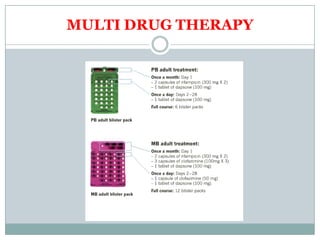
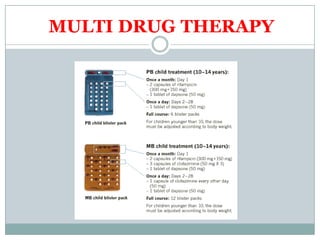
 Pauci-bacillary leprosy (1-5 skin lesions) Treat
with rifampicin and dapsone for 6 months
 Multi-bacillary leprosy (>5 skin lesions) Treat
with rifampicin, clofazimine and dapsone for 12
months
MULTI DRUG THERAPY
MULTI DRUG THERAPY
PREVENTIONAND CONTROL
 Prevention of contact with droplets from nasal and
other secretions from patients with untreated M.
leprae infection currently is a way to avoid the
disease.
 Treatment of patients with appropriate antibiotics
stops the person from spreading the disease.
 There is no vaccine available to prevent leprosy.

Leprosy

  • 1.
  • 2.
    DISCRIPTION  Leprosy isa disease caused by the bacteria Mycobacterium leprae that causes damage to the skin and the peripheral nervous system.  The disease develops slowly (from six months to 40 years!).  It results in skin lesions and deformities, most often affecting the cooler places on the body (for example, eyes, nose, earlobes, hands, feet, and testicles).
  • 3.
    Hypopigmented patches Nodules onthe ears Nerve enlargment Neurological deficits
  • 4.
    CAUSATIVE ORGANISM  Leprosyis caused by Mycobacterium leprae.  It is a rod-shaped bacillus that is an obligate intracellular (only grows inside of certain human and animal cells) bacterium.  M. leprae is termed an "acid fast" bacterium.
  • 5.
    MODE OF SPREAD Leprosy is transmitted through (a) prolonged skin contact with infected person either directly (skin to skin) or indirectly through foemites. (b) droplet infection when the bacilli escape from the cutaneous lessions, nasal and sputum secretions. (c) The bacilli also can spread to infant from mother through mothers milk.
  • 6.
    INCUBATION PERIOD  Incubationperiod is long varies from few months to number of years.  Commonly it varies from 6 months to 8 years.
  • 7.
    SIGNS AND SYMPTEMS Numbness and loss of temperature sensation (cannot sense very hot or cold temperatures) are some of the first symptoms that patients experience.  As the disease progresses, the sensation of touch, then pain, and eventually deep pressure are decreased or lost.  Signs that occur, such as relatively painless ulcers, skin lesions of hypo pigmented macules (flat, pale areas of skin), and eye damage (dryness, reduced blinking).
  • 8.
    DIAGNOSIS  The majorityof cases of leprosy are diagnosed by clinical findings  Hypopigmented patches of skin or reddish skin patches with loss of sensation, thickened peripheral nerves, or both clinical findings together often comprise the clinical diagnosis  Skin smears or biopsy material that show acid-fast bacilli with the Ziel-Nelson stain or the Fite stain (biopsy) can diagnose multibacillary leprosy
  • 9.
    TREATMENT  The majorityof cases (mainly clinically diagnosed) are treatedwith antibiotics.  The recommended antibiotics, their dosages and length of time of administration are based on the form or classification of the disease and whether or not the patient is supervised by a medical professional.  Current recommendations  Pauci-bacillary leprosy (1-5 skin lesions) Treat with rifampicin and dapsone for 6 months  Multi-bacillary leprosy (>5 skin lesions) Treat with rifampicin, clofazimine and dapsone for 12 months
  • 10.
  • 11.
  • 12.
    PREVENTIONAND CONTROL  Preventionof contact with droplets from nasal and other secretions from patients with untreated M. leprae infection currently is a way to avoid the disease.  Treatment of patients with appropriate antibiotics stops the person from spreading the disease.  There is no vaccine available to prevent leprosy.