Lemon grass oil
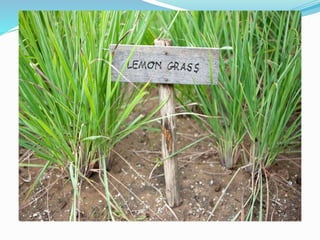
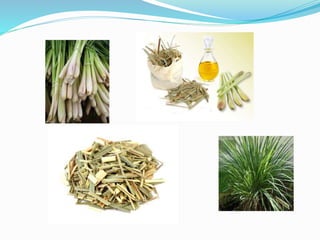
 Cymbopogon citratus – Poaceae/ Graminae
 citronella grass/fever grass/gavati chaha
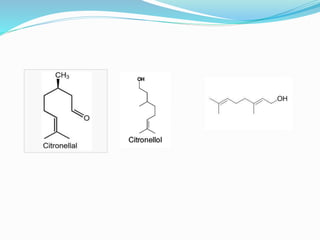
 Perfumery chemicals such as citronellal,
citronellol, and geraniol
 soap, candles and incense, perfumery,
cosmetic, and flavouring industries throughout
the world.
 plant-based insect repellent-registered-1948
 citronella as a biopesticide with a non-toxic mode of
action
 use of citronella as an insecticide is prohibited under
the Biocidal Product Directive 2006
Cultivation parameters
 abundant sunshine and high humidity (70 % and
above).
 Temperature range between 200C to 380C
 well-distributed rainfall of 2000-3000 mm
 if irrigation is available citronella can be cultivated in
regions of low rainfall also.
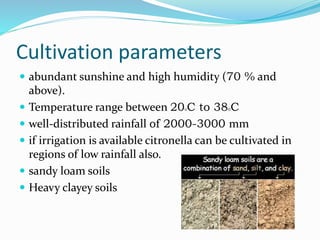
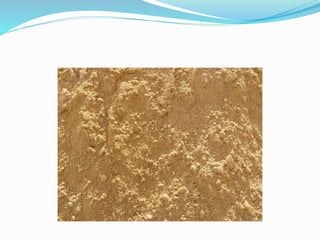
 sandy loam soils
 Heavy clayey soils
 It does not tolerate water stagnation.
 ideal pH range is 5.0-7.0
 clumps of vigorously growing plant of 6-months to one
year old into slips
 beginning of monsoon (May-June)
 at 45 x 45 cm in plain land at 5-8 cm depth on
one side of the ridges
 60 x 45 cm in sloppy land
 weed competition in the initial stages
 N, P205, K20 @ 200:80:75 kg/ha/year
 During rainy season crop may suffer iron deficiency
 leaf chlorosis-rectified by spraying 0.25% ferrous
sulphate
 Harvesting
 In the first year only 3 cuts
 From second year onwards, 5-6 harvests
 The crop can be maintained economically for about 4
years.
Production
 Supercritical fluid extraction
 353.15K and 18.0 MPa of pressure. Yield-2.2 %
 Distillation of oil
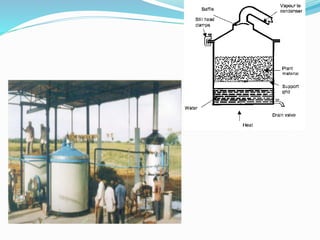
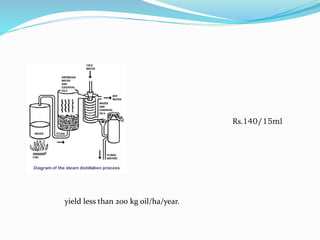
 The grass is steam distilled for better recovery
 boiler, a distillation vessel, a condenser and two
receivers / separators.
 Distillation is completed within 3 hours
yield less than 200 kg oil/ha/year.
Rs.140/15ml
uses
 culinary herb in Asian cuisine
 subtle citrus flavour dried and powdered or used fresh
 used in teas soups and curries
 poultry, fish, beef, and seafood
 often used as a tea in African countries
 Lemongrass oil is used as a pesticide and a preservative
 lemongrass oil has antifungal properties
 ability to repel some insects, such as mosquitoes
 no toxicity when used as a topical insect repellent,
 lure to attract honey bees
 pheromone created by the honeybee's Nasonov gland
 is effective in calming barking dogs
 grow to about 2 m (6.6 ft) and have magenta-colored
base stems.
 used in soaps, as an insect repellent
 insect sprays and candles, and in aromatherapy
 in home gardens to ward off insects such as whitefly
adults
 gavati chaha (गवती चहा)
 herbal 'soup' used against coughs, colds
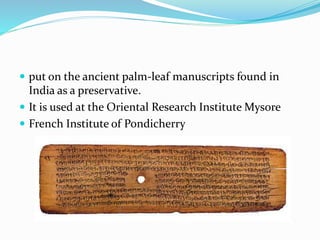
 put on the ancient palm-leaf manuscripts found in
India as a preservative.
 It is used at the Oriental Research Institute Mysore
 French Institute of Pondicherry
Trade
 world production of citronella oil is approximately
1300 tonnes
 China and Indonesia - producing 40 percent
 Taiwan, Guatemala, Honduras, Brazil, Sri Lanka,
India, Argentina, Ecuador, Jamaica, Madagascar,
Mexico, and South Africa.
 natural citronella oil has been eroded by chemicals
synthesised from turpentine
Indian trade
Assam
10,000 hectare
America biggest importer
Japan biggest importer in Asia.
2000 years back/ Distillation starts 1890
During 1950 India produce1800 tonnes/year.
Currently world production 800-1300 tonnes/Y
Listea cubeba/ synthetic citral- china
India major player in production- 80% exported.
Guatemala, China, Mexico, Bangladesh
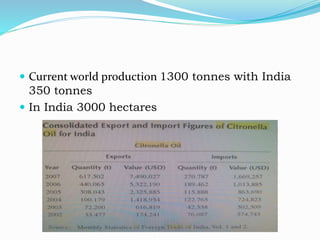
 Current world production 1300 tonnes with India
350 tonnes
 In India 3000 hectares
Thank you

lemongrass oil

  • 4.
    Lemon grass oil Cymbopogon citratus – Poaceae/ Graminae  citronella grass/fever grass/gavati chaha
  • 5.
     Perfumery chemicalssuch as citronellal, citronellol, and geraniol  soap, candles and incense, perfumery, cosmetic, and flavouring industries throughout the world.  plant-based insect repellent-registered-1948  citronella as a biopesticide with a non-toxic mode of action  use of citronella as an insecticide is prohibited under the Biocidal Product Directive 2006
  • 7.
    Cultivation parameters  abundantsunshine and high humidity (70 % and above).  Temperature range between 200C to 380C  well-distributed rainfall of 2000-3000 mm  if irrigation is available citronella can be cultivated in regions of low rainfall also.  sandy loam soils  Heavy clayey soils
  • 9.
     It doesnot tolerate water stagnation.  ideal pH range is 5.0-7.0  clumps of vigorously growing plant of 6-months to one year old into slips  beginning of monsoon (May-June)  at 45 x 45 cm in plain land at 5-8 cm depth on one side of the ridges  60 x 45 cm in sloppy land  weed competition in the initial stages  N, P205, K20 @ 200:80:75 kg/ha/year
  • 10.
     During rainyseason crop may suffer iron deficiency  leaf chlorosis-rectified by spraying 0.25% ferrous sulphate  Harvesting  In the first year only 3 cuts  From second year onwards, 5-6 harvests  The crop can be maintained economically for about 4 years.
  • 11.
    Production  Supercritical fluidextraction  353.15K and 18.0 MPa of pressure. Yield-2.2 %  Distillation of oil  The grass is steam distilled for better recovery  boiler, a distillation vessel, a condenser and two receivers / separators.  Distillation is completed within 3 hours
  • 13.
    yield less than200 kg oil/ha/year. Rs.140/15ml
  • 14.
    uses  culinary herbin Asian cuisine  subtle citrus flavour dried and powdered or used fresh  used in teas soups and curries  poultry, fish, beef, and seafood  often used as a tea in African countries  Lemongrass oil is used as a pesticide and a preservative  lemongrass oil has antifungal properties  ability to repel some insects, such as mosquitoes  no toxicity when used as a topical insect repellent,  lure to attract honey bees  pheromone created by the honeybee's Nasonov gland  is effective in calming barking dogs
  • 15.
     grow toabout 2 m (6.6 ft) and have magenta-colored base stems.  used in soaps, as an insect repellent  insect sprays and candles, and in aromatherapy  in home gardens to ward off insects such as whitefly adults  gavati chaha (गवती चहा)  herbal 'soup' used against coughs, colds
  • 16.
     put onthe ancient palm-leaf manuscripts found in India as a preservative.  It is used at the Oriental Research Institute Mysore  French Institute of Pondicherry
  • 17.
    Trade  world productionof citronella oil is approximately 1300 tonnes  China and Indonesia - producing 40 percent  Taiwan, Guatemala, Honduras, Brazil, Sri Lanka, India, Argentina, Ecuador, Jamaica, Madagascar, Mexico, and South Africa.  natural citronella oil has been eroded by chemicals synthesised from turpentine
  • 18.
    Indian trade Assam 10,000 hectare Americabiggest importer Japan biggest importer in Asia. 2000 years back/ Distillation starts 1890 During 1950 India produce1800 tonnes/year. Currently world production 800-1300 tonnes/Y Listea cubeba/ synthetic citral- china India major player in production- 80% exported. Guatemala, China, Mexico, Bangladesh
  • 19.
     Current worldproduction 1300 tonnes with India 350 tonnes  In India 3000 hectares
  • 20.