 Gum acacia , Gum Arabic , Indian gum ,
Babul.
 Indian gum is the dried gummy exudation
obtained from the steam and branches of
Acacia Arabic wild, belonging to the family
Leguminosae.
 The plant is found in India, Sri Lanka, Sudan,
Morocco, Africa.
 In India, it is occur Punjab, Rajasthan ,
Maharashtra and Western Ghats.
 About 85% of world supply of gum acacia is
from Sudan.
 It is a common member of dry monsoon
forests of India.
 It is an evergreen tree with short trunk.
 It is not cultivated on commercial scale.
 Plant can tolerate intensive drought, but it is
susceptible to frost.
 It is grows under different climatic conditions
due to its wide adaptability, from 0 c to 50 c
and up to 500 m in altitude.
 It is propagated by seeds.
 Gum is collected from wild grown plants,
made free of bark and foreign organic matter,
dried in sun, it is results in partial bleaching of
gum.
 Color : Tears are cream – brown to red in
color, while powder is light brown in color.
 Odour: Odourless
 Taste: Bland and mucilaginous.
 Size: Varying size
 Shape: Irregular brown tears.
 It is soluble in water.
 The watery solution is viscous and acidic.
 It is in soluble in alcohol.
 MOISTURE : not more than 15%
 ASH: NOT MORE THAN 5%
 Indian gum should not contain tannin, starch,
and dextrin.
 Leaves contain tannin 32% and fruits contain
tannin 41.7%
 PARTS USED: leaves, barks, seed, gum.
 Gum acacia consists arabin, which is complex
mixture of calcium, magnesium and potassium salts
of arabic acid.
 Arabic acid on hydrolysis gives L- arabinose, D-
galactose and D – glucuronic acid.
 It is also contains an enzyme oxidase and
peroxidase.
 bark: bark contains several polyphenolic
compounds, catechin, epicatechin, quercetin, gallic
acid, sucrose, tannin, M- digallic acid and chlorogenic
acid.
 Seeds: they contain amino acids, fatty acids,
ascorbic acid and more tannin.
1. Solutions of gum lead acetate geletinises
the aqueous solution of Indian gum.
2. It does not produce a pink color with the
solution of ruthenium red.
3. On addition of solutions of hydrogen
peroxide and alcohol to aqueous solution of
gum, blue color is produced due to oxidase
enzyme.
 It is used as demulcent, intravenously in
haemolysis ; suspending agent ; emulsifying
agent for fixed oil ; volatile oil; liquid paraffin
and binding agent in the preparation
lozenges.
 Pastilles, compressed tablets.
 In combination with gelatin, it is used to form
coacervates for microencapsulation of drugs,
as astringent and styptic.
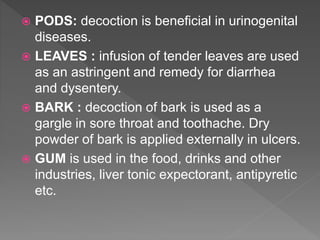
 PODS: decoction is beneficial in urinogenital
diseases.
 LEAVES : infusion of tender leaves are used
as an astringent and remedy for diarrhea
and dysentery.
 BARK : decoction of bark is used as a
gargle in sore throat and toothache. Dry
powder of bark is applied externally in ulcers.
 GUM is used in the food, drinks and other
industries, liver tonic expectorant, antipyretic
etc.
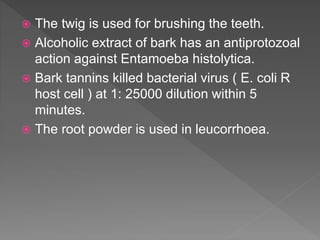
 The twig is used for brushing the teeth.
 Alcoholic extract of bark has an antiprotozoal
action against Entamoeba histolytica.
 Bark tannins killed bacterial virus ( E. coli R
host cell ) at 1: 25000 dilution within 5
minutes.
 The root powder is used in leucorrhoea.
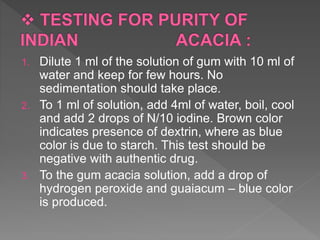
1. Dilute 1 ml of the solution of gum with 10 ml of
water and keep for few hours. No
sedimentation should take place.
2. To 1 ml of solution, add 4ml of water, boil, cool
and add 2 drops of N/10 iodine. Brown color
indicates presence of dextrin, where as blue
color is due to starch. This test should be
negative with authentic drug.
3. To the gum acacia solution, add a drop of
hydrogen peroxide and guaiacum – blue color
is produced.
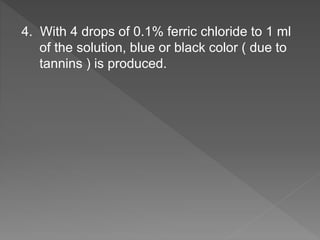
4. With 4 drops of 0.1% ferric chloride to 1 ml
of the solution, blue or black color ( due to
tannins ) is produced.
 A gum obtain from acacia senegal wild, in Africa,
consists of tears- rounded or avoid and about 4 to
40 mm in diameter and yellowish white in color. It
can be substituted to Indian gum.
 Indian gum is adulterated with gum ghatti,
obtained from Anogeissus latifolia which s
distinguished from the genuine drug by following
characters.
 Its outer surface is dull and without fissures.
 It shows very slight ppt with lead subacetate
solution and its aqueous solution is highly viscous.
 Starch, tragacanth, dextrin, and sterculia gum are
the other adulterants of acacia.
 Acacia or powder acacia should be stored in
cool dry place in air-tight containers.

Acacia

  • 2.
     Gum acacia, Gum Arabic , Indian gum , Babul.
  • 3.
     Indian gumis the dried gummy exudation obtained from the steam and branches of Acacia Arabic wild, belonging to the family Leguminosae.
  • 4.
     The plantis found in India, Sri Lanka, Sudan, Morocco, Africa.  In India, it is occur Punjab, Rajasthan , Maharashtra and Western Ghats.  About 85% of world supply of gum acacia is from Sudan.
  • 5.
     It isa common member of dry monsoon forests of India.  It is an evergreen tree with short trunk.  It is not cultivated on commercial scale.  Plant can tolerate intensive drought, but it is susceptible to frost.  It is grows under different climatic conditions due to its wide adaptability, from 0 c to 50 c and up to 500 m in altitude.  It is propagated by seeds.
  • 6.
     Gum iscollected from wild grown plants, made free of bark and foreign organic matter, dried in sun, it is results in partial bleaching of gum.
  • 7.
     Color :Tears are cream – brown to red in color, while powder is light brown in color.  Odour: Odourless  Taste: Bland and mucilaginous.  Size: Varying size  Shape: Irregular brown tears.
  • 8.
     It issoluble in water.  The watery solution is viscous and acidic.  It is in soluble in alcohol.
  • 9.
     MOISTURE :not more than 15%  ASH: NOT MORE THAN 5%  Indian gum should not contain tannin, starch, and dextrin.  Leaves contain tannin 32% and fruits contain tannin 41.7%  PARTS USED: leaves, barks, seed, gum.
  • 10.
     Gum acaciaconsists arabin, which is complex mixture of calcium, magnesium and potassium salts of arabic acid.  Arabic acid on hydrolysis gives L- arabinose, D- galactose and D – glucuronic acid.  It is also contains an enzyme oxidase and peroxidase.  bark: bark contains several polyphenolic compounds, catechin, epicatechin, quercetin, gallic acid, sucrose, tannin, M- digallic acid and chlorogenic acid.  Seeds: they contain amino acids, fatty acids, ascorbic acid and more tannin.
  • 11.
    1. Solutions ofgum lead acetate geletinises the aqueous solution of Indian gum. 2. It does not produce a pink color with the solution of ruthenium red. 3. On addition of solutions of hydrogen peroxide and alcohol to aqueous solution of gum, blue color is produced due to oxidase enzyme.
  • 12.
     It isused as demulcent, intravenously in haemolysis ; suspending agent ; emulsifying agent for fixed oil ; volatile oil; liquid paraffin and binding agent in the preparation lozenges.  Pastilles, compressed tablets.  In combination with gelatin, it is used to form coacervates for microencapsulation of drugs, as astringent and styptic.
  • 13.
     PODS: decoctionis beneficial in urinogenital diseases.  LEAVES : infusion of tender leaves are used as an astringent and remedy for diarrhea and dysentery.  BARK : decoction of bark is used as a gargle in sore throat and toothache. Dry powder of bark is applied externally in ulcers.  GUM is used in the food, drinks and other industries, liver tonic expectorant, antipyretic etc.
  • 14.
     The twigis used for brushing the teeth.  Alcoholic extract of bark has an antiprotozoal action against Entamoeba histolytica.  Bark tannins killed bacterial virus ( E. coli R host cell ) at 1: 25000 dilution within 5 minutes.  The root powder is used in leucorrhoea.
  • 15.
    1. Dilute 1ml of the solution of gum with 10 ml of water and keep for few hours. No sedimentation should take place. 2. To 1 ml of solution, add 4ml of water, boil, cool and add 2 drops of N/10 iodine. Brown color indicates presence of dextrin, where as blue color is due to starch. This test should be negative with authentic drug. 3. To the gum acacia solution, add a drop of hydrogen peroxide and guaiacum – blue color is produced.
  • 16.
    4. With 4drops of 0.1% ferric chloride to 1 ml of the solution, blue or black color ( due to tannins ) is produced.
  • 17.
     A gumobtain from acacia senegal wild, in Africa, consists of tears- rounded or avoid and about 4 to 40 mm in diameter and yellowish white in color. It can be substituted to Indian gum.  Indian gum is adulterated with gum ghatti, obtained from Anogeissus latifolia which s distinguished from the genuine drug by following characters.  Its outer surface is dull and without fissures.  It shows very slight ppt with lead subacetate solution and its aqueous solution is highly viscous.  Starch, tragacanth, dextrin, and sterculia gum are the other adulterants of acacia.
  • 18.
     Acacia orpowder acacia should be stored in cool dry place in air-tight containers.