Dioscorea
Presented by: Nabina Paudel
4th batch, b. pharmacy
Ucms, bhairahawa, Nepal
Introduction
• Dioscorea, yams, is a genus of over 500 species of usually
herbaceous (but sometimes woody) herbaceous perennial
vines that produce starchy, edible tuberous roots that are an
important source of food in tropical regions worldwide,
including Africa, Asia, Oceania, and Latin America. The
genus belongs to the Dioscoreaceae, the family that
contains true yams. (Although the sweet potato, Ipomoea
batatas, is often referred to as a “yam,” it is distantly
related and is not a true yam.)
Synonyms
• English name: Yam, Rheumatism root
• बैज्ञानिक िाम ( ल्याटिि िाम ) : डाएस्कोरिया
डेलट्वाइडडया (Dioscorea deltoidea Wall.)
• संस्कृ त िाम : बहाहकन्द
• अन्य िाम : िेपालीमा “गुिे माउिो” , “कु कु ि तरुल”
• विस्पनत परिवाि : डाएस्कोरियसी (Dioscoreaceae)
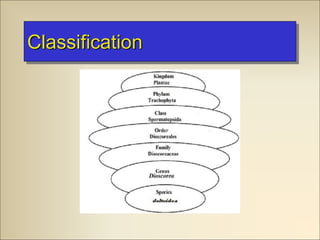
Classification
Biological source
• It consists of dried tubers of the plants,
Dioscorea like Dioscorea villosa, Dioscorea
prazert , Dioscorea composita and
Dioscorea spiculiflora, Dioscorea deltoidea
and Dioscorea floribunda.
• Family: Dioscoreaceae
Geographical source
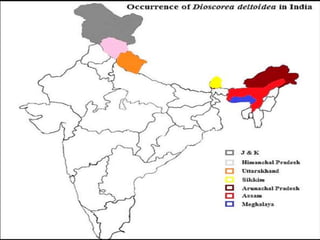
• D. deltoidea is found growing in north
western himalayas from kashmir and punjab
to nepal aand china upto an altitude of 1000
to 3000 m. It is cultivated in Jammu and
Kashmir and in part of Himachal Pradesh.
D. Deltoidea is also found in USA and
Mexico.
Collection and cultivation
• Dioscoria species are distributed throughout India
and nepal.
• These plants are cultivated mostly as garden crops
or subordinate crops with ginger, turmeric,
brinjal, sweet potato or maize.
• They grows best in deep sandy loams with
adequate moisture and good drainage.
• The crop can be raised from seeds, but variability
in progeny and comparatively longer time for
harvesting are the disadvantages with this method.
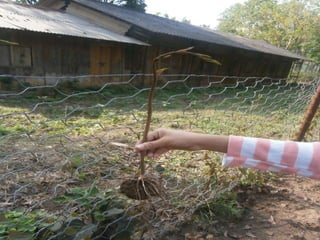
• Thus, healthy tubers of about 70-80 g in weight
with crown are selected for cultivation.
• After 2-3 months of growth, tubers are
transplanted in the field, which is treated with
the insecticide earlier.
• While planting, the tubers are placed at a
distance of 30-60 cm.
• Irrigation should be done every 10 days.
• Organic fertilizers should be applied in equal
dose at an interval of one month.
• The planting period is generally April-June
after the onset of monsoon, but it may varies
according to local condition and the species
• Crops are ready after 5-8 months of planting.
Morphology
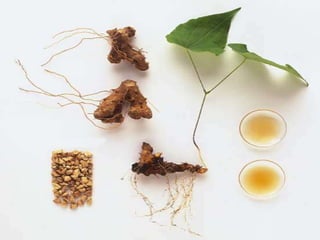
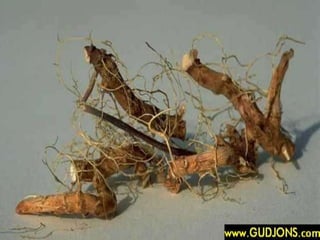
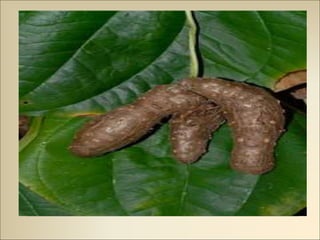
• Colour: slightly brown
• Odour: odourless
• Taste : bitter
• Size: varies depending upon age of
rhizomes.
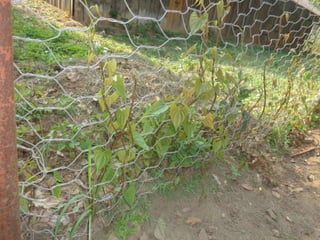
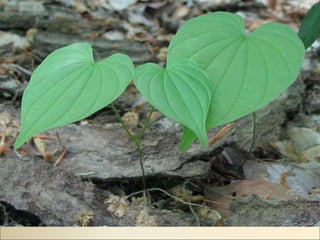
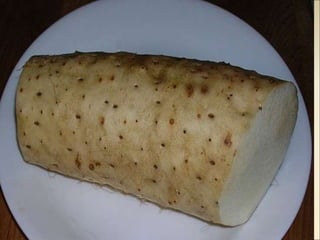
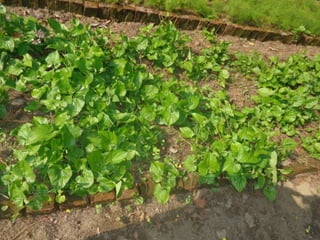
• Dioscoria species are climbing; roots tuberous;
tubers large; stem leafy
• The stem is a smooth green twiner, about the
size of a goose-quill, twining from the right to
the left, over fences, bushes, etc.
• The leaves are symmetrical and heart-shaped,
gradually tapering to a sharp, acuminate point,
(taper )and are borne on leaf stalks from 2 to 4
inches long.
Microscopic characters
• The epidermis is brown, thin, and scales off, more
or less, upon drying, especially when the rhizome is
gathered in the spring, but which is not the case with
a good quality of it, when dug in autumn.
• The internal color of the dry rhizome is whitish, or
slightly straw-colored, when gathered in the autumn,
but it is often brown when collected early in the
season; there is no bark to it.
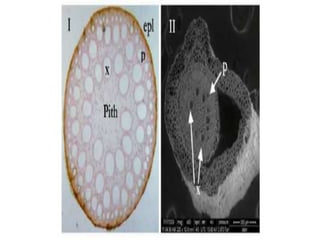
• Under a magnifying glass the texture of a broken
rhizome appears and perforated(Having a number or
series of holes) with numerous woody bundles.
Attached to the lower part of the rhizome, an
abundance of strong, wiry-like fibers will be
observed.
Chemical constituents
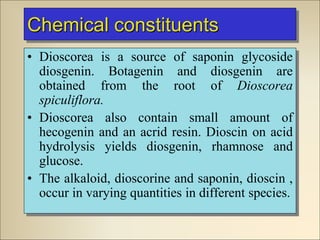
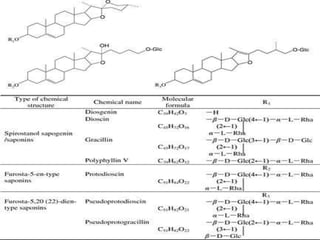
• Dioscorea is a source of saponin glycoside
diosgenin. Botagenin and diosgenin are
obtained from the root of Dioscorea
spiculiflora.
• Dioscorea also contain small amount of
hecogenin and an acrid resin. Dioscin on acid
hydrolysis yields diosgenin, rhamnose and
glucose.
• The alkaloid, dioscorine and saponin, dioscin ,
occur in varying quantities in different species.
Chemical Tests
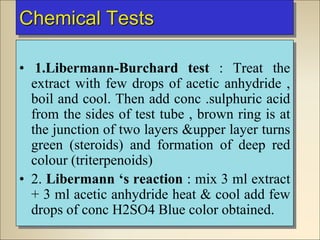
• 1.Libermann-Burchard test : Treat the
extract with few drops of acetic anhydride ,
boil and cool. Then add conc .sulphuric acid
from the sides of test tube , brown ring is at
the junction of two layers &upper layer turns
green (steroids) and formation of deep red
colour (triterpenoids)
• 2. Libermann ‘s reaction : mix 3 ml extract
+ 3 ml acetic anhydride heat & cool add few
drops of conc H2SO4 Blue color obtained.
standards
uses
• Diosogenin is used for the production of
various steroidal drugs like progesterone and
as a cheap source of carbohydrate food.
• Some speices D. alata , are used for the
extraction of starch. Some of them are rich in
vitamins B1, B2 and B6.
• Anti-spasmodic, anti-inflammatory, anti-
rheumatic, diaphoretic (Inducing perspiration),
diuretic, GI tonic, expectorant.
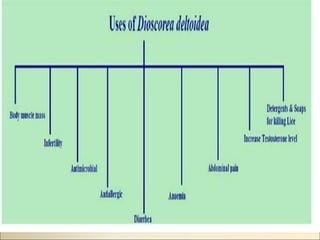
Therapeutic uses of Dioscorea
deltoidea
Diosgenin, which is a phytoestrogen that can be chemically
converted into hormone basis antifertility drugs such as the
progesterone, corticosteroids, and anabolic steroids
• Diosgenin is the contraceptive pills, of cortisone and sex
hormones such as testosterone and supplements are used by
body builders to increase their testosterone.
• Paste of rhizomes is also applied in hair to kill lice and
allergic states.
• In Nepal, auxiliary rhizomes from the upper part of the
plants are boiled and the liquid is to treat gastric problems
and bloody dysentery.
Traditional use of Dioscorea
deltoidea
• Traditionally the plant has been used as an anti-
rheumatic and to treat ophthalmic Conditions, as a
source of steroid drugs.
• It has also been used to rid the body of intestinal
worms as well as parasites, and sometimes the
women use it to wash shawls and woolen cloths.
• the powder from the rhizomes of the plant is taken
orally to cures dysentery, abdominal pains and
piles.
How safe is it?
• Contraindications Contraindications have not yet been
identified.
• Pregnancy/nursing Information regarding safety and
efficacy in pregnancy and lactation is lacking.
• Interactions None well documented.
• Side Effects A clinical study evaluating the daily
consumption of wild yam reported no adverse events.
Topical preparations of wild yam extract are relatively
free from adverse effects. Based on a single study in
rats, oral D. villosashould be avoided in people with
compromised renal function.
• Toxicities Topical D. villosa (with an upper limit of
3.5% diosgenin) was found to not be toxic.
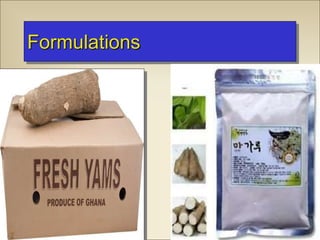
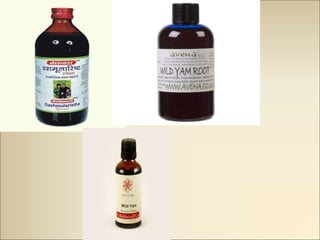
Formulations
Allied species
• D. alata , a native of south east Asia, is the most
important cultivated species throughout the tropics. They
are starchy and used as vegetable, antihelmintic, in
leprosy, piles and gonorrhoea.
• D. bubifera is a large unarmed climber with stems twining
to the left. The tubers are used mostly as famine food to
prepare starch, for washing wool and as fish bait in
Kashmir, applied for ulcers, in piles, dysentry and syphilis
• D. deltoidea is an extensive climber with unarmed stem
twining to the left. The tubers are rich in saponin and are
used for washing silk, wood and hair. They kill lice
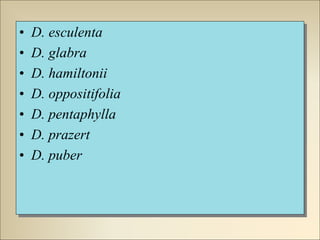
• D. esculenta
• D. glabra
• D. hamiltonii
• D. oppositifolia
• D. pentaphylla
• D. prazert
• D. puber
Preparations and dosage
• Decoction (he extraction of water-soluble
drug substances by boiling) of dried root, 2-
4g three times daily
• Tincture (a medicine consisting of an
extract in an alcohol solution) : 2-10 mL
three times daily
• Fluid extract (1:1) 2-4mL/ three times daily
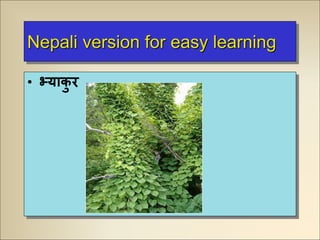
Nepali version for easy learning
• भ्याकु र
• भ्याकु िको लहिा
• वैज्ञानिक वर्गीकरण
• जगत: विस्पनत
• (श्रेणीववहीि): Angiosperms
• (श्रेणीववहीि): Monocots
• गण: Dioscoreales
• परिवाि: Dioscoreaceae
• वंश: Dioscorea
• बैज्ञानिक िाम ( ल्याटिि िाम ) :
डाएस्कोरिया डेलट्वाइडडया (Dioscorea
deltoidea Wall.)
• संस्कृ त िाम : बहाहकन्द
• अन्य िाम : िेपालीमा “गुिे माउिो” , “कु कु ि
तरुल”
• विस्पनत परिवाि : डाएस्कोरियसी
(Dioscoreaceae)
• परिचय
• िेपालको महाभाित तथा निम्ि टहम श्रृंखलाको ९०० देखख ३,०००
ममििसम्म उचाईमा चचसो , ओमसलो ि पतकि कु हेि मल भएको ,
अक्सि गिेि ढुङ्गै ,ढुङ्गा भएको मभिालो जग्गामा साल , सल्ला ,
लालीगुुँिाुँस , किुस , फलाुँस इत्याटदको जंगलमा यो प्रशस्त
मात्रामा पाइन्छ।
• वसन्त ऋतु शुरु भएपनछ भ्याकु िको खििो , चचल्लो लहिा जमीि
मुनि िहेको अदुवाको आकाि जस्तो गािोबाि पल्हाई आउुँछ। गािो
साहो , कडा , मोिो ( मोिाई ६ मममलममिि देखख २ से.मी. ) ि
जमीि मभत्र समकोण बिेको हुन्छ। गािाको बाटहिी भाग खैिो
िंगको हुन्छ। यसको मभत्री भाग (भाुँच्दा) पुँहेलो वा सेतो तथा
सुन्तला िंगको हुन्छ। अरु िंगको भन्दा सेतो िंगको गािोलाई उच्च
गुणस्तिको ठहिाईएको छ। गािोबाि निस्के का जिाहरू बुँदेलका िौँ
जस्ता दहो , लामा तथा खििा हुन्छि्। लहिाका हिेक आुँख्लामा
एक एक पात हुन्छि्। पात २ देखख १४ से. मी. लामो ि १ देखख ५
से. मी. चौडा , अण्डाकाि , भालाकाि तथा मुिु आकाि भै िुप्पो
नतखो ि लामो भएको हुन्छ।
• एक आुँख्लाबाि फू लहरू एउिा िुप्पा बनि निस्के को हुन्छ। फू लको
िंग सेतो हुन्छ। एकै ववरुवामा भाले तथा पोथी दुवै फू ल पाईँदैि।
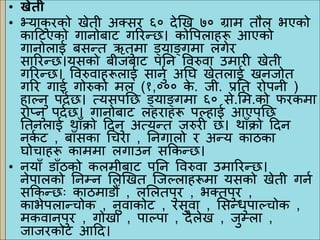
• खेती
• भ्याकु िको खेती अक्सि ६० देखख ७० ग्राम तौल भएको
काटिएको गािोबाि गरिन्छ। कोवपलाहरू आएको
गािोलाई बसन्त ऋतुमा ड्याङ्गमा लगेि
सारिन्छ।यसको बीजबाि पनि ववरुवा उमािी खेती
गरिन्छ। ववरुवाहरूलाई सािुु अनि खेतलाई खिजोत
गरि गाई गोरुको मल (१,००० के . जी. प्रनत िोपिी )
हाल्िु पदुछ। त्यसपनछ ड्याङ्गमा ६० से.मम.को फिकमा
िोप्िु पदुछ। गािोबाि लहिाहरू पल्हाई आएपनछ
नतिलाई थाुँक्रो टदिु अत्यन्त जरुिी छ। थाुँक्रो टदि
िकु ि , बाुँसका चचिा , निगालो ि अन्य काठका
िोचाहरू काममा लगाउि सककन्छ।
• ियाुँ डाुँठको कलमीबाि पनि ववरुवा उमारिन्छ।
िेपालको निम्ि मलखखत जजल्लाहरूमा यसको खेती गिु
सककन्छः काठमाडौं , लमलतपुि , भक्तपुि ,
काभेपलान्चोक , िुवाकोि , िसुवा , मसन्धुपाल्चोक ,
मकवािपुि , गोखाु , पाल्पा , दैलेख , जुम्ला ,
जाजिकोि आटद।
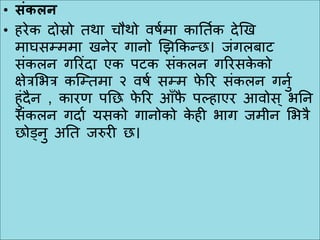
• संकलि
• हिेक दोस्रो तथा चौथो वर्ुमा कानतुक देखख
मािसम्ममा खिेि गािो खिककन्छ। जंगलबाि
संकलि गरिंदा एक पिक संकलि गरिसके को
क्षेत्रमभत्र कजम्तमा २ वर्ु सम्म फे रि संकलि गिुु
हुंदैि , कािण पनछ फे रि आुँफै पल्हाएि आवोस ् भनि
संकलि गदाु यसको गािोको के ही भाग जमीि मभत्रै
छोड्िु अनत जरुिी छ।
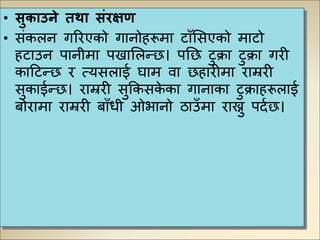
• सुकाउिे तथा संरक्षण
• संकलि गरिएको गािोहरूमा िाुँमसएको मािो
हिाउि पािीमा पखामलन्छ। पनछ िुक्रा िुक्रा गिी
काटिन्छ ि त्यसलाई िाम वा छहािीमा िाम्रिी
सुकाईन्छ। िाम्रिी सुककसके का गािाका िुक्राहरूलाई
बोिामा िाम्रिी बाुँधी ओभािो ठाउुँमा िाख्नु पदुछ।
• उपयोर्ग
• यो जुम्रा मािु ि माछा मािे ववर्को रूपमा
प्रयोग गरिन्छ। यसको प्रशोधि गरि प्राप्त हुिे
डायोस्जेनििबाि स्िेिोयेड हिमोन्स गभु
नििोधक चजक्क (और्धी) पनि निमाुण
गरिन्छ। िाउ , खटििा ि तागतको और्धीमा
पनि यो प्रयोग गरिन्छ। यसलाई पोलेि खािे
पनि गदुछि ्।
Thank you

Dioscorea deltoida

  • 1.
    Dioscorea Presented by: NabinaPaudel 4th batch, b. pharmacy Ucms, bhairahawa, Nepal
  • 2.
    Introduction • Dioscorea, yams,is a genus of over 500 species of usually herbaceous (but sometimes woody) herbaceous perennial vines that produce starchy, edible tuberous roots that are an important source of food in tropical regions worldwide, including Africa, Asia, Oceania, and Latin America. The genus belongs to the Dioscoreaceae, the family that contains true yams. (Although the sweet potato, Ipomoea batatas, is often referred to as a “yam,” it is distantly related and is not a true yam.)
  • 4.
    Synonyms • English name:Yam, Rheumatism root • बैज्ञानिक िाम ( ल्याटिि िाम ) : डाएस्कोरिया डेलट्वाइडडया (Dioscorea deltoidea Wall.) • संस्कृ त िाम : बहाहकन्द • अन्य िाम : िेपालीमा “गुिे माउिो” , “कु कु ि तरुल” • विस्पनत परिवाि : डाएस्कोरियसी (Dioscoreaceae)
  • 5.
  • 6.
    Biological source • Itconsists of dried tubers of the plants, Dioscorea like Dioscorea villosa, Dioscorea prazert , Dioscorea composita and Dioscorea spiculiflora, Dioscorea deltoidea and Dioscorea floribunda. • Family: Dioscoreaceae
  • 7.
    Geographical source • D.deltoidea is found growing in north western himalayas from kashmir and punjab to nepal aand china upto an altitude of 1000 to 3000 m. It is cultivated in Jammu and Kashmir and in part of Himachal Pradesh. D. Deltoidea is also found in USA and Mexico.
  • 9.
    Collection and cultivation •Dioscoria species are distributed throughout India and nepal. • These plants are cultivated mostly as garden crops or subordinate crops with ginger, turmeric, brinjal, sweet potato or maize. • They grows best in deep sandy loams with adequate moisture and good drainage. • The crop can be raised from seeds, but variability in progeny and comparatively longer time for harvesting are the disadvantages with this method. • Thus, healthy tubers of about 70-80 g in weight with crown are selected for cultivation.
  • 11.
    • After 2-3months of growth, tubers are transplanted in the field, which is treated with the insecticide earlier. • While planting, the tubers are placed at a distance of 30-60 cm. • Irrigation should be done every 10 days. • Organic fertilizers should be applied in equal dose at an interval of one month. • The planting period is generally April-June after the onset of monsoon, but it may varies according to local condition and the species • Crops are ready after 5-8 months of planting.
  • 12.
    Morphology • Colour: slightlybrown • Odour: odourless • Taste : bitter • Size: varies depending upon age of rhizomes.
  • 15.
    • Dioscoria speciesare climbing; roots tuberous; tubers large; stem leafy • The stem is a smooth green twiner, about the size of a goose-quill, twining from the right to the left, over fences, bushes, etc. • The leaves are symmetrical and heart-shaped, gradually tapering to a sharp, acuminate point, (taper )and are borne on leaf stalks from 2 to 4 inches long.
  • 19.
    Microscopic characters • Theepidermis is brown, thin, and scales off, more or less, upon drying, especially when the rhizome is gathered in the spring, but which is not the case with a good quality of it, when dug in autumn. • The internal color of the dry rhizome is whitish, or slightly straw-colored, when gathered in the autumn, but it is often brown when collected early in the season; there is no bark to it. • Under a magnifying glass the texture of a broken rhizome appears and perforated(Having a number or series of holes) with numerous woody bundles. Attached to the lower part of the rhizome, an abundance of strong, wiry-like fibers will be observed.
  • 21.
    Chemical constituents • Dioscoreais a source of saponin glycoside diosgenin. Botagenin and diosgenin are obtained from the root of Dioscorea spiculiflora. • Dioscorea also contain small amount of hecogenin and an acrid resin. Dioscin on acid hydrolysis yields diosgenin, rhamnose and glucose. • The alkaloid, dioscorine and saponin, dioscin , occur in varying quantities in different species.
  • 23.
    Chemical Tests • 1.Libermann-Burchardtest : Treat the extract with few drops of acetic anhydride , boil and cool. Then add conc .sulphuric acid from the sides of test tube , brown ring is at the junction of two layers &upper layer turns green (steroids) and formation of deep red colour (triterpenoids) • 2. Libermann ‘s reaction : mix 3 ml extract + 3 ml acetic anhydride heat & cool add few drops of conc H2SO4 Blue color obtained.
  • 24.
  • 25.
    uses • Diosogenin isused for the production of various steroidal drugs like progesterone and as a cheap source of carbohydrate food. • Some speices D. alata , are used for the extraction of starch. Some of them are rich in vitamins B1, B2 and B6. • Anti-spasmodic, anti-inflammatory, anti- rheumatic, diaphoretic (Inducing perspiration), diuretic, GI tonic, expectorant.
  • 26.
    Therapeutic uses ofDioscorea deltoidea Diosgenin, which is a phytoestrogen that can be chemically converted into hormone basis antifertility drugs such as the progesterone, corticosteroids, and anabolic steroids • Diosgenin is the contraceptive pills, of cortisone and sex hormones such as testosterone and supplements are used by body builders to increase their testosterone. • Paste of rhizomes is also applied in hair to kill lice and allergic states. • In Nepal, auxiliary rhizomes from the upper part of the plants are boiled and the liquid is to treat gastric problems and bloody dysentery.
  • 27.
    Traditional use ofDioscorea deltoidea • Traditionally the plant has been used as an anti- rheumatic and to treat ophthalmic Conditions, as a source of steroid drugs. • It has also been used to rid the body of intestinal worms as well as parasites, and sometimes the women use it to wash shawls and woolen cloths. • the powder from the rhizomes of the plant is taken orally to cures dysentery, abdominal pains and piles.
  • 29.
    How safe isit? • Contraindications Contraindications have not yet been identified. • Pregnancy/nursing Information regarding safety and efficacy in pregnancy and lactation is lacking. • Interactions None well documented. • Side Effects A clinical study evaluating the daily consumption of wild yam reported no adverse events. Topical preparations of wild yam extract are relatively free from adverse effects. Based on a single study in rats, oral D. villosashould be avoided in people with compromised renal function. • Toxicities Topical D. villosa (with an upper limit of 3.5% diosgenin) was found to not be toxic.
  • 30.
  • 32.
    Allied species • D.alata , a native of south east Asia, is the most important cultivated species throughout the tropics. They are starchy and used as vegetable, antihelmintic, in leprosy, piles and gonorrhoea. • D. bubifera is a large unarmed climber with stems twining to the left. The tubers are used mostly as famine food to prepare starch, for washing wool and as fish bait in Kashmir, applied for ulcers, in piles, dysentry and syphilis • D. deltoidea is an extensive climber with unarmed stem twining to the left. The tubers are rich in saponin and are used for washing silk, wood and hair. They kill lice
  • 33.
    • D. esculenta •D. glabra • D. hamiltonii • D. oppositifolia • D. pentaphylla • D. prazert • D. puber
  • 35.
    Preparations and dosage •Decoction (he extraction of water-soluble drug substances by boiling) of dried root, 2- 4g three times daily • Tincture (a medicine consisting of an extract in an alcohol solution) : 2-10 mL three times daily • Fluid extract (1:1) 2-4mL/ three times daily
  • 36.
    Nepali version foreasy learning • भ्याकु र
  • 37.
    • भ्याकु िकोलहिा • वैज्ञानिक वर्गीकरण • जगत: विस्पनत • (श्रेणीववहीि): Angiosperms • (श्रेणीववहीि): Monocots • गण: Dioscoreales • परिवाि: Dioscoreaceae • वंश: Dioscorea
  • 38.
    • बैज्ञानिक िाम( ल्याटिि िाम ) : डाएस्कोरिया डेलट्वाइडडया (Dioscorea deltoidea Wall.) • संस्कृ त िाम : बहाहकन्द • अन्य िाम : िेपालीमा “गुिे माउिो” , “कु कु ि तरुल” • विस्पनत परिवाि : डाएस्कोरियसी (Dioscoreaceae)
  • 39.
    • परिचय • िेपालकोमहाभाित तथा निम्ि टहम श्रृंखलाको ९०० देखख ३,००० ममििसम्म उचाईमा चचसो , ओमसलो ि पतकि कु हेि मल भएको , अक्सि गिेि ढुङ्गै ,ढुङ्गा भएको मभिालो जग्गामा साल , सल्ला , लालीगुुँिाुँस , किुस , फलाुँस इत्याटदको जंगलमा यो प्रशस्त मात्रामा पाइन्छ। • वसन्त ऋतु शुरु भएपनछ भ्याकु िको खििो , चचल्लो लहिा जमीि मुनि िहेको अदुवाको आकाि जस्तो गािोबाि पल्हाई आउुँछ। गािो साहो , कडा , मोिो ( मोिाई ६ मममलममिि देखख २ से.मी. ) ि जमीि मभत्र समकोण बिेको हुन्छ। गािाको बाटहिी भाग खैिो िंगको हुन्छ। यसको मभत्री भाग (भाुँच्दा) पुँहेलो वा सेतो तथा सुन्तला िंगको हुन्छ। अरु िंगको भन्दा सेतो िंगको गािोलाई उच्च गुणस्तिको ठहिाईएको छ। गािोबाि निस्के का जिाहरू बुँदेलका िौँ जस्ता दहो , लामा तथा खििा हुन्छि्। लहिाका हिेक आुँख्लामा एक एक पात हुन्छि्। पात २ देखख १४ से. मी. लामो ि १ देखख ५ से. मी. चौडा , अण्डाकाि , भालाकाि तथा मुिु आकाि भै िुप्पो नतखो ि लामो भएको हुन्छ। • एक आुँख्लाबाि फू लहरू एउिा िुप्पा बनि निस्के को हुन्छ। फू लको िंग सेतो हुन्छ। एकै ववरुवामा भाले तथा पोथी दुवै फू ल पाईँदैि।
  • 40.
    • खेती • भ्याकुिको खेती अक्सि ६० देखख ७० ग्राम तौल भएको काटिएको गािोबाि गरिन्छ। कोवपलाहरू आएको गािोलाई बसन्त ऋतुमा ड्याङ्गमा लगेि सारिन्छ।यसको बीजबाि पनि ववरुवा उमािी खेती गरिन्छ। ववरुवाहरूलाई सािुु अनि खेतलाई खिजोत गरि गाई गोरुको मल (१,००० के . जी. प्रनत िोपिी ) हाल्िु पदुछ। त्यसपनछ ड्याङ्गमा ६० से.मम.को फिकमा िोप्िु पदुछ। गािोबाि लहिाहरू पल्हाई आएपनछ नतिलाई थाुँक्रो टदिु अत्यन्त जरुिी छ। थाुँक्रो टदि िकु ि , बाुँसका चचिा , निगालो ि अन्य काठका िोचाहरू काममा लगाउि सककन्छ। • ियाुँ डाुँठको कलमीबाि पनि ववरुवा उमारिन्छ। िेपालको निम्ि मलखखत जजल्लाहरूमा यसको खेती गिु सककन्छः काठमाडौं , लमलतपुि , भक्तपुि , काभेपलान्चोक , िुवाकोि , िसुवा , मसन्धुपाल्चोक , मकवािपुि , गोखाु , पाल्पा , दैलेख , जुम्ला , जाजिकोि आटद।
  • 41.
    • संकलि • हिेकदोस्रो तथा चौथो वर्ुमा कानतुक देखख मािसम्ममा खिेि गािो खिककन्छ। जंगलबाि संकलि गरिंदा एक पिक संकलि गरिसके को क्षेत्रमभत्र कजम्तमा २ वर्ु सम्म फे रि संकलि गिुु हुंदैि , कािण पनछ फे रि आुँफै पल्हाएि आवोस ् भनि संकलि गदाु यसको गािोको के ही भाग जमीि मभत्रै छोड्िु अनत जरुिी छ।
  • 42.
    • सुकाउिे तथासंरक्षण • संकलि गरिएको गािोहरूमा िाुँमसएको मािो हिाउि पािीमा पखामलन्छ। पनछ िुक्रा िुक्रा गिी काटिन्छ ि त्यसलाई िाम वा छहािीमा िाम्रिी सुकाईन्छ। िाम्रिी सुककसके का गािाका िुक्राहरूलाई बोिामा िाम्रिी बाुँधी ओभािो ठाउुँमा िाख्नु पदुछ।
  • 43.
    • उपयोर्ग • योजुम्रा मािु ि माछा मािे ववर्को रूपमा प्रयोग गरिन्छ। यसको प्रशोधि गरि प्राप्त हुिे डायोस्जेनििबाि स्िेिोयेड हिमोन्स गभु नििोधक चजक्क (और्धी) पनि निमाुण गरिन्छ। िाउ , खटििा ि तागतको और्धीमा पनि यो प्रयोग गरिन्छ। यसलाई पोलेि खािे पनि गदुछि ्।
  • 44.