PHYLUM
ARTHROPODA
Lecture-9
General Characteristics
• Segmented
• Jointed appendages
• Hard external skeleton
• 3 parts-head, thorax, abdomen (arachnids exception)
• Exoskeleton-hard, external skeleton made of chitin
• Molting- shed old exoskeleton and secrete a larger one, very vulnerable after molting
• Complete digestive tract ( mandible -chewing or proboscis - sucking) with a dorsal heart and a
ventral nervous system
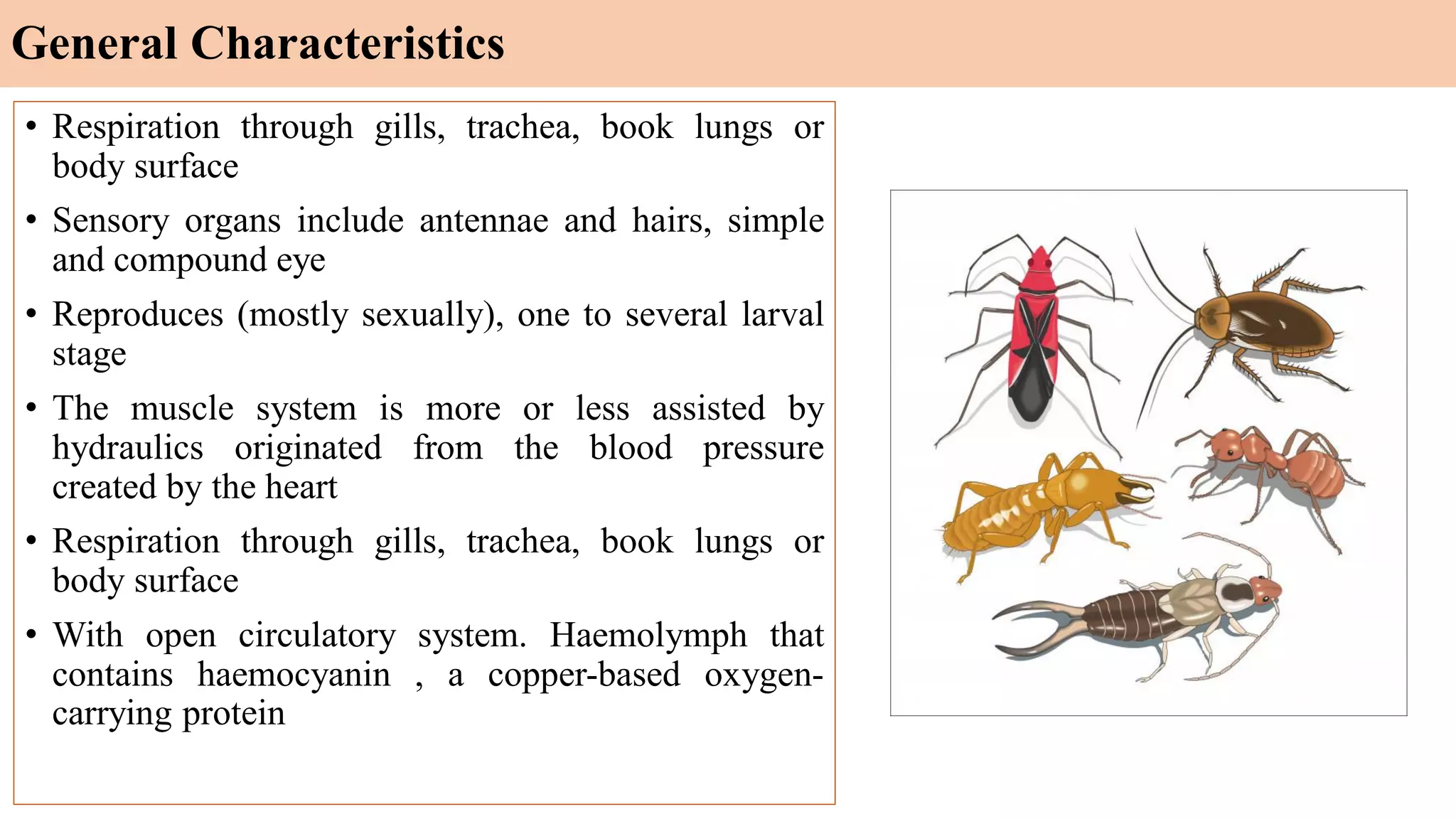
• Respiration through gills, trachea, book lungs or
body surface
• Sensory organs include antennae and hairs, simple
and compound eye
• Reproduces (mostly sexually), one to several larval
stage
• The muscle system is more or less assisted by
hydraulics originated from the blood pressure
created by the heart
• Respiration through gills, trachea, book lungs or
body surface
• With open circulatory system. Haemolymph that
contains haemocyanin , a copper-based oxygen-
carrying protein
General Characteristics
Distribution and Abundance
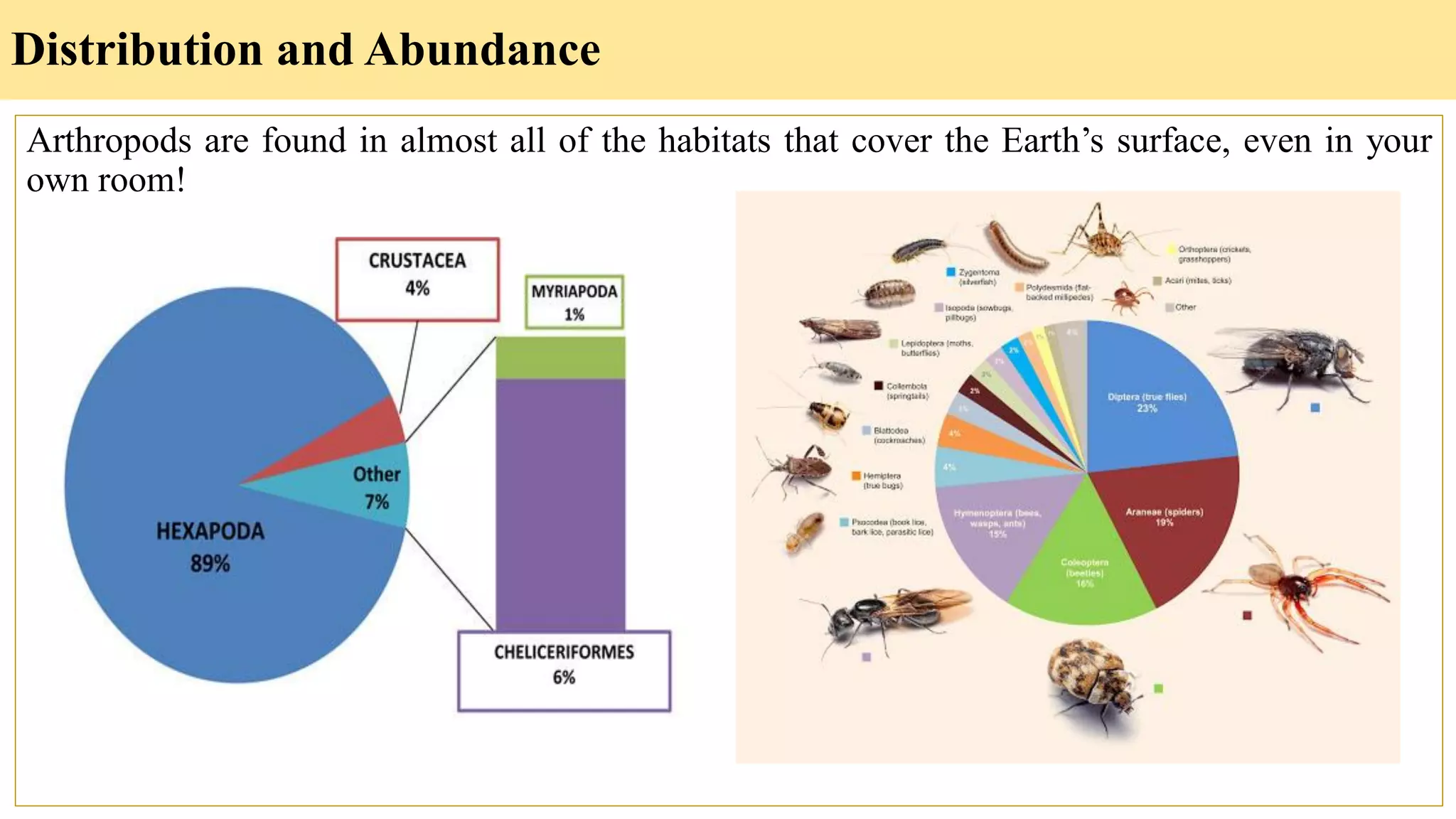
Arthropods are found in almost all of the habitats that cover the Earth’s surface, even in your
own room!
Importance
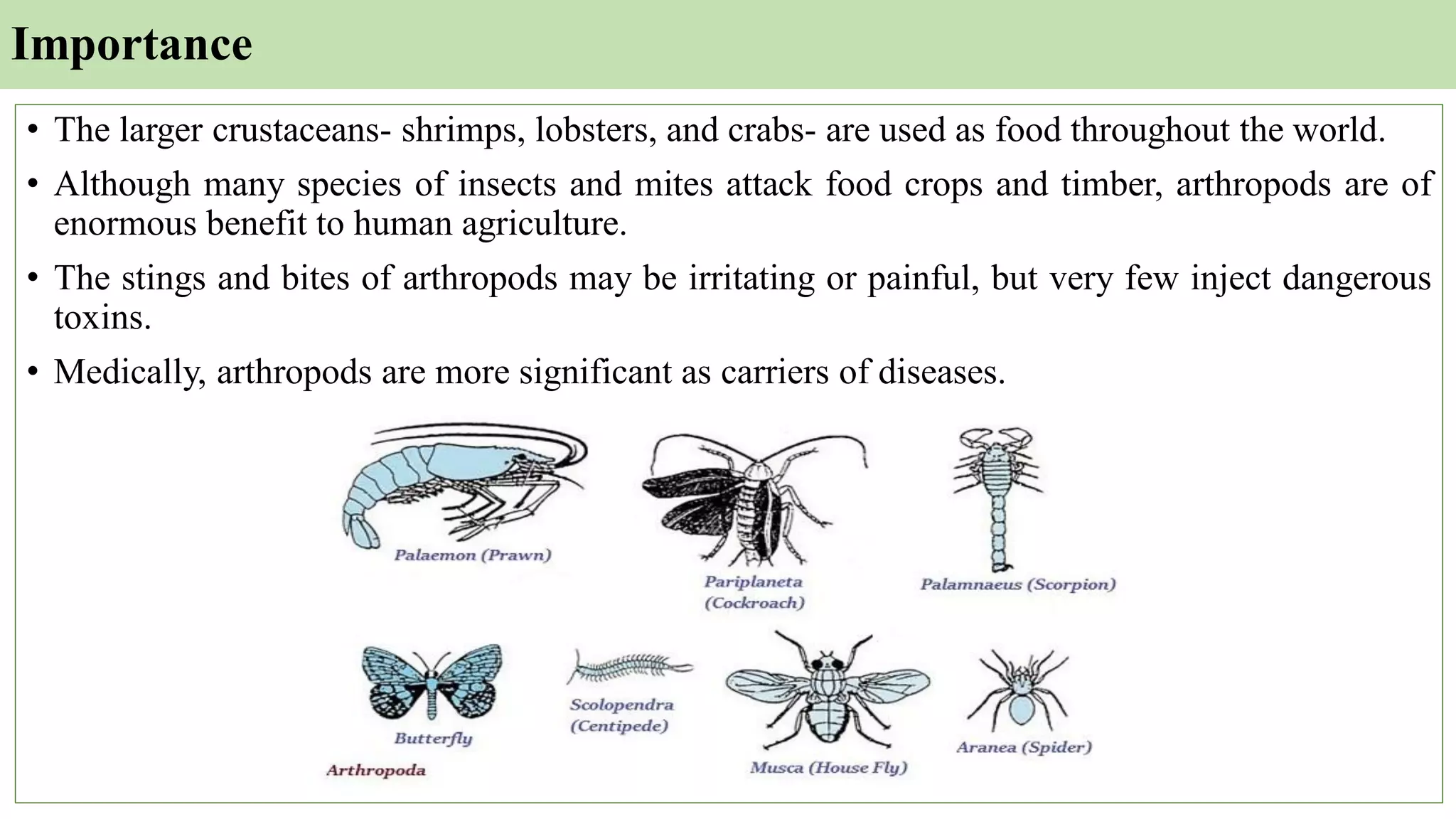
• The larger crustaceans- shrimps, lobsters, and crabs- are used as food throughout the world.
• Although many species of insects and mites attack food crops and timber, arthropods are of
enormous benefit to human agriculture.
• The stings and bites of arthropods may be irritating or painful, but very few inject dangerous
toxins.
• Medically, arthropods are more significant as carriers of diseases.
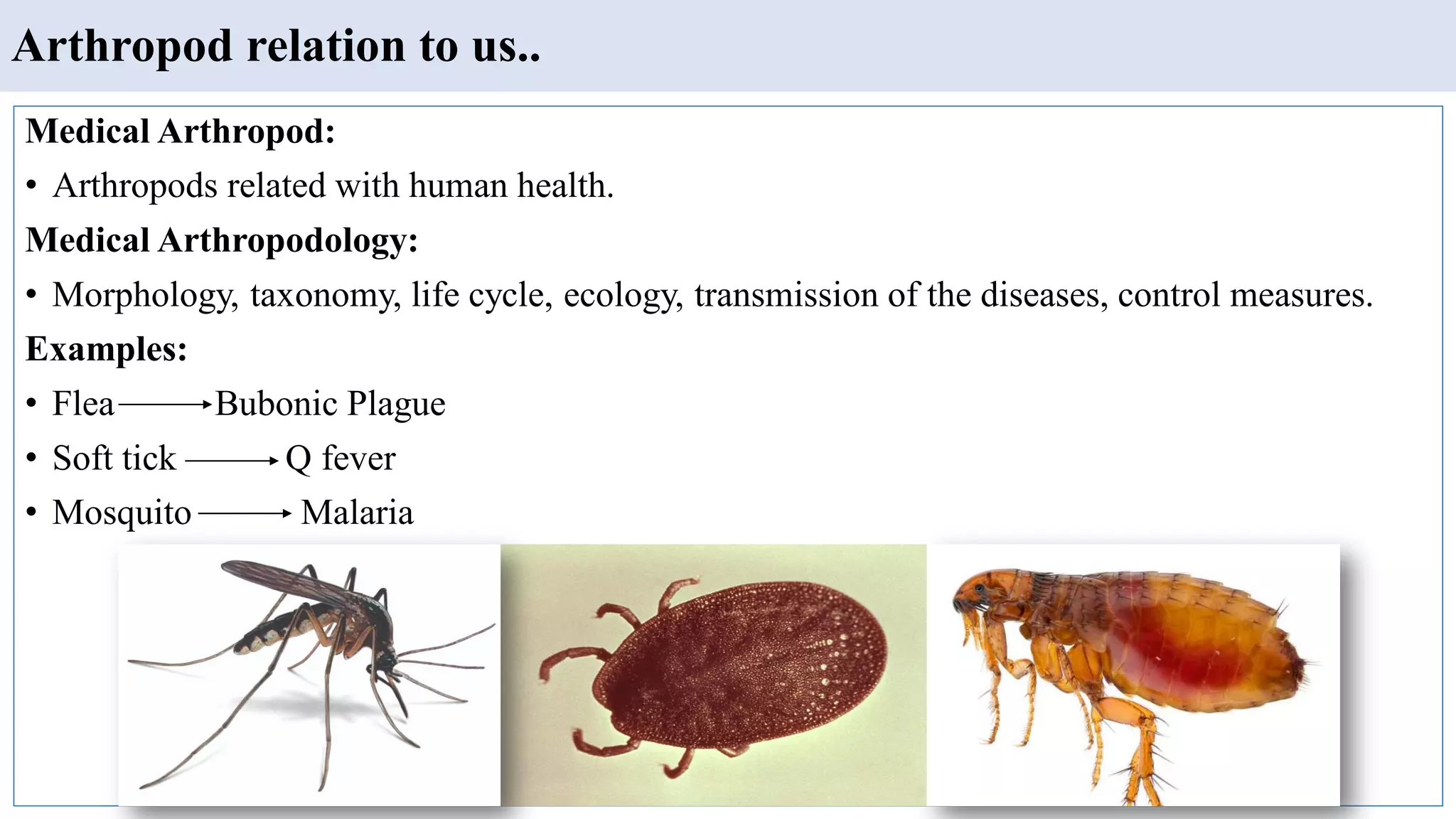
Arthropod relation to us..
Medical Arthropod:
• Arthropods related with human health.
Medical Arthropodology:
• Morphology, taxonomy, life cycle, ecology, transmission of the diseases, control measures.
Examples:
• Flea Bubonic Plague
• Soft tick Q fever
• Mosquito Malaria
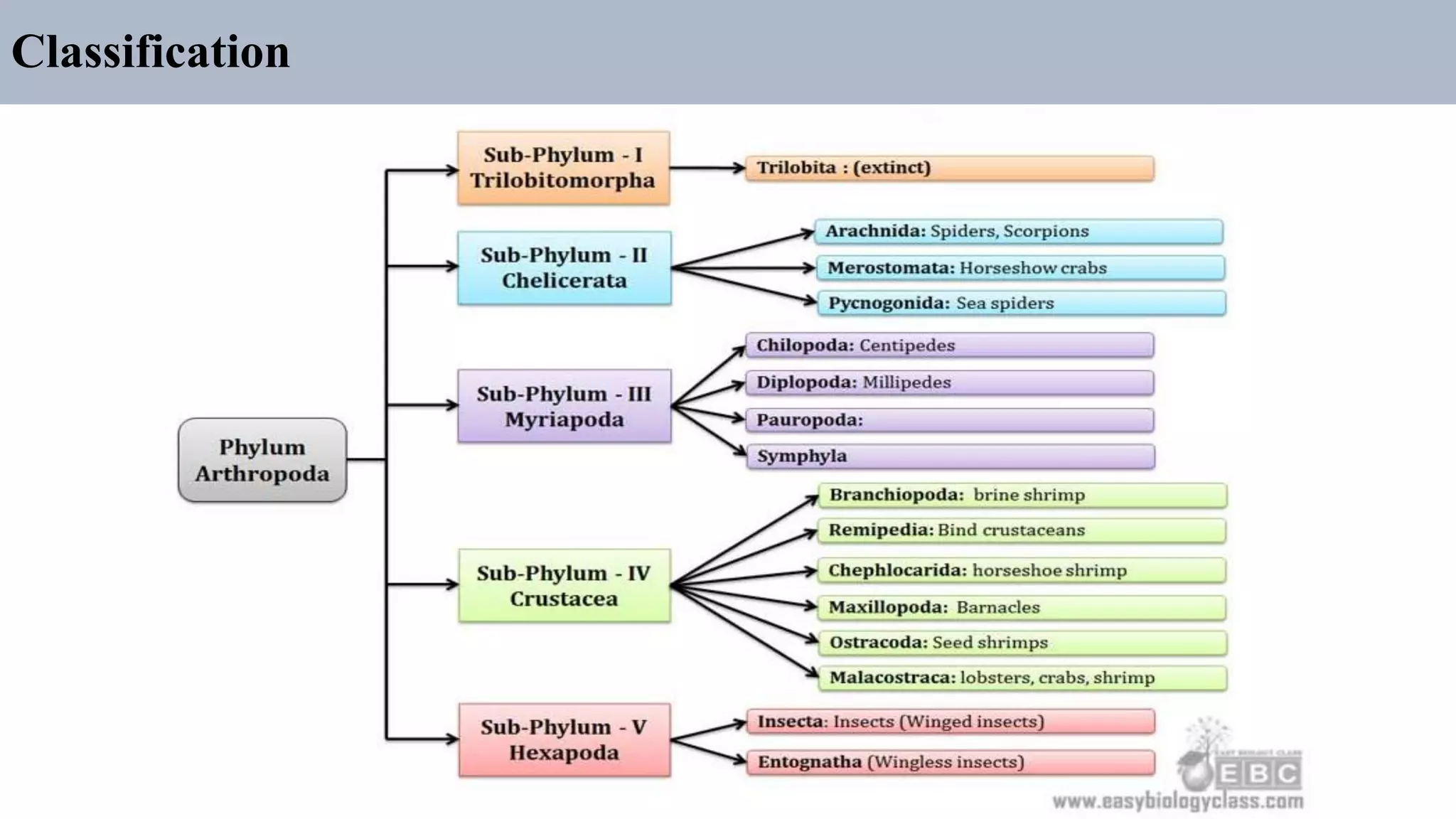
Classification
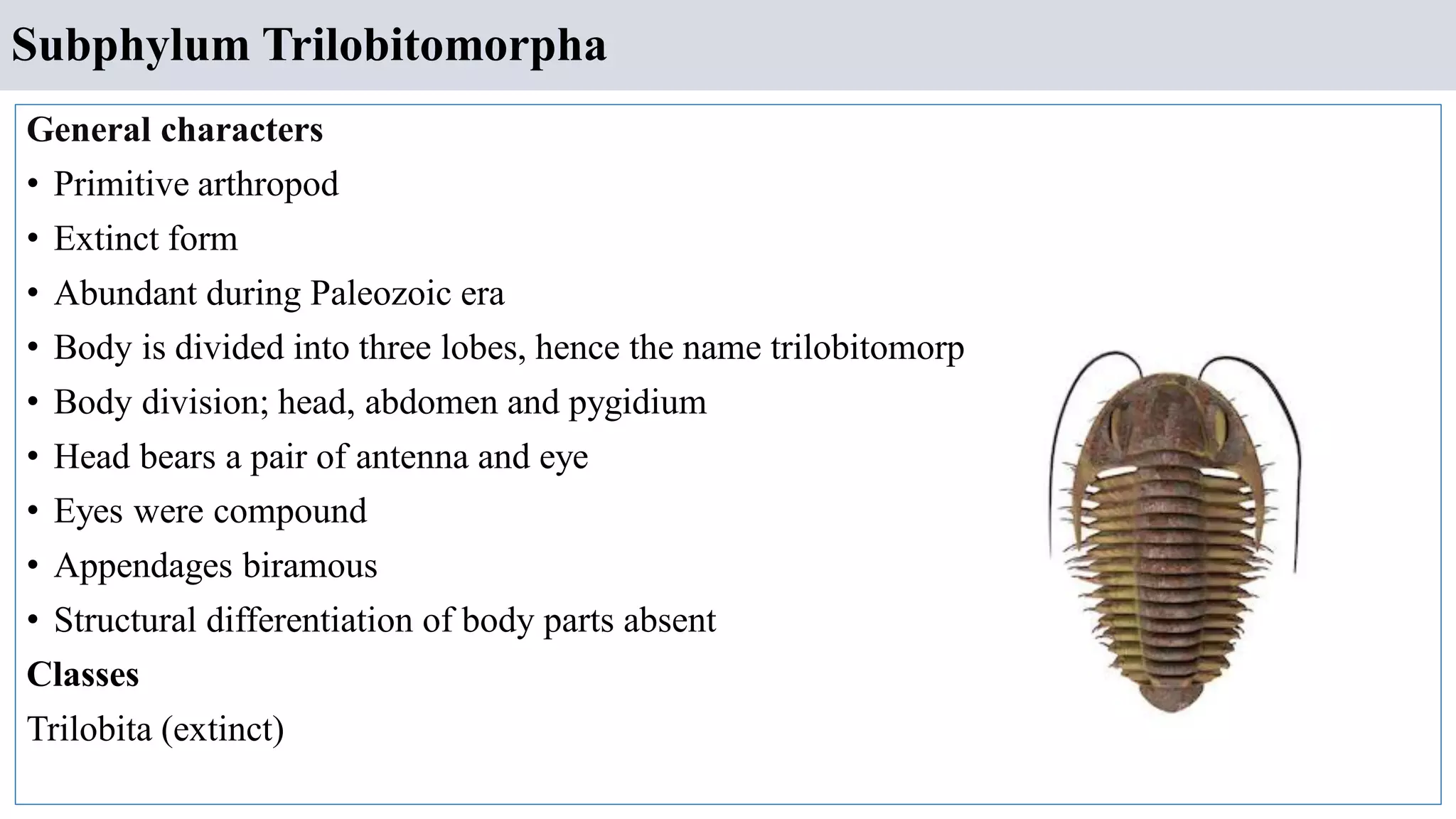
Subphylum Trilobitomorpha
General characters
• Primitive arthropod
• Extinct form
• Abundant during Paleozoic era
• Body is divided into three lobes, hence the name trilobitomorpha
• Body division; head, abdomen and pygidium
• Head bears a pair of antenna and eye
• Eyes were compound
• Appendages biramous
• Structural differentiation of body parts absent
Classes
Trilobita (extinct)
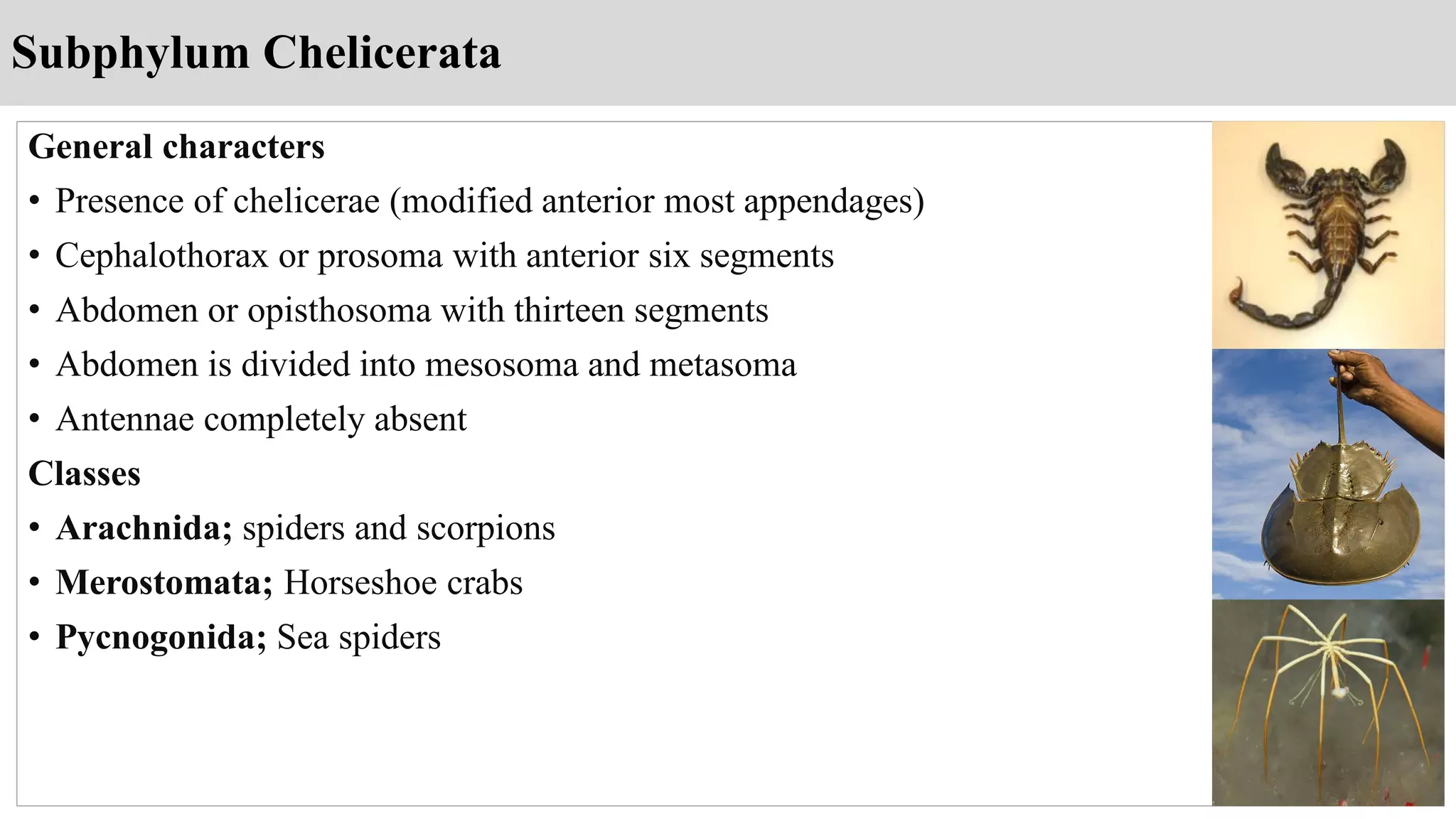
Subphylum Chelicerata
General characters
• Presence of chelicerae (modified anterior most appendages)
• Cephalothorax or prosoma with anterior six segments
• Abdomen or opisthosoma with thirteen segments
• Abdomen is divided into mesosoma and metasoma
• Antennae completely absent
Classes
• Arachnida; spiders and scorpions
• Merostomata; Horseshoe crabs
• Pycnogonida; Sea spiders
General characteristics
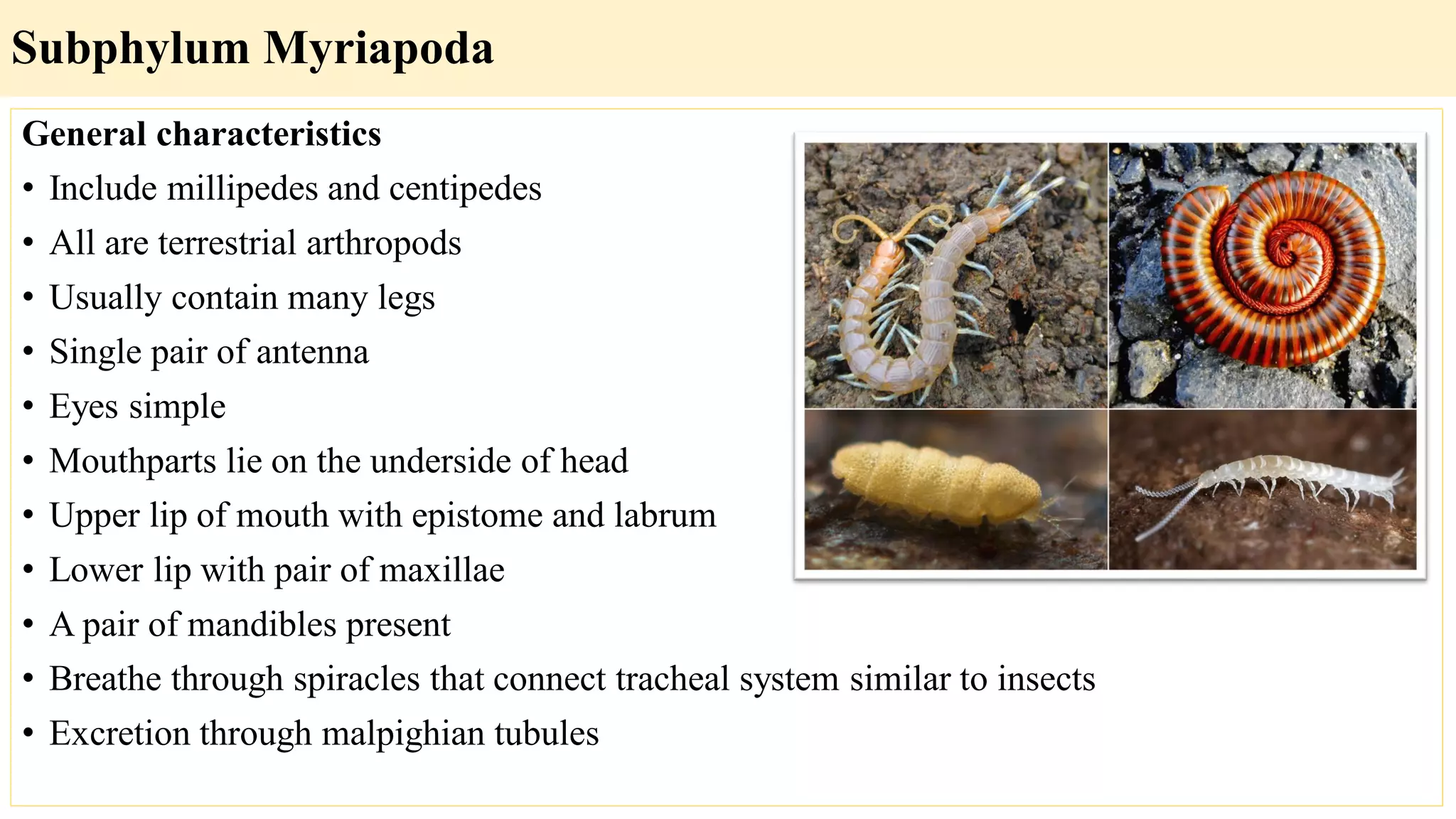
• Include millipedes and centipedes
• All are terrestrial arthropods
• Usually contain many legs
• Single pair of antenna
• Eyes simple
• Mouthparts lie on the underside of head
• Upper lip of mouth with epistome and labrum
• Lower lip with pair of maxillae
• A pair of mandibles present
• Breathe through spiracles that connect tracheal system similar to insects
• Excretion through malpighian tubules
Subphylum Myriapoda
Classes
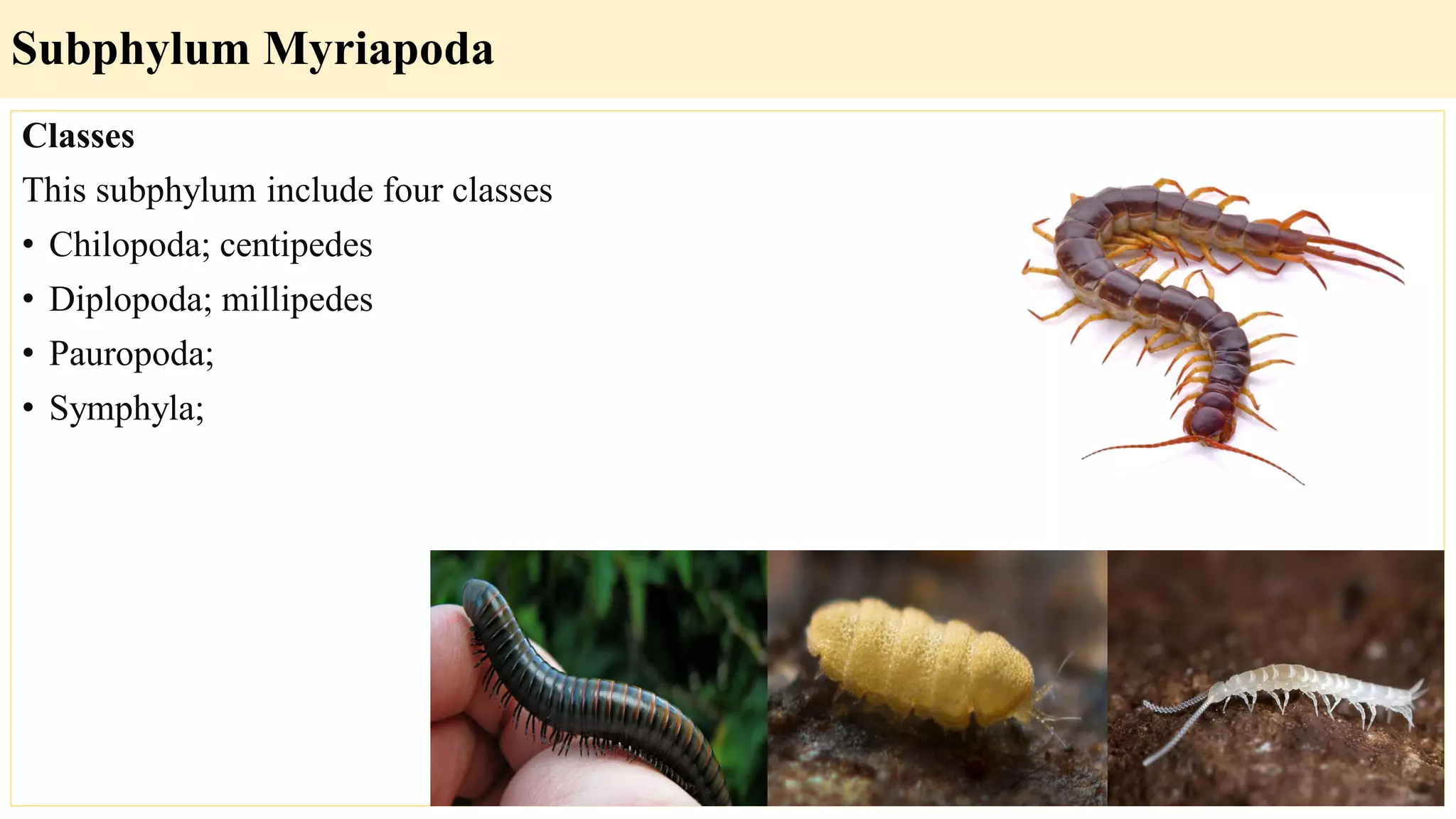
This subphylum include four classes
• Chilopoda; centipedes
• Diplopoda; millipedes
• Pauropoda;
• Symphyla;
Subphylum Myriapoda
Subphylum Crustacea
General characteristics
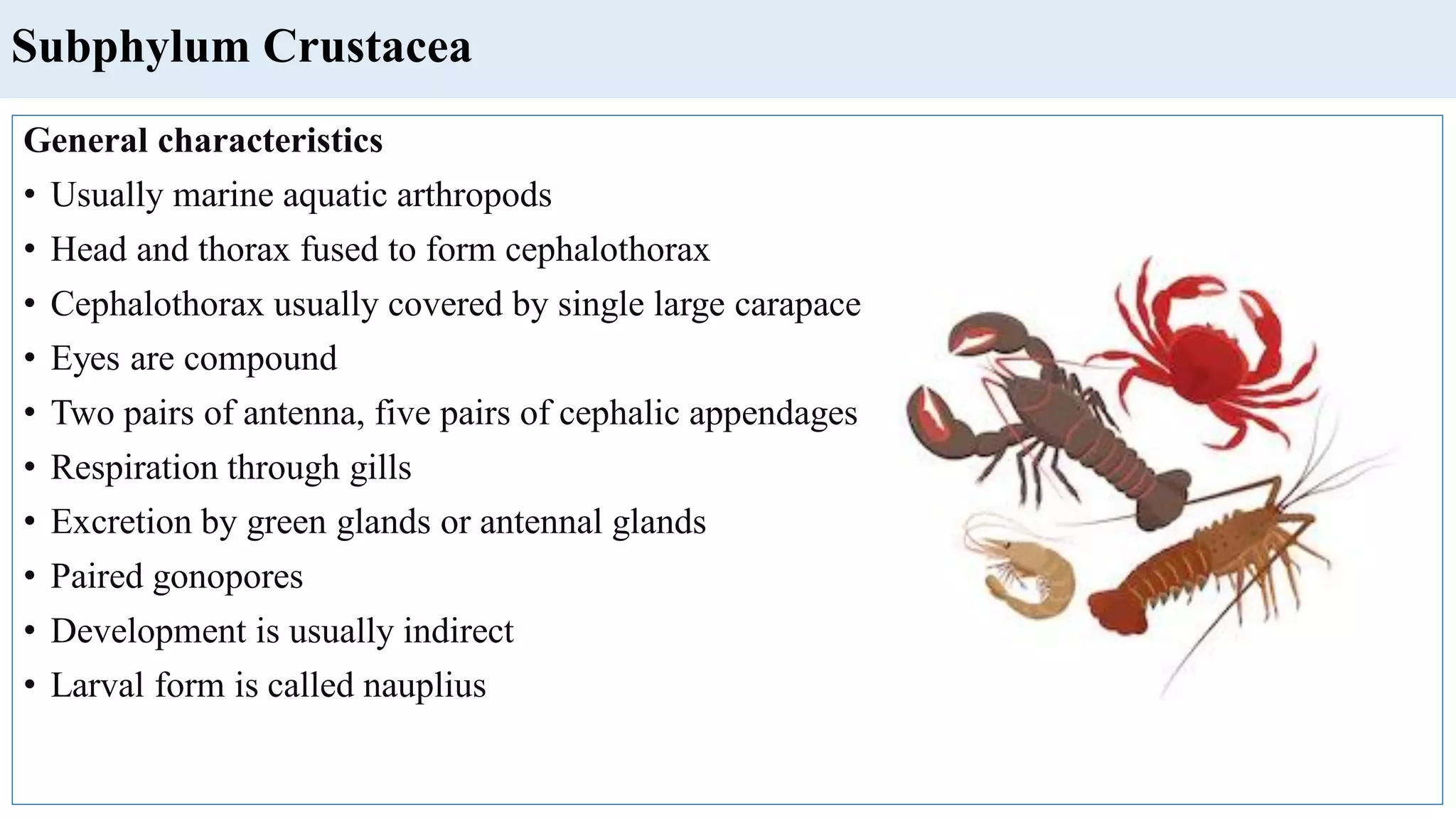
• Usually marine aquatic arthropods
• Head and thorax fused to form cephalothorax
• Cephalothorax usually covered by single large carapace
• Eyes are compound
• Two pairs of antenna, five pairs of cephalic appendages
• Respiration through gills
• Excretion by green glands or antennal glands
• Paired gonopores
• Development is usually indirect
• Larval form is called nauplius
Classes
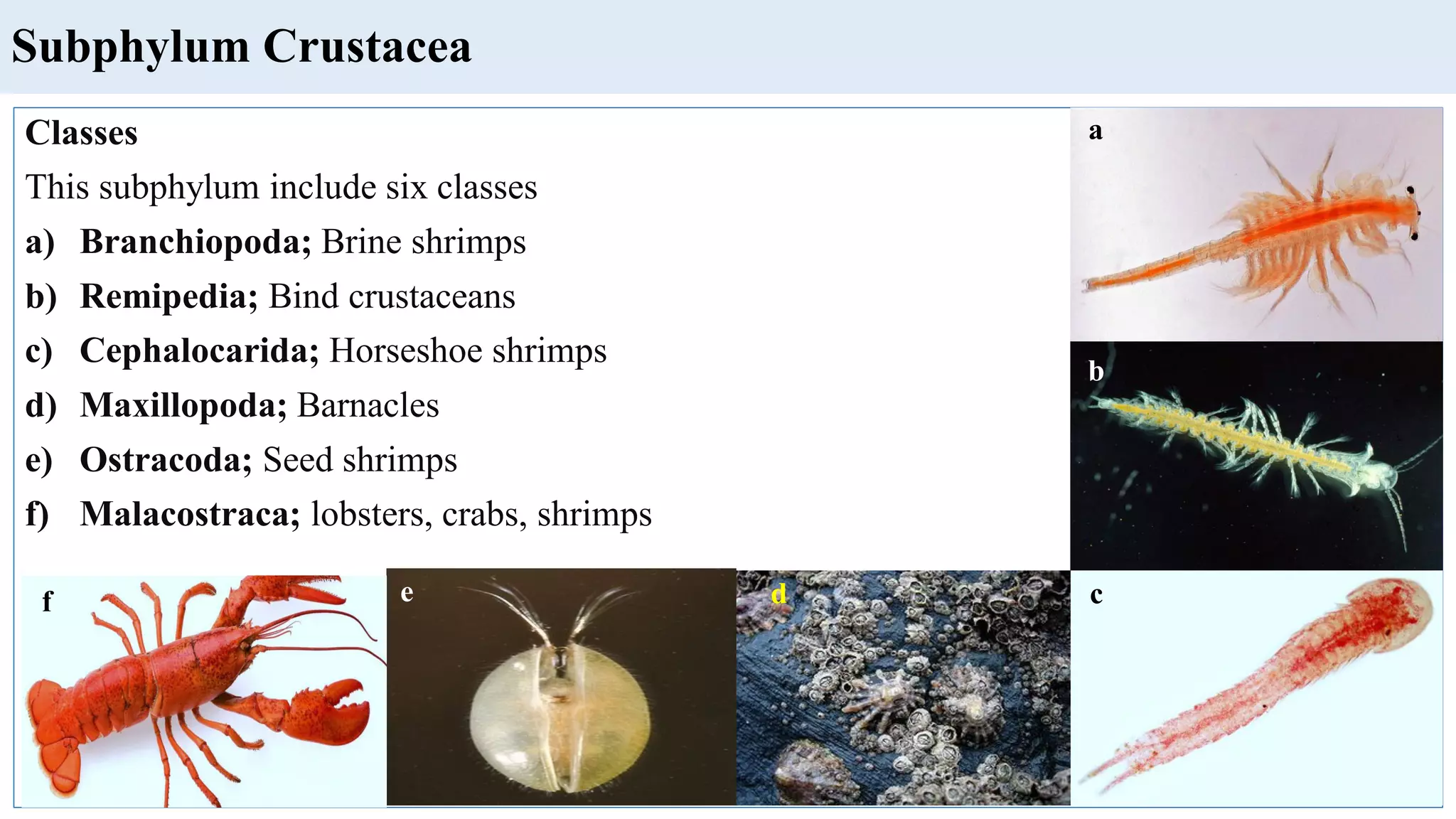
This subphylum include six classes
a) Branchiopoda; Brine shrimps
b) Remipedia; Bind crustaceans
c) Cephalocarida; Horseshoe shrimps
d) Maxillopoda; Barnacles
e) Ostracoda; Seed shrimps
f) Malacostraca; lobsters, crabs, shrimps
Subphylum Crustacea
a
b
c
d
e
f
Subphylum Hexapoda
General characteristics
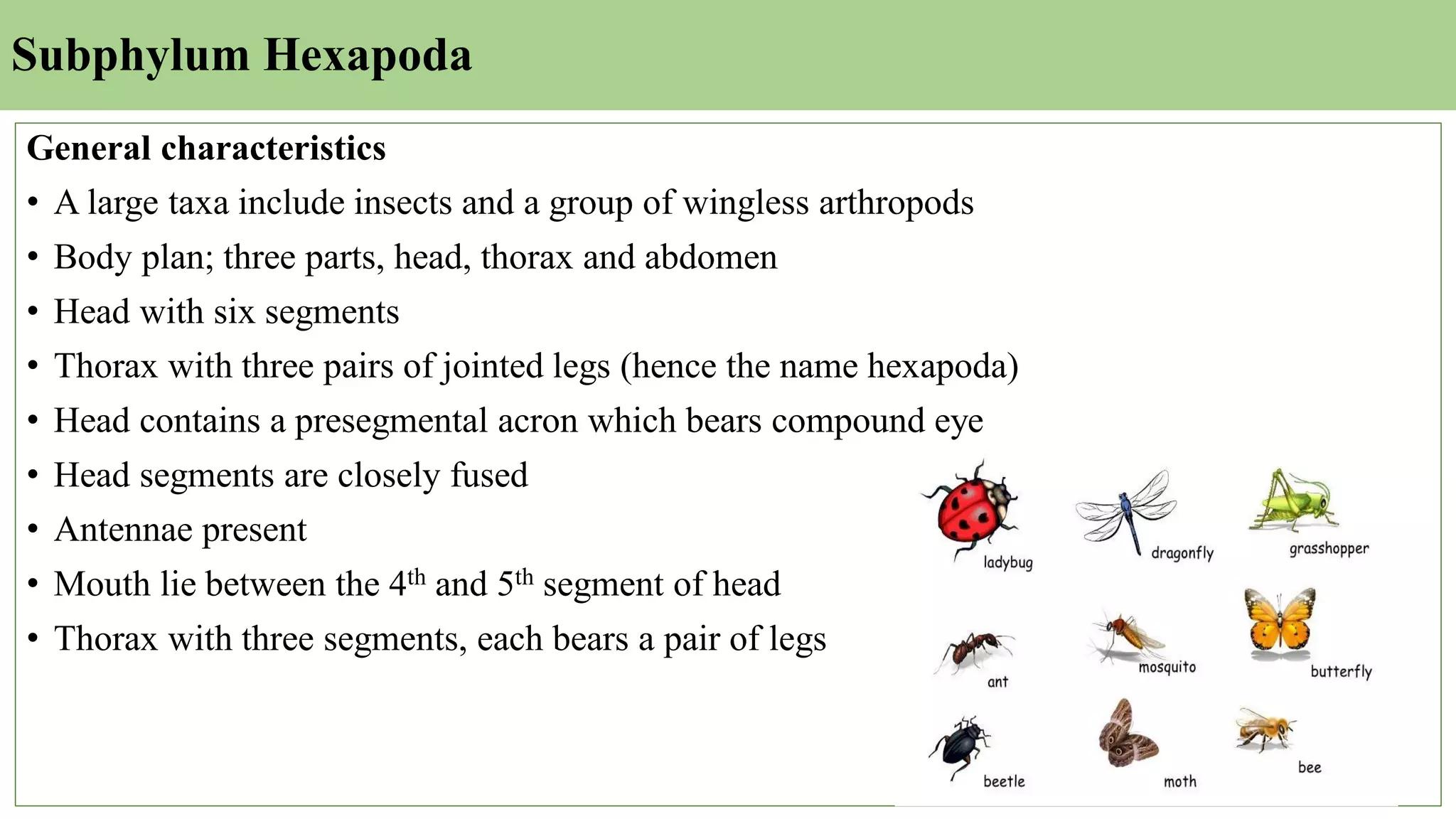
• A large taxa include insects and a group of wingless arthropods
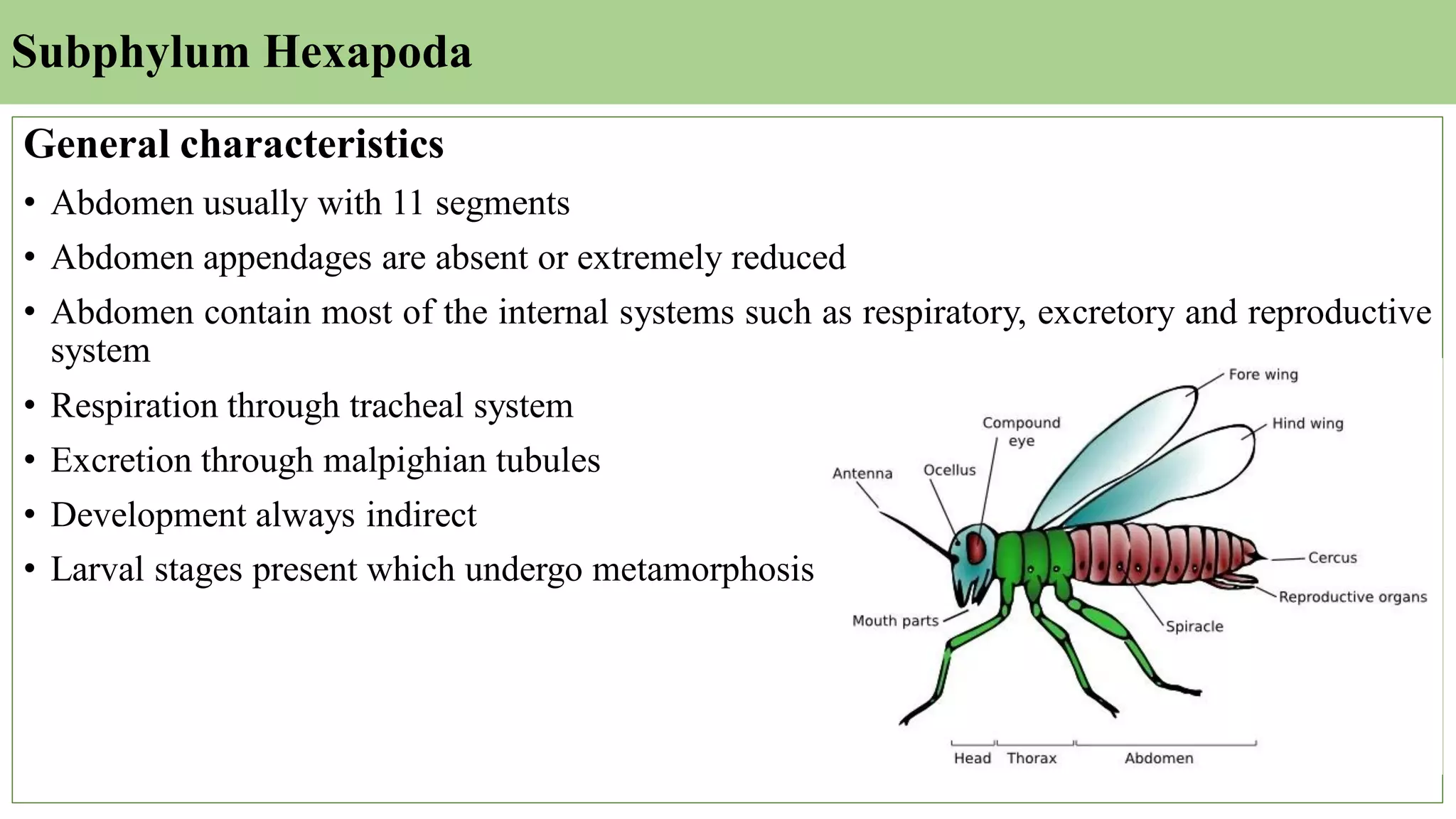
• Body plan; three parts, head, thorax and abdomen
• Head with six segments
• Thorax with three pairs of jointed legs (hence the name hexapoda)
• Head contains a presegmental acron which bears compound eye
• Head segments are closely fused
• Antennae present
• Mouth lie between the 4th and 5th segment of head
• Thorax with three segments, each bears a pair of legs
General characteristics
• Abdomen usually with 11 segments
• Abdomen appendages are absent or extremely reduced
• Abdomen contain most of the internal systems such as respiratory, excretory and reproductive
system
• Respiration through tracheal system
• Excretion through malpighian tubules
• Development always indirect
• Larval stages present which undergo metamorphosis
Subphylum Hexapoda
Classes
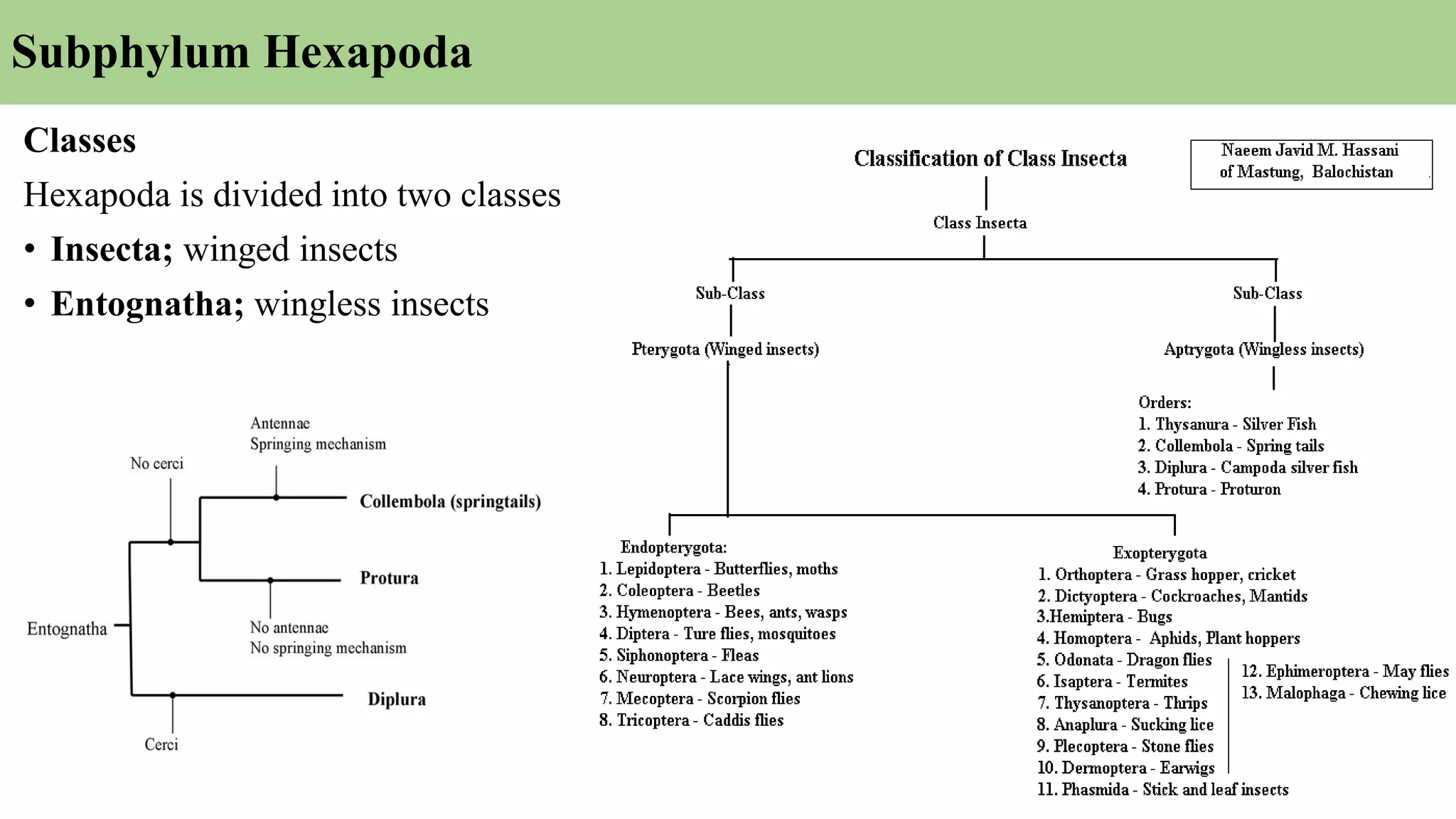
Hexapoda is divided into two classes
• Insecta; winged insects
• Entognatha; wingless insects
Subphylum Hexapoda

Lecture 9 (arthropoda)

  • 1.
  • 2.
    General Characteristics • Segmented •Jointed appendages • Hard external skeleton • 3 parts-head, thorax, abdomen (arachnids exception) • Exoskeleton-hard, external skeleton made of chitin • Molting- shed old exoskeleton and secrete a larger one, very vulnerable after molting • Complete digestive tract ( mandible -chewing or proboscis - sucking) with a dorsal heart and a ventral nervous system
  • 3.
    • Respiration throughgills, trachea, book lungs or body surface • Sensory organs include antennae and hairs, simple and compound eye • Reproduces (mostly sexually), one to several larval stage • The muscle system is more or less assisted by hydraulics originated from the blood pressure created by the heart • Respiration through gills, trachea, book lungs or body surface • With open circulatory system. Haemolymph that contains haemocyanin , a copper-based oxygen- carrying protein General Characteristics
  • 4.
    Distribution and Abundance Arthropodsare found in almost all of the habitats that cover the Earth’s surface, even in your own room!
  • 5.
    Importance • The largercrustaceans- shrimps, lobsters, and crabs- are used as food throughout the world. • Although many species of insects and mites attack food crops and timber, arthropods are of enormous benefit to human agriculture. • The stings and bites of arthropods may be irritating or painful, but very few inject dangerous toxins. • Medically, arthropods are more significant as carriers of diseases.
  • 6.
    Arthropod relation tous.. Medical Arthropod: • Arthropods related with human health. Medical Arthropodology: • Morphology, taxonomy, life cycle, ecology, transmission of the diseases, control measures. Examples: • Flea Bubonic Plague • Soft tick Q fever • Mosquito Malaria
  • 7.
  • 8.
    Subphylum Trilobitomorpha General characters •Primitive arthropod • Extinct form • Abundant during Paleozoic era • Body is divided into three lobes, hence the name trilobitomorpha • Body division; head, abdomen and pygidium • Head bears a pair of antenna and eye • Eyes were compound • Appendages biramous • Structural differentiation of body parts absent Classes Trilobita (extinct)
  • 9.
    Subphylum Chelicerata General characters •Presence of chelicerae (modified anterior most appendages) • Cephalothorax or prosoma with anterior six segments • Abdomen or opisthosoma with thirteen segments • Abdomen is divided into mesosoma and metasoma • Antennae completely absent Classes • Arachnida; spiders and scorpions • Merostomata; Horseshoe crabs • Pycnogonida; Sea spiders
  • 10.
    General characteristics • Includemillipedes and centipedes • All are terrestrial arthropods • Usually contain many legs • Single pair of antenna • Eyes simple • Mouthparts lie on the underside of head • Upper lip of mouth with epistome and labrum • Lower lip with pair of maxillae • A pair of mandibles present • Breathe through spiracles that connect tracheal system similar to insects • Excretion through malpighian tubules Subphylum Myriapoda
  • 11.
    Classes This subphylum includefour classes • Chilopoda; centipedes • Diplopoda; millipedes • Pauropoda; • Symphyla; Subphylum Myriapoda
  • 12.
    Subphylum Crustacea General characteristics •Usually marine aquatic arthropods • Head and thorax fused to form cephalothorax • Cephalothorax usually covered by single large carapace • Eyes are compound • Two pairs of antenna, five pairs of cephalic appendages • Respiration through gills • Excretion by green glands or antennal glands • Paired gonopores • Development is usually indirect • Larval form is called nauplius
  • 13.
    Classes This subphylum includesix classes a) Branchiopoda; Brine shrimps b) Remipedia; Bind crustaceans c) Cephalocarida; Horseshoe shrimps d) Maxillopoda; Barnacles e) Ostracoda; Seed shrimps f) Malacostraca; lobsters, crabs, shrimps Subphylum Crustacea a b c d e f
  • 14.
    Subphylum Hexapoda General characteristics •A large taxa include insects and a group of wingless arthropods • Body plan; three parts, head, thorax and abdomen • Head with six segments • Thorax with three pairs of jointed legs (hence the name hexapoda) • Head contains a presegmental acron which bears compound eye • Head segments are closely fused • Antennae present • Mouth lie between the 4th and 5th segment of head • Thorax with three segments, each bears a pair of legs
  • 15.
    General characteristics • Abdomenusually with 11 segments • Abdomen appendages are absent or extremely reduced • Abdomen contain most of the internal systems such as respiratory, excretory and reproductive system • Respiration through tracheal system • Excretion through malpighian tubules • Development always indirect • Larval stages present which undergo metamorphosis Subphylum Hexapoda
  • 16.
    Classes Hexapoda is dividedinto two classes • Insecta; winged insects • Entognatha; wingless insects Subphylum Hexapoda