
UNITS AND SIGNIFICANT
FIGURES
Dr. Mahmood Arshad
Assistant Professor,
Dept. of Mining Engineering,
Faculty of Earth Sciences and
Engineering,
University of Engineering & Technology,
Lahore.
smarshad@uet.edu.pk
Min-E-240 Surveying
Lecture 2 – January 24, 2019
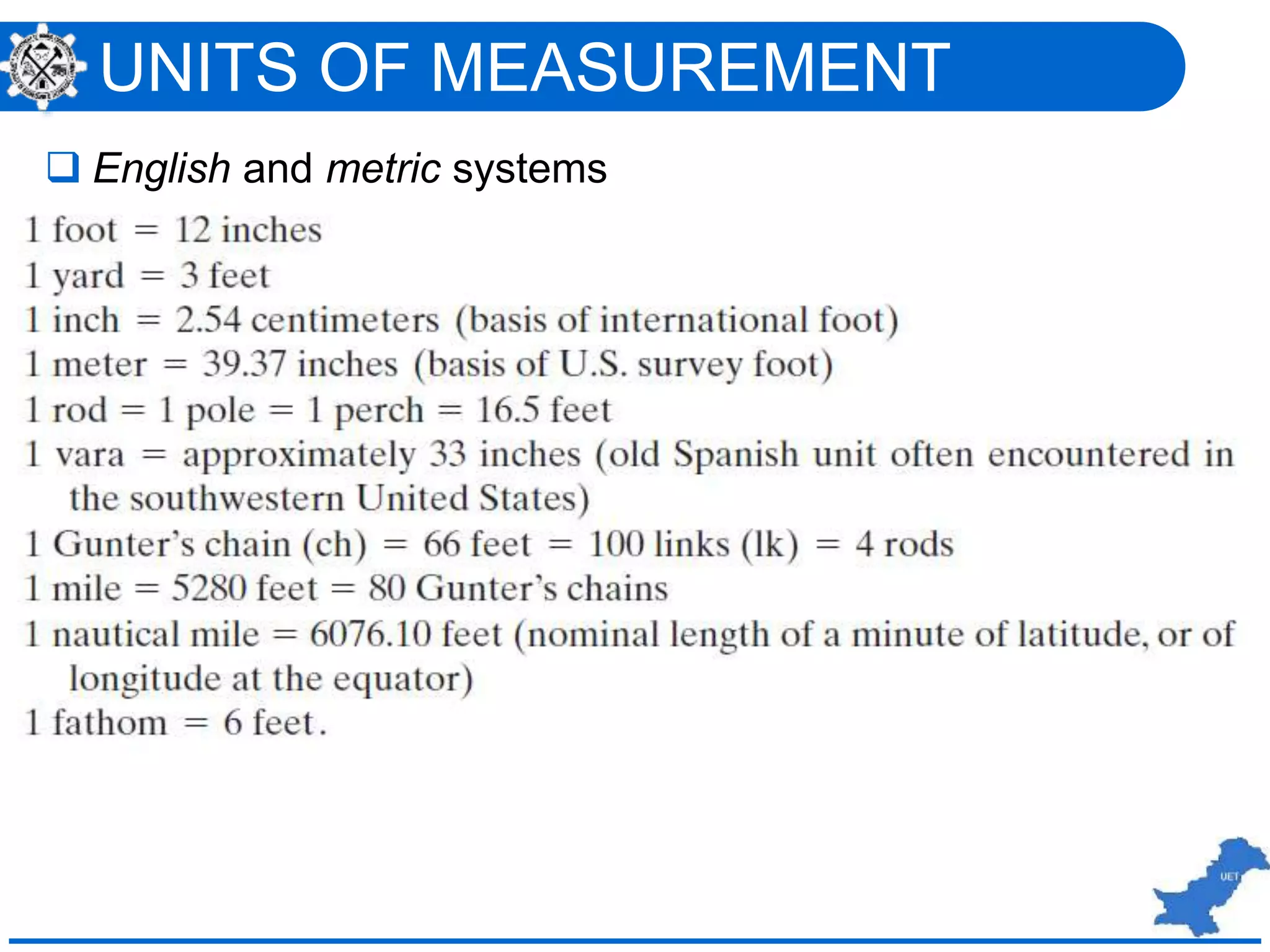
UNITS OF MEASUREMENT
 English and metric systems
Significant Figures
 The number of significant figures in any observed value
includes the positive (certain) digits plus one (only one) digit
that is estimated or rounded off, and therefore questionable.
 Zeros at the end of an integer.
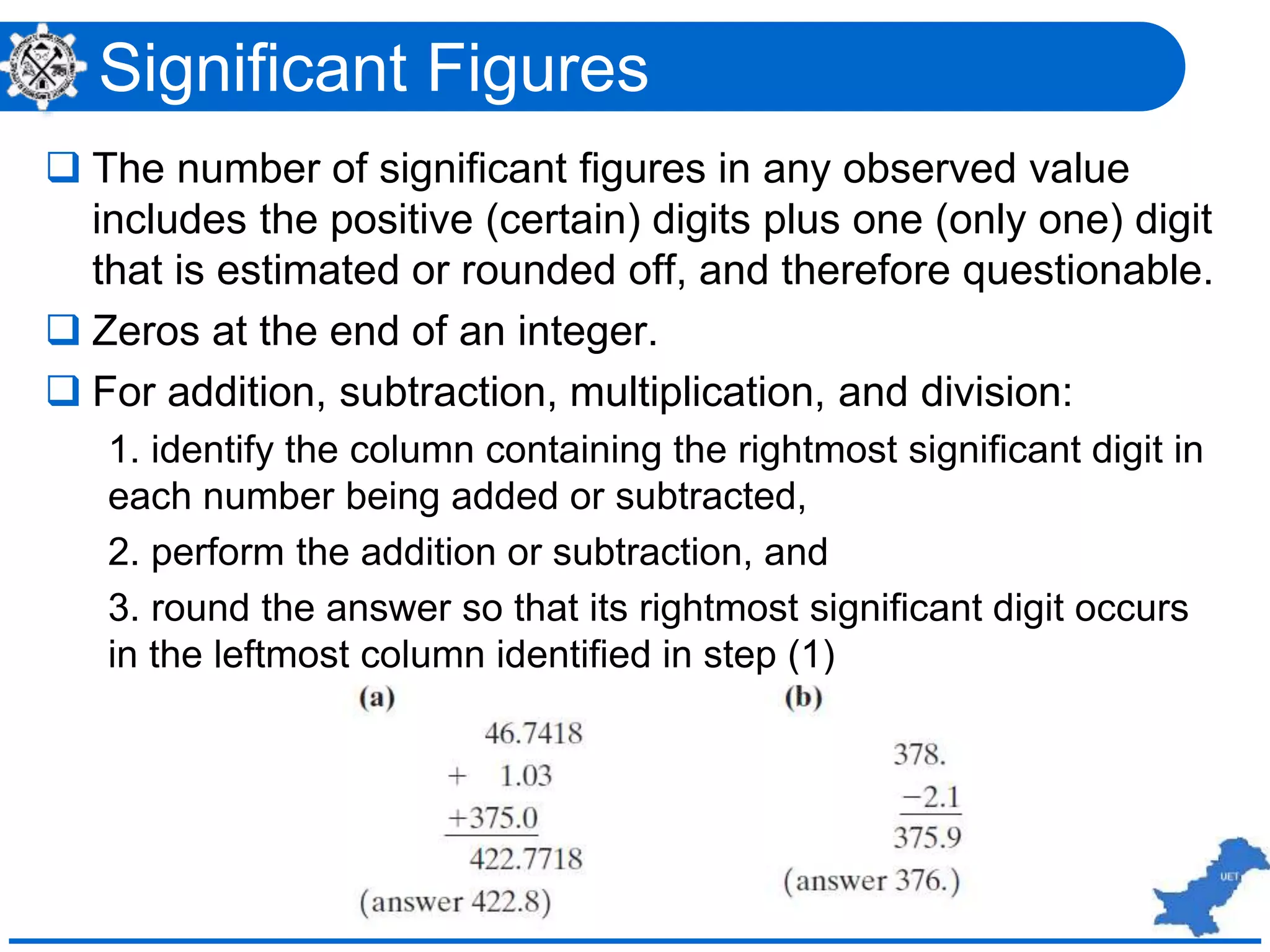
 For addition, subtraction, multiplication, and division:
1. identify the column containing the rightmost significant digit in
each number being added or subtracted,
2. perform the addition or subtraction, and
3. round the answer so that its rightmost significant digit occurs
in the leftmost column identified in step (1)
ROUNDING OFF NUMBERS
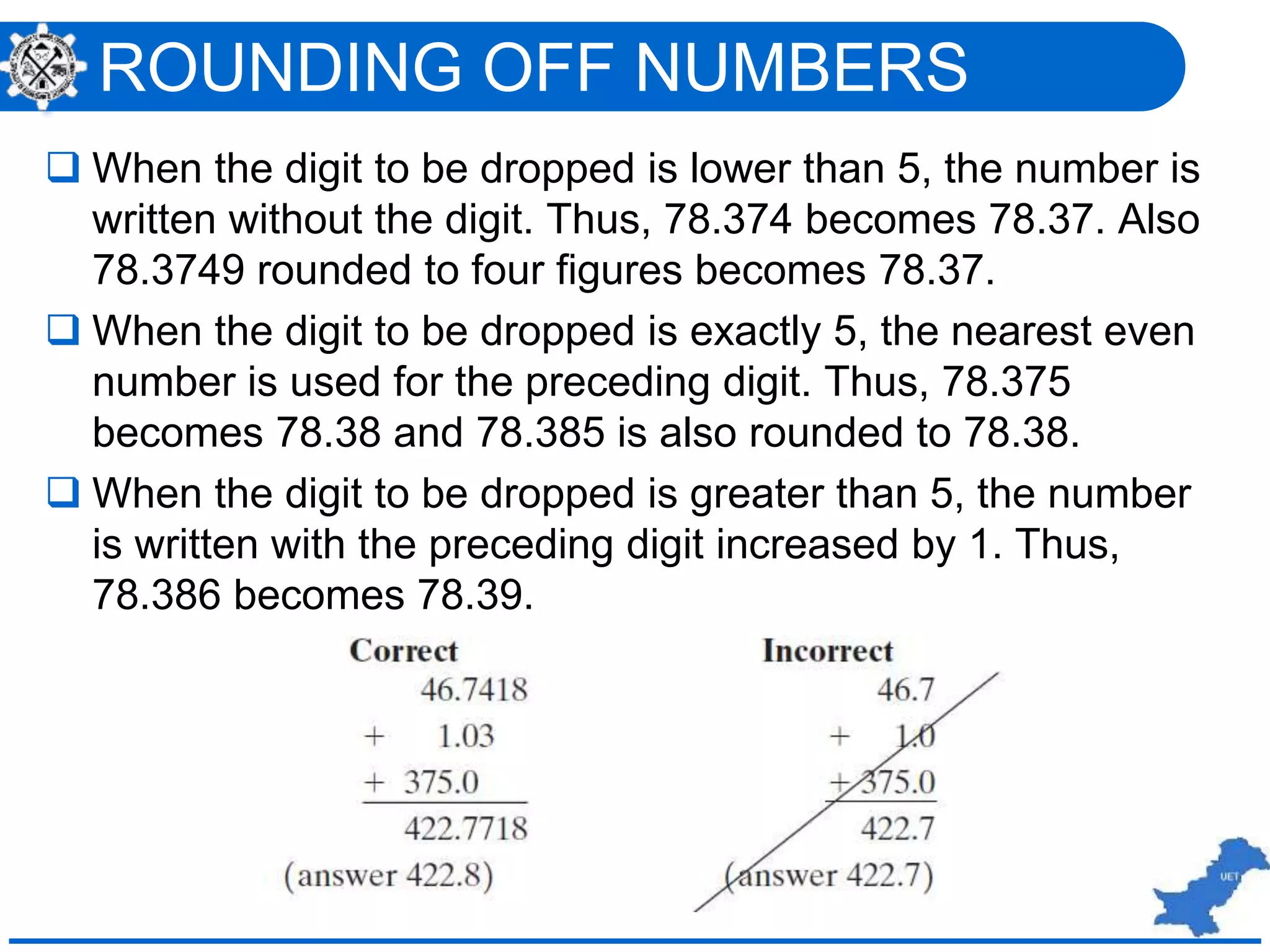
 When the digit to be dropped is lower than 5, the number is
written without the digit. Thus, 78.374 becomes 78.37. Also
78.3749 rounded to four figures becomes 78.37.
 When the digit to be dropped is exactly 5, the nearest even
number is used for the preceding digit. Thus, 78.375
becomes 78.38 and 78.385 is also rounded to 78.38.
 When the digit to be dropped is greater than 5, the number
is written with the preceding digit increased by 1. Thus,
78.386 becomes 78.39.
FIELD NOTES
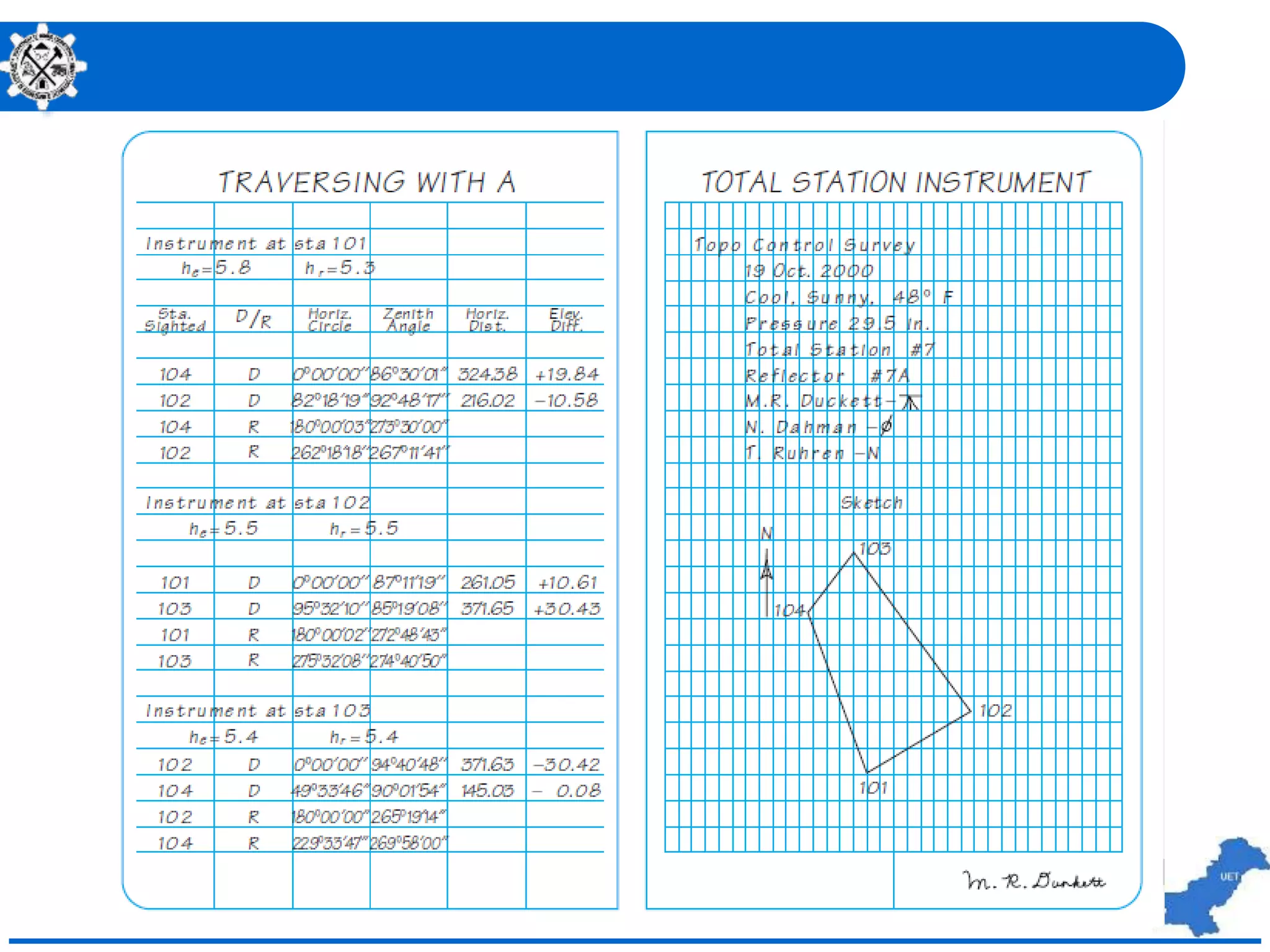
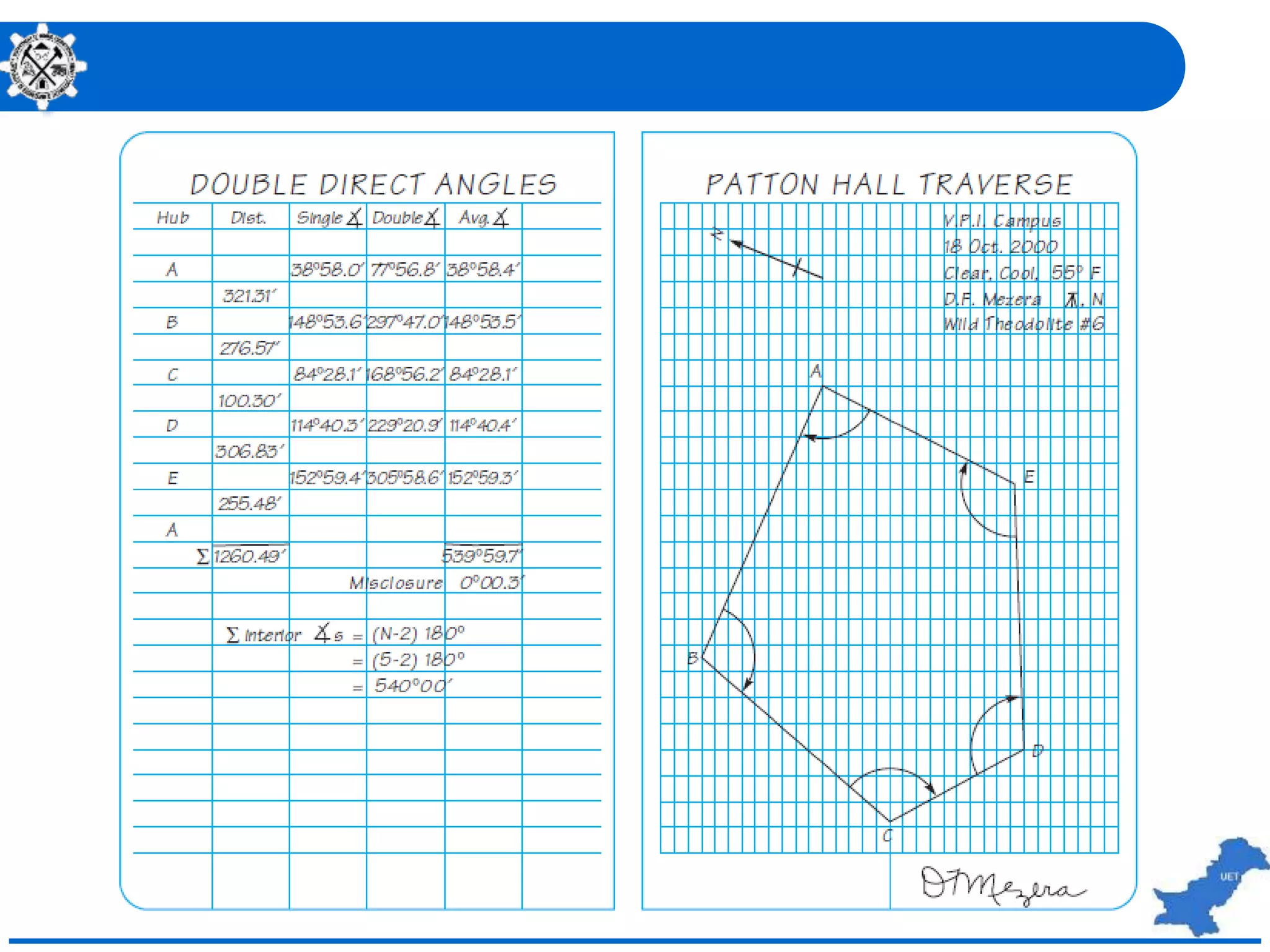
 The records of work done in the field
 measurements, sketches, descriptions, and many other
items of miscellaneous information
GENERAL REQUIREMENTS OF HANDWRITTEN FIELD NOTES
 Accuracy
 Integrity
 Legibility
 Arrangement
 Clarity
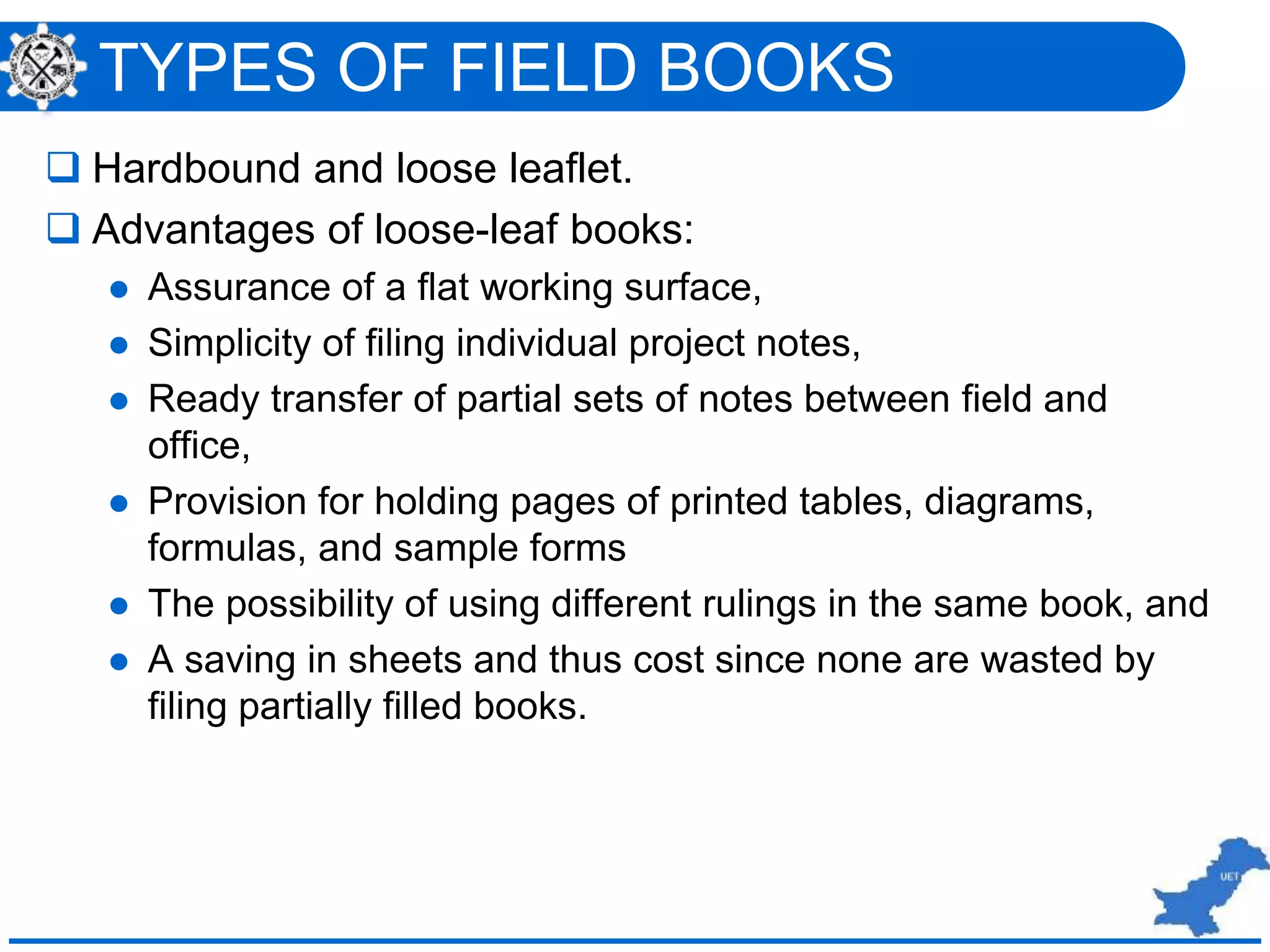
TYPES OF FIELD BOOKS
 Hardbound and loose leaflet.
 Advantages of loose-leaf books:
 Assurance of a flat working surface,
 Simplicity of filing individual project notes,
 Ready transfer of partial sets of notes between field and
office,
 Provision for holding pages of printed tables, diagrams,
formulas, and sample forms
 The possibility of using different rulings in the same book, and
 A saving in sheets and thus cost since none are wasted by
filing partially filled books.
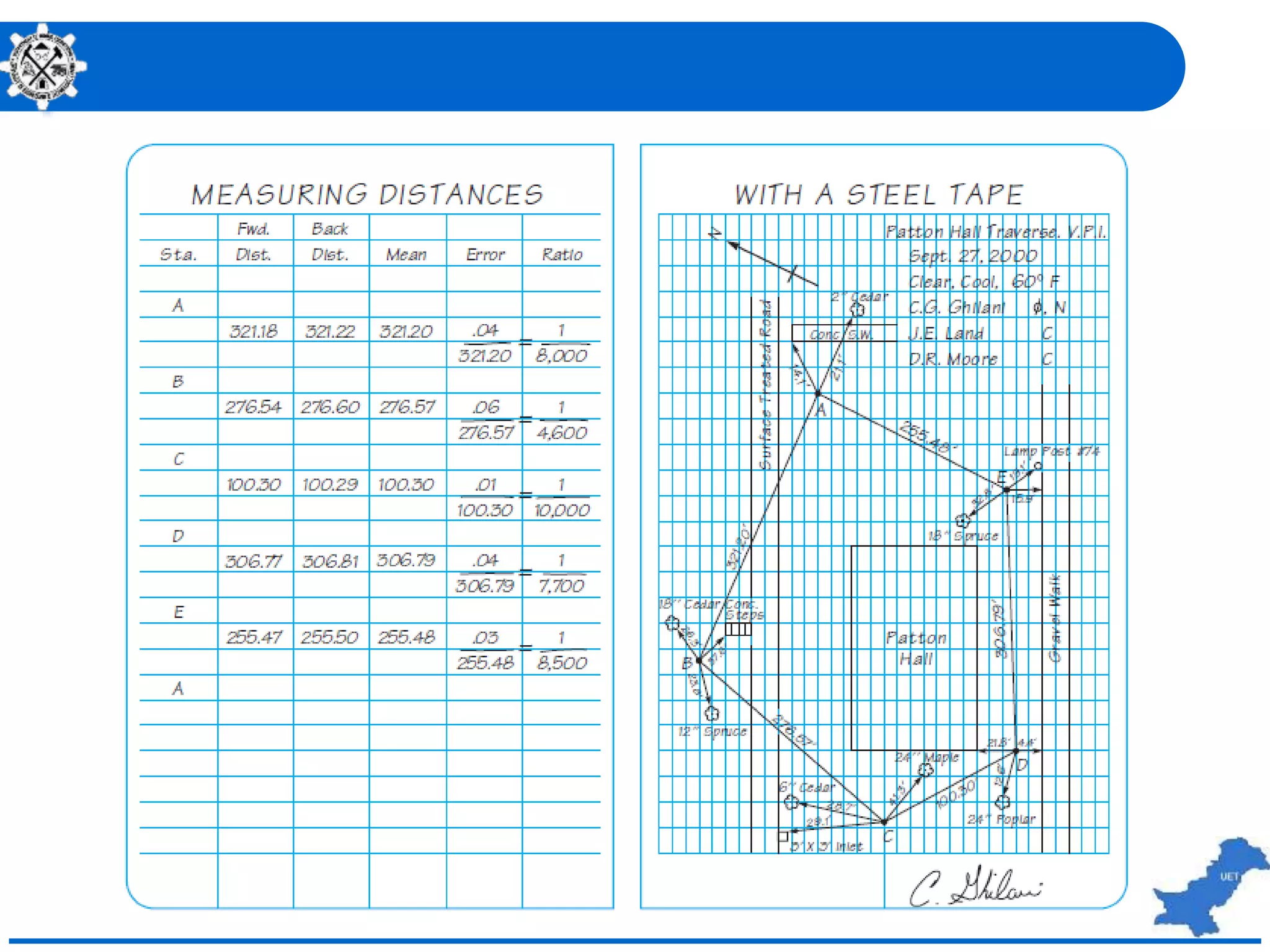
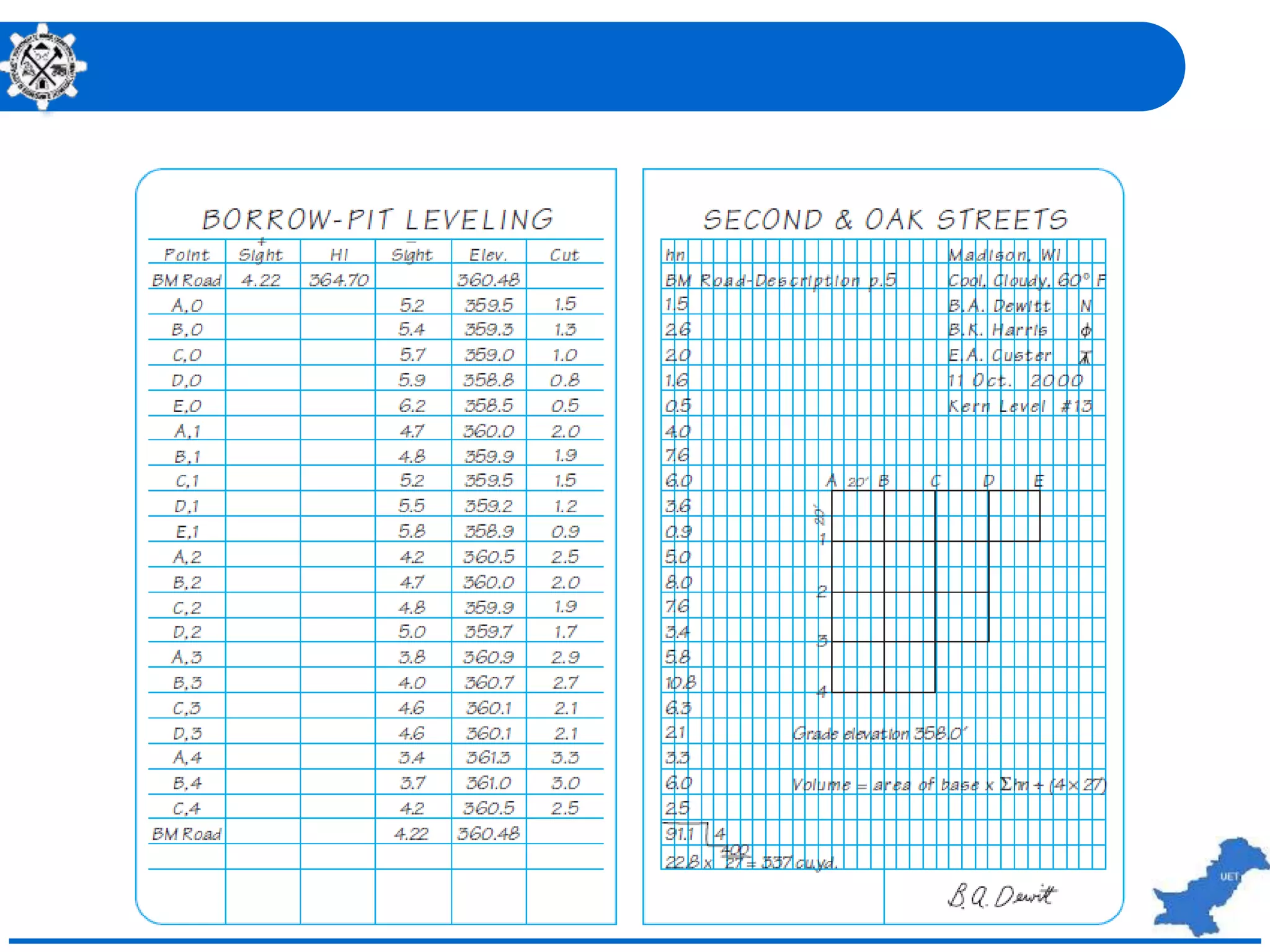
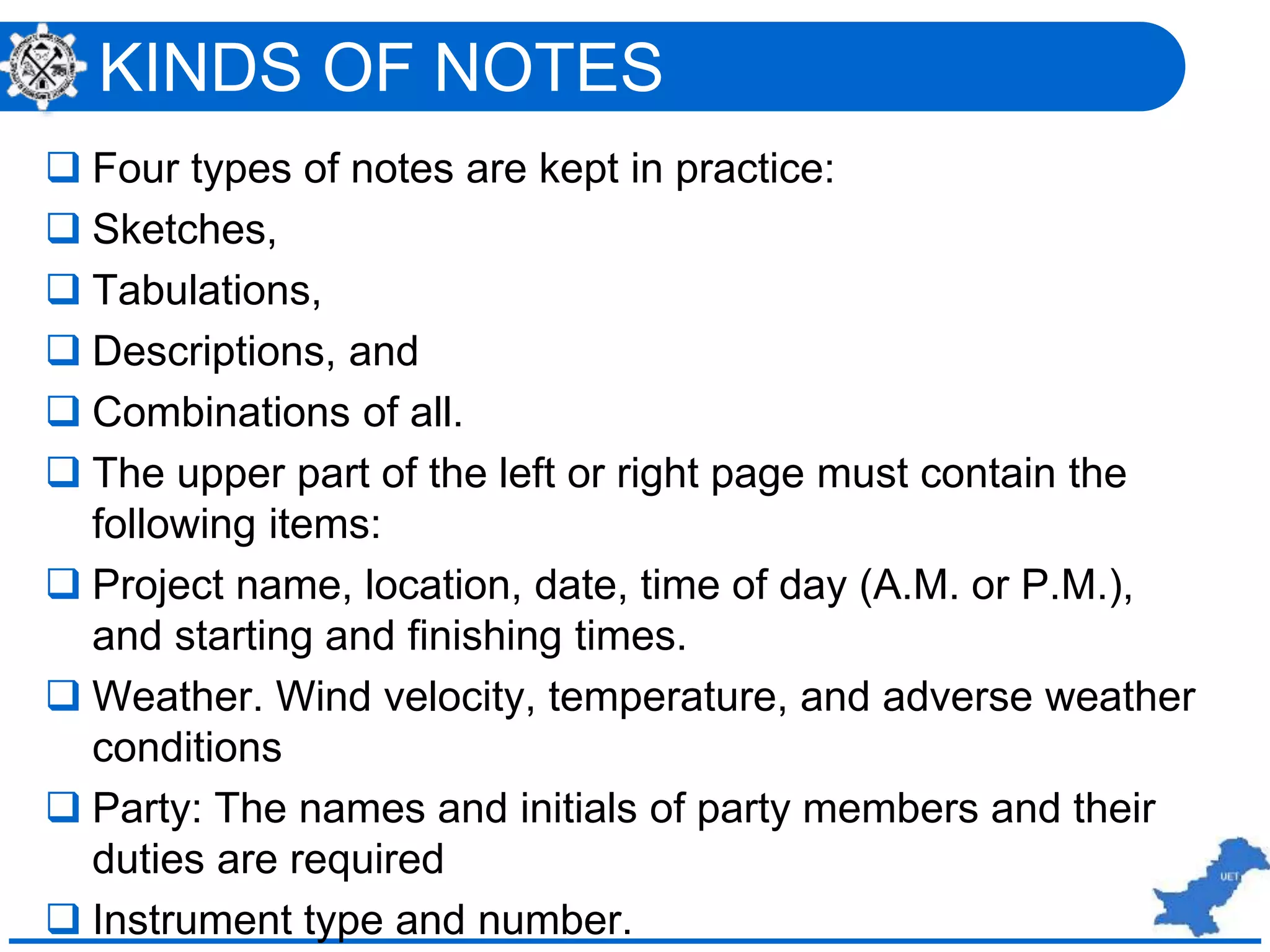
KINDS OF NOTES
 Four types of notes are kept in practice:
 Sketches,
 Tabulations,
 Descriptions, and
 Combinations of all.
 The upper part of the left or right page must contain the
following items:
 Project name, location, date, time of day (A.M. or P.M.),
and starting and finishing times.
 Weather. Wind velocity, temperature, and adverse weather
conditions
 Party: The names and initials of party members and their
duties are required
 Instrument type and number.
SUGGESTIONS FOR RECORDING NOTES
 Consider it as Homework 1:
 Handwrite all 25 suggestions under the title
“SUGGESTIONS FOR RECORDING NOTES” in
Chapter 2 of textbook and submit hardcopy.
 Solve the exercise questions in Chapter 1 and Chapter 2:
 Divide you roll number by 3 and get the remainder, i.e., 0, 1, or
2.
 Solve all questions from the assigned chapters that give the
same remainder as in your roll number when question number is
divided by 3.
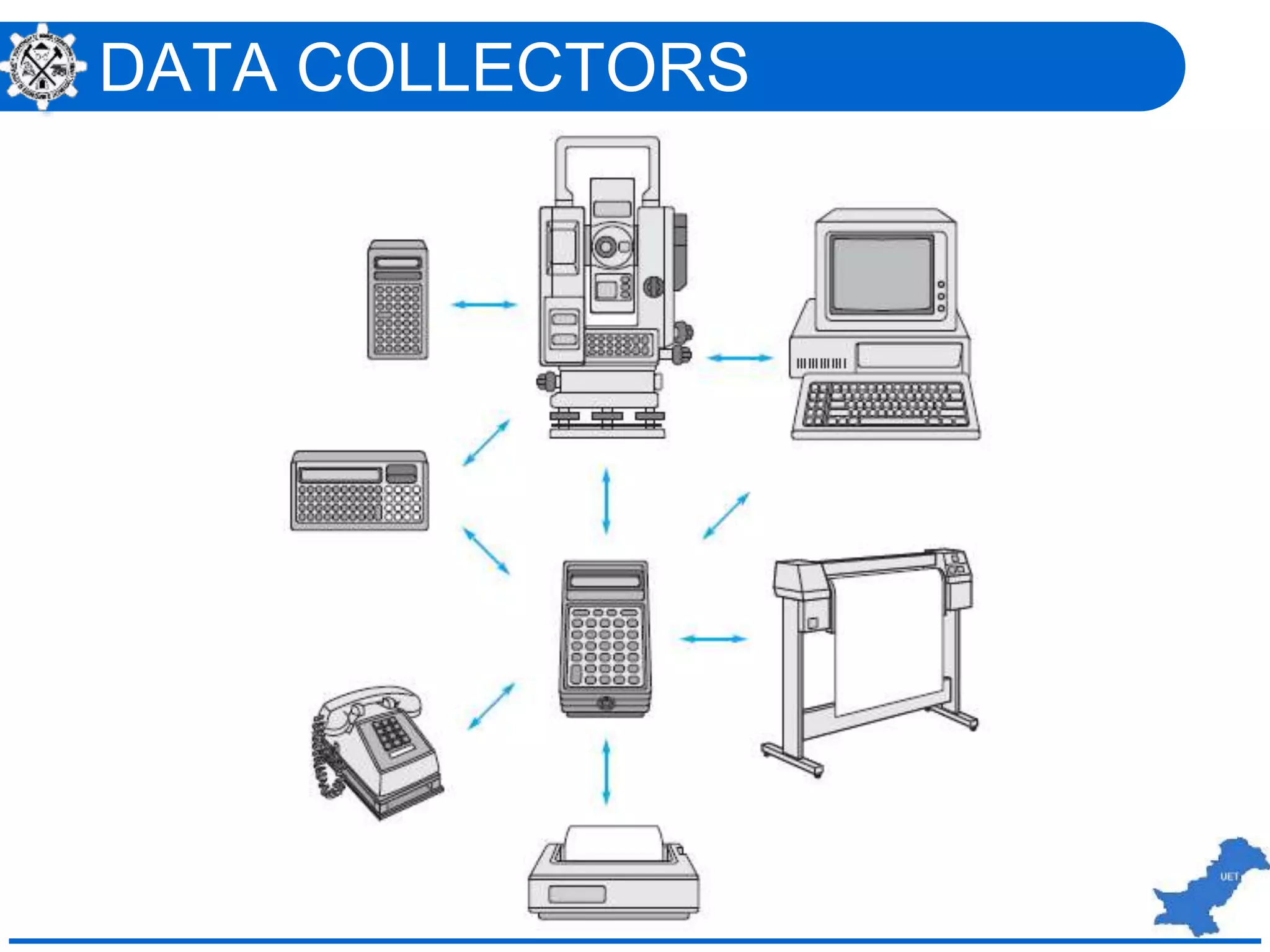
DATA COLLECTORS

Lecture 2 units and significant figures

  • 1.
    UNITS AND SIGNIFICANT FIGURES Dr.Mahmood Arshad Assistant Professor, Dept. of Mining Engineering, Faculty of Earth Sciences and Engineering, University of Engineering & Technology, Lahore. smarshad@uet.edu.pk Min-E-240 Surveying Lecture 2 – January 24, 2019
  • 3.
    UNITS OF MEASUREMENT English and metric systems
  • 4.
    Significant Figures  Thenumber of significant figures in any observed value includes the positive (certain) digits plus one (only one) digit that is estimated or rounded off, and therefore questionable.  Zeros at the end of an integer.  For addition, subtraction, multiplication, and division: 1. identify the column containing the rightmost significant digit in each number being added or subtracted, 2. perform the addition or subtraction, and 3. round the answer so that its rightmost significant digit occurs in the leftmost column identified in step (1)
  • 5.
    ROUNDING OFF NUMBERS When the digit to be dropped is lower than 5, the number is written without the digit. Thus, 78.374 becomes 78.37. Also 78.3749 rounded to four figures becomes 78.37.  When the digit to be dropped is exactly 5, the nearest even number is used for the preceding digit. Thus, 78.375 becomes 78.38 and 78.385 is also rounded to 78.38.  When the digit to be dropped is greater than 5, the number is written with the preceding digit increased by 1. Thus, 78.386 becomes 78.39.
  • 6.
    FIELD NOTES  Therecords of work done in the field  measurements, sketches, descriptions, and many other items of miscellaneous information
  • 7.
    GENERAL REQUIREMENTS OFHANDWRITTEN FIELD NOTES  Accuracy  Integrity  Legibility  Arrangement  Clarity
  • 12.
    TYPES OF FIELDBOOKS  Hardbound and loose leaflet.  Advantages of loose-leaf books:  Assurance of a flat working surface,  Simplicity of filing individual project notes,  Ready transfer of partial sets of notes between field and office,  Provision for holding pages of printed tables, diagrams, formulas, and sample forms  The possibility of using different rulings in the same book, and  A saving in sheets and thus cost since none are wasted by filing partially filled books.
  • 13.
    KINDS OF NOTES Four types of notes are kept in practice:  Sketches,  Tabulations,  Descriptions, and  Combinations of all.  The upper part of the left or right page must contain the following items:  Project name, location, date, time of day (A.M. or P.M.), and starting and finishing times.  Weather. Wind velocity, temperature, and adverse weather conditions  Party: The names and initials of party members and their duties are required  Instrument type and number.
  • 14.
    SUGGESTIONS FOR RECORDINGNOTES  Consider it as Homework 1:  Handwrite all 25 suggestions under the title “SUGGESTIONS FOR RECORDING NOTES” in Chapter 2 of textbook and submit hardcopy.  Solve the exercise questions in Chapter 1 and Chapter 2:  Divide you roll number by 3 and get the remainder, i.e., 0, 1, or 2.  Solve all questions from the assigned chapters that give the same remainder as in your roll number when question number is divided by 3.
  • 15.