
Downloaded 351 times
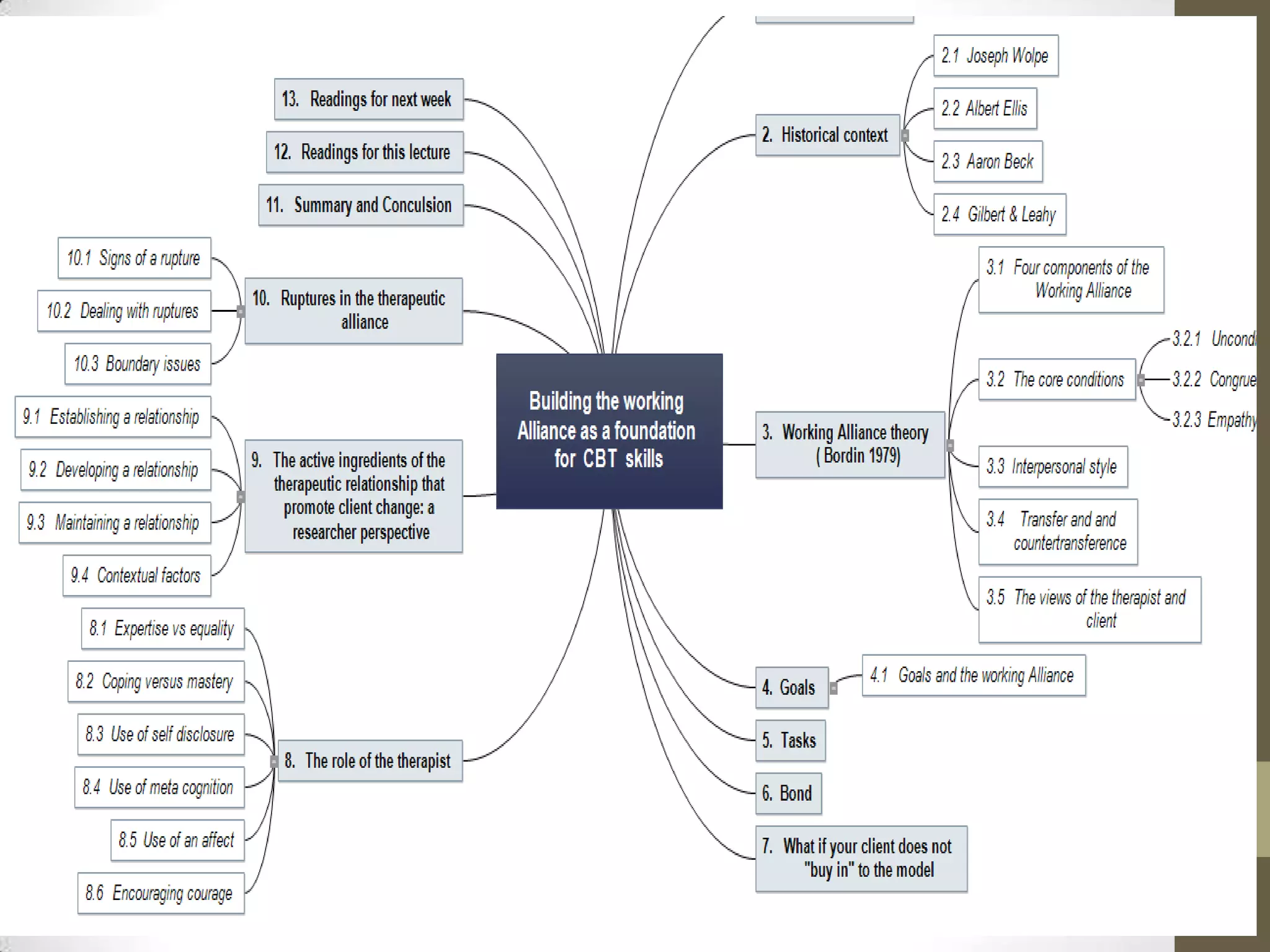

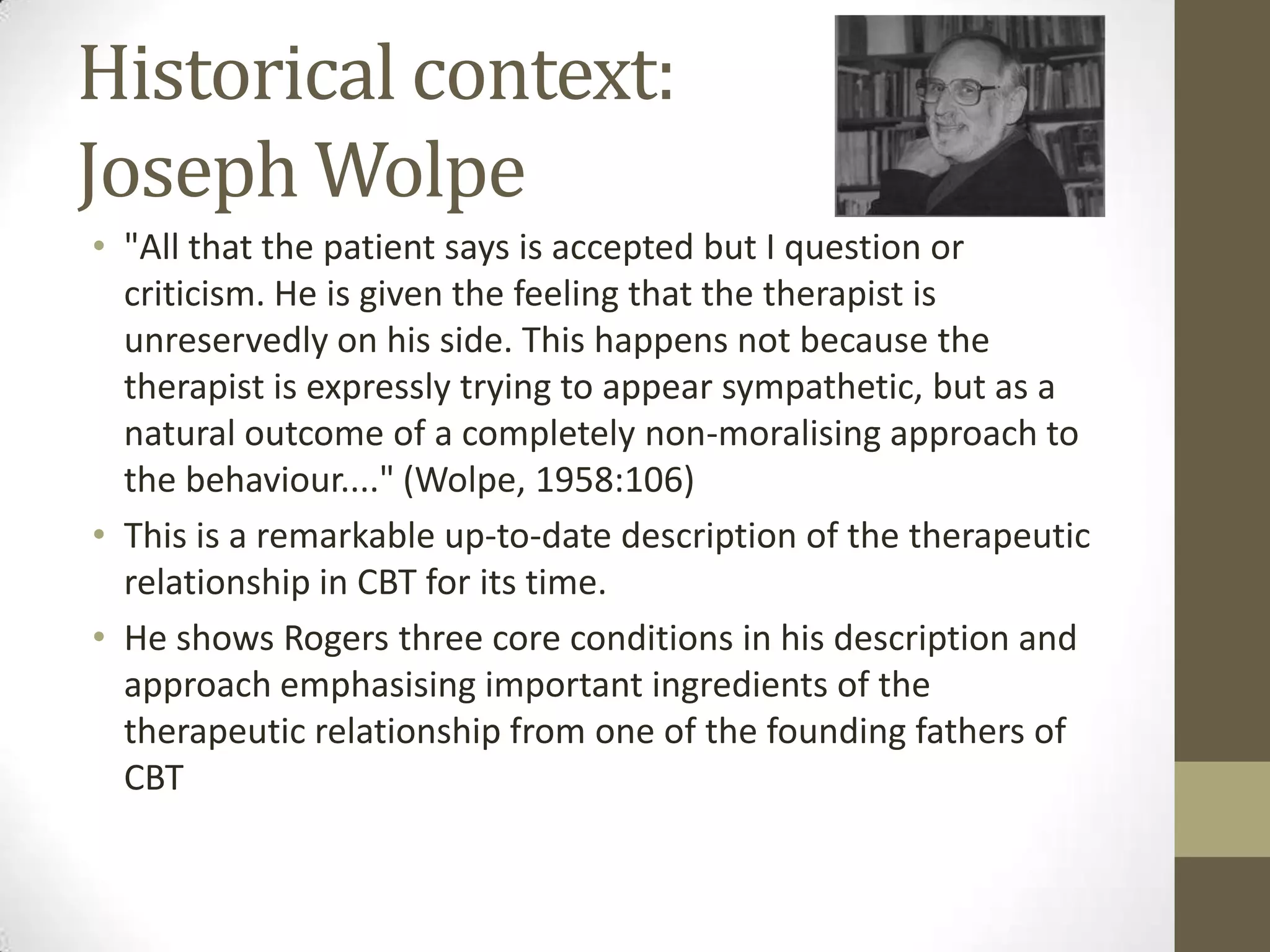
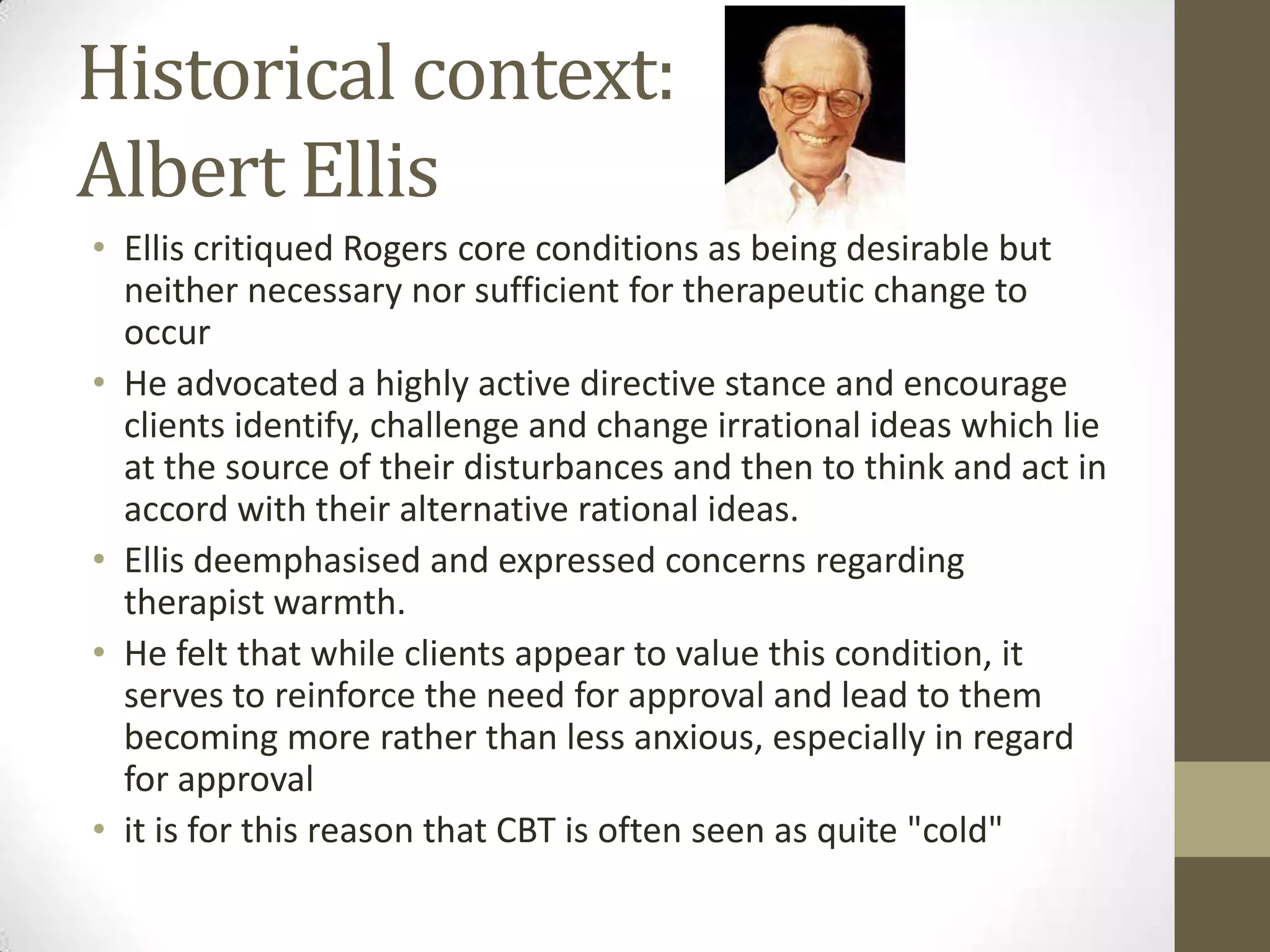
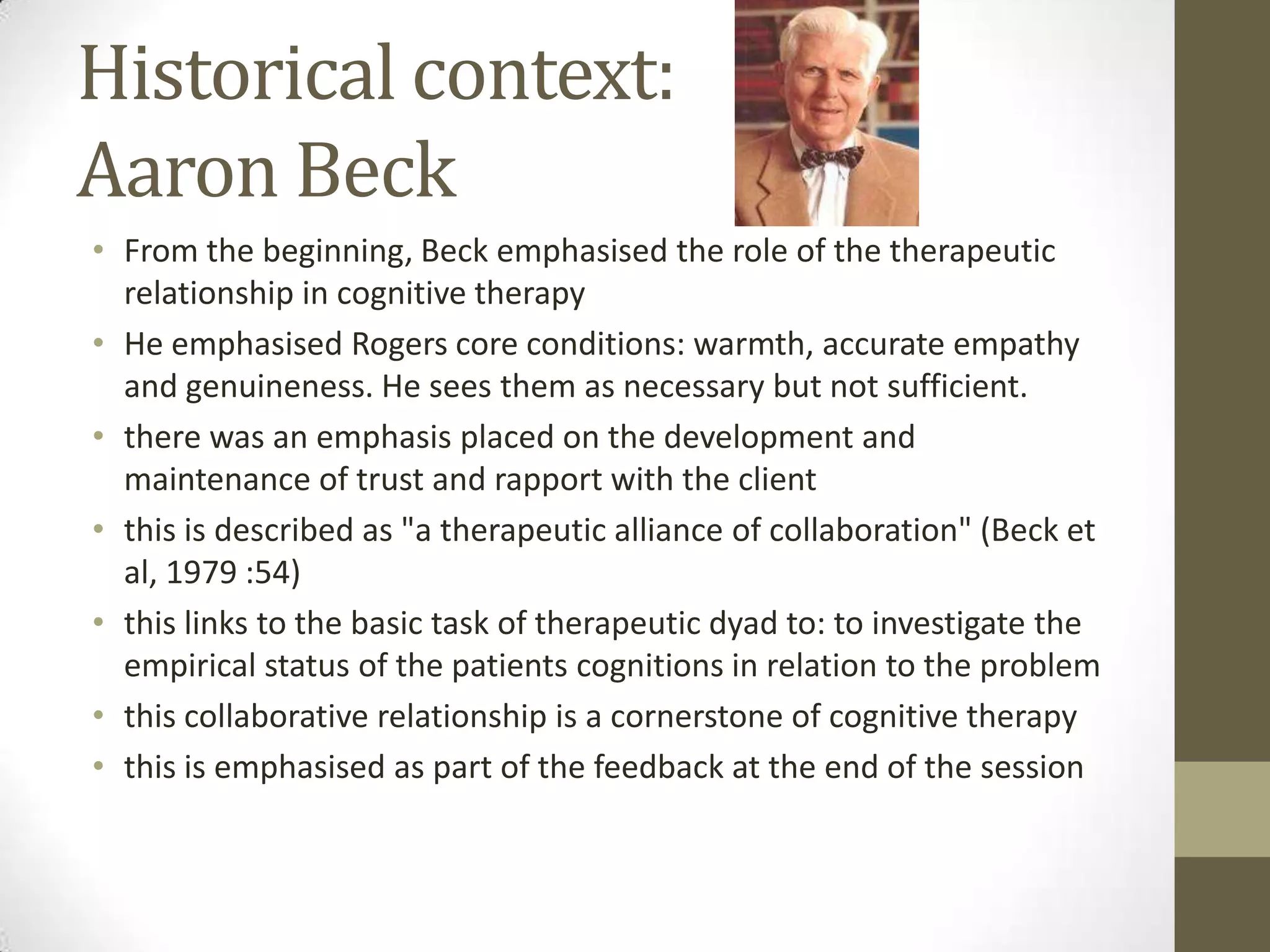


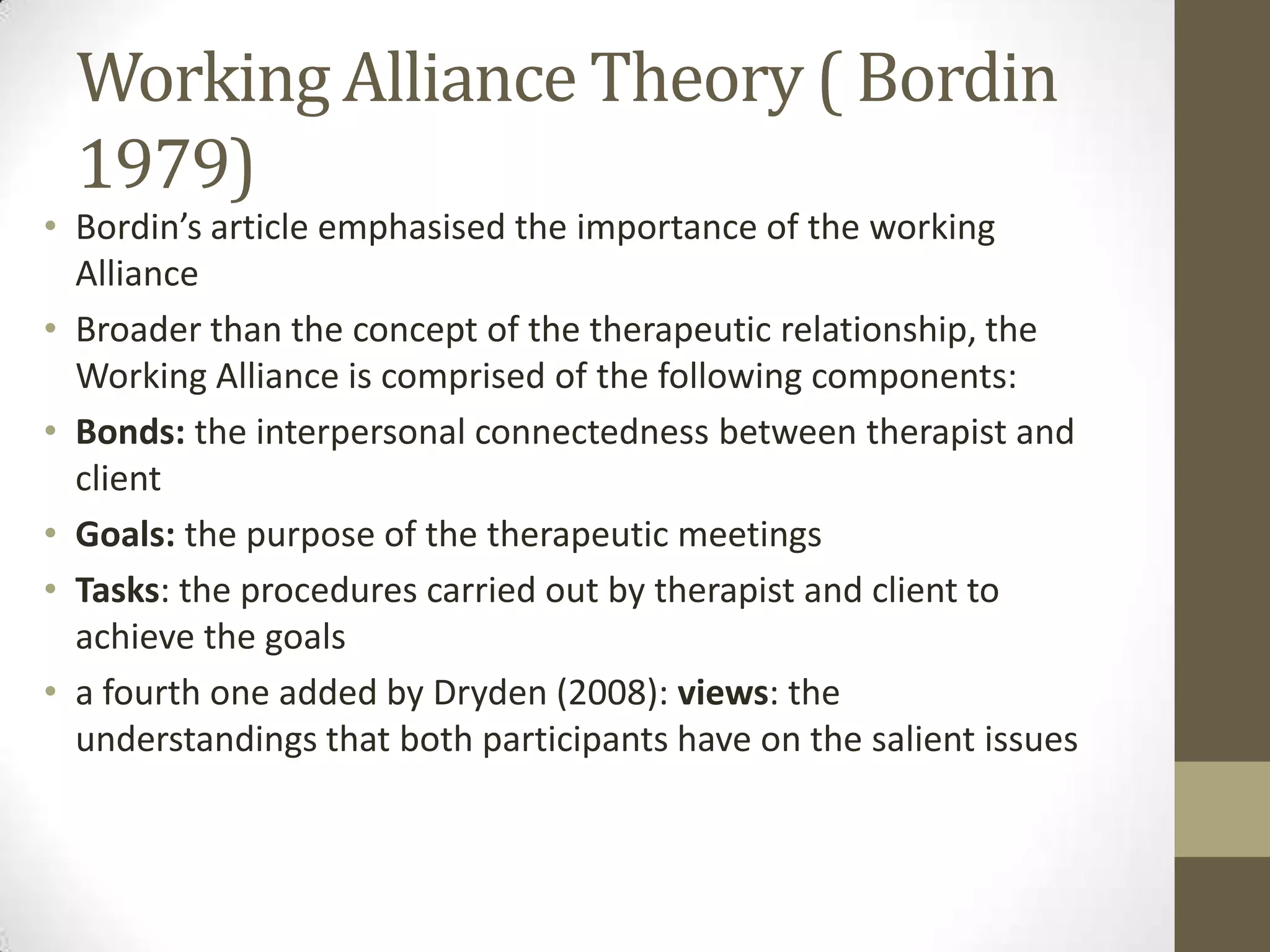

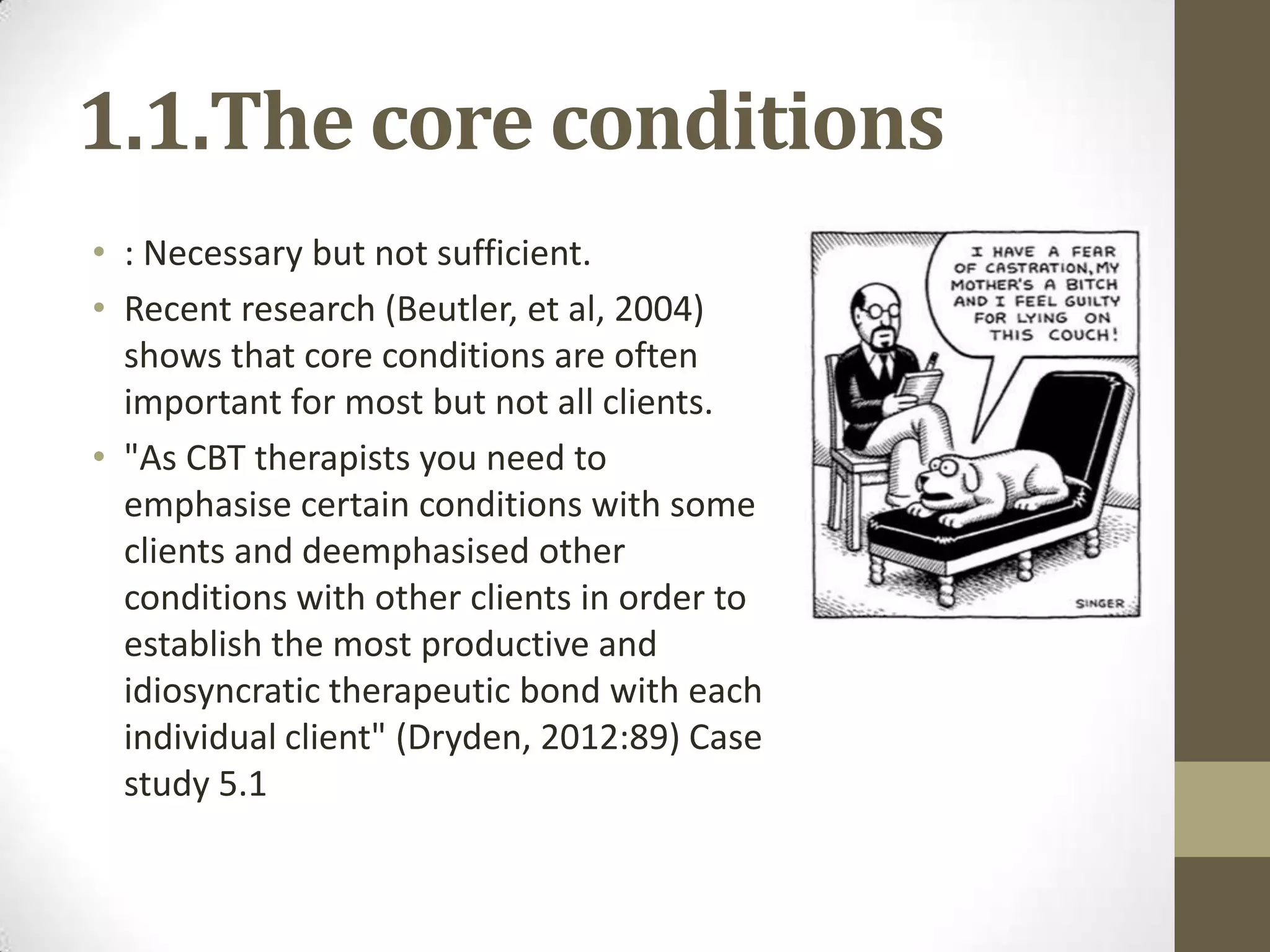
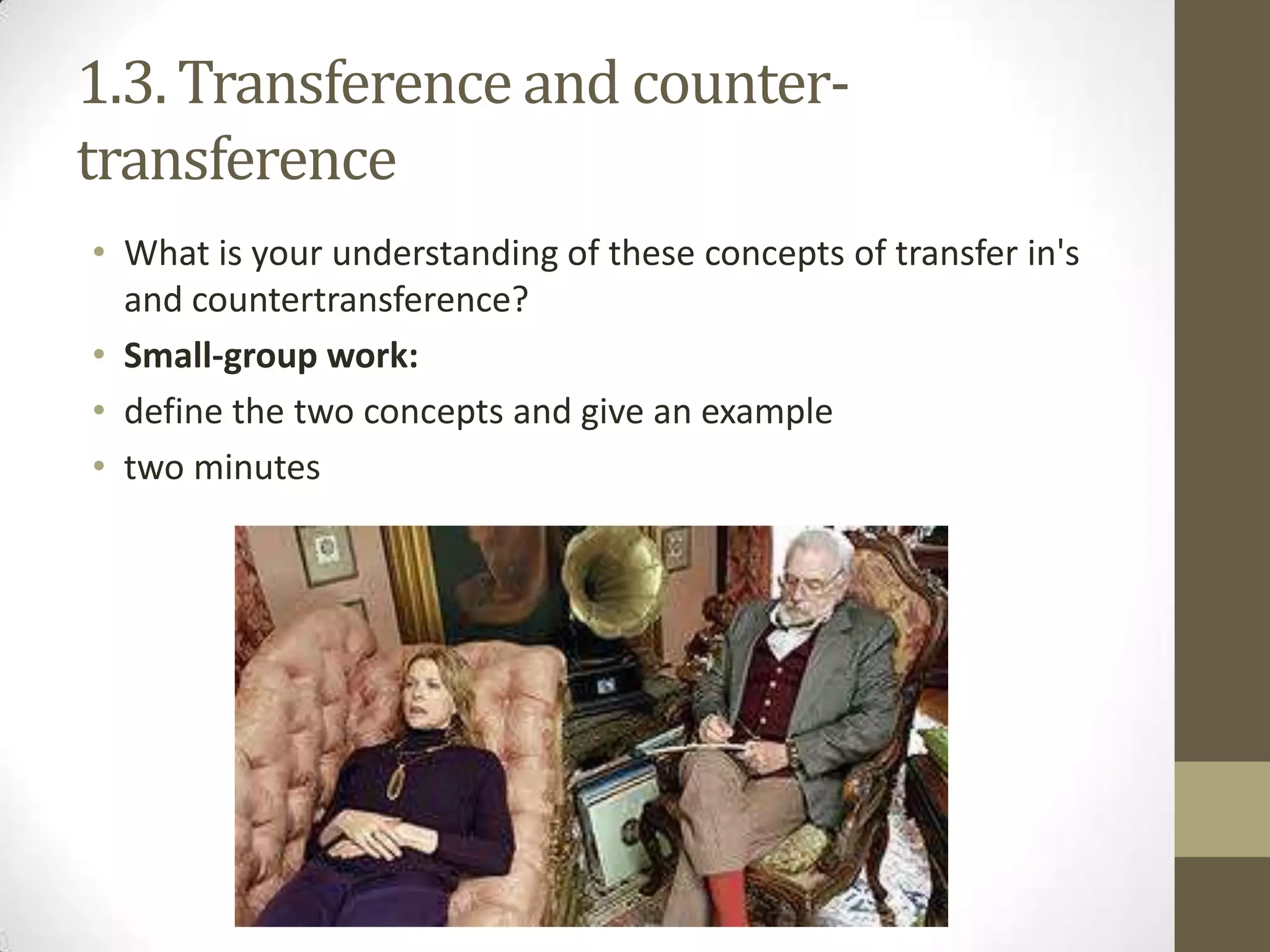

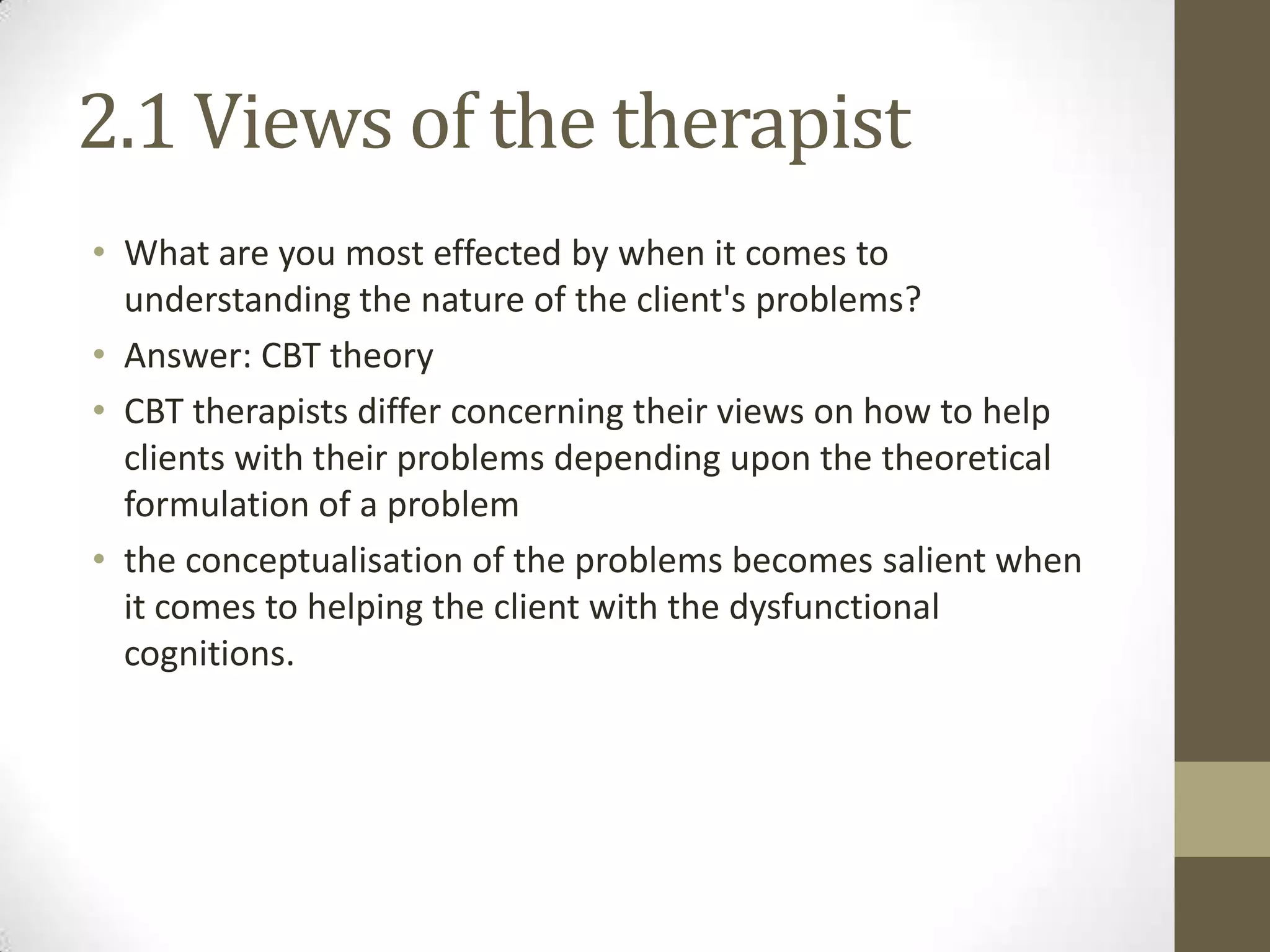
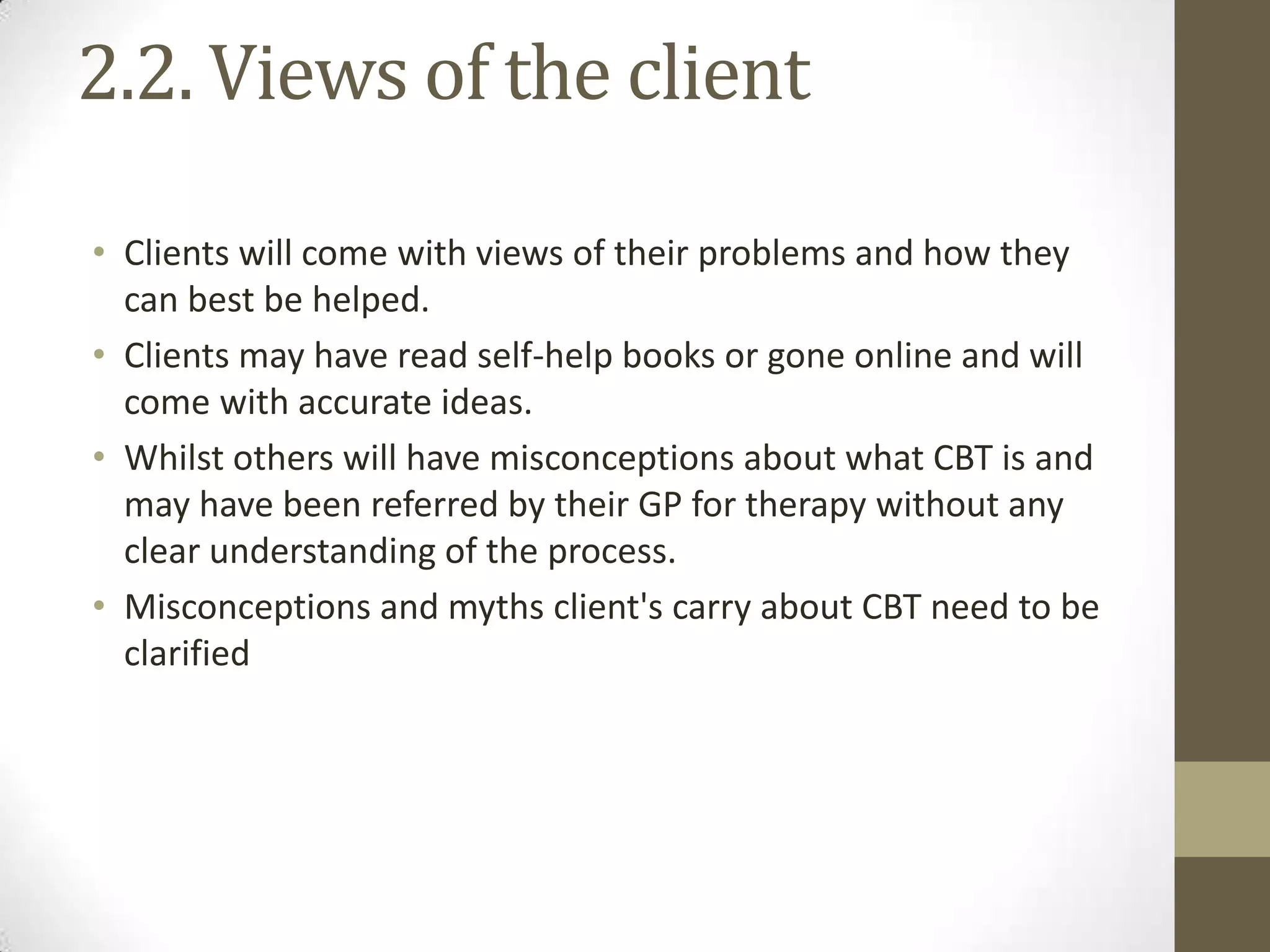
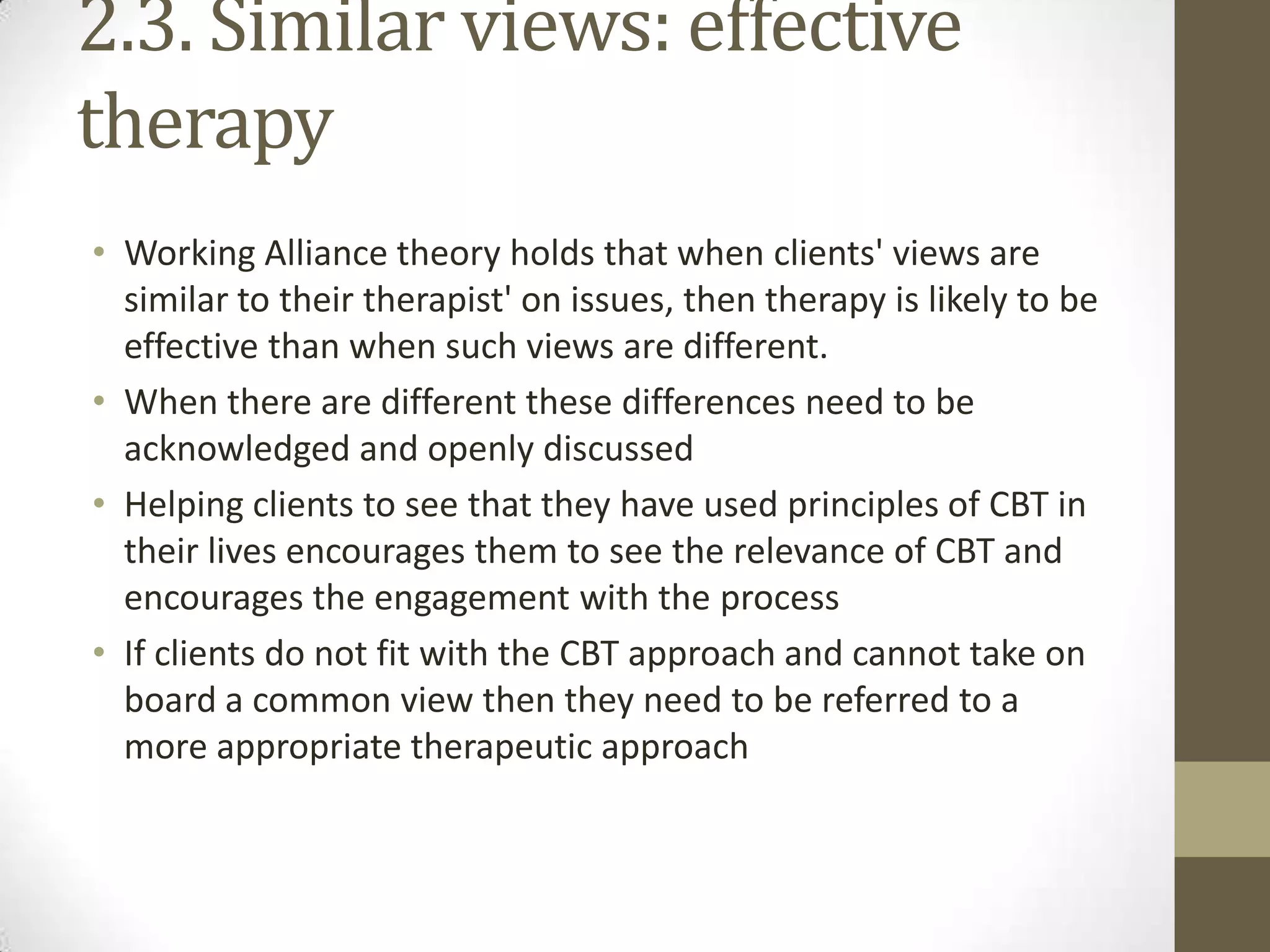


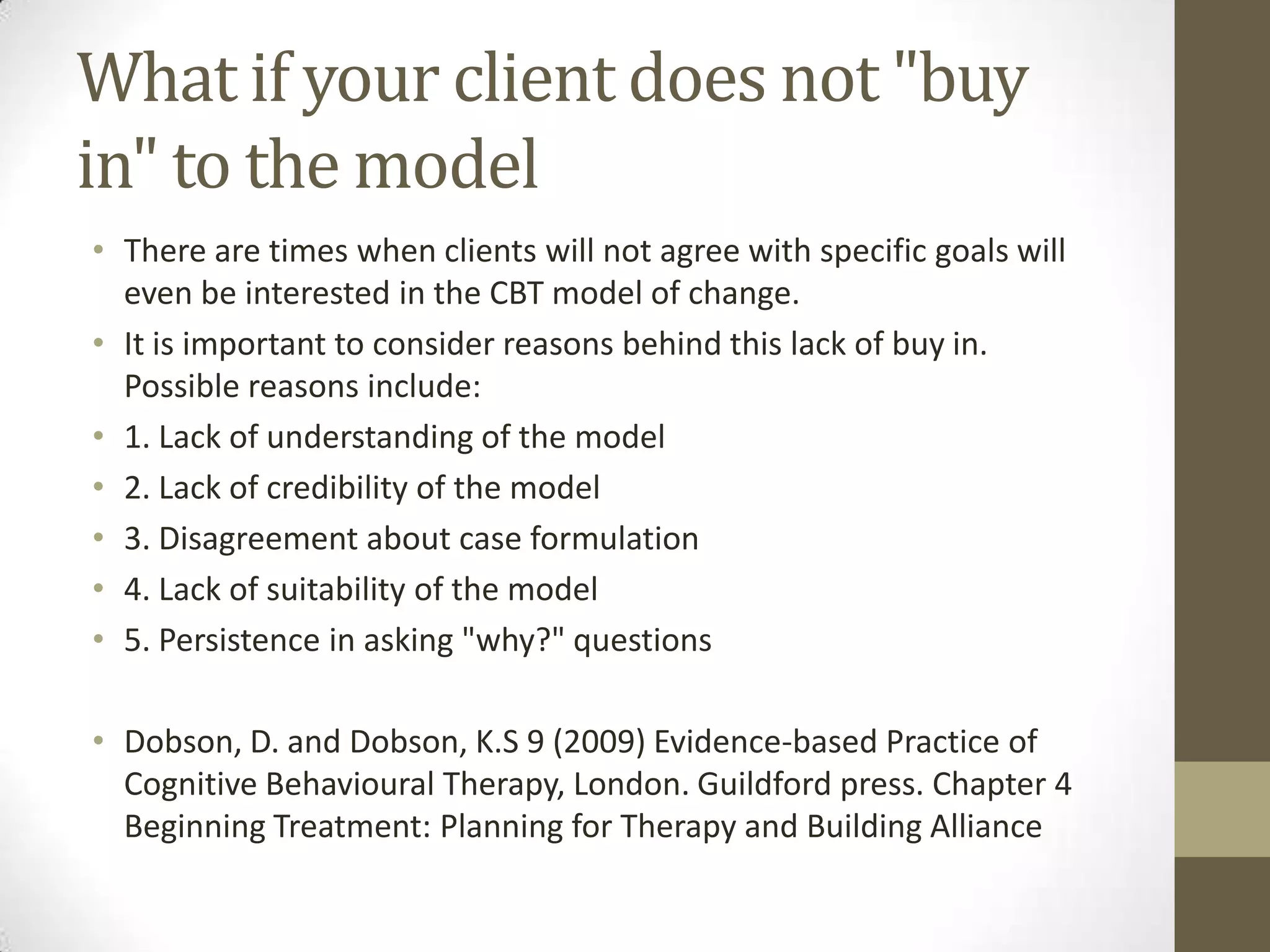

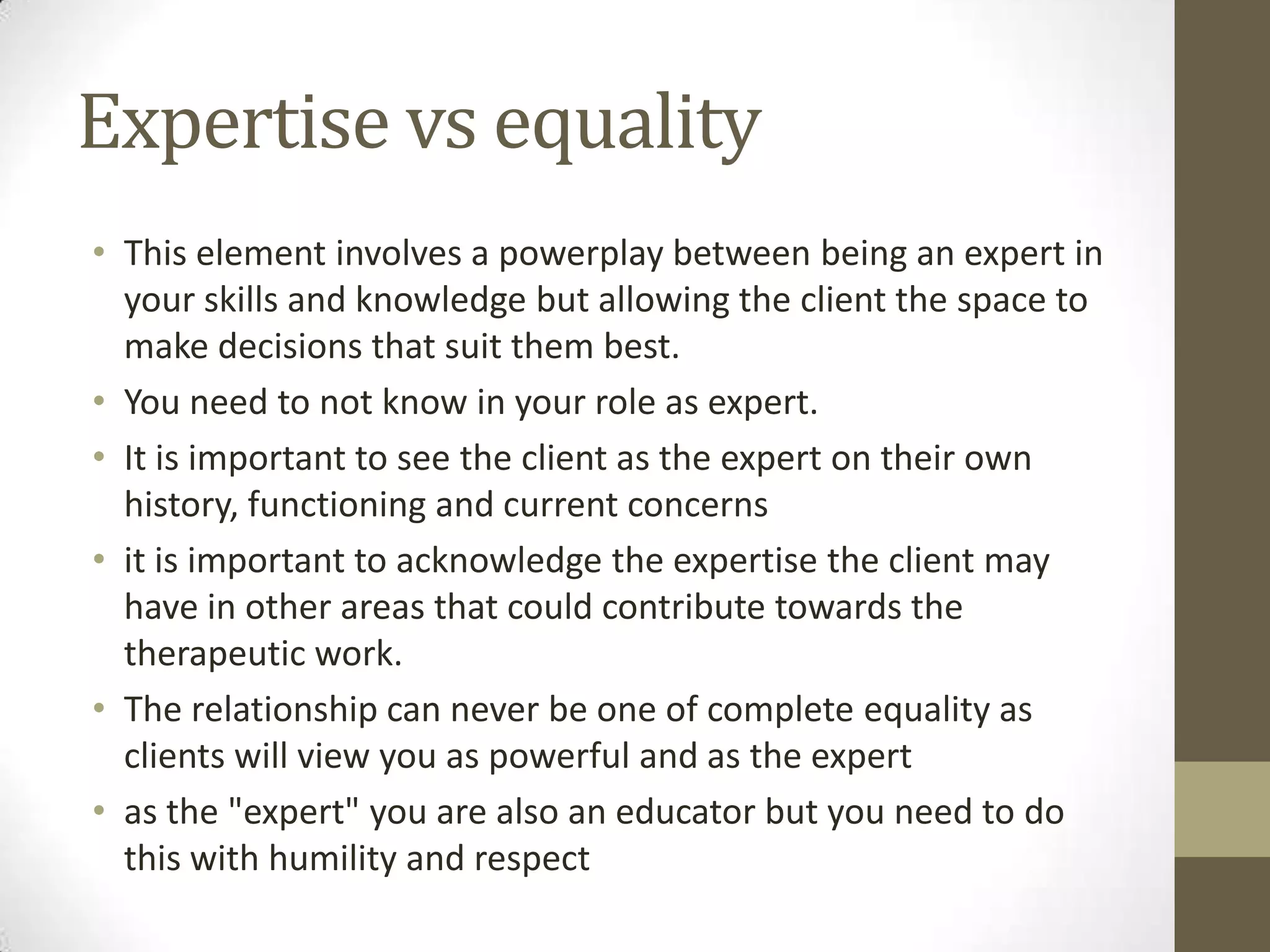
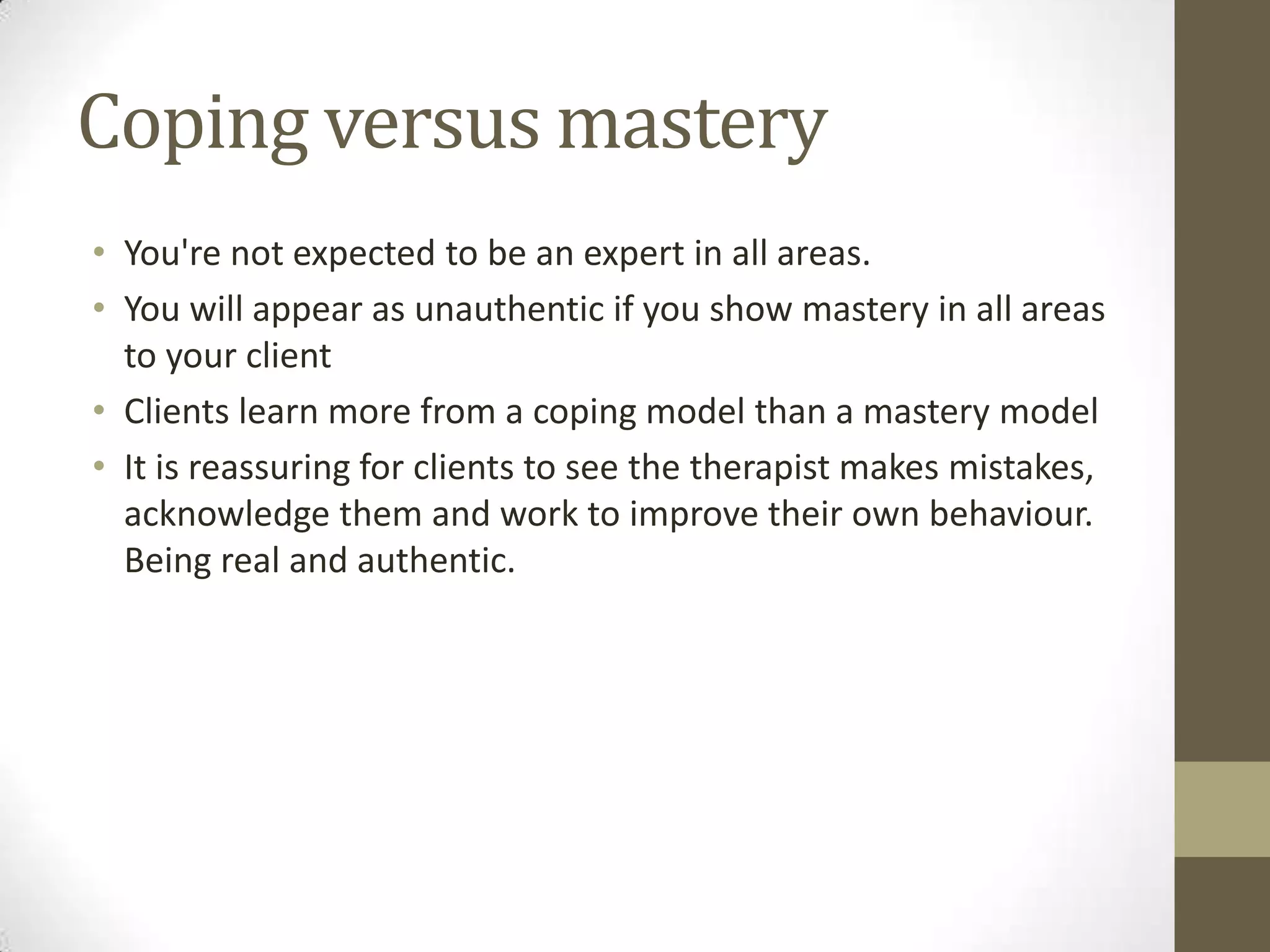
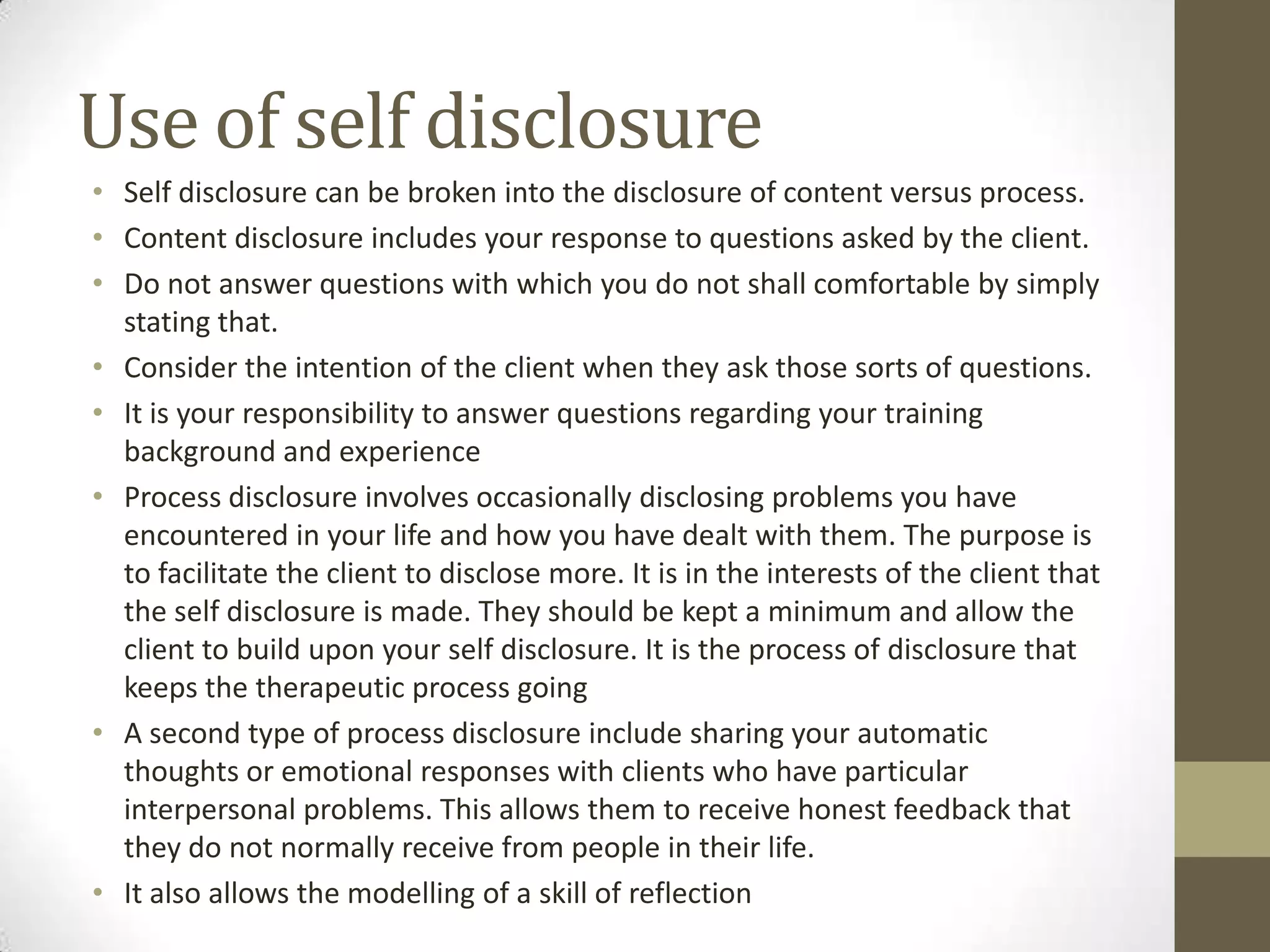
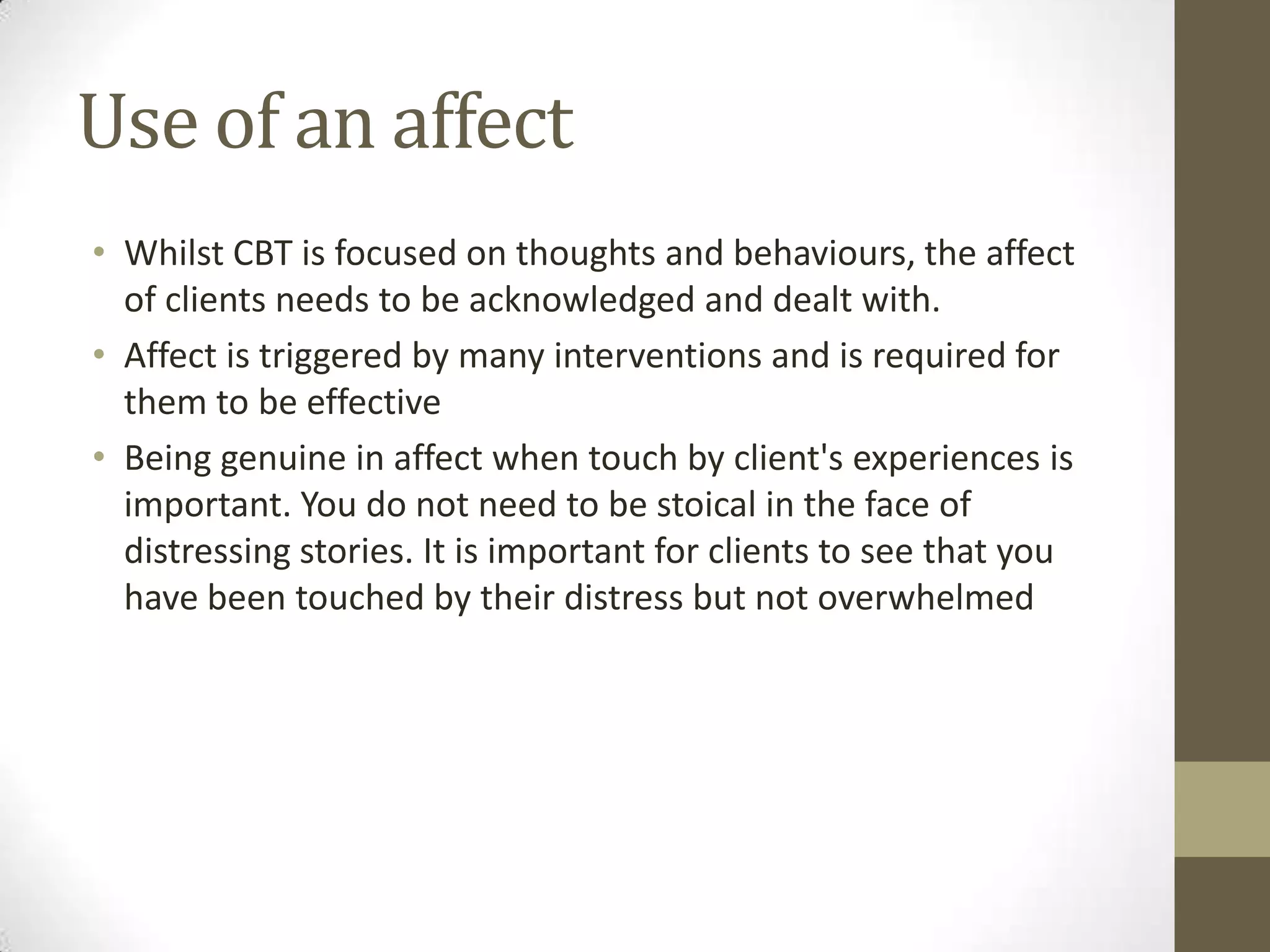
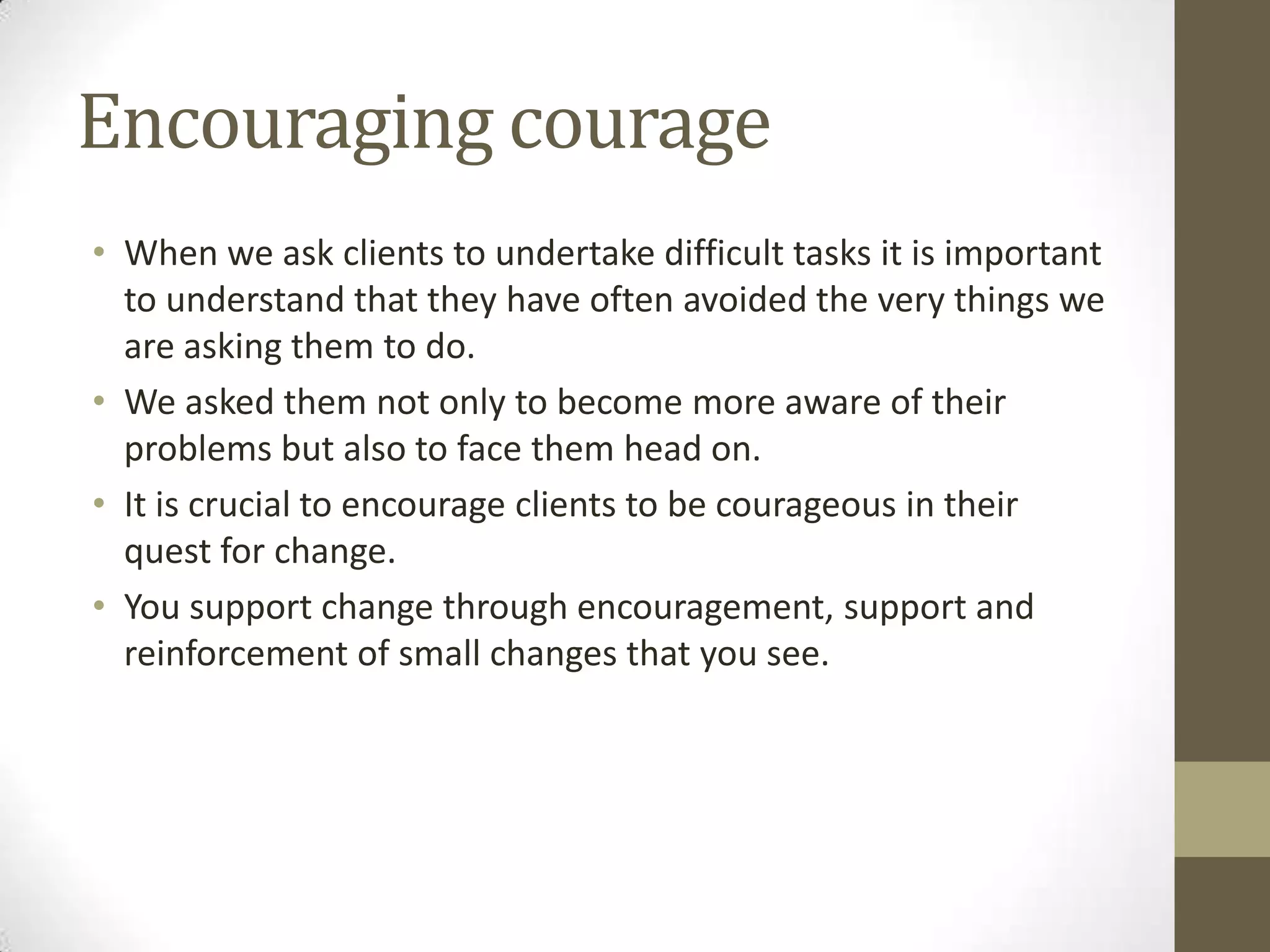

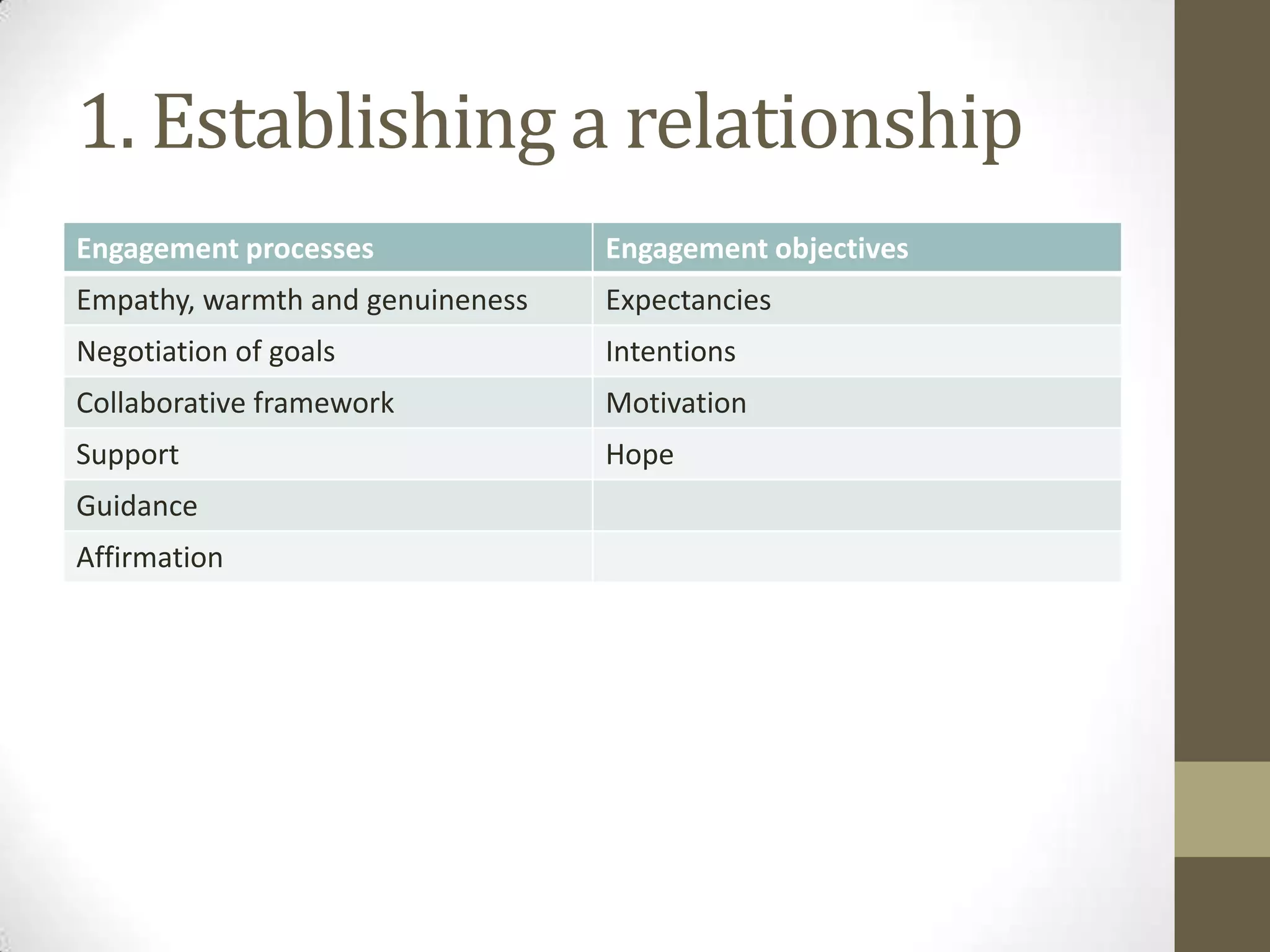
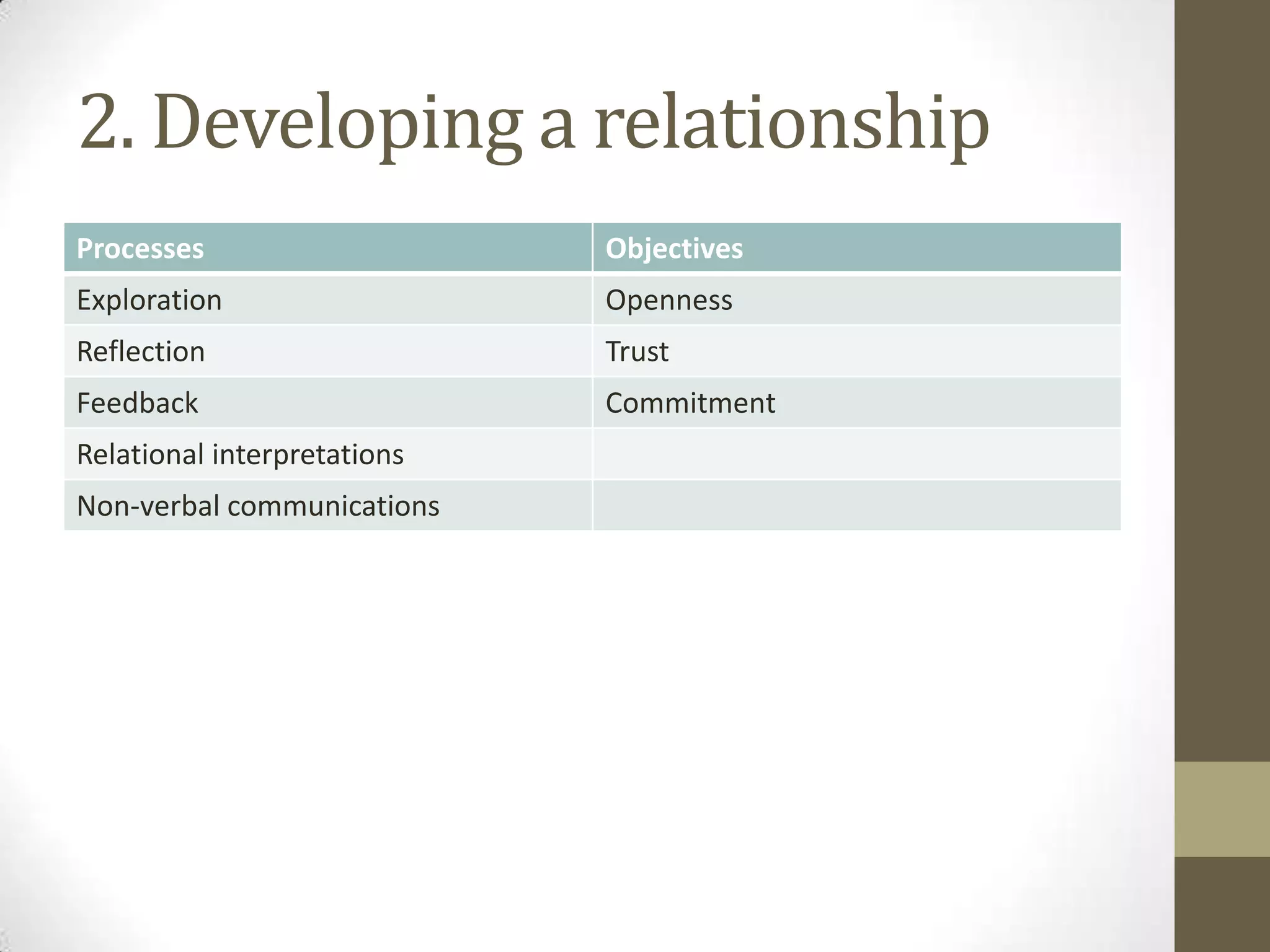
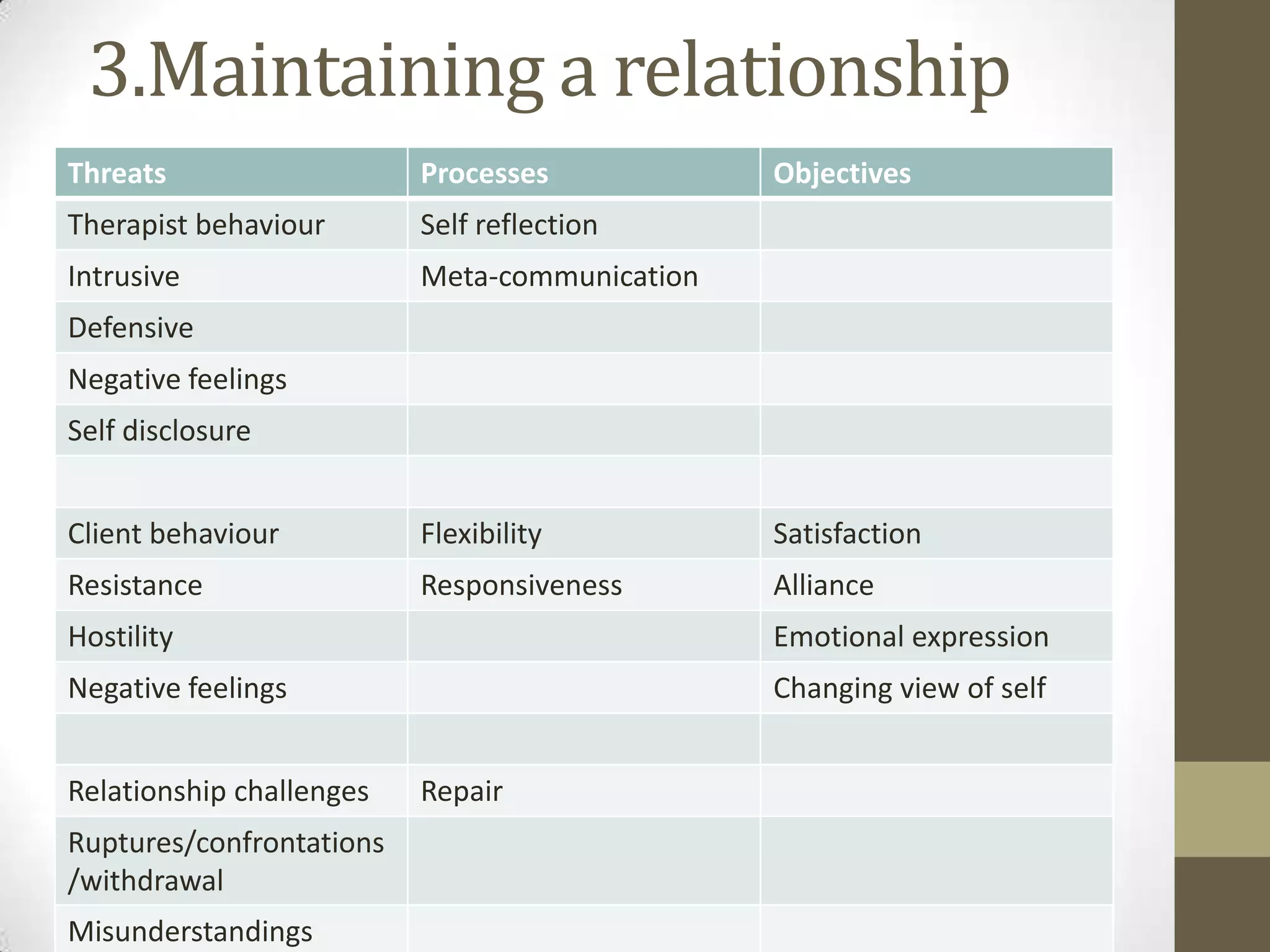



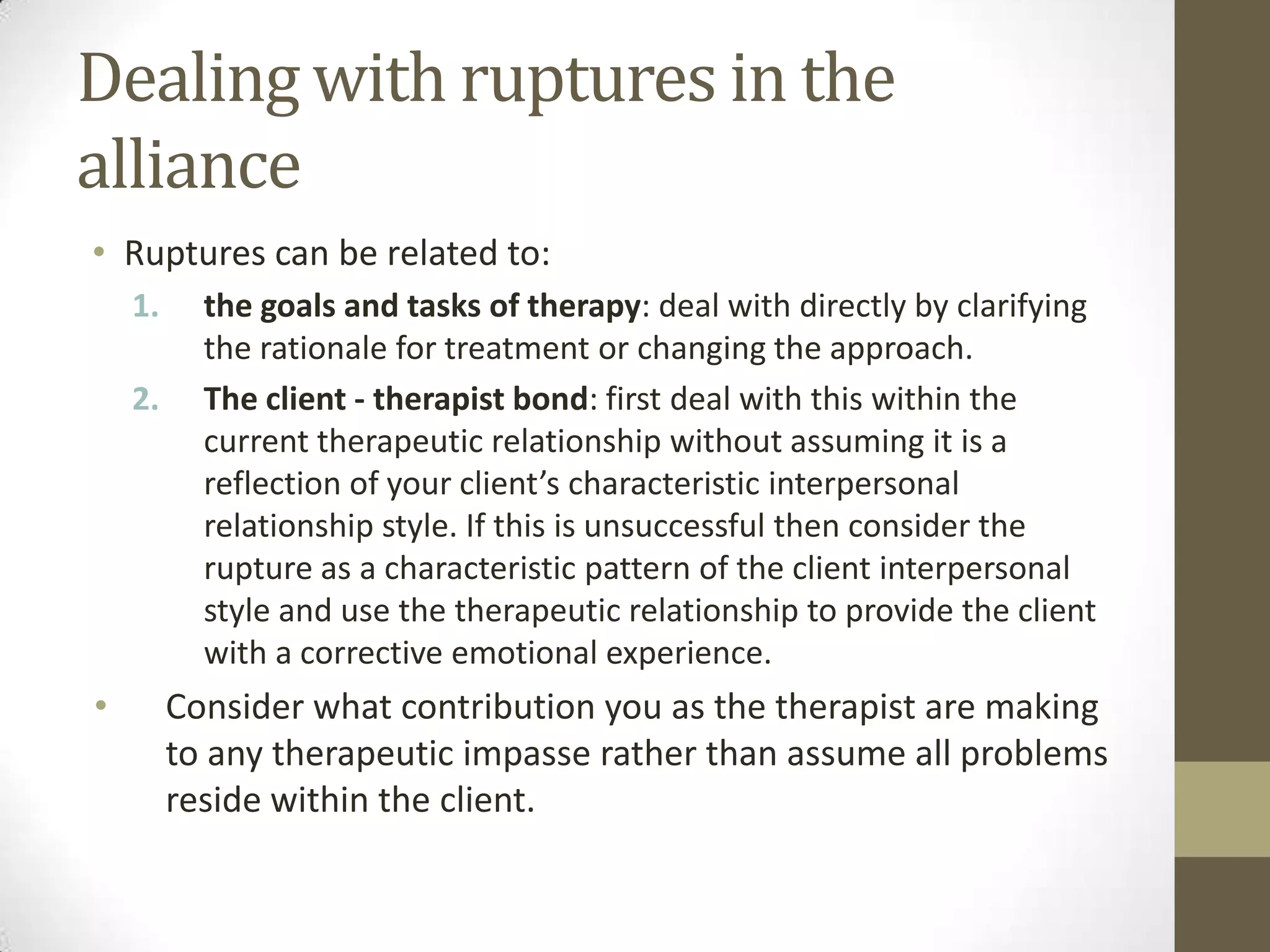



1. The working alliance theory places the therapeutic relationship in historical context and defines it as comprising bonds, goals, tasks, and views between the therapist and client. 2. Building the working alliance requires addressing bonds through core conditions, interpersonal style, and transference/countertransference. It also requires aligning the views of the therapist and client on salient issues. 3. Establishing goals and tasks that both the therapist and client understand and agree upon is important for an effective working alliance. The role of the therapist is to balance expertise with equality, coping with mastery, and use self-disclosure, affect, and encouragement strategically.


