Introduction to research in
counselling
Kevin Standish
Introduction to research
OUCNC1508
Learning objectives
1. To understand the scientific method of research
2. to describe ways of knowing
3. to describe what research can do
4. understand the importance of research for counsellors
5. to articulate the principles of research for counselling
Reflection
• What do you understand by research?
• In what way does the idea of research put you off?
• What scares you in learning about research?
• Can you give an example of research you have done?
• What do you hope to gain from this module about
research?
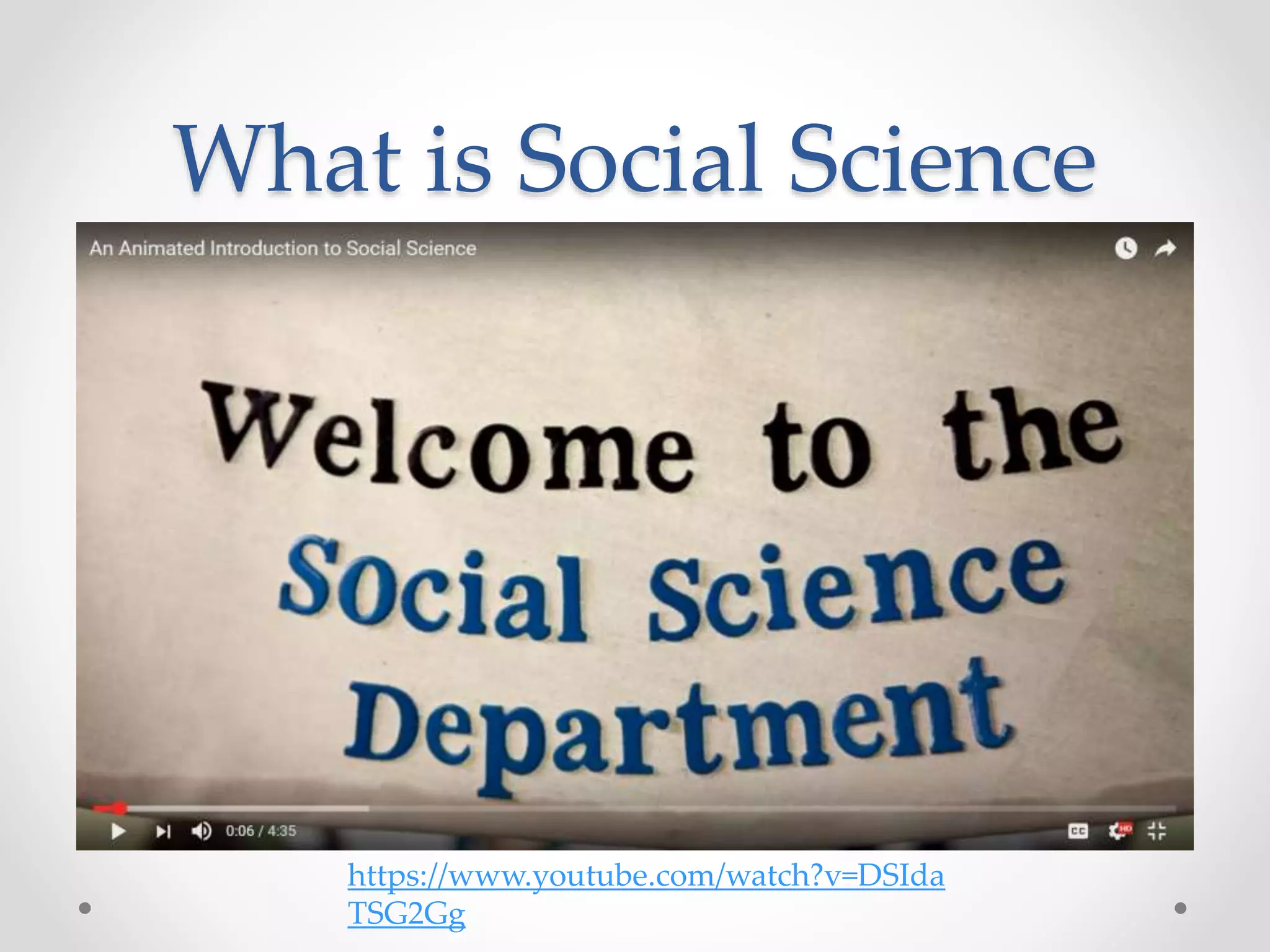
What is Social Science
https://www.youtube.com/watch?v=DSIda
TSG2Gg
What is research?
What is research?
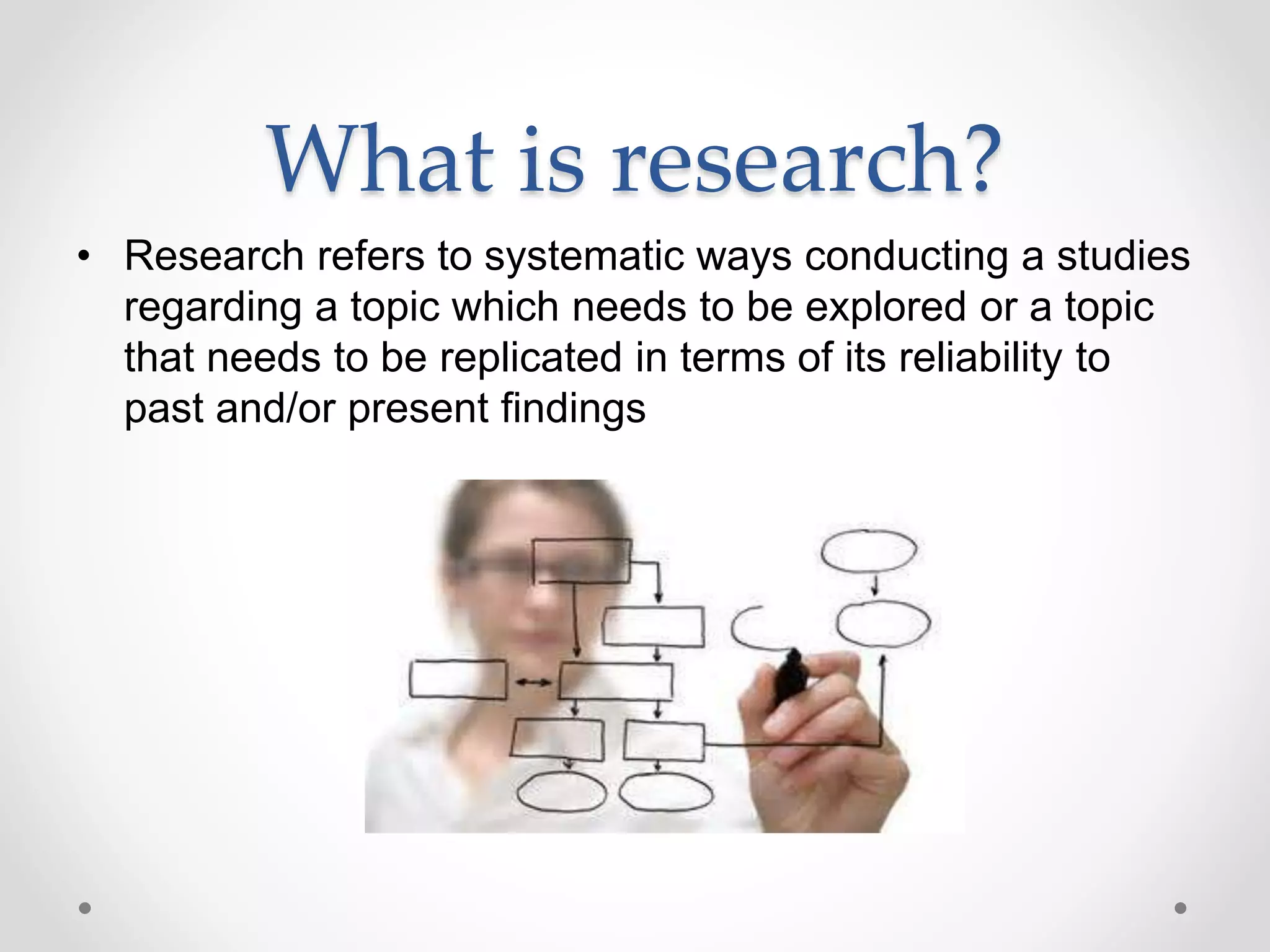
• Research refers to systematic ways conducting a studies
regarding a topic which needs to be explored or a topic
that needs to be replicated in terms of its reliability to
past and/or present findings
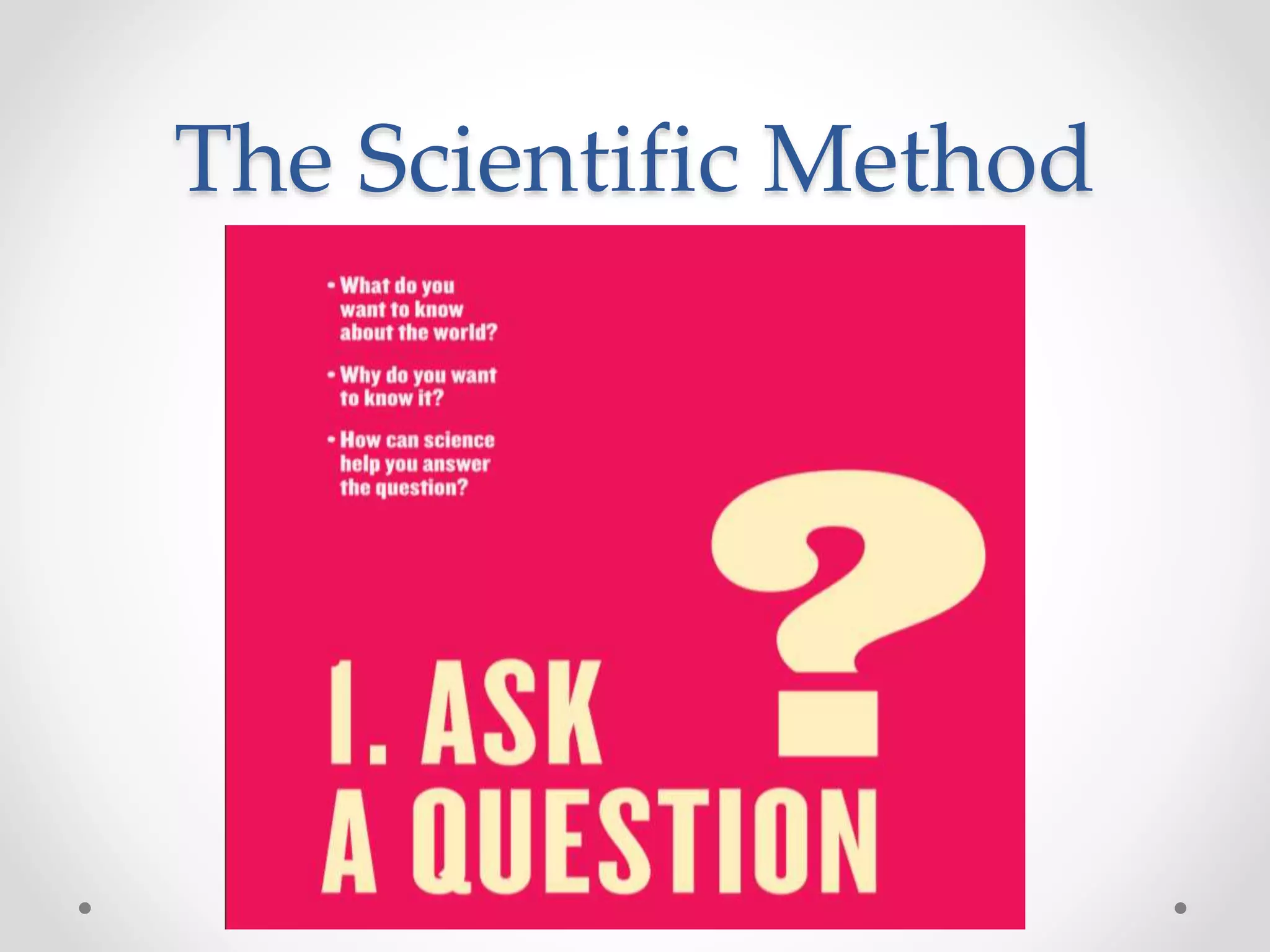
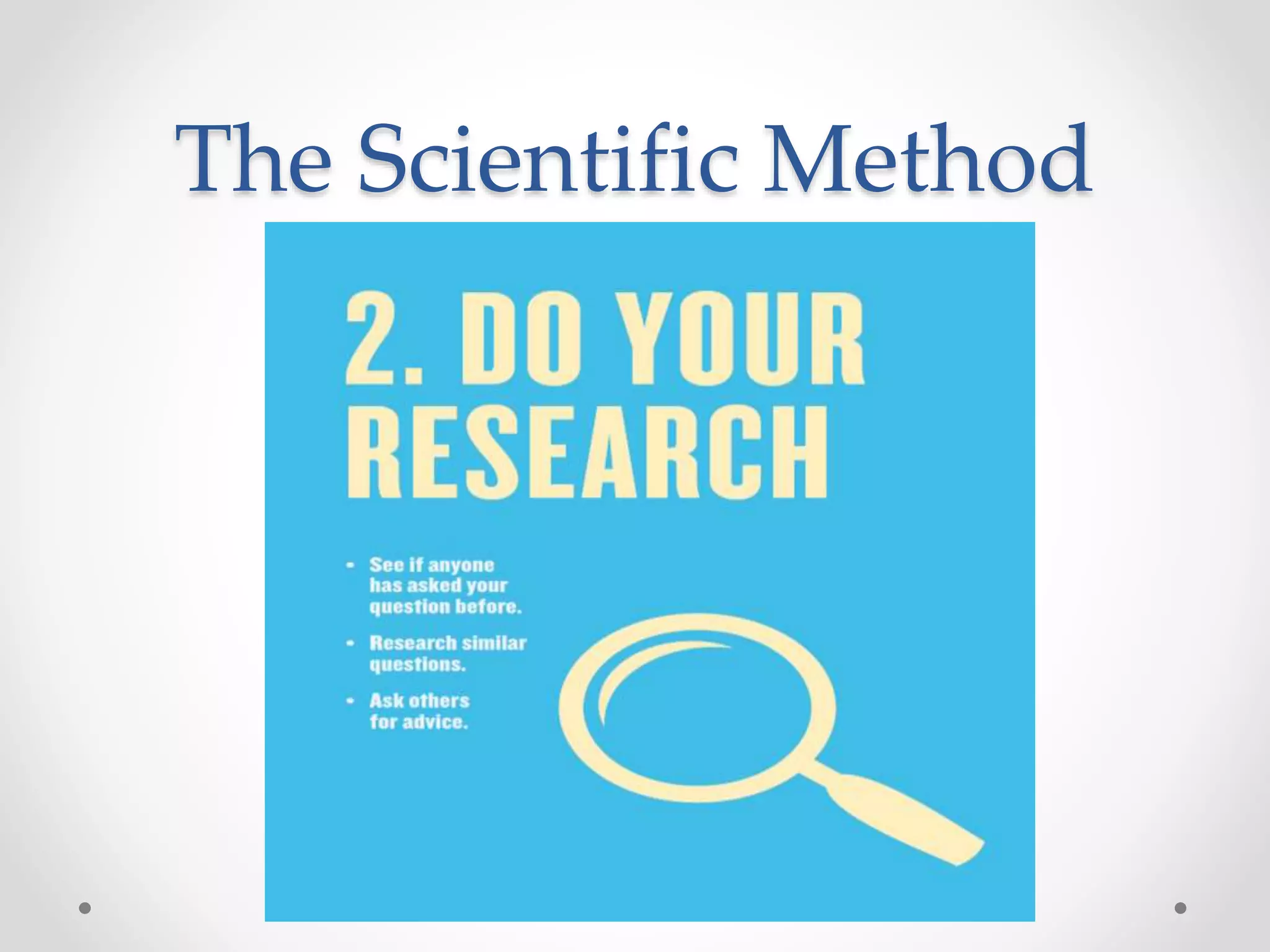
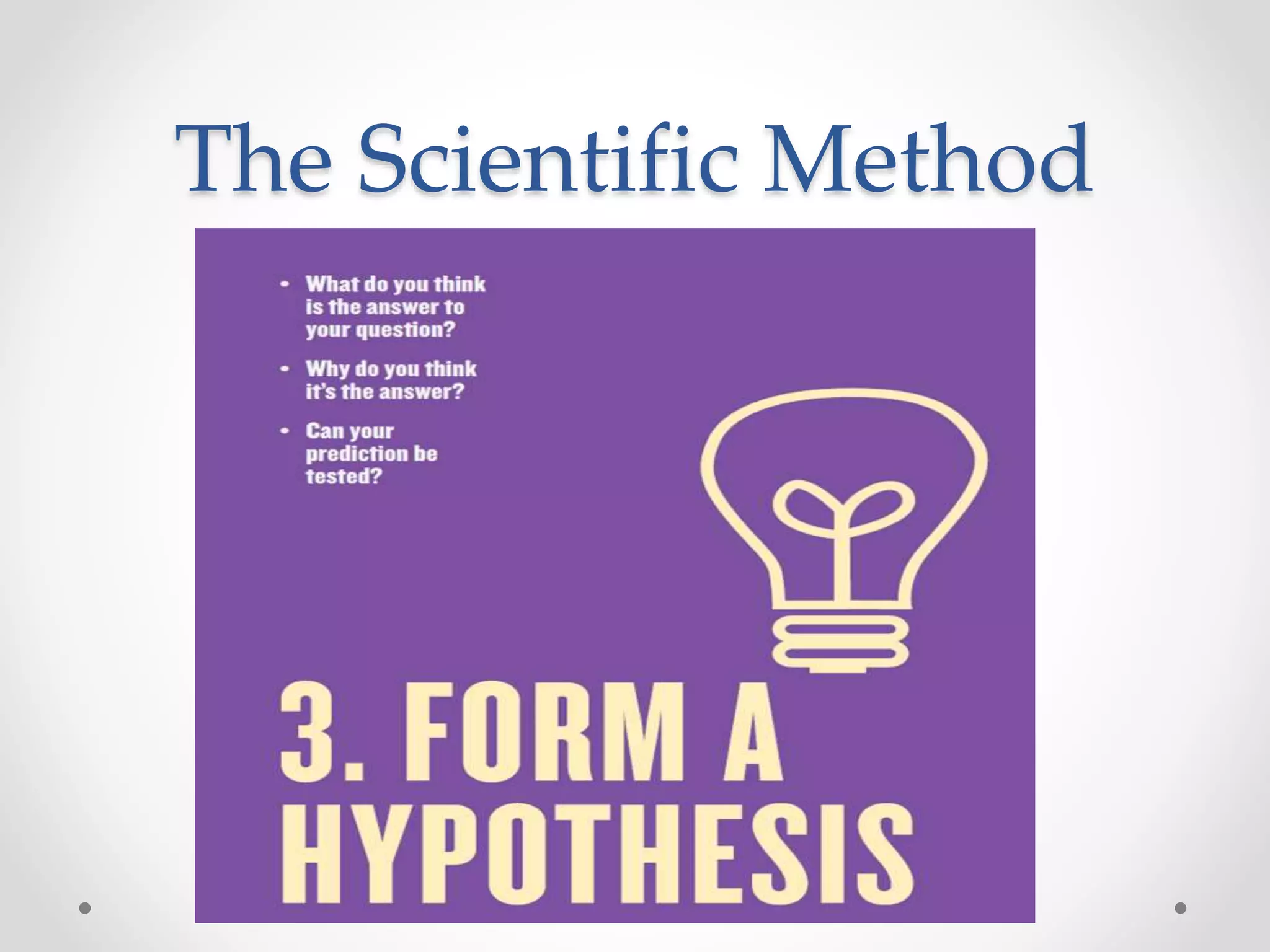
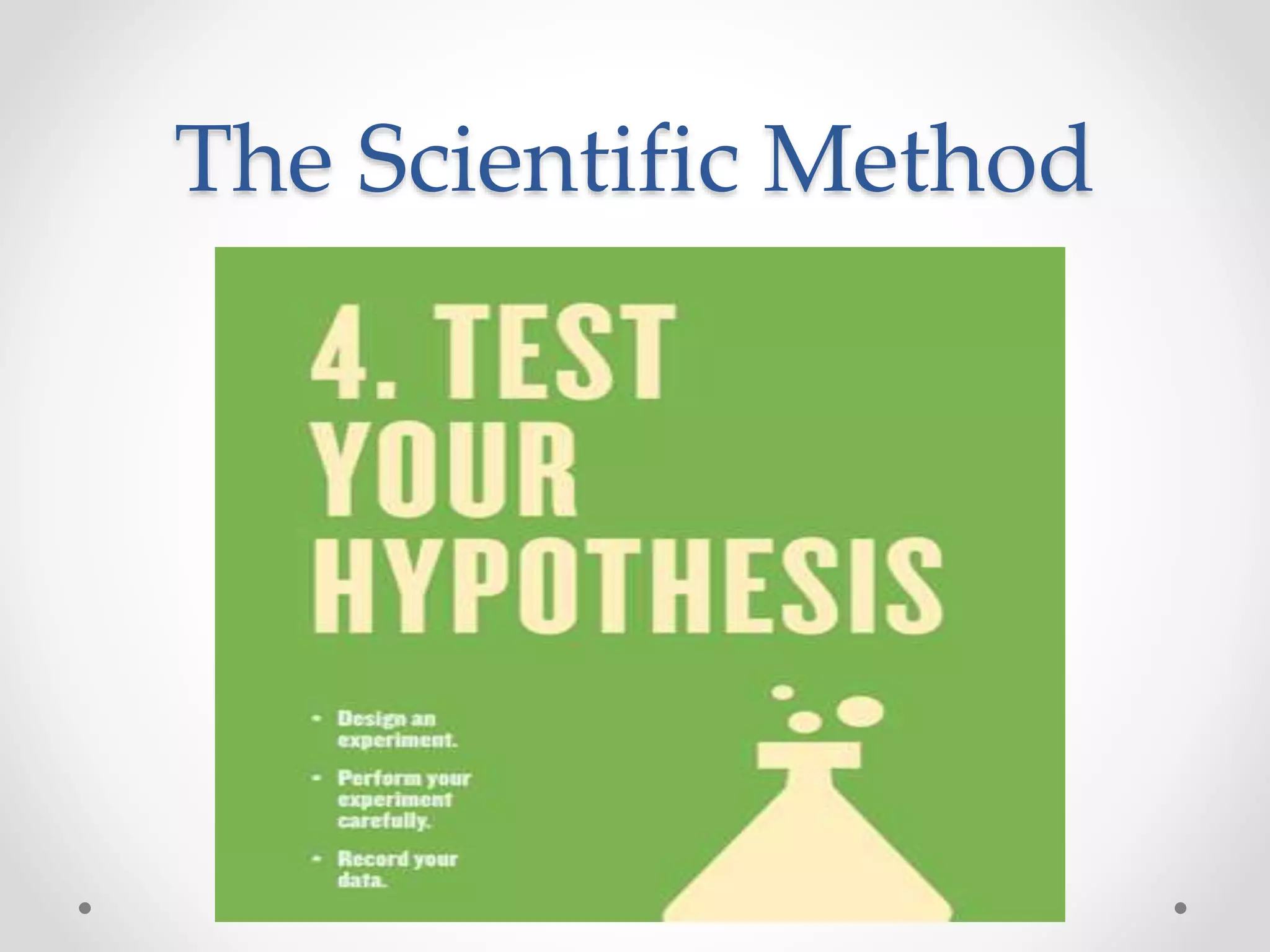
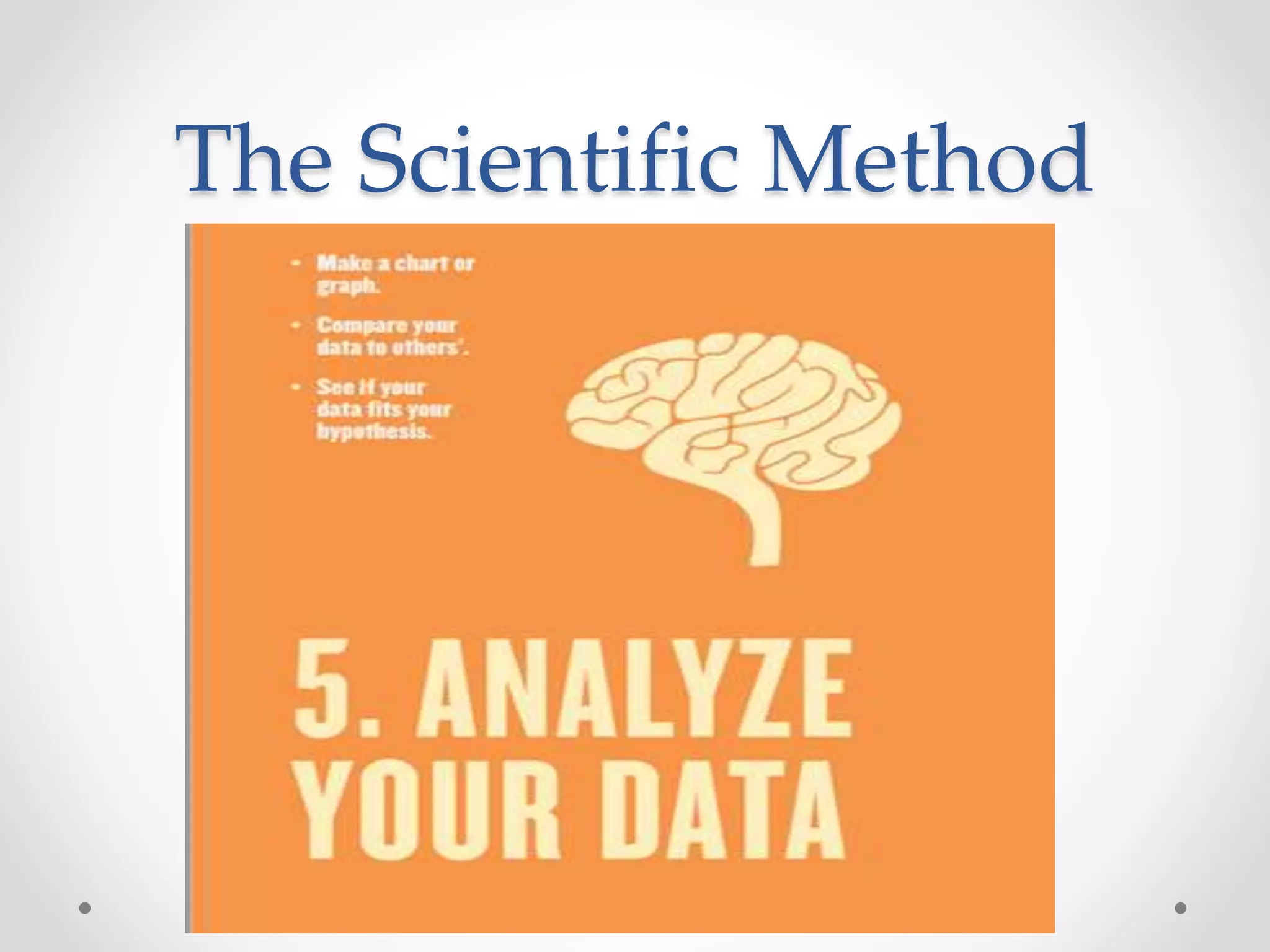
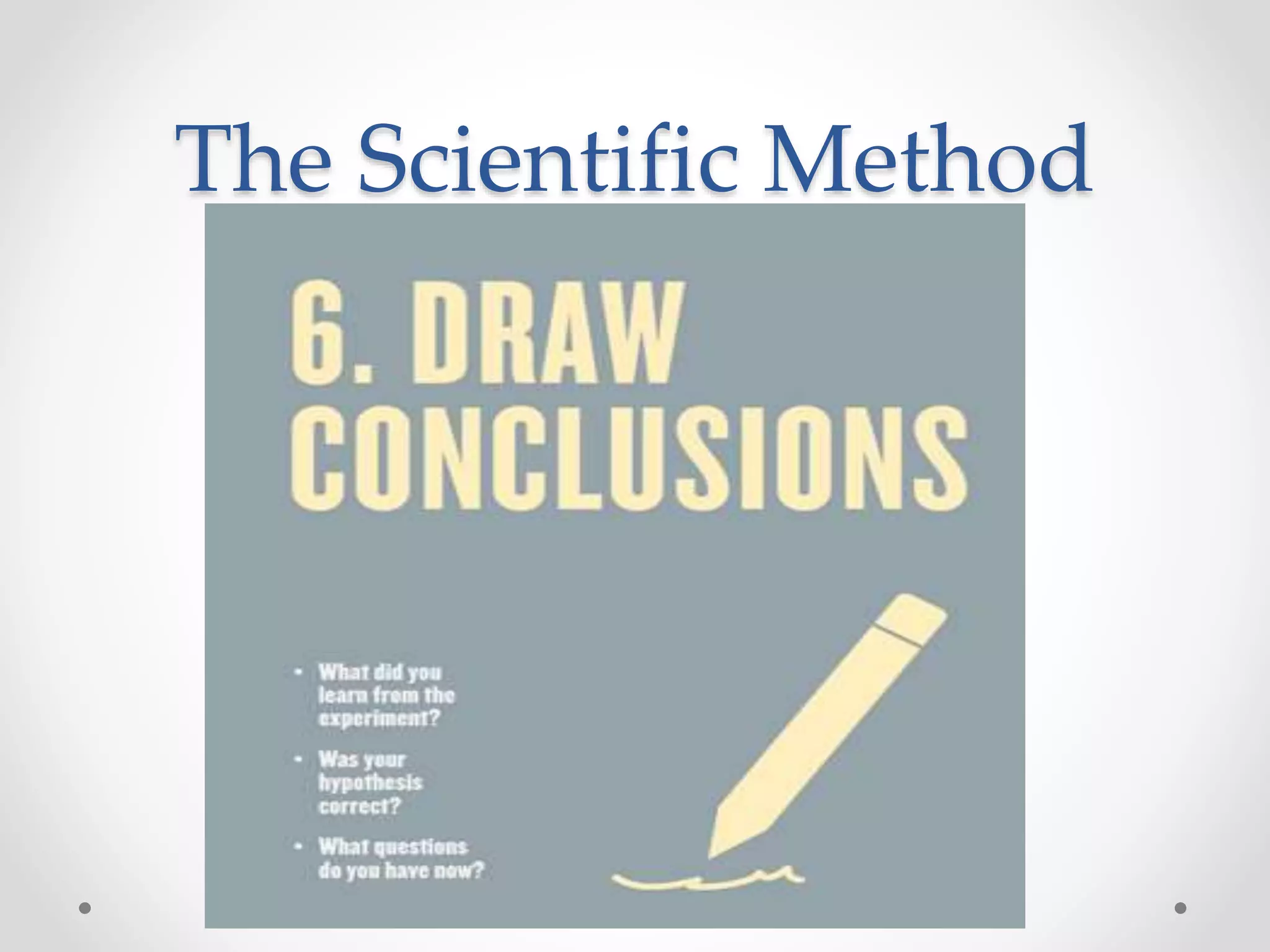
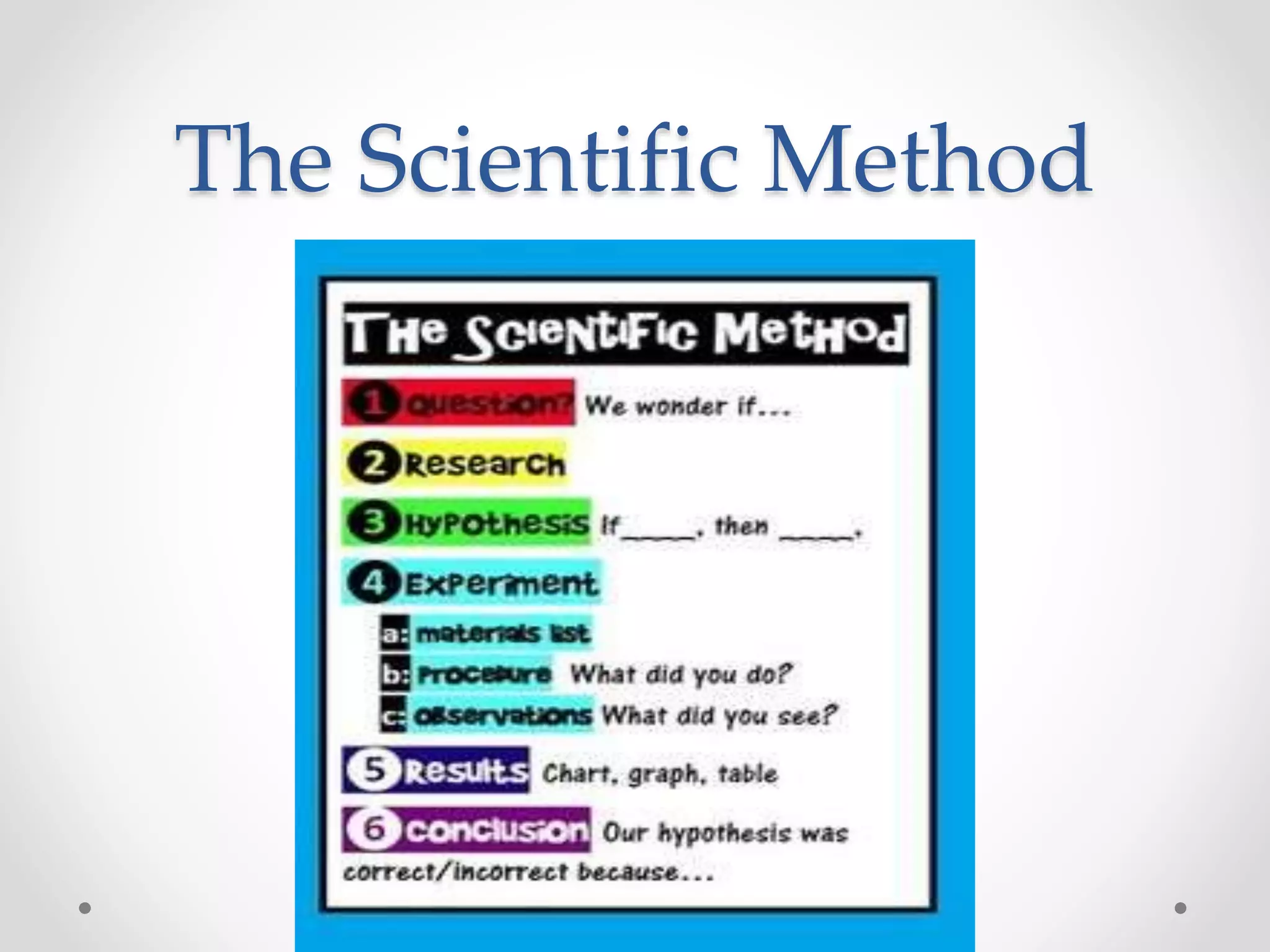
The Scientific Method
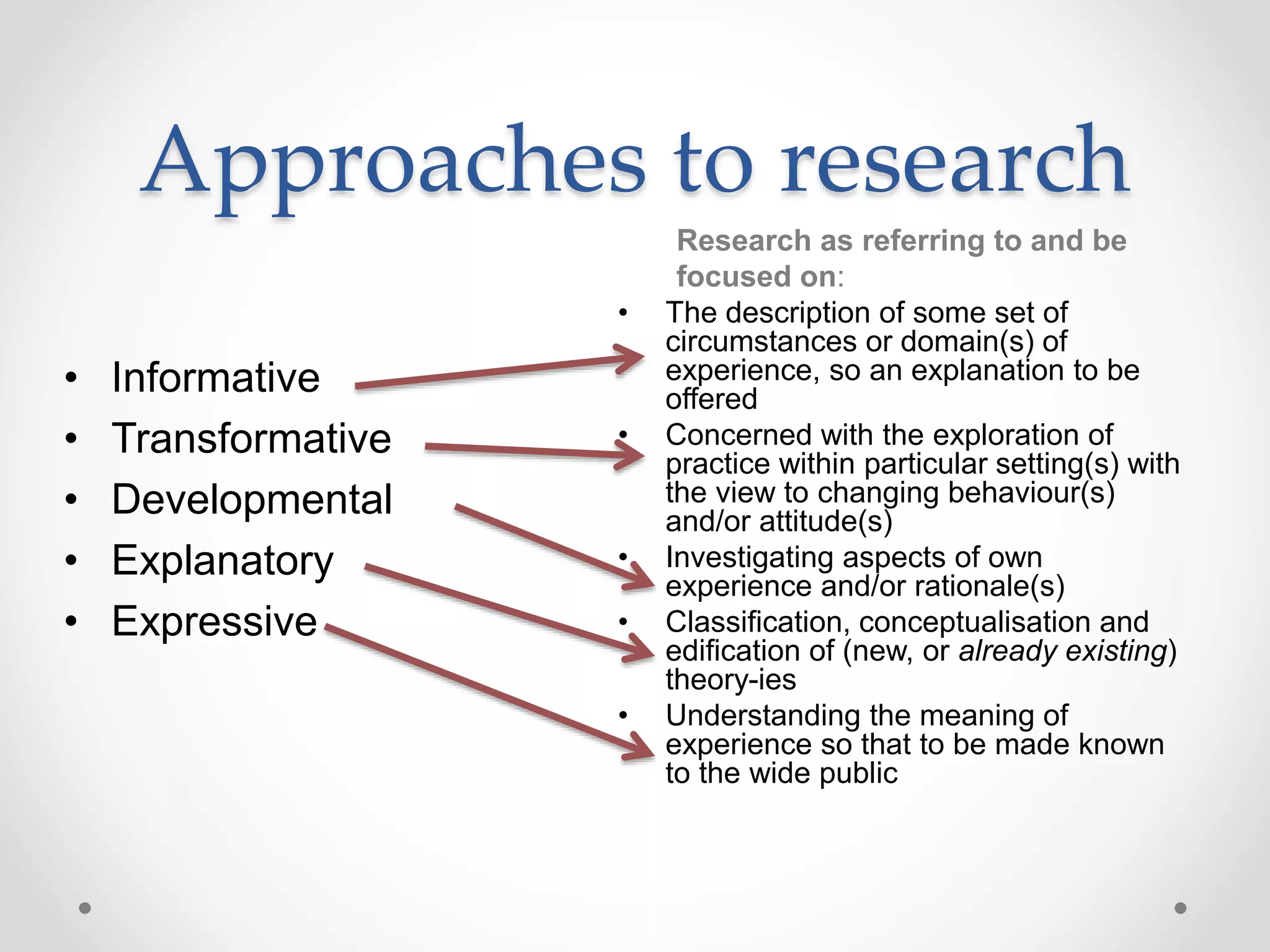
Approaches to research
Research as referring to and be
focused on:
• The description of some set of
circumstances or domain(s) of
experience, so an explanation to be
offered
• Concerned with the exploration of
practice within particular setting(s) with
the view to changing behaviour(s)
and/or attitude(s)
• Investigating aspects of own
experience and/or rationale(s)
• Classification, conceptualisation and
edification of (new, or already existing)
theory-ies
• Understanding the meaning of
experience so that to be made known
to the wide public
• Informative
• Transformative
• Developmental
• Explanatory
• Expressive
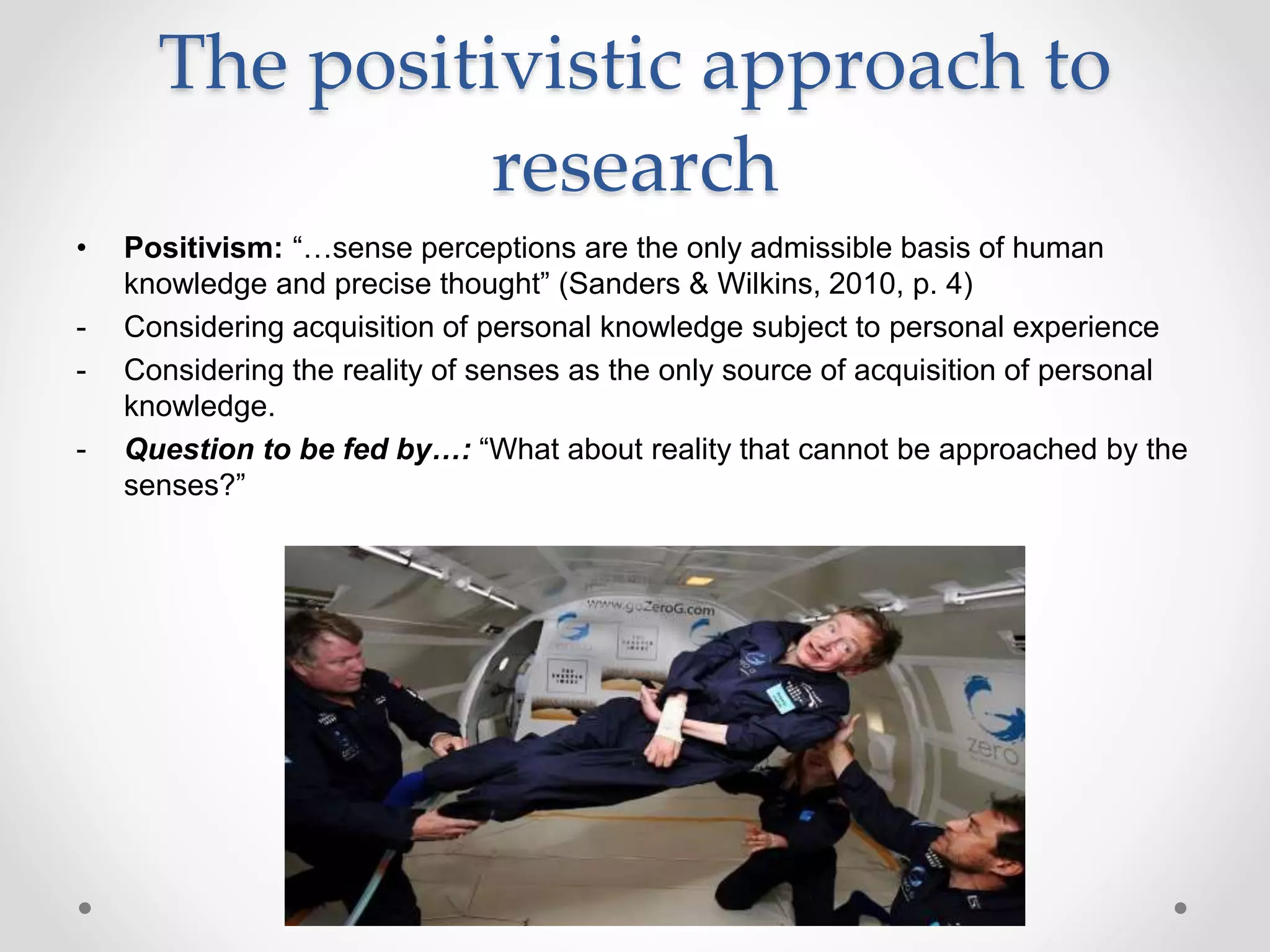
The positivistic approach to
research
• Positivism: “…sense perceptions are the only admissible basis of human
knowledge and precise thought” (Sanders & Wilkins, 2010, p. 4)
- Considering acquisition of personal knowledge subject to personal experience
- Considering the reality of senses as the only source of acquisition of personal
knowledge.
- Question to be fed by…: “What about reality that cannot be approached by the
senses?”
Positivism and Pragmatism
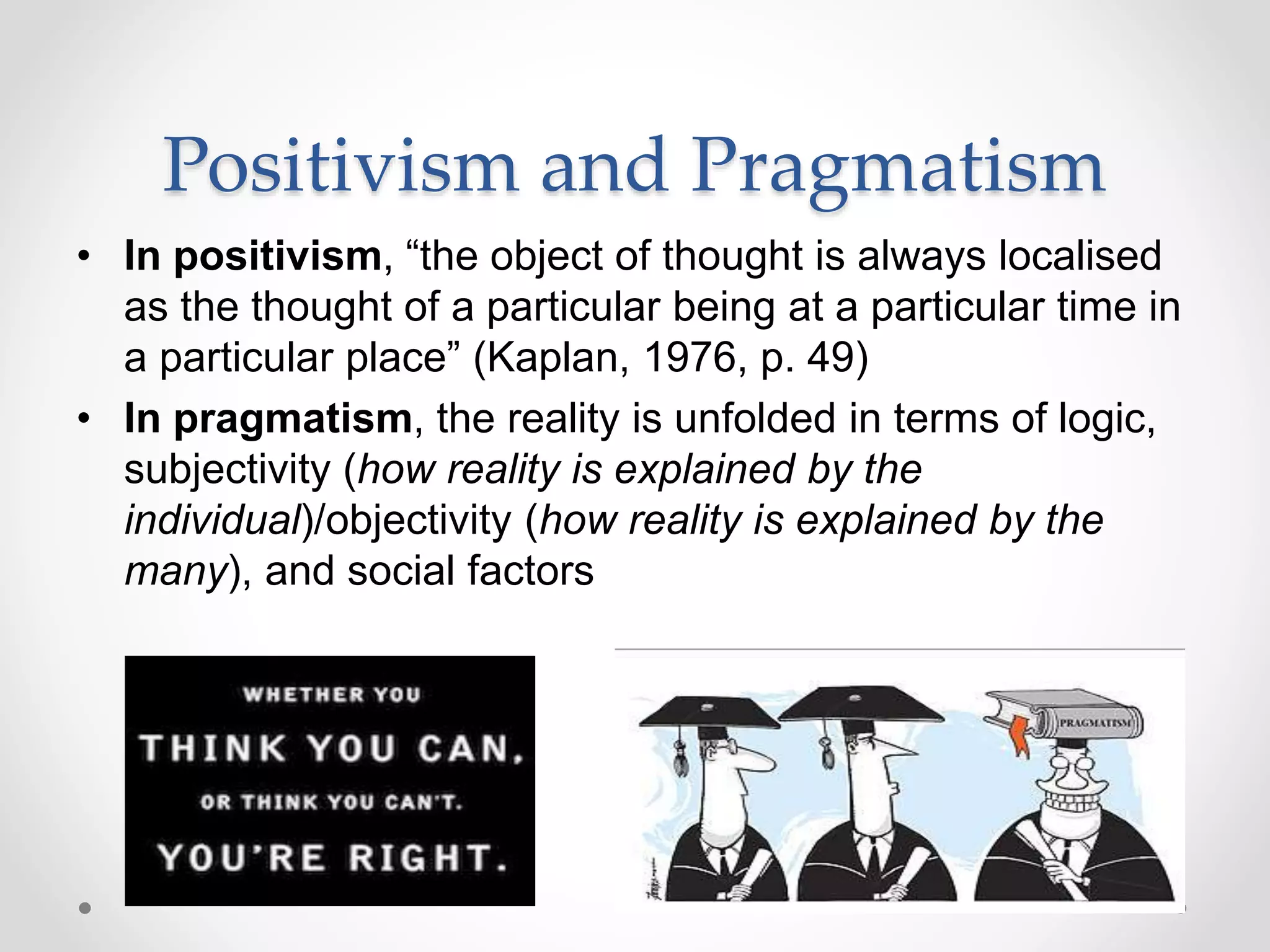
• In positivism, “the object of thought is always localised
as the thought of a particular being at a particular time in
a particular place” (Kaplan, 1976, p. 49)
• In pragmatism, the reality is unfolded in terms of logic,
subjectivity (how reality is explained by the
individual)/objectivity (how reality is explained by the
many), and social factors
Positivism and being critical
• Main critique to positivism: The positivist conception of
science does not presuppose epistemological positivism
- Value-freedom: Factual-judgement and/or/versus value-
judgement?
- Is positivism a tenet of rationalisation of knowledge (why we
ask what we ask?) or an ‘instrument’ to explain the world? –
cogito ergo sum (Descartes)
The social constructivist
approach to research
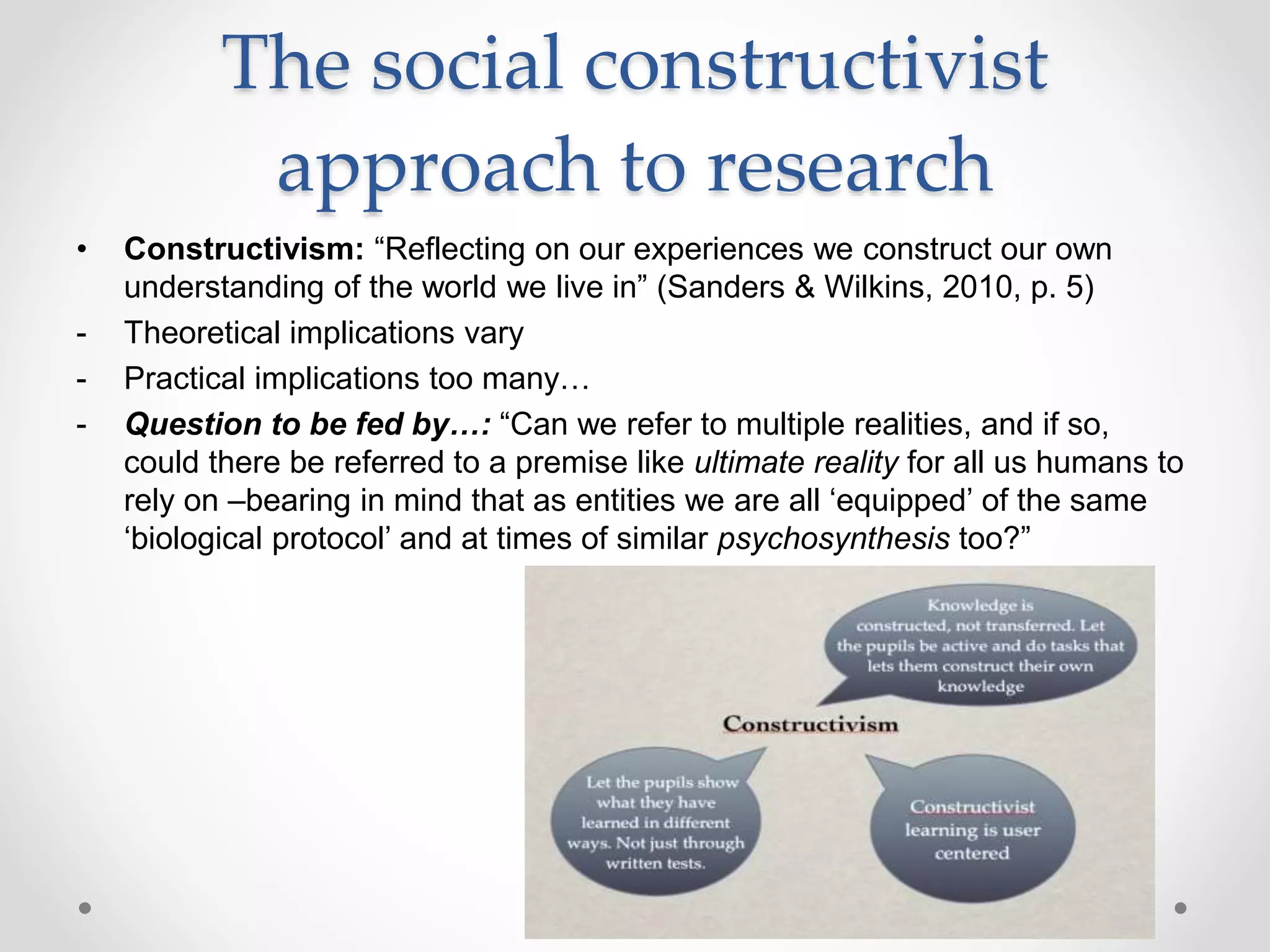
• Constructivism: “Reflecting on our experiences we construct our own
understanding of the world we live in” (Sanders & Wilkins, 2010, p. 5)
- Theoretical implications vary
- Practical implications too many…
- Question to be fed by…: “Can we refer to multiple realities, and if so,
could there be referred to a premise like ultimate reality for all us humans to
rely on –bearing in mind that as entities we are all ‘equipped’ of the same
‘biological protocol’ and at times of similar psychosynthesis too?”
Social constructionism and
being critical
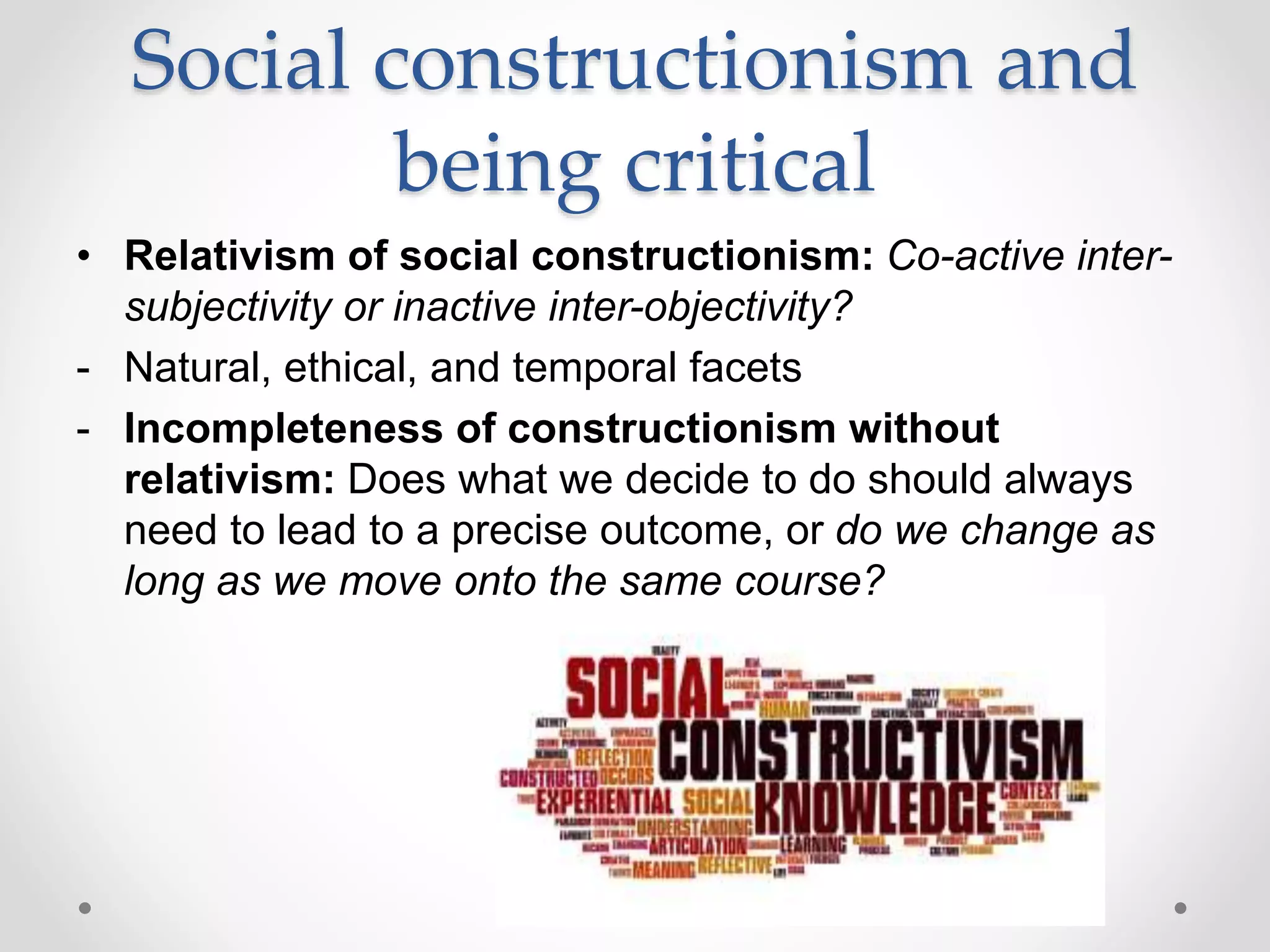
• Relativism of social constructionism: Co-active inter-
subjectivity or inactive inter-objectivity?
- Natural, ethical, and temporal facets
- Incompleteness of constructionism without
relativism: Does what we decide to do should always
need to lead to a precise outcome, or do we change as
long as we move onto the same course?
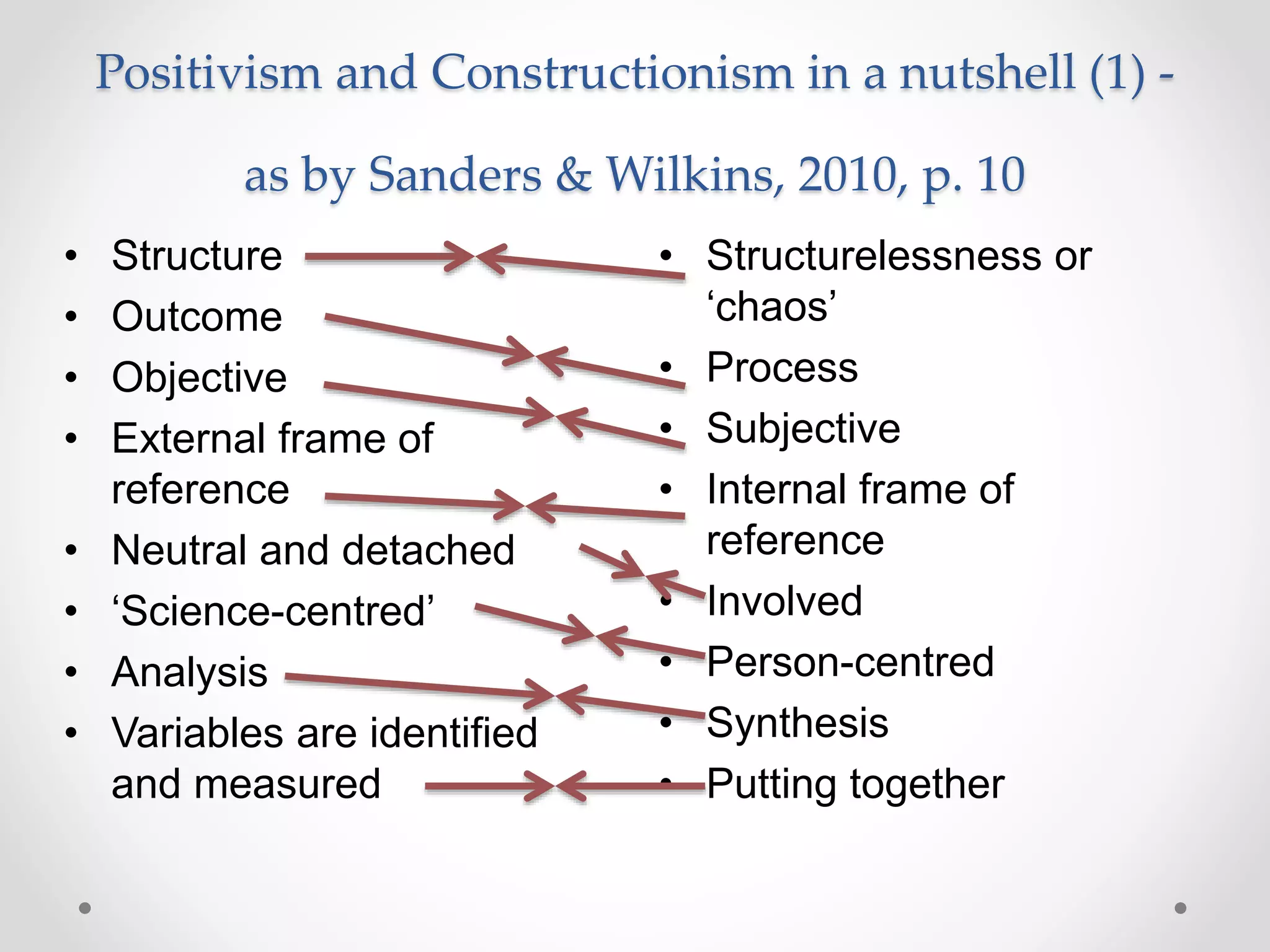
Positivism and Constructionism in a nutshell (1) -
as by Sanders & Wilkins, 2010, p. 10
• Structurelessness or
‘chaos’
• Process
• Subjective
• Internal frame of
reference
• Involved
• Person-centred
• Synthesis
• Putting together
• Structure
• Outcome
• Objective
• External frame of
reference
• Neutral and detached
• ‘Science-centred’
• Analysis
• Variables are identified
and measured
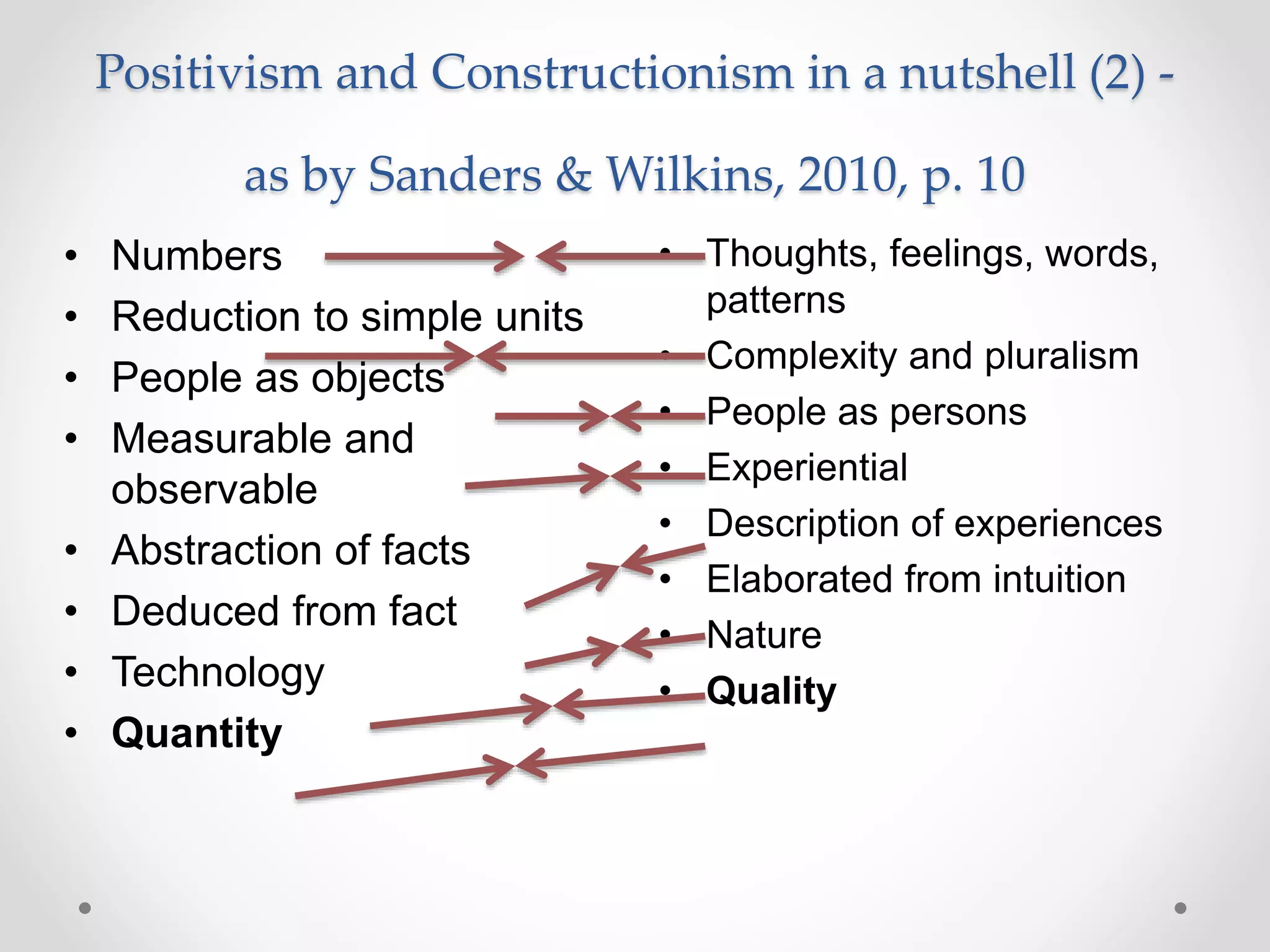
Positivism and Constructionism in a nutshell (2) -
as by Sanders & Wilkins, 2010, p. 10
• Thoughts, feelings, words,
patterns
• Complexity and pluralism
• People as persons
• Experiential
• Description of experiences
• Elaborated from intuition
• Nature
• Quality
• Numbers
• Reduction to simple units
• People as objects
• Measurable and
observable
• Abstraction of facts
• Deduced from fact
• Technology
• Quantity
What can research do?
• There are many reasons for conducting research; with the
primary driver being the desire to know on the part of the
researcher
• Research can be seen as an attempt to establish “evidence-
based” credentials of therapy often called outcomes studies
• Alternative investigations focus on the phenomenology of
experience….this involves the deep reflection on experience
to understand it “from the inside”: heuristic Inquiry
• Given the appropriate method, research can contribute to the
knowledge and insight into almost any question that can be
framed.
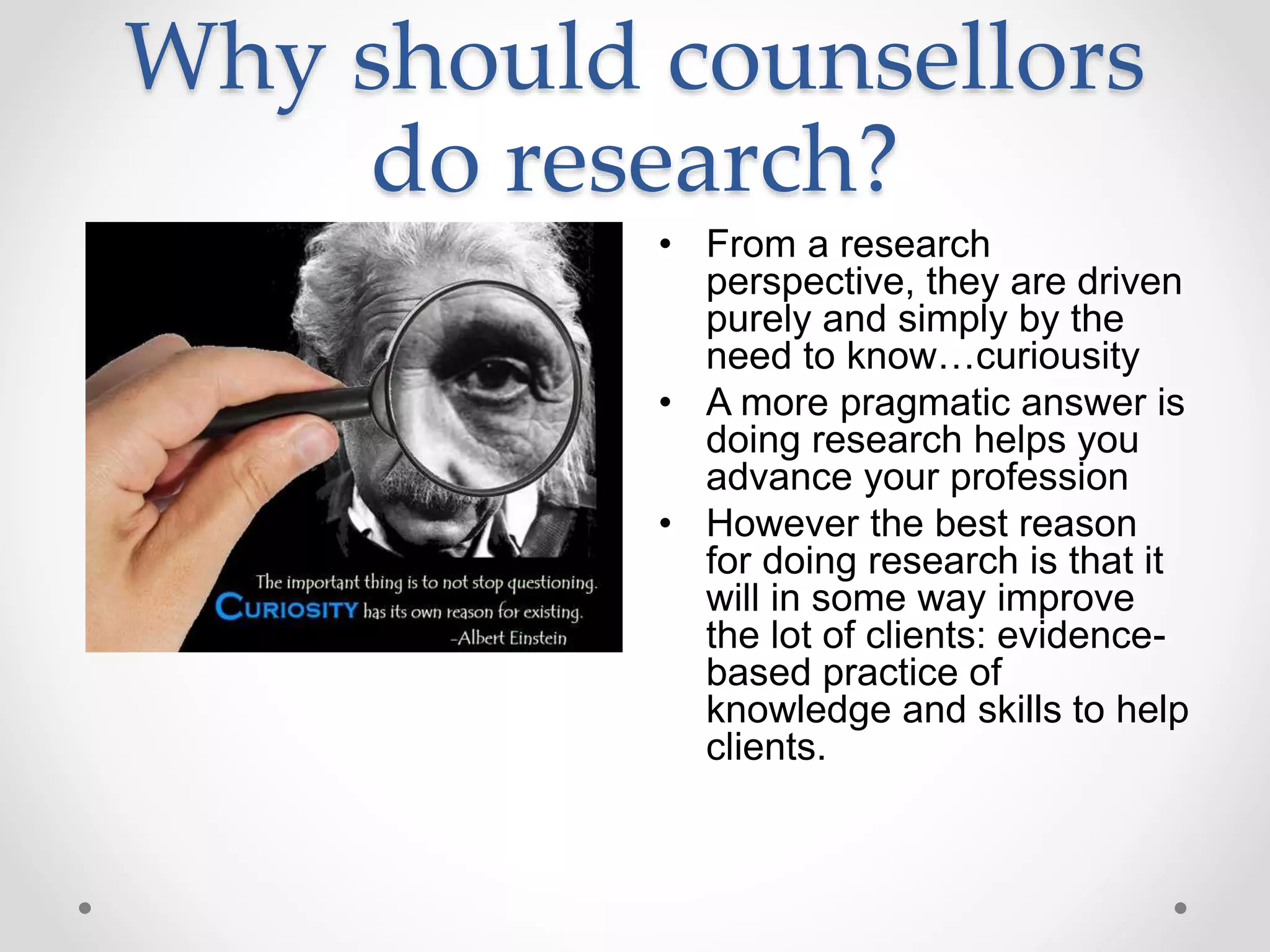
Why should counsellors
do research?
• From a research
perspective, they are driven
purely and simply by the
need to know…curiousity
• A more pragmatic answer is
doing research helps you
advance your profession
• However the best reason
for doing research is that it
will in some way improve
the lot of clients: evidence-
based practice of
knowledge and skills to help
clients.
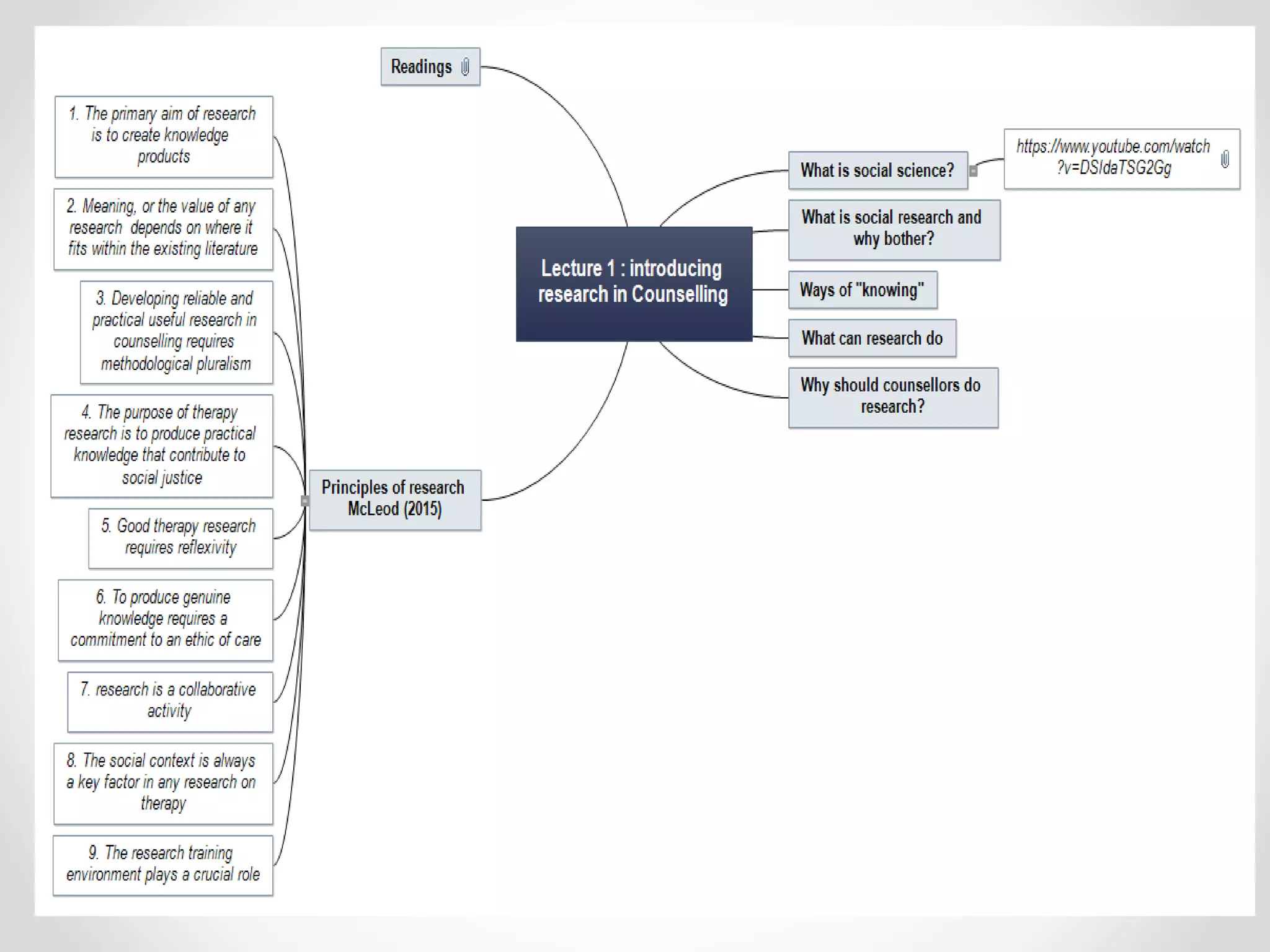
9 Principles of Research
1. The primary aim of research is to create knowledge
products
2. Meaning, or the value of any research depends on
where it fits within the existing literature
3. Developing reliable and practical useful research in
counselling requires methodological pluralism
4. The purpose of therapy research is to produce
practical knowledge that contribute to social justice
5. Good therapy research requires reflexivity
9 Principles of Research
6. To produce genuine knowledge requires a
commitment to an ethic of care
7. research is a collaborative activity
8. The social context is always a key factor in any
research on therapy
9. The research training environment plays a crucial
role
READINGS
• 1.McLeod (2015) Principles of research chapter on NL
• 2. Sanders & Wilkins Chapter 1.1 what is research and
why bother
Lecture 1 introduction to research in counselling

Lecture 1 introduction to research in counselling

  • 1.
    Introduction to researchin counselling Kevin Standish Introduction to research OUCNC1508
  • 2.
    Learning objectives 1. Tounderstand the scientific method of research 2. to describe ways of knowing 3. to describe what research can do 4. understand the importance of research for counsellors 5. to articulate the principles of research for counselling
  • 4.
    Reflection • What doyou understand by research? • In what way does the idea of research put you off? • What scares you in learning about research? • Can you give an example of research you have done? • What do you hope to gain from this module about research?
  • 5.
    What is SocialScience https://www.youtube.com/watch?v=DSIda TSG2Gg
  • 6.
  • 7.
    What is research? •Research refers to systematic ways conducting a studies regarding a topic which needs to be explored or a topic that needs to be replicated in terms of its reliability to past and/or present findings
  • 8.
  • 9.
  • 10.
  • 11.
  • 12.
  • 13.
  • 14.
  • 15.
    Approaches to research Researchas referring to and be focused on: • The description of some set of circumstances or domain(s) of experience, so an explanation to be offered • Concerned with the exploration of practice within particular setting(s) with the view to changing behaviour(s) and/or attitude(s) • Investigating aspects of own experience and/or rationale(s) • Classification, conceptualisation and edification of (new, or already existing) theory-ies • Understanding the meaning of experience so that to be made known to the wide public • Informative • Transformative • Developmental • Explanatory • Expressive
  • 16.
    The positivistic approachto research • Positivism: “…sense perceptions are the only admissible basis of human knowledge and precise thought” (Sanders & Wilkins, 2010, p. 4) - Considering acquisition of personal knowledge subject to personal experience - Considering the reality of senses as the only source of acquisition of personal knowledge. - Question to be fed by…: “What about reality that cannot be approached by the senses?”
  • 17.
    Positivism and Pragmatism •In positivism, “the object of thought is always localised as the thought of a particular being at a particular time in a particular place” (Kaplan, 1976, p. 49) • In pragmatism, the reality is unfolded in terms of logic, subjectivity (how reality is explained by the individual)/objectivity (how reality is explained by the many), and social factors
  • 18.
    Positivism and beingcritical • Main critique to positivism: The positivist conception of science does not presuppose epistemological positivism - Value-freedom: Factual-judgement and/or/versus value- judgement? - Is positivism a tenet of rationalisation of knowledge (why we ask what we ask?) or an ‘instrument’ to explain the world? – cogito ergo sum (Descartes)
  • 19.
    The social constructivist approachto research • Constructivism: “Reflecting on our experiences we construct our own understanding of the world we live in” (Sanders & Wilkins, 2010, p. 5) - Theoretical implications vary - Practical implications too many… - Question to be fed by…: “Can we refer to multiple realities, and if so, could there be referred to a premise like ultimate reality for all us humans to rely on –bearing in mind that as entities we are all ‘equipped’ of the same ‘biological protocol’ and at times of similar psychosynthesis too?”
  • 20.
    Social constructionism and beingcritical • Relativism of social constructionism: Co-active inter- subjectivity or inactive inter-objectivity? - Natural, ethical, and temporal facets - Incompleteness of constructionism without relativism: Does what we decide to do should always need to lead to a precise outcome, or do we change as long as we move onto the same course?
  • 21.
    Positivism and Constructionismin a nutshell (1) - as by Sanders & Wilkins, 2010, p. 10 • Structurelessness or ‘chaos’ • Process • Subjective • Internal frame of reference • Involved • Person-centred • Synthesis • Putting together • Structure • Outcome • Objective • External frame of reference • Neutral and detached • ‘Science-centred’ • Analysis • Variables are identified and measured
  • 22.
    Positivism and Constructionismin a nutshell (2) - as by Sanders & Wilkins, 2010, p. 10 • Thoughts, feelings, words, patterns • Complexity and pluralism • People as persons • Experiential • Description of experiences • Elaborated from intuition • Nature • Quality • Numbers • Reduction to simple units • People as objects • Measurable and observable • Abstraction of facts • Deduced from fact • Technology • Quantity
  • 23.
    What can researchdo? • There are many reasons for conducting research; with the primary driver being the desire to know on the part of the researcher • Research can be seen as an attempt to establish “evidence- based” credentials of therapy often called outcomes studies • Alternative investigations focus on the phenomenology of experience….this involves the deep reflection on experience to understand it “from the inside”: heuristic Inquiry • Given the appropriate method, research can contribute to the knowledge and insight into almost any question that can be framed.
  • 24.
    Why should counsellors doresearch? • From a research perspective, they are driven purely and simply by the need to know…curiousity • A more pragmatic answer is doing research helps you advance your profession • However the best reason for doing research is that it will in some way improve the lot of clients: evidence- based practice of knowledge and skills to help clients.
  • 25.
    9 Principles ofResearch 1. The primary aim of research is to create knowledge products 2. Meaning, or the value of any research depends on where it fits within the existing literature 3. Developing reliable and practical useful research in counselling requires methodological pluralism 4. The purpose of therapy research is to produce practical knowledge that contribute to social justice 5. Good therapy research requires reflexivity
  • 26.
    9 Principles ofResearch 6. To produce genuine knowledge requires a commitment to an ethic of care 7. research is a collaborative activity 8. The social context is always a key factor in any research on therapy 9. The research training environment plays a crucial role
  • 27.
    READINGS • 1.McLeod (2015)Principles of research chapter on NL • 2. Sanders & Wilkins Chapter 1.1 what is research and why bother