ORDERING PRINCIPLES OF DESIGN


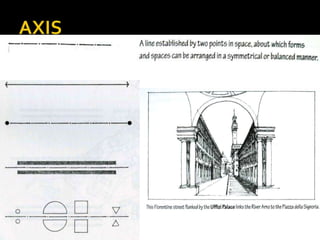
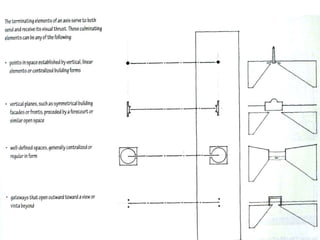
                          AXIS
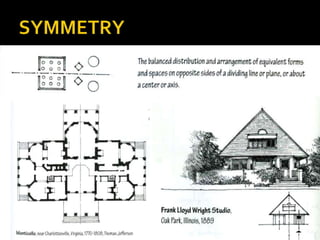
                          SYMMETRY
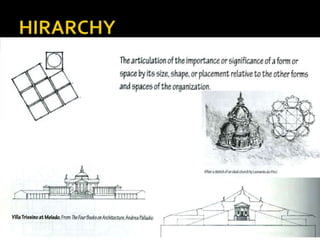
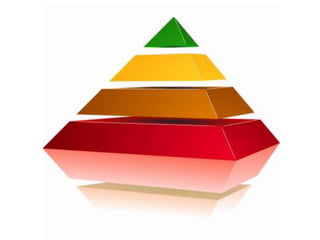
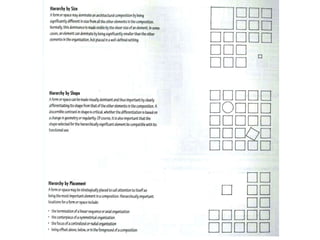
                          HIRARCHY
                          RHYTHM
                          DATUM
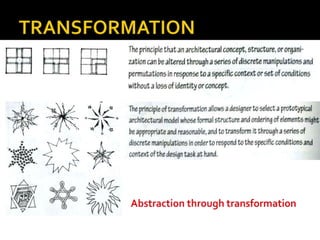
                          TRANSFORMATION
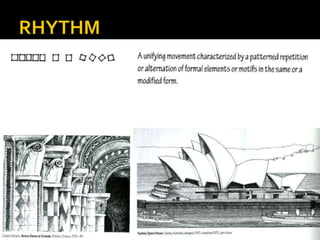
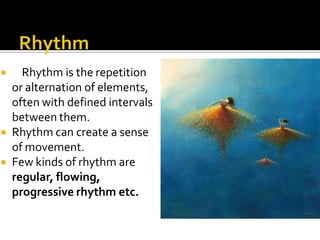
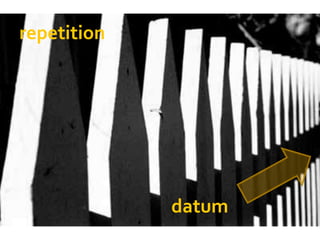
     Rhythm is the repetition
    or alternation of elements,
    often with defined intervals
    between them.
   Rhythm can create a sense
    of movement.
   Few kinds of rhythm are
    regular, flowing,
    progressive rhythm etc.
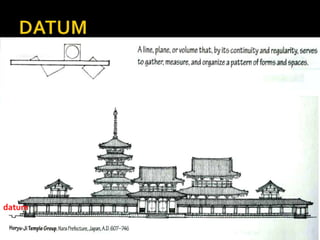
datum
repetition


             datum
QUALITIES IN DESIGN


       UNITY
       BALANCE          VARIETY
       PROPORTIONS      MONOTONY
       EMPHASIS         ANOMALY
       CONTRAST         PROXIMITY
       MOVEMENT         CHAOS.
       DOMINANCE
       REPETETION
       GRADATION
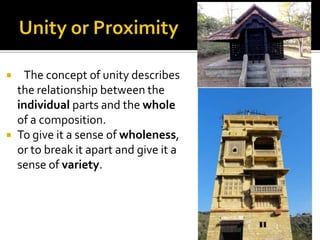
    The concept of unity describes
    the relationship between the
    individual parts and the whole
    of a composition.
   To give it a sense of wholeness,
    or to break it apart and give it a
    sense of variety.
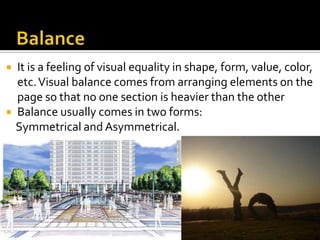
   It is a feeling of visual equality in shape, form, value, color,
    etc. Visual balance comes from arranging elements on the
    page so that no one section is heavier than the other
   Balance usually comes in two forms:
    Symmetrical and Asymmetrical.
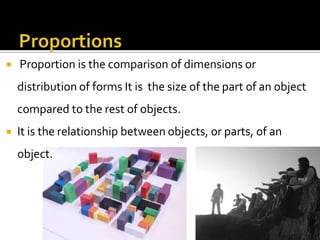
   Proportion is the comparison of dimensions or
    distribution of forms It is the size of the part of an object
    compared to the rest of objects.
   It is the relationship between objects, or parts, of an
    object.
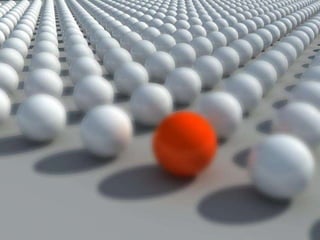
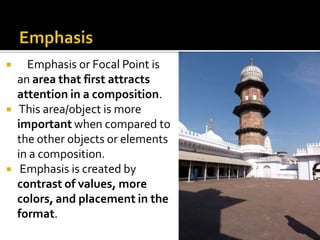
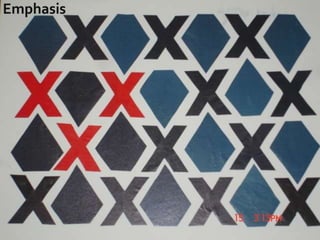
     Emphasis or Focal Point is
    an area that first attracts
    attention in a composition.
    This area/object is more
    important when compared to
    the other objects or elements
    in a composition.
    Emphasis is created by
    contrast of values, more
    colors, and placement in the
    format.
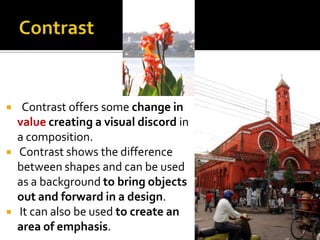
    Contrast offers some change in
    value creating a visual discord in
    a composition.
   Contrast shows the difference
    between shapes and can be used
    as a background to bring objects
    out and forward in a design.
   It can also be used to create an
    area of emphasis.
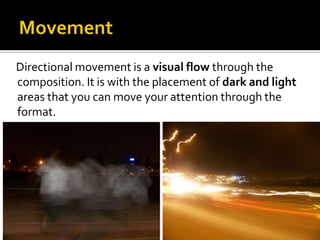
Directional movement is a visual flow through the
composition. It is with the placement of dark and light
areas that you can move your attention through the
format.
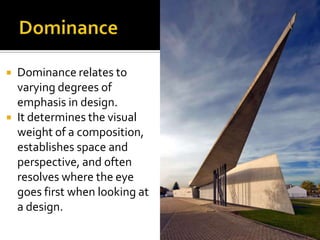
   Dominance relates to
    varying degrees of
    emphasis in design.
   It determines the visual
    weight of a composition,
    establishes space and
    perspective, and often
    resolves where the eye
    goes first when looking at
    a design.
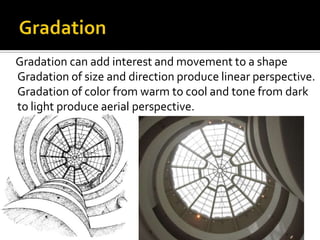
Gradation can add interest and movement to a shape
Gradation of size and direction produce linear perspective.
Gradation of color from warm to cool and tone from dark
to light produce aerial perspective.

Lecture 2 principals-of-design

  • 2.
    ORDERING PRINCIPLES OFDESIGN  AXIS  SYMMETRY  HIRARCHY  RHYTHM  DATUM  TRANSFORMATION
  • 13.
    Rhythm is the repetition or alternation of elements, often with defined intervals between them.  Rhythm can create a sense of movement.  Few kinds of rhythm are regular, flowing, progressive rhythm etc.
  • 14.
  • 16.
  • 19.
    QUALITIES IN DESIGN  UNITY  BALANCE  VARIETY  PROPORTIONS  MONOTONY  EMPHASIS  ANOMALY  CONTRAST  PROXIMITY  MOVEMENT  CHAOS.  DOMINANCE  REPETETION  GRADATION
  • 20.
    The concept of unity describes the relationship between the individual parts and the whole of a composition.  To give it a sense of wholeness, or to break it apart and give it a sense of variety.
  • 21.
    It is a feeling of visual equality in shape, form, value, color, etc. Visual balance comes from arranging elements on the page so that no one section is heavier than the other  Balance usually comes in two forms: Symmetrical and Asymmetrical.
  • 22.
    Proportion is the comparison of dimensions or distribution of forms It is the size of the part of an object compared to the rest of objects.  It is the relationship between objects, or parts, of an object.
  • 23.
    Emphasis or Focal Point is an area that first attracts attention in a composition.  This area/object is more important when compared to the other objects or elements in a composition.  Emphasis is created by contrast of values, more colors, and placement in the format.
  • 25.
    Contrast offers some change in value creating a visual discord in a composition.  Contrast shows the difference between shapes and can be used as a background to bring objects out and forward in a design.  It can also be used to create an area of emphasis.
  • 26.
    Directional movement isa visual flow through the composition. It is with the placement of dark and light areas that you can move your attention through the format.
  • 27.
    Dominance relates to varying degrees of emphasis in design.  It determines the visual weight of a composition, establishes space and perspective, and often resolves where the eye goes first when looking at a design.
  • 29.
    Gradation can addinterest and movement to a shape Gradation of size and direction produce linear perspective. Gradation of color from warm to cool and tone from dark to light produce aerial perspective.