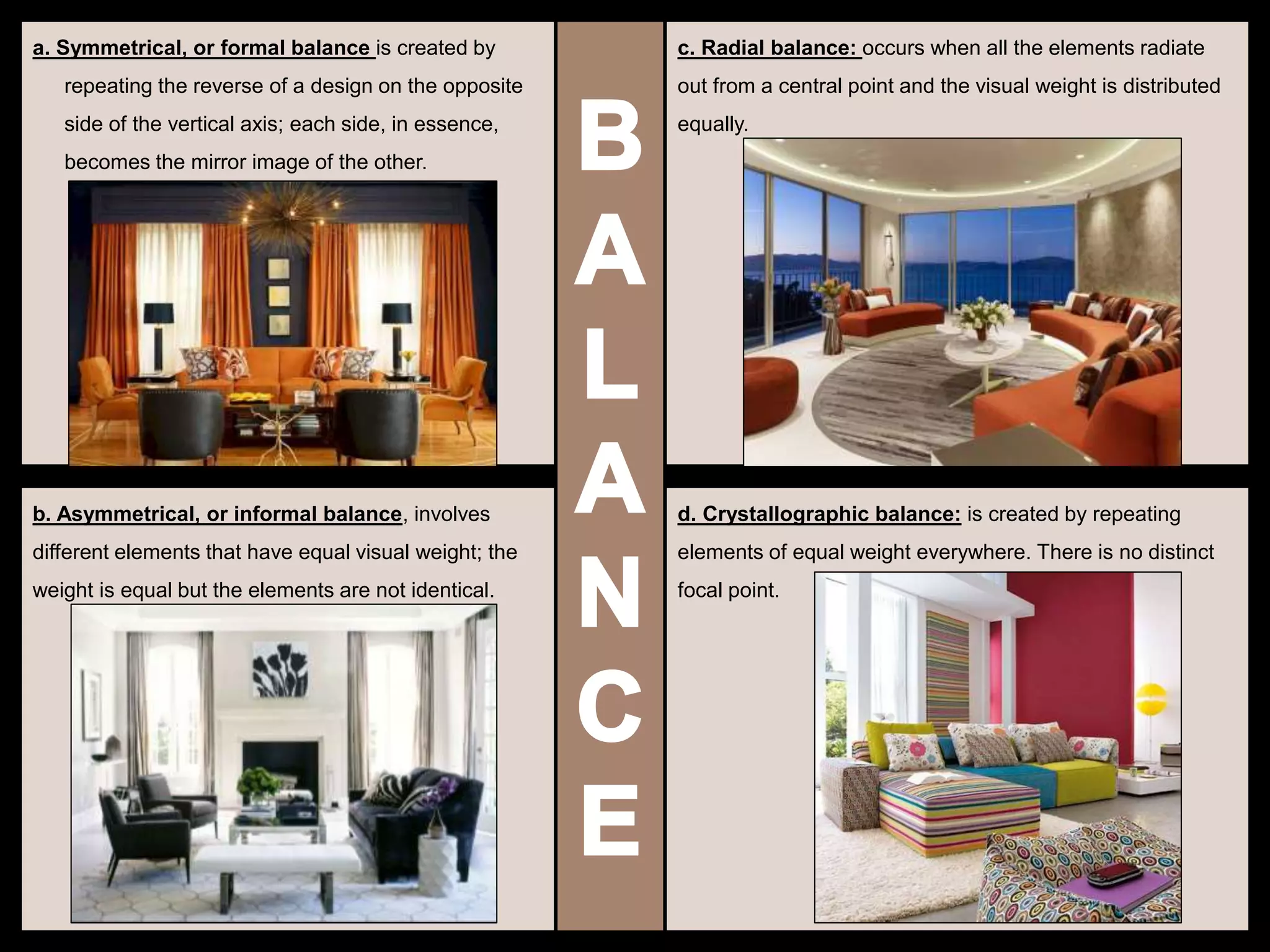
a. Symmetrical, or formal balance is created by
repeating the reverse of a design on the opposite
side of the vertical axis; each side, in essence,
becomes the mirror image of the other.
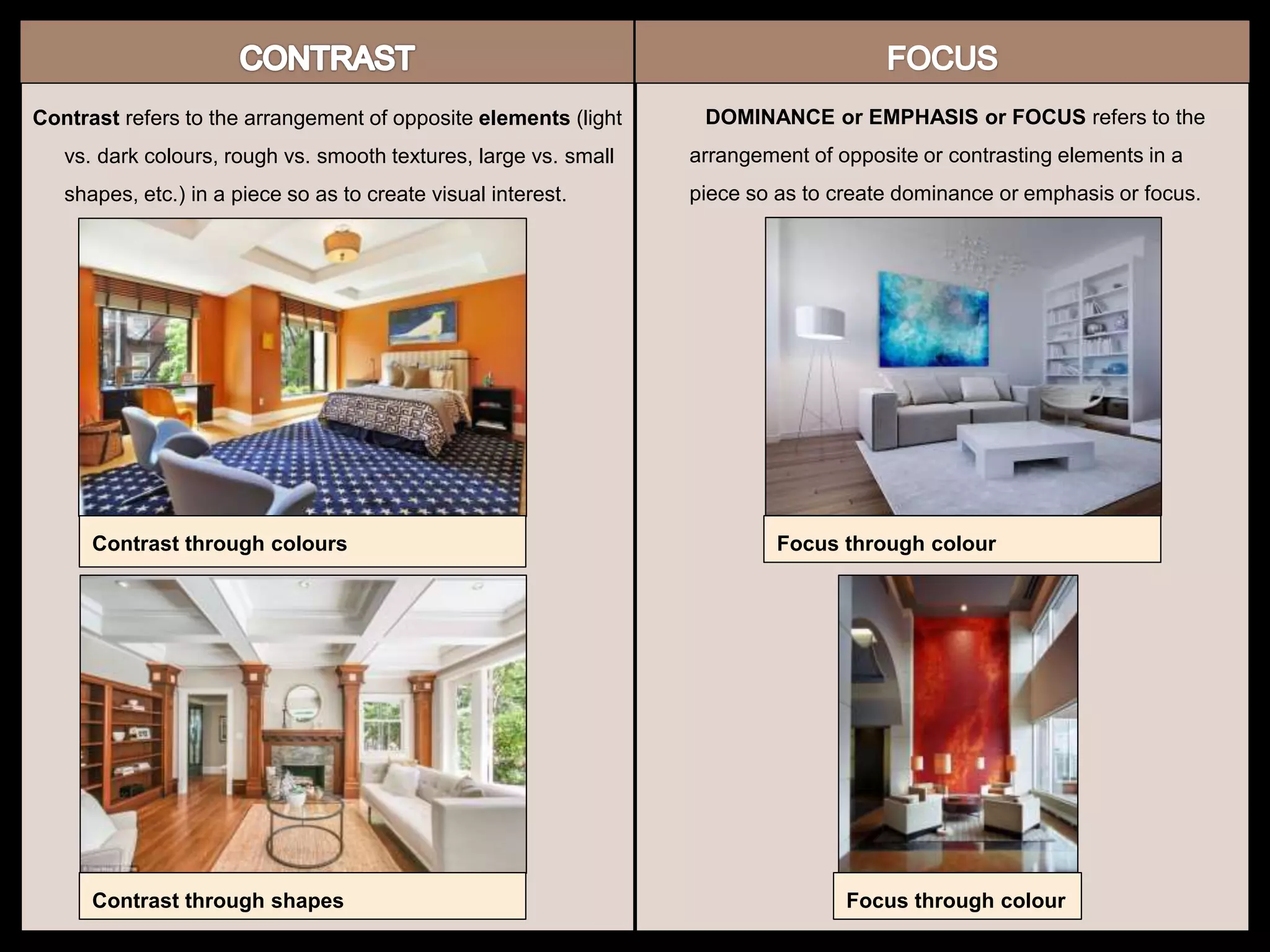
c. Radial balance: occurs when all the elements radiate
out from a central point and the visual weight is distributed
equally.
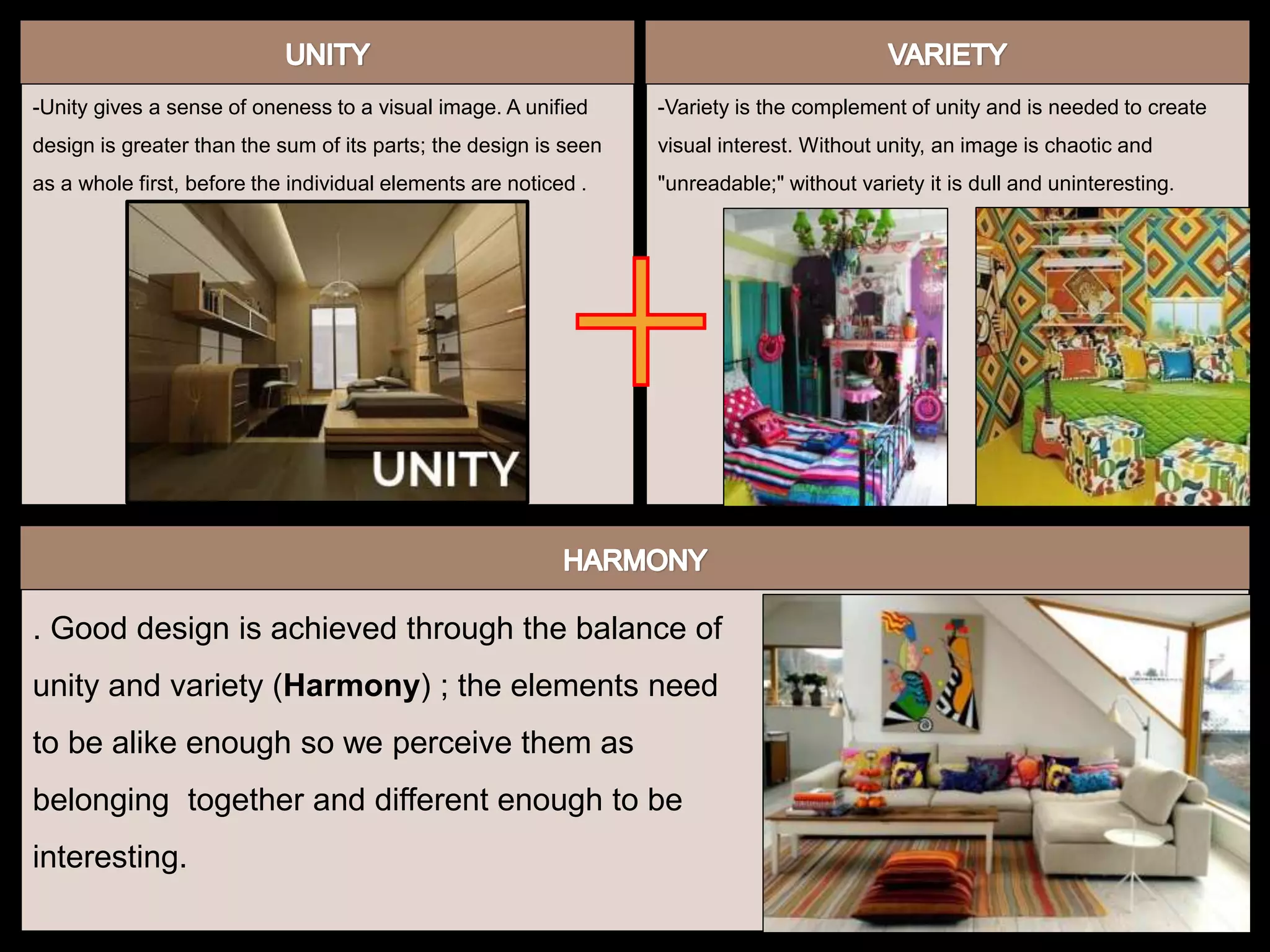
b. Asymmetrical, or informal balance, involves
different elements that have equal visual weight; the
weight is equal but the elements are not identical.
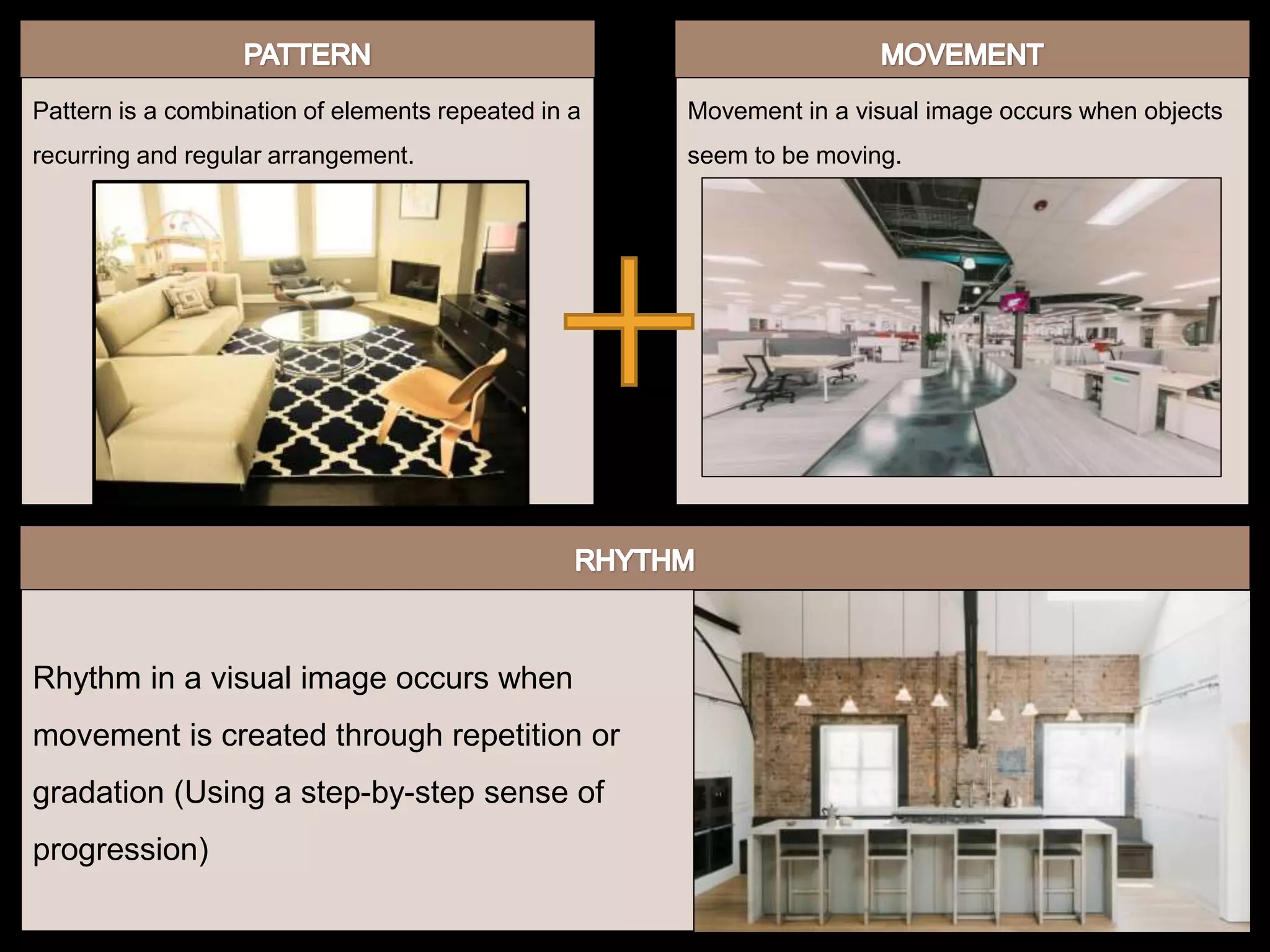
d. Crystallographic balance: is created by repeating
elements of equal weight everywhere. There is no distinct
focal point.
Contrast refers to the arrangement of opposite elements (light
vs. dark colours, rough vs. smooth textures, large vs. small
shapes, etc.) in a piece so as to create visual interest.
Contrast through colours
Contrast through shapes
DOMINANCE or EMPHASIS or FOCUS refers to the
arrangement of opposite or contrasting elements in a
piece so as to create dominance or emphasis or focus.
Focus through colour
-Unity gives a sense of oneness to a visual image. A unified
design is greater than the sum of its parts; the design is seen
as a whole first, before the individual elements are noticed .
-Variety is the complement of unity and is needed to create
visual interest. Without unity, an image is chaotic and
"unreadable;" without variety it is dull and uninteresting.
. Good design is achieved through the balance of
unity and variety (Harmony) ; the elements need
to be alike enough so we perceive them as
belonging together and different enough to be
interesting.
Pattern is a combination of elements repeated in a
recurring and regular arrangement.
Movement in a visual image occurs when objects
seem to be moving.
Rhythm in a visual image occurs when
movement is created through repetition or
gradation (Using a step-by-step sense of
progression)
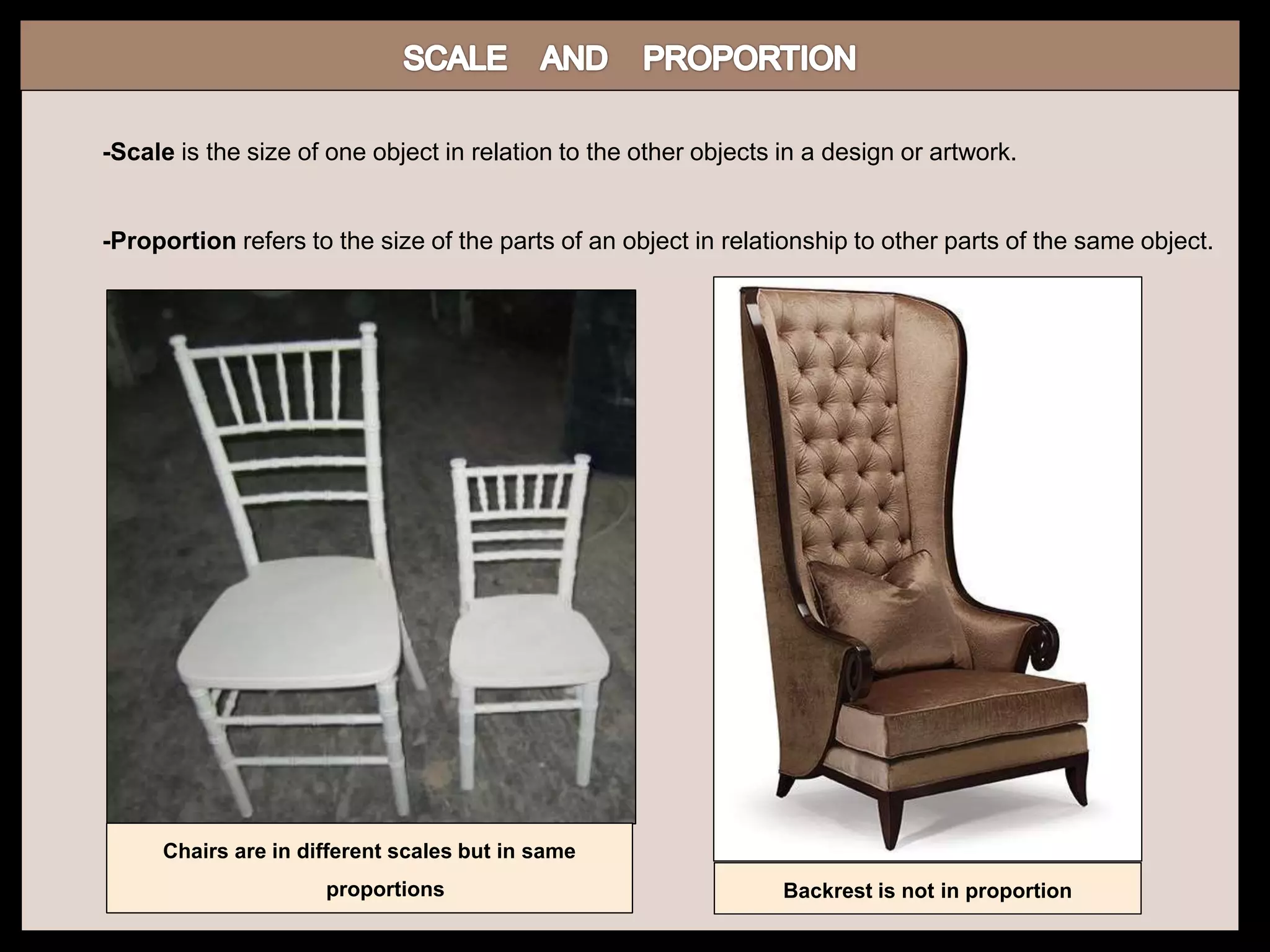
-Scale is the size of one object in relation to the other objects in a design or artwork.
-Proportion refers to the size of the parts of an object in relationship to other parts of the same object.
Chairs are in different scales but in same
proportions Backrest is not in proportion

Use of Design Principles in Interiors - Adeeba Afreen

  • 1.
    a. Symmetrical, orformal balance is created by repeating the reverse of a design on the opposite side of the vertical axis; each side, in essence, becomes the mirror image of the other. c. Radial balance: occurs when all the elements radiate out from a central point and the visual weight is distributed equally. b. Asymmetrical, or informal balance, involves different elements that have equal visual weight; the weight is equal but the elements are not identical. d. Crystallographic balance: is created by repeating elements of equal weight everywhere. There is no distinct focal point.
  • 2.
    Contrast refers tothe arrangement of opposite elements (light vs. dark colours, rough vs. smooth textures, large vs. small shapes, etc.) in a piece so as to create visual interest. Contrast through colours Contrast through shapes DOMINANCE or EMPHASIS or FOCUS refers to the arrangement of opposite or contrasting elements in a piece so as to create dominance or emphasis or focus. Focus through colour Focus through colour
  • 3.
    -Unity gives asense of oneness to a visual image. A unified design is greater than the sum of its parts; the design is seen as a whole first, before the individual elements are noticed . -Variety is the complement of unity and is needed to create visual interest. Without unity, an image is chaotic and "unreadable;" without variety it is dull and uninteresting. . Good design is achieved through the balance of unity and variety (Harmony) ; the elements need to be alike enough so we perceive them as belonging together and different enough to be interesting.
  • 4.
    Pattern is acombination of elements repeated in a recurring and regular arrangement. Movement in a visual image occurs when objects seem to be moving. Rhythm in a visual image occurs when movement is created through repetition or gradation (Using a step-by-step sense of progression)
  • 5.
    -Scale is thesize of one object in relation to the other objects in a design or artwork. -Proportion refers to the size of the parts of an object in relationship to other parts of the same object. Chairs are in different scales but in same proportions Backrest is not in proportion