Principle of Design
Dr. Deepa Swamy
Associate Professor
Govt Arts Girls College, Kota
The principles of design describe the
ways an artist use different elements
of design in a composition.
Principle of Design
Balance : Symmetrical Asymmetrical
Emphasis
Rhythm:
Proportion:
Harmony: Unity ,Variety
Balance
 Object is equal weight at equal distance from center.
 Object is unequal weights than place heavier weight near the
center and light at far.
 Bright color object should be near and dull color should be
far from center.
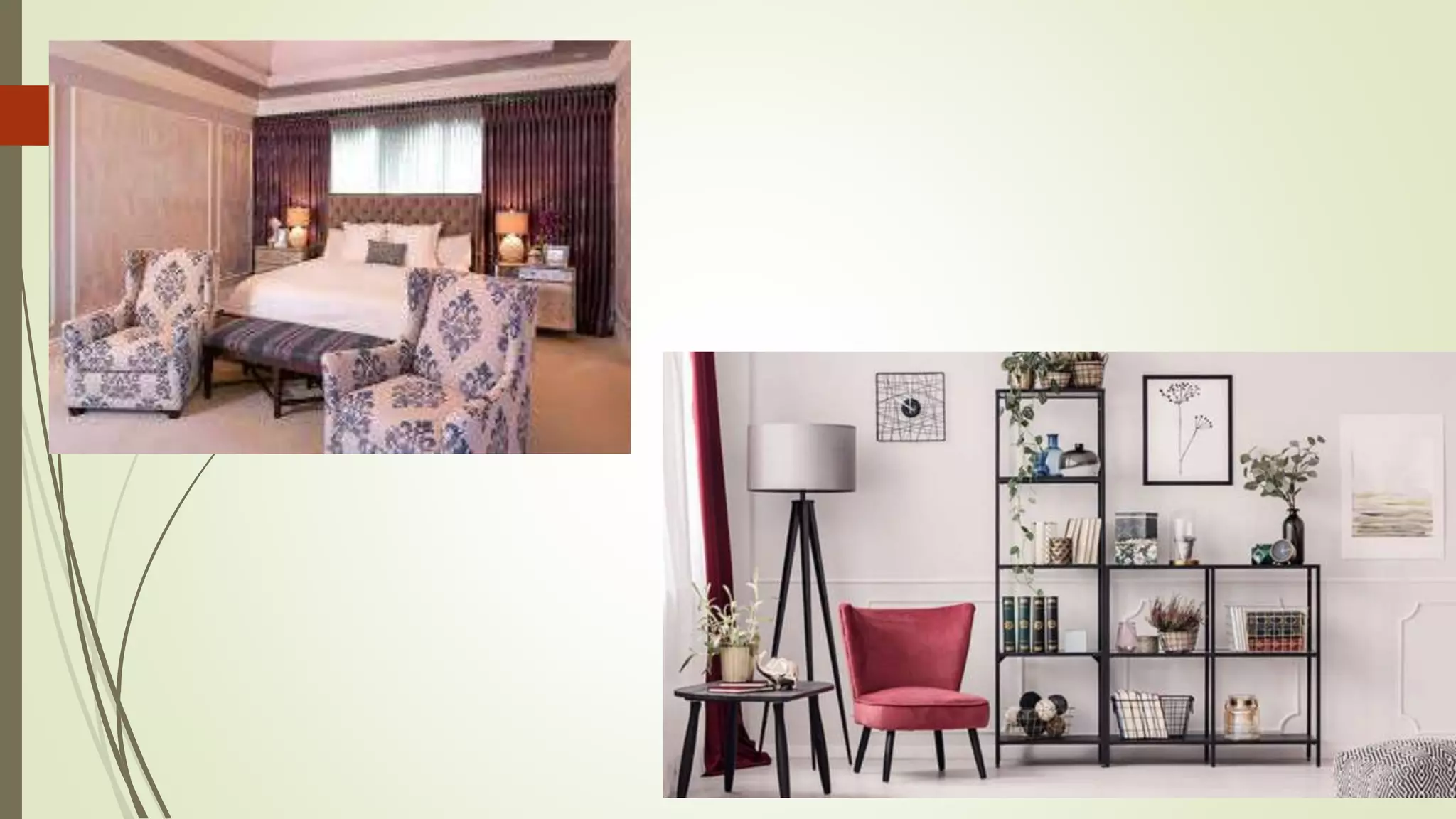
Symmetrical / Formal Balance
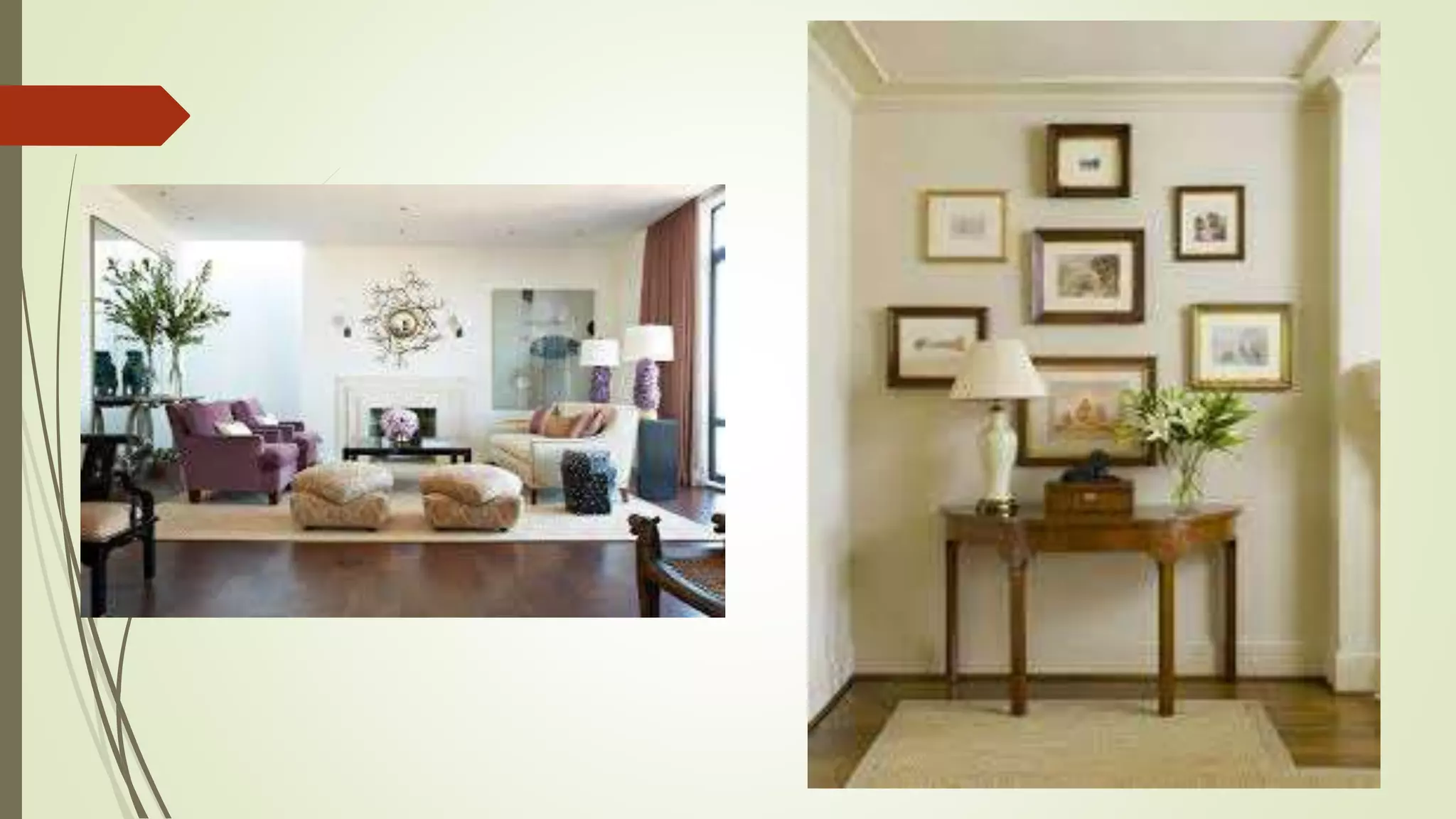
Symmetrical balance can be described as having equal
"weight" on equal sides of a centrally placed fulcrum.
It may also be referred to as formal balance.
When the elements are arranged equally on either side
of a central axis, the result is Bilateral symmetry.
This axis may be horizontal or vertical.
Each side from the centre are identical.
Formal balance is quiet dignified and gives a sense of
precision.
It Should be used in large number.
Asymmetrical / Informal Balance
 Asymmetrical balance, also called informal balance,
 It is more complex and difficult to achieve.
 It involves placement of objects in a way that will allow objects
of varying visual weight to balance one another around a
central point.
 It just means that there are no mirror images in a composition.
 The term, however, is usually used to describe a kind of
balance that does not rely on symmetry.
 It is more subtle and offer a great opportunity and variety in
arrangement.
 It should be use in small rooms
Emphasis
It is the centers interest on the most important thing in
arrangement .
Emphasis creates a focal point in a design composition; it
is how we bring attention to what is important in it.
Emphasis helps readers determine the important
information on your display and allows them to
interpret the message faster.
This process of arranging the visual elements on a
composition according to their order of importance and
emphasis is called Visual Hierarchy.
Visual Hierarchy is used to guide readers attention to the
main places on your composition.
Emphasis can be done through
 grouping of the object.
 through color contract.
 decoration.
 plain surface
 contrasting Lines, shapes, and sizes.
 Make it bolder
 Make it brighter
 Change Style Add special visual effects.
 Add a border or frame
 Add more negative of positive space
 Add shadow or lights
 Change the position Create Focal Points
Rhythm
It is nothing but a form of movement.
It suggest the gracefulness, spontaneity, energy and
primitiveness.
The principle of design that refers to a regular
repetition of elements of art to produce the look and
feel of movement.
It is often achieved through the careful placement
of repeated components which invite the viewer's
eye to jump rapidly or glide smoothly from one to
the next.
Rhythm can be achieved through
Repetition of shapes.
Progression of sizes or gradation.
Continues line movement.
Radiation.
Opposition.
Transition.
Proportion
Scale refers to the size of an object (a whole) in
relationship to another object (another whole).
Proportions relates to the size of a design in relation
to the height and width of the area in which it is
placed
 Proportions of objects determine the size when
compared to each other or in other words we evaluate
the size from the objects surrounded by objects.
Harmony
 Harmony in visual design means all parts of the visual image
relate to and complement each other. Harmony pulls the pieces
of a visual image together.
 It can be defined as the selection and arrangement of
consistent ideas and objects.
 When multiple elements of design are used to add interest to a
design. n Variety can be created using different elements and
materials, as long as they are compatible to each other.
Aspect of Harmony
Harmony in line and shape
Harmony in size
Harmony in texture
Harmony in Idea/Theme
Harmony in Color
Principle of art
Principle of art

Principle of art

  • 1.
    Principle of Design Dr.Deepa Swamy Associate Professor Govt Arts Girls College, Kota
  • 2.
    The principles ofdesign describe the ways an artist use different elements of design in a composition.
  • 3.
    Principle of Design Balance: Symmetrical Asymmetrical Emphasis Rhythm: Proportion: Harmony: Unity ,Variety
  • 4.
    Balance  Object isequal weight at equal distance from center.  Object is unequal weights than place heavier weight near the center and light at far.  Bright color object should be near and dull color should be far from center.
  • 5.
    Symmetrical / FormalBalance Symmetrical balance can be described as having equal "weight" on equal sides of a centrally placed fulcrum. It may also be referred to as formal balance. When the elements are arranged equally on either side of a central axis, the result is Bilateral symmetry. This axis may be horizontal or vertical. Each side from the centre are identical. Formal balance is quiet dignified and gives a sense of precision. It Should be used in large number.
  • 7.
    Asymmetrical / InformalBalance  Asymmetrical balance, also called informal balance,  It is more complex and difficult to achieve.  It involves placement of objects in a way that will allow objects of varying visual weight to balance one another around a central point.  It just means that there are no mirror images in a composition.  The term, however, is usually used to describe a kind of balance that does not rely on symmetry.  It is more subtle and offer a great opportunity and variety in arrangement.  It should be use in small rooms
  • 9.
    Emphasis It is thecenters interest on the most important thing in arrangement . Emphasis creates a focal point in a design composition; it is how we bring attention to what is important in it. Emphasis helps readers determine the important information on your display and allows them to interpret the message faster. This process of arranging the visual elements on a composition according to their order of importance and emphasis is called Visual Hierarchy. Visual Hierarchy is used to guide readers attention to the main places on your composition.
  • 10.
    Emphasis can bedone through  grouping of the object.  through color contract.  decoration.  plain surface  contrasting Lines, shapes, and sizes.  Make it bolder  Make it brighter  Change Style Add special visual effects.  Add a border or frame  Add more negative of positive space  Add shadow or lights  Change the position Create Focal Points
  • 12.
    Rhythm It is nothingbut a form of movement. It suggest the gracefulness, spontaneity, energy and primitiveness. The principle of design that refers to a regular repetition of elements of art to produce the look and feel of movement. It is often achieved through the careful placement of repeated components which invite the viewer's eye to jump rapidly or glide smoothly from one to the next.
  • 13.
    Rhythm can beachieved through Repetition of shapes. Progression of sizes or gradation. Continues line movement. Radiation. Opposition. Transition.
  • 15.
    Proportion Scale refers tothe size of an object (a whole) in relationship to another object (another whole). Proportions relates to the size of a design in relation to the height and width of the area in which it is placed  Proportions of objects determine the size when compared to each other or in other words we evaluate the size from the objects surrounded by objects.
  • 17.
    Harmony  Harmony invisual design means all parts of the visual image relate to and complement each other. Harmony pulls the pieces of a visual image together.  It can be defined as the selection and arrangement of consistent ideas and objects.  When multiple elements of design are used to add interest to a design. n Variety can be created using different elements and materials, as long as they are compatible to each other.
  • 18.
    Aspect of Harmony Harmonyin line and shape Harmony in size Harmony in texture Harmony in Idea/Theme Harmony in Color