Class Session 3 
Curriculum Design in Medical 
Education 
October 2, 2014
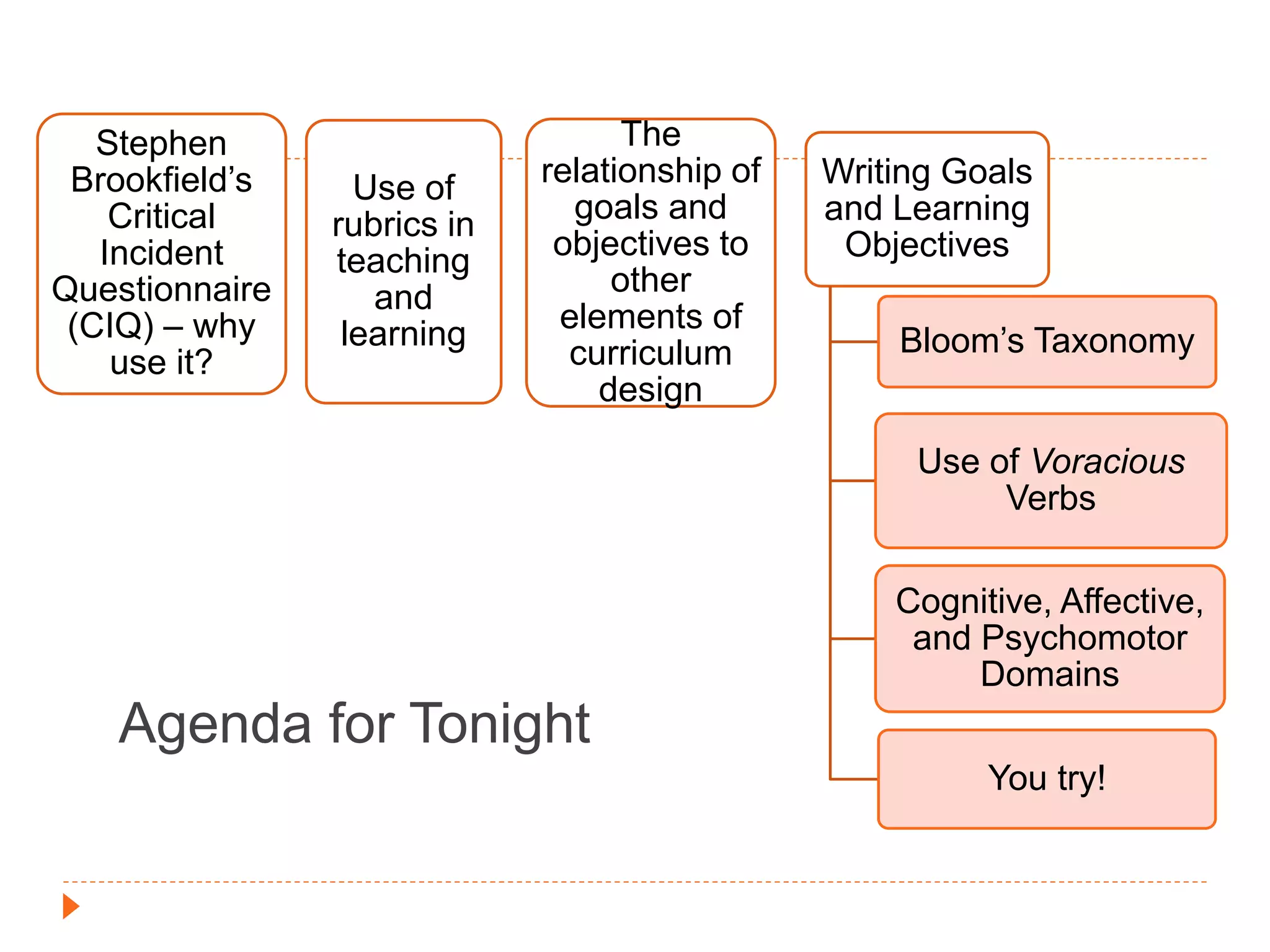
Stephen 
Brookfield’s 
Critical 
Incident 
Questionnaire 
(CIQ) – why 
use it? 
Use of 
rubrics in 
teaching 
and 
learning 
Agenda for Tonight 
The 
relationship of 
goals and 
objectives to 
other 
elements of 
curriculum 
design 
Writing Goals 
and Learning 
Objectives 
Bloom’s Taxonomy 
Use of Voracious 
Verbs 
Cognitive, Affective, 
and Psychomotor 
Domains 
You try!
Use of Rubrics in Designing Learning 
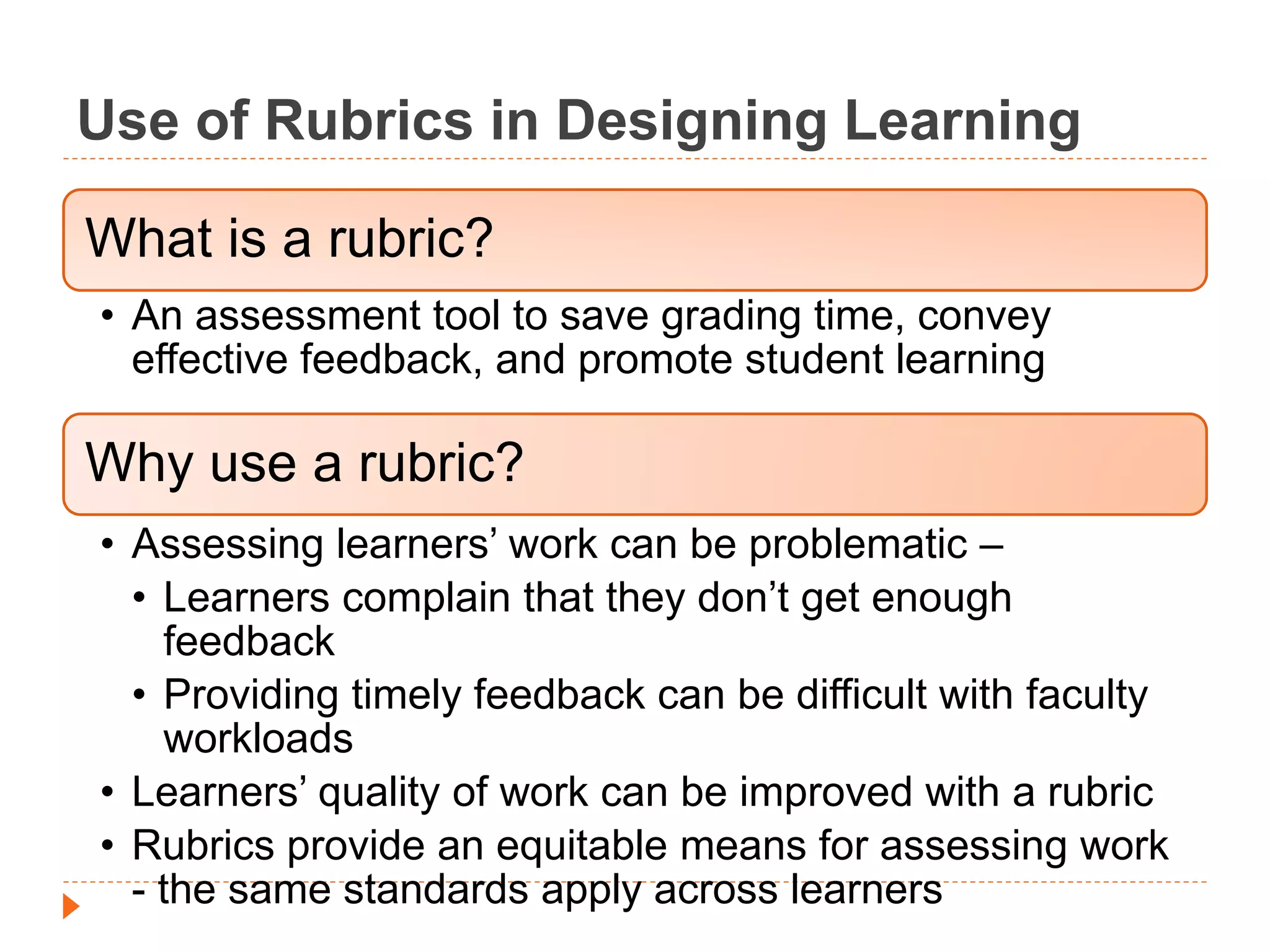
What is a rubric? 
• An assessment tool to save grading time, convey 
effective feedback, and promote student learning 
Why use a rubric? 
• Assessing learners’ work can be problematic – 
• Learners complain that they don’t get enough 
feedback 
• Providing timely feedback can be difficult with faculty 
workloads 
• Learners’ quality of work can be improved with a rubric 
• Rubrics provide an equitable means for assessing work 
- the same standards apply across learners
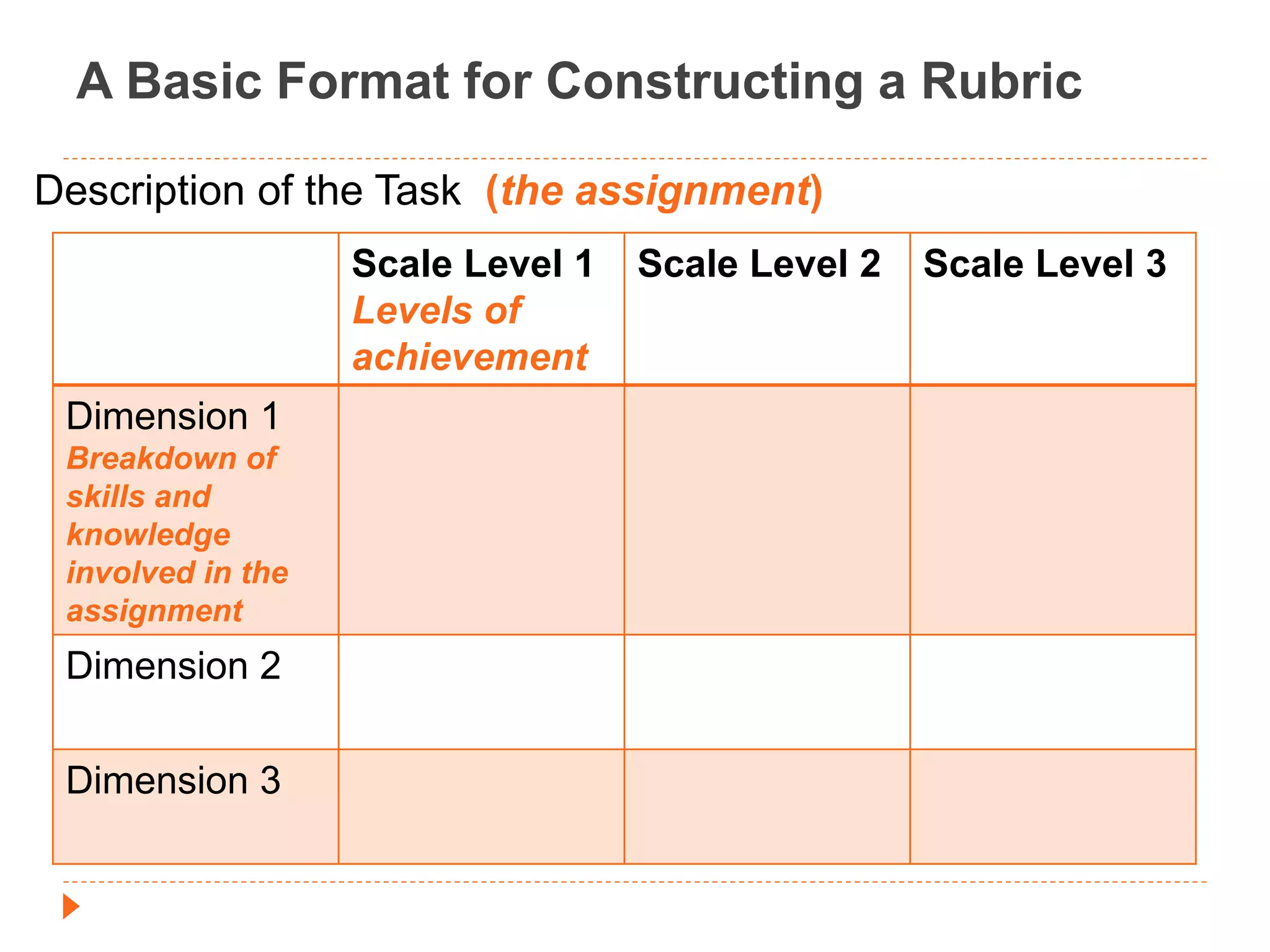
A Basic Format for Constructing a Rubric 
Description of the Task (the assignment) 
Scale Level 1 
Levels of 
achievement 
Scale Level 2 Scale Level 3 
Dimension 1 
Breakdown of 
skills and 
knowledge 
involved in the 
assignment 
Dimension 2 
Dimension 3
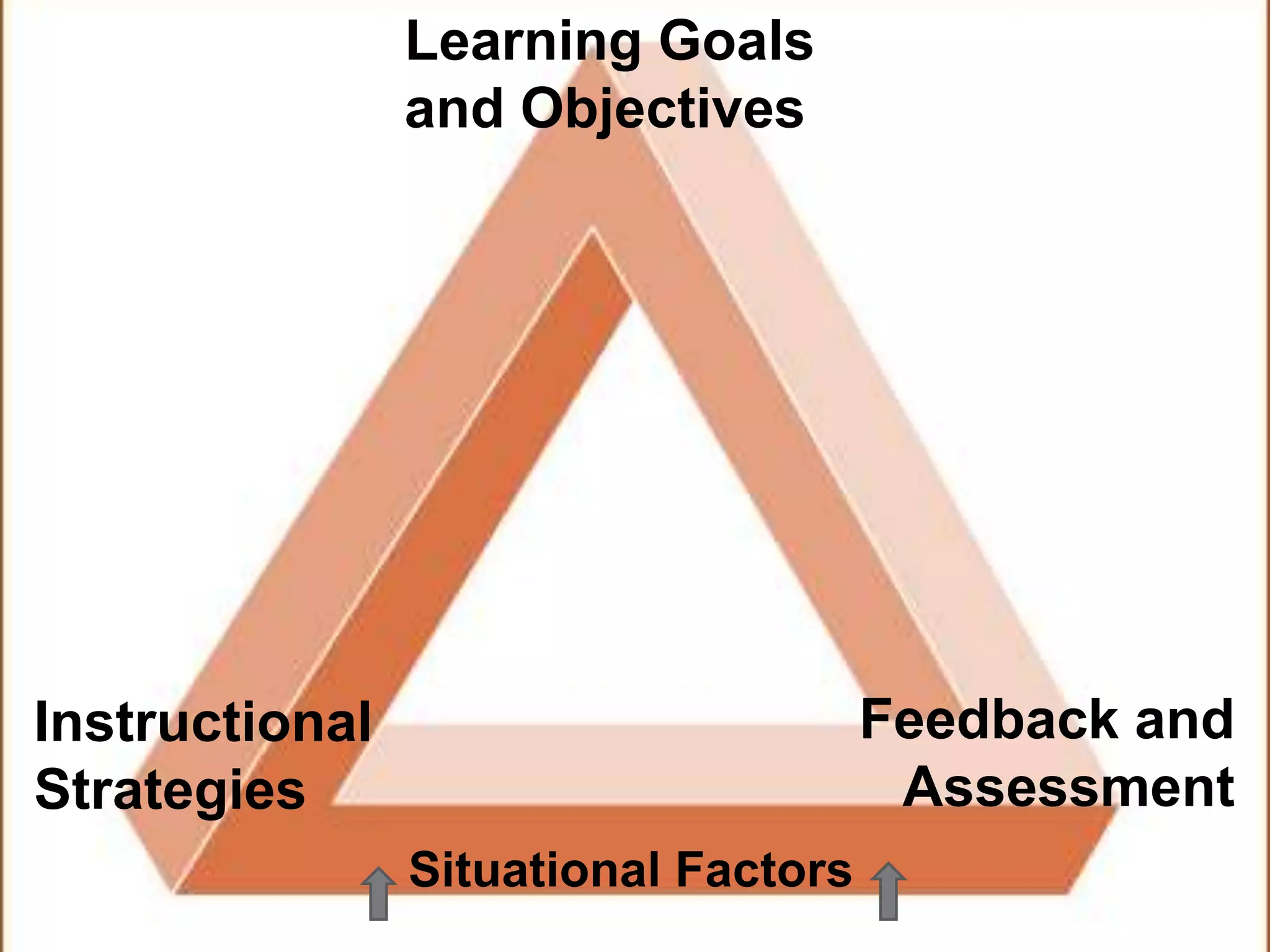
Learning Goals 
and Objectives 
Instructional 
Strategies 
Feedback and 
Assessment 
Situational Factors
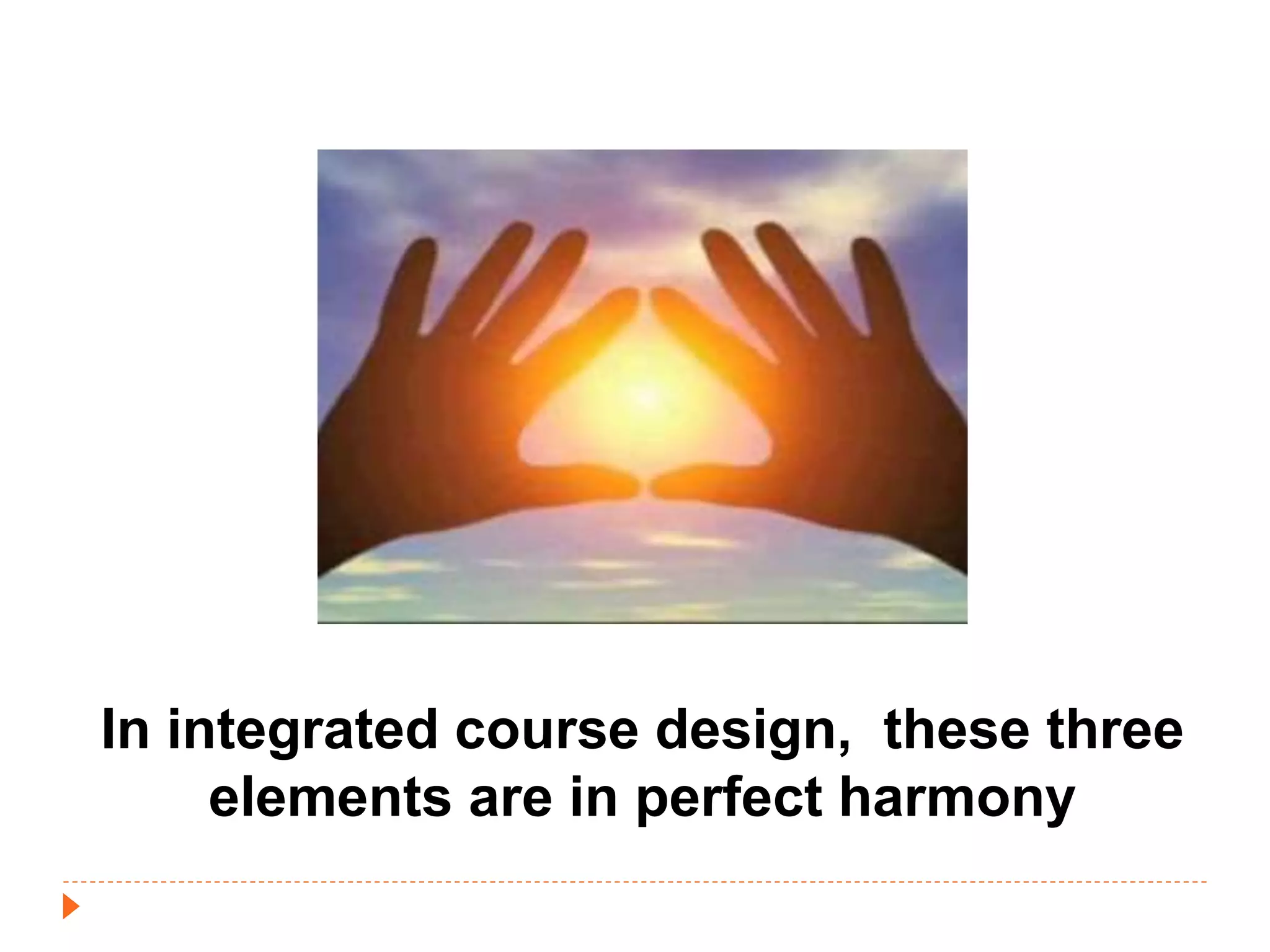
In integrated course design, these three 
elements are in perfect harmony
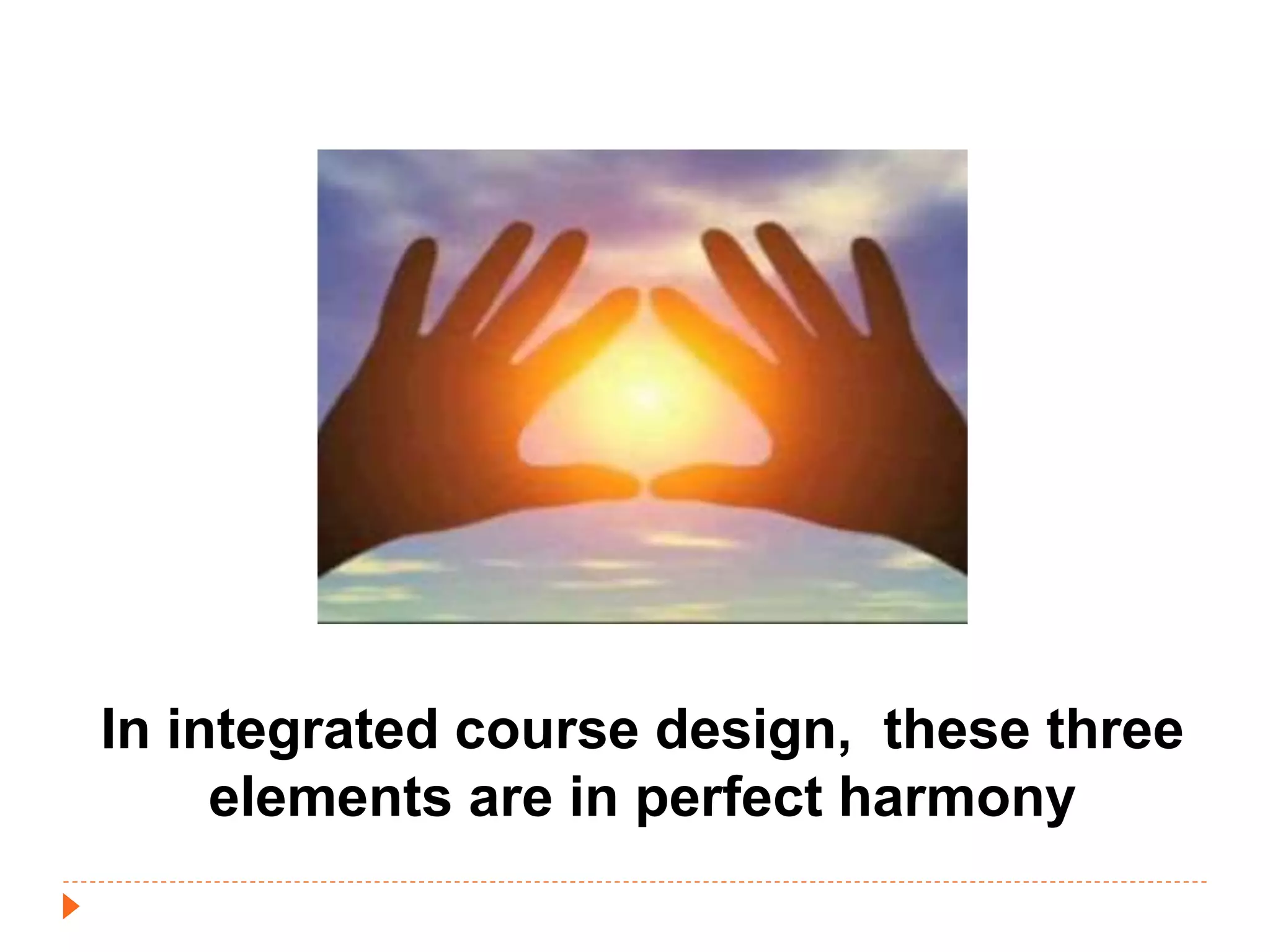
In integrated course design, these three 
elements are in perfect harmony
What do you want your 
learners to be able to DO at the 
end of your lesson, rotation, or 
course?
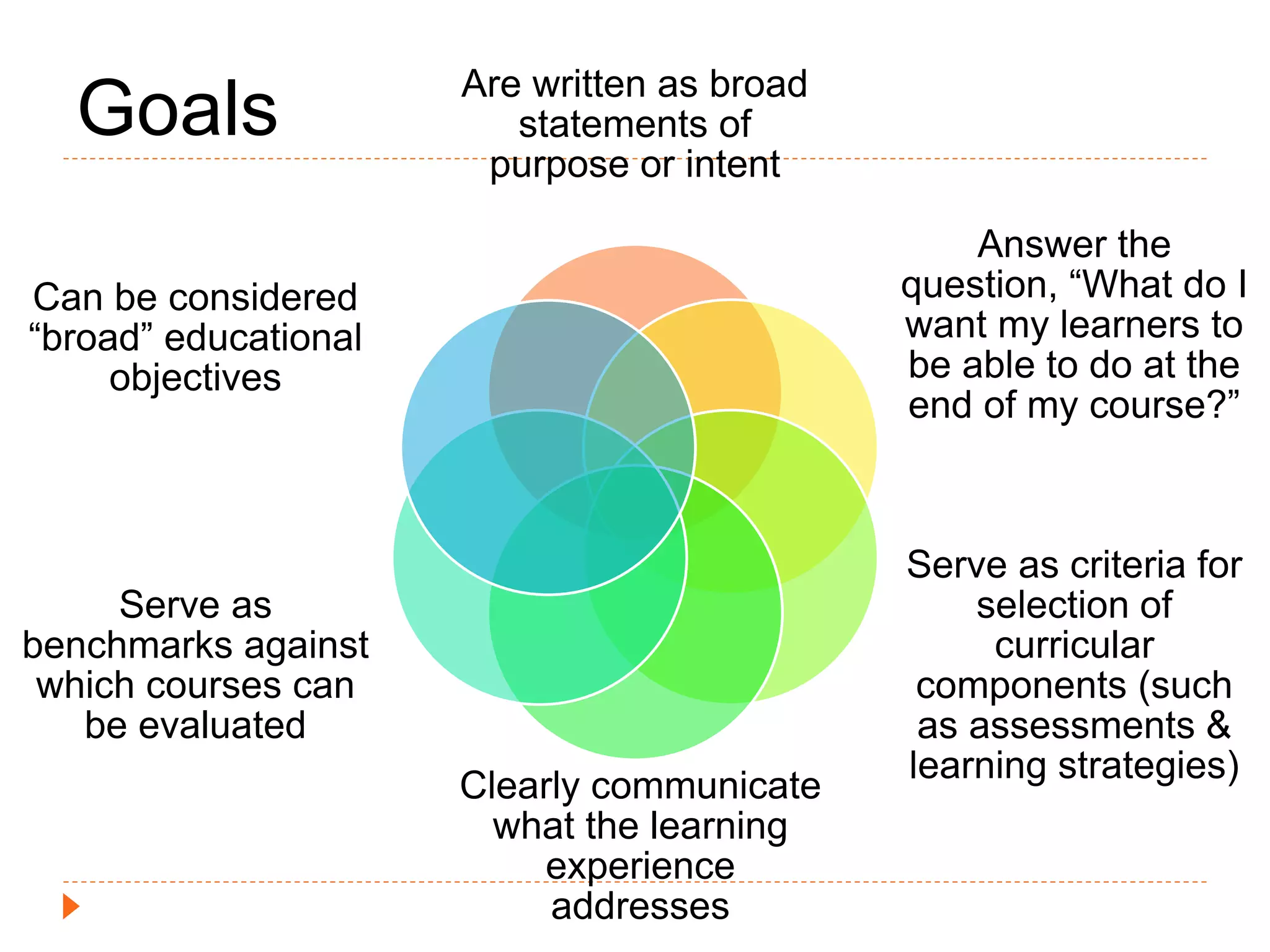
Goals Are written as broad 
statements of 
purpose or intent 
Answer the 
question, “What do I 
want my learners to 
be able to do at the 
end of my course?” 
Serve as criteria for 
selection of 
curricular 
components (such 
as assessments & 
learning strategies) 
Clearly communicate 
what the learning 
experience 
addresses 
Can be considered 
“broad” educational 
objectives 
Serve as 
benchmarks against 
which courses can 
be evaluated
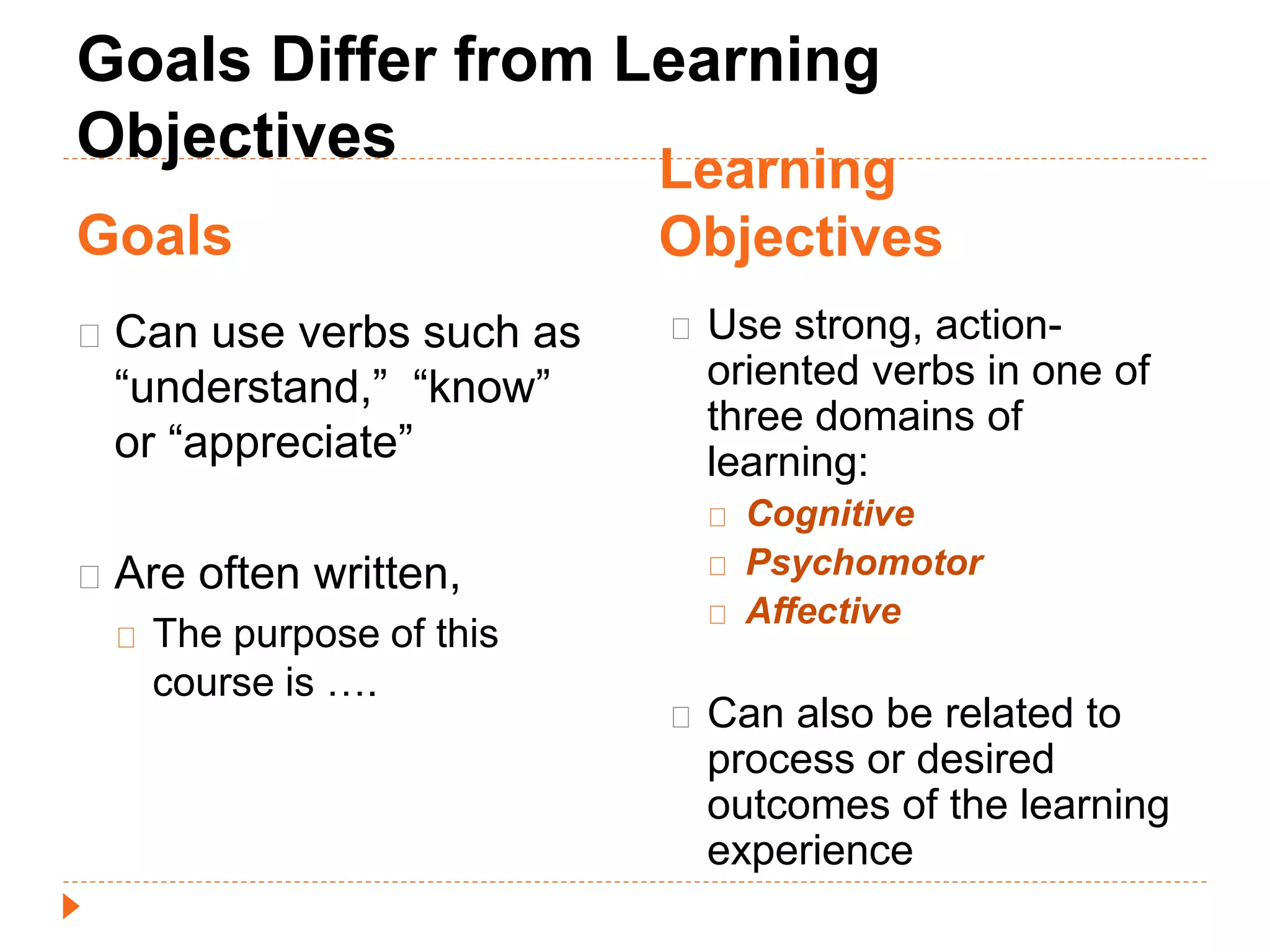
Goals Differ from Learning 
Objectives 
Goals 
Learning 
Objectives 
Can use verbs such as 
“understand,” “know” 
or “appreciate” 
Are often written, 
The purpose of this 
course is …. 
Use strong, action-oriented 
verbs in one of 
three domains of 
learning: 
Cognitive 
Psychomotor 
Affective 
Can also be related to 
process or desired 
outcomes of the learning 
experience
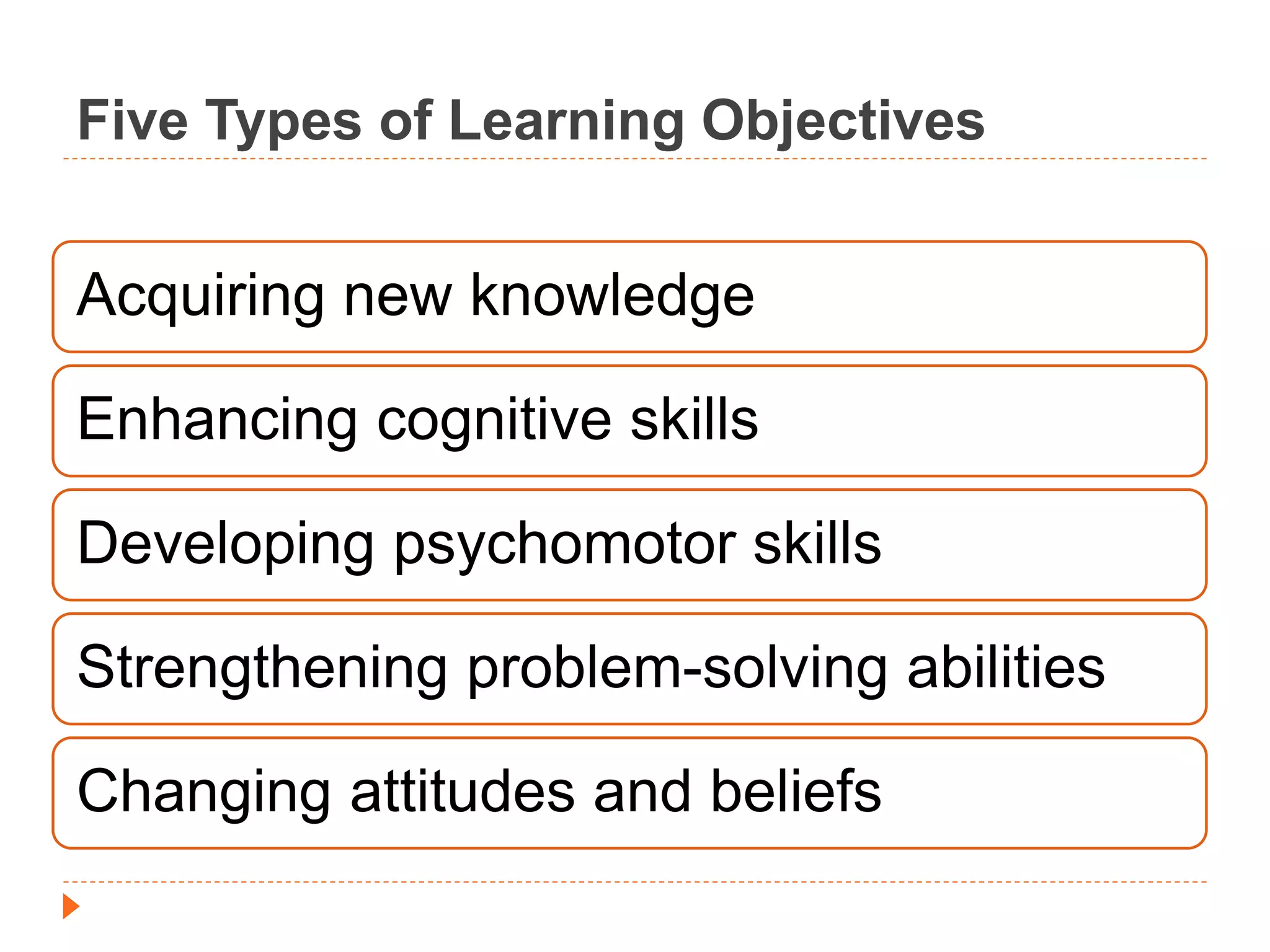
Five Types of Learning Objectives 
Acquiring new knowledge 
Enhancing cognitive skills 
Developing psychomotor skills 
Strengthening problem-solving abilities 
Changing attitudes and beliefs
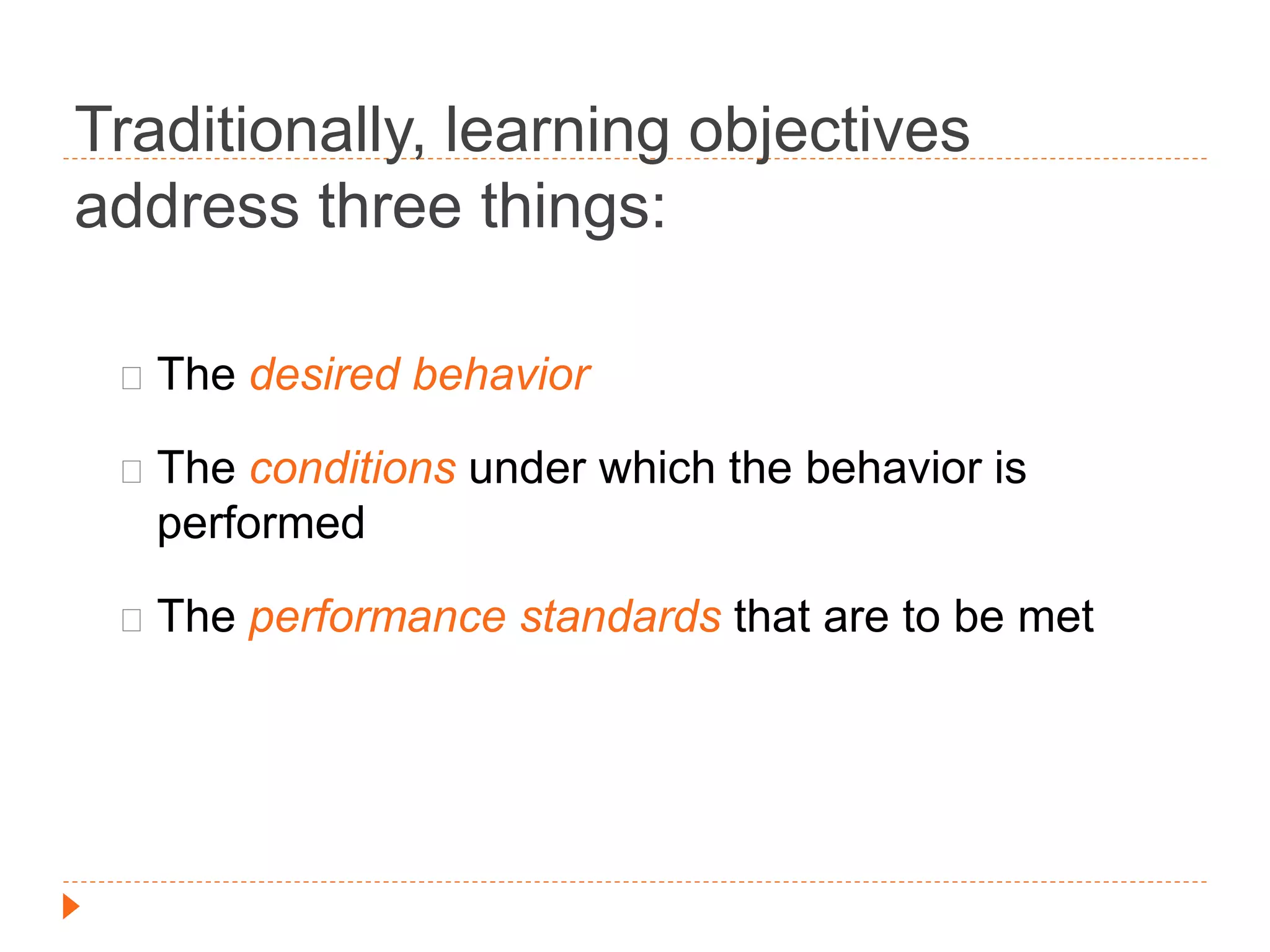
Traditionally, learning objectives 
address three things: 
The desired behavior 
The conditions under which the behavior is 
performed 
The performance standards that are to be met
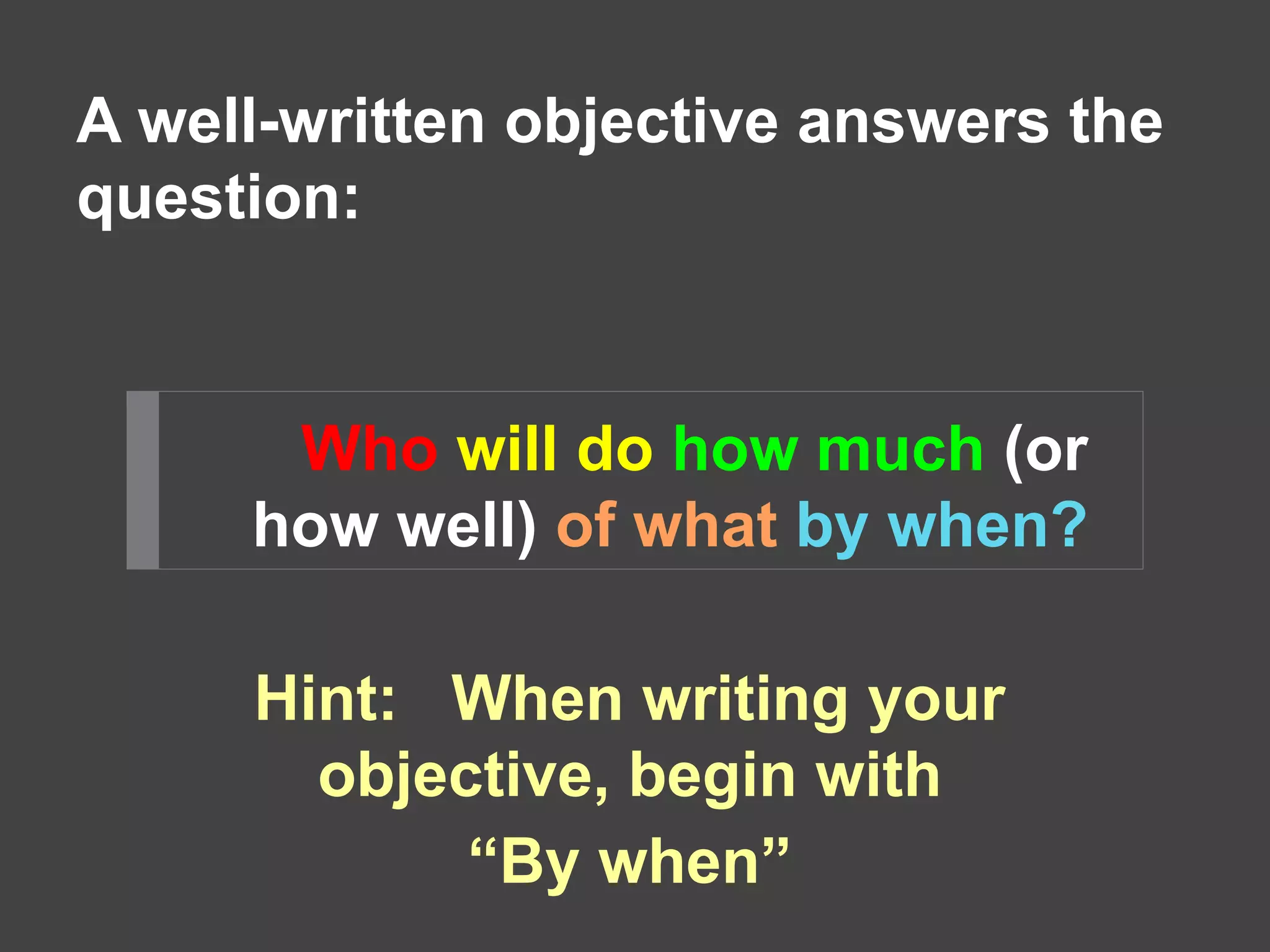
A well-written objective answers the 
question: 
Who will do how much (or 
how well) of what by when? 
Hint: When writing your 
objective, begin with 
“By when”
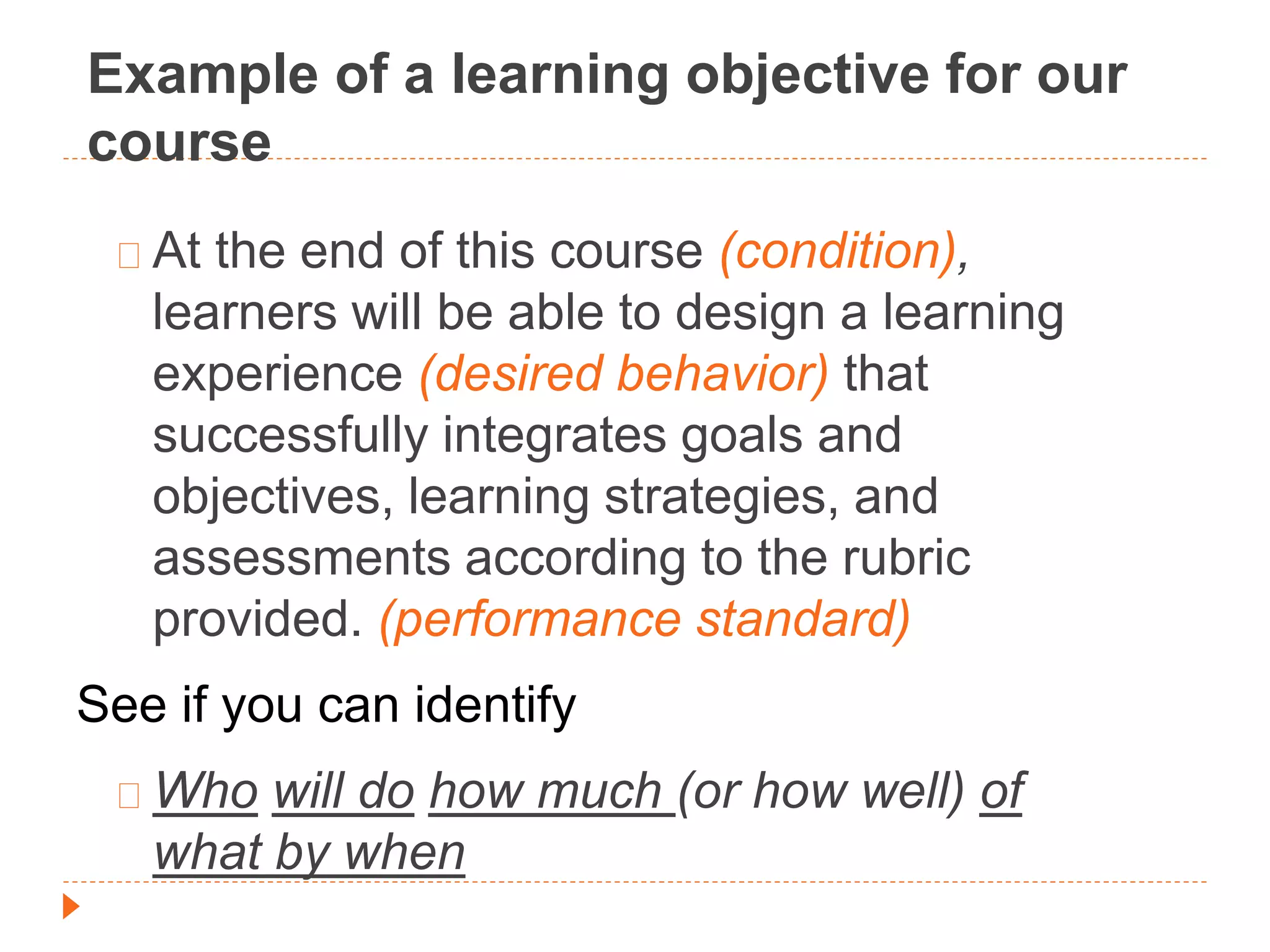
Example of a learning objective for our 
course 
At the end of this course (condition), 
learners will be able to design a learning 
experience (desired behavior) that 
successfully integrates goals and 
objectives, learning strategies, and 
assessments according to the rubric 
provided. (performance standard) 
See if you can identify 
Who will do how much (or how well) of 
what by when
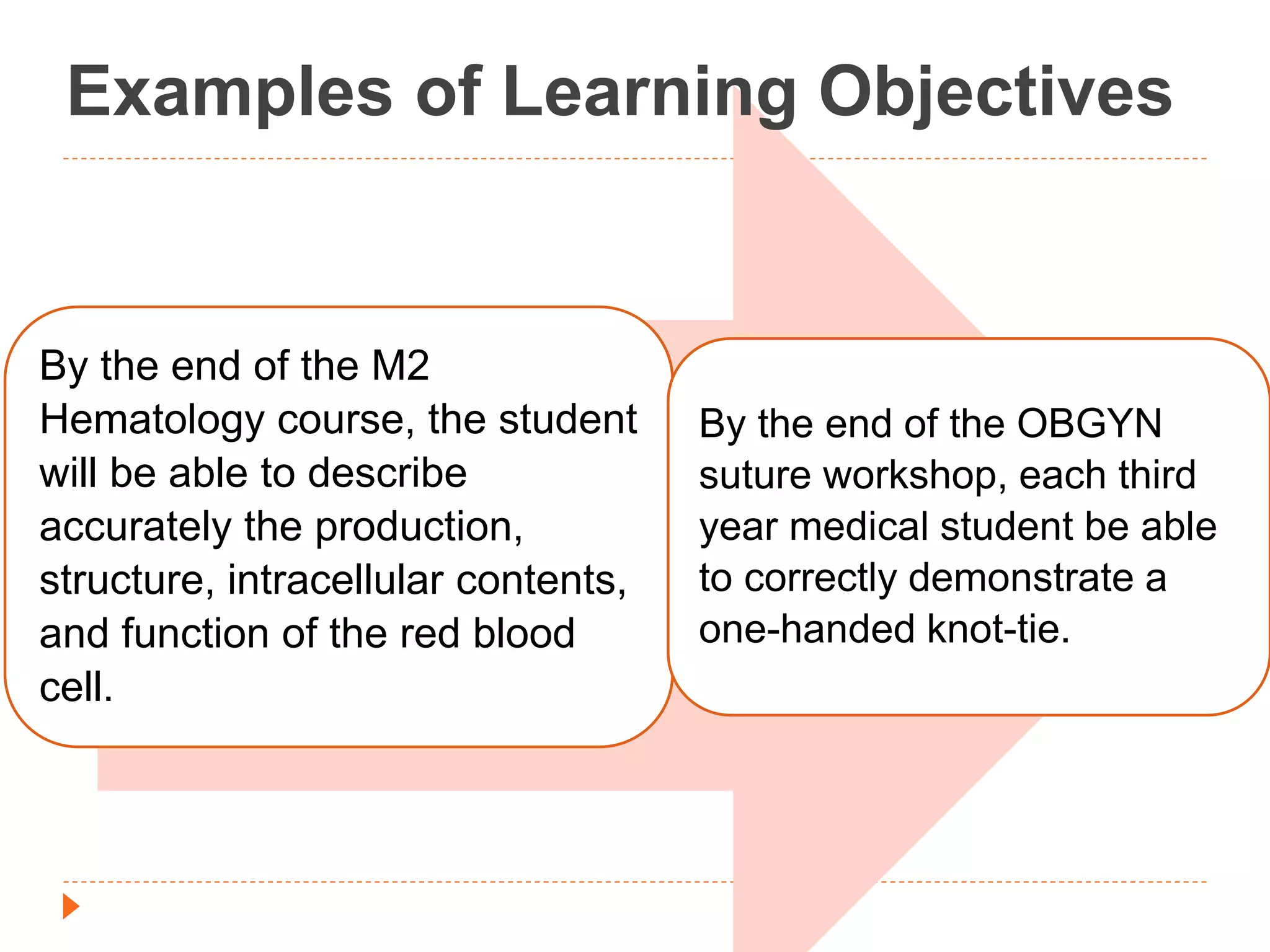
Examples of Learning Objectives 
By the end of the M2 
Hematology course, the student 
will be able to describe 
accurately the production, 
structure, intracellular contents, 
and function of the red blood 
cell. 
By the end of the OBGYN 
suture workshop, each third 
year medical student be able 
to correctly demonstrate a 
one-handed knot-tie.
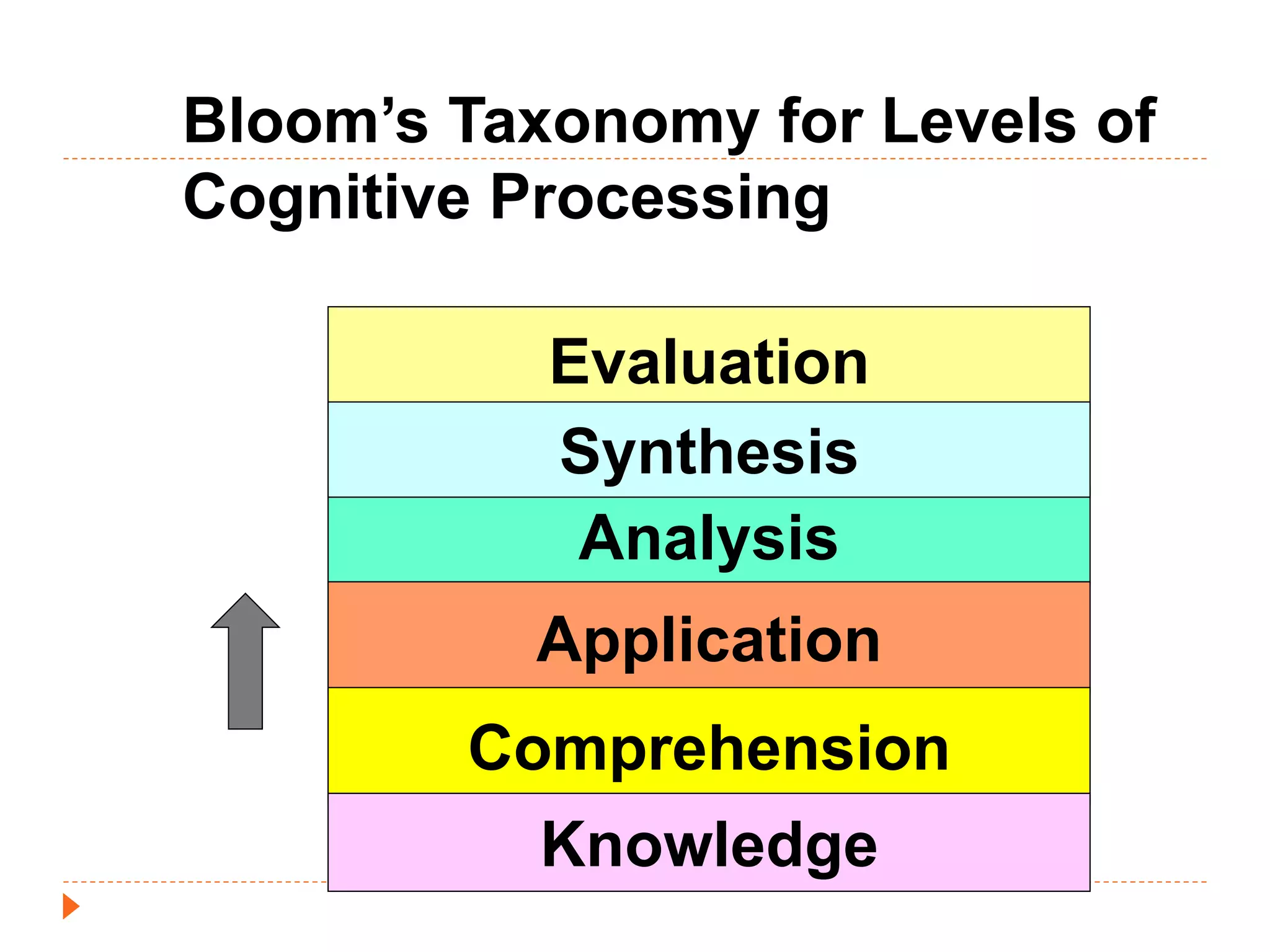
Bloom’s Taxonomy for Levels of 
Cognitive Processing 
Evaluation 
Synthesis 
Analysis 
Application 
Comprehension 
Knowledge
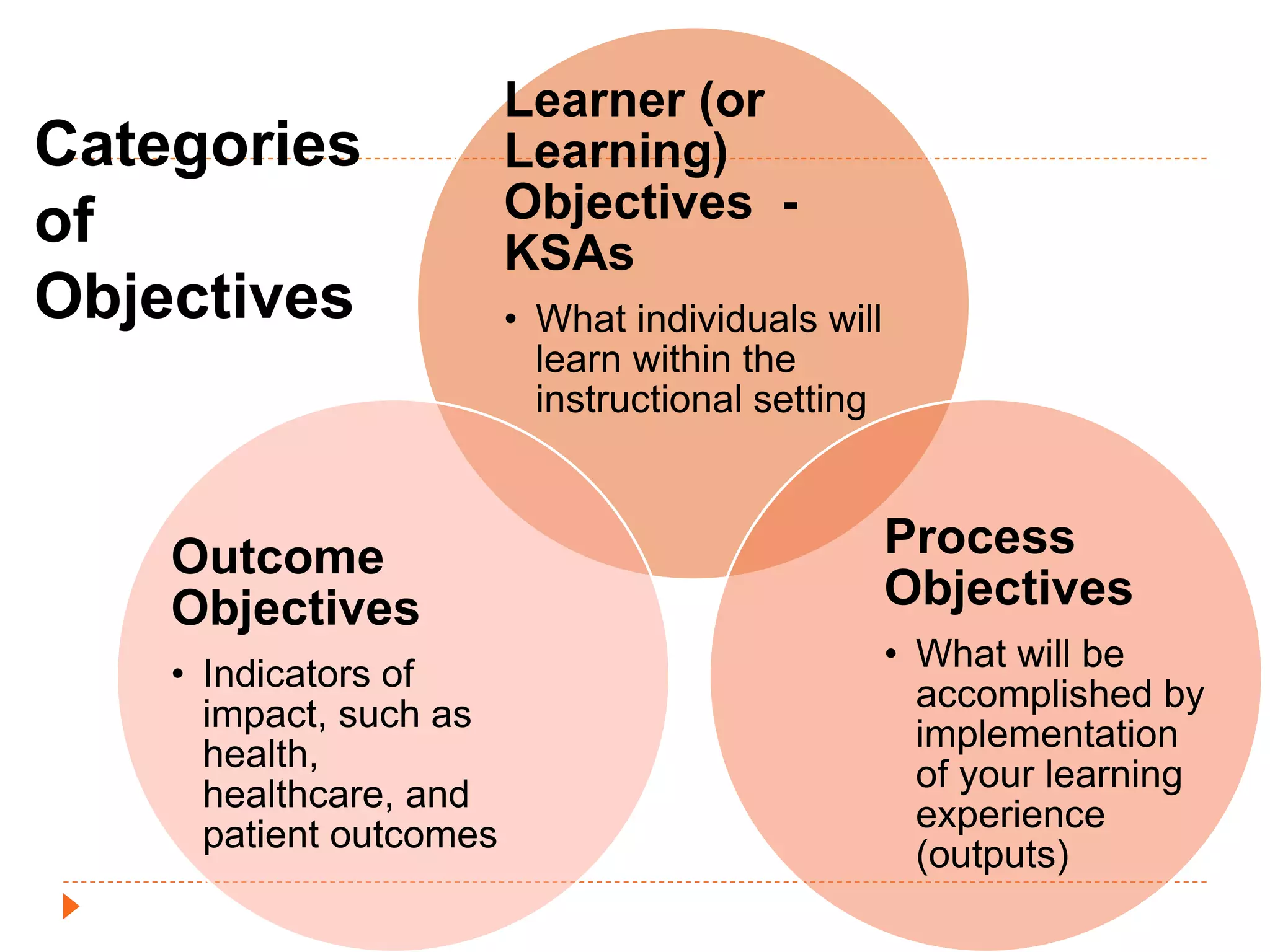
Categories 
of 
Objectives 
Learner (or 
Learning) 
Objectives - 
KSAs 
• What individuals will 
learn within the 
instructional setting 
Process 
Objectives 
• What will be 
accomplished by 
implementation 
of your learning 
experience 
(outputs) 
Outcome 
Objectives 
• Indicators of 
impact, such as 
health, 
healthcare, and 
patient outcomes
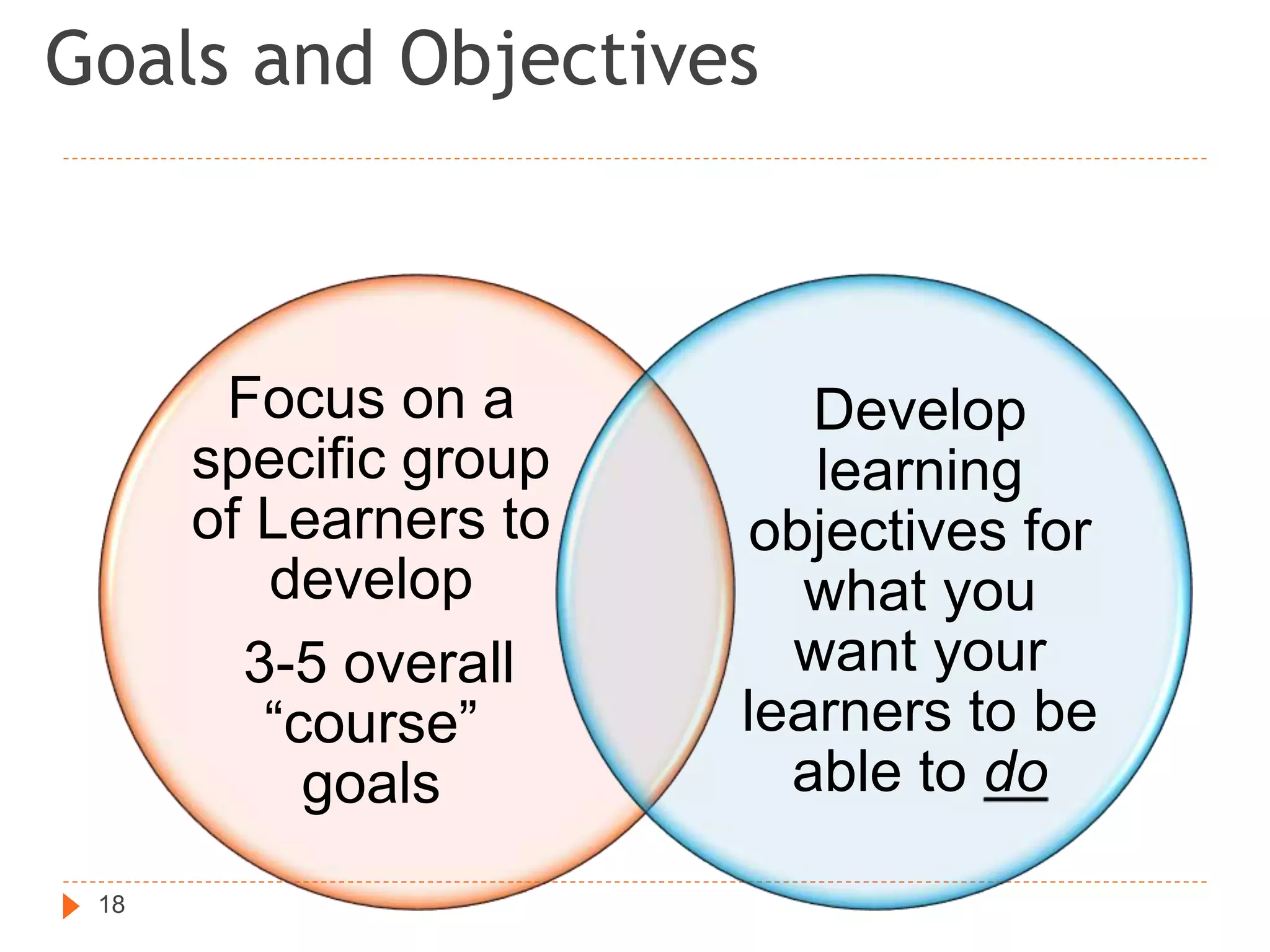
Goals and Objectives 
Focus on a 
specific group 
of Learners to 
develop 
3-5 overall 
“course” 
goals 
Develop 
learning 
objectives for 
what you 
want your 
learners to be 
able to do 
18
Paired Dialogue 
• Describe your program to someone in the 
class who is unfamiliar with it. 
• What is the major goal of your program? 
Share with them. 
• Show them 1 or 2 goals that you have 
repared. 
• Describe one or two learning objectives 
that address at least one of your program 
goals.

Class session 3

  • 1.
    Class Session 3 Curriculum Design in Medical Education October 2, 2014
  • 2.
    Stephen Brookfield’s Critical Incident Questionnaire (CIQ) – why use it? Use of rubrics in teaching and learning Agenda for Tonight The relationship of goals and objectives to other elements of curriculum design Writing Goals and Learning Objectives Bloom’s Taxonomy Use of Voracious Verbs Cognitive, Affective, and Psychomotor Domains You try!
  • 3.
    Use of Rubricsin Designing Learning What is a rubric? • An assessment tool to save grading time, convey effective feedback, and promote student learning Why use a rubric? • Assessing learners’ work can be problematic – • Learners complain that they don’t get enough feedback • Providing timely feedback can be difficult with faculty workloads • Learners’ quality of work can be improved with a rubric • Rubrics provide an equitable means for assessing work - the same standards apply across learners
  • 4.
    A Basic Formatfor Constructing a Rubric Description of the Task (the assignment) Scale Level 1 Levels of achievement Scale Level 2 Scale Level 3 Dimension 1 Breakdown of skills and knowledge involved in the assignment Dimension 2 Dimension 3
  • 5.
    Learning Goals andObjectives Instructional Strategies Feedback and Assessment Situational Factors
  • 6.
    In integrated coursedesign, these three elements are in perfect harmony
  • 7.
    In integrated coursedesign, these three elements are in perfect harmony
  • 8.
    What do youwant your learners to be able to DO at the end of your lesson, rotation, or course?
  • 9.
    Goals Are writtenas broad statements of purpose or intent Answer the question, “What do I want my learners to be able to do at the end of my course?” Serve as criteria for selection of curricular components (such as assessments & learning strategies) Clearly communicate what the learning experience addresses Can be considered “broad” educational objectives Serve as benchmarks against which courses can be evaluated
  • 10.
    Goals Differ fromLearning Objectives Goals Learning Objectives Can use verbs such as “understand,” “know” or “appreciate” Are often written, The purpose of this course is …. Use strong, action-oriented verbs in one of three domains of learning: Cognitive Psychomotor Affective Can also be related to process or desired outcomes of the learning experience
  • 11.
    Five Types ofLearning Objectives Acquiring new knowledge Enhancing cognitive skills Developing psychomotor skills Strengthening problem-solving abilities Changing attitudes and beliefs
  • 12.
    Traditionally, learning objectives address three things: The desired behavior The conditions under which the behavior is performed The performance standards that are to be met
  • 13.
    A well-written objectiveanswers the question: Who will do how much (or how well) of what by when? Hint: When writing your objective, begin with “By when”
  • 14.
    Example of alearning objective for our course At the end of this course (condition), learners will be able to design a learning experience (desired behavior) that successfully integrates goals and objectives, learning strategies, and assessments according to the rubric provided. (performance standard) See if you can identify Who will do how much (or how well) of what by when
  • 15.
    Examples of LearningObjectives By the end of the M2 Hematology course, the student will be able to describe accurately the production, structure, intracellular contents, and function of the red blood cell. By the end of the OBGYN suture workshop, each third year medical student be able to correctly demonstrate a one-handed knot-tie.
  • 16.
    Bloom’s Taxonomy forLevels of Cognitive Processing Evaluation Synthesis Analysis Application Comprehension Knowledge
  • 17.
    Categories of Objectives Learner (or Learning) Objectives - KSAs • What individuals will learn within the instructional setting Process Objectives • What will be accomplished by implementation of your learning experience (outputs) Outcome Objectives • Indicators of impact, such as health, healthcare, and patient outcomes
  • 18.
    Goals and Objectives Focus on a specific group of Learners to develop 3-5 overall “course” goals Develop learning objectives for what you want your learners to be able to do 18
  • 19.
    Paired Dialogue •Describe your program to someone in the class who is unfamiliar with it. • What is the major goal of your program? Share with them. • Show them 1 or 2 goals that you have repared. • Describe one or two learning objectives that address at least one of your program goals.