Learning and Technology in the Global South Niall Winters Oxford Forum for International Development  #oxfid2012  February 26 th  2012 http://www.lkl.ac.uk/niall   @nwin
 
Let's think about learning and technology in Sub-Saharan Africa: What does - and could - it look like?
Let's think about  learning and technology  in Sub-Saharan Africa: What does - and could - it look like? (Revisit later!)
“ Game changers of the 21 st  Century” Potential of technology What we learn The nature of knowledge


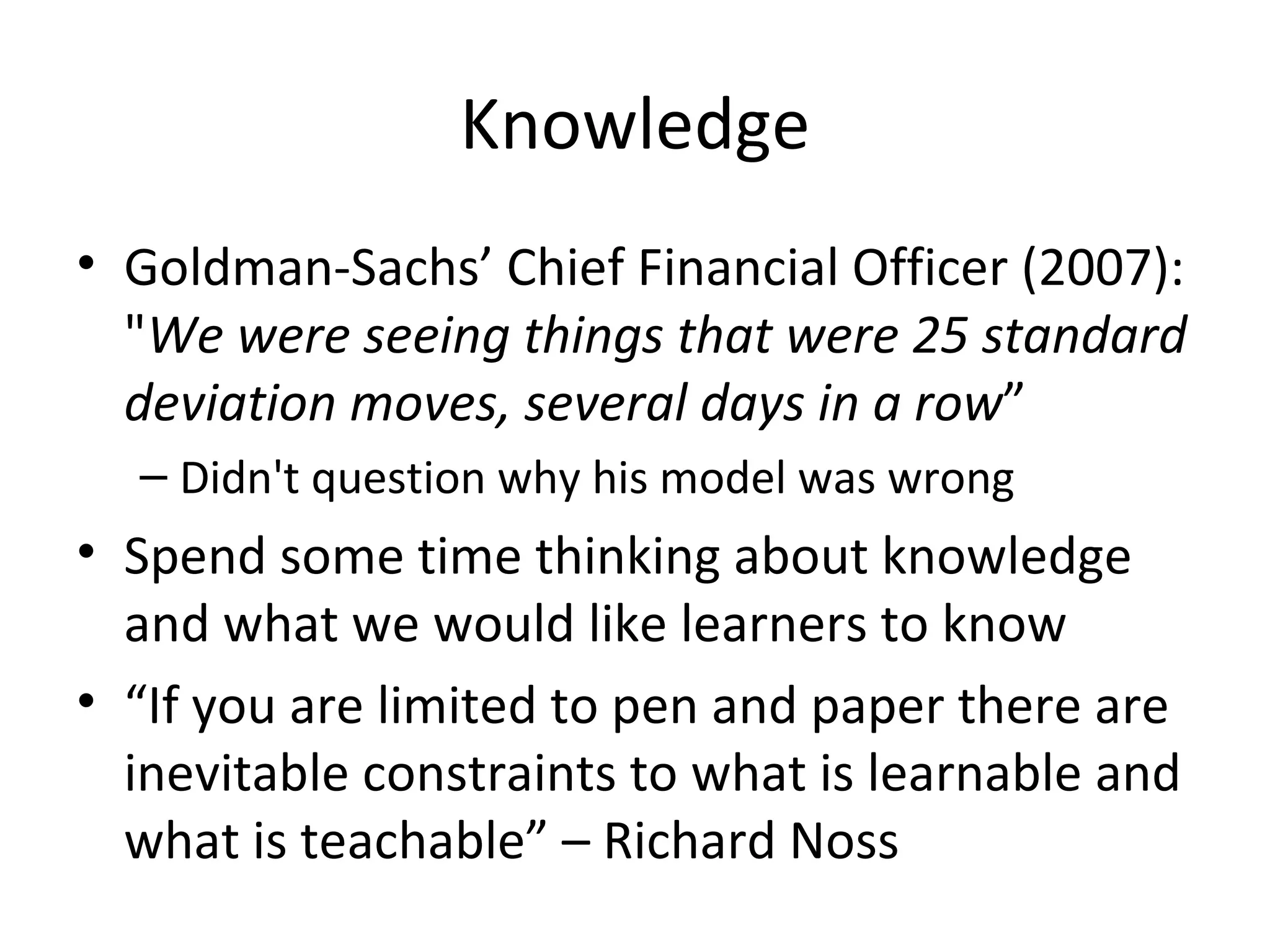
Knowledge Goldman-Sachs’ Chief Financial Officer (2007): " We were seeing things that were 25 standard deviation moves, several days in a row ” Didn't question why his model was wrong Spend some time thinking about knowledge and what we would like learners to know “ If you are limited to pen and paper there are inevitable constraints to what is learnable and what is teachable” – Richard Noss
The situation in Sub-Saharan Africa
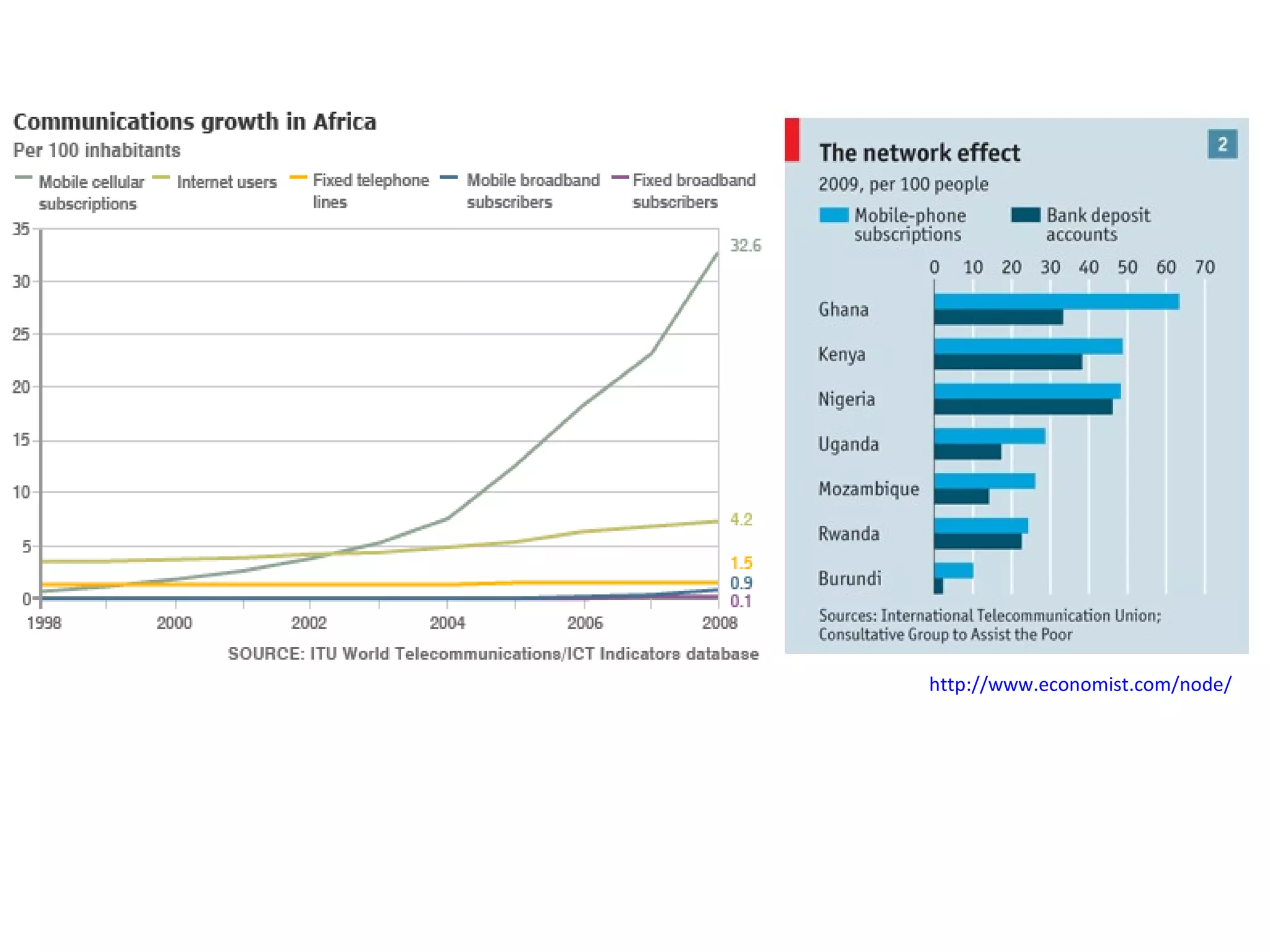
http://www.economist.com/node/18008202?story_id=18008202
Online connectivity 50% increase in search requests from sub-Saharan Africa 40% coming from mobile devices Facebook is adding 100,000 per month in Senegal Number of youtube plays is doubling each year within sub-Saharan Africa http://www.bloomberg.com/news/2011-02-22/google-recording-50-annual-growth-in-african-search-requests.html
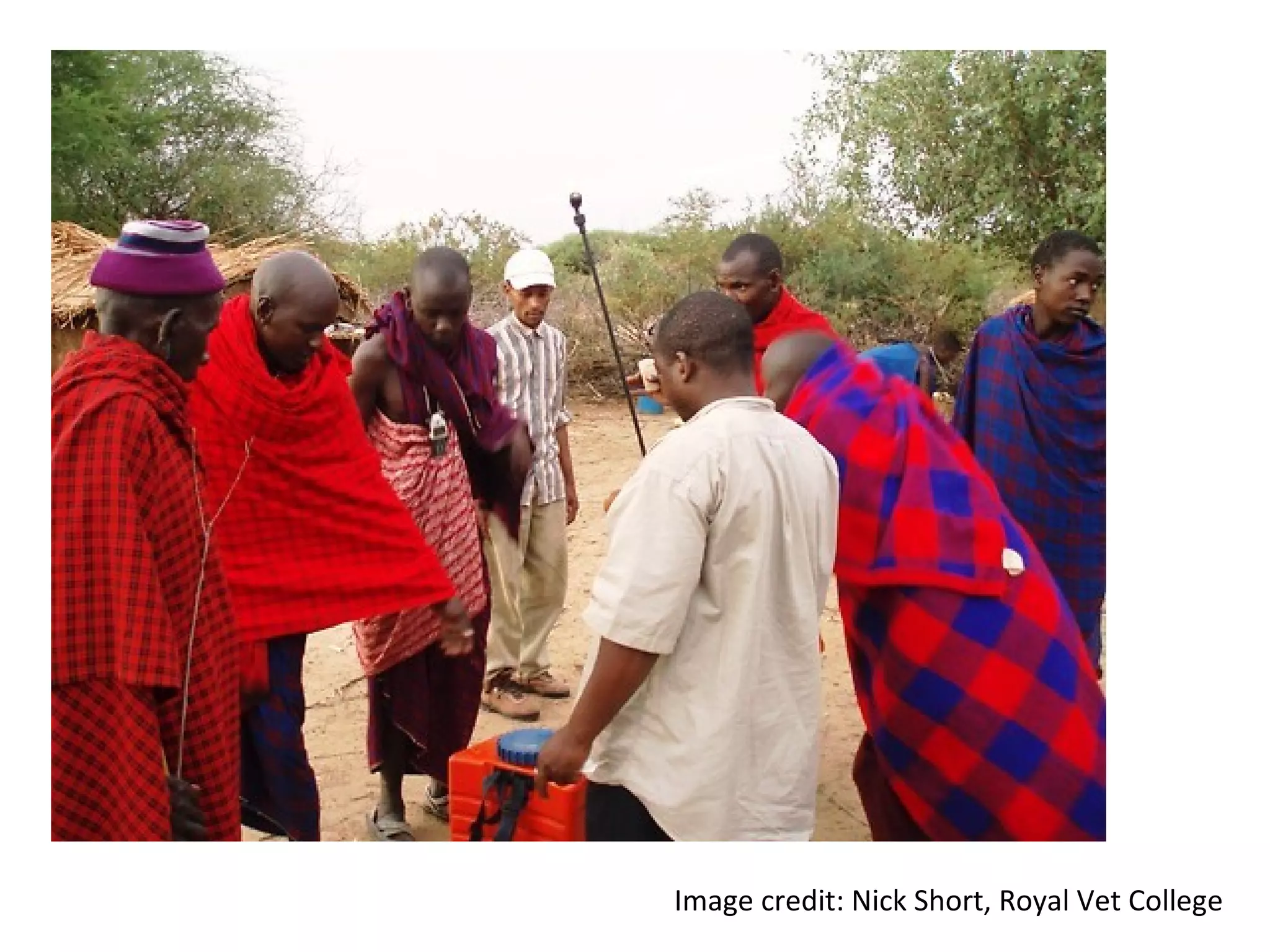
Image credit: Nick Short, Royal Vet College
 
 
Mobile learning in Development What is your vision?  What does it look like?


Examples Text2Teach MobiLink – SMS for Literacy  Mobitel mLearning platform Nokia – MoMaths BBC World Service Trust – Janala Ericsson Education Programme CMU & U. Berkeley MILLEE Shuttleworth Foundation – M4Lit
Emergent themes from some projects Top down but at scale Often driven by telco providers (but affordable) SMS is key Pedagogically weak, e.g. quizzes  Dissemination of content Byte-size, e.g. language learning  Completing exercises, e.g. MoMaths “ Education as a service” = Business case
A different focus Participatory & in partnership Underpinned by learning theory Situated Personalised Collaboration Knowledge sharing Understanding technological functionalities
 
 
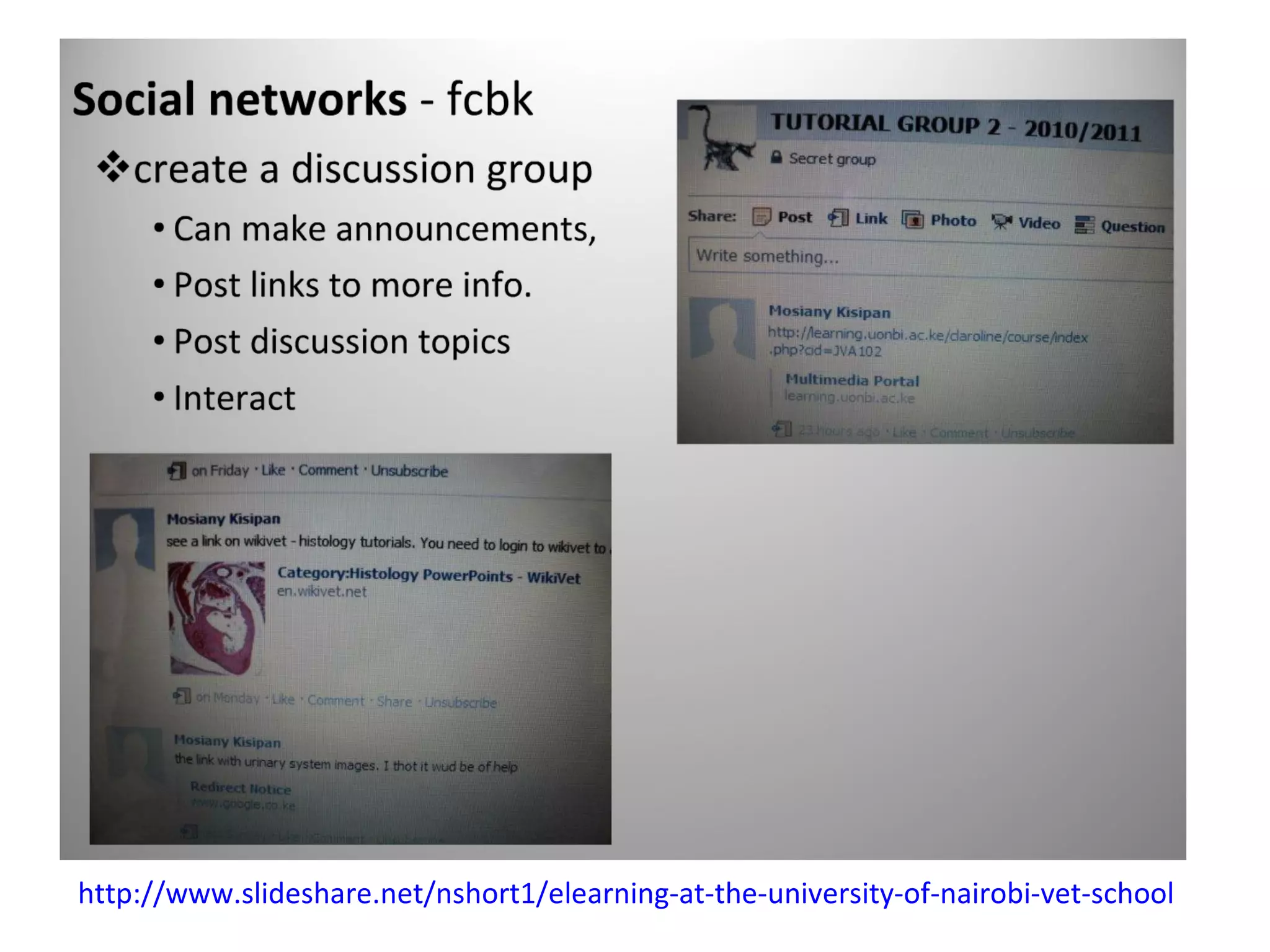
http://www.slideshare.net/nshort1/elearning-at-the-university-of-nairobi-vet-school
Revisit your ideas
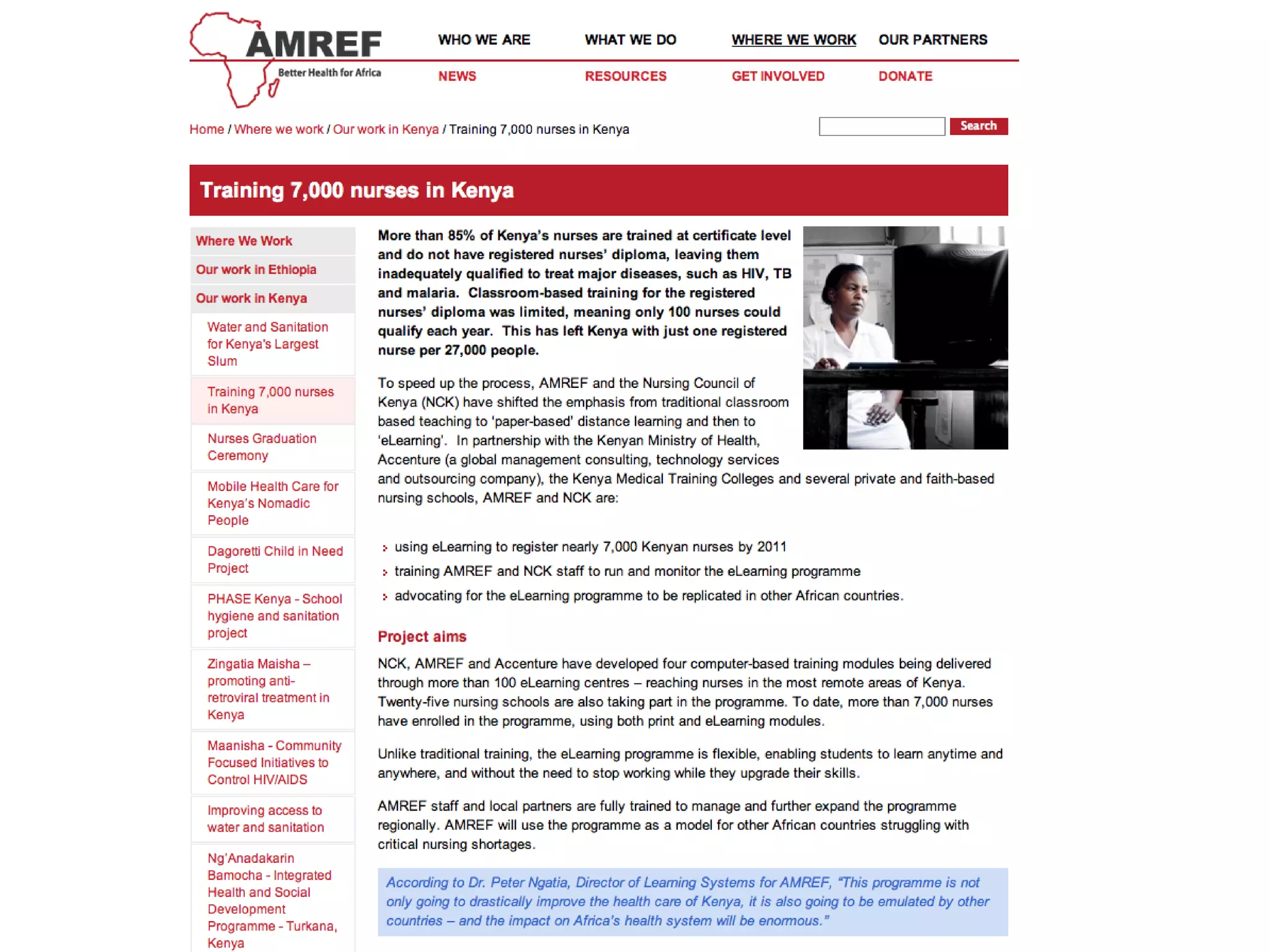
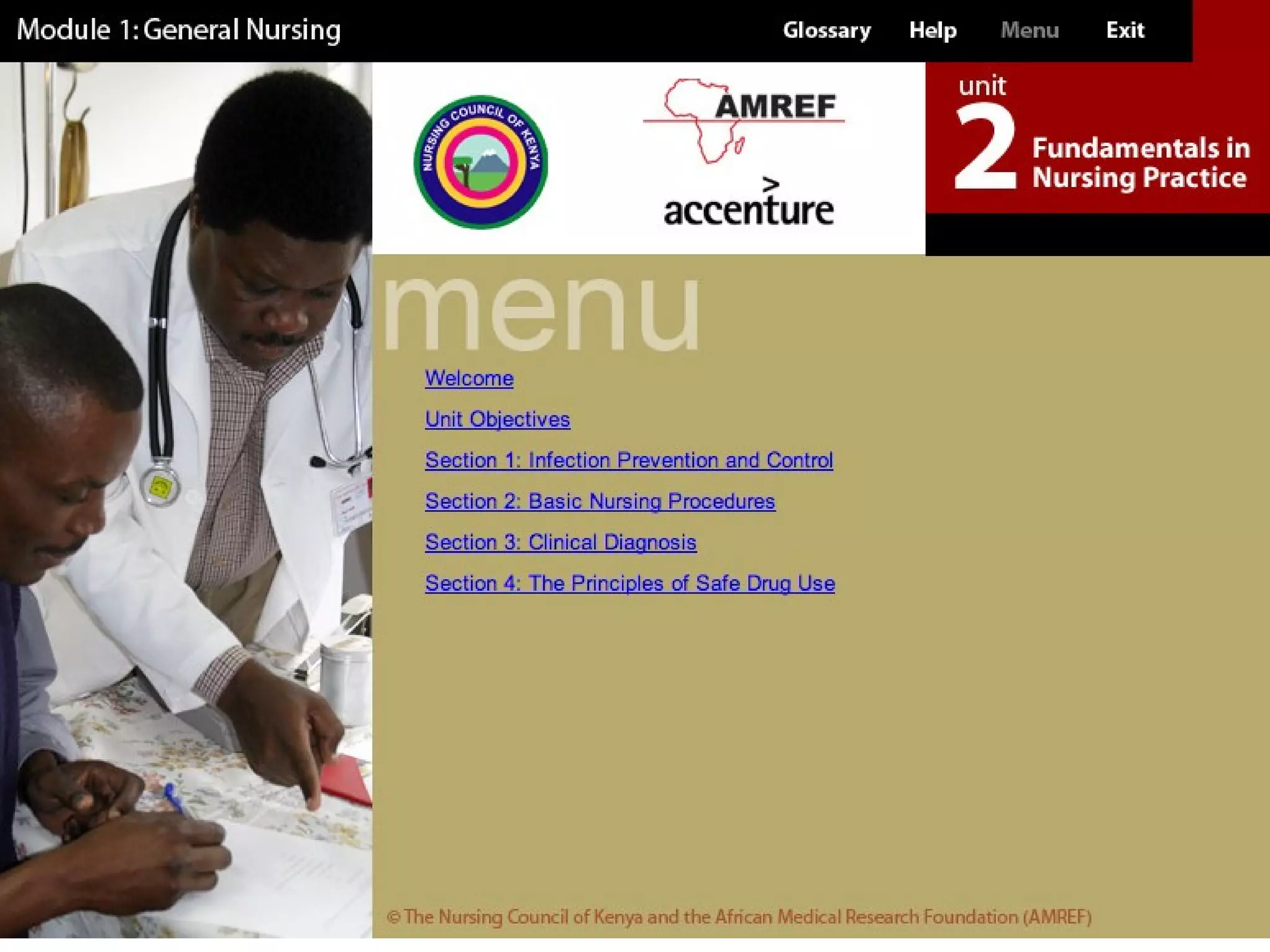
Case:  Mobile learning for nurse training (w/AMREF) within the context of an elearning programme
 
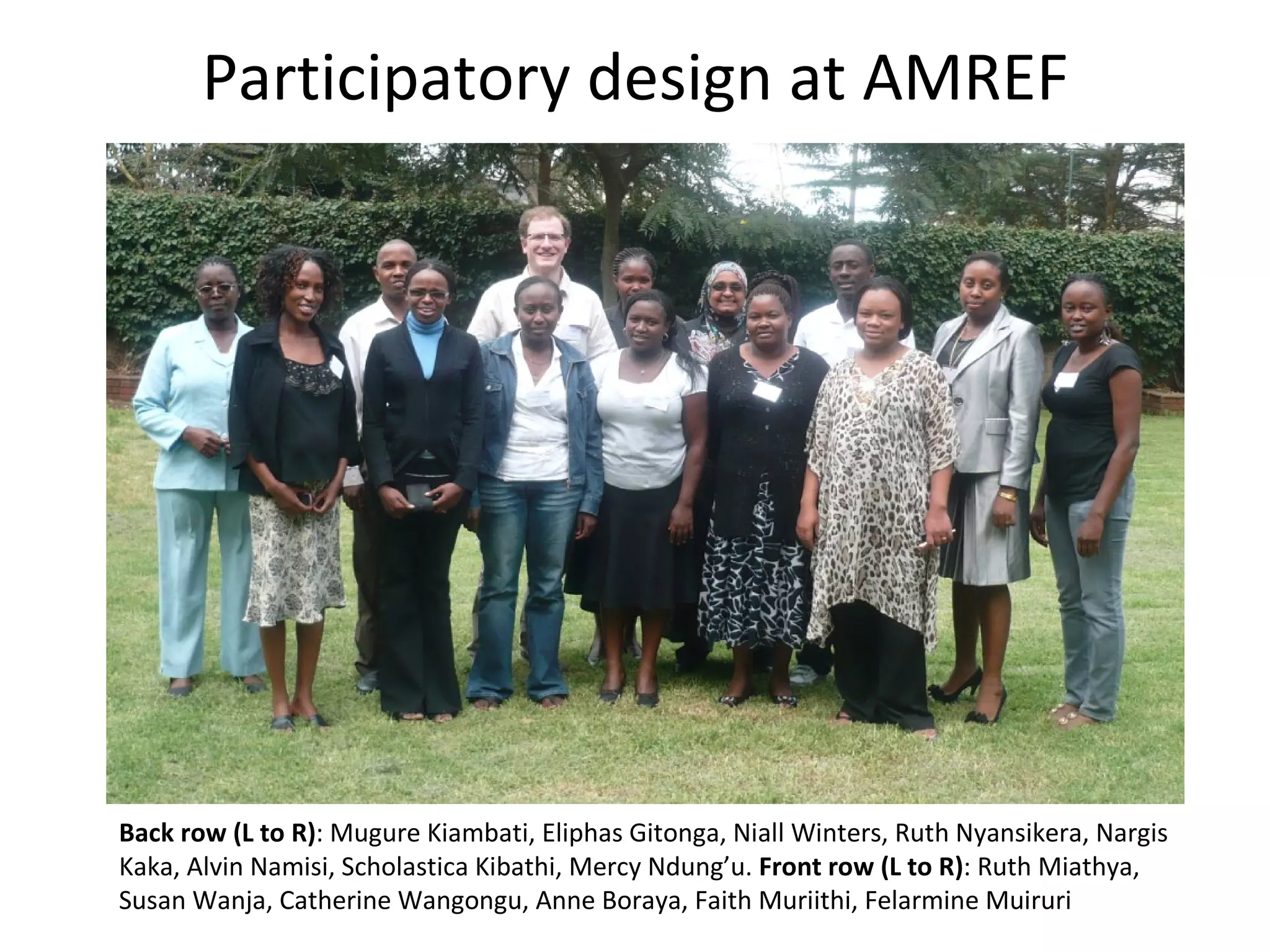
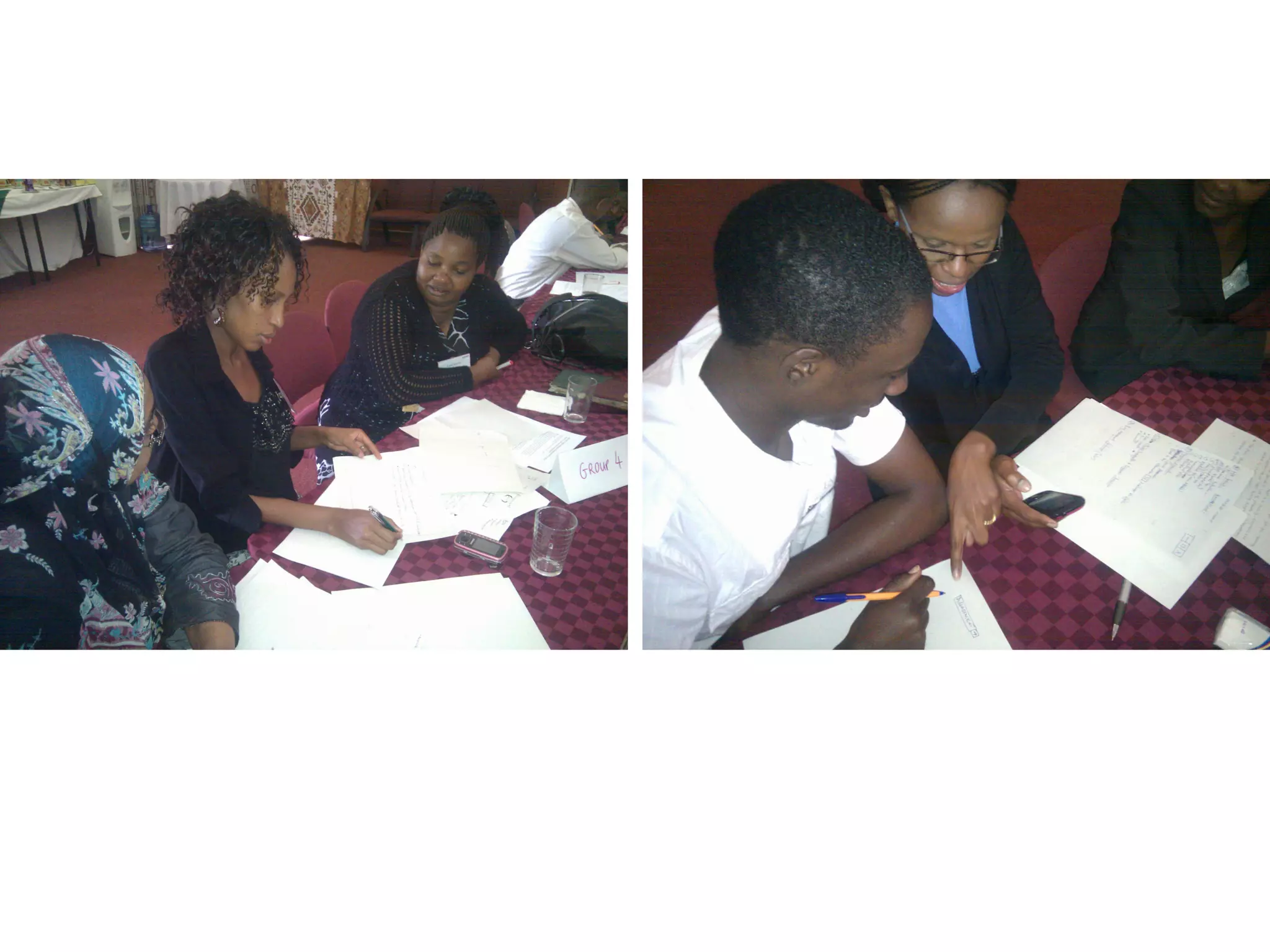
Participatory design at AMREF Back row (L to R) : Mugure Kiambati, Eliphas Gitonga, Niall Winters, Ruth Nyansikera, Nargis Kaka, Alvin Namisi, Scholastica Kibathi, Mercy Ndung ’ u .  Front row (L to R) : Ruth Miathya, Susan Wanja, Catherine Wangongu, Anne Boraya, Faith Muriithi, Felarmine Muiruri


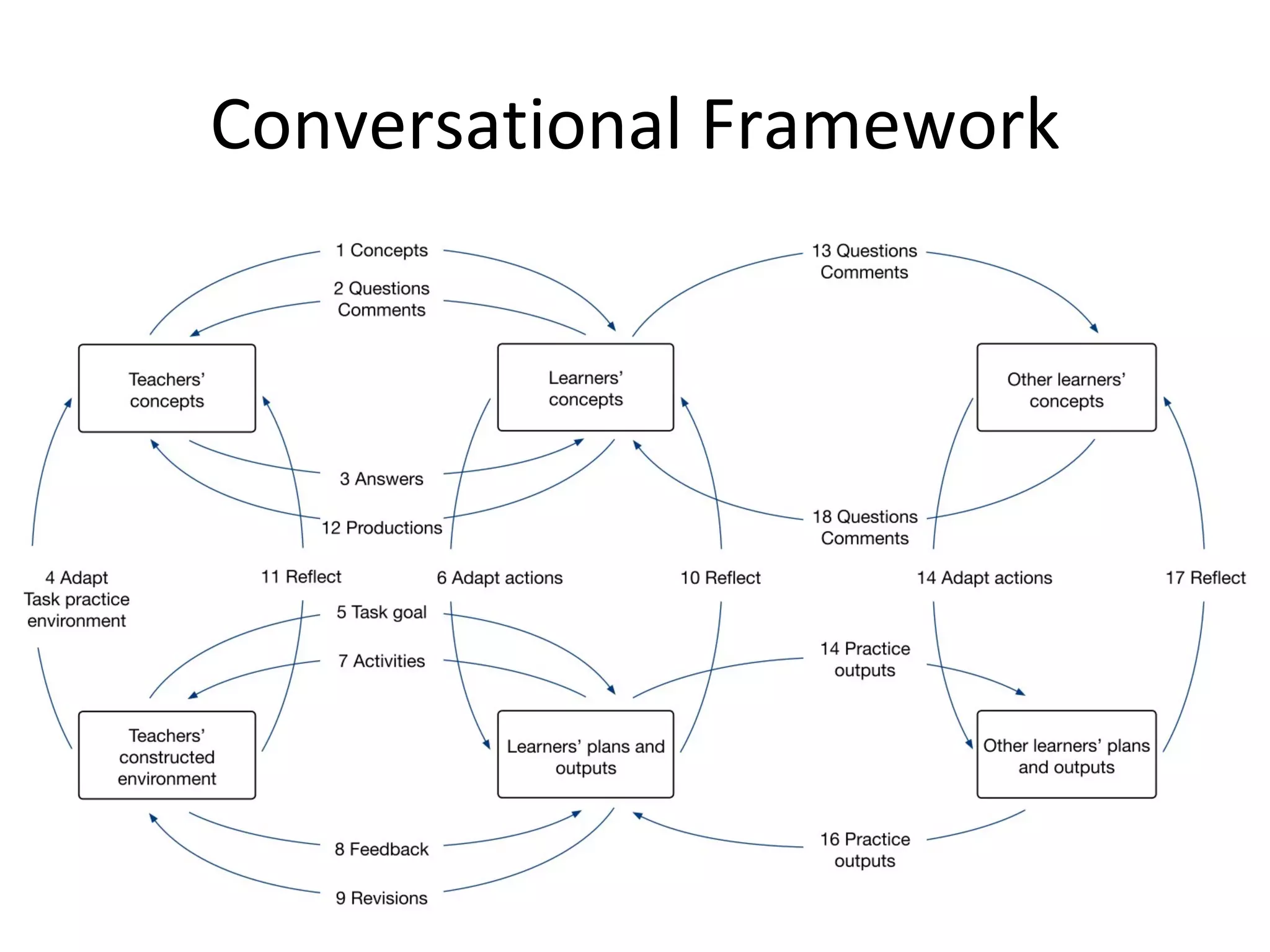
Conversational Framework
The mobile design should support students to: Access theory (on the nursing process) Ask questions of mentors and tutors/peers Offer their own ideas to tutors/peers Use their understanding to achieve the task goal Repeat their practice and improve via feedback Share/Debate their practice outputs with peers Reflect
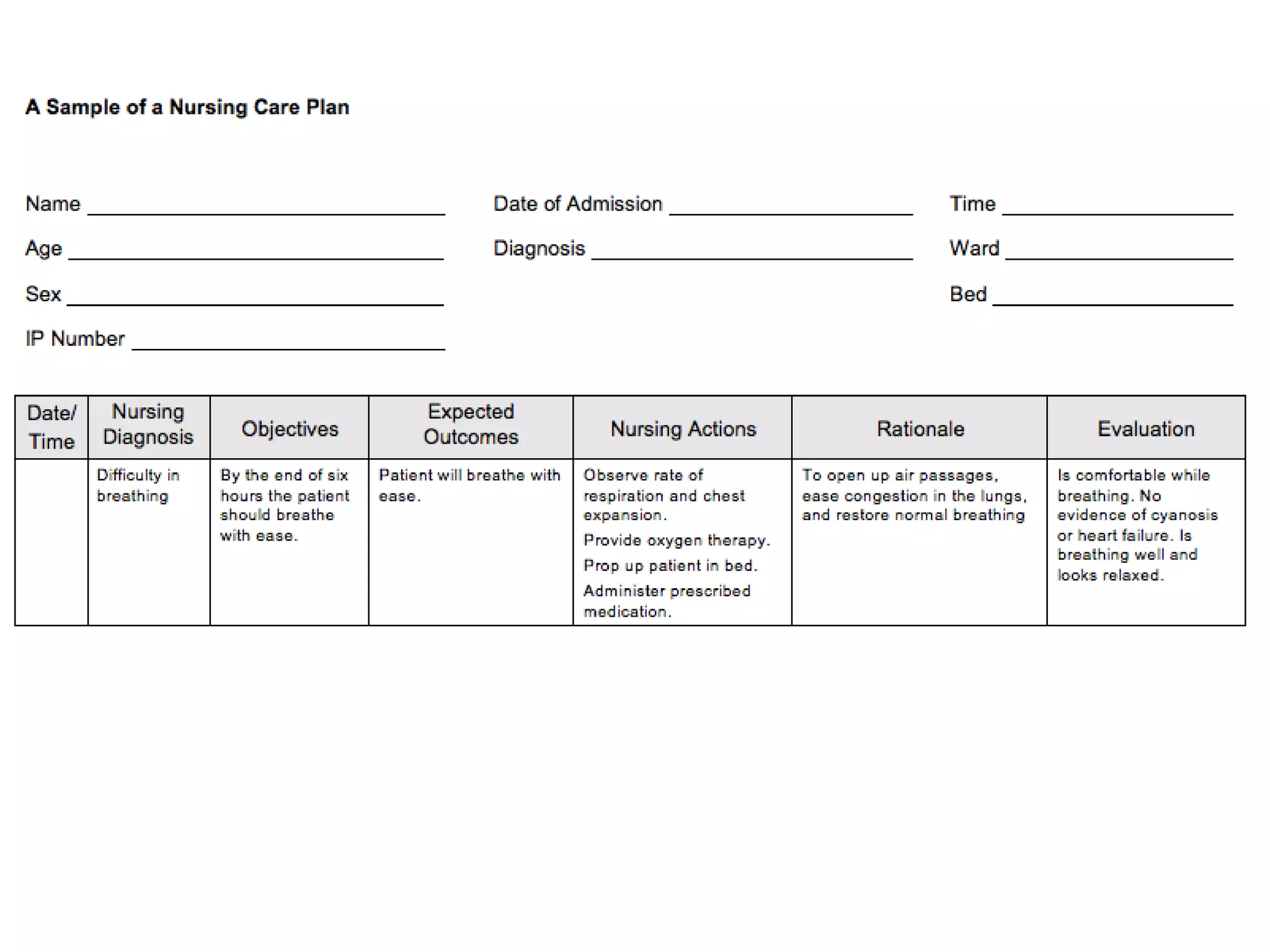
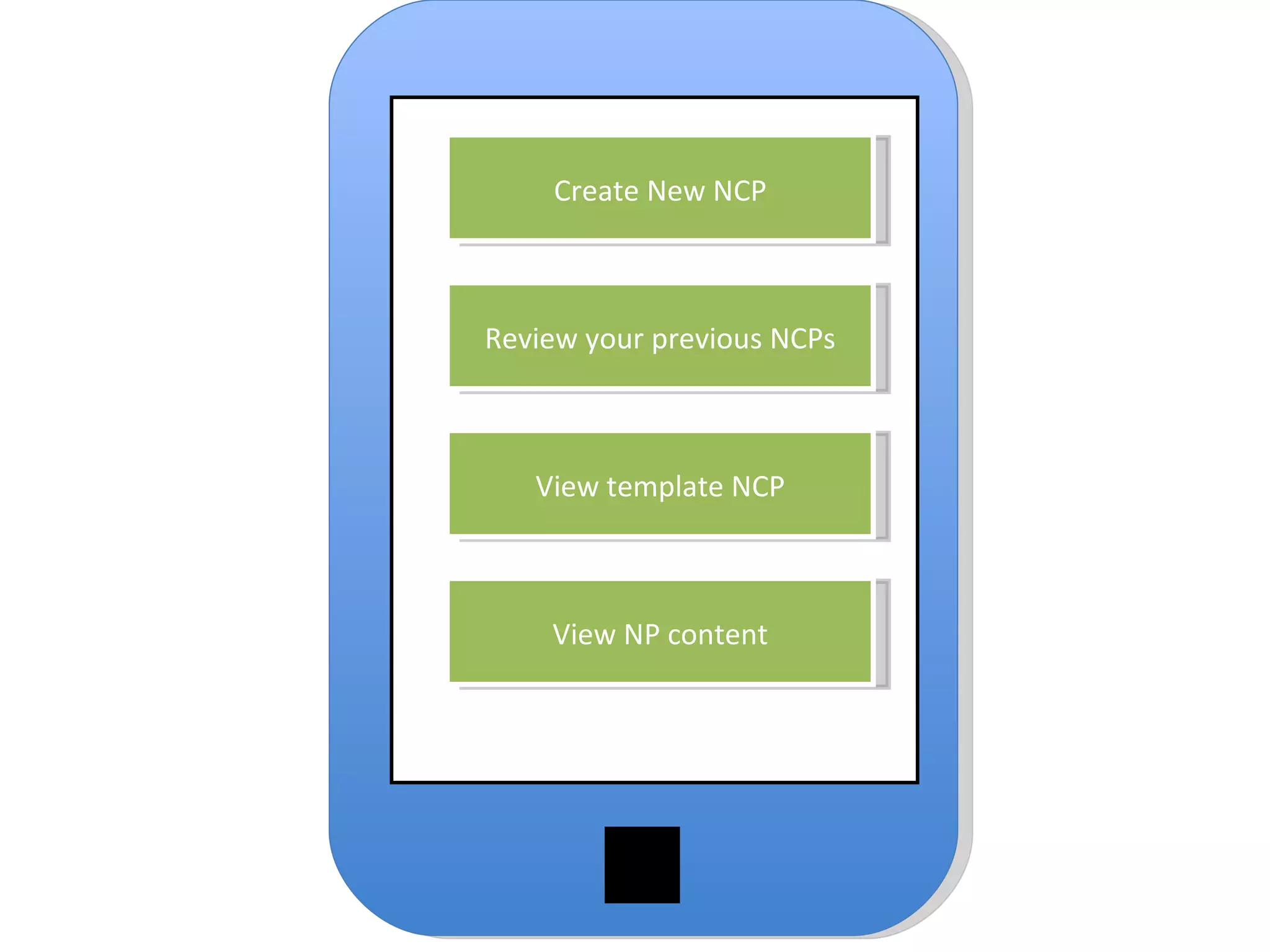
Create New NCP Review your previous NCPs View template NCP View NP content
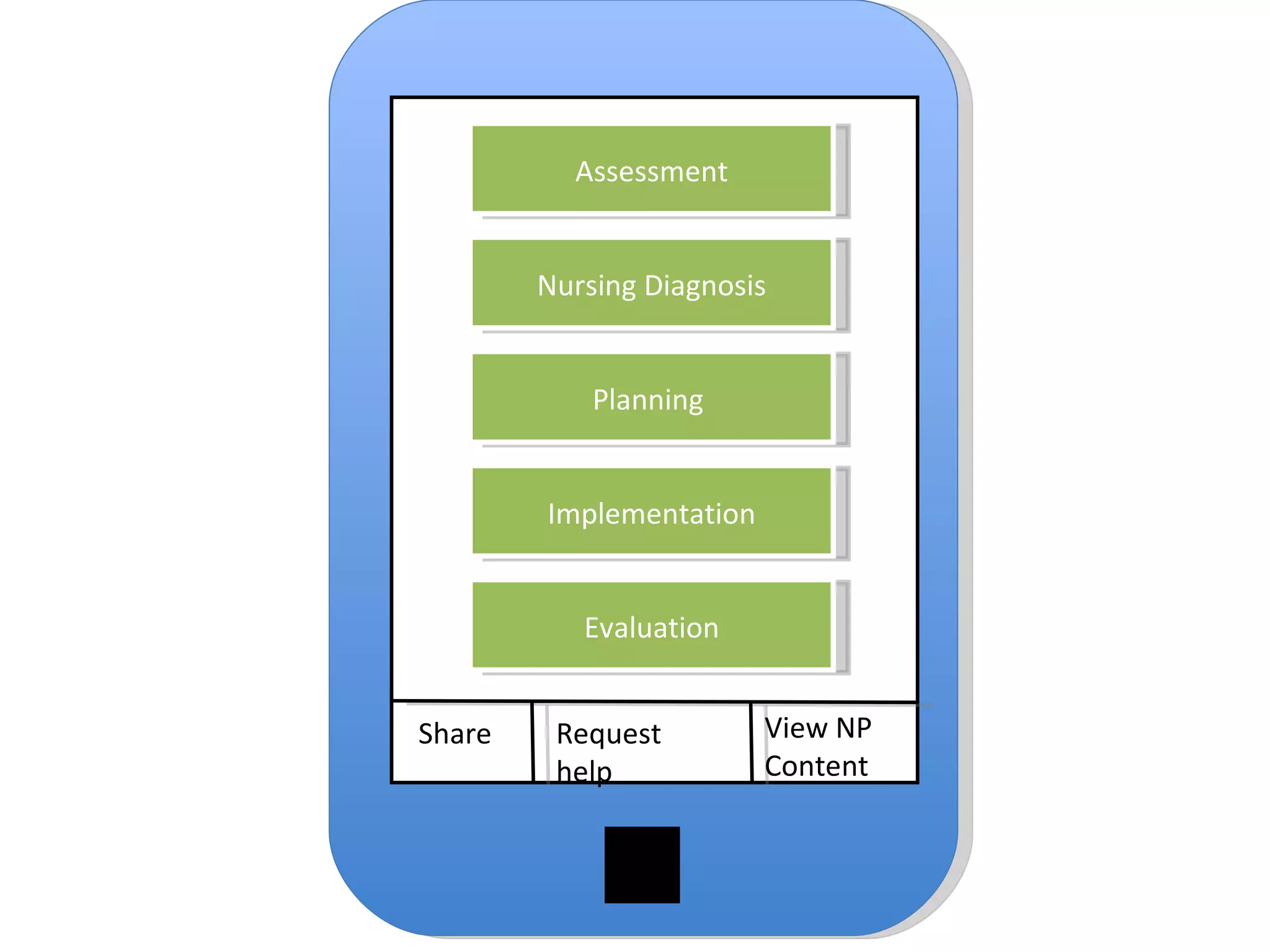
Assessment Nursing Diagnosis Planning  Implementation Evaluation Share Request help View NP Content
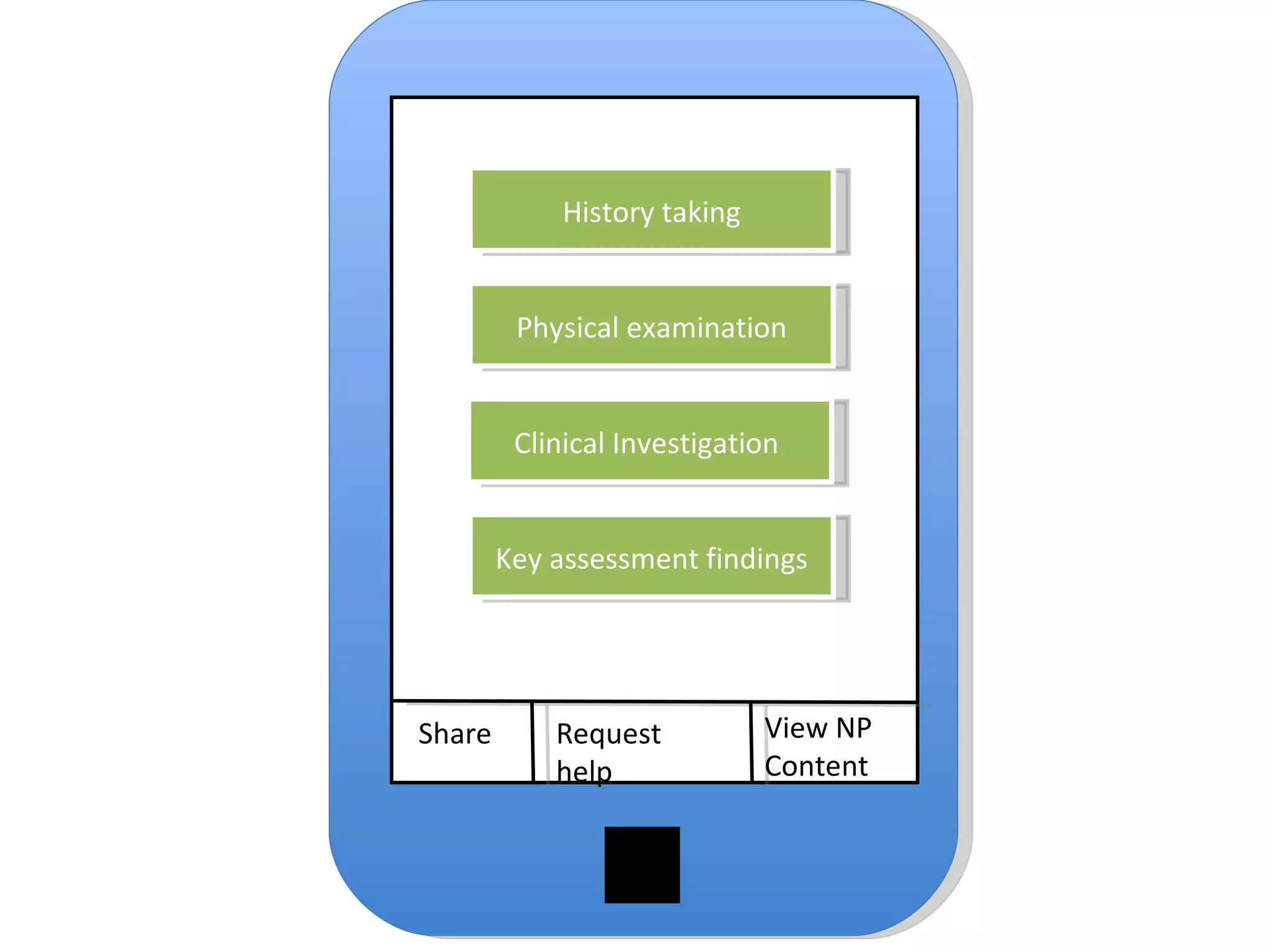
Share Request help View NP Content History taking Physical examination Clinical Investigation  Key assessment findings
Share Request help View NP Content Nursing Diagnosis Actual  [Problem]  related to  [Cause]  as evidenced by  [Defining characteristics] Potential NANDA labels Actual vs Potential
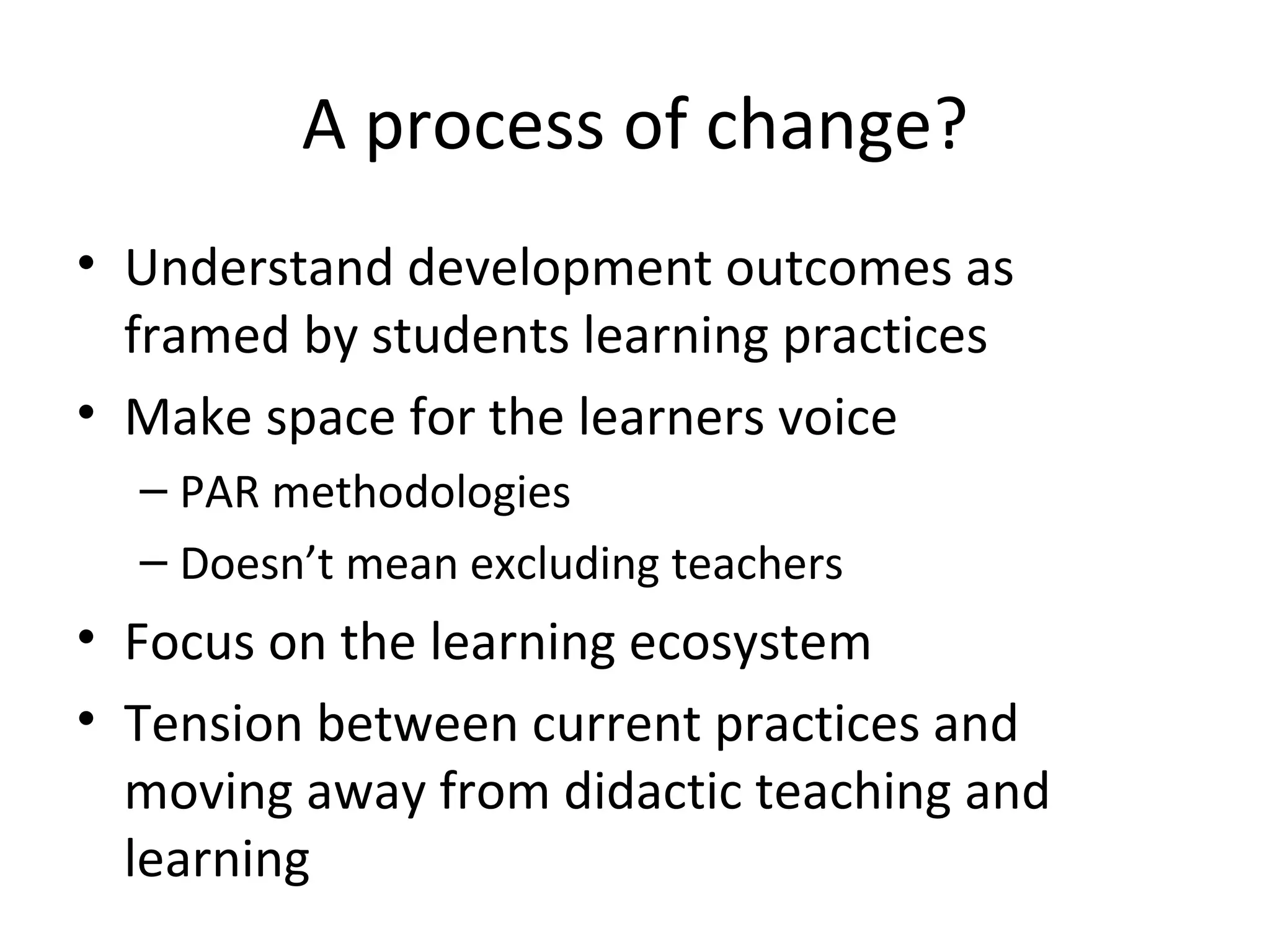
A process of change? Understand development outcomes as framed by students learning practices Make space for the learners voice PAR methodologies Doesn’t mean excluding teachers Focus on the learning ecosystem Tension between current practices and moving away from didactic teaching and learning
Mobile learning workshop Mobile Learning and Development: Exploring Pedagogical Design and Implementation March 1 st , LIDC Free, 1-day http://lidc.org.uk/event_detail.php?event_id=636
Thank you! [email_address] http://www.lkl.ac.uk/niall @nwin http://mlearningafrica.blogspot.com   Q & A

Learning and technology in the Global South

  • 1.
    Learning and Technologyin the Global South Niall Winters Oxford Forum for International Development #oxfid2012 February 26 th 2012 http://www.lkl.ac.uk/niall @nwin
  • 2.
  • 3.
    Let's think aboutlearning and technology in Sub-Saharan Africa: What does - and could - it look like?
  • 4.
    Let's think about learning and technology in Sub-Saharan Africa: What does - and could - it look like? (Revisit later!)
  • 5.
    “ Game changersof the 21 st Century” Potential of technology What we learn The nature of knowledge
  • 6.
  • 7.
  • 8.
  • 9.
    Knowledge Goldman-Sachs’ ChiefFinancial Officer (2007): " We were seeing things that were 25 standard deviation moves, several days in a row ” Didn't question why his model was wrong Spend some time thinking about knowledge and what we would like learners to know “ If you are limited to pen and paper there are inevitable constraints to what is learnable and what is teachable” – Richard Noss
  • 10.
    The situation inSub-Saharan Africa
  • 11.
  • 12.
    Online connectivity 50%increase in search requests from sub-Saharan Africa 40% coming from mobile devices Facebook is adding 100,000 per month in Senegal Number of youtube plays is doubling each year within sub-Saharan Africa http://www.bloomberg.com/news/2011-02-22/google-recording-50-annual-growth-in-african-search-requests.html
  • 13.
    Image credit: NickShort, Royal Vet College
  • 14.
  • 15.
  • 16.
    Mobile learning inDevelopment What is your vision? What does it look like?
  • 17.
  • 18.
  • 19.
  • 20.
  • 21.
    Examples Text2Teach MobiLink– SMS for Literacy Mobitel mLearning platform Nokia – MoMaths BBC World Service Trust – Janala Ericsson Education Programme CMU & U. Berkeley MILLEE Shuttleworth Foundation – M4Lit
  • 22.
    Emergent themes fromsome projects Top down but at scale Often driven by telco providers (but affordable) SMS is key Pedagogically weak, e.g. quizzes Dissemination of content Byte-size, e.g. language learning Completing exercises, e.g. MoMaths “ Education as a service” = Business case
  • 23.
    A different focusParticipatory & in partnership Underpinned by learning theory Situated Personalised Collaboration Knowledge sharing Understanding technological functionalities
  • 24.
  • 25.
  • 26.
  • 27.
  • 28.
    Case: Mobilelearning for nurse training (w/AMREF) within the context of an elearning programme
  • 29.
  • 30.
    Participatory design atAMREF Back row (L to R) : Mugure Kiambati, Eliphas Gitonga, Niall Winters, Ruth Nyansikera, Nargis Kaka, Alvin Namisi, Scholastica Kibathi, Mercy Ndung ’ u . Front row (L to R) : Ruth Miathya, Susan Wanja, Catherine Wangongu, Anne Boraya, Faith Muriithi, Felarmine Muiruri
  • 31.
  • 32.
  • 33.
  • 34.
  • 35.
    The mobile designshould support students to: Access theory (on the nursing process) Ask questions of mentors and tutors/peers Offer their own ideas to tutors/peers Use their understanding to achieve the task goal Repeat their practice and improve via feedback Share/Debate their practice outputs with peers Reflect
  • 36.
    Create New NCPReview your previous NCPs View template NCP View NP content
  • 37.
    Assessment Nursing DiagnosisPlanning Implementation Evaluation Share Request help View NP Content
  • 38.
    Share Request helpView NP Content History taking Physical examination Clinical Investigation Key assessment findings
  • 39.
    Share Request helpView NP Content Nursing Diagnosis Actual [Problem] related to [Cause] as evidenced by [Defining characteristics] Potential NANDA labels Actual vs Potential
  • 40.
    A process ofchange? Understand development outcomes as framed by students learning practices Make space for the learners voice PAR methodologies Doesn’t mean excluding teachers Focus on the learning ecosystem Tension between current practices and moving away from didactic teaching and learning
  • 41.
    Mobile learning workshopMobile Learning and Development: Exploring Pedagogical Design and Implementation March 1 st , LIDC Free, 1-day http://lidc.org.uk/event_detail.php?event_id=636
  • 42.
    Thank you! [email_address]http://www.lkl.ac.uk/niall @nwin http://mlearningafrica.blogspot.com Q & A

Editor's Notes

  • #2 Outline structure: talk plus hands-on work, plus discussion
  • #3 Interdisciplinary: “Edward Said's suggestion that it is in the interstices between subjects that the most exciting intellectual work happens”
  • #4 Q1: What do you think about when you think about technology and learning?
  • #5 Q1: What do you think about when you think about technology and learning?
  • #6 Michael D. Higgins: “… convinced of the power of education in not only lifting their fellow citizens out of poverty but also of such citizens understanding, participating, and in time, offering an alternative form of society” Power of technology What we learn The nature of knowledge
  • #8 Learners’ capacity for innovation: creativity is as important as literacy and we should treat it with the same status!
  • #9 Source: the TEL COMMUNITY Given the time, my focus will be on mobiles!
  • #10 Deviations of 25 standard deviations should be seriously rare. If you look once a day, then deviations of 25 standard deviations occur once in every approximately 1 followed by 135 zeros years. The age of the universe only has 10 zeros in it, so this is a seriously long time. Surry physics blog: http://www.uniofsurreyblogs.org.uk/physics/2012/01/16/so-wrong-it-breaks-your-calculator/
  • #12 Mobile environment
  • #25 Note the need for a participatory approach to content development, e.g. Digital Green.
  • #26 Information sharing practices – value of the social network
  • #37 Improved on their own capabilities to do their job!