








Innovation in Distance Learning? I Can’t Define It, But I Know It When I See It! Fredric M. Litto Brazilian Association of Distance Education Gdansk, Poland 13 June 2009
“ I Know It When I See It!” 1964 – United States Supreme Court Justice Potter Stewart Jacobellis v. Ohio , regarding possible obscenity in  The Lovers “ I can’t define it, but I know it when I see it!” Became one of the most famous phrases in the history of the Supreme Court The user attempts to categorize an observable fact or event, although the category is subjective or lacks clearly defined parameters
My Personal Interest in Innovation Post-Doctoral Year Stanford, 1987-88 New ideas in Cognition/Learning & ICTs Upon return to Brazil, a new research laboratory at University of São Paulo 1988—  . The School of the Future
My Personal Interest in Innovation Prohibited from creating distance education through courses (the University only starts DE in 2009!) The laboratory did the next best: activities to support the DE of others: Virtual library Learning objects Virtual learning communities
 
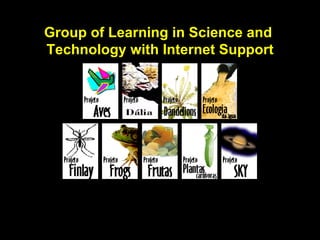
Group of Learning in Science and  Technology with Internet Support http://darwin.futuro.usp.br
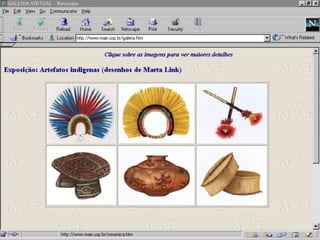
REPOSITORY OF REUSABLE LEARNING OBJECTS Virtual Science Lab Group http://www.labvirt.futuro.usp.br
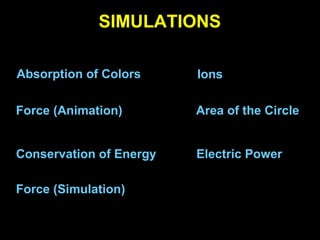
SIMULATIONS Absorption of Colors Force (Animation) Conservation of Energy Ions Area of the Circle Electric Power Force (Simulation)
2000 – 2009
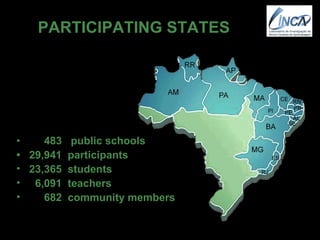
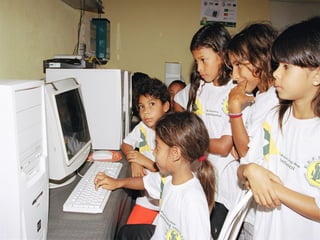
PARTICIPATING STATES •  483   public schools •  29,941   participants  23,365  students 6,091  teachers 682  community members
Sistema Solar Trairi - CE


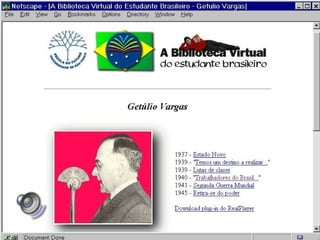
The Virtual Library of the Portuguese- Speaking Student http://www.bibvirt.futuro.usp.br


The Price of Innovation Central Administration never gave support; merely tolerated the lab Self-sustaining—all funding external In years 2003-2006, US$ 2 million entered annually Supported staff of 75 researchers
The Price of Innovation Since we brought in our own funds, we had independence in choosing and running our own projects So which is more crucial- freedom to invent, or sacrifice freedom and be part of the regular university budget?  The lab is currently “coasting along....”
The Study The opinions of some of DE’s most experienced leaders A sort of pre-Delphi survey E-mails of request sent to 70 friends around the world 33 responded (49.1%) From 1 to 3 pages
The Study Today’s report is a preliminary summary of the results I plan to submit the final paper, with further details, to the  EURODL-European Journal of Open, Distance & E-Learning
The Questions Oslo Manual – Guidelines for Collecting & Interpreting Innovation Data.  3 rd  ed. Paris: OECD, 2005 Products Processes Marketing Organization
The Questions What are your choices for the most significant innovations in DE 1988-2008? Cite no more than 10 examples. 2.  What do you believe were the real or possible factors affecting the high or low number of innovations? 3.  What is the single most important challenge that confronts DE over the next decade?
The Restrictions Please refrain from citing innovations initiated by yourself or by the institution for which you worked, or are working at the present time. Although there was no restriction as to the citation of specific brands, institutional names or trademarks, so few were in fact mentioned that these were not included in the conclusions
The Kind Respondents Europe:  Ulrich Bernath Domingo Gallego Brenda Gurley Helmut Hoyer François Marchessou Brian Sayer David Sewart
The Kind Respondents Africa:  Narand Baijnath Bakary Diallo Asia & ME: Mahmood H. Butt Zhang Deming Toufic Houri Pranee Sungkatavat
The Kind Respondents Europe:  Andras Szucs Antonio Moreira Teixeira Mathy Van Buel Oceania: Lalita Rajasingham Jim Taylor
The Kind Respondents North America: Susan Aldridge Nicholas Allen Tony Bates John Daniel Kay Kohl Gary Miller Takashi Utsumi
The Kind Respondents South America: Gilda Helena Campos Andrea Filatro Marcos Formiga Edith Litwin Carlos Longo Jaime Ricardo Valenzuela
Question 1 - Products Greatest number of citations: Web 1.0, 2.0 & 3.0 Internet 1 & 2 Open Educational Resources Learning Management Systems Social Networking Mobile Learning
Question 1 - Products Remainder (in no special order): Use of IT PDAs Microcomputers Miniaturization Hypertext Voice over Internet Sound over Internet Multimedia Virtual Classrooms Virtual Universities Virtual Learning Communities Immersive Learning Environments Networked Learning Blended Learning
Question 1 - Products Fibre-based highways Satellite systems Production/Construction of Teaching Resources Asynchronous Learning Environments Worked-based products Transactional Distance Wi-fi Online Videoconferencing Digital Libraries Remote & Virtual Labs Learning Objects eBooks Open Source Software Mega-universities Meta-universities Search Engines
Question 1 - Processes Innovations in the psychology of learning Paradigm shift from teacher-centered to student centered approaches No-classroom teaching (self-study) Opportunity to operate globally Opportunity for non-traditional sources to start their own educational programs Interactivity Complete disappearance of the element of distance in learning – “any time and any place”
Question 1 - Processes Shift from “artesenal” education to an “industrialized” education Shift from radio & tv to internet & multimedia Shift from textbooks to multimedia Shift from printed material and postal delivery plus tutoring (by correspondence or F2F) to online (materials, delivery, return—all in one) “Unthinkable before the mid-1990s!” Mobility/portability of the process—people, content, and tools
Question 1 - Processes Learning processes: Virtual learning environments (wikis, blogs, etc.) Collaborative learning strategies & communities Collaborative writing tools Customization around individualization, around individual abilities, learning styles, and cultural traditions Administrative processes: More student/customer focused (CRM) “Unbundling” of individual processes in value chain and outsourcing to private providers Using e-business processes to streamline “our medieval ways of working”
Question 1 - Processes “Disambiguation” of intellectual property in wikis, web publications, student assignments, recycling represents a loss of ownership, of QA and of control but gives greater democratic access to content Web 3.0 assembling ideas and information into bodies of knowledge by mapping data semantically semantic searches based on word meanings
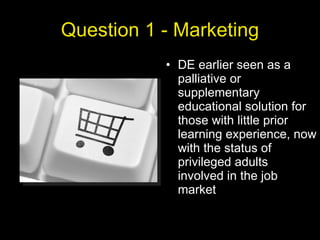
Question 1 - Marketing DE earlier seen as a palliative or supplementary educational solution for those with little prior learning experience, now with the status of privileged adults involved in the job market
Question 1 - Marketing Investing in the development of brands Paying attention to rankings Using ICT for student recruitment, especially non-traditional students Using agents (and paying a fee per student) Market now expects more flexibility, interaction, and immediacy from the learning process Greater outreach for less cost and effort
Question 1 - Marketing The public expects recognition by the market of DE degree and courses Philanthropic foundations which served as catalysts for improvement and growth of online DE
Question 1 - Marketing A skeptical view:  Promises of instant change and fast skills acquisition made in the late 1990s (start of Web courses) have proved deceitful, counterproductive, and ill-founded. They never attracted a sufficient number of students and led to abysmal failures and loss of public money. “Politicians announce a revolutionary scheme, inexperienced and timid civil servants hurriedly draw up a tender…
Question 1 - Marketing and award it to the lowest (not necessarily the most competent bidder. Political pressure causes the specification to change, so costs spiral and disillusion grows” ( The Economist , February 16, 2008, referring to “e-administration,” and could be applied to e-learning in the last decade.
Question 1 - Organization Entry of for-profit degree-granting organizations New players (publishers, TV producers, world library of digital resources) Multiple collaborative authorship of content
Question 1 - Organization Inter-institutional sharing of educational programs and resources Automation, at a distance, of the processes: enrollments, learner resources, exams, tutoring, notification of grades, data mining Greater emphasis on professional management processes and practices Greater emphasis on evidence-based practice and analytics
Question 1 - Organization “Organization seems to be better in traditional DE institutions—efficient, smooth-running; but still awaiting the ideal template for Web-based organizations” “Most institutions have organizational processes and values about learners which still await modernization” “There’s little real innovation in the world of DE – institutions are ossifying and becoming risk-averse”
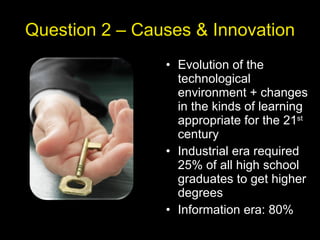
Question 2 – Causes & Innovation Evolution of the technological environment + changes in the kinds of learning appropriate for the 21 st  century Industrial era required 25% of all high school graduates to get higher degrees Information era: 80%
Question 2 – Causes and Innovation Pressures of competition Greater access to ICT Need to implement a QA system Increased government support Government demanding more for its money Growing confidence of DE faculties to show the results of academic activities Growth of teleworking, telecommuting
Question 2 – Causes and Innovation Public no longer automatically regards universities as a public good Needs and demands from individuals (increase income), employers and society (better trained employees) Possibilities for updating knowledge and skills parallel to work Greater market/business orientation “ Push/Pull of student demand” Possibility of DE professionals in developing countries to be on a par with the latest strategies
Question 3 – Greatest Challenge Language barriers blocking access to data and information – no common language, cultural differences; automatic translation unreliable Transactional distance – its manifestation in the digital world
Question 3 – Greatest Challenge How to make the best use of ICT and digital media to reach out to non-traditional targets in large-scale operations. “DE is no longer unique – other forms of teaching & learning can also reach out to anybody, any time (when they see it as in their interests)” Achieving due recognition and governmental support in some countries
Question 3 – Greatest Challenge Getting academics appropriately skilled in the technology (both technically & pedagogically). “Academics are not keeping up.” Bring under control the NIH Factor (Not Invented Here). This will reduce the “reinvention” from scratch of materials, reduce the number of course writers and course editors. But academic course writers have the power in most institutions.
Question 3 – Greatest Challenge How to counter the challenge of the process of “devaluation of knowledge” (versus skills, the short-term, utilitarian approach to learning) “ How  not  to be dissolved in the superficial e-learning approach?” Attitudes of aging academics versus the reactions of future generations of the digital natives. There may be a reaction against innovations for some time.
Question 3 – Greatest Challenge’ “ How best to educate ‘visionary would-be decision-makers’ among the young to pave the way for global DE? Those in power now don’t have the mind set for rapid globalization of learning” “ How to avoid a ‘silo mentality’ – seeing DE as something different & exotic, and not something just to help people learn.”
Question 3 – Greatest Challenge  How to overcome thinking of ourselves as the DE community – “we need to move on beyond the frontiers of the past to the next frontier.” How to change the customary  reactive  position of educational professionals when confronted with technological innovations, with a more  active  attitude in regard to methodological efficiency.
Question 3 – Greatest Challenge  How to be aware of “innovations” which suggest that henceforth it will be possible to study less or to study less deeply. How to avoid the tendency that when we evaluate, we modify the strategy we originally used to develop the themes, concepts and problems...and we return to  traditional  educational values & practices. How to increase the usage of resources – transformation from “building” to “use”
Question 3 – Greatest Challenge “ How to balance the cost of innovation against the value of adoption (the impact of ICT on institutional productivity).” How to overcome the lack of professionals prepared to deal with complexity, and with learners lacking basic study skills
Question 3 – Greatest Challenge From where can we expect to come the leadership and management of DE in the future?  “Achieving this will alleviate the other challenges” “ How to avoid institutional stagnation? When the institution becomes the slave of its initial methods and procedures, it ignores technical developments.”
Question 3 – Greatest Challenge “ How to avoid institutional inertia – the lack of effective leadership to promote proactive organizational development” “ How to overcome the fact that as DE institutions become large, they get self-satisfied and neglect the students....or become too large to be managed effectively...one has the feeling that no one is really in charge.”
Question 3 – Greatest Challenge “ Educational institutions have a stranglehold on recognition & accreditation of learning, even though they exist in a world in which the means of learning  outside  the institution have proliferated. Learning is now democratized. The best situation would be just a few global and respected institutions which could transform themselves to support & recognize  this, instead of investing in protectionism & marketing their wares to an already-converted congregation.”
Question 3 – Greatest Challenge “ How to prepare new business models in an environment in which OERs are issued by renowned institutions & distributed without cost – no remuneration of authors, production teams, investors -- micro-accesses, or micro-payments?”
Question 3 – Greatest Challenge ““ The conflict of size, quality and benefit will become accute” With student numbers falling in the developed world, how to invent ways of being fully open & flexible while maintaining institutional quality.
Question 3 – Greatest Challenge “ International Regulation & Accreditation of DE Provision & Providers will have to be developed: growth of numbers of degrees will require certification of quality—developed, approved, implemented & controlled” “ Local government regulations may become a barrier to distributed learning (students take courses in different institutions & get a diploma from one).Will government validate?
Question 3 – Greatest Challenge “ How to avoid failures caused by managers who do not know the various educational alternatives in DE and believe that the only motive an institution  thinks  it has for adopting DE is the reduction of costs. This leads to embryonic innovations which may have worked well in laboratory situations, but involve risks when applied at a larger scale.”
Question 3 – Greatest Challenge “ We still have a long way to go to develop pedagogic processes & instructional design which go beyond traditional values of F2F models.”
By Way of a Conclusion There is considerable variation, in the identification by leaders in the profession, as to what constitutes innovation Those areas most frequently cited tend to be more the result of DE taking advantage of technological breakthroughs, rather than advances in learning themselves The challenges of the next decade, as identified, are a fruitful source of suggestion for those interested in innovating
Thanks for your attention

Innovation in Distance Learning? I Can't Define It, But I Know It When I See It!

  • 1.
  • 2.
    Innovation in DistanceLearning? I Can’t Define It, But I Know It When I See It! Fredric M. Litto Brazilian Association of Distance Education Gdansk, Poland 13 June 2009
  • 3.
    “ I KnowIt When I See It!” 1964 – United States Supreme Court Justice Potter Stewart Jacobellis v. Ohio , regarding possible obscenity in The Lovers “ I can’t define it, but I know it when I see it!” Became one of the most famous phrases in the history of the Supreme Court The user attempts to categorize an observable fact or event, although the category is subjective or lacks clearly defined parameters
  • 4.
    My Personal Interestin Innovation Post-Doctoral Year Stanford, 1987-88 New ideas in Cognition/Learning & ICTs Upon return to Brazil, a new research laboratory at University of São Paulo 1988— . The School of the Future
  • 5.
    My Personal Interestin Innovation Prohibited from creating distance education through courses (the University only starts DE in 2009!) The laboratory did the next best: activities to support the DE of others: Virtual library Learning objects Virtual learning communities
  • 6.
  • 7.
    Group of Learningin Science and Technology with Internet Support http://darwin.futuro.usp.br
  • 8.
    REPOSITORY OF REUSABLELEARNING OBJECTS Virtual Science Lab Group http://www.labvirt.futuro.usp.br
  • 9.
    SIMULATIONS Absorption ofColors Force (Animation) Conservation of Energy Ions Area of the Circle Electric Power Force (Simulation)
  • 10.
  • 11.
    PARTICIPATING STATES • 483 public schools • 29,941 participants 23,365 students 6,091 teachers 682 community members
  • 12.
  • 13.
  • 14.
  • 15.
  • 16.
    The Virtual Libraryof the Portuguese- Speaking Student http://www.bibvirt.futuro.usp.br
  • 17.
  • 18.
  • 19.
  • 20.
    The Price ofInnovation Central Administration never gave support; merely tolerated the lab Self-sustaining—all funding external In years 2003-2006, US$ 2 million entered annually Supported staff of 75 researchers
  • 21.
    The Price ofInnovation Since we brought in our own funds, we had independence in choosing and running our own projects So which is more crucial- freedom to invent, or sacrifice freedom and be part of the regular university budget? The lab is currently “coasting along....”
  • 22.
    The Study Theopinions of some of DE’s most experienced leaders A sort of pre-Delphi survey E-mails of request sent to 70 friends around the world 33 responded (49.1%) From 1 to 3 pages
  • 23.
    The Study Today’sreport is a preliminary summary of the results I plan to submit the final paper, with further details, to the EURODL-European Journal of Open, Distance & E-Learning
  • 24.
    The Questions OsloManual – Guidelines for Collecting & Interpreting Innovation Data. 3 rd ed. Paris: OECD, 2005 Products Processes Marketing Organization
  • 25.
    The Questions Whatare your choices for the most significant innovations in DE 1988-2008? Cite no more than 10 examples. 2. What do you believe were the real or possible factors affecting the high or low number of innovations? 3. What is the single most important challenge that confronts DE over the next decade?
  • 26.
    The Restrictions Pleaserefrain from citing innovations initiated by yourself or by the institution for which you worked, or are working at the present time. Although there was no restriction as to the citation of specific brands, institutional names or trademarks, so few were in fact mentioned that these were not included in the conclusions
  • 27.
    The Kind RespondentsEurope: Ulrich Bernath Domingo Gallego Brenda Gurley Helmut Hoyer François Marchessou Brian Sayer David Sewart
  • 28.
    The Kind RespondentsAfrica: Narand Baijnath Bakary Diallo Asia & ME: Mahmood H. Butt Zhang Deming Toufic Houri Pranee Sungkatavat
  • 29.
    The Kind RespondentsEurope: Andras Szucs Antonio Moreira Teixeira Mathy Van Buel Oceania: Lalita Rajasingham Jim Taylor
  • 30.
    The Kind RespondentsNorth America: Susan Aldridge Nicholas Allen Tony Bates John Daniel Kay Kohl Gary Miller Takashi Utsumi
  • 31.
    The Kind RespondentsSouth America: Gilda Helena Campos Andrea Filatro Marcos Formiga Edith Litwin Carlos Longo Jaime Ricardo Valenzuela
  • 32.
    Question 1 -Products Greatest number of citations: Web 1.0, 2.0 & 3.0 Internet 1 & 2 Open Educational Resources Learning Management Systems Social Networking Mobile Learning
  • 33.
    Question 1 -Products Remainder (in no special order): Use of IT PDAs Microcomputers Miniaturization Hypertext Voice over Internet Sound over Internet Multimedia Virtual Classrooms Virtual Universities Virtual Learning Communities Immersive Learning Environments Networked Learning Blended Learning
  • 34.
    Question 1 -Products Fibre-based highways Satellite systems Production/Construction of Teaching Resources Asynchronous Learning Environments Worked-based products Transactional Distance Wi-fi Online Videoconferencing Digital Libraries Remote & Virtual Labs Learning Objects eBooks Open Source Software Mega-universities Meta-universities Search Engines
  • 35.
    Question 1 -Processes Innovations in the psychology of learning Paradigm shift from teacher-centered to student centered approaches No-classroom teaching (self-study) Opportunity to operate globally Opportunity for non-traditional sources to start their own educational programs Interactivity Complete disappearance of the element of distance in learning – “any time and any place”
  • 36.
    Question 1 -Processes Shift from “artesenal” education to an “industrialized” education Shift from radio & tv to internet & multimedia Shift from textbooks to multimedia Shift from printed material and postal delivery plus tutoring (by correspondence or F2F) to online (materials, delivery, return—all in one) “Unthinkable before the mid-1990s!” Mobility/portability of the process—people, content, and tools
  • 37.
    Question 1 -Processes Learning processes: Virtual learning environments (wikis, blogs, etc.) Collaborative learning strategies & communities Collaborative writing tools Customization around individualization, around individual abilities, learning styles, and cultural traditions Administrative processes: More student/customer focused (CRM) “Unbundling” of individual processes in value chain and outsourcing to private providers Using e-business processes to streamline “our medieval ways of working”
  • 38.
    Question 1 -Processes “Disambiguation” of intellectual property in wikis, web publications, student assignments, recycling represents a loss of ownership, of QA and of control but gives greater democratic access to content Web 3.0 assembling ideas and information into bodies of knowledge by mapping data semantically semantic searches based on word meanings
  • 39.
    Question 1 -Marketing DE earlier seen as a palliative or supplementary educational solution for those with little prior learning experience, now with the status of privileged adults involved in the job market
  • 40.
    Question 1 -Marketing Investing in the development of brands Paying attention to rankings Using ICT for student recruitment, especially non-traditional students Using agents (and paying a fee per student) Market now expects more flexibility, interaction, and immediacy from the learning process Greater outreach for less cost and effort
  • 41.
    Question 1 -Marketing The public expects recognition by the market of DE degree and courses Philanthropic foundations which served as catalysts for improvement and growth of online DE
  • 42.
    Question 1 -Marketing A skeptical view: Promises of instant change and fast skills acquisition made in the late 1990s (start of Web courses) have proved deceitful, counterproductive, and ill-founded. They never attracted a sufficient number of students and led to abysmal failures and loss of public money. “Politicians announce a revolutionary scheme, inexperienced and timid civil servants hurriedly draw up a tender…
  • 43.
    Question 1 -Marketing and award it to the lowest (not necessarily the most competent bidder. Political pressure causes the specification to change, so costs spiral and disillusion grows” ( The Economist , February 16, 2008, referring to “e-administration,” and could be applied to e-learning in the last decade.
  • 44.
    Question 1 -Organization Entry of for-profit degree-granting organizations New players (publishers, TV producers, world library of digital resources) Multiple collaborative authorship of content
  • 45.
    Question 1 -Organization Inter-institutional sharing of educational programs and resources Automation, at a distance, of the processes: enrollments, learner resources, exams, tutoring, notification of grades, data mining Greater emphasis on professional management processes and practices Greater emphasis on evidence-based practice and analytics
  • 46.
    Question 1 -Organization “Organization seems to be better in traditional DE institutions—efficient, smooth-running; but still awaiting the ideal template for Web-based organizations” “Most institutions have organizational processes and values about learners which still await modernization” “There’s little real innovation in the world of DE – institutions are ossifying and becoming risk-averse”
  • 47.
    Question 2 –Causes & Innovation Evolution of the technological environment + changes in the kinds of learning appropriate for the 21 st century Industrial era required 25% of all high school graduates to get higher degrees Information era: 80%
  • 48.
    Question 2 –Causes and Innovation Pressures of competition Greater access to ICT Need to implement a QA system Increased government support Government demanding more for its money Growing confidence of DE faculties to show the results of academic activities Growth of teleworking, telecommuting
  • 49.
    Question 2 –Causes and Innovation Public no longer automatically regards universities as a public good Needs and demands from individuals (increase income), employers and society (better trained employees) Possibilities for updating knowledge and skills parallel to work Greater market/business orientation “ Push/Pull of student demand” Possibility of DE professionals in developing countries to be on a par with the latest strategies
  • 50.
    Question 3 –Greatest Challenge Language barriers blocking access to data and information – no common language, cultural differences; automatic translation unreliable Transactional distance – its manifestation in the digital world
  • 51.
    Question 3 –Greatest Challenge How to make the best use of ICT and digital media to reach out to non-traditional targets in large-scale operations. “DE is no longer unique – other forms of teaching & learning can also reach out to anybody, any time (when they see it as in their interests)” Achieving due recognition and governmental support in some countries
  • 52.
    Question 3 –Greatest Challenge Getting academics appropriately skilled in the technology (both technically & pedagogically). “Academics are not keeping up.” Bring under control the NIH Factor (Not Invented Here). This will reduce the “reinvention” from scratch of materials, reduce the number of course writers and course editors. But academic course writers have the power in most institutions.
  • 53.
    Question 3 –Greatest Challenge How to counter the challenge of the process of “devaluation of knowledge” (versus skills, the short-term, utilitarian approach to learning) “ How not to be dissolved in the superficial e-learning approach?” Attitudes of aging academics versus the reactions of future generations of the digital natives. There may be a reaction against innovations for some time.
  • 54.
    Question 3 –Greatest Challenge’ “ How best to educate ‘visionary would-be decision-makers’ among the young to pave the way for global DE? Those in power now don’t have the mind set for rapid globalization of learning” “ How to avoid a ‘silo mentality’ – seeing DE as something different & exotic, and not something just to help people learn.”
  • 55.
    Question 3 –Greatest Challenge How to overcome thinking of ourselves as the DE community – “we need to move on beyond the frontiers of the past to the next frontier.” How to change the customary reactive position of educational professionals when confronted with technological innovations, with a more active attitude in regard to methodological efficiency.
  • 56.
    Question 3 –Greatest Challenge How to be aware of “innovations” which suggest that henceforth it will be possible to study less or to study less deeply. How to avoid the tendency that when we evaluate, we modify the strategy we originally used to develop the themes, concepts and problems...and we return to traditional educational values & practices. How to increase the usage of resources – transformation from “building” to “use”
  • 57.
    Question 3 –Greatest Challenge “ How to balance the cost of innovation against the value of adoption (the impact of ICT on institutional productivity).” How to overcome the lack of professionals prepared to deal with complexity, and with learners lacking basic study skills
  • 58.
    Question 3 –Greatest Challenge From where can we expect to come the leadership and management of DE in the future? “Achieving this will alleviate the other challenges” “ How to avoid institutional stagnation? When the institution becomes the slave of its initial methods and procedures, it ignores technical developments.”
  • 59.
    Question 3 –Greatest Challenge “ How to avoid institutional inertia – the lack of effective leadership to promote proactive organizational development” “ How to overcome the fact that as DE institutions become large, they get self-satisfied and neglect the students....or become too large to be managed effectively...one has the feeling that no one is really in charge.”
  • 60.
    Question 3 –Greatest Challenge “ Educational institutions have a stranglehold on recognition & accreditation of learning, even though they exist in a world in which the means of learning outside the institution have proliferated. Learning is now democratized. The best situation would be just a few global and respected institutions which could transform themselves to support & recognize this, instead of investing in protectionism & marketing their wares to an already-converted congregation.”
  • 61.
    Question 3 –Greatest Challenge “ How to prepare new business models in an environment in which OERs are issued by renowned institutions & distributed without cost – no remuneration of authors, production teams, investors -- micro-accesses, or micro-payments?”
  • 62.
    Question 3 –Greatest Challenge ““ The conflict of size, quality and benefit will become accute” With student numbers falling in the developed world, how to invent ways of being fully open & flexible while maintaining institutional quality.
  • 63.
    Question 3 –Greatest Challenge “ International Regulation & Accreditation of DE Provision & Providers will have to be developed: growth of numbers of degrees will require certification of quality—developed, approved, implemented & controlled” “ Local government regulations may become a barrier to distributed learning (students take courses in different institutions & get a diploma from one).Will government validate?
  • 64.
    Question 3 –Greatest Challenge “ How to avoid failures caused by managers who do not know the various educational alternatives in DE and believe that the only motive an institution thinks it has for adopting DE is the reduction of costs. This leads to embryonic innovations which may have worked well in laboratory situations, but involve risks when applied at a larger scale.”
  • 65.
    Question 3 –Greatest Challenge “ We still have a long way to go to develop pedagogic processes & instructional design which go beyond traditional values of F2F models.”
  • 66.
    By Way ofa Conclusion There is considerable variation, in the identification by leaders in the profession, as to what constitutes innovation Those areas most frequently cited tend to be more the result of DE taking advantage of technological breakthroughs, rather than advances in learning themselves The challenges of the next decade, as identified, are a fruitful source of suggestion for those interested in innovating
  • 67.
    Thanks for yourattention