Mobilizing teachers
A free-fall approach to narrowing the
gap between theory and practice


Geoff Stead, Sr Director, Mobile Learning
@geoffstead
Mobile Learning Theory ?

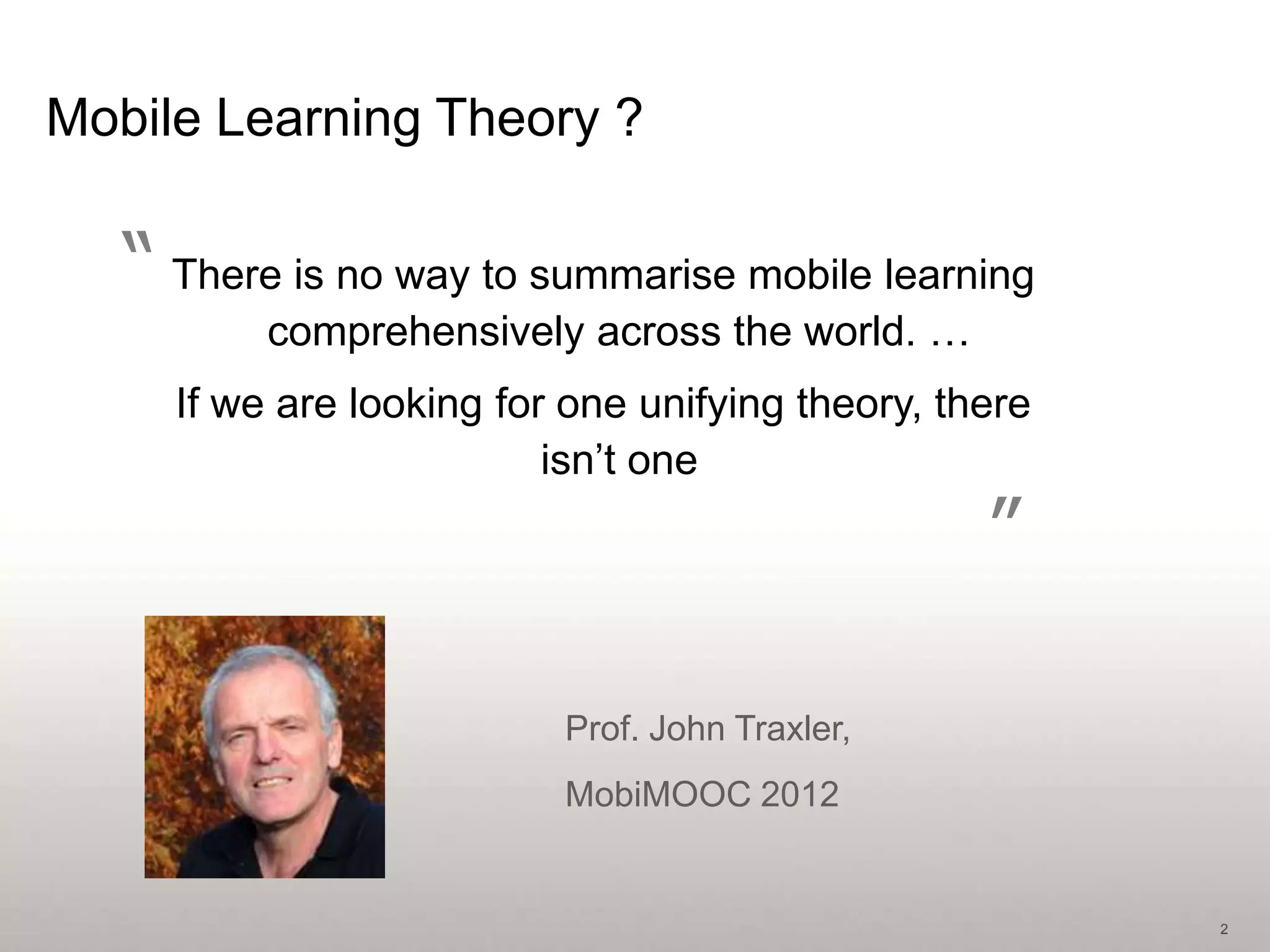
   “ There is no way to summarise mobile learning
          comprehensively across the world. …
     If we are looking for one unifying theory, there
                          isn’t one
                                                  ”

                          Prof. John Traxler,
                          MobiMOOC 2012


                                                        2
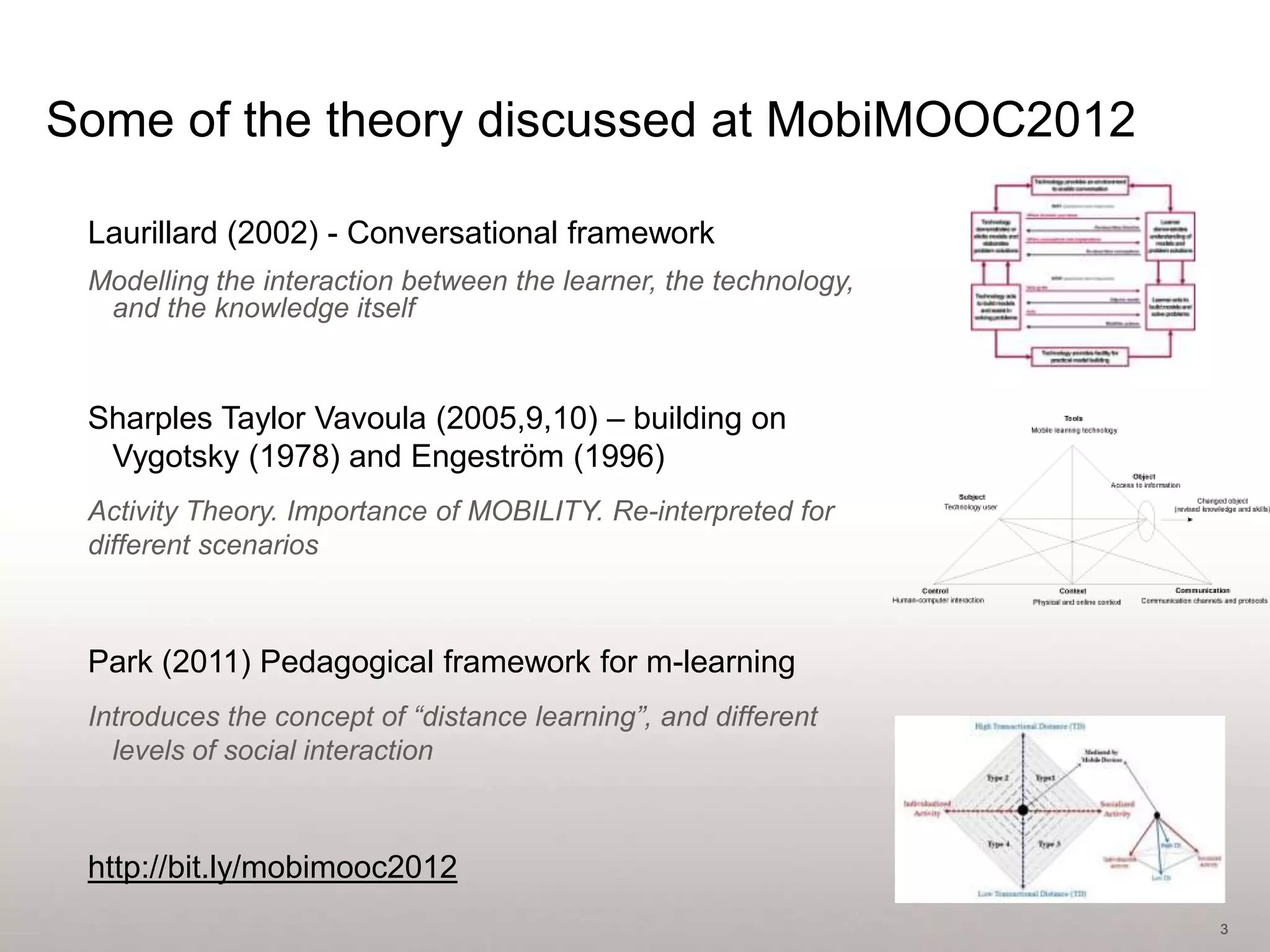
Some of the theory discussed at MobiMOOC2012

 Laurillard (2002) - Conversational framework
 Modelling the interaction between the learner, the technology,
  and the knowledge itself


 Sharples Taylor Vavoula (2005,9,10) – building on
  Vygotsky (1978) and Engeström (1996)
 Activity Theory. Importance of MOBILITY. Re-interpreted for
 different scenarios


 Park (2011) Pedagogical framework for m-learning
 Introduces the concept of “distance learning”, and different
   levels of social interaction


 http://bit.ly/mobimooc2012
                                                                  3
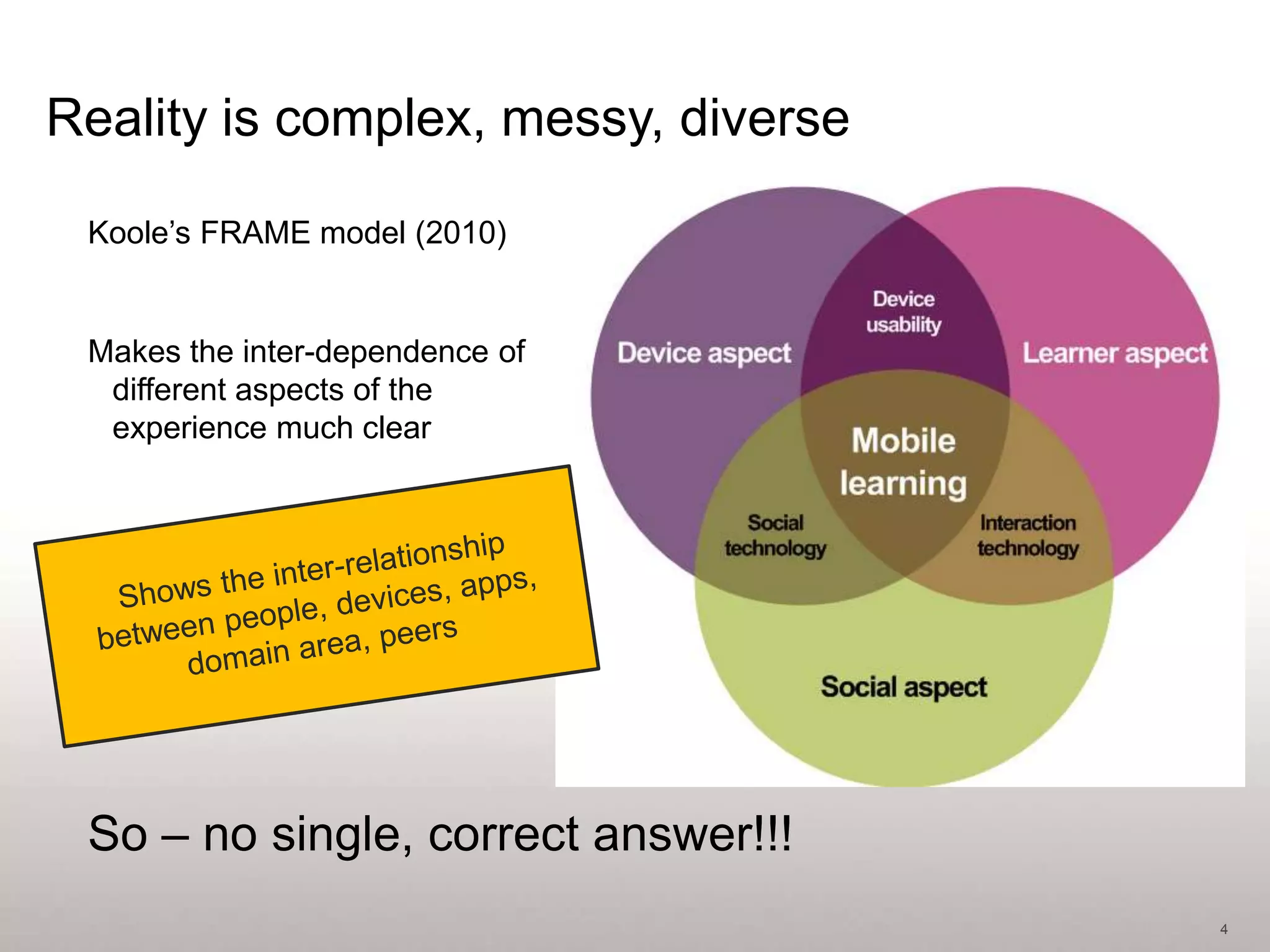
Reality is complex, messy, diverse

 Koole’s FRAME model (2010)


 Makes the inter-dependence of
  different aspects of the
  experience much clear


 So – no single, correct answer!!!
                                     4
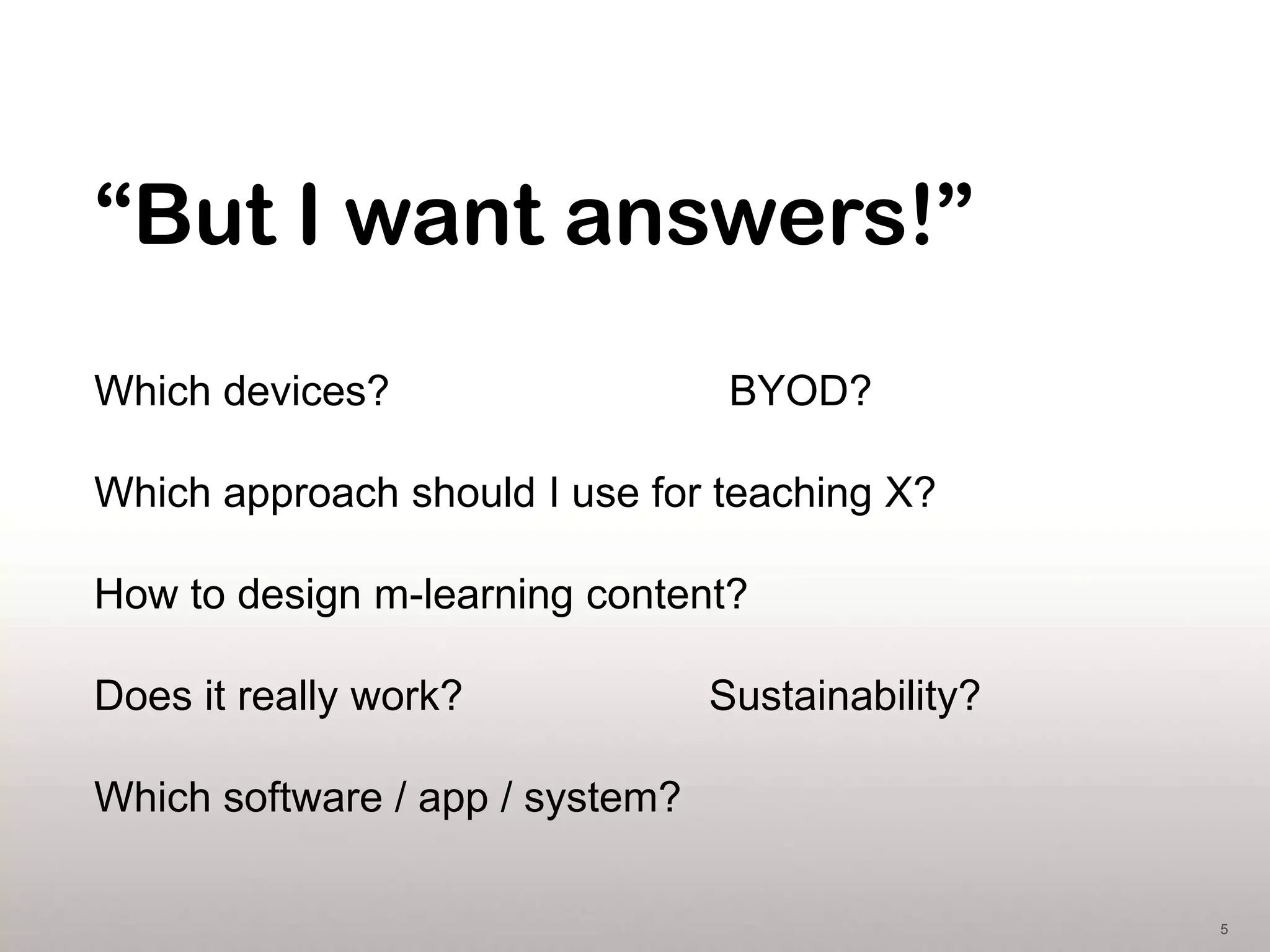
“But I want answers!”
Which devices?                    BYOD?

Which approach should I use for teaching X?

How to design m-learning content?

Does it really work?             Sustainability?

Which software / app / system?

                                                   5
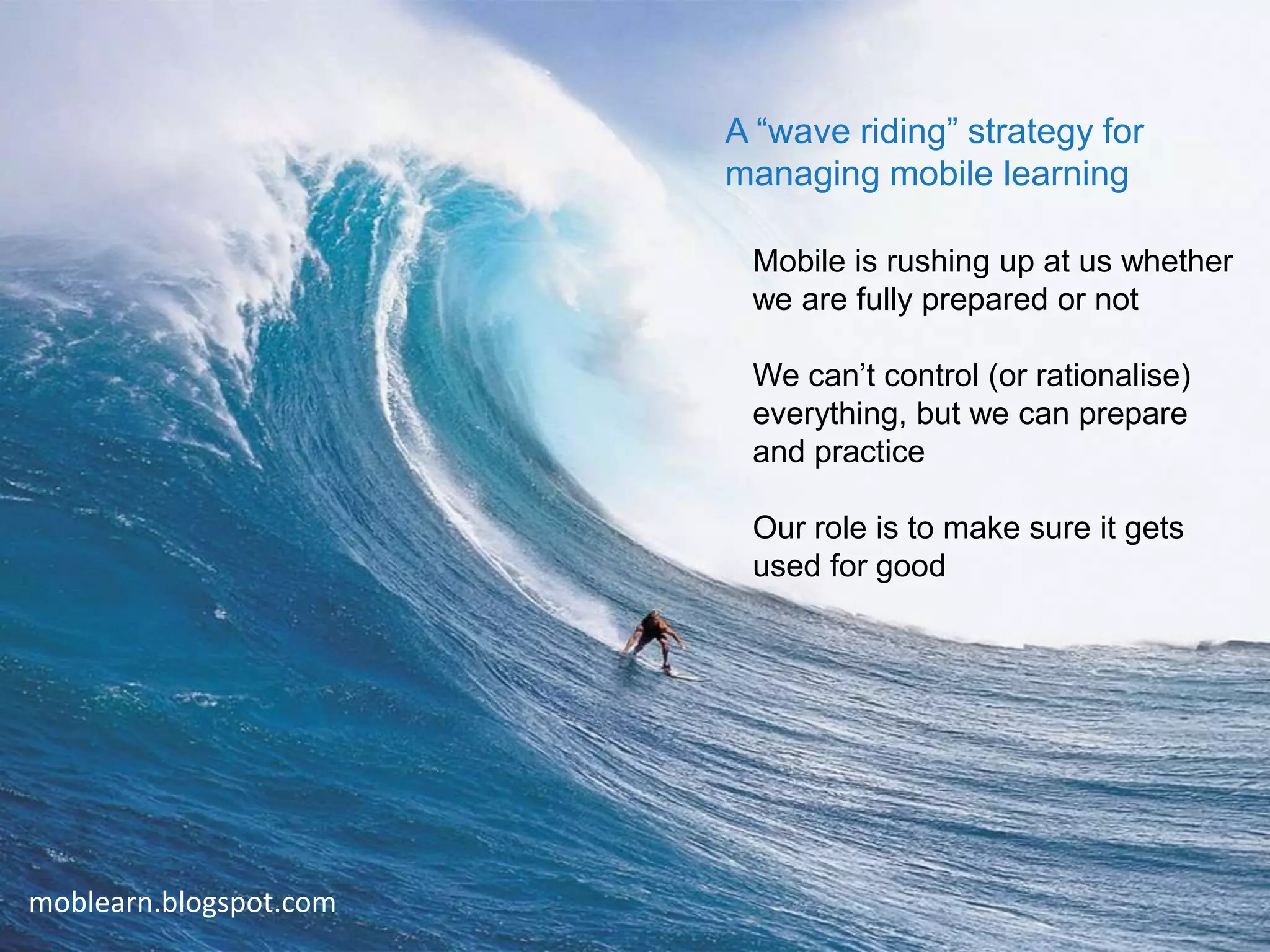
A “wave riding” strategy for
                        managing mobile learning

                         Mobile is rushing up at us whether
                         we are fully prepared or not

                         We can’t control (or rationalise)
                         everything, but we can prepare
                         and practice

                         Our role is to make sure it gets
                         used for good


moblearn.blogspot.com
                                                             6
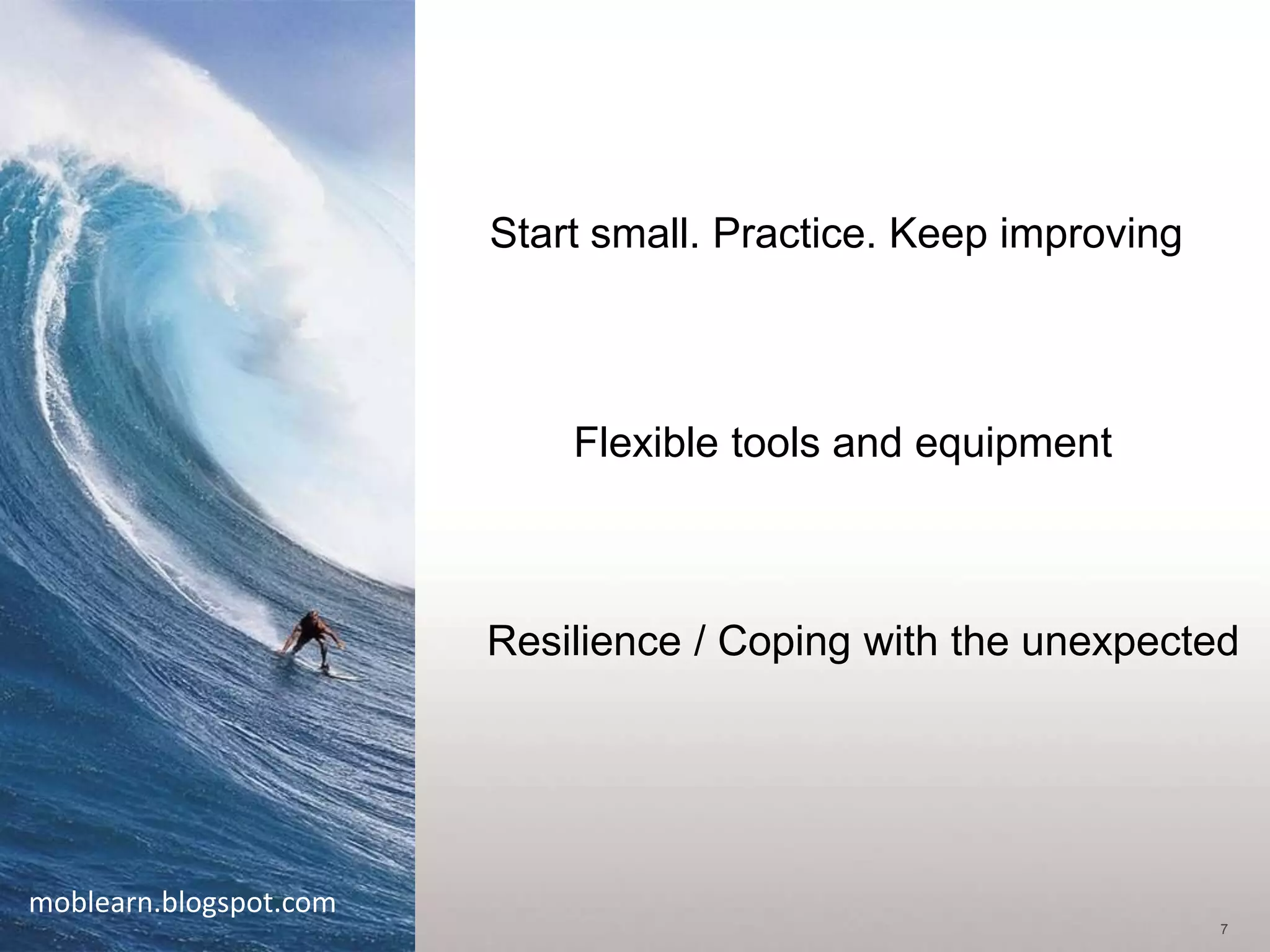
Start small. Practice. Keep improving


                            Flexible tools and equipment


                        Resilience / Coping with the unexpected


moblearn.blogspot.com
                                                                7
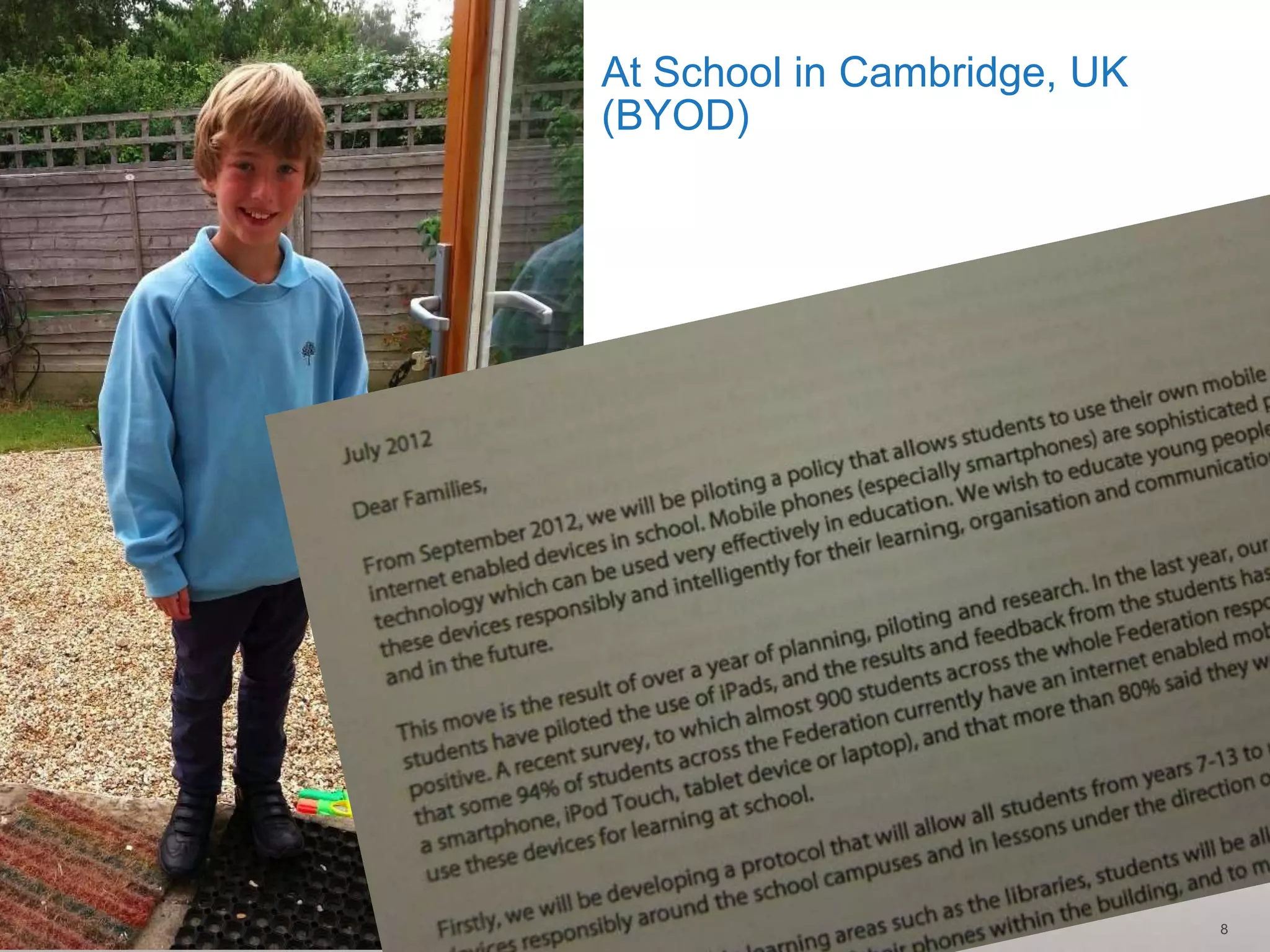
At School in Cambridge, UK
(BYOD)


                             8
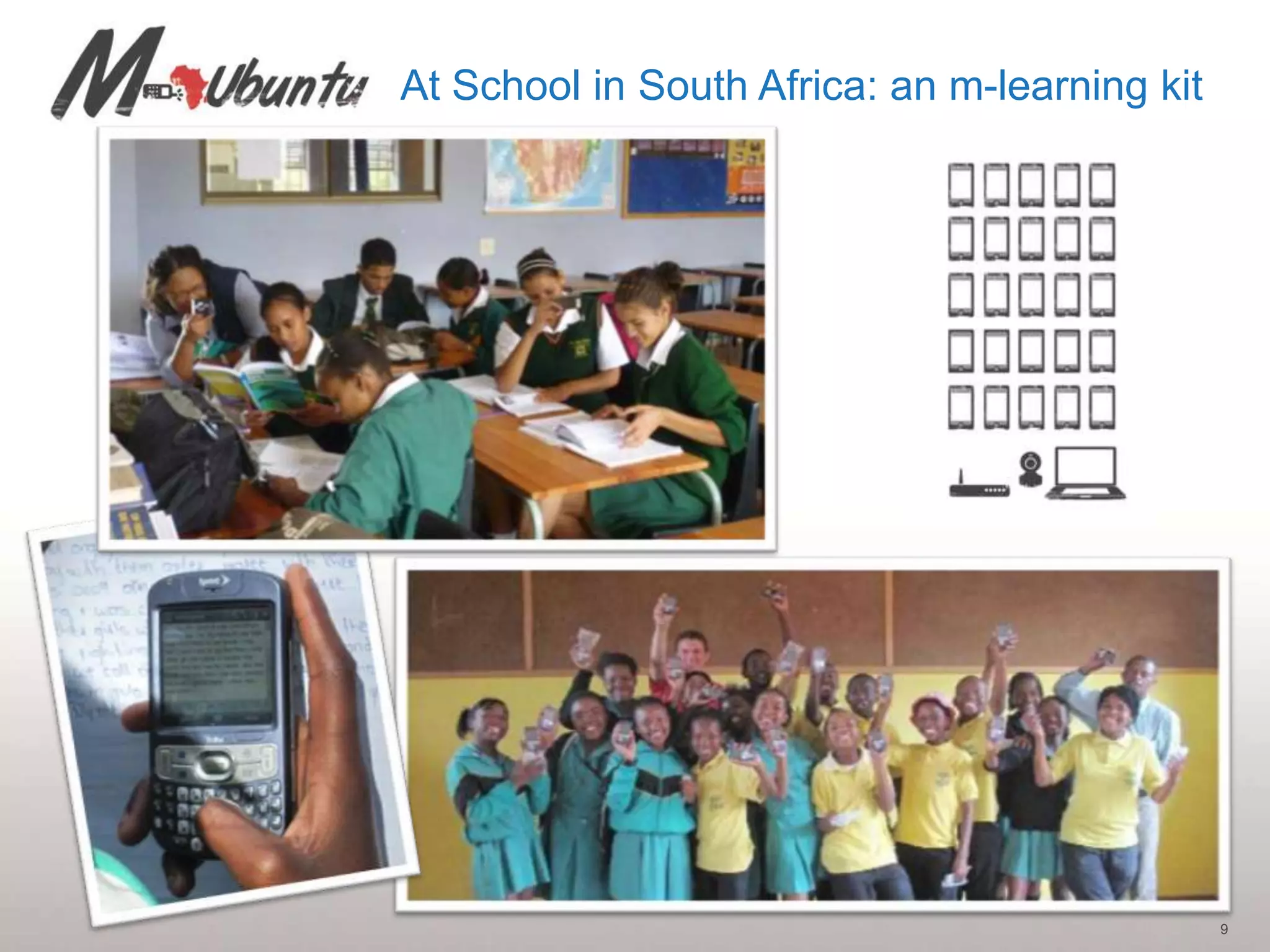
At School in South Africa: an m-learning kit


                                               9
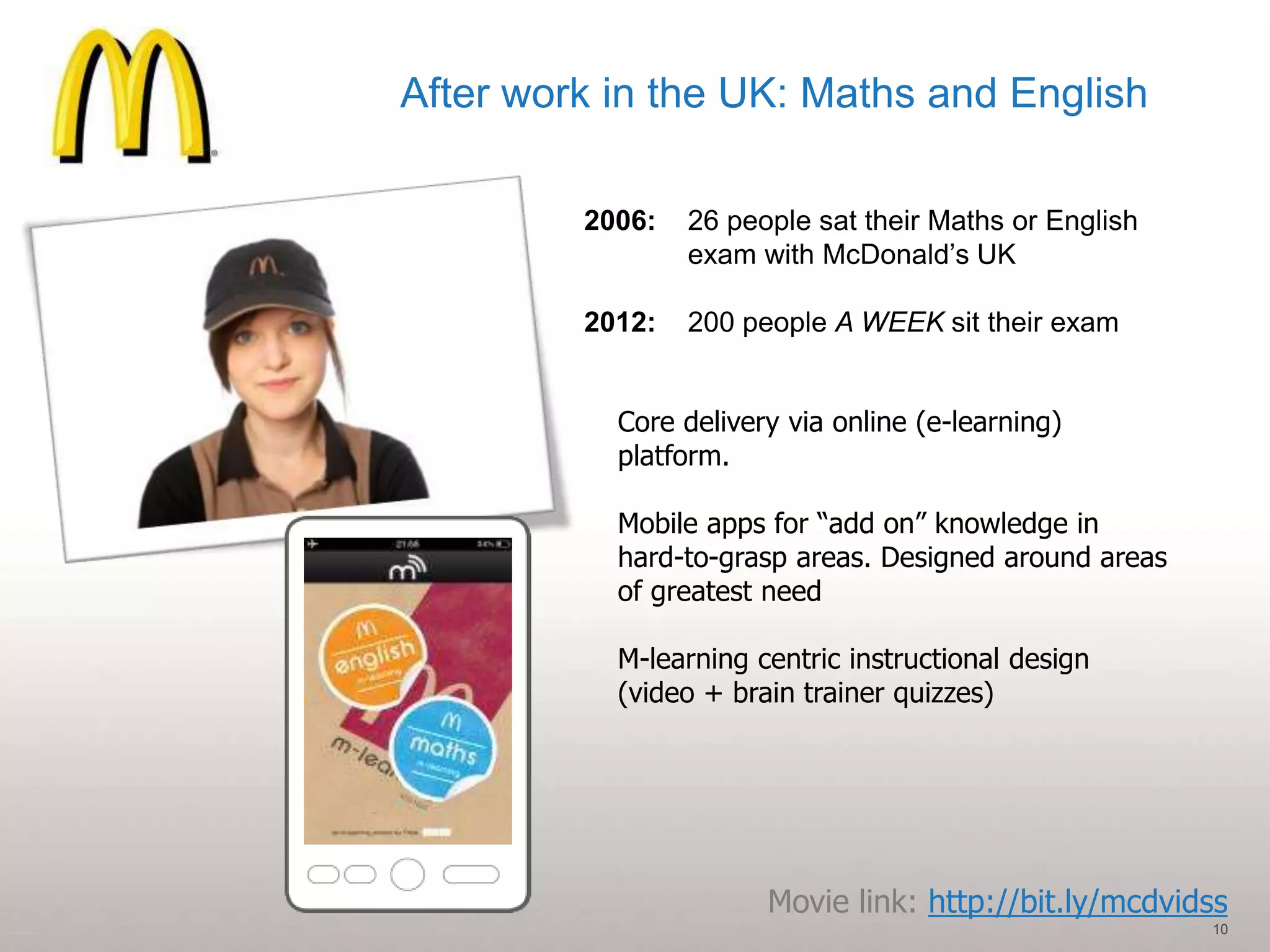
After work in the UK: Maths and English

         2006:   26 people sat their Maths or English
                 exam with McDonald’s UK

         2012:   200 people A WEEK sit their exam


           Core delivery via online (e-learning)
           platform.

           Mobile apps for “add on” knowledge in
           hard-to-grasp areas. Designed around areas
           of greatest need

           M-learning centric instructional design
           (video + brain trainer quizzes)


                       Movie link: http://bit.ly/mcdvidss
                                                        10
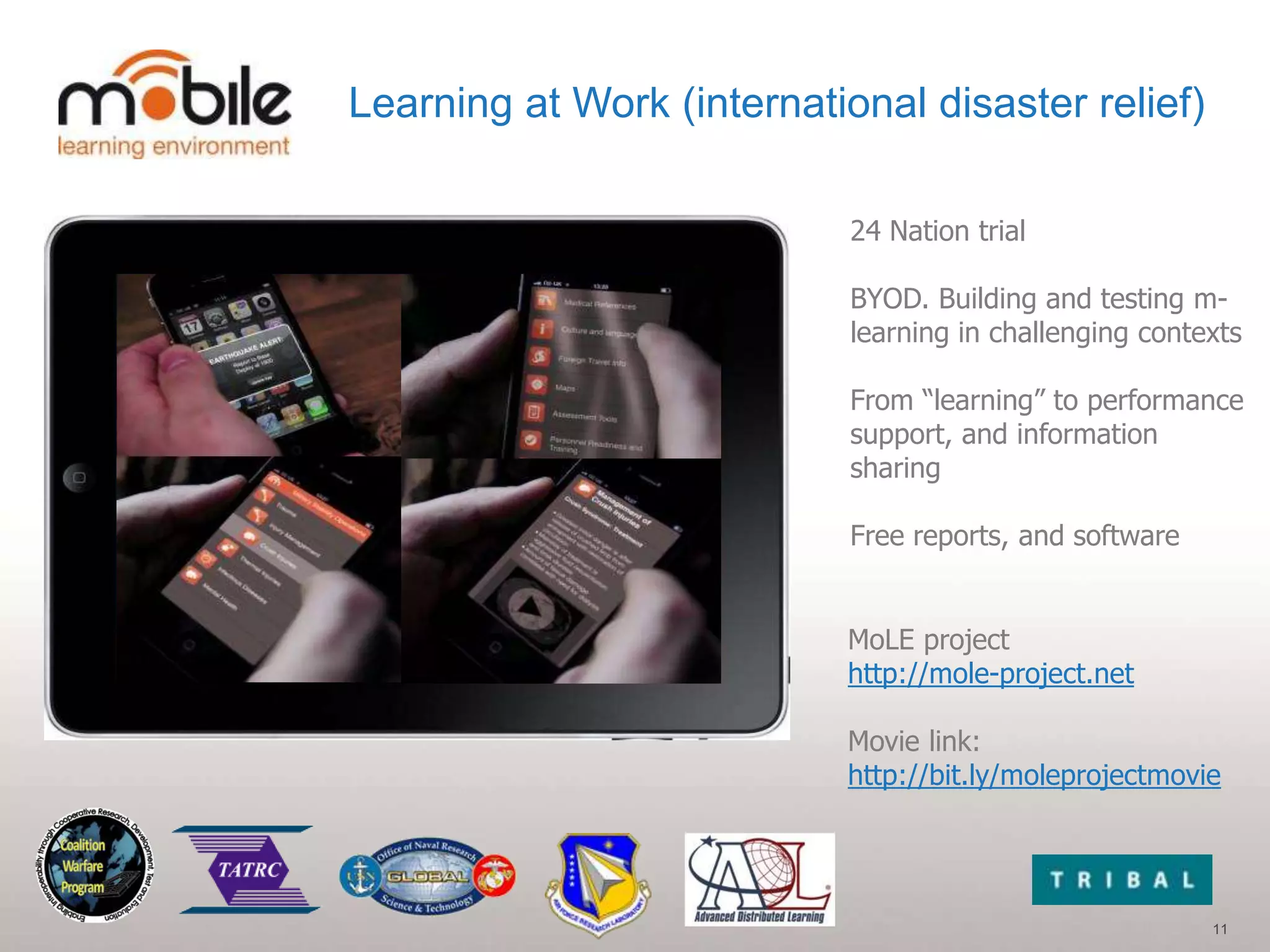
Learning at Work (international disaster relief)

                            24 Nation trial

                            BYOD. Building and testing m-
                            learning in challenging contexts

                            From “learning” to performance
                            support, and information
                            sharing

                            Free reports, and software


                           MoLE project
                           http://mole-project.net

                           Movie link:
                           http://bit.ly/moleprojectmovie


                                                         11
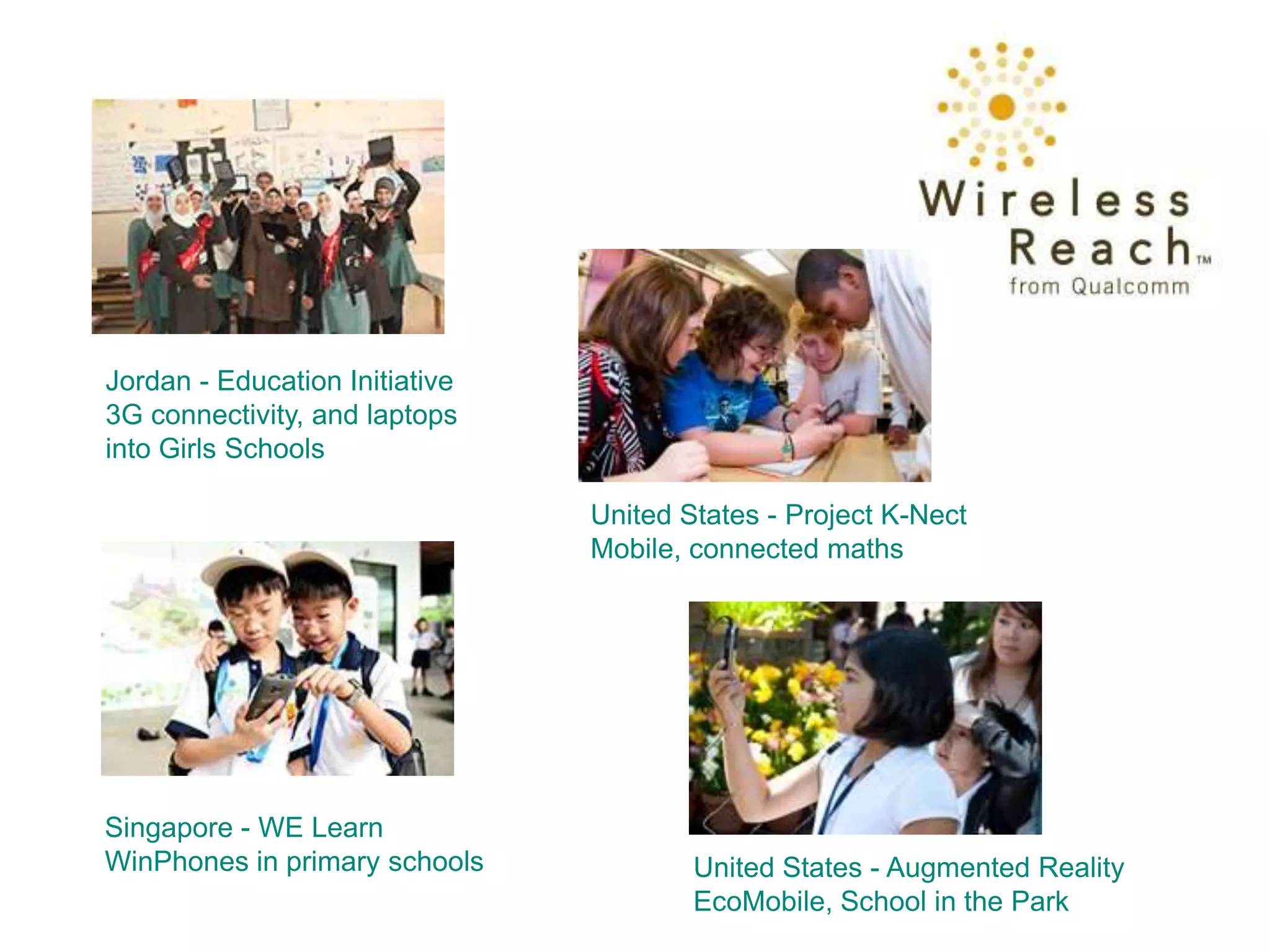
Jordan - Education Initiative
3G connectivity, and laptops
into Girls Schools

                                United States - Project K-Nect
                                Mobile, connected maths


Singapore - WE Learn
WinPhones in primary schools            United States - Augmented Reality
                                        EcoMobile, School in the Park
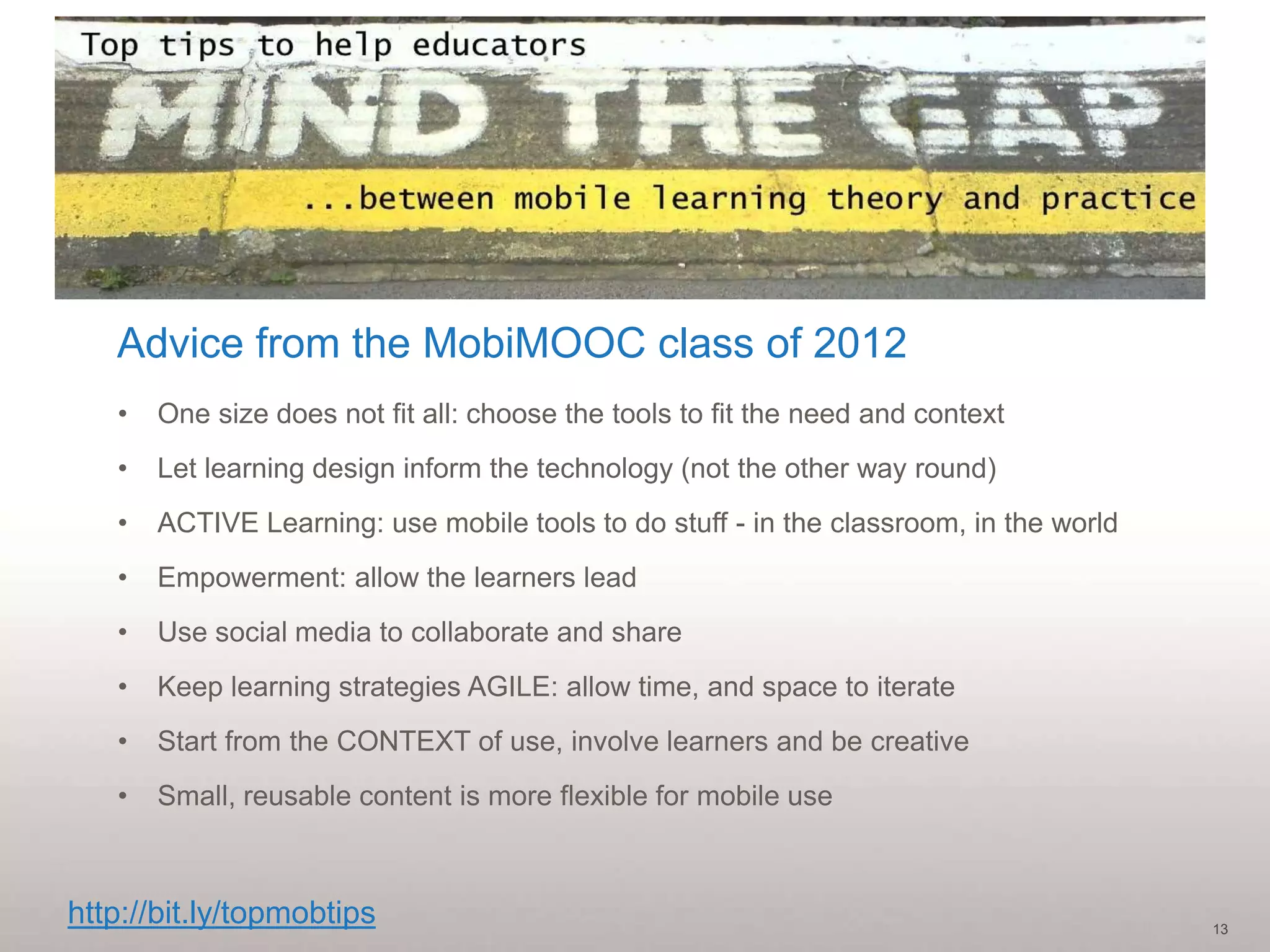
Advice from the MobiMOOC class of 2012
   •   One size does not fit all: choose the tools to fit the need and context
   •   Let learning design inform the technology (not the other way round)
   •   ACTIVE Learning: use mobile tools to do stuff - in the classroom, in the world
   •   Empowerment: allow the learners lead
   •   Use social media to collaborate and share
   •   Keep learning strategies AGILE: allow time, and space to iterate
   •   Start from the CONTEXT of use, involve learners and be creative
   •   Small, reusable content is more flexible for mobile use


http://bit.ly/topmobtips                                                                13
Geoff Stead
                              Mobile Learning Lab
                              Qualcomm

                              @geoffstead

                              gstead@qualcomm.com
                              info@mlearnnetwork.com


Thank you
For more information on Qualcomm, visit us at:
www.qualcomm.com & www.qualcomm.com/blog

Follow us on:
©2012 Qualcomm Incorporated. All rights reserved. Qualcomm, Snapdragon, and Gobi are trademarks of
Qualcomm Incorporated, registered in the United States and in other countries. Mirasol is a trademark of
Qualcomm Mems Technologies, Inc., registered in the United States and in other countries. Atheros is a
trademark of Qualcomm Atheros, Inc., registered in the United States and in other countries. 2Net is a
trademark of Qualcomm Incorporated. Other product and brand names may be trademarks or registered
trademarks of their respective owners.

QUALCOMM Incorporated, 5775 Morehouse Drive, San Diego, CA 92121-1714

Mobile Learning tips for teachers (the gap between theory and practice)

  • 1.
    Mobilizing teachers A free-fallapproach to narrowing the gap between theory and practice Geoff Stead, Sr Director, Mobile Learning @geoffstead
  • 2.
    Mobile Learning Theory? “ There is no way to summarise mobile learning comprehensively across the world. … If we are looking for one unifying theory, there isn’t one ” Prof. John Traxler, MobiMOOC 2012 2
  • 3.
    Some of thetheory discussed at MobiMOOC2012 Laurillard (2002) - Conversational framework Modelling the interaction between the learner, the technology, and the knowledge itself Sharples Taylor Vavoula (2005,9,10) – building on Vygotsky (1978) and Engeström (1996) Activity Theory. Importance of MOBILITY. Re-interpreted for different scenarios Park (2011) Pedagogical framework for m-learning Introduces the concept of “distance learning”, and different levels of social interaction http://bit.ly/mobimooc2012 3
  • 4.
    Reality is complex,messy, diverse Koole’s FRAME model (2010) Makes the inter-dependence of different aspects of the experience much clear So – no single, correct answer!!! 4
  • 5.
    “But I wantanswers!” Which devices? BYOD? Which approach should I use for teaching X? How to design m-learning content? Does it really work? Sustainability? Which software / app / system? 5
  • 6.
    A “wave riding”strategy for managing mobile learning Mobile is rushing up at us whether we are fully prepared or not We can’t control (or rationalise) everything, but we can prepare and practice Our role is to make sure it gets used for good moblearn.blogspot.com 6
  • 7.
    Start small. Practice.Keep improving Flexible tools and equipment Resilience / Coping with the unexpected moblearn.blogspot.com 7
  • 8.
    At School inCambridge, UK (BYOD) 8
  • 9.
    At School inSouth Africa: an m-learning kit 9
  • 10.
    After work inthe UK: Maths and English 2006: 26 people sat their Maths or English exam with McDonald’s UK 2012: 200 people A WEEK sit their exam Core delivery via online (e-learning) platform. Mobile apps for “add on” knowledge in hard-to-grasp areas. Designed around areas of greatest need M-learning centric instructional design (video + brain trainer quizzes) Movie link: http://bit.ly/mcdvidss 10
  • 11.
    Learning at Work(international disaster relief) 24 Nation trial BYOD. Building and testing m- learning in challenging contexts From “learning” to performance support, and information sharing Free reports, and software MoLE project http://mole-project.net Movie link: http://bit.ly/moleprojectmovie 11
  • 12.
    Jordan - EducationInitiative 3G connectivity, and laptops into Girls Schools United States - Project K-Nect Mobile, connected maths Singapore - WE Learn WinPhones in primary schools United States - Augmented Reality EcoMobile, School in the Park
  • 13.
    Advice from theMobiMOOC class of 2012 • One size does not fit all: choose the tools to fit the need and context • Let learning design inform the technology (not the other way round) • ACTIVE Learning: use mobile tools to do stuff - in the classroom, in the world • Empowerment: allow the learners lead • Use social media to collaborate and share • Keep learning strategies AGILE: allow time, and space to iterate • Start from the CONTEXT of use, involve learners and be creative • Small, reusable content is more flexible for mobile use http://bit.ly/topmobtips 13
  • 14.
    Geoff Stead Mobile Learning Lab Qualcomm @geoffstead gstead@qualcomm.com info@mlearnnetwork.com Thank you For more information on Qualcomm, visit us at: www.qualcomm.com & www.qualcomm.com/blog Follow us on: ©2012 Qualcomm Incorporated. All rights reserved. Qualcomm, Snapdragon, and Gobi are trademarks of Qualcomm Incorporated, registered in the United States and in other countries. Mirasol is a trademark of Qualcomm Mems Technologies, Inc., registered in the United States and in other countries. Atheros is a trademark of Qualcomm Atheros, Inc., registered in the United States and in other countries. 2Net is a trademark of Qualcomm Incorporated. Other product and brand names may be trademarks or registered trademarks of their respective owners. QUALCOMM Incorporated, 5775 Morehouse Drive, San Diego, CA 92121-1714

Editor's Notes