Mobiles, Development & Global
Health Training: A way forward
The mCHW project
Anne Geniets
University of Oxford
What was your aim and what challenge in mHealth
were you addressing?
• To design, develop, implement and evaluate a mobile
learning intervention to support the professional
education of CHVs and CHEWs
• By doing so:
– Contribute to the evidence base on the effectiveness of
mobile-based activities to increase CHWs' capabilities
through CHEW supervision/mentorship and peer learning
• To determine how mobile based supervision and
training can be embedded within existing local primary
health infrastructure
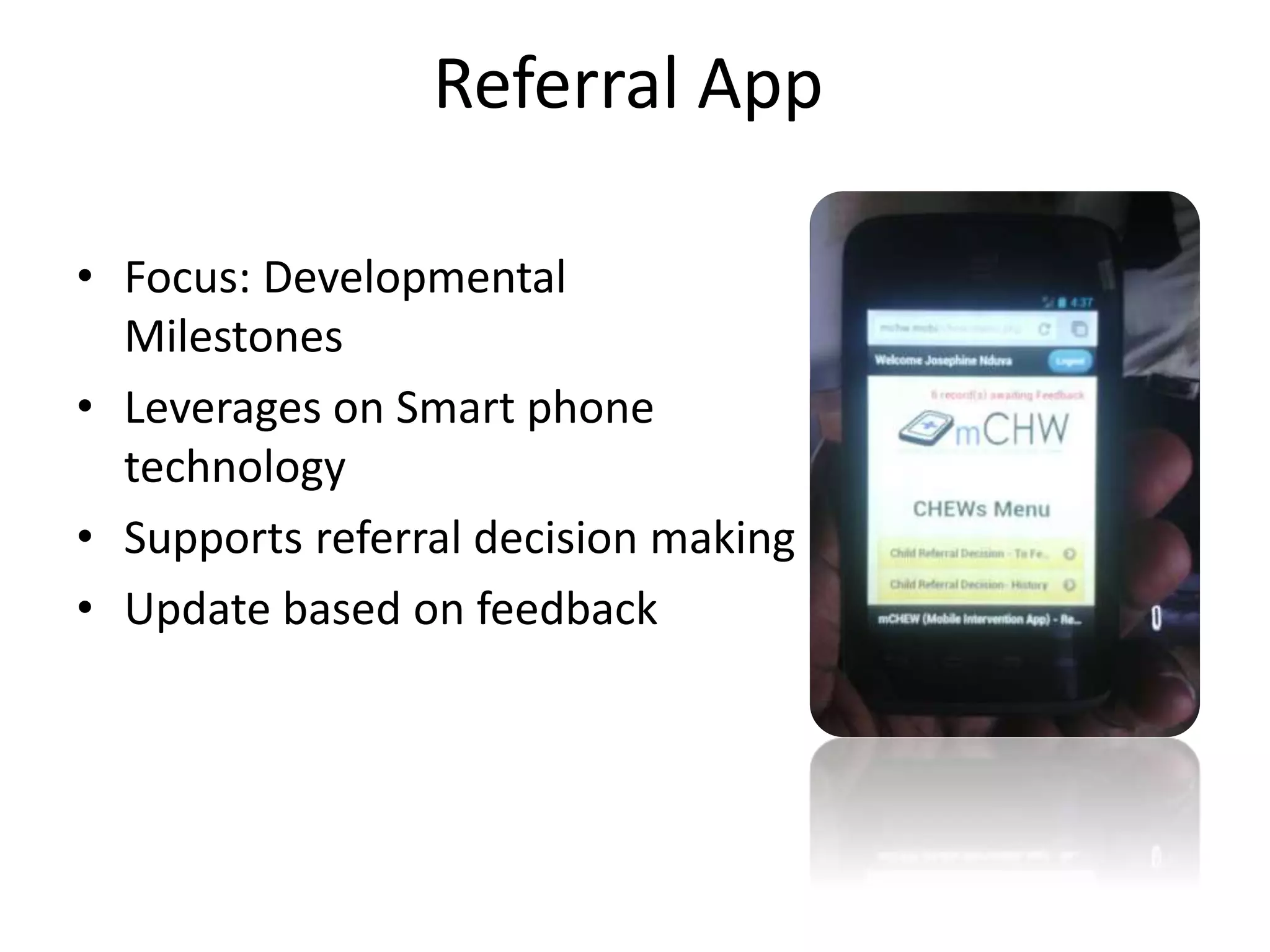
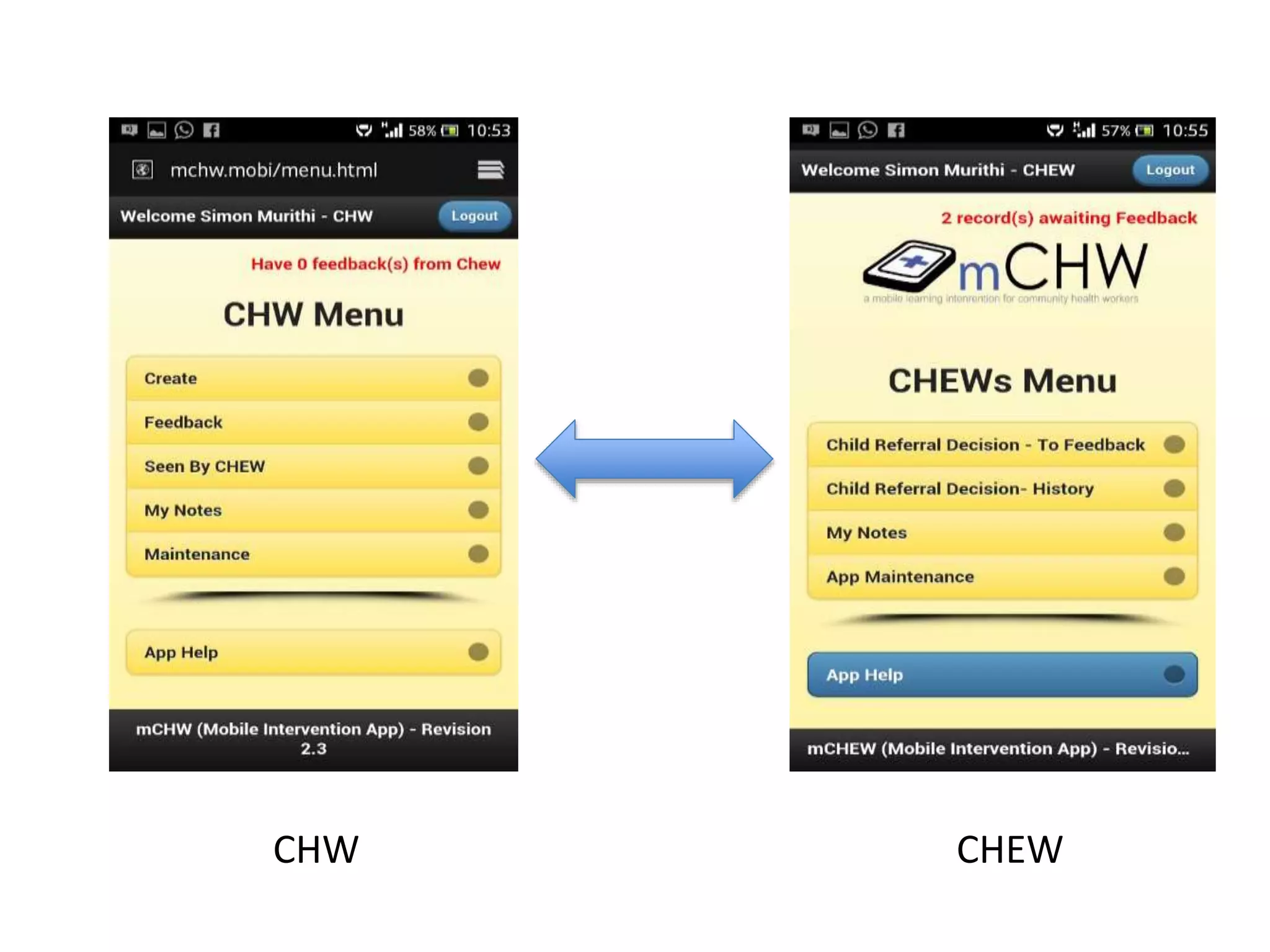
Referral App
• Focus: Developmental
Milestones
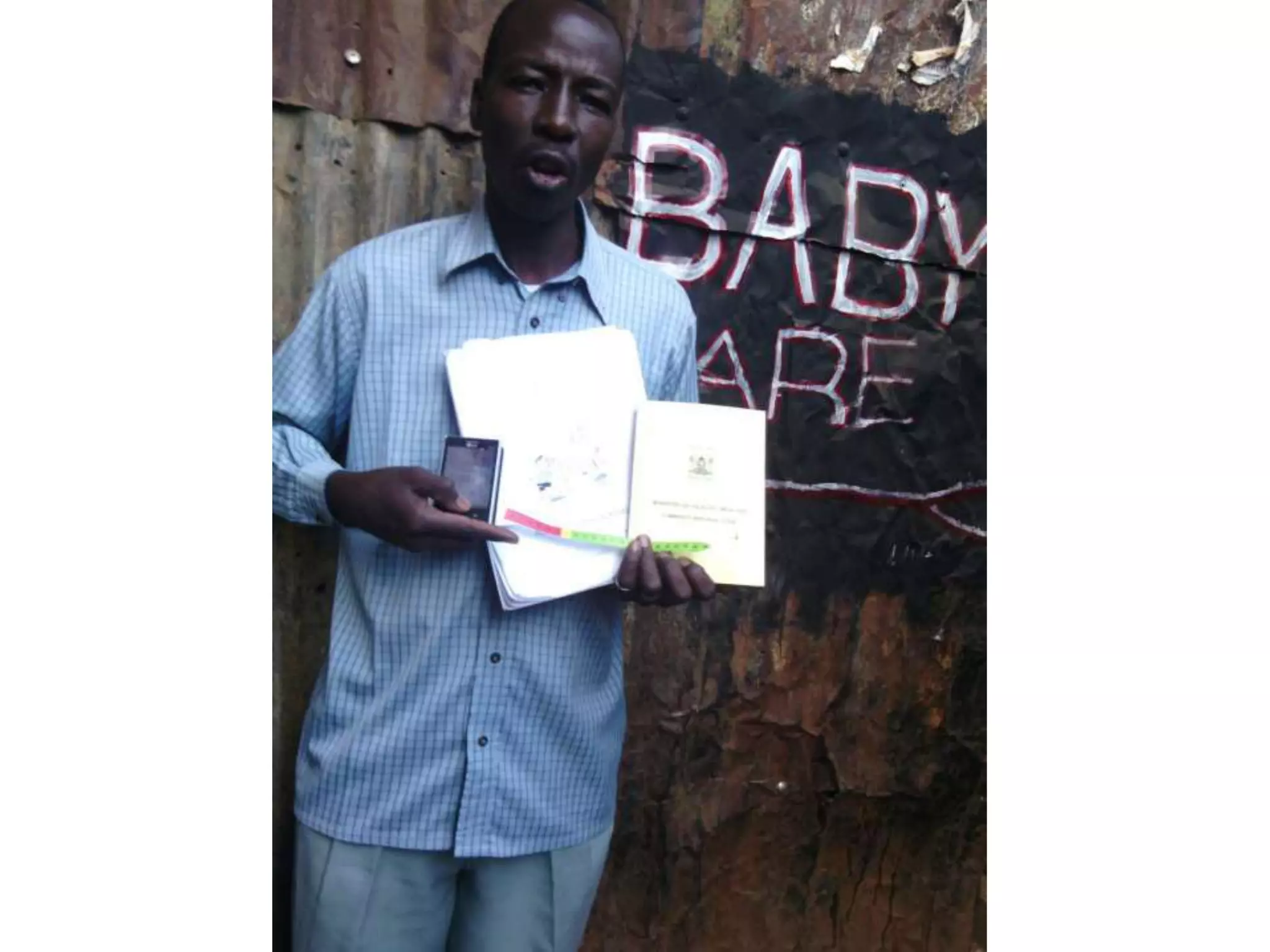
• Leverages on Smart phone
technology
• Supports referral decision making
• Update based on feedback
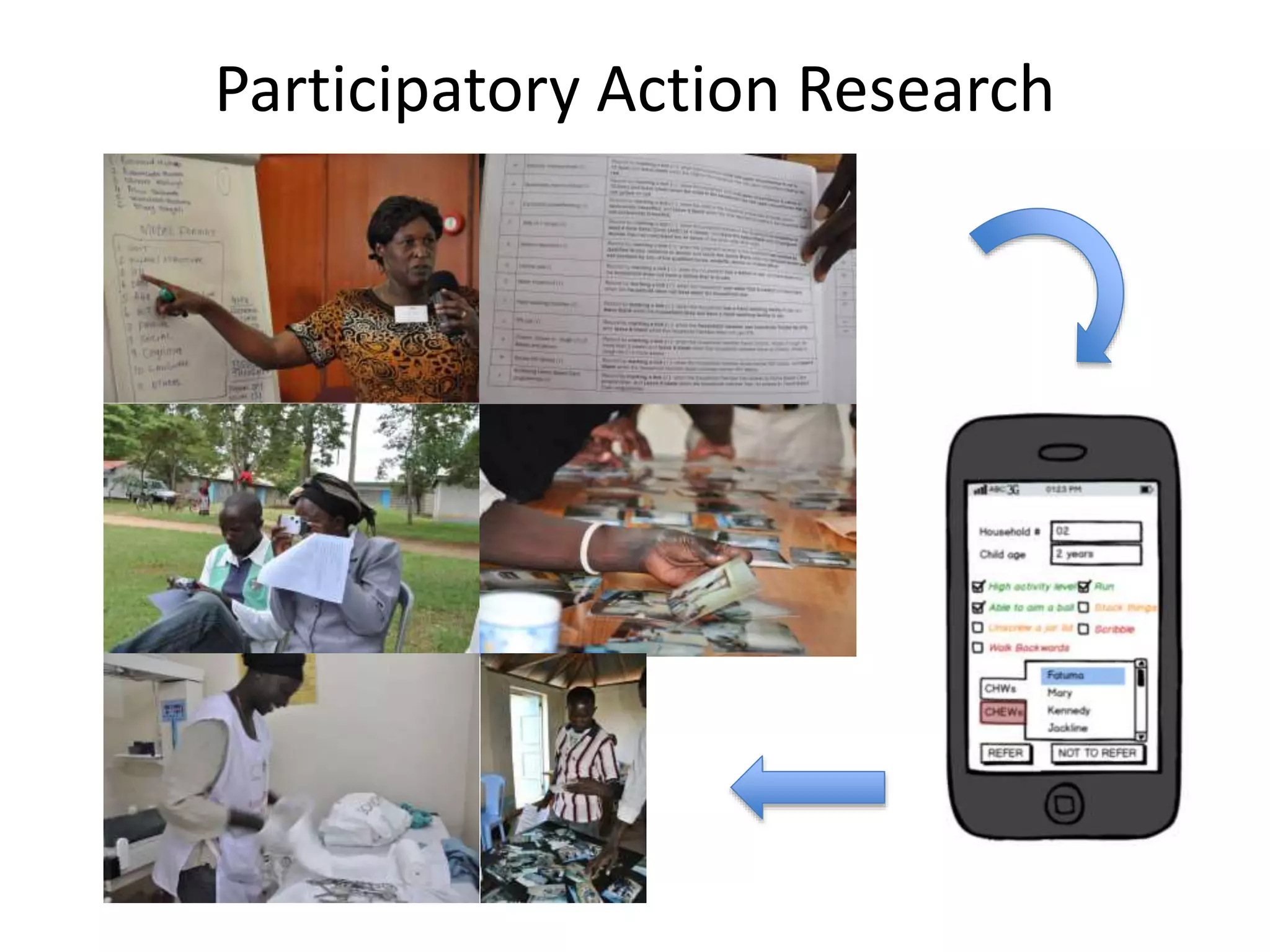
Participatory Action Research
CHW CHEW
What was critical to successfully addressing this
challenge?
• UCL-Amref-Oxford Partnership & relationship
with CHVs and CHEWs in our two communities
in Kenya
• Technology & Resources
• Complex challenge – complex intervention
What three key impacts do you feel you’ve made?
• We’ve shown that with enough upfront
understanding of the context and of people’s
practice
• Mobile intervention is:
– Training tool
– Job aid
– Data collection tool
– Community mobilisation & advocacy
• Mobile tools
– Mobile job aid & supervision: REFER App
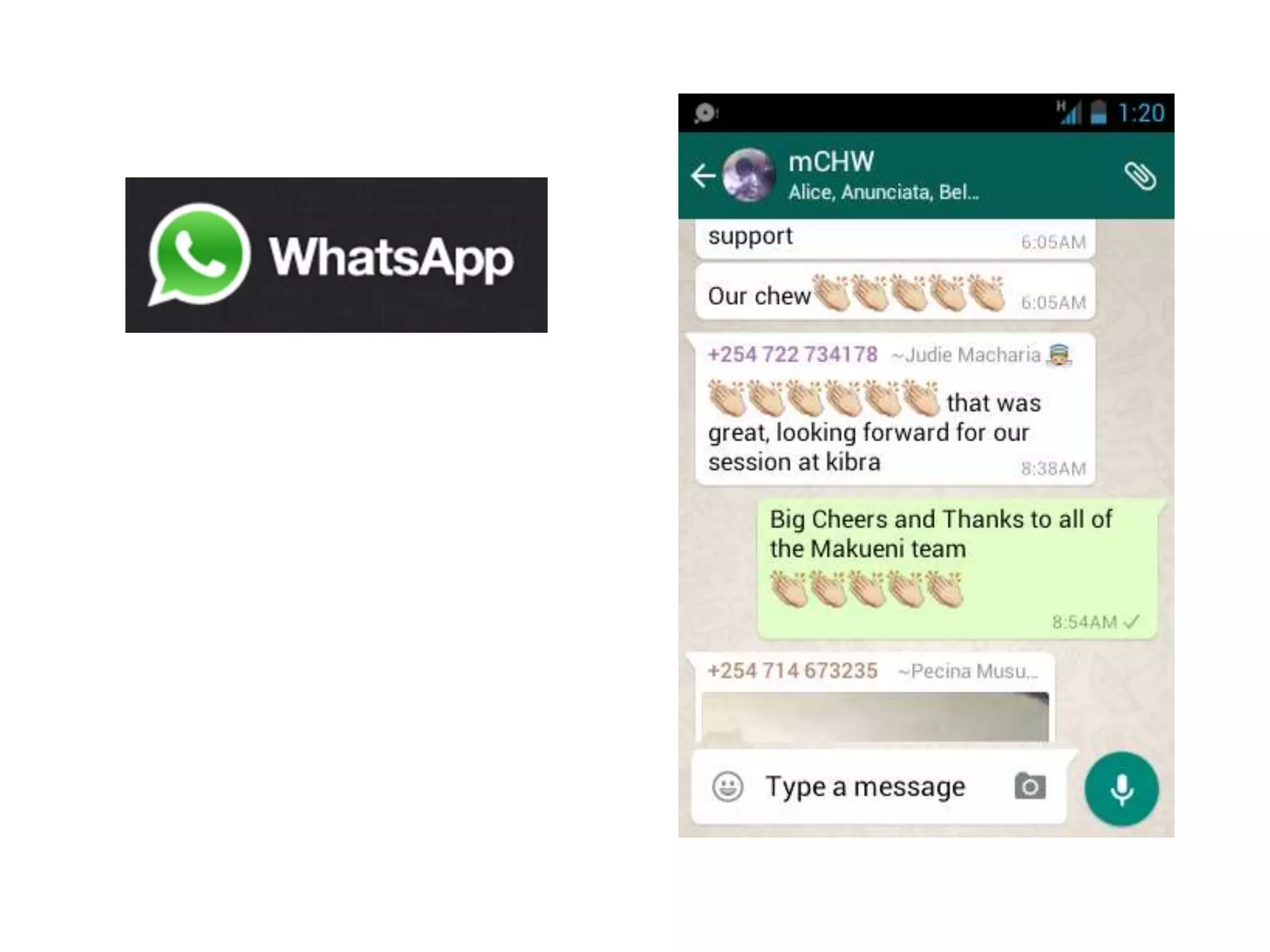
– Mentorship & social support: Whatsapp
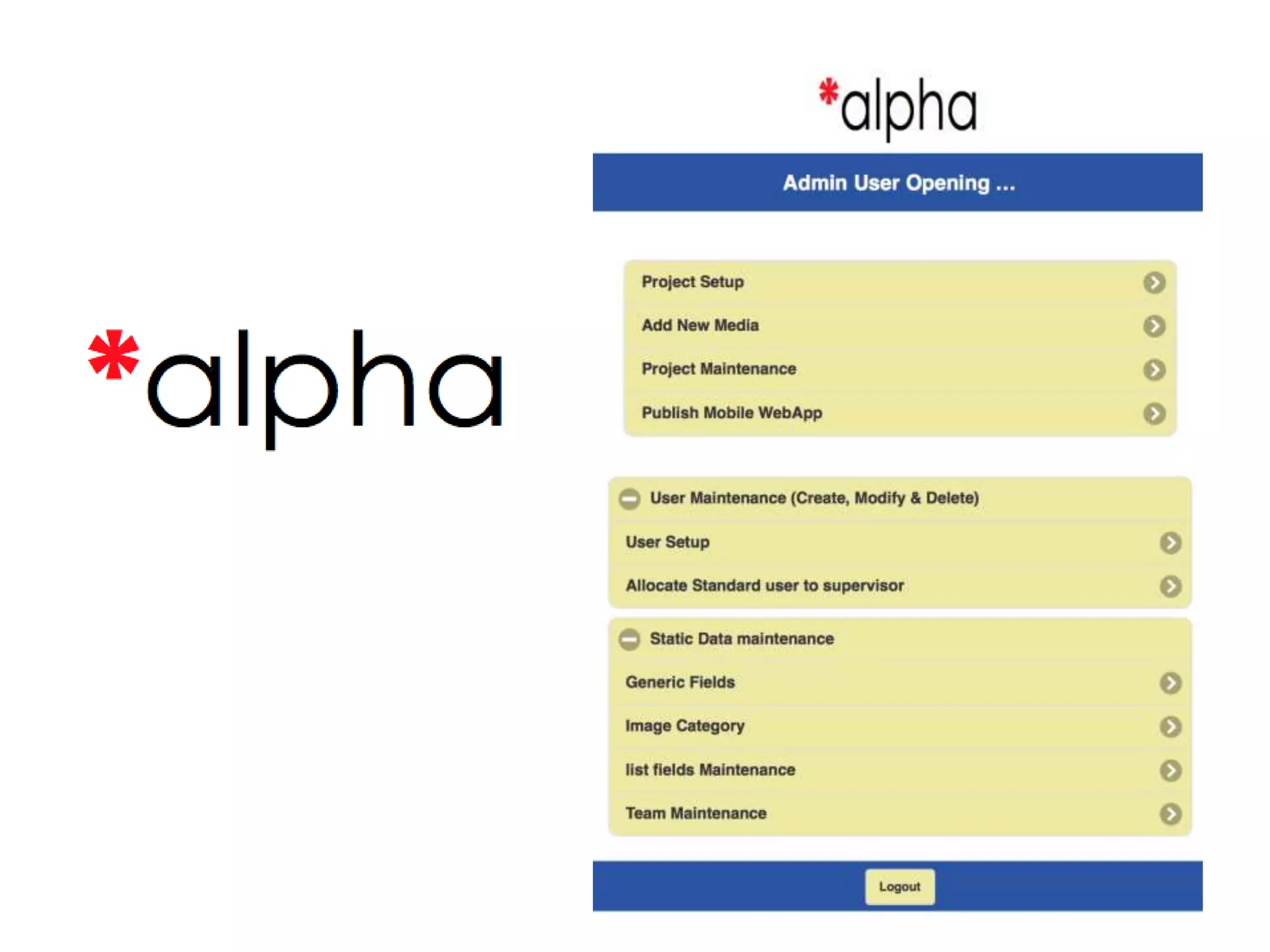
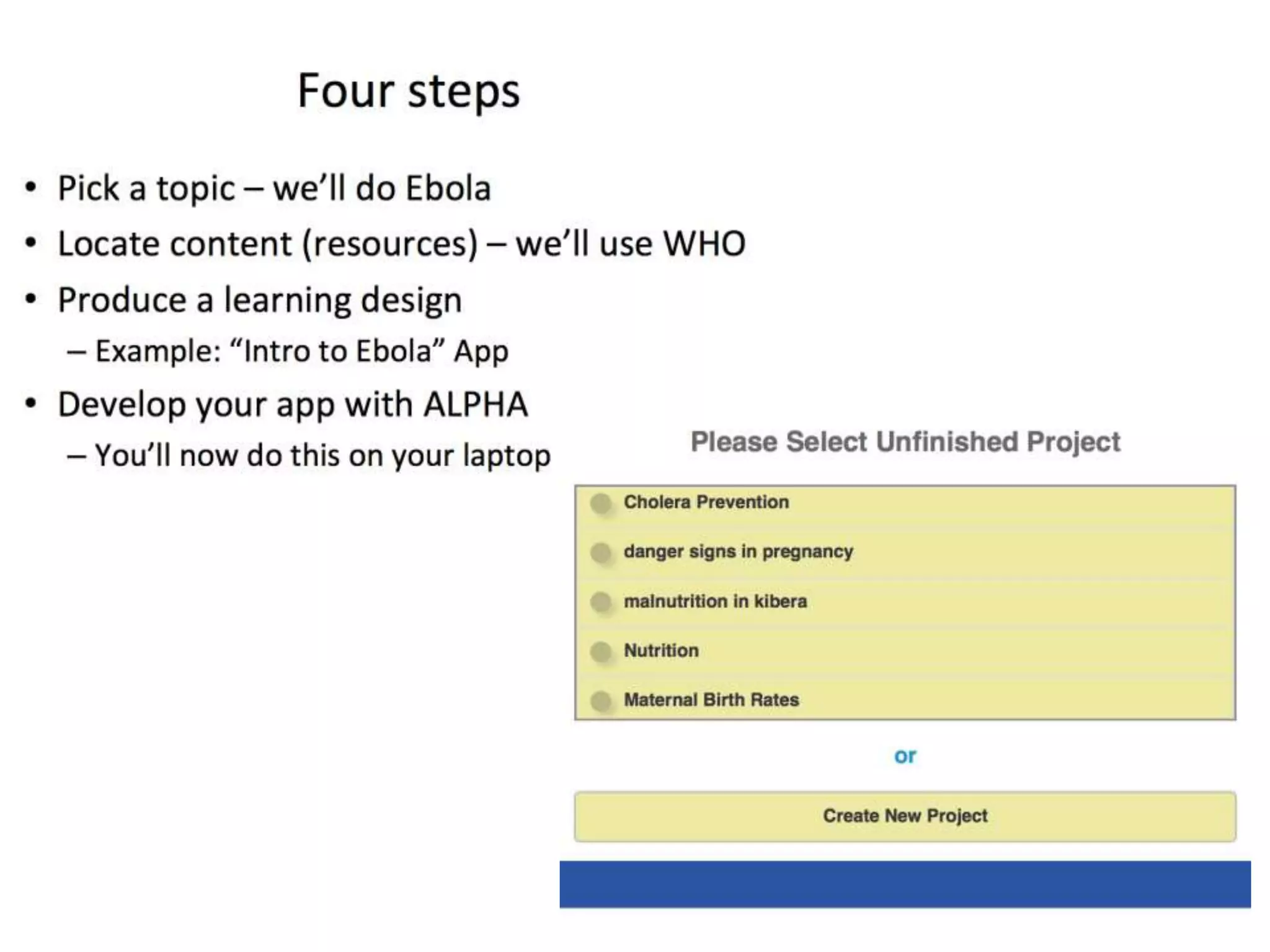
– App development for CHEWs: ALPHA App
• Training
– Formal: MoH & CHEWs
– On-the-ground: Peer-to-peer
– Capacity building: Amref – Oxford/UCL
• Community support
– For those with children with disabilities
– Exchange visits
• Four key areas of contributions of a mobile
health and training intervention
– For CHVs and CHEWs
– For the community
– For mHealth programming & research
– For Health Systems Strengthening
What technologies are you using? (Olajide)
• Leverages on smartphone technology
• HTML 5, works online and offline
• http://www.mchw.org |@m_CHW

Mobiles, Development & Global Health Training: A way forward - The mCHW project

  • 1.
    Mobiles, Development &Global Health Training: A way forward The mCHW project Anne Geniets University of Oxford
  • 2.
    What was youraim and what challenge in mHealth were you addressing? • To design, develop, implement and evaluate a mobile learning intervention to support the professional education of CHVs and CHEWs • By doing so: – Contribute to the evidence base on the effectiveness of mobile-based activities to increase CHWs' capabilities through CHEW supervision/mentorship and peer learning • To determine how mobile based supervision and training can be embedded within existing local primary health infrastructure
  • 3.
    Referral App • Focus:Developmental Milestones • Leverages on Smart phone technology • Supports referral decision making • Update based on feedback
  • 4.
  • 5.
  • 9.
    What was criticalto successfully addressing this challenge? • UCL-Amref-Oxford Partnership & relationship with CHVs and CHEWs in our two communities in Kenya • Technology & Resources • Complex challenge – complex intervention
  • 10.
    What three keyimpacts do you feel you’ve made? • We’ve shown that with enough upfront understanding of the context and of people’s practice • Mobile intervention is: – Training tool – Job aid – Data collection tool – Community mobilisation & advocacy
  • 11.
    • Mobile tools –Mobile job aid & supervision: REFER App – Mentorship & social support: Whatsapp – App development for CHEWs: ALPHA App • Training – Formal: MoH & CHEWs – On-the-ground: Peer-to-peer – Capacity building: Amref – Oxford/UCL • Community support – For those with children with disabilities – Exchange visits
  • 12.
    • Four keyareas of contributions of a mobile health and training intervention – For CHVs and CHEWs – For the community – For mHealth programming & research – For Health Systems Strengthening
  • 13.
    What technologies areyou using? (Olajide) • Leverages on smartphone technology • HTML 5, works online and offline
  • 15.