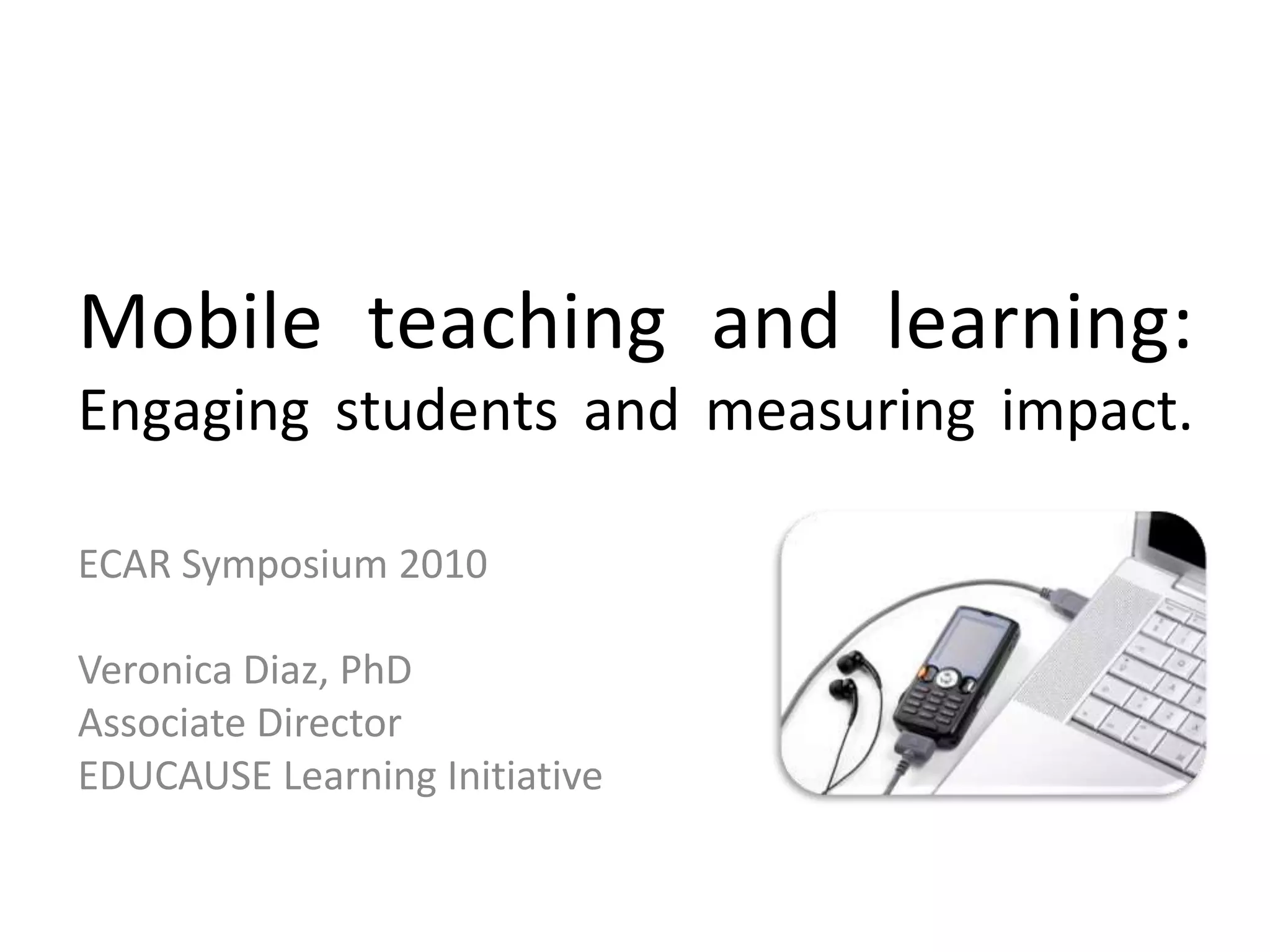













Mobile teaching and learning:Engaging students and measuring impact. ECAR Symposium 2010Veronica Diaz, PhDAssociate DirectorEDUCAUSE Learning Initiative
Download me!http://www.slideshare.net/drvdiaz/mecar2010
Agenda Mobility in the Horizon ReportELI 2010 focus session on mobile learningCommunity's findings Institutional examples of the potential of mobility in the areas of content delivery, student collaboration, and community building. Strategies and methodologies to help measure the impact of mobile tools on teaching and learning
questionHow many of your institutions or faculty members are involved in mobile learning in some way?
Mobility in Review
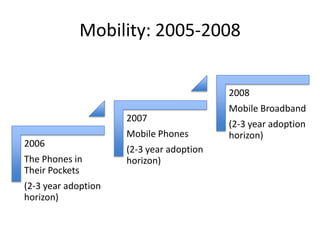
Mobility: 2005-2008
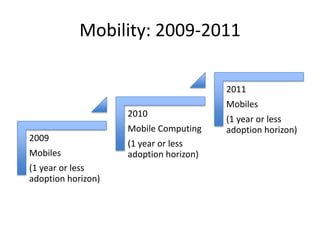
Mobility: 2009-2011
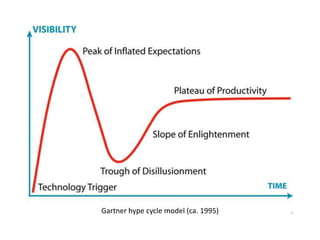
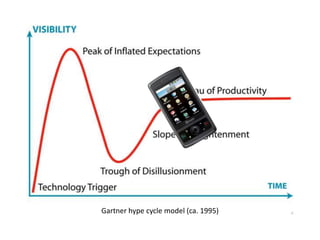
Gartner hype cycle model (ca. 1995)
questionHow does the Horizon Report compare to what you’re seeing at your institutions?
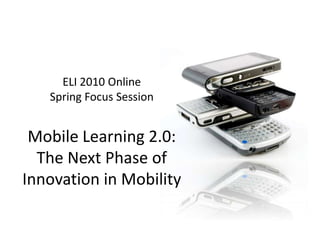
ELI 2010 Online Spring Focus SessionMobile Learning 2.0: The Next Phase of Innovation in Mobility
Community’s Conclusions
Content Community Collaboration
Mobile technology is best suited for…
Tapping into the PLE
Content delivery is the low-hanging fruit
Innovation doesn’t always start in the classroom
Rapid growth in mobile applications and their interoperability with other tools
The new tool in the toolkit
Challenge of ownership patterns
ChallengesOwnership patternsCosts AdoptionContent deliveryTime Beyond content and information delivery to engagement 26
questionOwnership Variations Mobile PedagogiesStudent Engagement
Mobility Examples
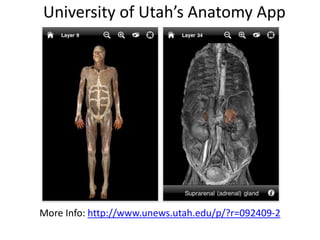
University of Utah’s Anatomy AppMore Info: http://www.unews.utah.edu/p/?r=092409-2
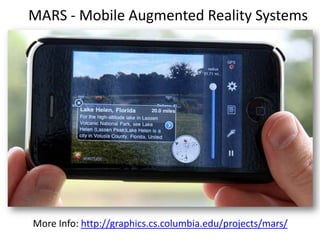
MARS - Mobile Augmented Reality SystemsMore Info: http://graphics.cs.columbia.edu/projects/mars/
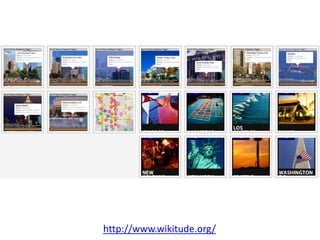
http://www.wikitude.org/
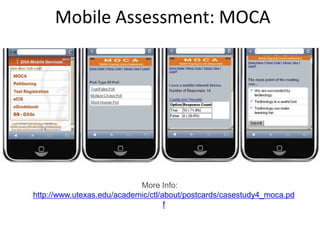
Mobile Assessment: MOCAMore Info: http://www.utexas.edu/academic/ctl/about/postcards/casestudy4_moca.pdf
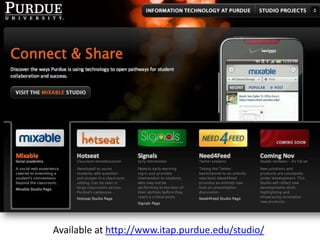
Available at http://www.itap.purdue.edu/studio/
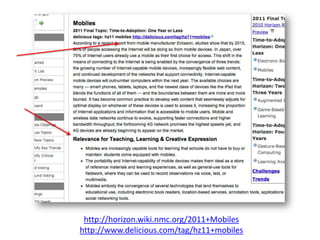
http://horizon.wiki.nmc.org/2011+Mobileshttp://www.delicious.com/tag/hz11+mobiles
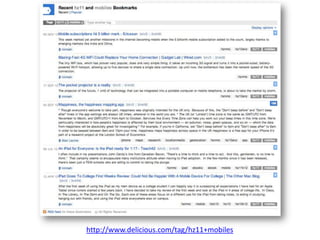
http://www.delicious.com/tag/hz11+mobiles
Measuring the Impact
Review mobile technologies and ask…What would be the ramifications and opportunities for learning if this technology were adopted?What kinds of teaching and learning engagements might this technology: make better or enable?If we decide to do a pilot, what kind of evaluation methodology can we overlay on the project to assess outcomes?What kind of additional research needs to be done concerning this technology?
Join ELI as we Seek Evidence of ImpactAdvance evidence-based applications of learning innovationEncourage the teaching and learning community to explore new ways of gathering evidence
questionWhat are some items you’d like to measure in evaluating your mobile learning initiatives?
Challenges and goalsSource: https://lra.le.ac.uk/bitstream/2381/8162/3/%5B14%5DVavoulaSharples-mlearn2008%5B1%5D.pdf
Capturing learning context and learning across contextsChallenge 1
Has anyone learned anything yet?Challenge 2
An ethical questionChallenge 3
The technology itselfChallenge 4
The big pictureChallenge 5
Formal vs informalChallenge 6
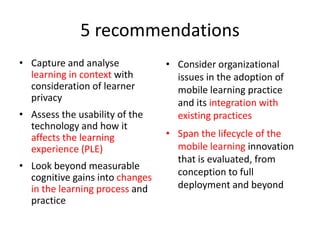
5 recommendationsCapture and analyselearning in context with consideration of learner privacyAssess the usability of the technology and how it affects the learning experience (PLE) Look beyond measurable cognitive gains into changes in the learning process and practiceConsider organizational issues in the adoption of mobile learning practice and its integration with existing practicesSpan the lifecycle of the mobile learning innovation that is evaluated, from conception to full deployment and beyond
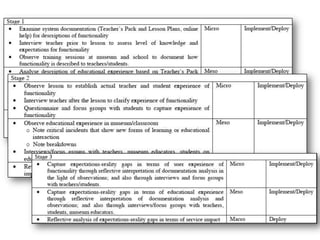
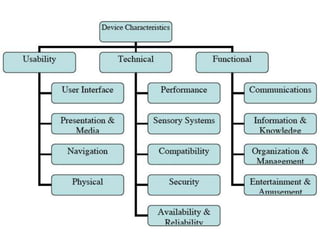
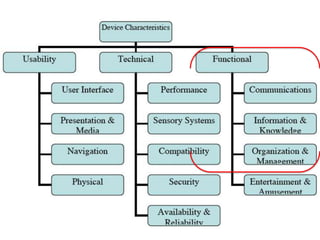
Comprehensive framework:usability, technical, functionalSource: http://citeseerx.ist.psu.edu/viewdoc/download?doi=10.1.1.137.9318&rep=rep1&type=pdf
Thematic frameworkSource: http://www.scribd.com/doc/3115019/Traxler-Defining-Discussing-and-Evaluating-Mobile-Learning
Proportionate
Appropriate to the specific learning technologies, to the learners, and to the ethos of the learning – ideally built in, not bolted on
Consistent with the teaching and learning philosophy
Alignment between learning goals and technology
Consistent
Quality mattersMore info: http://qminstitute.org/home/Public%20Library/About%20QM/RubricStandards2008-2010.pdf
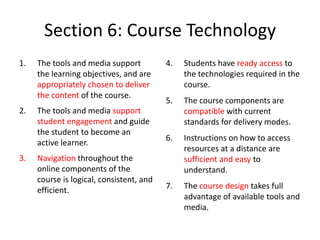
Section 6: Course TechnologyThe tools and media support the learning objectives, and are appropriately chosen to deliver the content of the course.The tools and media support student engagement and guide the student to become an active learner. Navigationthroughout the online components of the course is logical, consistent, and efficient. Students have ready access to the technologies required in the course. The course components are compatible with current standards for delivery modes.Instructions on how to access resources at a distance are sufficient and easy to understand. The course design takes full advantage of available tools and media.
Mobile learning in a blended course: case study Source: http://www.docstoc.com/docs/38964563/Assessing-the-Effectiveness-of-Mobile-Learning-in-Large-HybridBlended
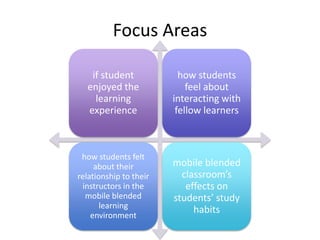
Focus Areas
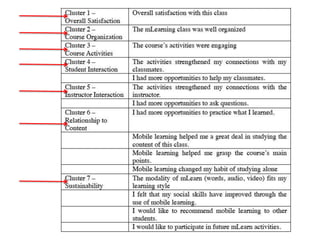
Overall Satisfaction
Course Organization
Course Activities
Student Interaction
Instructor Interaction
Relationship to Content
Sustainability
Mobile learning in a medical school: case studySource: http://www.biomedcentral.com/1472-6920/10/57
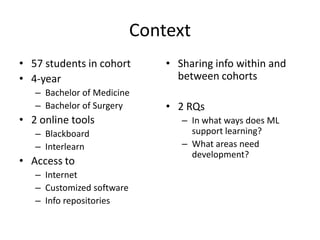
Context 57 students in cohort4-year Bachelor of Medicine Bachelor of Surgery2 online toolsBlackboard InterlearnAccess to InternetCustomized software Info repositoriesSharing info within and between cohorts2 RQsIn what ways does ML support learning?What areas need development?
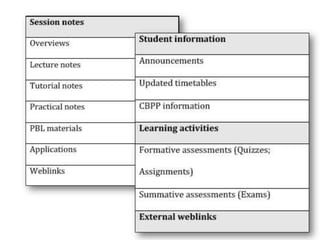
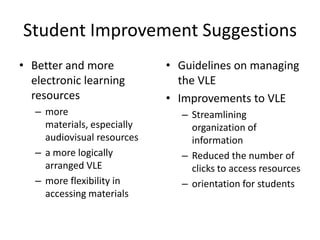
Student Improvement Suggestions Better and more electronic learning resources more materials, especially audiovisual resourcesa more logically arranged VLEmore flexibility in accessing materialsGuidelines on managing the VLEImprovements to VLEStreamlining organization of information Reduced the number of clicks to access resources orientation for students
Central mobility at the University of MDSource: http://www.mobility.umd.edu/
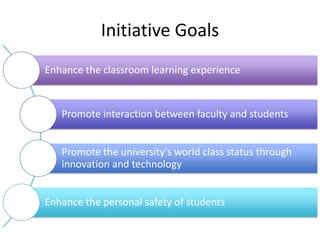
Initiative Goals
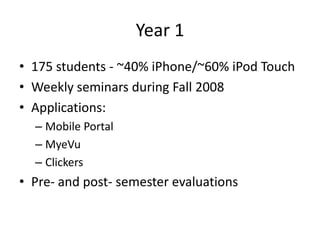
Year 1175 students - ~40% iPhone/~60% iPod TouchWeekly seminars during Fall 2008Applications:Mobile PortalMyeVuClickersPre- and post- semester evaluations
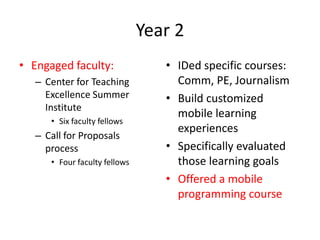
Year 2Engaged faculty:Center for Teaching Excellence Summer InstituteSix faculty fellowsCall for Proposals processFour faculty fellowsIDed specific courses: Comm, PE, JournalismBuild customized mobile learning experiencesSpecifically evaluated those learning goals Offered a mobile programming course
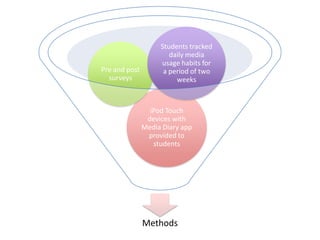
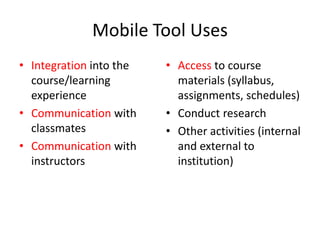
Mobile Tool UsesIntegration into the course/learning experience Communication with classmatesCommunication with instructorsAccess to course materials (syllabus, assignments, schedules)Conduct research Other activities (internal and external to institution)
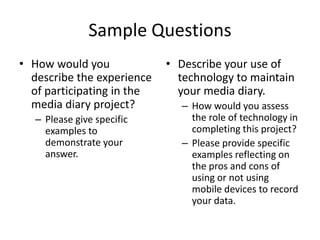
Sample QuestionsHow would you describe the experience of participating in the media diary project? Please give specific examples to demonstrate your answer.Describe your use of technology to maintain your media diary. How would you assess the role of technology in completing this project? Please provide specific examples reflecting on the pros and cons of using or not using mobile devices to record your data.
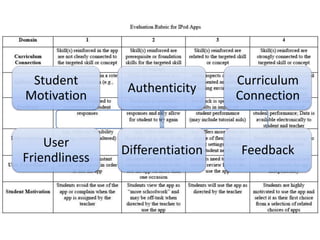
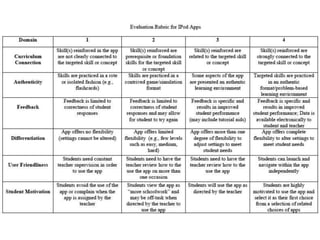
App rubric Johns Hopkins University 10/18/2010
questionsWhat are your challenges/opportunities in mobile learning? What research in this area might be useful to the community to further mobility?
Resources http://tinyurl.com/mecar
Veronica Diaz, PhDAssociate DirectorEDUCAUSE Learning Initiative vdiaz@educause.eduhttp://www.educause.edu/eli

Mecar2010