LEARNING ABOUT THE
MOON
MOON
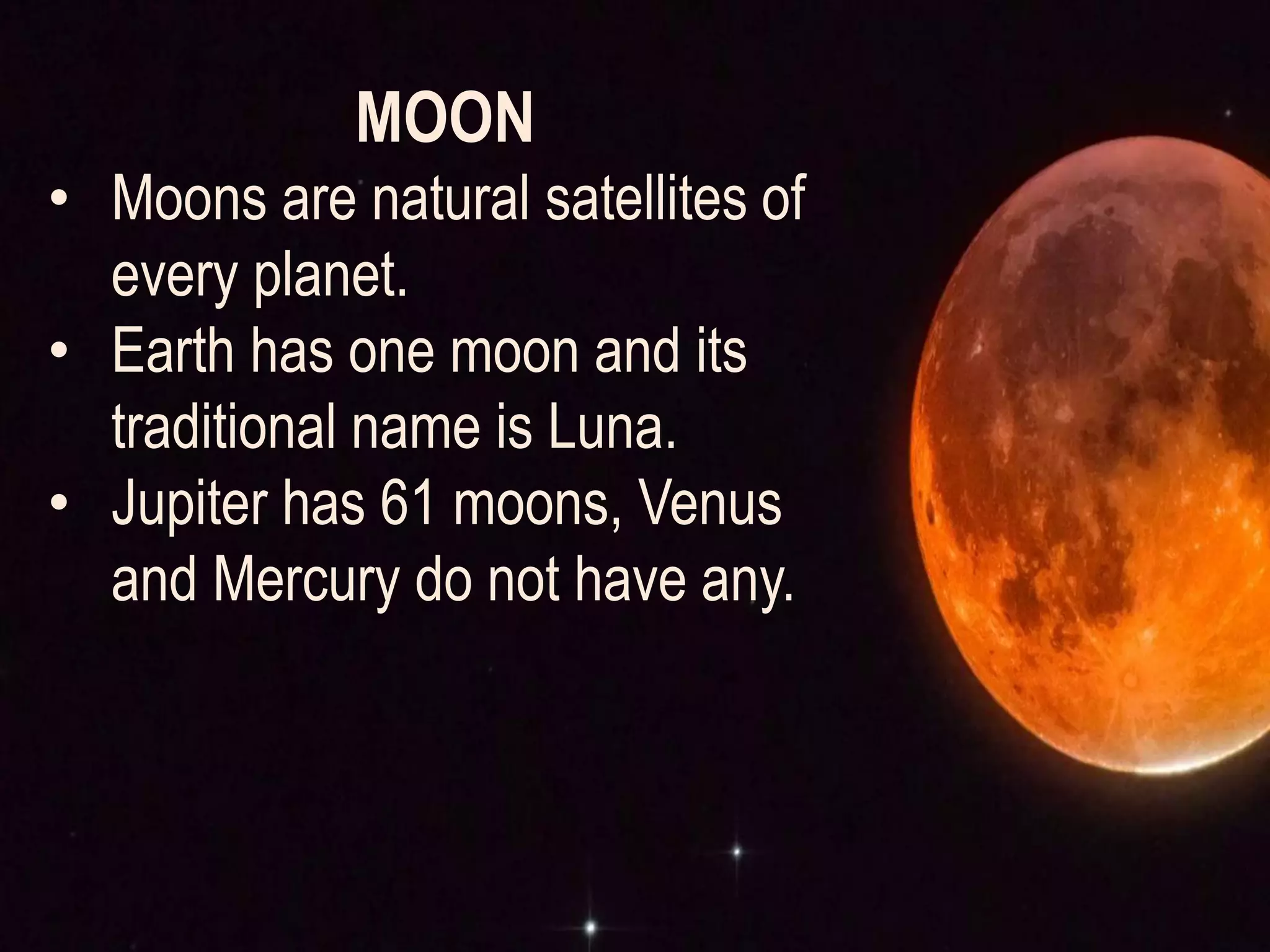
• Moons are natural satellites of
every planet.
• Earth has one moon and its
traditional name is Luna.
• Jupiter has 61 moons, Venus
and Mercury do not have any.
MOON
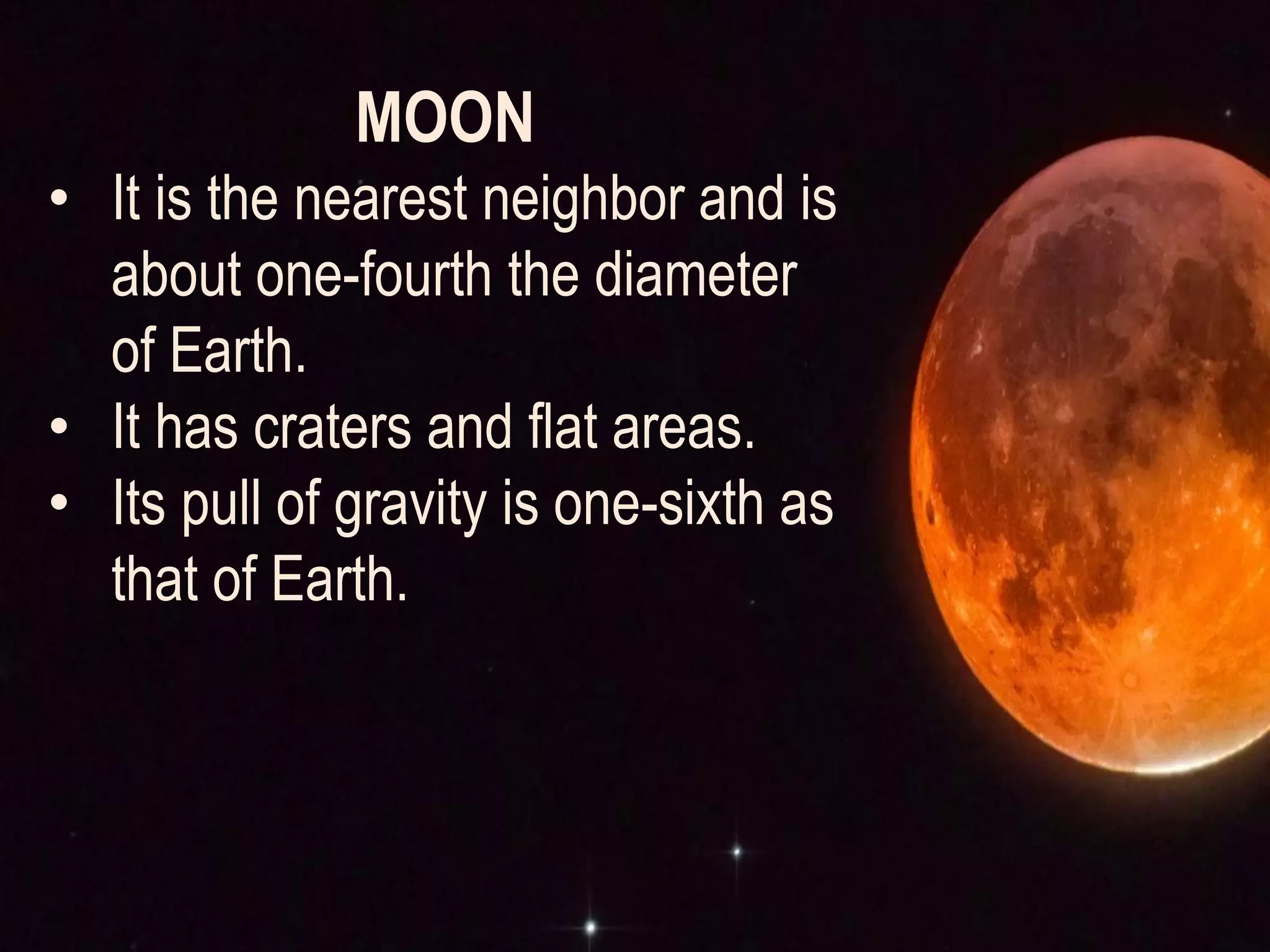
• It is the nearest neighbor and is
about one-fourth the diameter
of Earth.
• It has craters and flat areas.
• Its pull of gravity is one-sixth as
that of Earth.
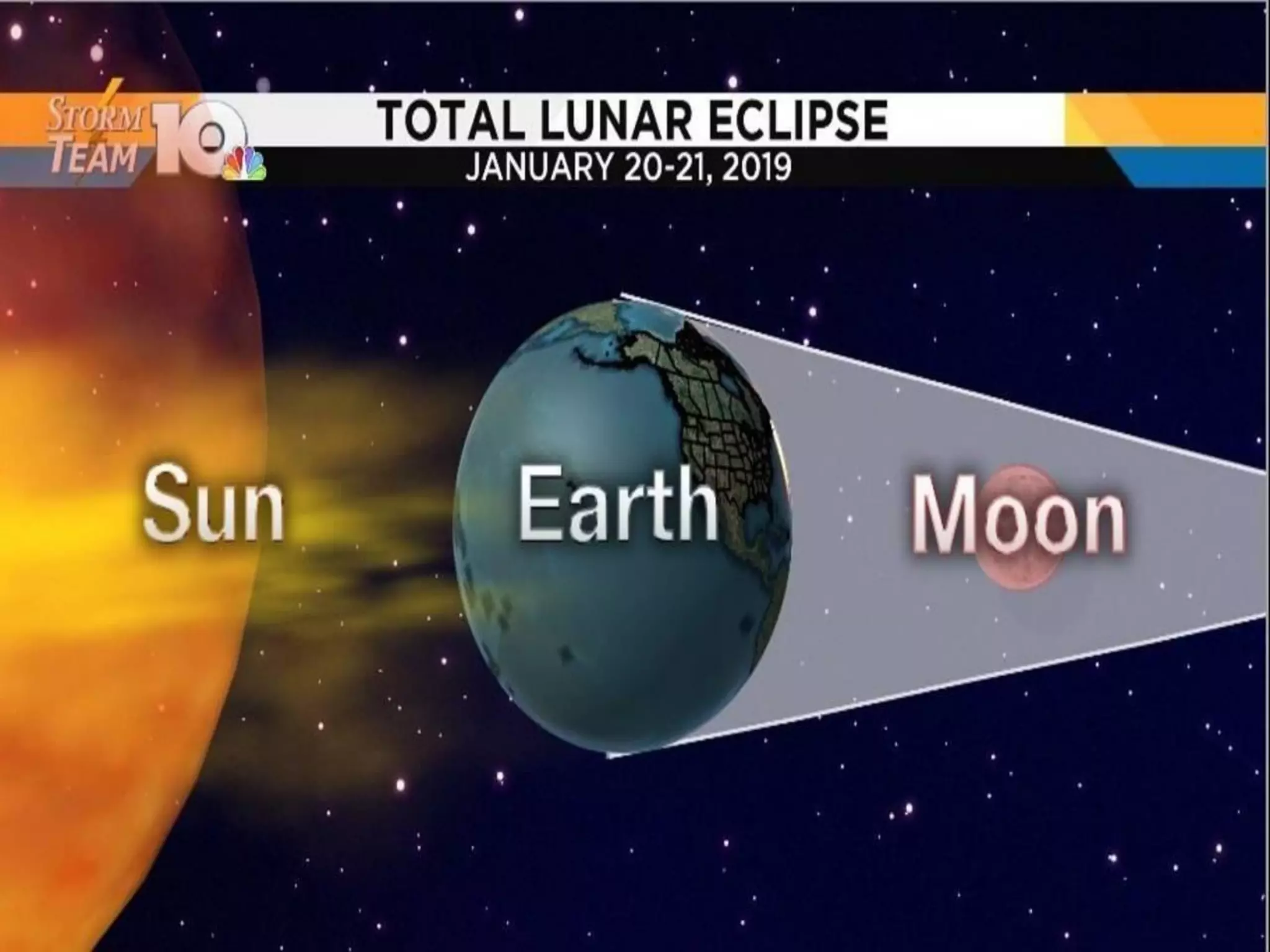
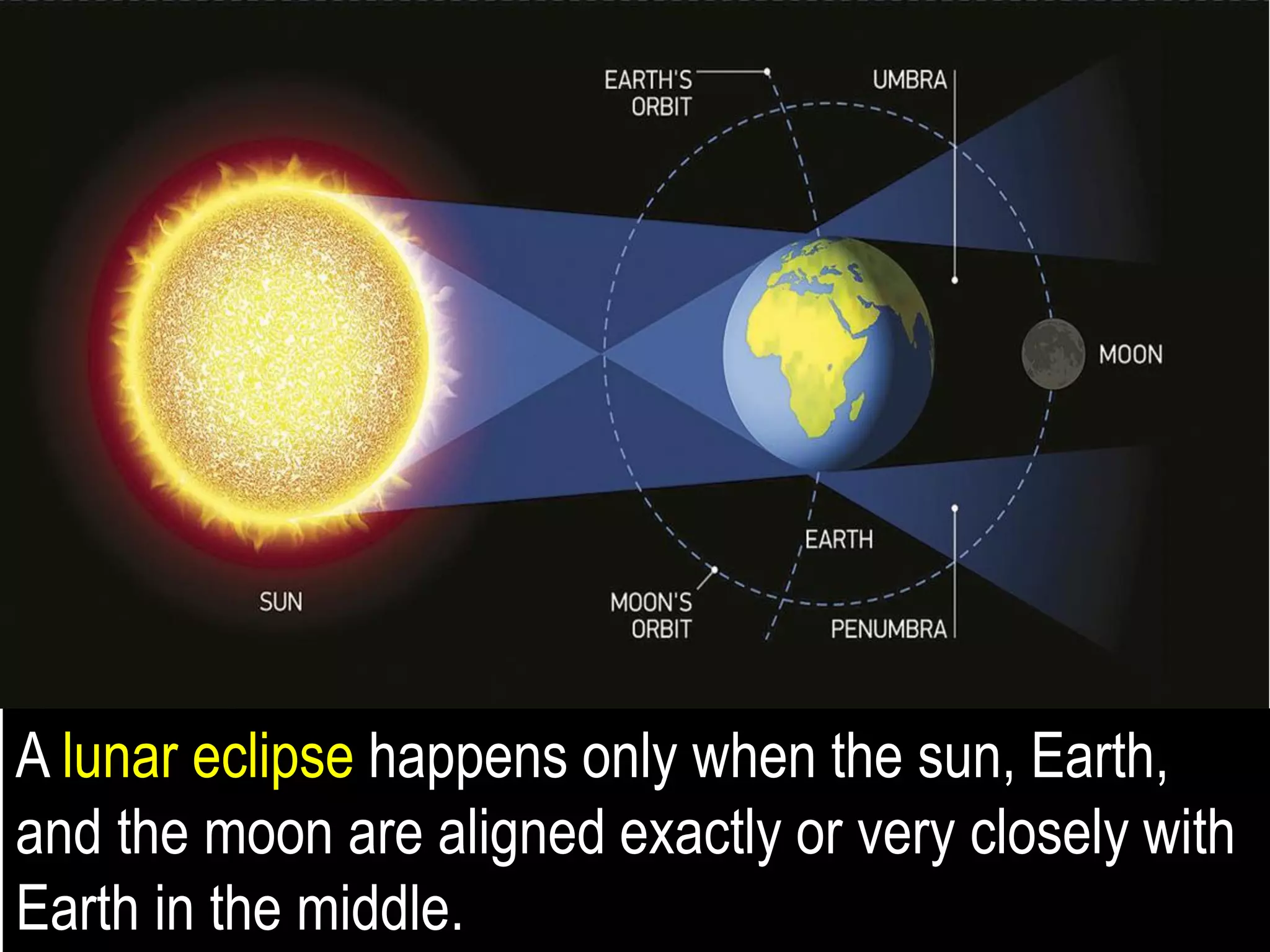
A lunar eclipse happens only when the sun, Earth,
and the moon are aligned exactly or very closely with
Earth in the middle.
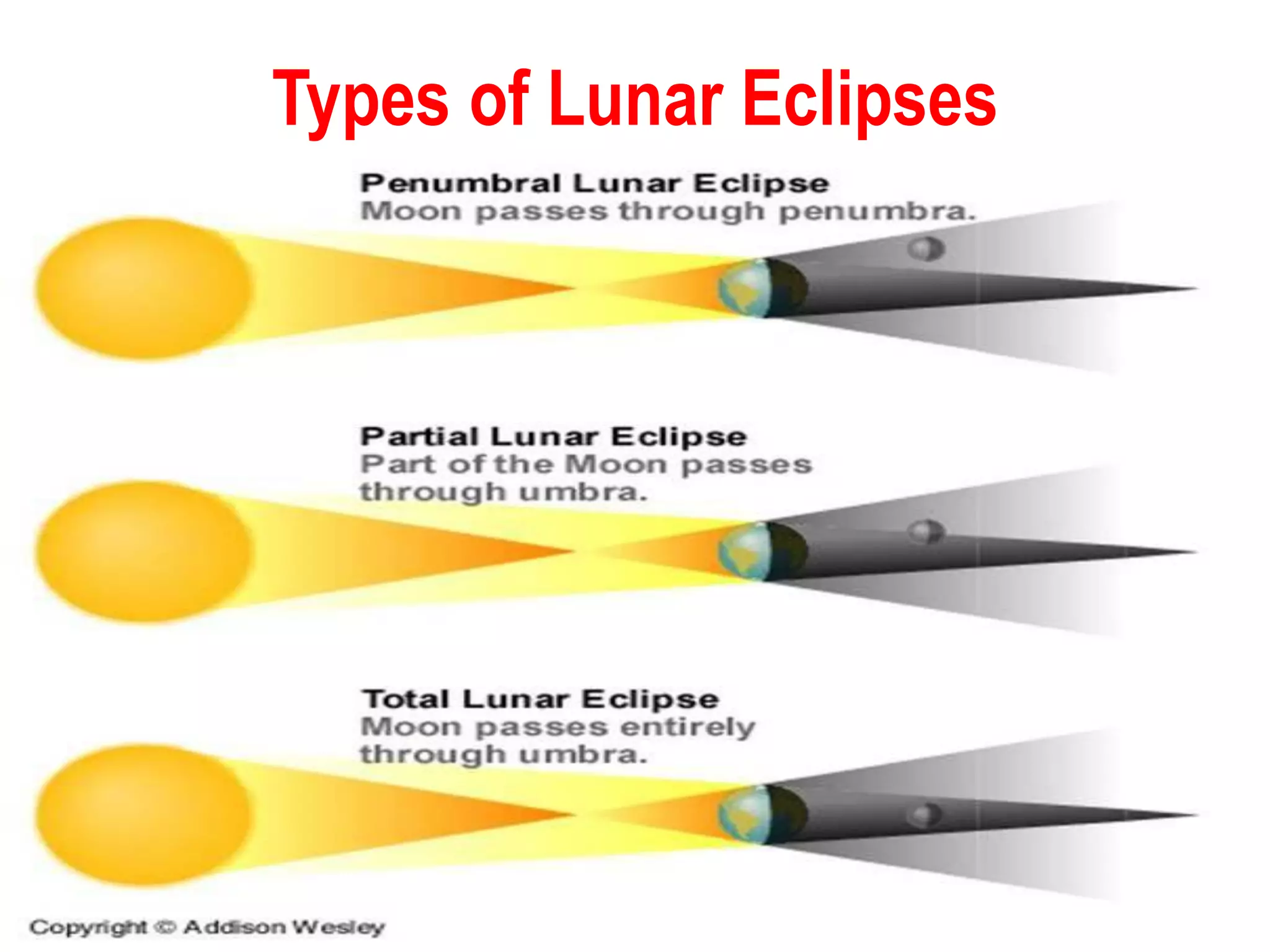
Types of Lunar Eclipses
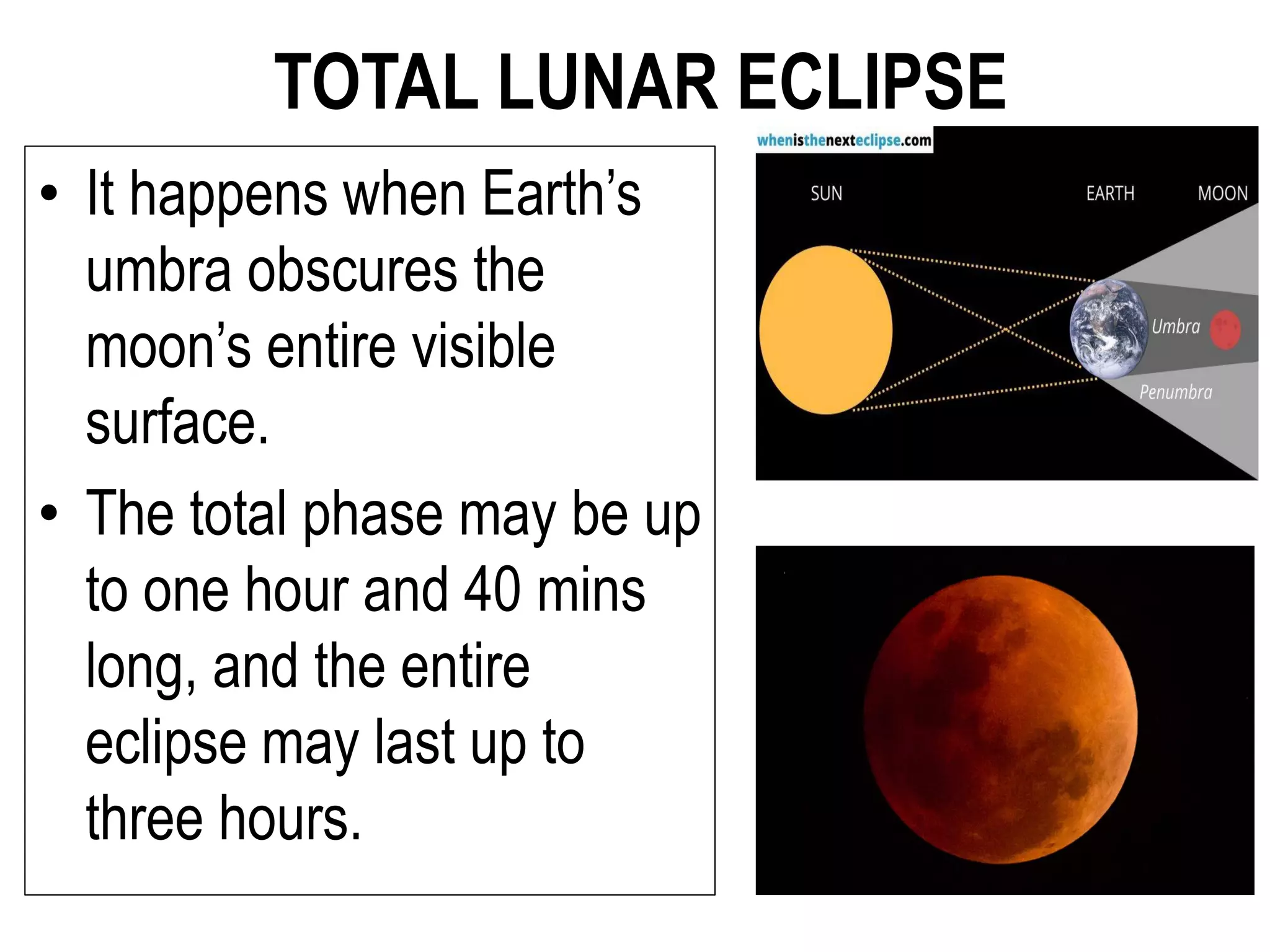
TOTAL LUNAR ECLIPSE
• It happens when Earth’s
umbra obscures the
moon’s entire visible
surface.
• The total phase may be up
to one hour and 40 mins
long, and the entire
eclipse may last up to
three hours.
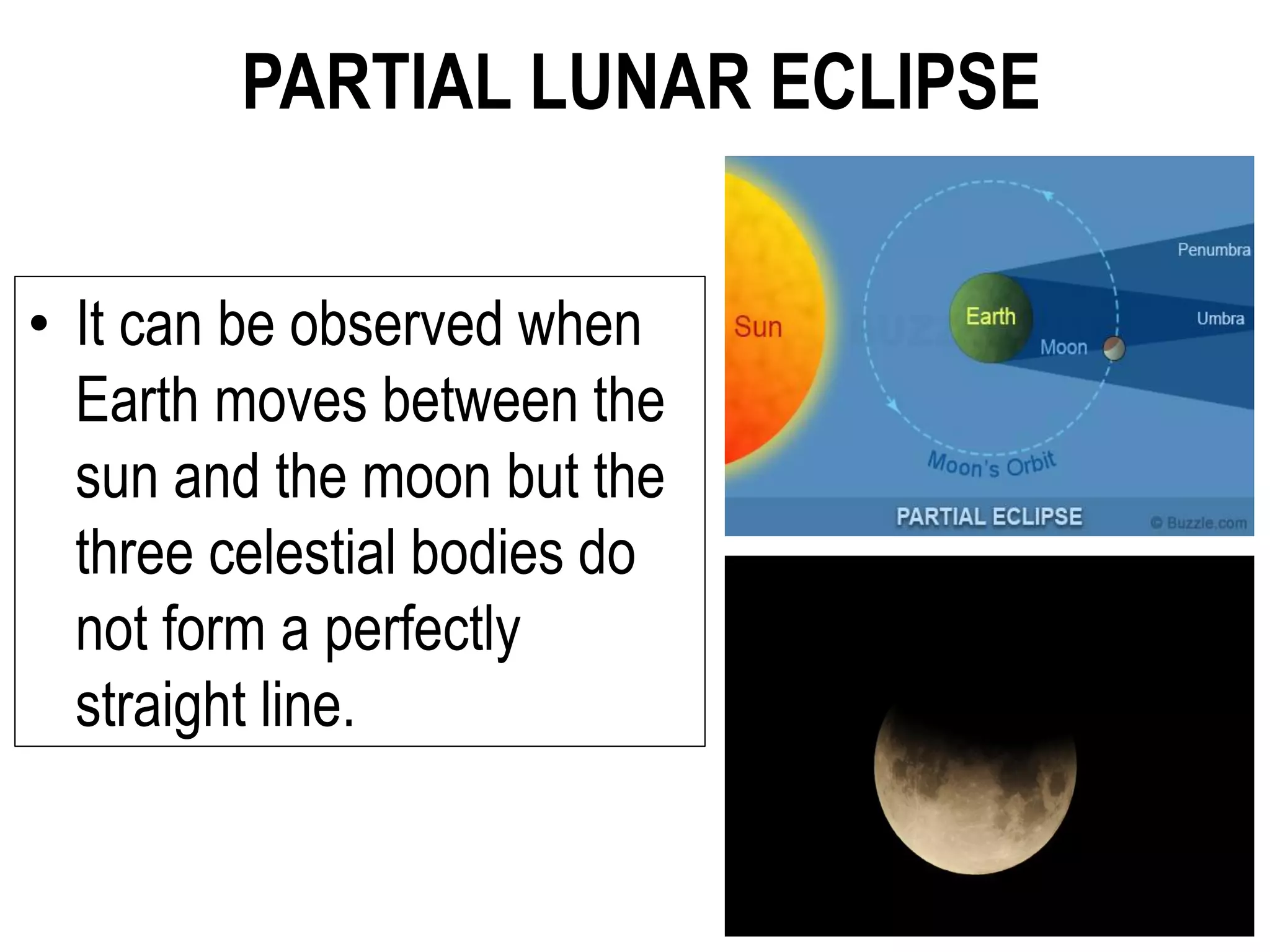
PARTIAL LUNAR ECLIPSE
• It can be observed when
Earth moves between the
sun and the moon but the
three celestial bodies do
not form a perfectly
straight line.
PENUMBRAL LUNAR ECLIPSE
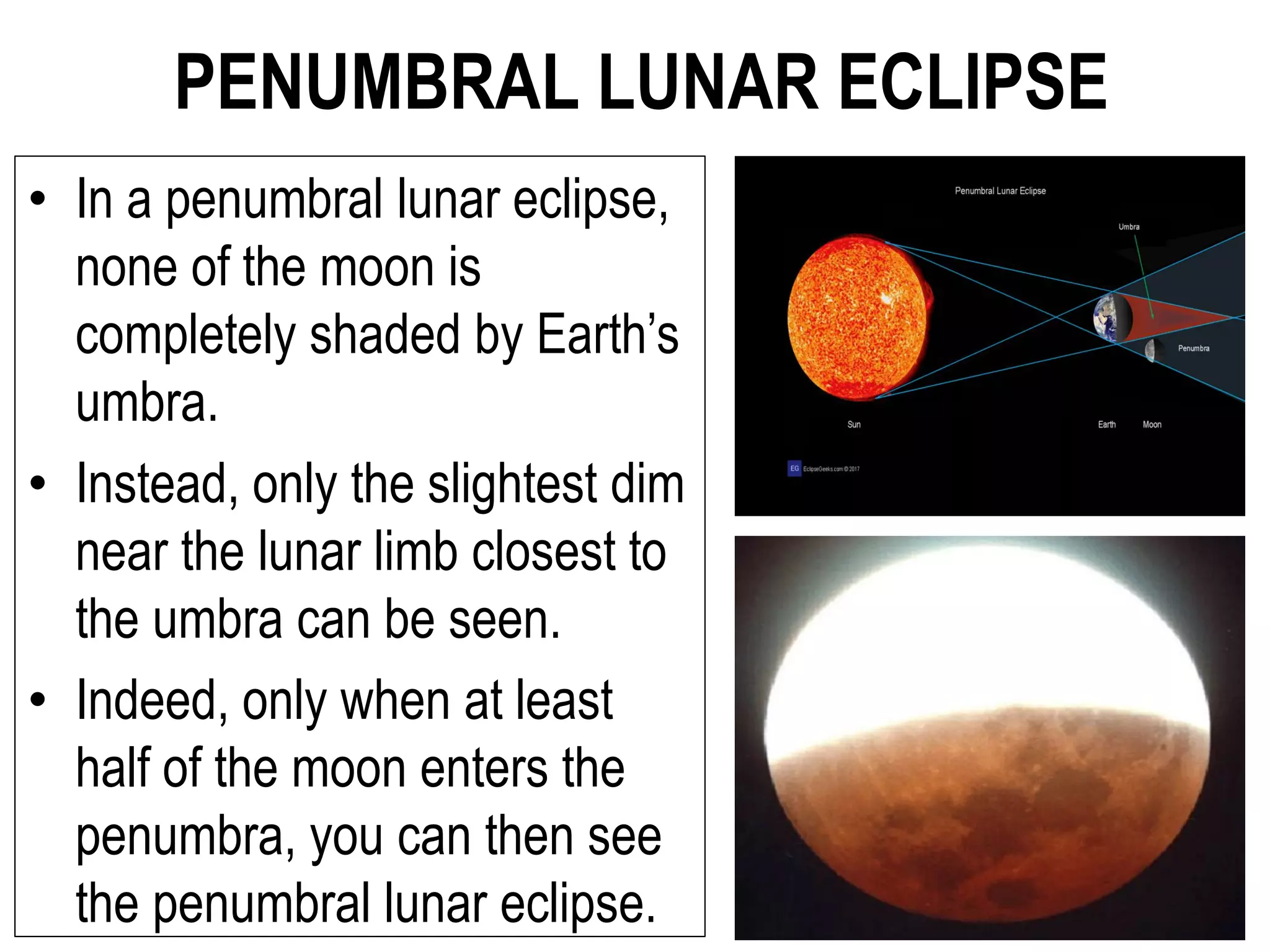
• In a penumbral lunar eclipse,
none of the moon is
completely shaded by Earth’s
umbra.
• Instead, only the slightest dim
near the lunar limb closest to
the umbra can be seen.
• Indeed, only when at least
half of the moon enters the
penumbra, you can then see
the penumbral lunar eclipse.
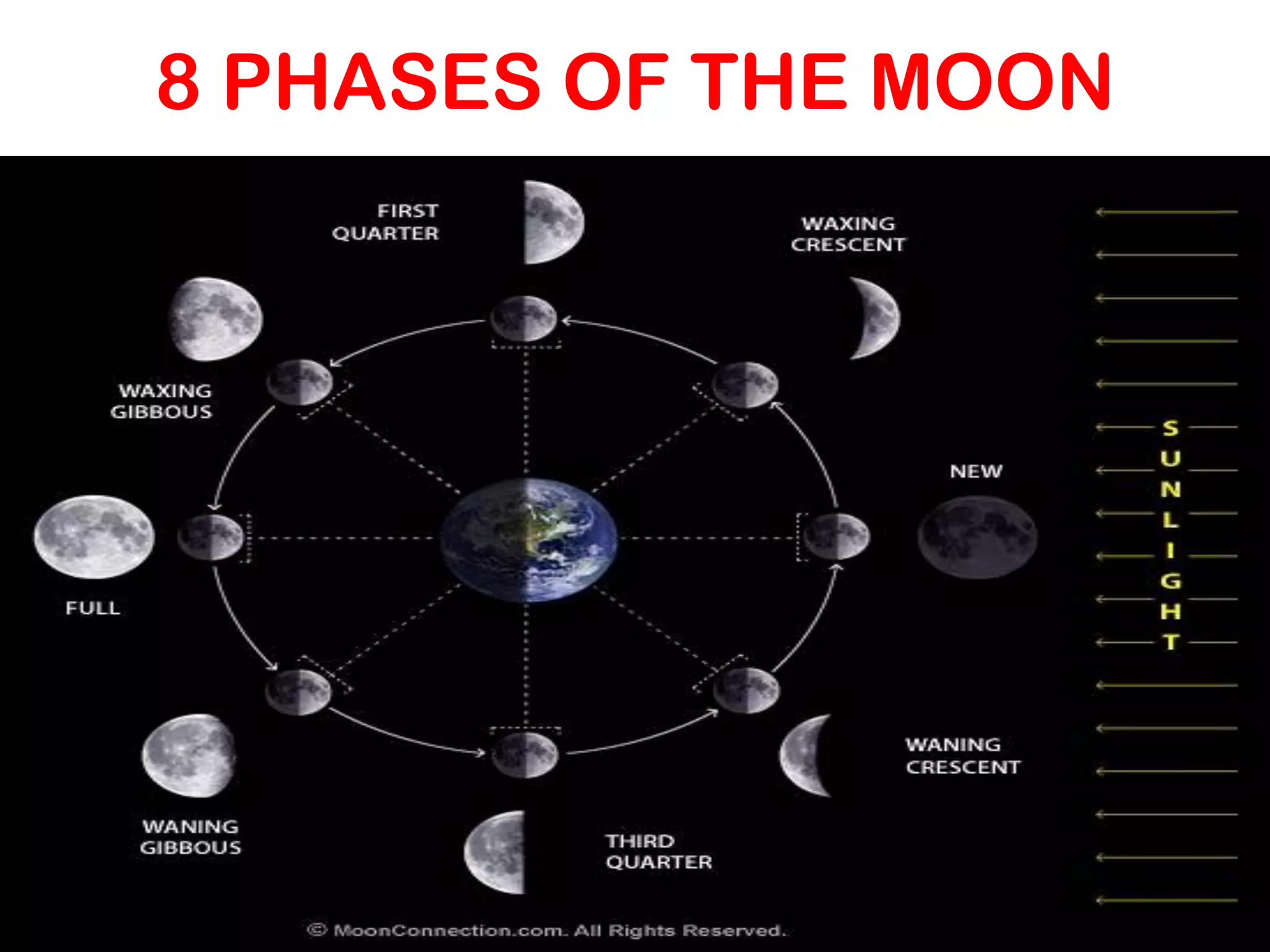
8 PHASES OF THE MOON
NEW MOON
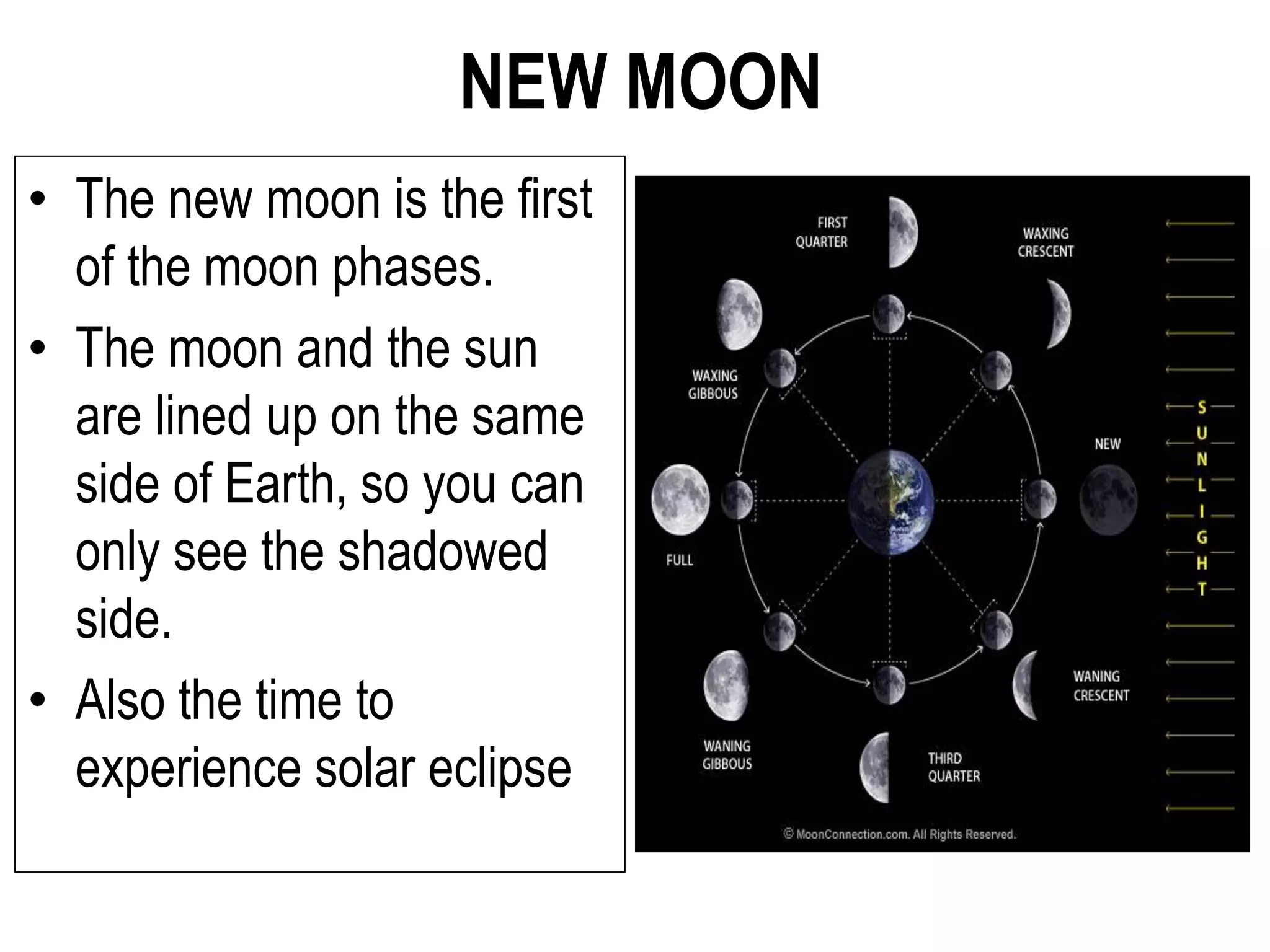
• The new moon is the first
of the moon phases.
• The moon and the sun
are lined up on the same
side of Earth, so you can
only see the shadowed
side.
• Also the time to
experience solar eclipse
NEW MOON
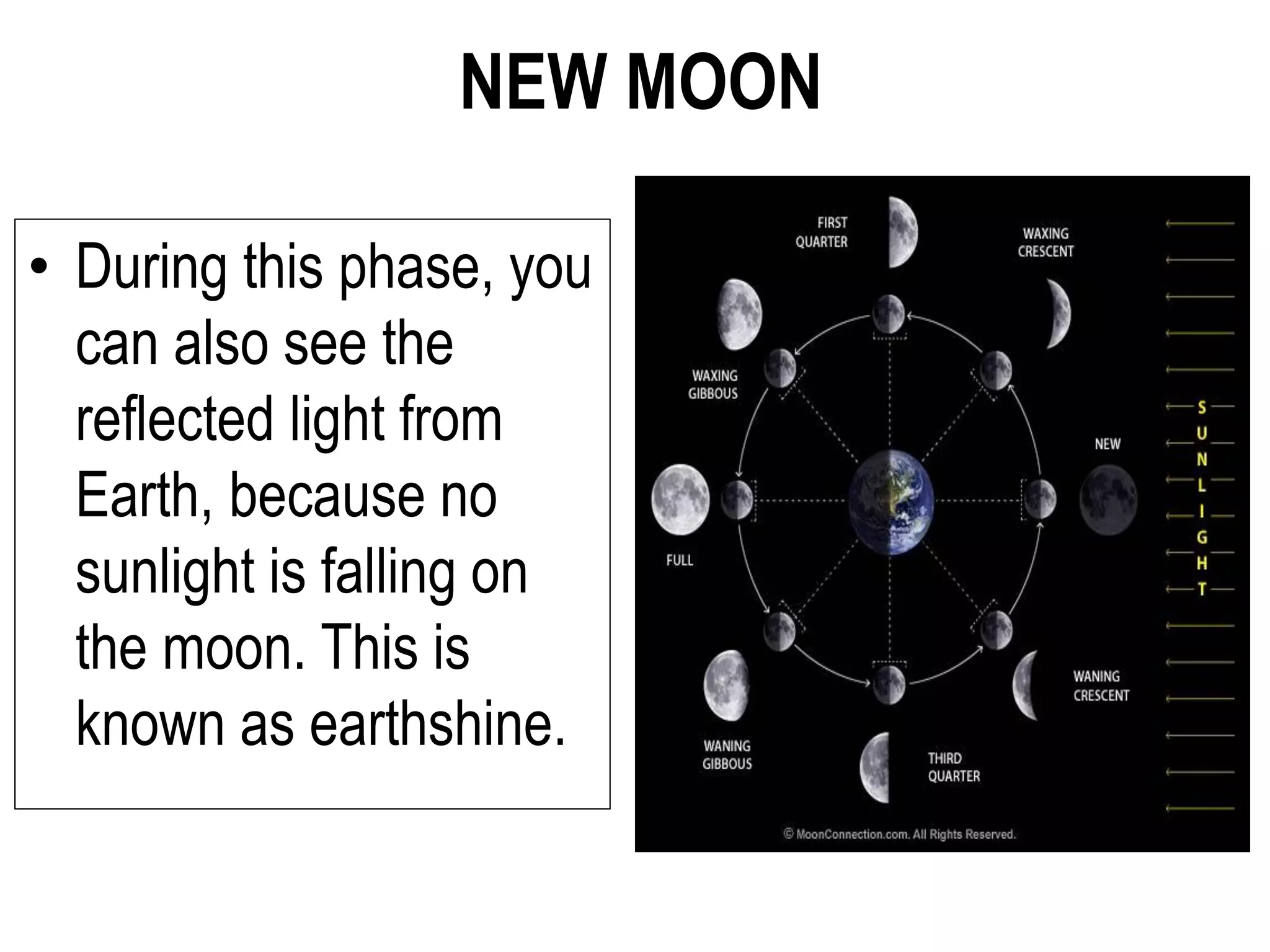
• During this phase, you
can also see the
reflected light from
Earth, because no
sunlight is falling on
the moon. This is
known as earthshine.
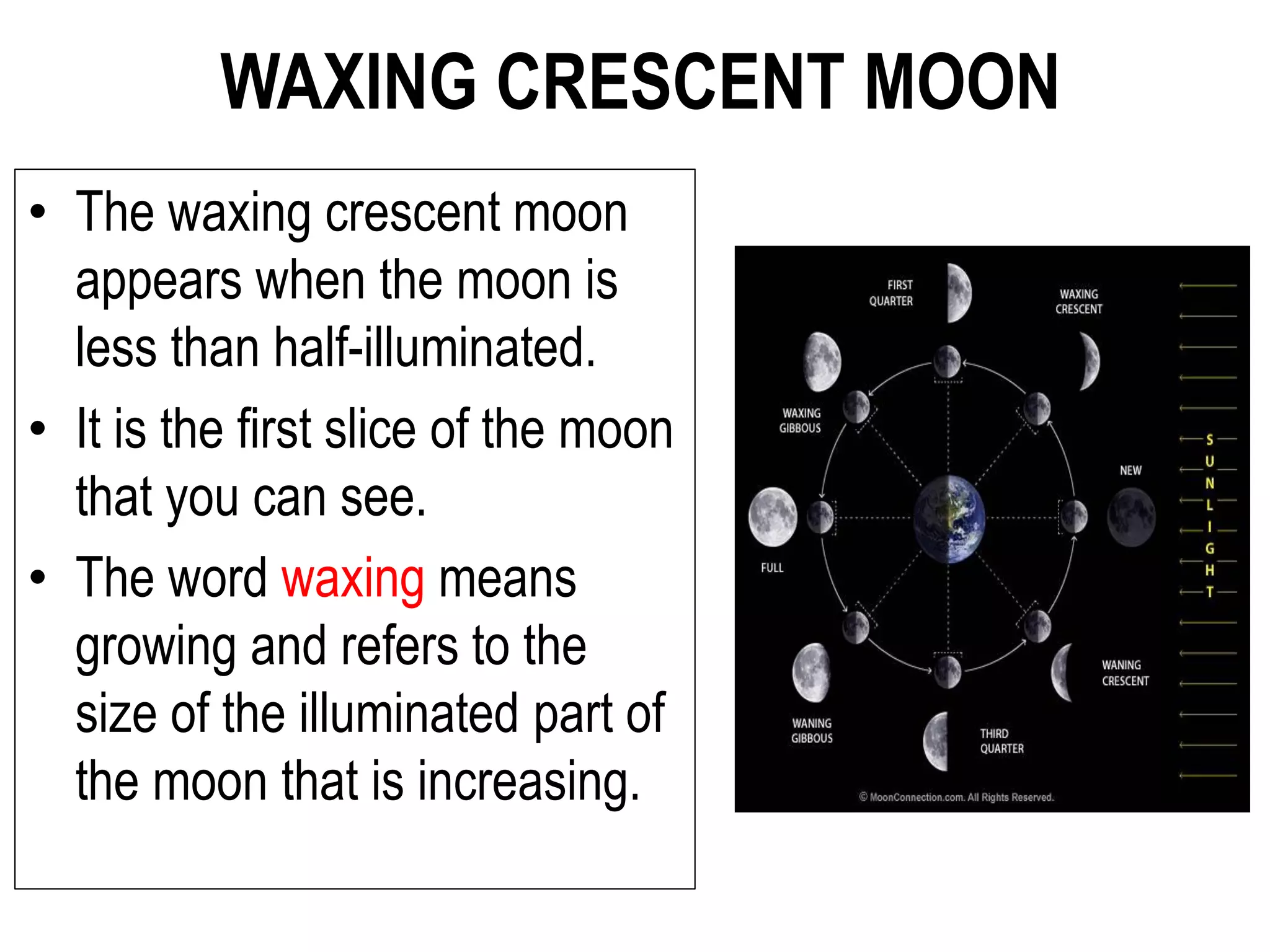
WAXING CRESCENT MOON
• The waxing crescent moon
appears when the moon is
less than half-illuminated.
• It is the first slice of the moon
that you can see.
• The word waxing means
growing and refers to the
size of the illuminated part of
the moon that is increasing.
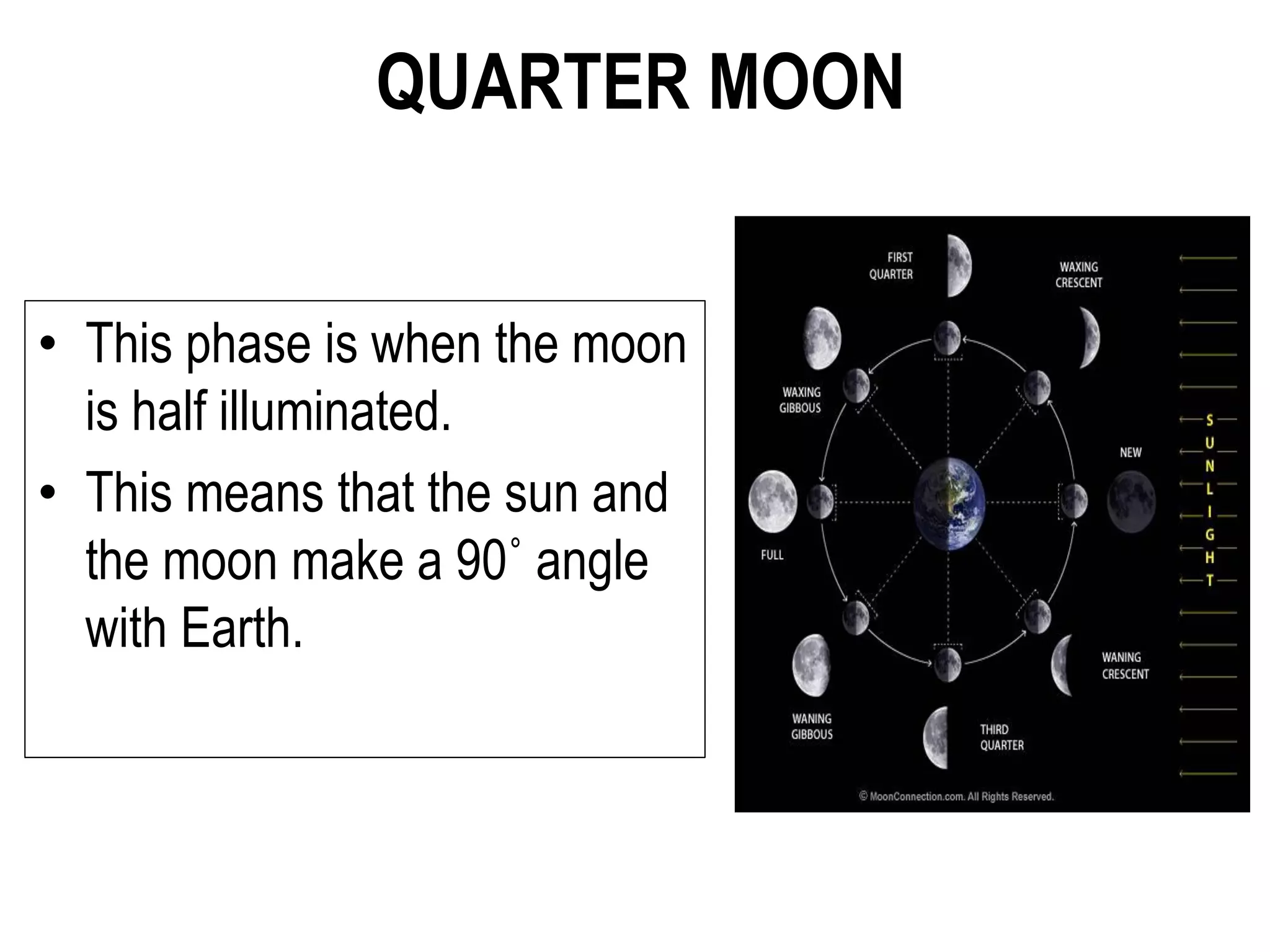
QUARTER MOON
• This phase is when the moon
is half illuminated.
• This means that the sun and
the moon make a 90˚ angle
with Earth.
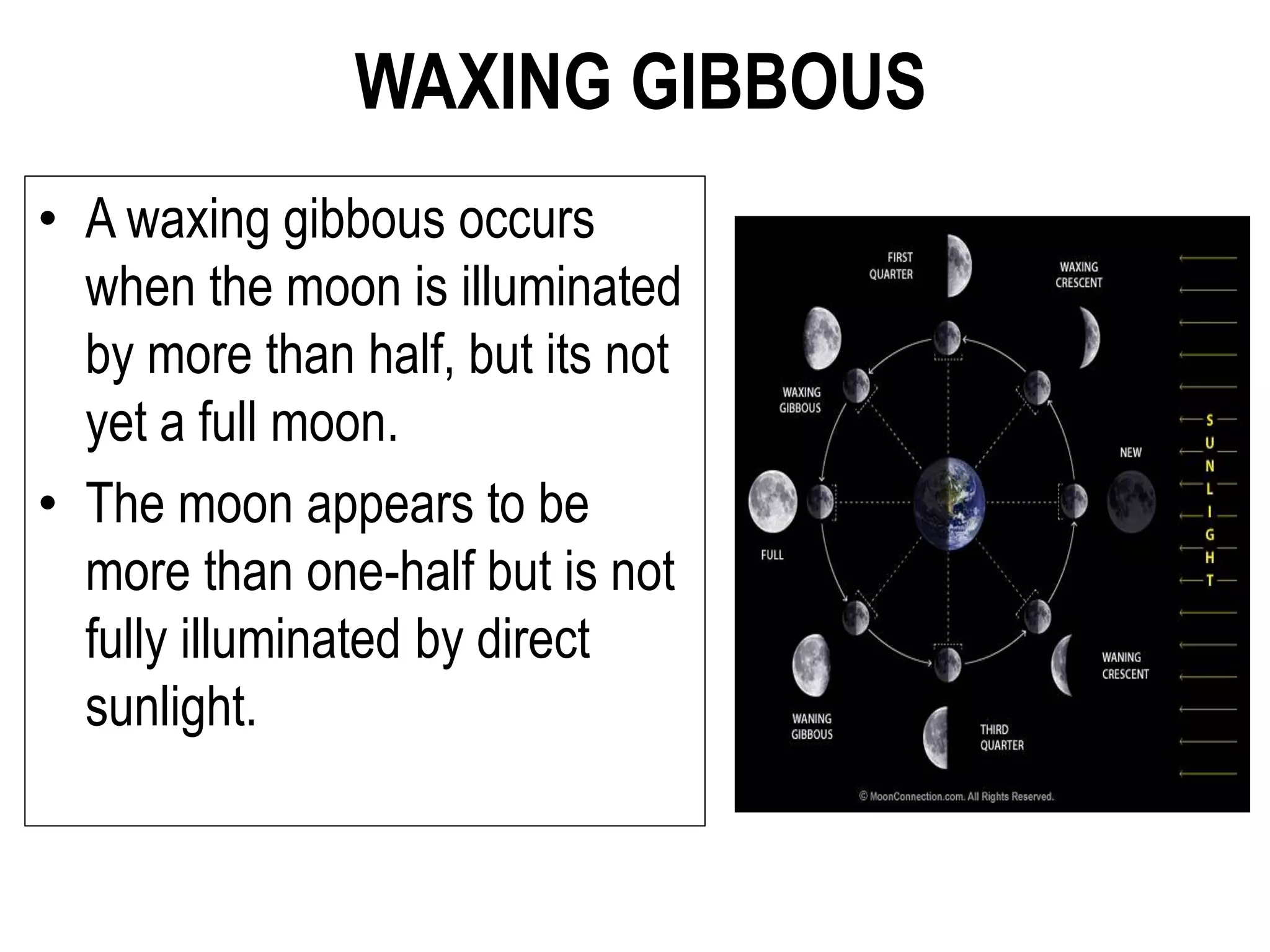
WAXING GIBBOUS
• A waxing gibbous occurs
when the moon is illuminated
by more than half, but its not
yet a full moon.
• The moon appears to be
more than one-half but is not
fully illuminated by direct
sunlight.
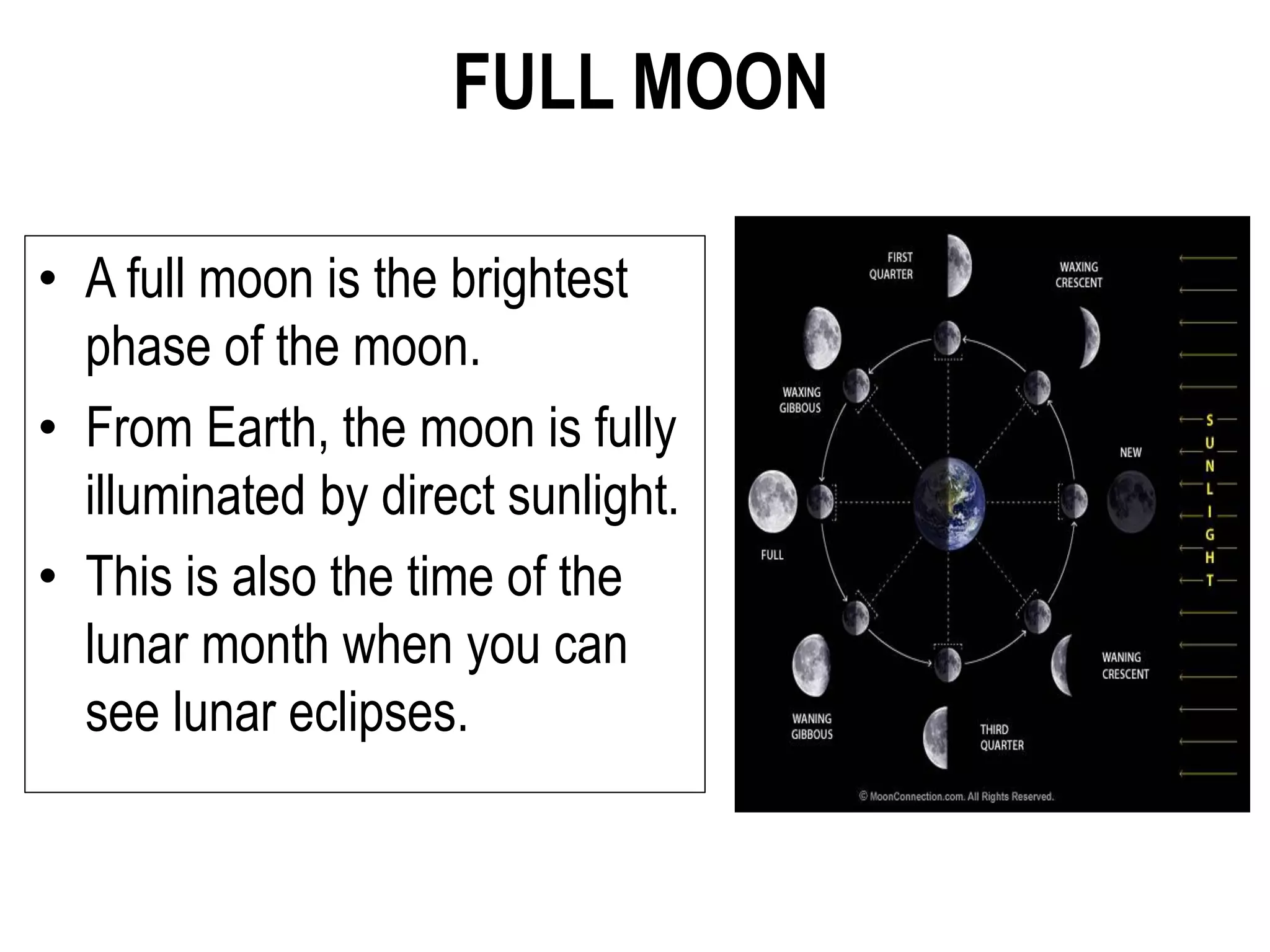
FULL MOON
• A full moon is the brightest
phase of the moon.
• From Earth, the moon is fully
illuminated by direct sunlight.
• This is also the time of the
lunar month when you can
see lunar eclipses.
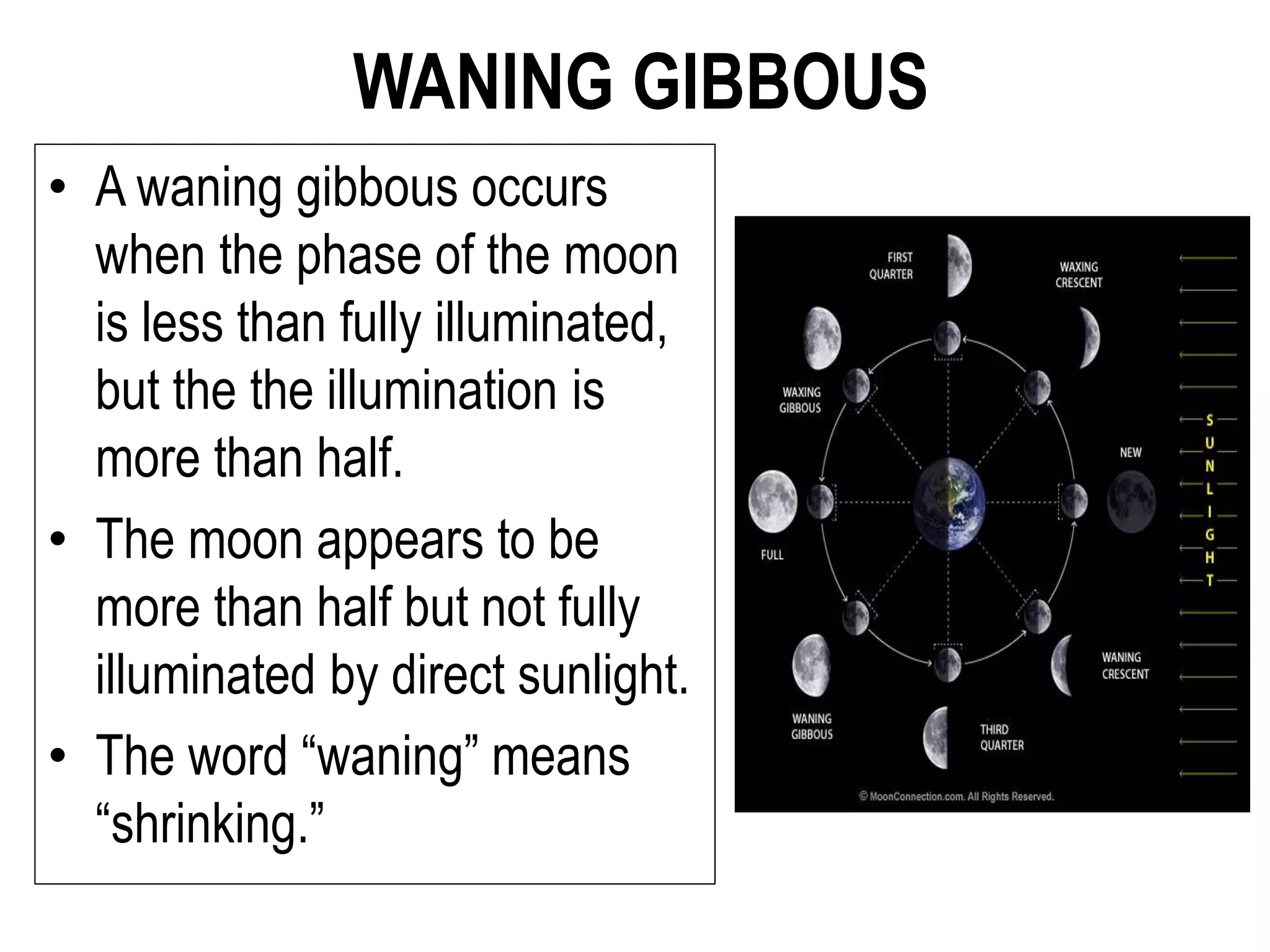
WANING GIBBOUS
• A waning gibbous occurs
when the phase of the moon
is less than fully illuminated,
but the the illumination is
more than half.
• The moon appears to be
more than half but not fully
illuminated by direct sunlight.
• The word “waning” means
“shrinking.”
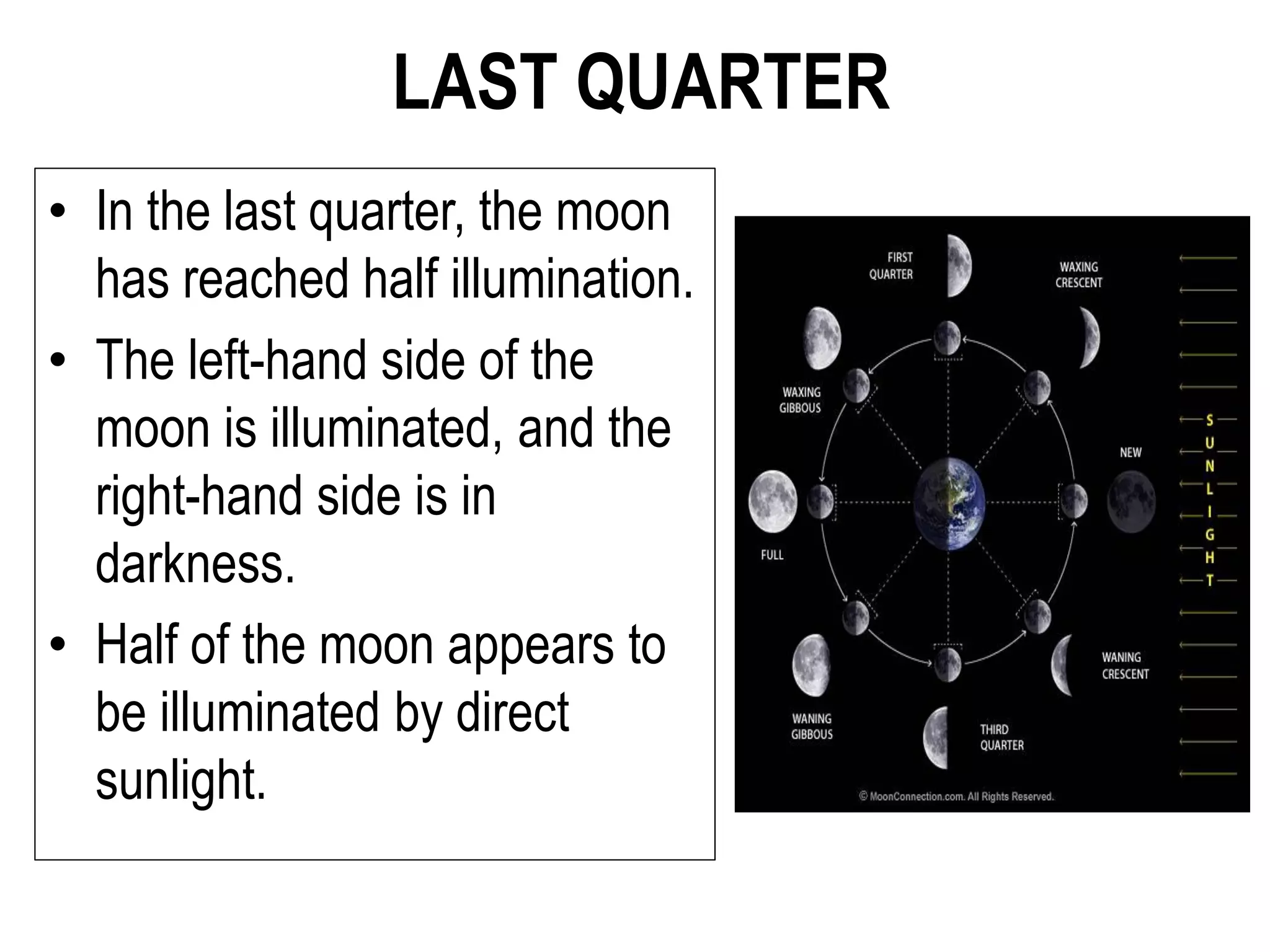
LAST QUARTER
• In the last quarter, the moon
has reached half illumination.
• The left-hand side of the
moon is illuminated, and the
right-hand side is in
darkness.
• Half of the moon appears to
be illuminated by direct
sunlight.
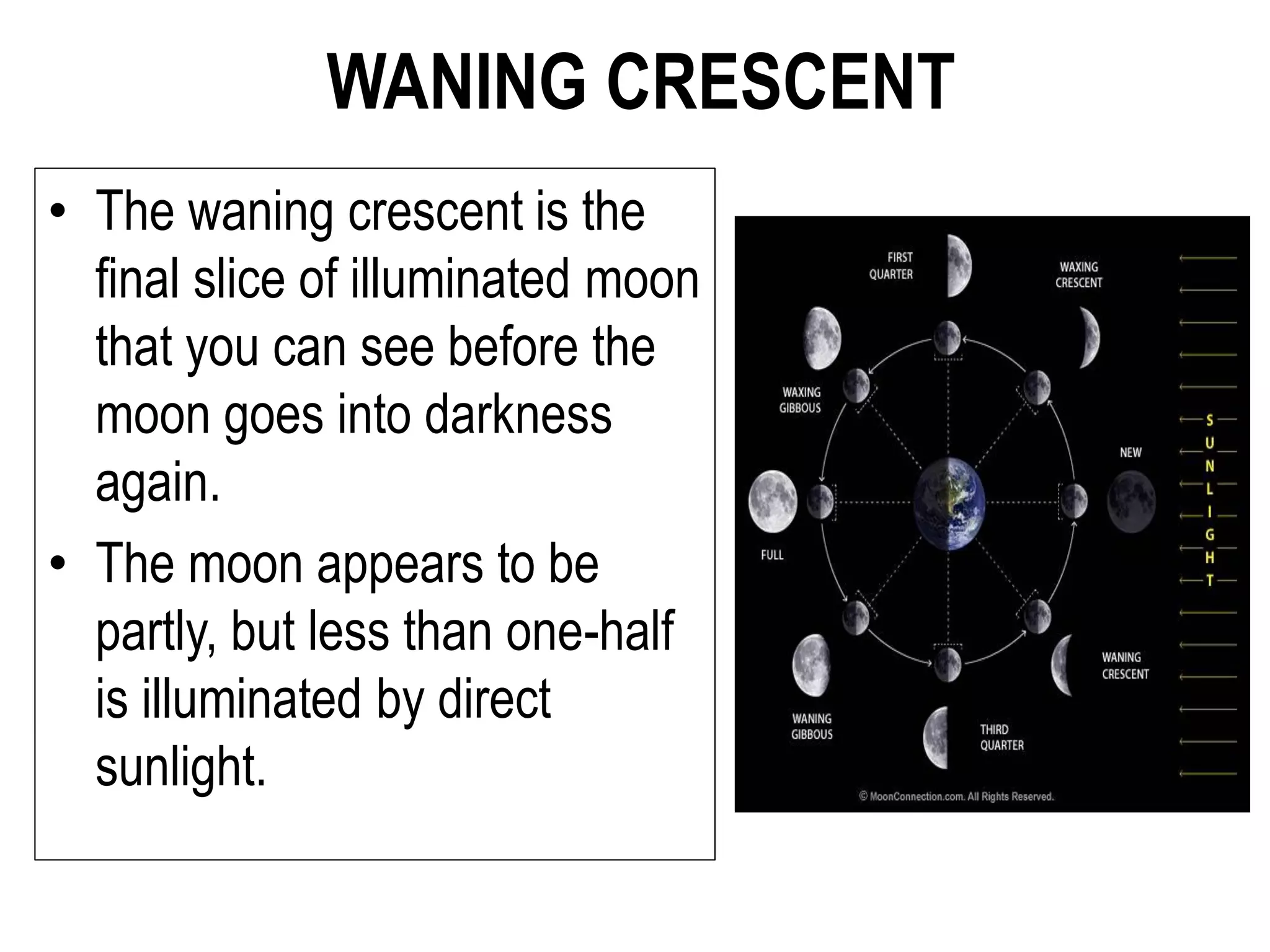
WANING CRESCENT
• The waning crescent is the
final slice of illuminated moon
that you can see before the
moon goes into darkness
again.
• The moon appears to be
partly, but less than one-half
is illuminated by direct
sunlight.
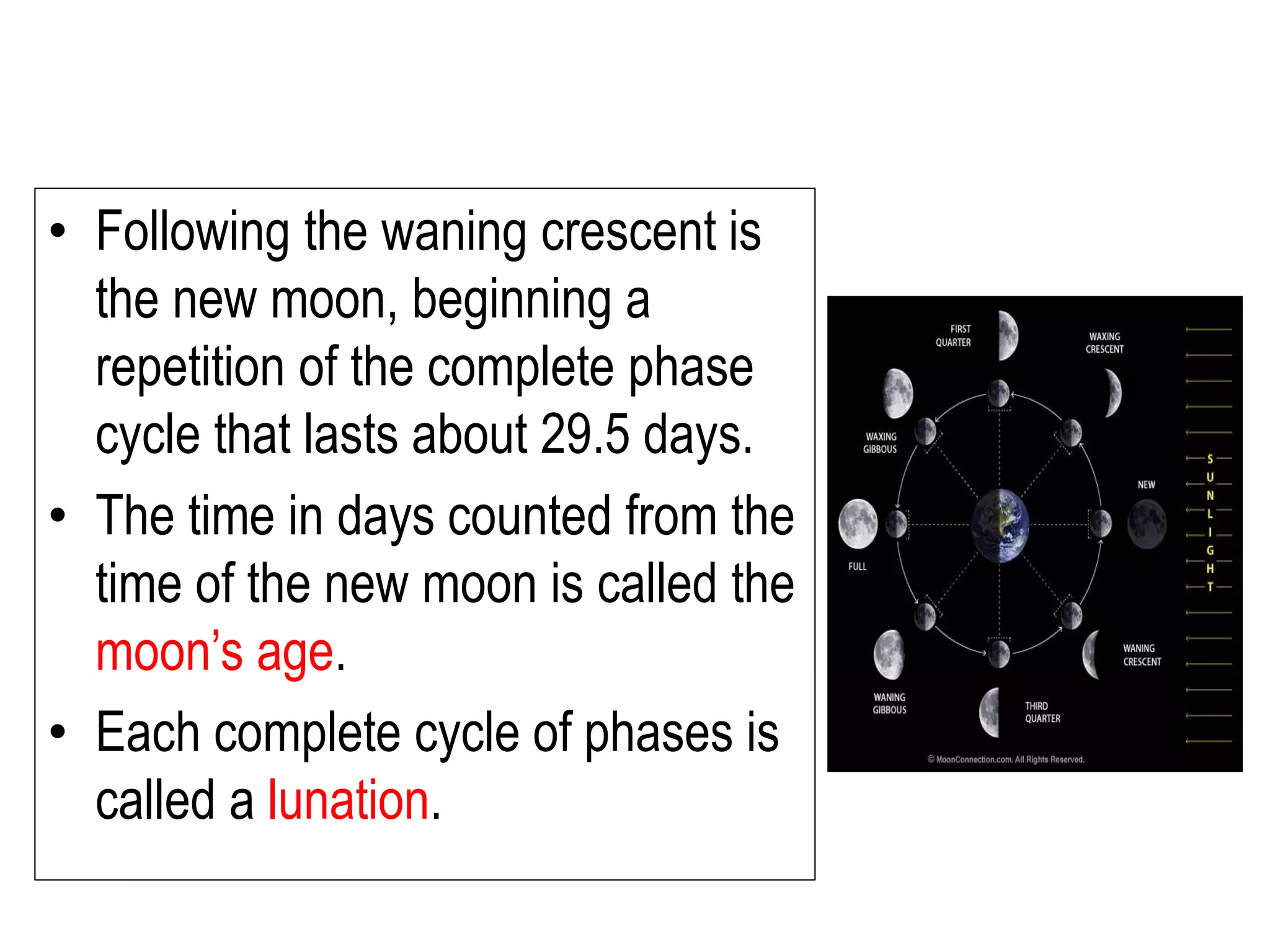
• Following the waning crescent is
the new moon, beginning a
repetition of the complete phase
cycle that lasts about 29.5 days.
• The time in days counted from the
time of the new moon is called the
moon’s age.
• Each complete cycle of phases is
called a lunation.
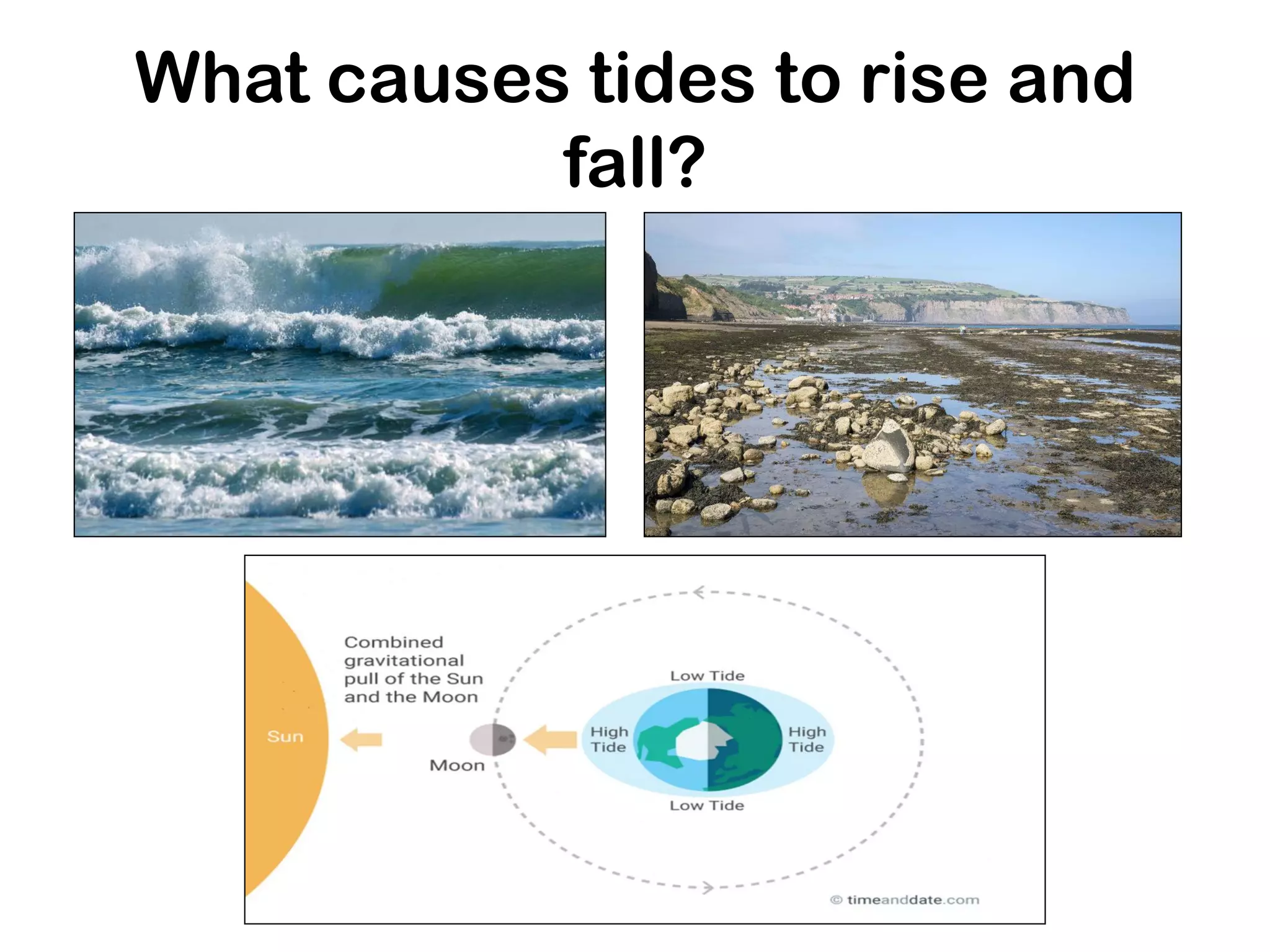
What causes tides to rise and
fall?
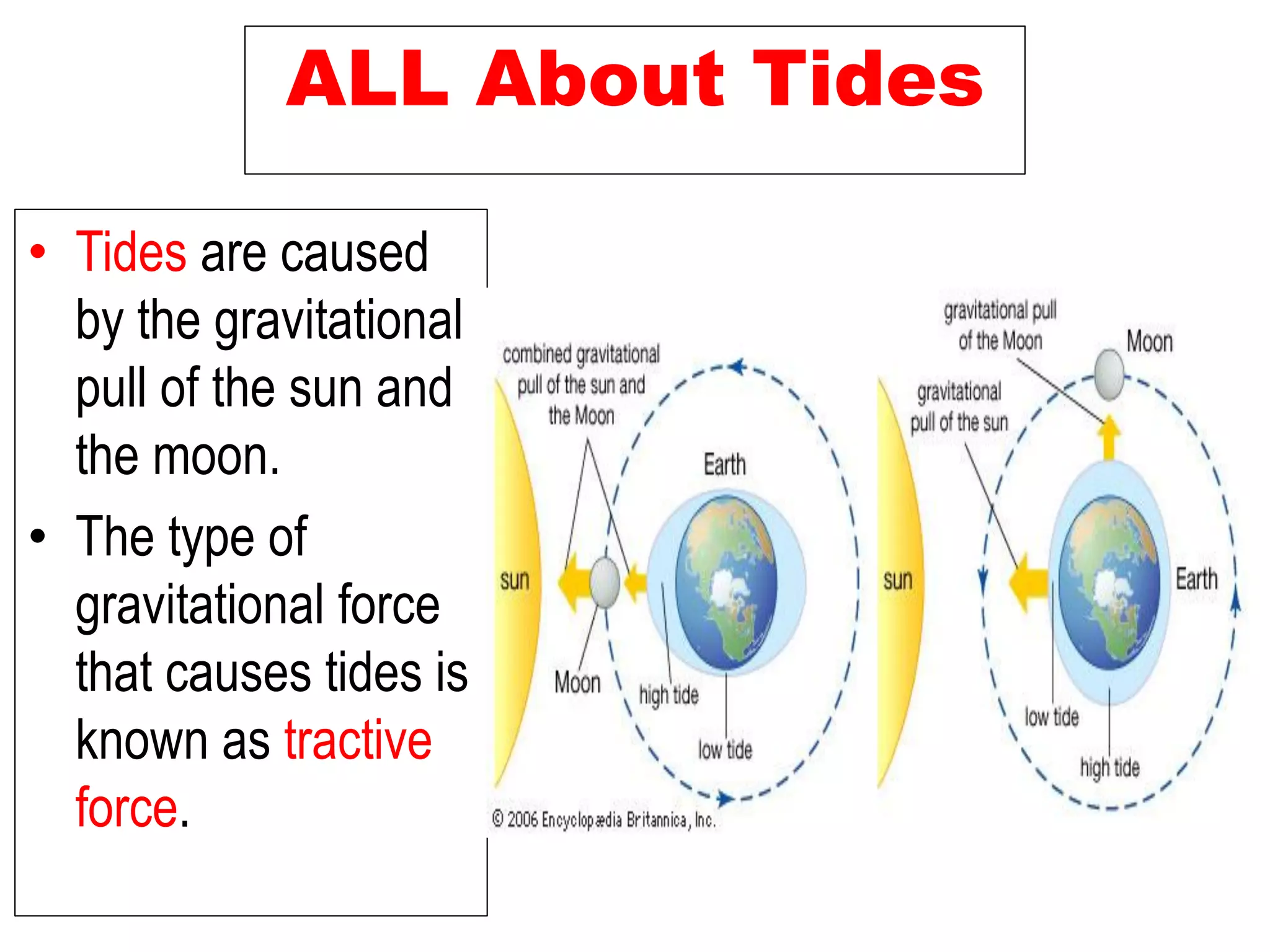
ALL About Tides
• Tides are caused
by the gravitational
pull of the sun and
the moon.
• The type of
gravitational force
that causes tides is
known as tractive
force.
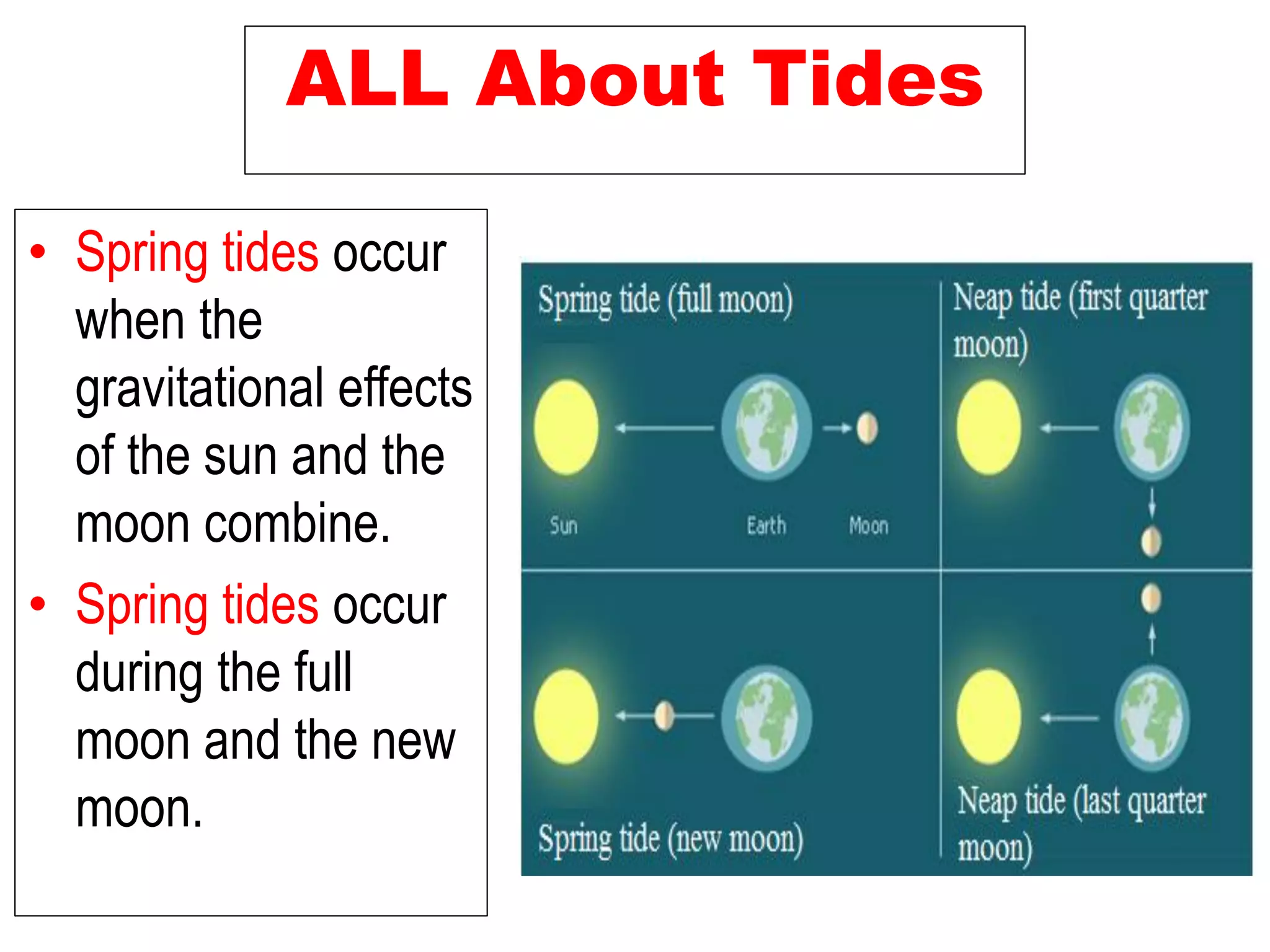
ALL About Tides
• Spring tides occur
when the
gravitational effects
of the sun and the
moon combine.
• Spring tides occur
during the full
moon and the new
moon.
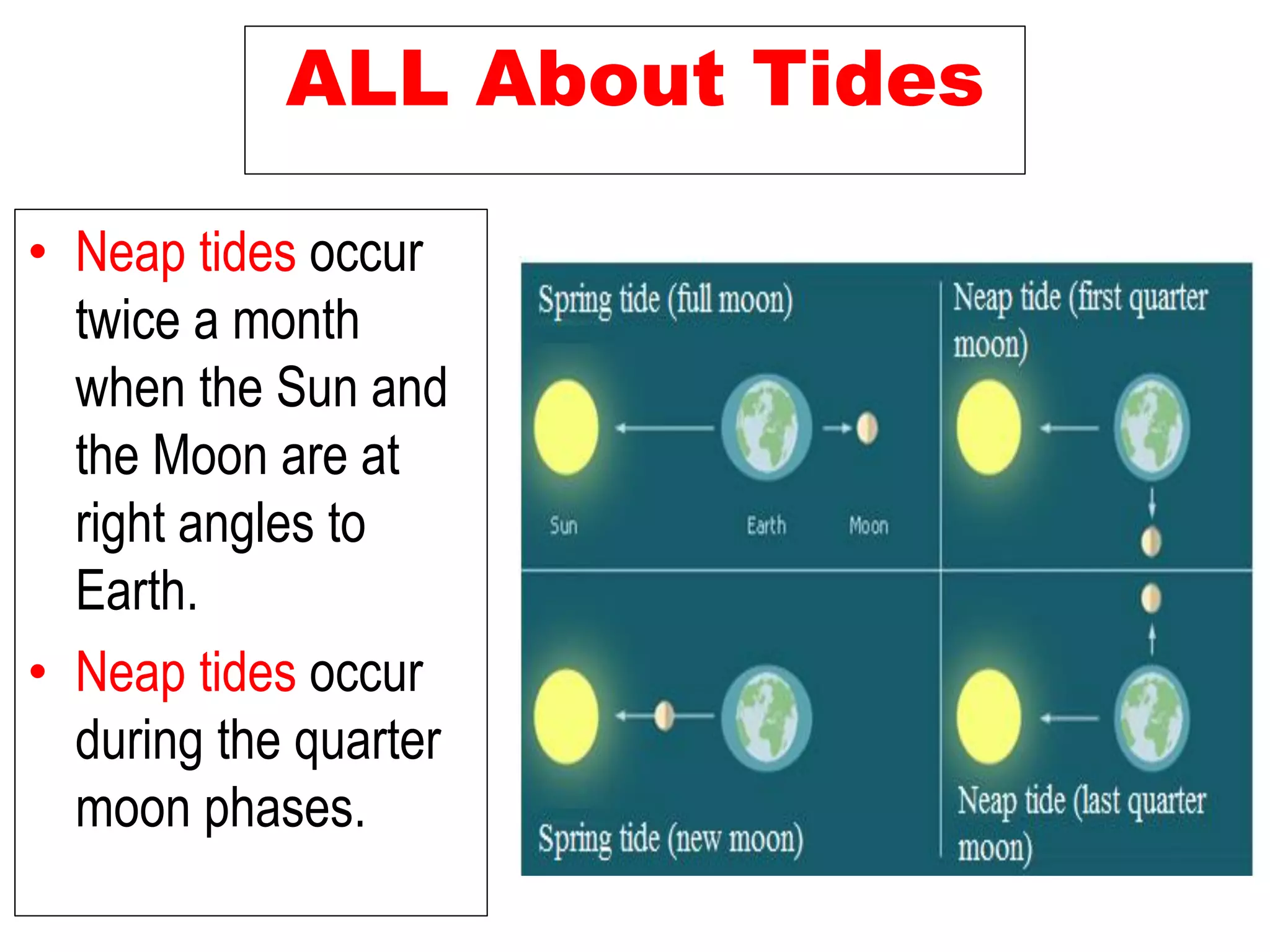
ALL About Tides
• Neap tides occur
twice a month
when the Sun and
the Moon are at
right angles to
Earth.
• Neap tides occur
during the quarter
moon phases.
SIGNIFICANCE
• Most people observe that they are able to catch more
fish during high tides.
• Tides can clear the shores of litter and other debris.
• People should also know the schedule of the high tide
and the low tide. Ships usually have to wait for the high
tide to come before they are able to dock or leave the
port.
• In places where the difference of water levels between
tides is high, people have learned to harness the tide’s
energy.

Learning about the moon(lunar eclipse)

  • 1.
  • 3.
    MOON • Moons arenatural satellites of every planet. • Earth has one moon and its traditional name is Luna. • Jupiter has 61 moons, Venus and Mercury do not have any.
  • 4.
    MOON • It isthe nearest neighbor and is about one-fourth the diameter of Earth. • It has craters and flat areas. • Its pull of gravity is one-sixth as that of Earth.
  • 5.
    A lunar eclipsehappens only when the sun, Earth, and the moon are aligned exactly or very closely with Earth in the middle.
  • 6.
  • 7.
    TOTAL LUNAR ECLIPSE •It happens when Earth’s umbra obscures the moon’s entire visible surface. • The total phase may be up to one hour and 40 mins long, and the entire eclipse may last up to three hours.
  • 8.
    PARTIAL LUNAR ECLIPSE •It can be observed when Earth moves between the sun and the moon but the three celestial bodies do not form a perfectly straight line.
  • 9.
    PENUMBRAL LUNAR ECLIPSE •In a penumbral lunar eclipse, none of the moon is completely shaded by Earth’s umbra. • Instead, only the slightest dim near the lunar limb closest to the umbra can be seen. • Indeed, only when at least half of the moon enters the penumbra, you can then see the penumbral lunar eclipse.
  • 10.
    8 PHASES OFTHE MOON
  • 11.
    NEW MOON • Thenew moon is the first of the moon phases. • The moon and the sun are lined up on the same side of Earth, so you can only see the shadowed side. • Also the time to experience solar eclipse
  • 12.
    NEW MOON • Duringthis phase, you can also see the reflected light from Earth, because no sunlight is falling on the moon. This is known as earthshine.
  • 13.
    WAXING CRESCENT MOON •The waxing crescent moon appears when the moon is less than half-illuminated. • It is the first slice of the moon that you can see. • The word waxing means growing and refers to the size of the illuminated part of the moon that is increasing.
  • 14.
    QUARTER MOON • Thisphase is when the moon is half illuminated. • This means that the sun and the moon make a 90˚ angle with Earth.
  • 15.
    WAXING GIBBOUS • Awaxing gibbous occurs when the moon is illuminated by more than half, but its not yet a full moon. • The moon appears to be more than one-half but is not fully illuminated by direct sunlight.
  • 16.
    FULL MOON • Afull moon is the brightest phase of the moon. • From Earth, the moon is fully illuminated by direct sunlight. • This is also the time of the lunar month when you can see lunar eclipses.
  • 17.
    WANING GIBBOUS • Awaning gibbous occurs when the phase of the moon is less than fully illuminated, but the the illumination is more than half. • The moon appears to be more than half but not fully illuminated by direct sunlight. • The word “waning” means “shrinking.”
  • 18.
    LAST QUARTER • Inthe last quarter, the moon has reached half illumination. • The left-hand side of the moon is illuminated, and the right-hand side is in darkness. • Half of the moon appears to be illuminated by direct sunlight.
  • 19.
    WANING CRESCENT • Thewaning crescent is the final slice of illuminated moon that you can see before the moon goes into darkness again. • The moon appears to be partly, but less than one-half is illuminated by direct sunlight.
  • 20.
    • Following thewaning crescent is the new moon, beginning a repetition of the complete phase cycle that lasts about 29.5 days. • The time in days counted from the time of the new moon is called the moon’s age. • Each complete cycle of phases is called a lunation.
  • 21.
    What causes tidesto rise and fall?
  • 22.
    ALL About Tides •Tides are caused by the gravitational pull of the sun and the moon. • The type of gravitational force that causes tides is known as tractive force.
  • 23.
    ALL About Tides •Spring tides occur when the gravitational effects of the sun and the moon combine. • Spring tides occur during the full moon and the new moon.
  • 24.
    ALL About Tides •Neap tides occur twice a month when the Sun and the Moon are at right angles to Earth. • Neap tides occur during the quarter moon phases.
  • 25.
    SIGNIFICANCE • Most peopleobserve that they are able to catch more fish during high tides. • Tides can clear the shores of litter and other debris. • People should also know the schedule of the high tide and the low tide. Ships usually have to wait for the high tide to come before they are able to dock or leave the port. • In places where the difference of water levels between tides is high, people have learned to harness the tide’s energy.