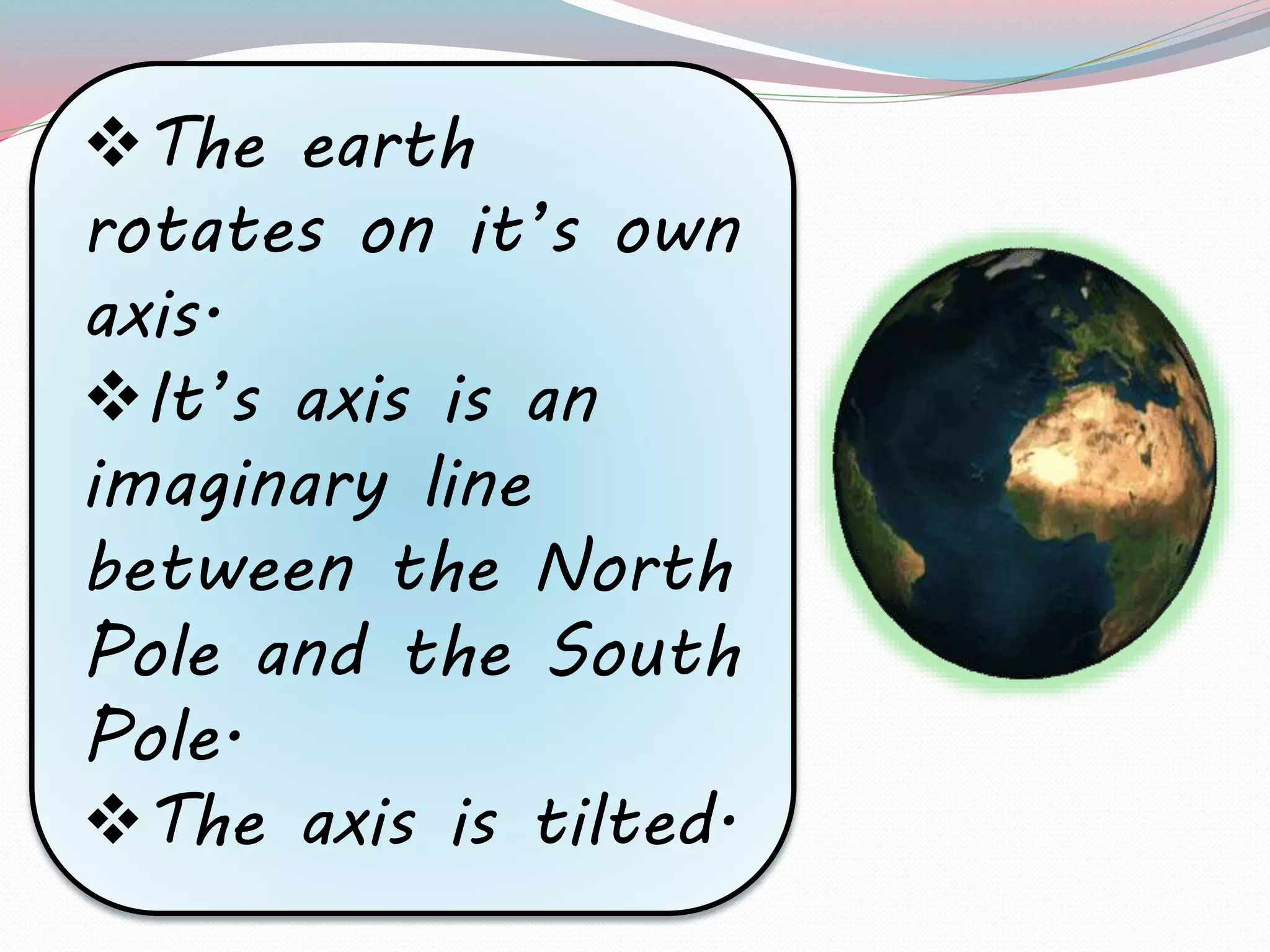
The earth
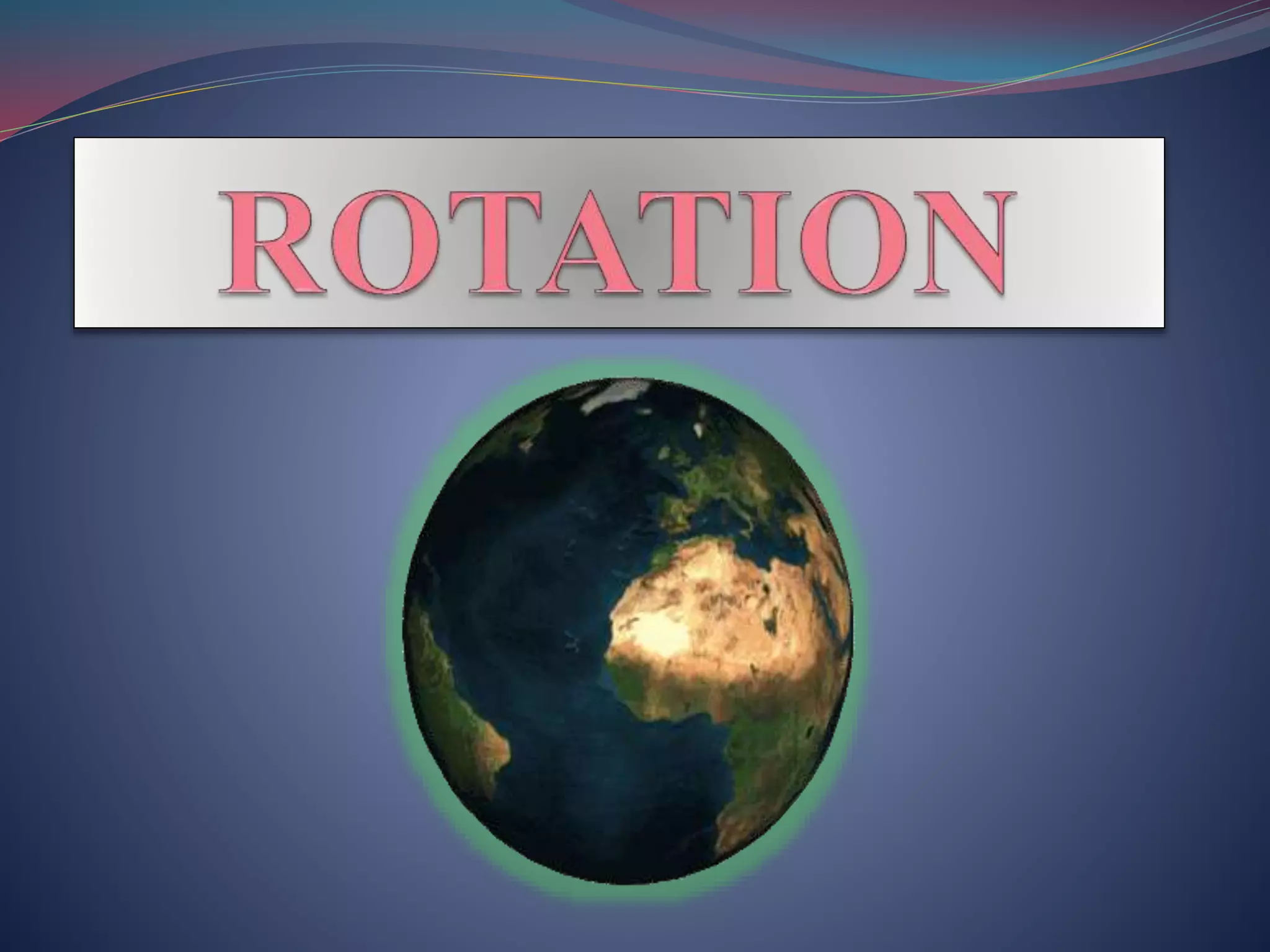
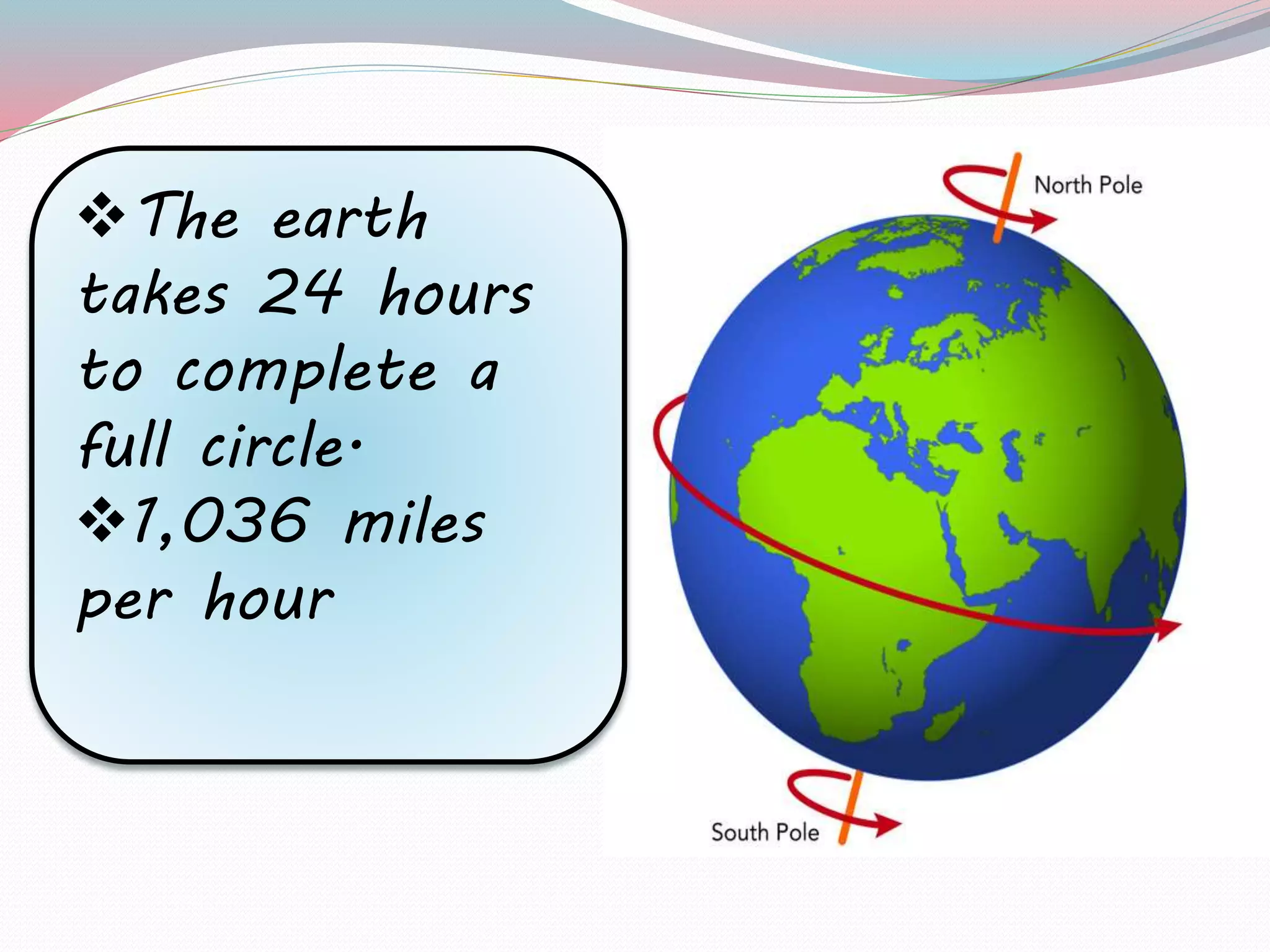
rotates on it’s own
axis.
It’s axis is an
imaginary line
between the North
Pole and the South
Pole.
The axis is tilted.
The earth
takes 24 hours
to complete a
full circle.
1,036 miles
per hour
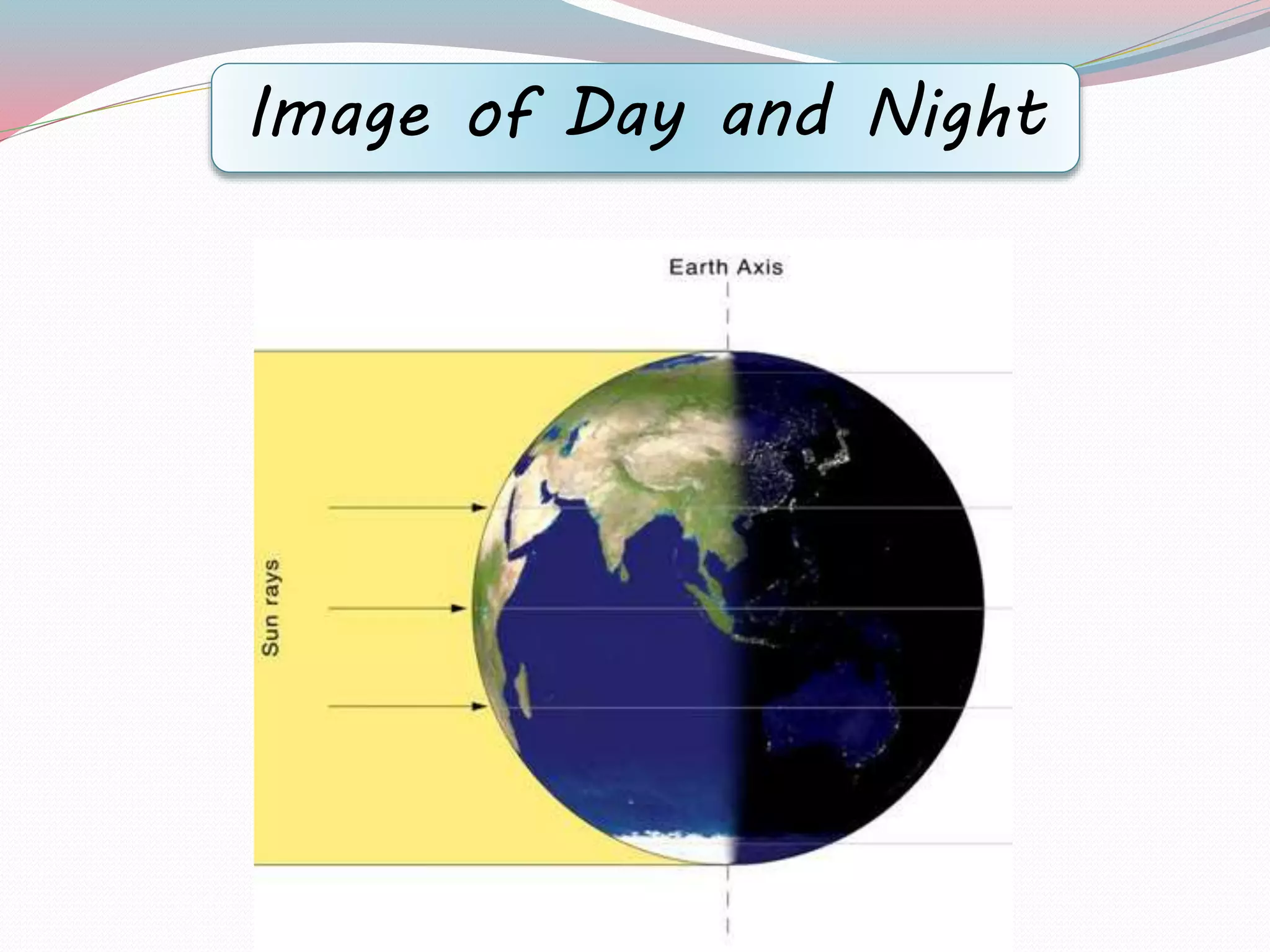
Day and Night As the earth rotates
on its axis, half of the earth
faces the sun and half of the
earth faces away from the sun.
The half of the Earth that faces
the sun will experience day while
the half of the Earth that faces
away from the sun will
experience night.
Image of Day and Night
High and Low Tide High and low tide
is a result of the gravitational
pull between the sun and the
moon. When the earth rotates,
the sun and the moon pulls it,
however, one of the force is
usually stronger than the
other. Hence, we will experience
high and low tide.
Image of High and Low Tide
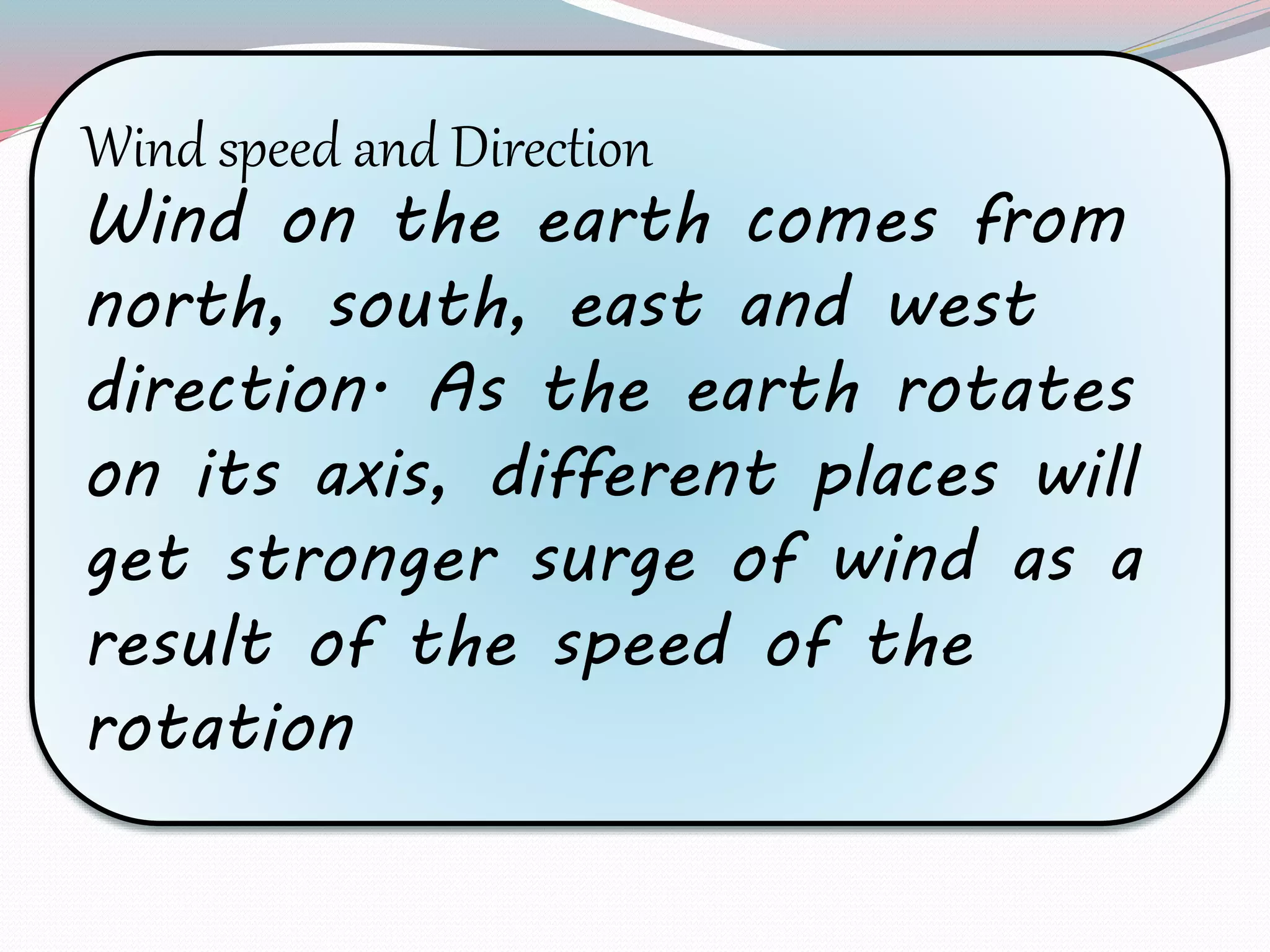
Wind speed and Direction
Wind on the earth comes from
north, south, east and west
direction. As the earth rotates
on its axis, different places will
get stronger surge of wind as a
result of the speed of the
rotation
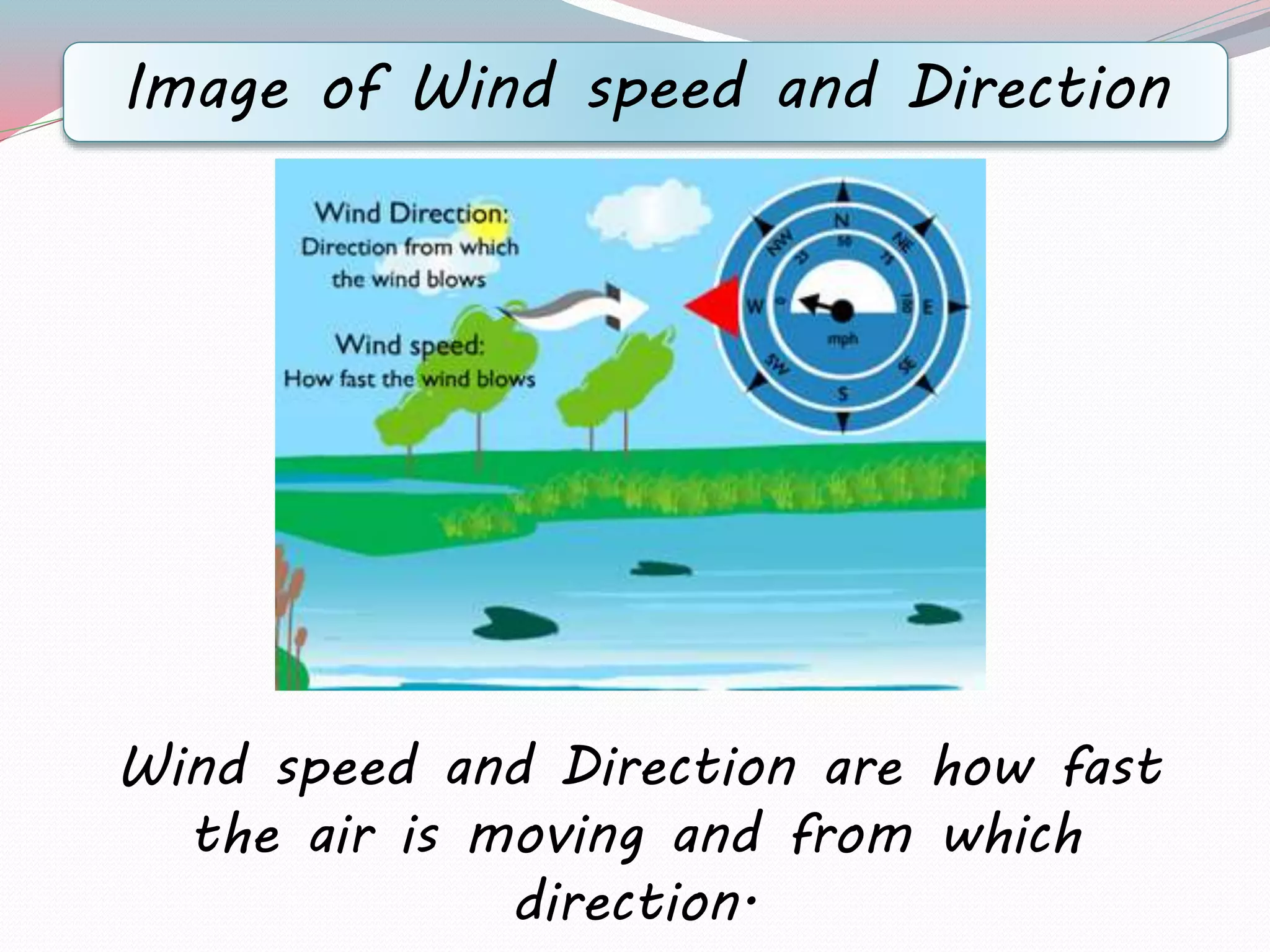
Image of Wind speed and Direction
Wind speed and Direction are how fast
the air is moving and from which
direction.
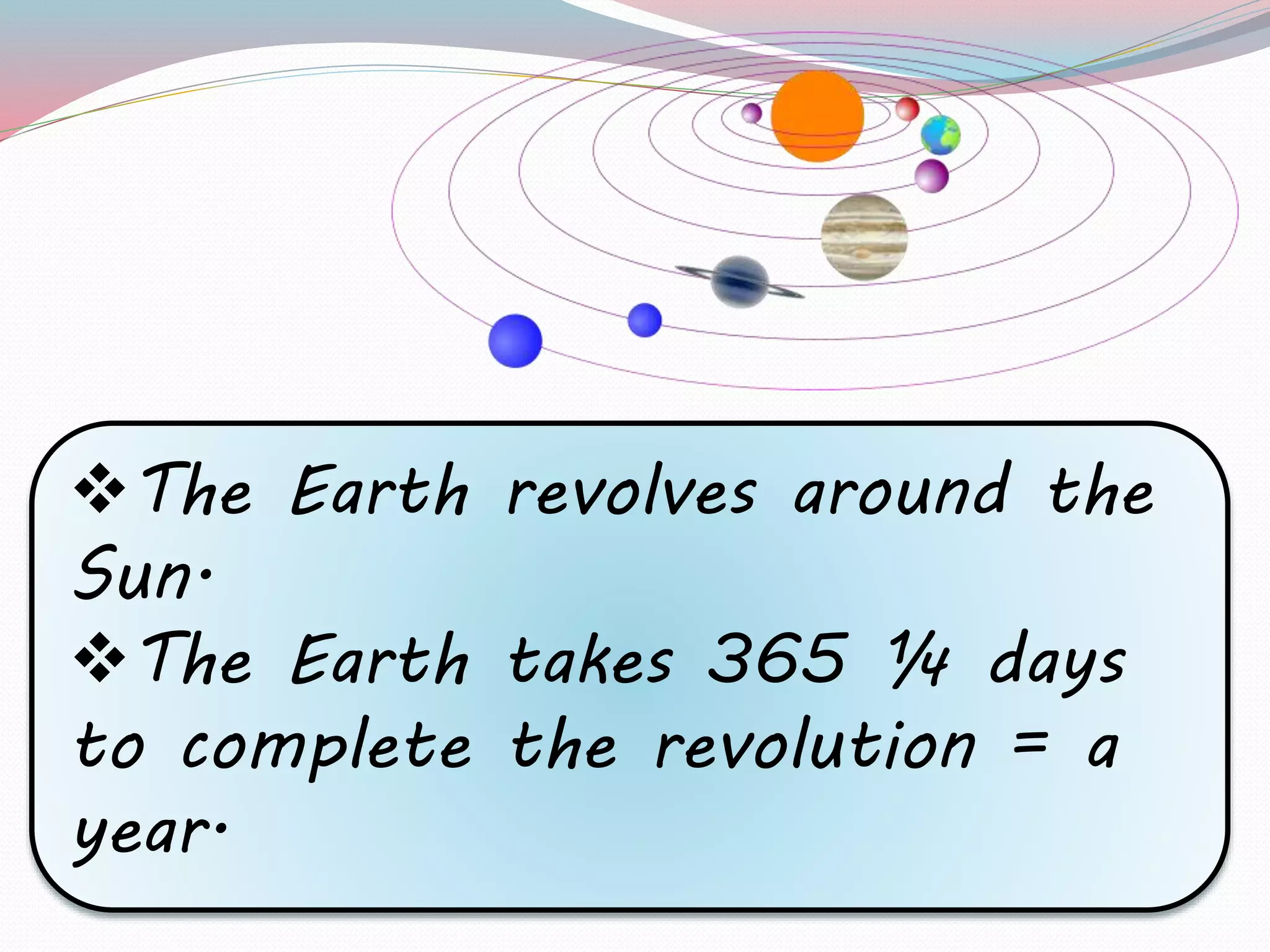
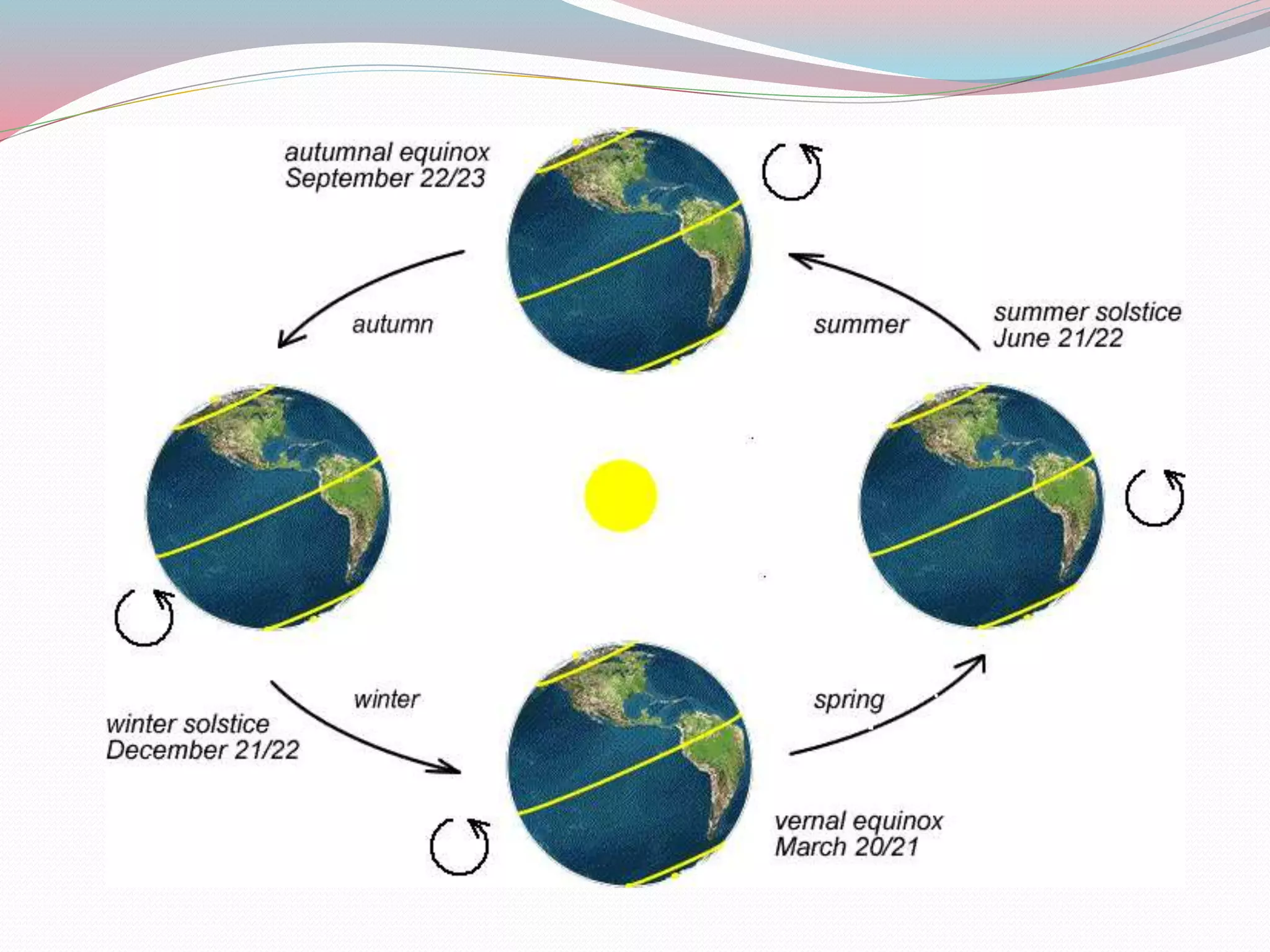
The Earth revolves around the
Sun.
The Earth takes 365 ¼ days
to complete the revolution = a
year.
Earth revolves
around the sun
in a slightly
eccentric
elliptical orbit
once a year.
The speed of
earth’s
revolution is
about 18 miles
per hour.
Three factors cause the seasons:
 The revolution of the Earth around
the Sun.
 The tilt of the Earth’s axis of
rotation respects to the Plane of the
Ecliptic.
 The tilt of the Earth’s axis remains
constant
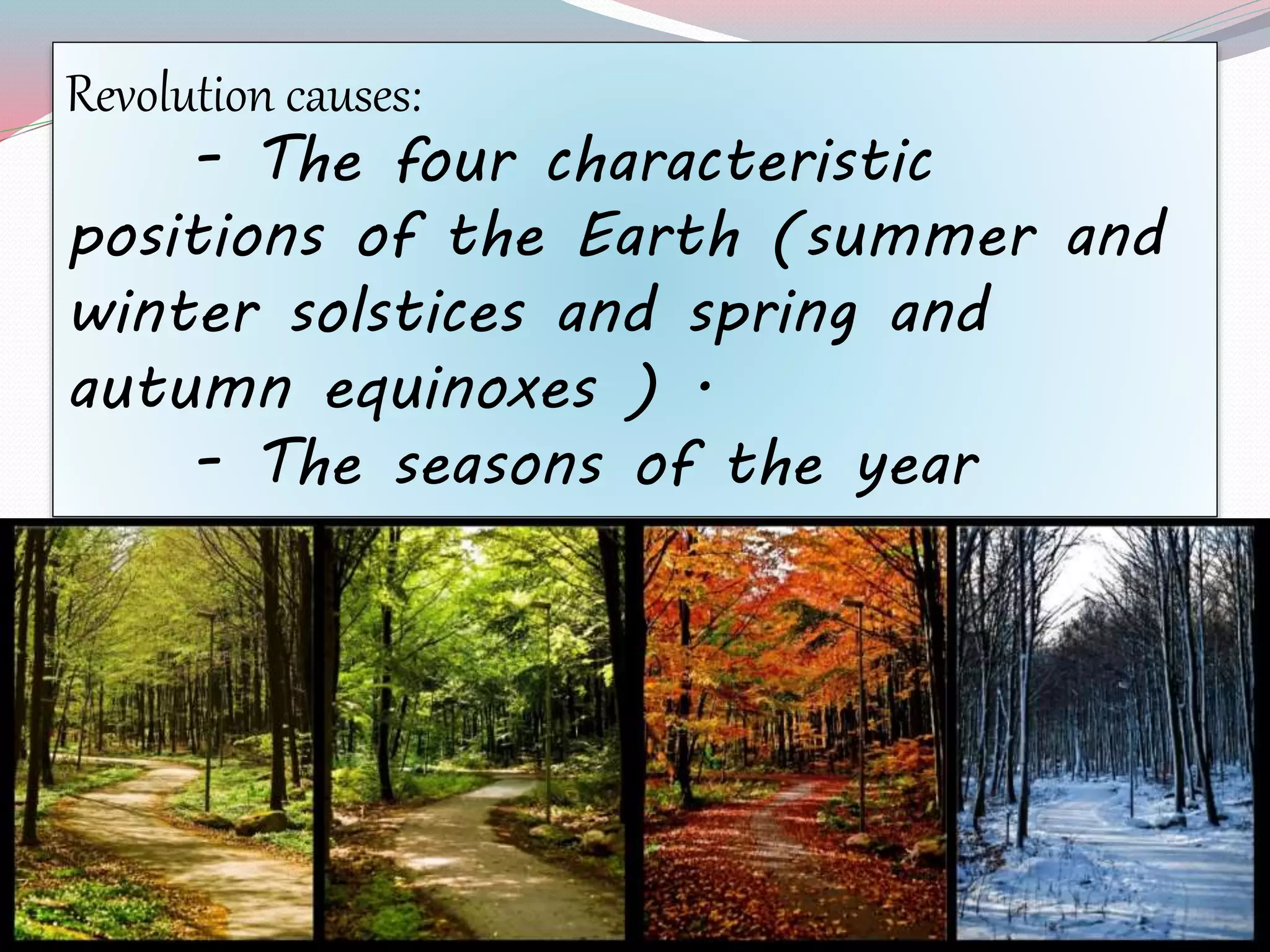
Revolution causes:
- The four characteristic
positions of the Earth (summer and
winter solstices and spring and
autumn equinoxes ) .
- The seasons of the year
Solstices and equinoxes
Solstice: one of two days in the
year when the Sun is at its
highest or lowest point in the sky
at noon (12 pm)
Equinox: one of two days in the
year when day and night are the
same length of time.
Summer Solstice marks the beginning of
summer on June 21/22. June 21 is the
longest day. When it is summer in the
northern hemisphere it will be winter in
the southern hemisphere and the sun is
directly over the tropic of cancer.
Winter Solstice marks the beginning of winter
on December 21/22. December 21 is the
shortest day. When it is winter in the
northern hemisphere it will be summer in the
southern hemisphere and the sun is directly
over the tropic of Capricorn.
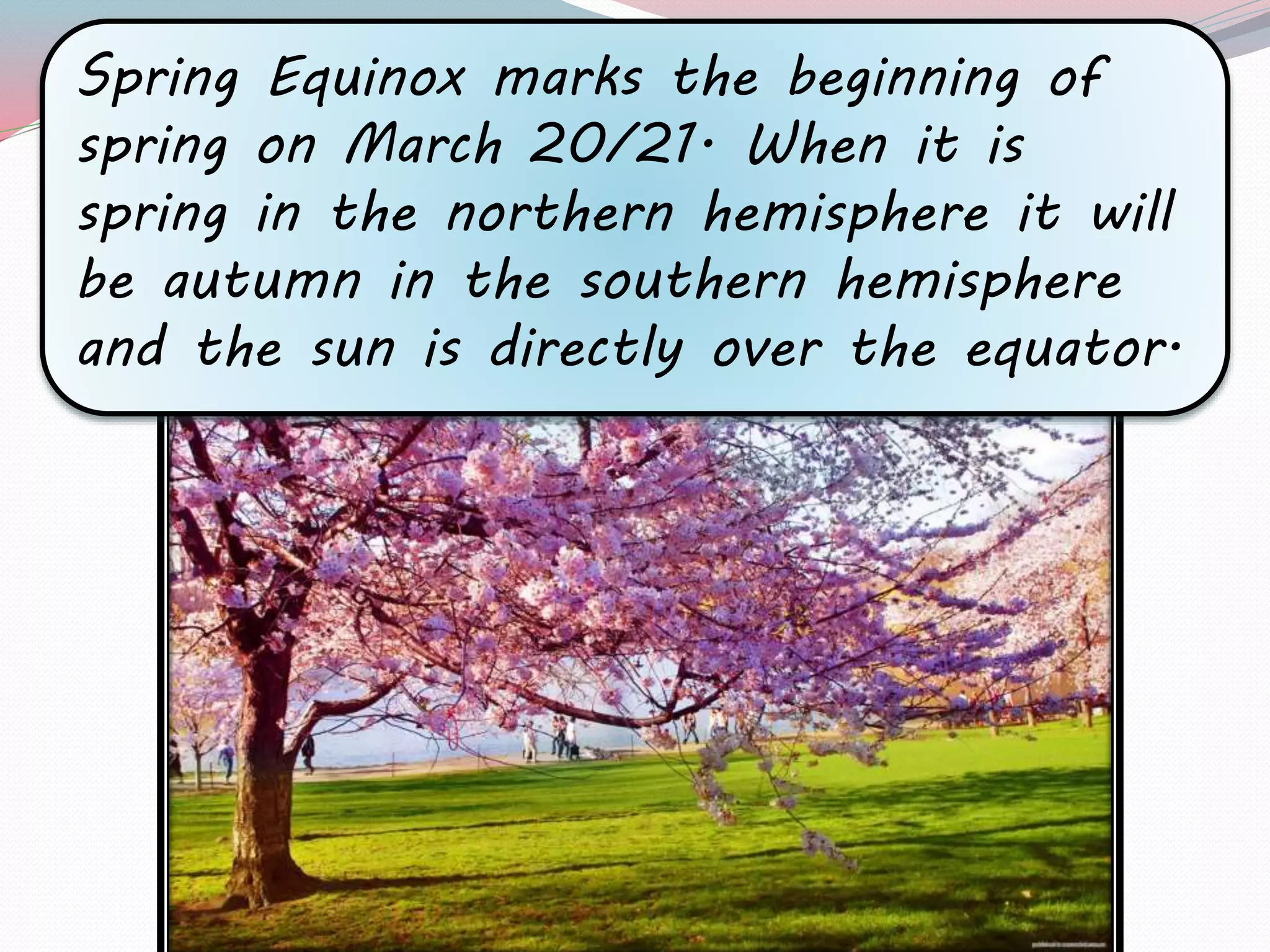
Spring Equinox marks the beginning of
spring on March 20/21. When it is
spring in the northern hemisphere it will
be autumn in the southern hemisphere
and the sun is directly over the equator.
Autumn Equinox marks the beginning of
autumn on September 22/23. When it
is autumn in the northern hemisphere it
will be spring in the southern hemisphere
and the sun is directly over equator.
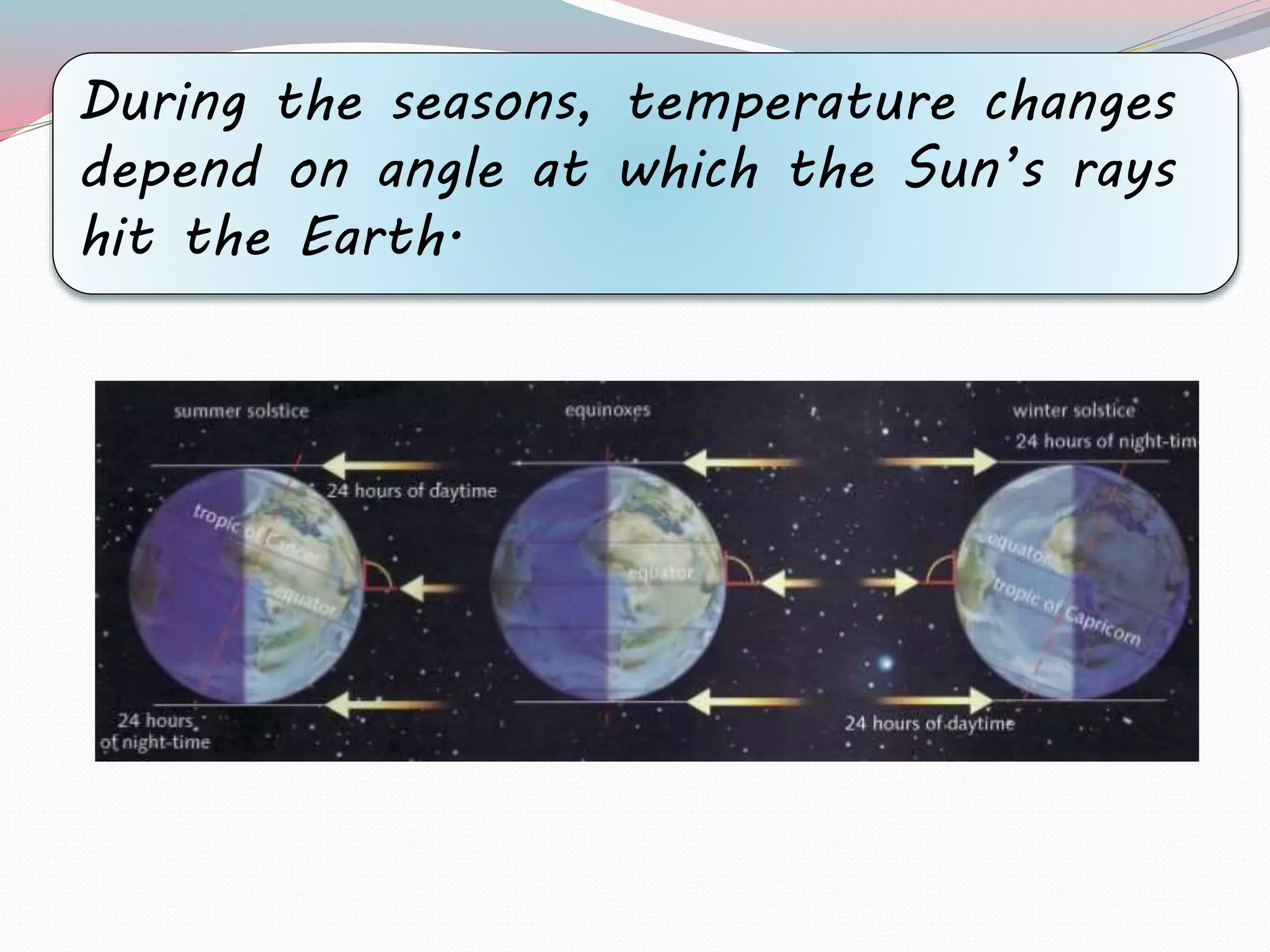
Varying Length of Day and Night
The effects of revolution causes varying
length of day and night.
In December the sun is directly over
the tropic of capricorn, therefore,
there will be shorter days and longer
night.
In June, the sun is directly over the
tropic of cancer, therefore, there will
be longer days and shorter nights.
During the seasons, temperature changes
depend on angle at which the Sun’s rays
hit the Earth.

Motion of the earth

  • 4.
    The earth rotates onit’s own axis. It’s axis is an imaginary line between the North Pole and the South Pole. The axis is tilted.
  • 5.
    The earth takes 24hours to complete a full circle. 1,036 miles per hour
  • 7.
    Day and NightAs the earth rotates on its axis, half of the earth faces the sun and half of the earth faces away from the sun. The half of the Earth that faces the sun will experience day while the half of the Earth that faces away from the sun will experience night.
  • 8.
    Image of Dayand Night
  • 9.
    High and LowTide High and low tide is a result of the gravitational pull between the sun and the moon. When the earth rotates, the sun and the moon pulls it, however, one of the force is usually stronger than the other. Hence, we will experience high and low tide.
  • 10.
    Image of Highand Low Tide
  • 11.
    Wind speed andDirection Wind on the earth comes from north, south, east and west direction. As the earth rotates on its axis, different places will get stronger surge of wind as a result of the speed of the rotation
  • 12.
    Image of Windspeed and Direction Wind speed and Direction are how fast the air is moving and from which direction.
  • 14.
    The Earth revolvesaround the Sun. The Earth takes 365 ¼ days to complete the revolution = a year.
  • 15.
    Earth revolves around thesun in a slightly eccentric elliptical orbit once a year. The speed of earth’s revolution is about 18 miles per hour.
  • 17.
    Three factors causethe seasons:  The revolution of the Earth around the Sun.  The tilt of the Earth’s axis of rotation respects to the Plane of the Ecliptic.  The tilt of the Earth’s axis remains constant
  • 18.
    Revolution causes: - Thefour characteristic positions of the Earth (summer and winter solstices and spring and autumn equinoxes ) . - The seasons of the year
  • 19.
    Solstices and equinoxes Solstice:one of two days in the year when the Sun is at its highest or lowest point in the sky at noon (12 pm) Equinox: one of two days in the year when day and night are the same length of time.
  • 20.
    Summer Solstice marksthe beginning of summer on June 21/22. June 21 is the longest day. When it is summer in the northern hemisphere it will be winter in the southern hemisphere and the sun is directly over the tropic of cancer.
  • 21.
    Winter Solstice marksthe beginning of winter on December 21/22. December 21 is the shortest day. When it is winter in the northern hemisphere it will be summer in the southern hemisphere and the sun is directly over the tropic of Capricorn.
  • 22.
    Spring Equinox marksthe beginning of spring on March 20/21. When it is spring in the northern hemisphere it will be autumn in the southern hemisphere and the sun is directly over the equator.
  • 23.
    Autumn Equinox marksthe beginning of autumn on September 22/23. When it is autumn in the northern hemisphere it will be spring in the southern hemisphere and the sun is directly over equator.
  • 25.
    Varying Length ofDay and Night The effects of revolution causes varying length of day and night. In December the sun is directly over the tropic of capricorn, therefore, there will be shorter days and longer night. In June, the sun is directly over the tropic of cancer, therefore, there will be longer days and shorter nights.
  • 26.
    During the seasons,temperature changes depend on angle at which the Sun’s rays hit the Earth.

Editor's Notes

  • #7 The Effects of Rotation on the Earth