• The link between learning ecosystems and capability development
• The key elements of a learning ecosystem
• Using digital learning to enable and accelerate 70-20-10 learning
ecosystems
• Applying design thinking to planning a learning ecosystem
We will discuss …
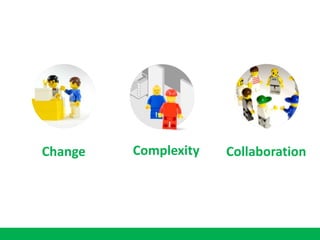
CollaborationChange Complexity
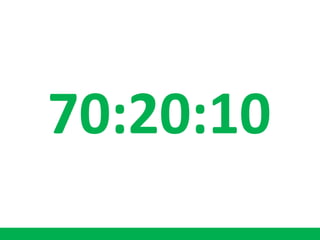
70:20:10
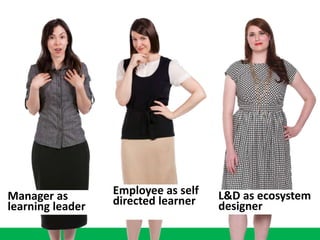
Manager as
learning leader
Employee as self
directed learner L&D as ecosystem
designer
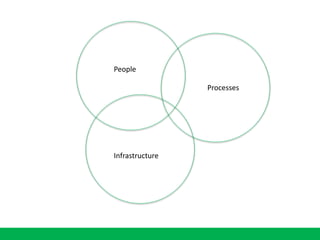
People
Processes
Infrastructure
Ecosystems are a powerful way to
develop the capacity of an organisation
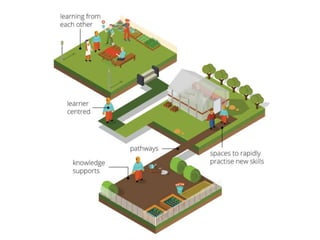
An ecosystem is an interactive
system of components that
work together
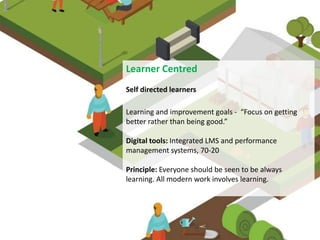
Learner Centred
Self directed learners
Learning and improvement goals - “Focus on getting
better rather than being good.”
Digital tools: Integrated LMS and performance
management systems, 70-20
Principle: Everyone should be seen to be always
learning. All modern work involves learning.
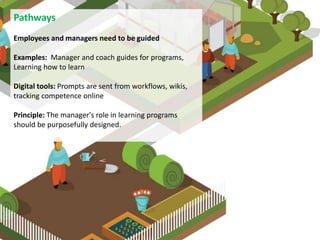
Pathways
Employees and managers need to be guided
Examples: Manager and coach guides for programs,
Learning how to learn
Digital tools: Prompts are sent from workflows, wikis,
tracking competence online
Principle: The manager's role in learning programs
should be purposefully designed.
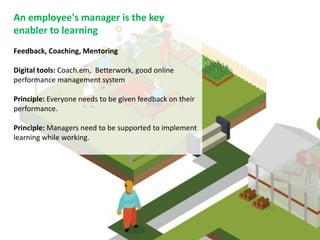
An employee's manager is the key
enabler to learning
Feedback, Coaching, Mentoring
Digital tools: Coach.em, Betterwork, good online
performance management system
Principle: Everyone needs to be given feedback on their
performance.
Principle: Managers need to be supported to implement
learning while working.
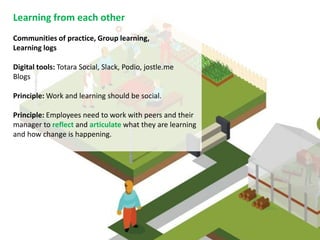
Learning from each other
Communities of practice, Group learning,
Learning logs
Digital tools: Totara Social, Slack, Podio, jostle.me
Blogs
Principle: Work and learning should be social.
Principle: Employees need to work with peers and their
manager to reflect and articulate what they are learning
and how change is happening.
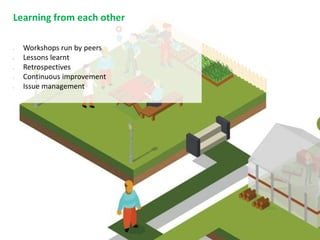
Learning from each other
• Workshops run by peers
• Lessons learnt
• Retrospectives
• Continuous improvement
• Issue management
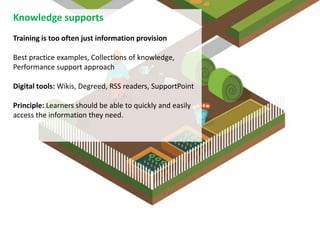
Knowledge supports
Training is too often just information provision
Best practice examples, Collections of knowledge,
Performance support approach
Digital tools: Wikis, Degreed, RSS readers, SupportPoint
Principle: Learners should be able to quickly and easily
access the information they need.
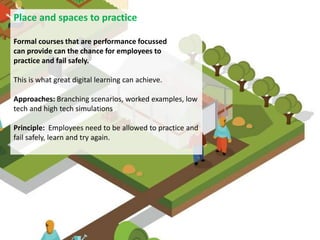
Place and spaces to practice
Formal courses that are performance focussed
can provide can the chance for employees to
practice and fail safely.
This is what great digital learning can achieve.
Approaches: Branching scenarios, worked examples, low
tech and high tech simulations
Principle: Employees need to be allowed to practice and
fail safely, learn and try again.
We need different processes
for designing learning
Design thinking is about
applying the same principles
that designers use to business
processes and practices
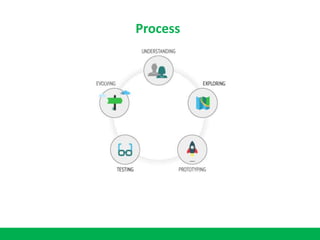
Process
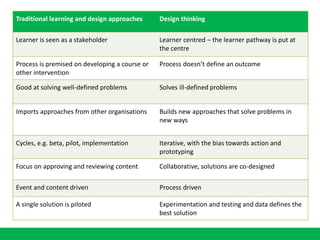
Traditional learning and design approaches Design thinking
Learner is seen as a stakeholder Learner centred – the learner pathway is put at
the centre
Process is premised on developing a course or
other intervention
Process doesn’t define an outcome
Good at solving well-defined problems Solves ill-defined problems
Imports approaches from other organisations Builds new approaches that solve problems in
new ways
Cycles, e.g. beta, pilot, implementation Iterative, with the bias towards action and
prototyping
Focus on approving and reviewing content Collaborative, solutions are co-designed
Event and content driven Process driven
A single solution is piloted Experimentation and testing and data defines the
best solution
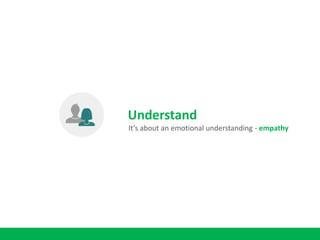
Understand
It’s about an emotional understanding - empathy
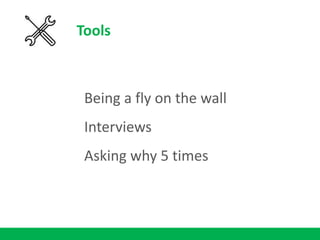
Tools
Being a fly on the wall
Interviews
Asking why 5 times
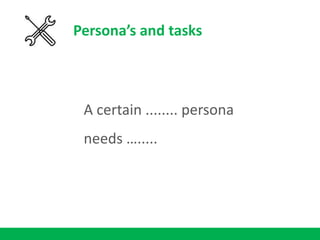
Persona’s and tasks
A certain ........ persona
needs ….....
Exploring
Sometime called ideation
Co-create
Make it visual
Individual, expert and group
activities
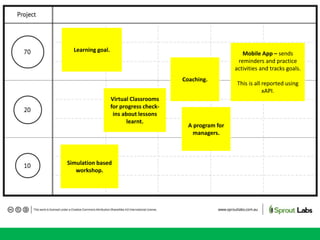
Learning goal.
Simulation based
workshop.
Mobile App – sends
reminders and practice
activities and tracks goals.
This is all reported using
xAPI.
Virtual Classrooms
for progress check-
ins about lessons
learnt.
Coaching.
A program for
managers.
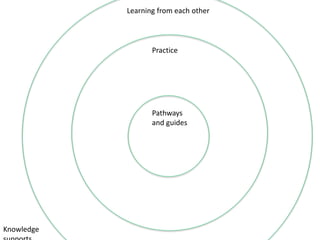
Knowledge
Learning from each other
Practice
Pathways
and guides
Prototype
One or more of the ideas from the exploration
phase are then prototyped
Stories
Mockups
Roleplays
Smaller chunks
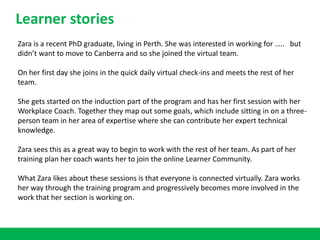
Zara is a recent PhD graduate, living in Perth. She was interested in working for ….. but
didn’t want to move to Canberra and so she joined the virtual team.
On her first day she joins in the quick daily virtual check-ins and meets the rest of her
team.
She gets started on the induction part of the program and has her first session with her
Workplace Coach. Together they map out some goals, which include sitting in on a three-
person team in her area of expertise where she can contribute her expert technical
knowledge.
Zara sees this as a great way to begin to work with the rest of her team. As part of her
training plan her coach wants her to join the online Learner Community.
What Zara likes about these sessions is that everyone is connected virtually. Zara works
her way through the training program and progressively becomes more involved in the
work that her section is working on.
Learner stories
Testing
The prototypes are tested to see if they will meet
the needs that were defined in the understanding
phase. Often the exploration, prototyping and
testing phases merge together.
Business impact
Collecting stories
Collecting data
Refine
Once an approach has been designed and
implemented, it is important to reinvent
constantly and improve relentlessly.
Each week I spend a few hours focused on talking with
people who have been to our webinars.
If you are interested in having a chat about improving
your learning and capability development programs my
contact information is below.
Dr Robin Petterd
Director
M: +61 419 101 928
E: robin@sproutlabs.com.au

Learn how to design a 70-20-10 learning ecosystem

  • 2.
    • The linkbetween learning ecosystems and capability development • The key elements of a learning ecosystem • Using digital learning to enable and accelerate 70-20-10 learning ecosystems • Applying design thinking to planning a learning ecosystem We will discuss …
  • 3.
  • 4.
  • 5.
    Manager as learning leader Employeeas self directed learner L&D as ecosystem designer
  • 6.
  • 7.
    Ecosystems are apowerful way to develop the capacity of an organisation
  • 8.
    An ecosystem isan interactive system of components that work together
  • 10.
    Learner Centred Self directedlearners Learning and improvement goals - “Focus on getting better rather than being good.” Digital tools: Integrated LMS and performance management systems, 70-20 Principle: Everyone should be seen to be always learning. All modern work involves learning.
  • 11.
    Pathways Employees and managersneed to be guided Examples: Manager and coach guides for programs, Learning how to learn Digital tools: Prompts are sent from workflows, wikis, tracking competence online Principle: The manager's role in learning programs should be purposefully designed.
  • 12.
    An employee's manageris the key enabler to learning Feedback, Coaching, Mentoring Digital tools: Coach.em, Betterwork, good online performance management system Principle: Everyone needs to be given feedback on their performance. Principle: Managers need to be supported to implement learning while working.
  • 13.
    Learning from eachother Communities of practice, Group learning, Learning logs Digital tools: Totara Social, Slack, Podio, jostle.me Blogs Principle: Work and learning should be social. Principle: Employees need to work with peers and their manager to reflect and articulate what they are learning and how change is happening.
  • 14.
    Learning from eachother • Workshops run by peers • Lessons learnt • Retrospectives • Continuous improvement • Issue management
  • 15.
    Knowledge supports Training istoo often just information provision Best practice examples, Collections of knowledge, Performance support approach Digital tools: Wikis, Degreed, RSS readers, SupportPoint Principle: Learners should be able to quickly and easily access the information they need.
  • 16.
    Place and spacesto practice Formal courses that are performance focussed can provide can the chance for employees to practice and fail safely. This is what great digital learning can achieve. Approaches: Branching scenarios, worked examples, low tech and high tech simulations Principle: Employees need to be allowed to practice and fail safely, learn and try again.
  • 17.
    We need differentprocesses for designing learning
  • 18.
    Design thinking isabout applying the same principles that designers use to business processes and practices
  • 19.
  • 20.
    Traditional learning anddesign approaches Design thinking Learner is seen as a stakeholder Learner centred – the learner pathway is put at the centre Process is premised on developing a course or other intervention Process doesn’t define an outcome Good at solving well-defined problems Solves ill-defined problems Imports approaches from other organisations Builds new approaches that solve problems in new ways Cycles, e.g. beta, pilot, implementation Iterative, with the bias towards action and prototyping Focus on approving and reviewing content Collaborative, solutions are co-designed Event and content driven Process driven A single solution is piloted Experimentation and testing and data defines the best solution
  • 21.
    Understand It’s about anemotional understanding - empathy
  • 22.
    Tools Being a flyon the wall Interviews Asking why 5 times
  • 23.
    Persona’s and tasks Acertain ........ persona needs ….....
  • 24.
  • 25.
    Co-create Make it visual Individual,expert and group activities
  • 26.
    Learning goal. Simulation based workshop. MobileApp – sends reminders and practice activities and tracks goals. This is all reported using xAPI. Virtual Classrooms for progress check- ins about lessons learnt. Coaching. A program for managers.
  • 27.
    Knowledge Learning from eachother Practice Pathways and guides
  • 28.
    Prototype One or moreof the ideas from the exploration phase are then prototyped
  • 29.
  • 30.
    Zara is arecent PhD graduate, living in Perth. She was interested in working for ….. but didn’t want to move to Canberra and so she joined the virtual team. On her first day she joins in the quick daily virtual check-ins and meets the rest of her team. She gets started on the induction part of the program and has her first session with her Workplace Coach. Together they map out some goals, which include sitting in on a three- person team in her area of expertise where she can contribute her expert technical knowledge. Zara sees this as a great way to begin to work with the rest of her team. As part of her training plan her coach wants her to join the online Learner Community. What Zara likes about these sessions is that everyone is connected virtually. Zara works her way through the training program and progressively becomes more involved in the work that her section is working on. Learner stories
  • 31.
    Testing The prototypes aretested to see if they will meet the needs that were defined in the understanding phase. Often the exploration, prototyping and testing phases merge together.
  • 32.
  • 33.
    Refine Once an approachhas been designed and implemented, it is important to reinvent constantly and improve relentlessly.
  • 34.
    Each week Ispend a few hours focused on talking with people who have been to our webinars. If you are interested in having a chat about improving your learning and capability development programs my contact information is below. Dr Robin Petterd Director M: +61 419 101 928 E: robin@sproutlabs.com.au