Dr Robin Petterd
Founder of Sprout Labs
Sprout Labs builds digital learning platforms that enable you
and your team to author, deliver and measure high impact
digital learning ecosystems.
• The Learning While Working podcast
• The blog
• eBooks
• The recordings of past webinars
• The Learning While Working virtual conference
● the use of artificial intelligence in L&D
● the maturation of xAPI and how L&D is becoming more data
driven
● the relationship between microlearning and learning while
working, and personalisation of learning
● the rise of digital workplaces and what this means for L&D
● virtual reality and augmented reality
● the new role of the LMS in a learning ecosystem and the
growth of learning experience platforms
…
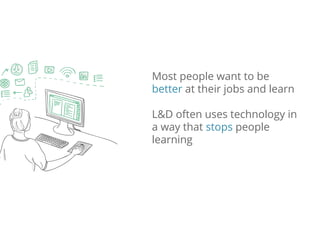
Most people want to be
better at their jobs and learn
L&D often uses technology in
a way that stops people
learning
Consumer technology drives workplace technology
Digital learning is starting to focus on what a
learner really needs
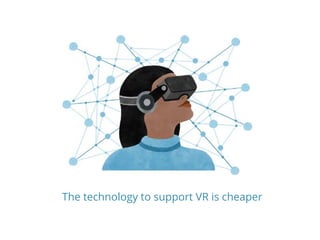
The technology to support VR is cheaper
It means no PowerPoints!
Preparation - Experience - Debrief
Phone based - lower cost
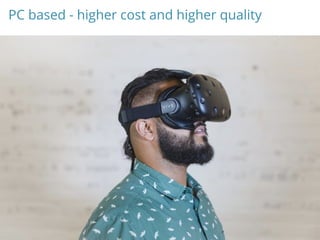
PC based - higher cost and higher quality
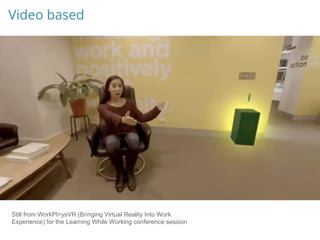
Video based
Still from WorkPl>ysVR (Bringing Virtual Reality Into Work
Experience) for the Learning While Working conference session
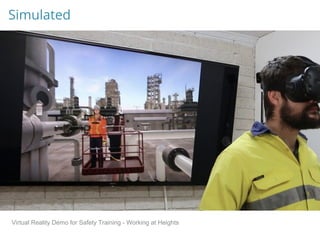
Simulated
Virtual Reality Demo for Safety Training - Working at Heights
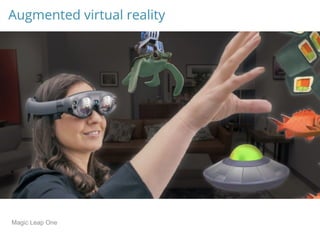
Augmented virtual reality
Magic Leap One
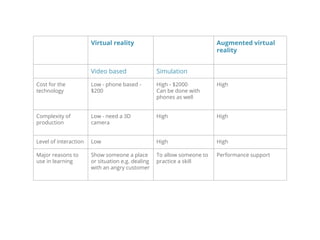
Virtual reality Augmented virtual
reality
Video based Simulation
Cost for the
technology
Low - phone based -
$200
High - $2000
Can be done with
phones as well
High
Complexity of
production
Low - need a 3D
camera
High High
Level of interaction Low High High
Major reasons to
use in learning
Show someone a place
or situation e.g. dealing
with an angry customer
To allow someone to
practice a skill
Performance support
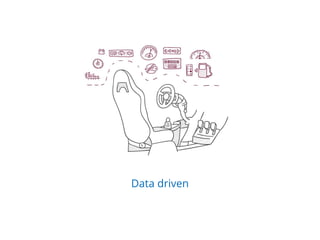
Data driven
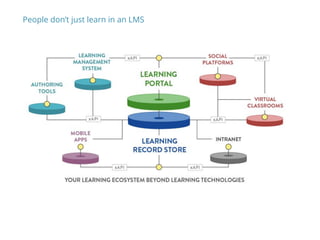
People don’t just learn in an LMS
It’s expected now that learning technologies are
xAPI enabled
Data is everywhere
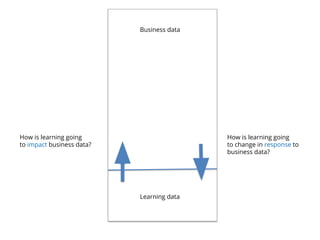
Business data
Learning data
How is learning going
to impact business data?
How is learning going
to change in response to
business data?
Data-Driven Learning Design — Lori Niles-Hofmann
She talks about reading employees’ ‘Digital body language’.
What are people searching for?
What are people accessing?
What are the trends? How is the data changing?
Listen to the podcast at:
https://www.sproutlabs.com.au/blog/data-driven-learning-design-and-digital-body-language/
What source of data should L&D be looking at
beyond your LMS?
Please add your thoughts in chat.
Linking learning and performance — GamEffective
Changes in performance data – trigger micro-learning
Dashboards to give employees feedback (visualisations make data
easier to understand)
Listen to the podcast at:
https://www.sproutlabs.com.au/blog/personalisation-of-learning/
Microlearning is L&D realising what learners need
Microlearning is small components of learning
whose purpose is to help behaviour change or
support performance
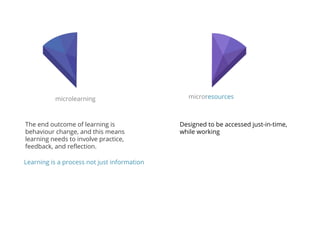
microlearning microresources
Designed to be accessed just-in-time,
while working
The end outcome of learning is
behaviour change, and this means
learning needs to involve practice,
feedback, and reflection.
Learning is a process not just information
Resources are useful for learning while working
Performance supports - checklists, flowcharts, videos,
infographics
Learning happens as a process of doing
Microlearning is not adaptive and personalised
learning, it’s not spaced learning, it’s not a
learning campaign.
It’s an enabler for these approaches
Drivers for microlearning
• We are working more on mobile devices
• We want to develop expertise faster
• We are distracted
Microlearning can help L&D teams become more agile by working
in smaller chunks of work
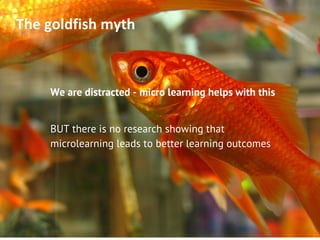
We are distracted - micro learning helps with this
BUT there is no research showing that
microlearning leads to better learning outcomes
The rise of digital workplaces
Integrated collaboration technology
Office 365 - done well
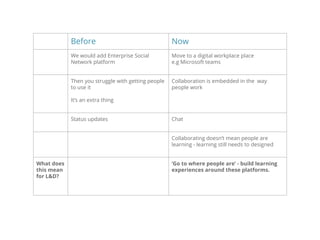
Before Now
We would add Enterprise Social
Network platform
Move to a digital workplace place
e.g Microsoft teams
Then you struggle with getting people
to use it
It’s an extra thing
Collaboration is embedded in the way
people work
Status updates Chat
Collaborating doesn’t mean people are
learning - learning still needs to designed
What does
this mean
for L&D?
‘Go to where people are’ - build learning
experiences around these platforms.
It’s a term that is being used for learning platforms that are not
learning management systems.
An employee pulls in what they need
Instead of pushing out what an organisation needs
Experience is maybe not the best term
What is a Learning Experience platform?
They give your learners the freedom
to be self directed
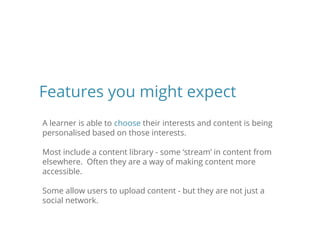
A learner is able to choose their interests and content is being
personalised based on those interests.
Most include a content library - some ‘stream’ in content from
elsewhere. Often they are a way of making content more
accessible.
Some allow users to upload content - but they are not just a
social network.
Features you might expect
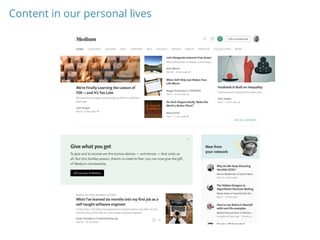
Content in our personal lives
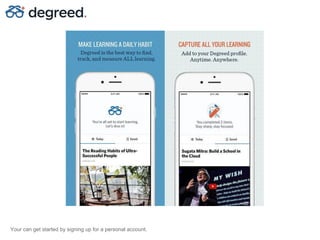
Your can get started by signing up for a personal account.
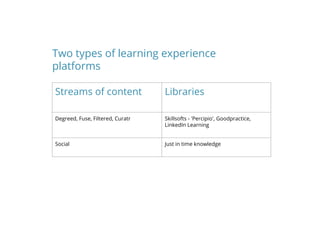
Streams of content Libraries
Degreed, Fuse, Filtered, Curatr Skillsofts - 'Percipio', Goodpractice,
LinkedIn Learning
Social Just in time knowledge
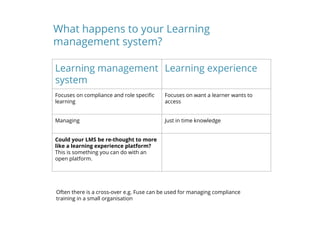
Two types of learning experience
platforms
Learning management
system
Learning experience
Focuses on compliance and role specific
learning
Focuses on want a learner wants to
access
Managing Just in time knowledge
Could your LMS be re-thought to more
like a learning experience platform?
This is something you can do with an
open platform.
What happens to your Learning
management system?
Often there is a cross-over e.g. Fuse can be used for managing compliance
training in a small organisation
A core feature of many Learning Experience
platforms is the use of recommendation engines
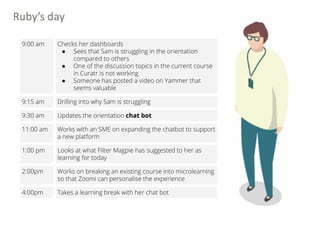
●
●
●
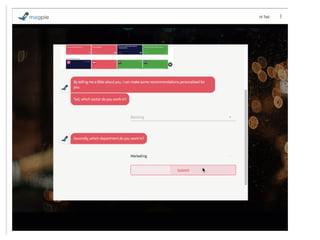
chat bot
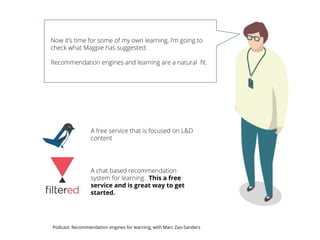
Podcast: Recommendation engines for learning, with Marc Zao-Sanders
This a free
service and is great way to get
started.
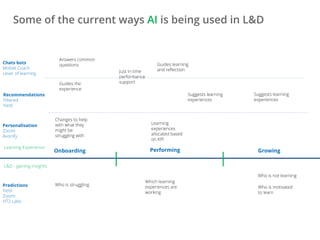
Performing GrowingOnboarding
Predictions
Personalisation
Recommendations
Chats bots
If you are interested in having a chat about getting started in digital
learning or improving your digital learning my contact information
is below.
Dr Robin Petterd
M: +61 419 101 928
E: robin@sproutlabs.com.au

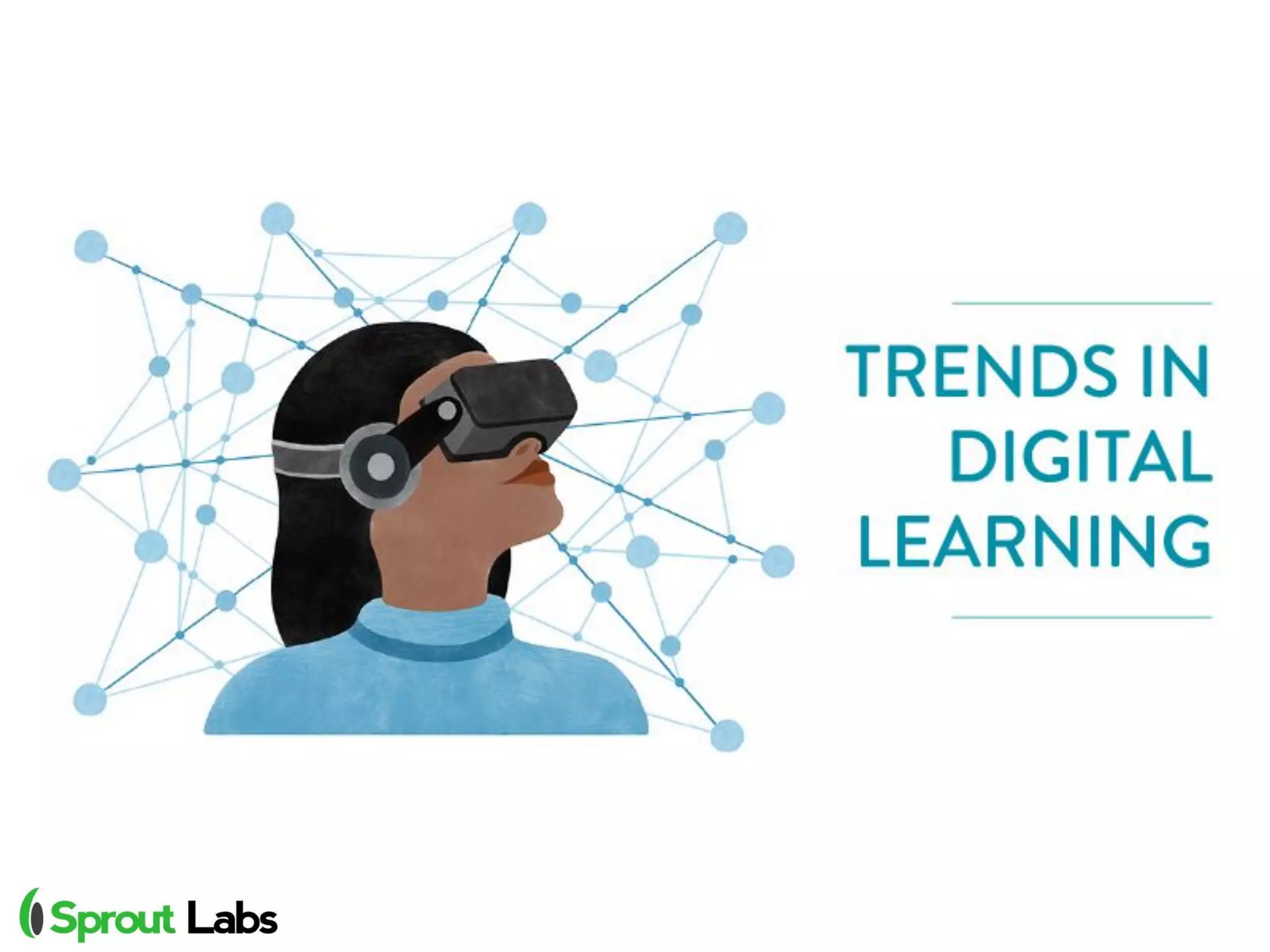
Trends in digital learning - 2018

  • 2.
  • 3.
    Sprout Labs buildsdigital learning platforms that enable you and your team to author, deliver and measure high impact digital learning ecosystems.
  • 4.
    • The LearningWhile Working podcast • The blog • eBooks • The recordings of past webinars • The Learning While Working virtual conference
  • 5.
    ● the useof artificial intelligence in L&D ● the maturation of xAPI and how L&D is becoming more data driven ● the relationship between microlearning and learning while working, and personalisation of learning ● the rise of digital workplaces and what this means for L&D ● virtual reality and augmented reality ● the new role of the LMS in a learning ecosystem and the growth of learning experience platforms …
  • 6.
    Most people wantto be better at their jobs and learn L&D often uses technology in a way that stops people learning
  • 7.
    Consumer technology drivesworkplace technology
  • 8.
    Digital learning isstarting to focus on what a learner really needs
  • 9.
    The technology tosupport VR is cheaper
  • 10.
    It means noPowerPoints! Preparation - Experience - Debrief
  • 11.
    Phone based -lower cost
  • 12.
    PC based -higher cost and higher quality
  • 13.
    Video based Still fromWorkPl>ysVR (Bringing Virtual Reality Into Work Experience) for the Learning While Working conference session
  • 14.
    Simulated Virtual Reality Demofor Safety Training - Working at Heights
  • 15.
  • 16.
    Virtual reality Augmentedvirtual reality Video based Simulation Cost for the technology Low - phone based - $200 High - $2000 Can be done with phones as well High Complexity of production Low - need a 3D camera High High Level of interaction Low High High Major reasons to use in learning Show someone a place or situation e.g. dealing with an angry customer To allow someone to practice a skill Performance support
  • 17.
  • 18.
    People don’t justlearn in an LMS
  • 20.
    It’s expected nowthat learning technologies are xAPI enabled
  • 21.
  • 22.
    Business data Learning data Howis learning going to impact business data? How is learning going to change in response to business data?
  • 23.
    Data-Driven Learning Design— Lori Niles-Hofmann She talks about reading employees’ ‘Digital body language’. What are people searching for? What are people accessing? What are the trends? How is the data changing? Listen to the podcast at: https://www.sproutlabs.com.au/blog/data-driven-learning-design-and-digital-body-language/
  • 24.
    What source ofdata should L&D be looking at beyond your LMS? Please add your thoughts in chat.
  • 25.
    Linking learning andperformance — GamEffective Changes in performance data – trigger micro-learning Dashboards to give employees feedback (visualisations make data easier to understand) Listen to the podcast at: https://www.sproutlabs.com.au/blog/personalisation-of-learning/
  • 26.
    Microlearning is L&Drealising what learners need
  • 27.
    Microlearning is smallcomponents of learning whose purpose is to help behaviour change or support performance
  • 28.
    microlearning microresources Designed tobe accessed just-in-time, while working The end outcome of learning is behaviour change, and this means learning needs to involve practice, feedback, and reflection. Learning is a process not just information
  • 29.
    Resources are usefulfor learning while working Performance supports - checklists, flowcharts, videos, infographics Learning happens as a process of doing
  • 30.
    Microlearning is notadaptive and personalised learning, it’s not spaced learning, it’s not a learning campaign. It’s an enabler for these approaches
  • 31.
    Drivers for microlearning •We are working more on mobile devices • We want to develop expertise faster • We are distracted Microlearning can help L&D teams become more agile by working in smaller chunks of work
  • 32.
    We are distracted- micro learning helps with this BUT there is no research showing that microlearning leads to better learning outcomes
  • 34.
    The rise ofdigital workplaces Integrated collaboration technology Office 365 - done well
  • 35.
    Before Now We wouldadd Enterprise Social Network platform Move to a digital workplace place e.g Microsoft teams Then you struggle with getting people to use it It’s an extra thing Collaboration is embedded in the way people work Status updates Chat Collaborating doesn’t mean people are learning - learning still needs to designed What does this mean for L&D? ‘Go to where people are’ - build learning experiences around these platforms.
  • 36.
    It’s a termthat is being used for learning platforms that are not learning management systems. An employee pulls in what they need Instead of pushing out what an organisation needs Experience is maybe not the best term What is a Learning Experience platform?
  • 37.
    They give yourlearners the freedom to be self directed
  • 38.
    A learner isable to choose their interests and content is being personalised based on those interests. Most include a content library - some ‘stream’ in content from elsewhere. Often they are a way of making content more accessible. Some allow users to upload content - but they are not just a social network. Features you might expect
  • 39.
    Content in ourpersonal lives
  • 40.
    Your can getstarted by signing up for a personal account.
  • 41.
    Streams of contentLibraries Degreed, Fuse, Filtered, Curatr Skillsofts - 'Percipio', Goodpractice, LinkedIn Learning Social Just in time knowledge Two types of learning experience platforms
  • 42.
    Learning management system Learning experience Focuseson compliance and role specific learning Focuses on want a learner wants to access Managing Just in time knowledge Could your LMS be re-thought to more like a learning experience platform? This is something you can do with an open platform. What happens to your Learning management system? Often there is a cross-over e.g. Fuse can be used for managing compliance training in a small organisation
  • 43.
    A core featureof many Learning Experience platforms is the use of recommendation engines
  • 45.
  • 47.
    Podcast: Recommendation enginesfor learning, with Marc Zao-Sanders This a free service and is great way to get started.
  • 49.
  • 50.
    If you areinterested in having a chat about getting started in digital learning or improving your digital learning my contact information is below. Dr Robin Petterd M: +61 419 101 928 E: robin@sproutlabs.com.au