Asexual Propagation by

              Layering


 Original work from “Applied Technologies” edited and used
            with permission by Dr. Teri Hamlin
Table of Contents
  Introduction to Plant Propagation
  Sexual Propagation
  Asexual Propagation
    Stem, Leaf, Cuttings
    Layering
    Separation & Division
    Tissue Culture
    Budding and Grafting
What is layering?

 a method of asexual propagation in
 which roots are formed on a stem or
 root while it is still attached to the
 parent plant
 the stem or root which is rooted is
 called a layer
Why use this method?
 Some plants are propagated easiest
 using this method.
Advantage
 The plant being rooted benefits from
 the resource of water and nutrients that
 the mother plant provides.
Disadvantages:
 Requires more time than other
 methods of propagation
 Fewer plants can be started from
 each parent plant
Methods of Layering
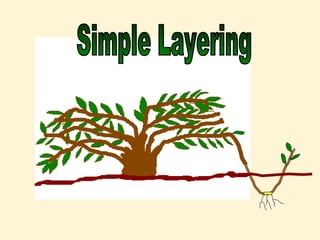
 Simple Layering
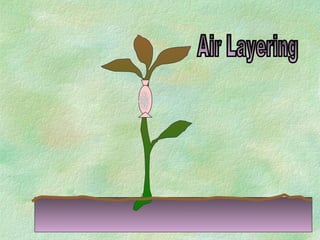
 Air Layering
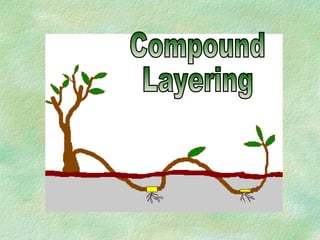
 Compound Layering
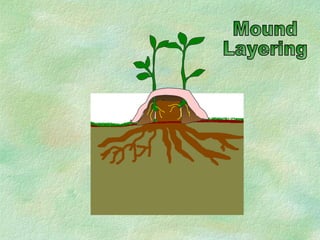
 Mound Layering
 Trench Layering
Layering
Layering
Layering
Layering

Layering

  • 1.
    Asexual Propagation by Layering Original work from “Applied Technologies” edited and used with permission by Dr. Teri Hamlin
  • 2.
    Table of Contents Introduction to Plant Propagation Sexual Propagation Asexual Propagation Stem, Leaf, Cuttings Layering Separation & Division Tissue Culture Budding and Grafting
  • 3.
    What is layering? a method of asexual propagation in which roots are formed on a stem or root while it is still attached to the parent plant the stem or root which is rooted is called a layer
  • 4.
    Why use thismethod? Some plants are propagated easiest using this method. Advantage The plant being rooted benefits from the resource of water and nutrients that the mother plant provides.
  • 5.
    Disadvantages: Requires moretime than other methods of propagation Fewer plants can be started from each parent plant
  • 6.
    Methods of Layering Simple Layering Air Layering Compound Layering Mound Layering Trench Layering