RAMKRISHNA BAJAJ COLLEGE OF AGRICULTURE
PIPRI WARDHA
HORTICULTURE MODULE
PRESENTATION
PRESENTATION TOPIC :- METHOD OF
ASEXUAL PROPAGATION BY LAYERING
Guided By :- Dr Sanjivani Gondane
PRESENTED BY :-
Vaibhav B. Fating QQ618
Semster :- 8th
Course no:- ELE- HORT4811
Course title:- Nursery management of Horticulture crop
Reference:- Principles of Horticulture and Production technology of fruitcrop
(K. Bhaskara. Reddy)
Contents
1. LAYERING
2. METHODS OF LAYERING
3. ADVANTAGES OF LAYERING
4. DISADVANTAGES OF LAYERING
LAYERING
1) The development of roots on a stem while the stem is still attached
to the parent plant is called layering
2) The root formation during layering on a stem is stimulated by
various stem treatments like ringing, notching
3) Growth regulators like IBA, IAA etc, are also treated to layered stem
to induce better rooting
Methods of Layering
I. Ground layering
1) Tip layering
2) Simple layering
3) Trench layering
4) Mound layering or stool layering
5) Compound or serpentine layering
II. Air layering
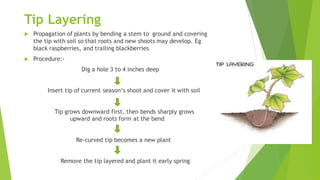
Tip Layering
 Propagation of plants by bending a stem to ground and covering
the tip with soil so that roots and new shoots may develop. Eg
black raspberries, and trailing blackberries
 Procedure:-
Dig a hole 3 to 4 inches deep
Insert tip of current season‘s shoot and cover it with soil
Tip grows downward first, then bends sharply grows
upward and roots form at the bend
Re-curved tip becomes a new plant
Remove the tip layered and plant it early spring
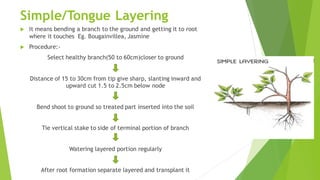
Simple/Tongue Layering
 It means bending a branch to the ground and getting it to root
where it touches Eg. Bougainvillea, Jasmine
 Procedure:-
Select healthy branch(50 to 60cm)closer to ground
Distance of 15 to 30cm from tip give sharp, slanting inward and
upward cut 1.5 to 2.5cm below node
Bend shoot to ground so treated part inserted into the soil
Tie vertical stake to side of terminal portion of branch
Watering layered portion regularly
After root formation separate layered and transplant it
Trench Layering
 Growing a plant or branch of plant in horizontal position in base
of trench and filling in soil produce new shoots Eg. Apple
rootstocks, Litchi
 Procedure:-
Dig trench about 25-30cm deep and 1 m wide
Lay plant flat on bottom of trench and kept flat with wooden pegs
Cut shoots slightly and remove weak branches
Add roots medium(sand or sawdust or peat moss) or their mixture
at base to developing shoots
Remove medium and cut off rooted shoots
Transplant the rooted shoots in pots
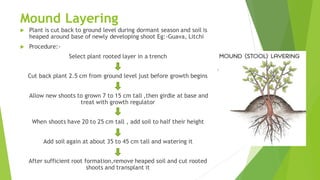
Mound Layering
 Plant is cut back to ground level during dormant season and soil is
heaped around base of newly developing shoot Eg:-Guava, Litchi
 Procedure:-
Select plant rooted layer in a trench
Cut back plant 2.5 cm from ground level just before growth begins
Allow new shoots to grown 7 to 15 cm tall ,then girdle at base and
treat with growth regulator
When shoots have 20 to 25 cm tall , add soil to half their height
Add soil again at about 35 to 45 cm tall and watering it
After sufficient root formation,remove heaped soil and cut rooted
shoots and transplant it
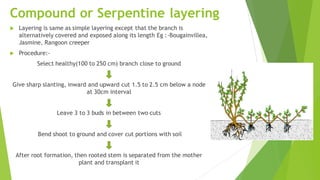
Compound or Serpentine layering
 Layering is same as simple layering except that the branch is
alternatively covered and exposed along its length Eg :-Bougainvillea,
Jasmine, Rangoon creeper
 Procedure:-
Select healthy(100 to 250 cm) branch close to ground
Give sharp slanting, inward and upward cut 1.5 to 2.5 cm below a node
at 30cm interval
Leave 3 to 3 buds in between two cuts
Bend shoot to ground and cover cut portions with soil
After root formation, then rooted stem is separated from the mother
plant and transplant it
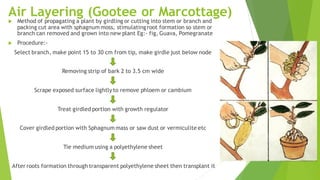
Air Layering (Gootee or Marcottage)
 Method of propagating a plant by girdling or cutting into stem or branch and
packing cut area with sphagnum moss, stimulating root formation so stem or
branch can removed and grown into new plant Eg:- fig, Guava, Pomegranate
 Procedure:-
Select branch, make point 15 to 30 cm from tip, make girdle just below node
Removing strip of bark 2 to 3.5 cm wide
Scrape exposed surface lightly to remove phloem or cambium
Treat girdled portion with growth regulator
Cover girdled portion with Sphagnum mass or saw dust or vermiculite etc
Tie medium using a polyethylene sheet
After roots formation through transparent polyethylene sheet then transplant it
Advantages of Layering
 Easy method and does not require much care than cutting
 Mother plant supplies nutrient and other metabolites
attached while rooting
 Large branch can obtained in first instance
 Some plants that cannot started from cuttings so propagated
by layering eg :-climbing roses, forsythia
Disadvantages of Layering
 Limited number of plants can be propagated
 Layered plants are generally shallow rooted
 It is a costlier and slow process method
 The beneficial effect of root stock cannot be
exploited
Layering

Layering

  • 1.
    RAMKRISHNA BAJAJ COLLEGEOF AGRICULTURE PIPRI WARDHA HORTICULTURE MODULE PRESENTATION
  • 2.
    PRESENTATION TOPIC :-METHOD OF ASEXUAL PROPAGATION BY LAYERING Guided By :- Dr Sanjivani Gondane PRESENTED BY :- Vaibhav B. Fating QQ618 Semster :- 8th Course no:- ELE- HORT4811 Course title:- Nursery management of Horticulture crop Reference:- Principles of Horticulture and Production technology of fruitcrop (K. Bhaskara. Reddy)
  • 3.
    Contents 1. LAYERING 2. METHODSOF LAYERING 3. ADVANTAGES OF LAYERING 4. DISADVANTAGES OF LAYERING
  • 4.
    LAYERING 1) The developmentof roots on a stem while the stem is still attached to the parent plant is called layering 2) The root formation during layering on a stem is stimulated by various stem treatments like ringing, notching 3) Growth regulators like IBA, IAA etc, are also treated to layered stem to induce better rooting
  • 5.
    Methods of Layering I.Ground layering 1) Tip layering 2) Simple layering 3) Trench layering 4) Mound layering or stool layering 5) Compound or serpentine layering II. Air layering
  • 6.
    Tip Layering  Propagationof plants by bending a stem to ground and covering the tip with soil so that roots and new shoots may develop. Eg black raspberries, and trailing blackberries  Procedure:- Dig a hole 3 to 4 inches deep Insert tip of current season‘s shoot and cover it with soil Tip grows downward first, then bends sharply grows upward and roots form at the bend Re-curved tip becomes a new plant Remove the tip layered and plant it early spring
  • 7.
    Simple/Tongue Layering  Itmeans bending a branch to the ground and getting it to root where it touches Eg. Bougainvillea, Jasmine  Procedure:- Select healthy branch(50 to 60cm)closer to ground Distance of 15 to 30cm from tip give sharp, slanting inward and upward cut 1.5 to 2.5cm below node Bend shoot to ground so treated part inserted into the soil Tie vertical stake to side of terminal portion of branch Watering layered portion regularly After root formation separate layered and transplant it
  • 8.
    Trench Layering  Growinga plant or branch of plant in horizontal position in base of trench and filling in soil produce new shoots Eg. Apple rootstocks, Litchi  Procedure:- Dig trench about 25-30cm deep and 1 m wide Lay plant flat on bottom of trench and kept flat with wooden pegs Cut shoots slightly and remove weak branches Add roots medium(sand or sawdust or peat moss) or their mixture at base to developing shoots Remove medium and cut off rooted shoots Transplant the rooted shoots in pots
  • 9.
    Mound Layering  Plantis cut back to ground level during dormant season and soil is heaped around base of newly developing shoot Eg:-Guava, Litchi  Procedure:- Select plant rooted layer in a trench Cut back plant 2.5 cm from ground level just before growth begins Allow new shoots to grown 7 to 15 cm tall ,then girdle at base and treat with growth regulator When shoots have 20 to 25 cm tall , add soil to half their height Add soil again at about 35 to 45 cm tall and watering it After sufficient root formation,remove heaped soil and cut rooted shoots and transplant it
  • 10.
    Compound or Serpentinelayering  Layering is same as simple layering except that the branch is alternatively covered and exposed along its length Eg :-Bougainvillea, Jasmine, Rangoon creeper  Procedure:- Select healthy(100 to 250 cm) branch close to ground Give sharp slanting, inward and upward cut 1.5 to 2.5 cm below a node at 30cm interval Leave 3 to 3 buds in between two cuts Bend shoot to ground and cover cut portions with soil After root formation, then rooted stem is separated from the mother plant and transplant it
  • 11.
    Air Layering (Gooteeor Marcottage)  Method of propagating a plant by girdling or cutting into stem or branch and packing cut area with sphagnum moss, stimulating root formation so stem or branch can removed and grown into new plant Eg:- fig, Guava, Pomegranate  Procedure:- Select branch, make point 15 to 30 cm from tip, make girdle just below node Removing strip of bark 2 to 3.5 cm wide Scrape exposed surface lightly to remove phloem or cambium Treat girdled portion with growth regulator Cover girdled portion with Sphagnum mass or saw dust or vermiculite etc Tie medium using a polyethylene sheet After roots formation through transparent polyethylene sheet then transplant it
  • 12.
    Advantages of Layering Easy method and does not require much care than cutting  Mother plant supplies nutrient and other metabolites attached while rooting  Large branch can obtained in first instance  Some plants that cannot started from cuttings so propagated by layering eg :-climbing roses, forsythia
  • 13.
    Disadvantages of Layering Limited number of plants can be propagated  Layered plants are generally shallow rooted  It is a costlier and slow process method  The beneficial effect of root stock cannot be exploited