Council for technical
Council for technical technical education and vocational training
Tikapur polytechnic institute
Submitted by submitted to
Krishna raj joshi Hemant neupane
Agriculture department
LAYERING
• The development of roots on a stem while the
stem is still attached to the parent plant is
called layering.
• A layer is the rooted stem following
detachment (removal) from the parent plants.
• Layering is an easy way to start new plants
from old ones.
Advantage of layering
• The success rate is higher than other asexual
method.
• Simple and easy method than other methods.
• Low cost than other methods.
• Plant being rooted benefits from the
resources of water and nutrients that the
mother plant provides.
Disadvantage of layering
• Not suitable for all type of ornamental plants.
• Required the more time than other methods
• Fewer plant can be started from each parent
plant.
Physiology of layering
• The flow of carbohydrates, hormones and other
organic substances is interrupted by the removal
of the bark through notching or girdling (removal
of bark).
• The accumulation of these organic substances in
the stem facilitates rooting.
• The rooting media is provided for the proper
development of roots.
• When sufficient roots are formed the plantlets
are severed from the mother plants.
Different methods of layering
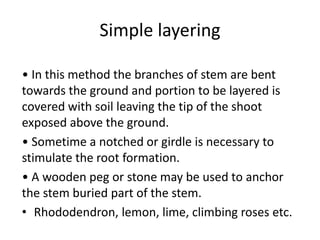
• Simple layering
• Air layering.
• Mount or stool layering.
• Compound layering.
• Trench layering.
•
Simple layering
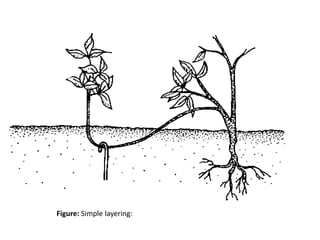
• In this method the branches of stem are bent
towards the ground and portion to be layered is
covered with soil leaving the tip of the shoot
exposed above the ground.
• Sometime a notched or girdle is necessary to
stimulate the root formation.
• A wooden peg or stone may be used to anchor
the stem buried part of the stem.
• Rhododendron, lemon, lime, climbing roses etc.
Figure: Simple layering:
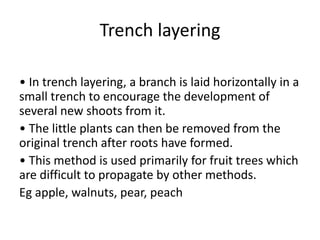
Compound layering
• It is same as simple layering but differs by
cover and expose section of the stem.
• Each section should have at least one bud
exposed and one bud covered with soil.
• Wound the lower side of each stem section to
be covered facilitates rapid root growth.
• This method is mostly applied in Muscadine
grapes & other vines.
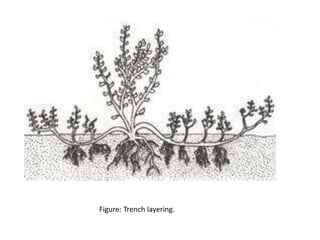
Trench layering
• In trench layering, a branch is laid horizontally in a
small trench to encourage the development of
several new shoots from it.
• The little plants can then be removed from the
original trench after roots have formed.
• This method is used primarily for fruit trees which
are difficult to propagate by other methods.
Eg apple, walnuts, pear, peach
Figure: Trench layering.
Mount or stool layering
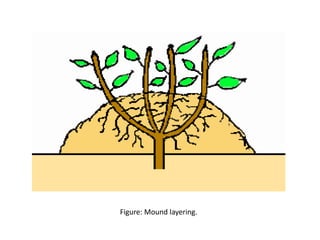
• Mound (stool) layering is useful with heavy
stemmed, closely branched shrubs and rootstock of
tree fruits.
• Mound soil over the new shoots as they grow.
• Roots will develop at the bases of the young
shoots.
• Remove the layers in the dormant season.
•This method is successful with gooseberries and
apple rootstocks.
Figure: Mound layering.
Air layering
• Air layering is also called “Gootee”, Chinese layering or marcotting.
• In this method roots are produced in the branch of tree.
• No twisting or tending are required.
• First girdle or bending are required.
• First girdle the bark along with cambium layer between two buds.
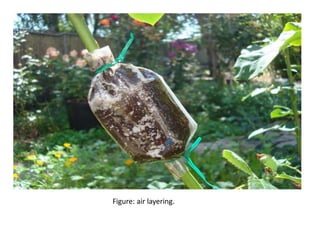
• Rooting is encouraged by placing the rooting media (moist
soil+sphagnum mass) in the girdled portion and wrapped with plastic
or gunny bag and tied properly.
• When root is formed detach the plant and grown as new plant.
• Example Rubber plant, litchi, guava, jackfruit, lemon etc.
Figure: air layering.
Leyaring

Leyaring

  • 1.
  • 2.
    Council for technicaltechnical education and vocational training Tikapur polytechnic institute Submitted by submitted to Krishna raj joshi Hemant neupane Agriculture department
  • 3.
    LAYERING • The developmentof roots on a stem while the stem is still attached to the parent plant is called layering. • A layer is the rooted stem following detachment (removal) from the parent plants. • Layering is an easy way to start new plants from old ones.
  • 4.
    Advantage of layering •The success rate is higher than other asexual method. • Simple and easy method than other methods. • Low cost than other methods. • Plant being rooted benefits from the resources of water and nutrients that the mother plant provides.
  • 5.
    Disadvantage of layering •Not suitable for all type of ornamental plants. • Required the more time than other methods • Fewer plant can be started from each parent plant.
  • 6.
    Physiology of layering •The flow of carbohydrates, hormones and other organic substances is interrupted by the removal of the bark through notching or girdling (removal of bark). • The accumulation of these organic substances in the stem facilitates rooting. • The rooting media is provided for the proper development of roots. • When sufficient roots are formed the plantlets are severed from the mother plants.
  • 7.
    Different methods oflayering • Simple layering • Air layering. • Mount or stool layering. • Compound layering. • Trench layering. •
  • 8.
    Simple layering • Inthis method the branches of stem are bent towards the ground and portion to be layered is covered with soil leaving the tip of the shoot exposed above the ground. • Sometime a notched or girdle is necessary to stimulate the root formation. • A wooden peg or stone may be used to anchor the stem buried part of the stem. • Rhododendron, lemon, lime, climbing roses etc.
  • 9.
  • 10.
    Compound layering • Itis same as simple layering but differs by cover and expose section of the stem. • Each section should have at least one bud exposed and one bud covered with soil. • Wound the lower side of each stem section to be covered facilitates rapid root growth. • This method is mostly applied in Muscadine grapes & other vines.
  • 12.
    Trench layering • Intrench layering, a branch is laid horizontally in a small trench to encourage the development of several new shoots from it. • The little plants can then be removed from the original trench after roots have formed. • This method is used primarily for fruit trees which are difficult to propagate by other methods. Eg apple, walnuts, pear, peach
  • 13.
  • 14.
    Mount or stoollayering • Mound (stool) layering is useful with heavy stemmed, closely branched shrubs and rootstock of tree fruits. • Mound soil over the new shoots as they grow. • Roots will develop at the bases of the young shoots. • Remove the layers in the dormant season. •This method is successful with gooseberries and apple rootstocks.
  • 15.
  • 16.
    Air layering • Airlayering is also called “Gootee”, Chinese layering or marcotting. • In this method roots are produced in the branch of tree. • No twisting or tending are required. • First girdle or bending are required. • First girdle the bark along with cambium layer between two buds. • Rooting is encouraged by placing the rooting media (moist soil+sphagnum mass) in the girdled portion and wrapped with plastic or gunny bag and tied properly. • When root is formed detach the plant and grown as new plant. • Example Rubber plant, litchi, guava, jackfruit, lemon etc.
  • 17.