Name : Solanki Pratiksha M. 
Roll No : 21 
Enrolment No. 13101032 
Paper : 12 A. English Language 
Teaching 
Sem : 3. (2014-2015) 
Subject : Language Learning 
Strategies - Rebecca L. Oxford 
Submitted to : 
 Smt. S.B. Gardi 
Department of English 
M.K.Bhavnagar University
 Language Learning Strategies 
• Language learning Strategies.. 
• Implications for teaching and future 
research. 
" The main factors that help determine 
how 
and how well our students learn a second 
or foreign.."
•A Second Language 
 Language studied in a setting 
where that language is the main 
vehicle of everyday 
communication.
A foreign language 
 A language studied in an 
environment where it is not the 
primary vehicle for daily interaction.
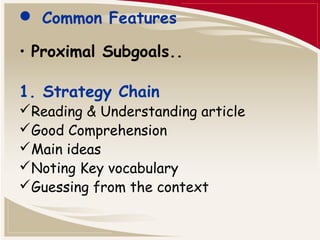
 Common Features 
• Proximal Subgoals.. 
1. Strategy Chain 
Reading & Understanding article 
Good Comprehension 
Main ideas 
Noting Key vocabulary 
Guessing from the context
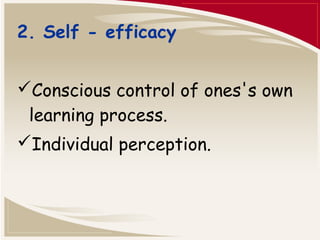
2. Self - efficacy 
Conscious control of ones's own 
learning process. 
Individual perception.
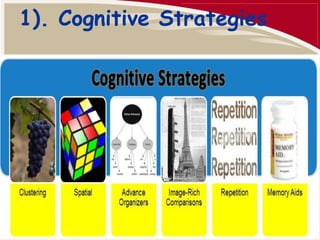
1). Cognitive Strategies
"Cognitive strategies help learners 
make and strengthen associations 
between new and already known 
information.." 
 Practicising 
Analysing and reasoning 
Creating structures for input and 
output
• Tapestry Approach .. 
 Reflects work of Vygotsky (1978.. 1986 ). 
 Learning occurs in interaction with 
other people.. 
With the help of more capable 
other..
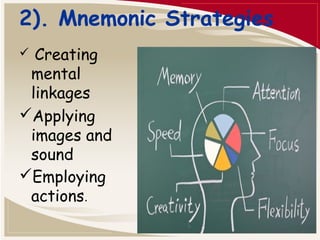
2). Mnemonic Strategies 
 Creating 
mental 
linkages 
Applying 
images and 
sound 
Employing 
actions.
3). Metacognitive Strategies 
 Help learners to 
manage.. 
 themselves as 
learners. 
 the general 
learning process. 
 specific learning 
tasks.
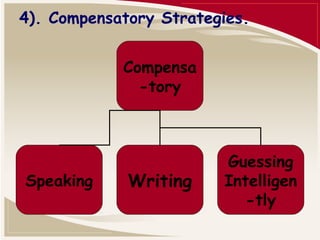
4). Compensatory Strategies. 
Compensa 
-tory 
Speaking Writing 
Guessing 
Intelligen 
-tly
5). Affective Strategies.
 Identifying one's feeling.. 
 Anxiety 
 Anger 
 Contentment 
 " Emotional Checklists ".. 
 Language Learning anxiety - which has 
received an abundance.. 
 Usually related to fear of 
communicating in English..
6). Social Strategies. 
 Define 
 Culture 
 Cultural Norms 
 Cultural values 
 Engage 
 Control 
 Develop 
 Prioritize
Research 
Assess 
Language 
Learning 
Rubin1975 
Asking 
questions 
Clerification 
The 
"Good 
Language 
Learner " 
Strategy 
Instructi 
-on
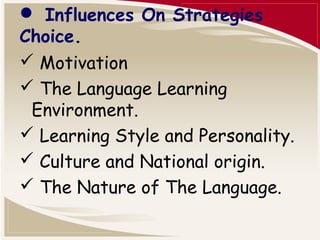
 Influences On Strategies 
Choice. 
 Motivation 
 The Language Learning 
Environment. 
 Learning Style and Personality. 
 Culture and National origin. 
 The Nature of The Language.
Current and Future Trends and 
Directions. 
• Deal with a number of key issues.. 
1. to learn how to help language teachers 
become aware of the importance of language 
learning strategies. 
2. Discover.. How to teach strategies 
effectively.. 
3. Various forms of Strategies. 
4. Strategies Research..
Language learning strategies : Rebecca L. Oxford

Language learning strategies : Rebecca L. Oxford

  • 1.
    Name : SolankiPratiksha M. Roll No : 21 Enrolment No. 13101032 Paper : 12 A. English Language Teaching Sem : 3. (2014-2015) Subject : Language Learning Strategies - Rebecca L. Oxford Submitted to :  Smt. S.B. Gardi Department of English M.K.Bhavnagar University
  • 2.
     Language LearningStrategies • Language learning Strategies.. • Implications for teaching and future research. " The main factors that help determine how and how well our students learn a second or foreign.."
  • 3.
    •A Second Language  Language studied in a setting where that language is the main vehicle of everyday communication.
  • 4.
    A foreign language  A language studied in an environment where it is not the primary vehicle for daily interaction.
  • 5.
     Common Features • Proximal Subgoals.. 1. Strategy Chain Reading & Understanding article Good Comprehension Main ideas Noting Key vocabulary Guessing from the context
  • 6.
    2. Self -efficacy Conscious control of ones's own learning process. Individual perception.
  • 7.
  • 8.
    "Cognitive strategies helplearners make and strengthen associations between new and already known information.."  Practicising Analysing and reasoning Creating structures for input and output
  • 9.
    • Tapestry Approach..  Reflects work of Vygotsky (1978.. 1986 ).  Learning occurs in interaction with other people.. With the help of more capable other..
  • 10.
    2). Mnemonic Strategies  Creating mental linkages Applying images and sound Employing actions.
  • 11.
    3). Metacognitive Strategies  Help learners to manage..  themselves as learners.  the general learning process.  specific learning tasks.
  • 12.
    4). Compensatory Strategies. Compensa -tory Speaking Writing Guessing Intelligen -tly
  • 13.
  • 14.
     Identifying one'sfeeling..  Anxiety  Anger  Contentment  " Emotional Checklists "..  Language Learning anxiety - which has received an abundance..  Usually related to fear of communicating in English..
  • 15.
    6). Social Strategies.  Define  Culture  Cultural Norms  Cultural values  Engage  Control  Develop  Prioritize
  • 16.
    Research Assess Language Learning Rubin1975 Asking questions Clerification The "Good Language Learner " Strategy Instructi -on
  • 17.
     Influences OnStrategies Choice.  Motivation  The Language Learning Environment.  Learning Style and Personality.  Culture and National origin.  The Nature of The Language.
  • 18.
    Current and FutureTrends and Directions. • Deal with a number of key issues.. 1. to learn how to help language teachers become aware of the importance of language learning strategies. 2. Discover.. How to teach strategies effectively.. 3. Various forms of Strategies. 4. Strategies Research..