Name : Solanki Pratiksha M.
Paper:1.Research Skills: Documentation
and Fundamentals of Literary Research
Sem: 1. M.Phil (2016-2017)
Enrolment No. 206911222017003
Subject :Using Online sources for
Literary Purpose
 Smt. S.B. Gardi
Dept. of English
M.K.Bhavnagar University
 pratikshasolanki068@gmail.com
Using Online Source for Literary
Purpose
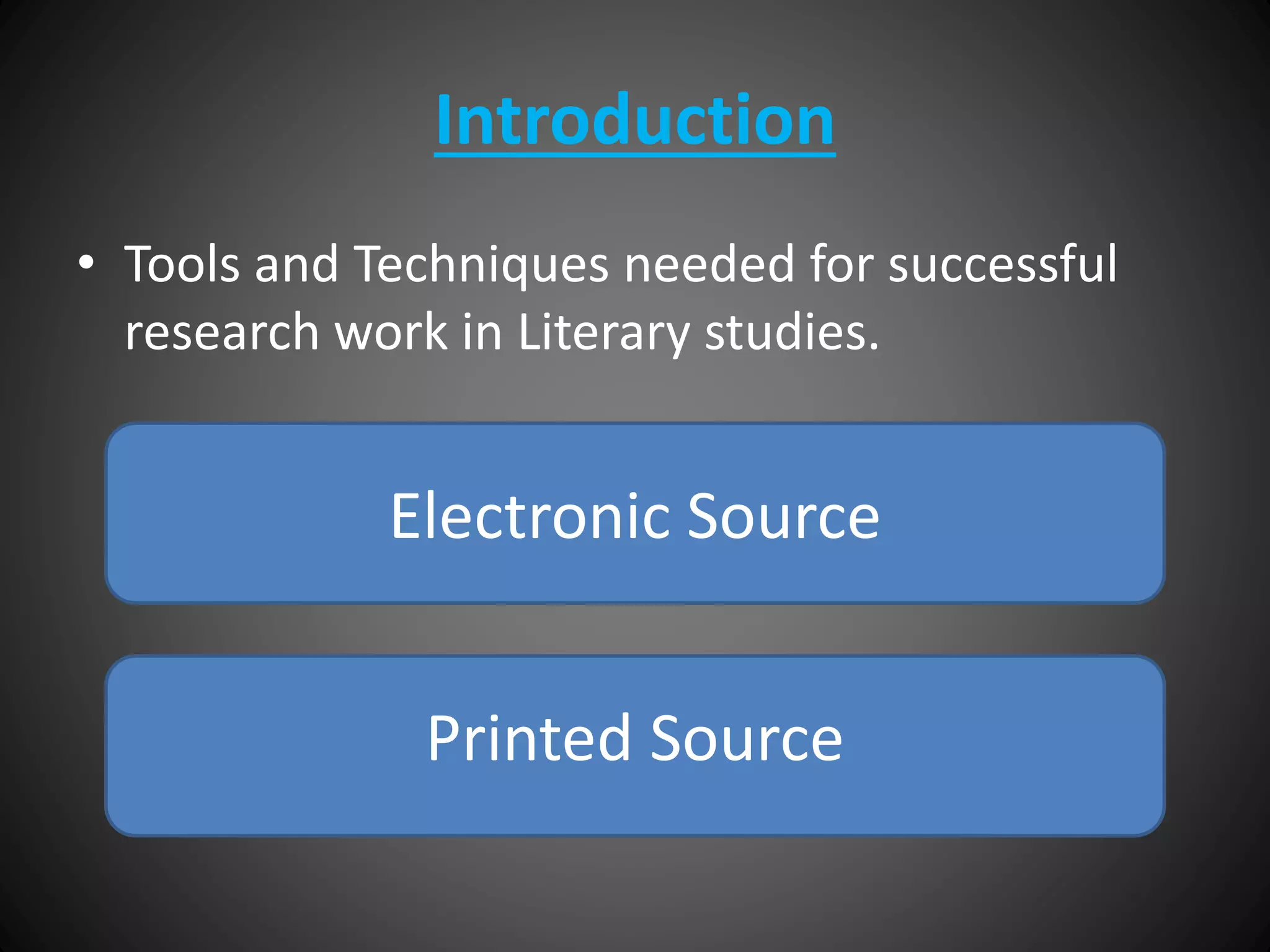
Introduction
• Tools and Techniques needed for successful
research work in Literary studies.
Electronic Source
Printed Source
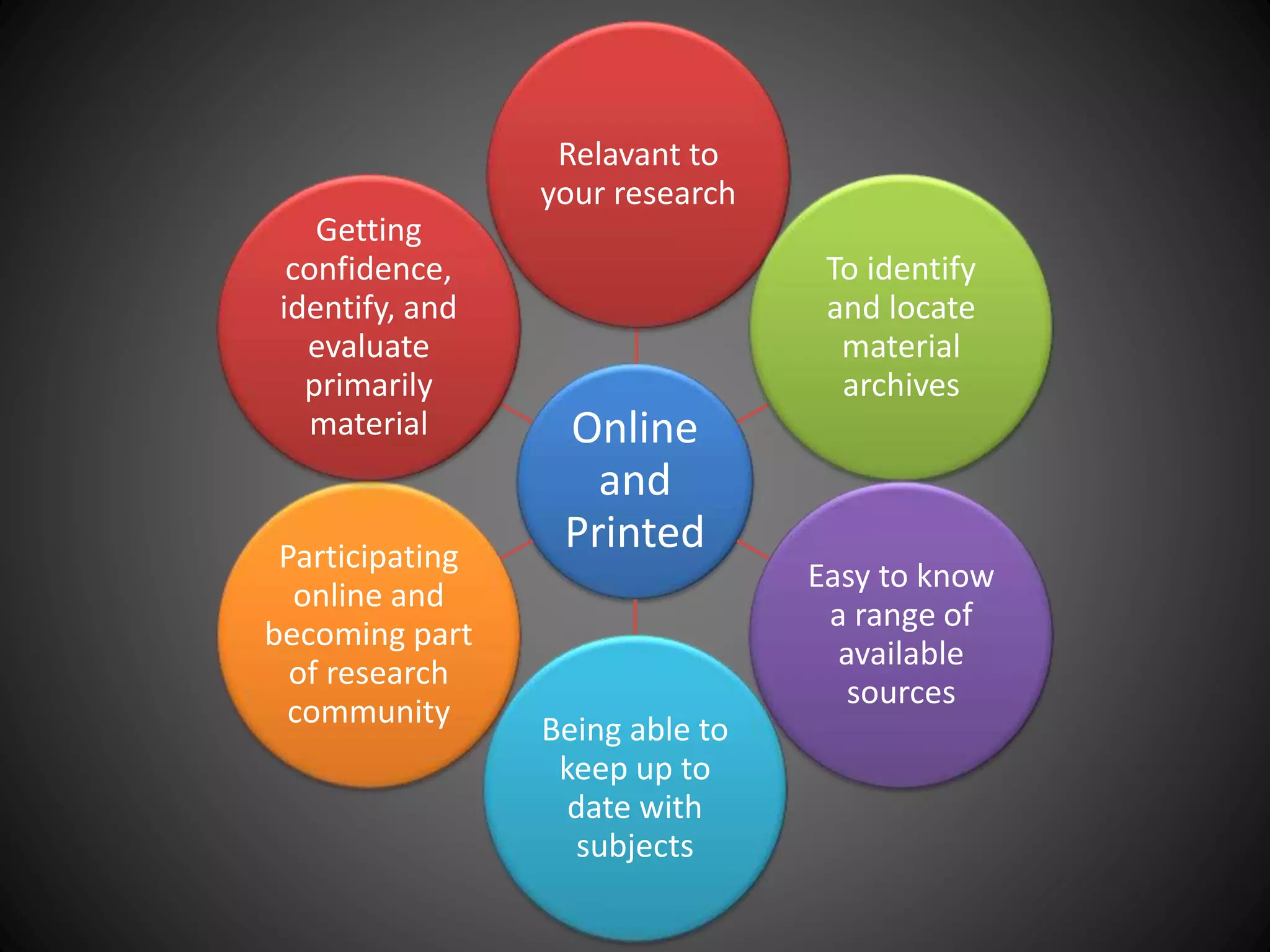
Online
and
Printed
Relavant to
your research
To identify
and locate
material
archives
Easy to know
a range of
available
sources
Being able to
keep up to
date with
subjects
Participating
online and
becoming part
of research
community
Getting
confidence,
identify, and
evaluate
primarily
material
Online Sources: For Literary Purpose
• Online tools, in one form or another, has always been
part of the teaching and it is among the resources that
teachers use to help facilitate student
• Re + Search
• Word ‘Research’ is comprises of two words = Re +
Search. It means to search again.
• Today’s postgraduate students are use and evaluate a
wide range of electronic sources.
• They have most likely have their own laptops with wifi
and able to do multitask.
• How the basic principles of online tools that helps to
underpin your research, which you can and than apply.
Internet
Google
Wikipedia
Bookmark
Citing
Source
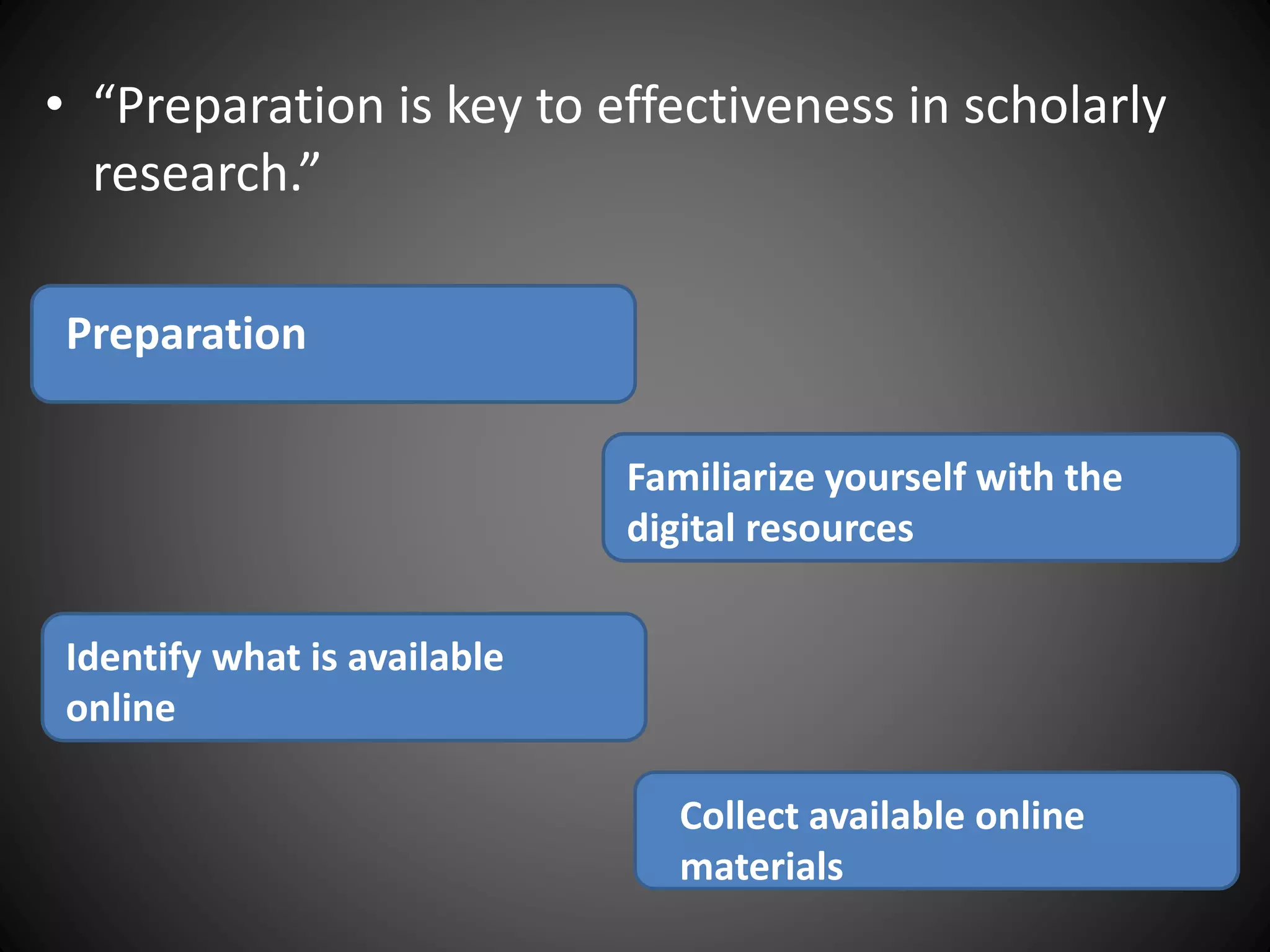
• “Preparation is key to effectiveness in scholarly
research.”
Preparation
Collect available online
materials
Identify what is available
online
Familiarize yourself with the
digital resources
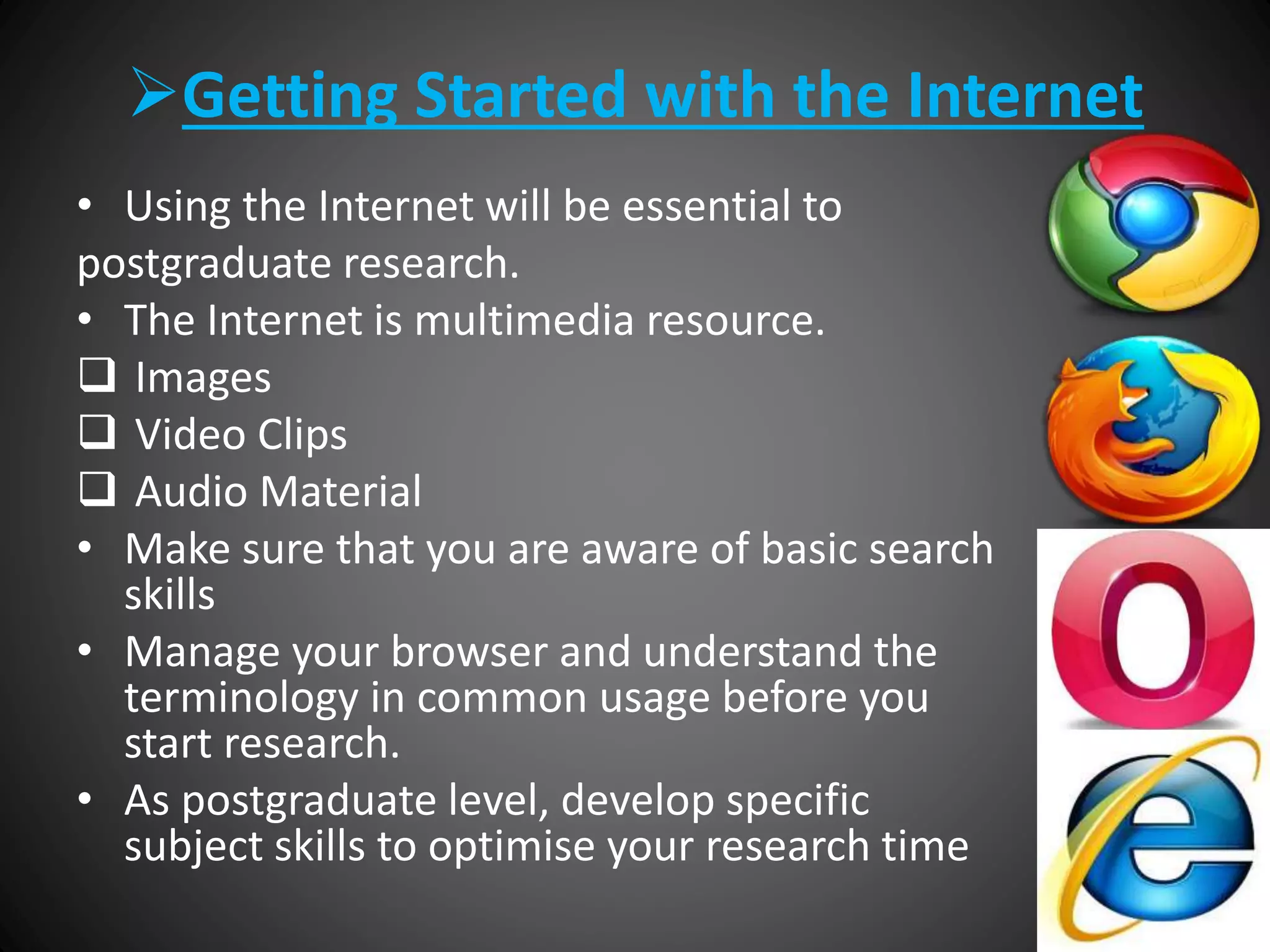
Getting Started with the Internet
• Using the Internet will be essential to
postgraduate research.
• The Internet is multimedia resource.
 Images
 Video Clips
 Audio Material
• Make sure that you are aware of basic search
skills
• Manage your browser and understand the
terminology in common usage before you
start research.
• As postgraduate level, develop specific
subject skills to optimise your research time
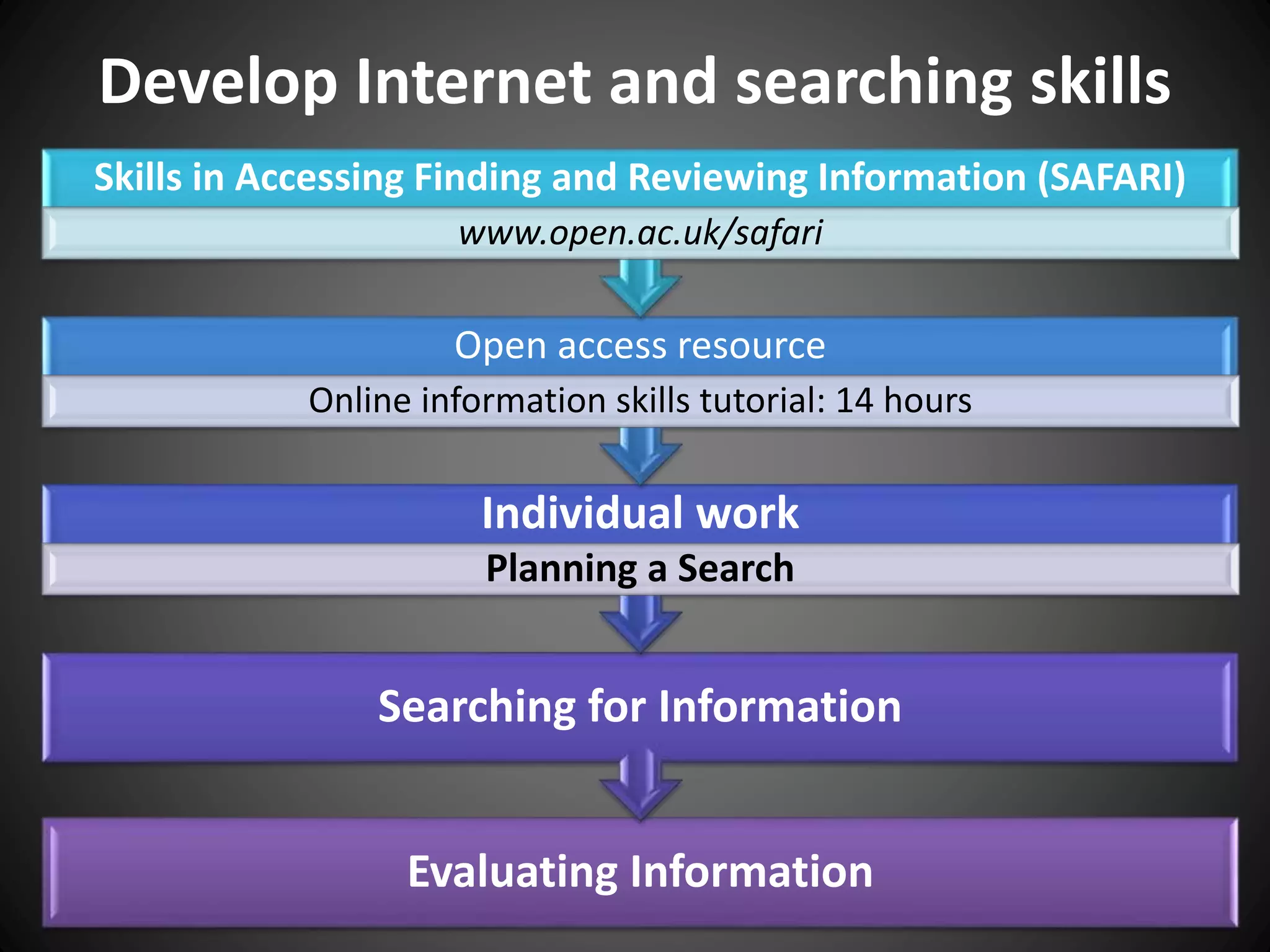
Develop Internet and searching skills
Evaluating Information
Searching for Information
Individual work
Planning a Search
Open access resource
Online information skills tutorial: 14 hours
Skills in Accessing Finding and Reviewing Information (SAFARI)
www.open.ac.uk/safari
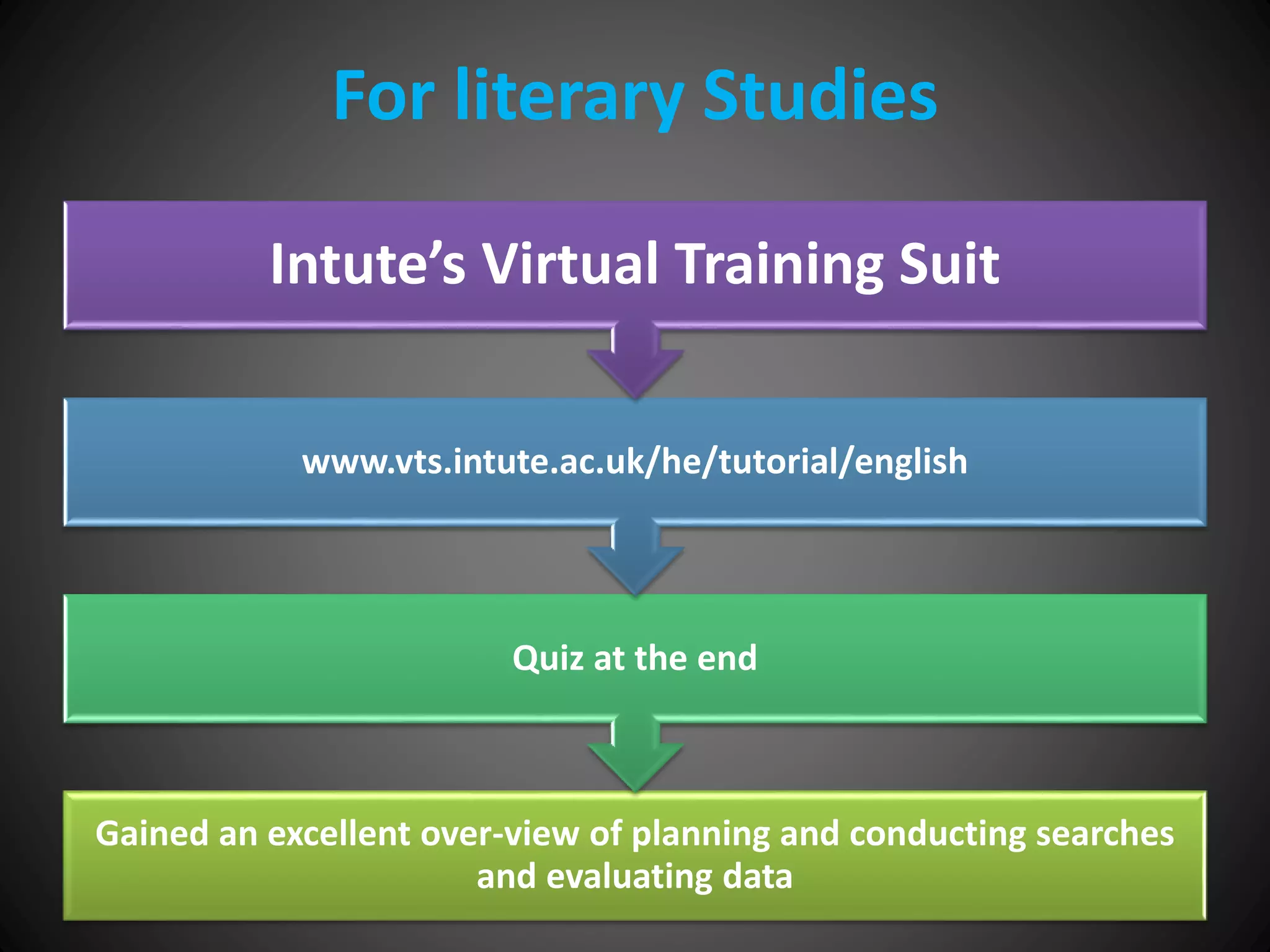
For literary Studies
Gained an excellent over-view of planning and conducting searches
and evaluating data
Quiz at the end
www.vts.intute.ac.uk/he/tutorial/english
Intute’s Virtual Training Suit
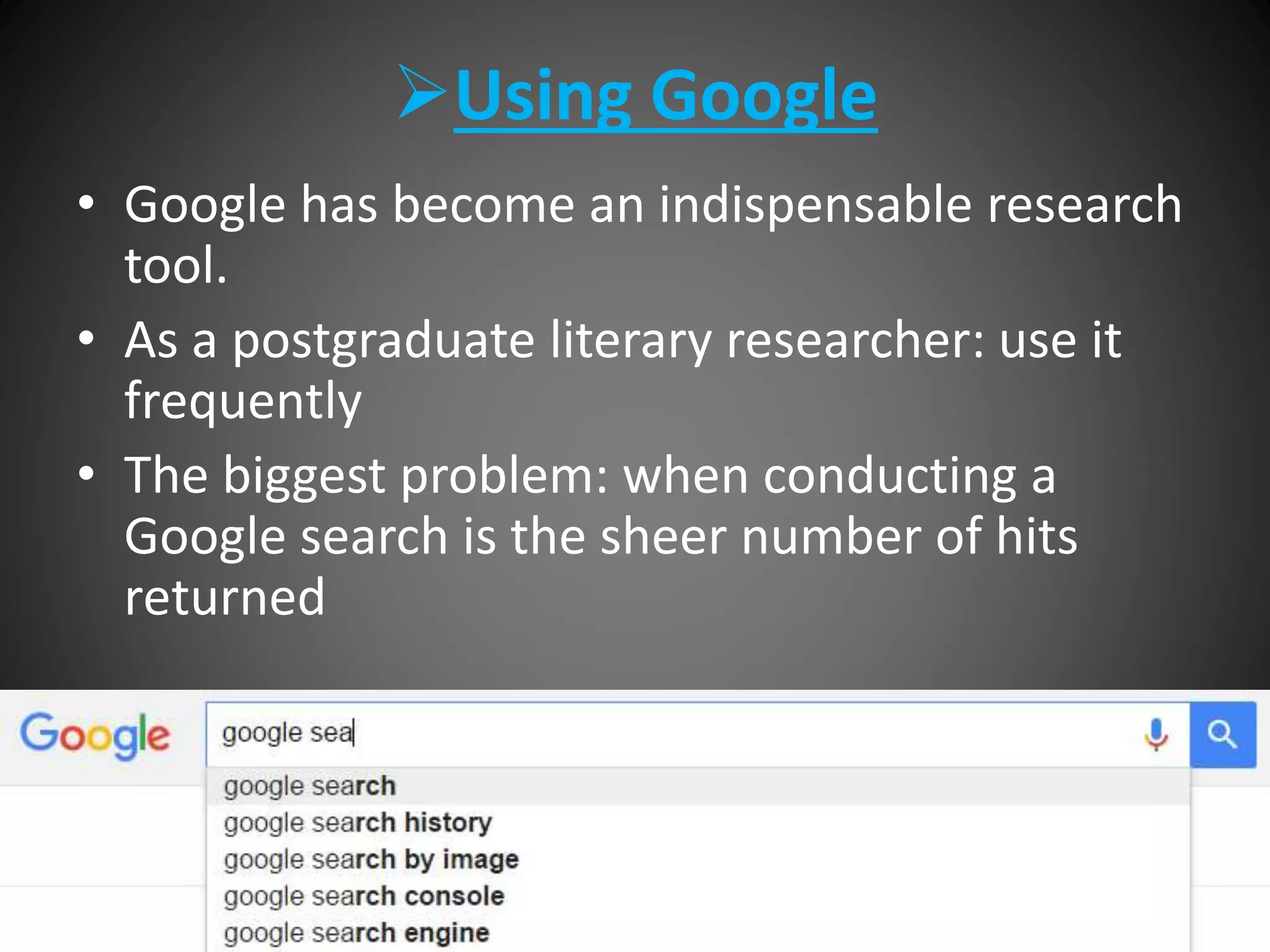
Using Google
• Google has become an indispensable research
tool.
• As a postgraduate literary researcher: use it
frequently
• The biggest problem: when conducting a
Google search is the sheer number of hits
returned
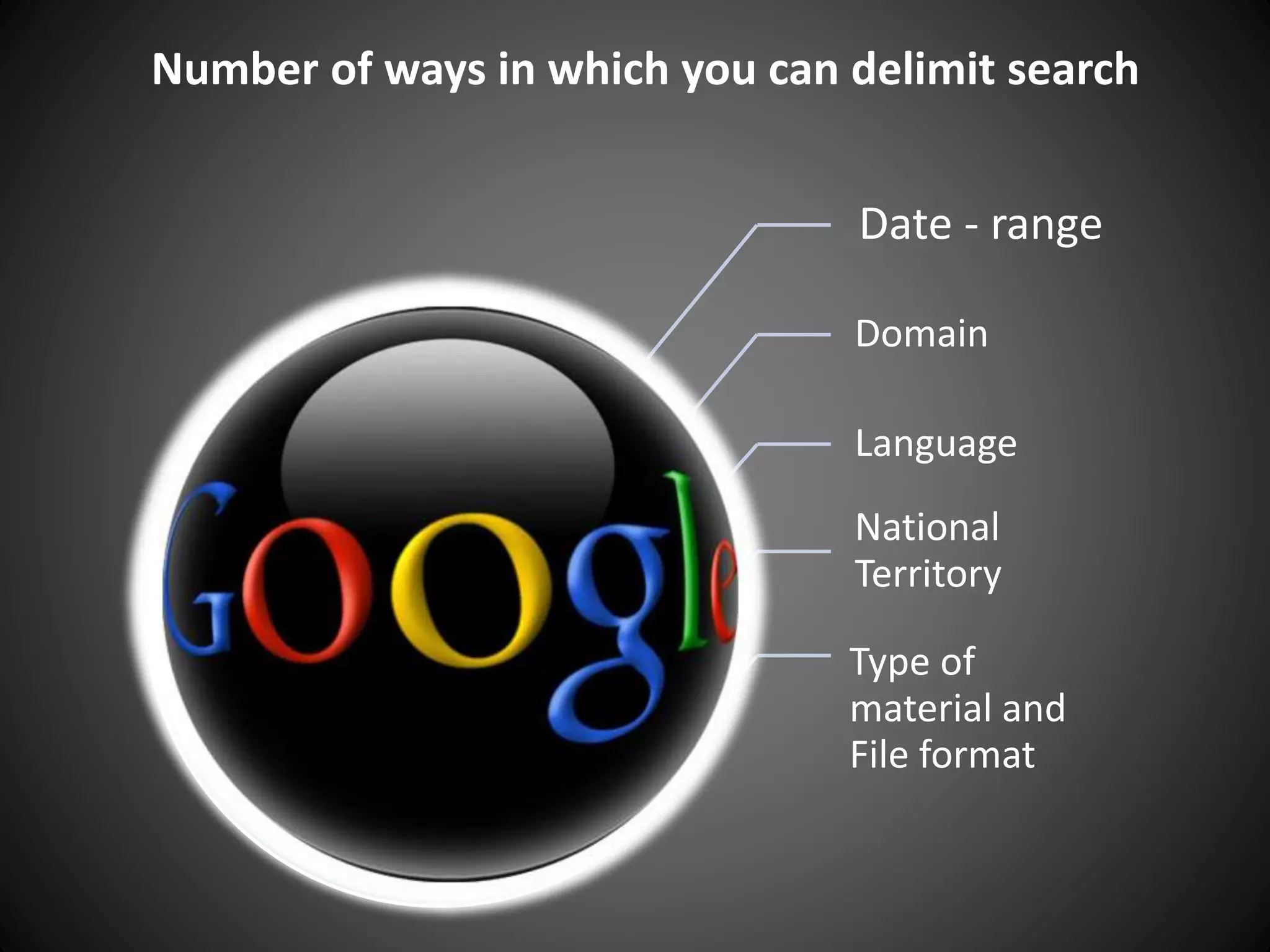
Date - range
Domain
Language
National
Territory
Type of
material and
File format
Number of ways in which you can delimit search
Using advanced search
• Using the advanced search function and
entering a specific marks (“. . .”) will greatly
improve the accuracy of your search, as it will
search for only that particular combination.
• Synonym search by placing a tilde (~) mark
before your search term.
• Specifically exclude something by placing a
minus (-) before it or placing plus (+)
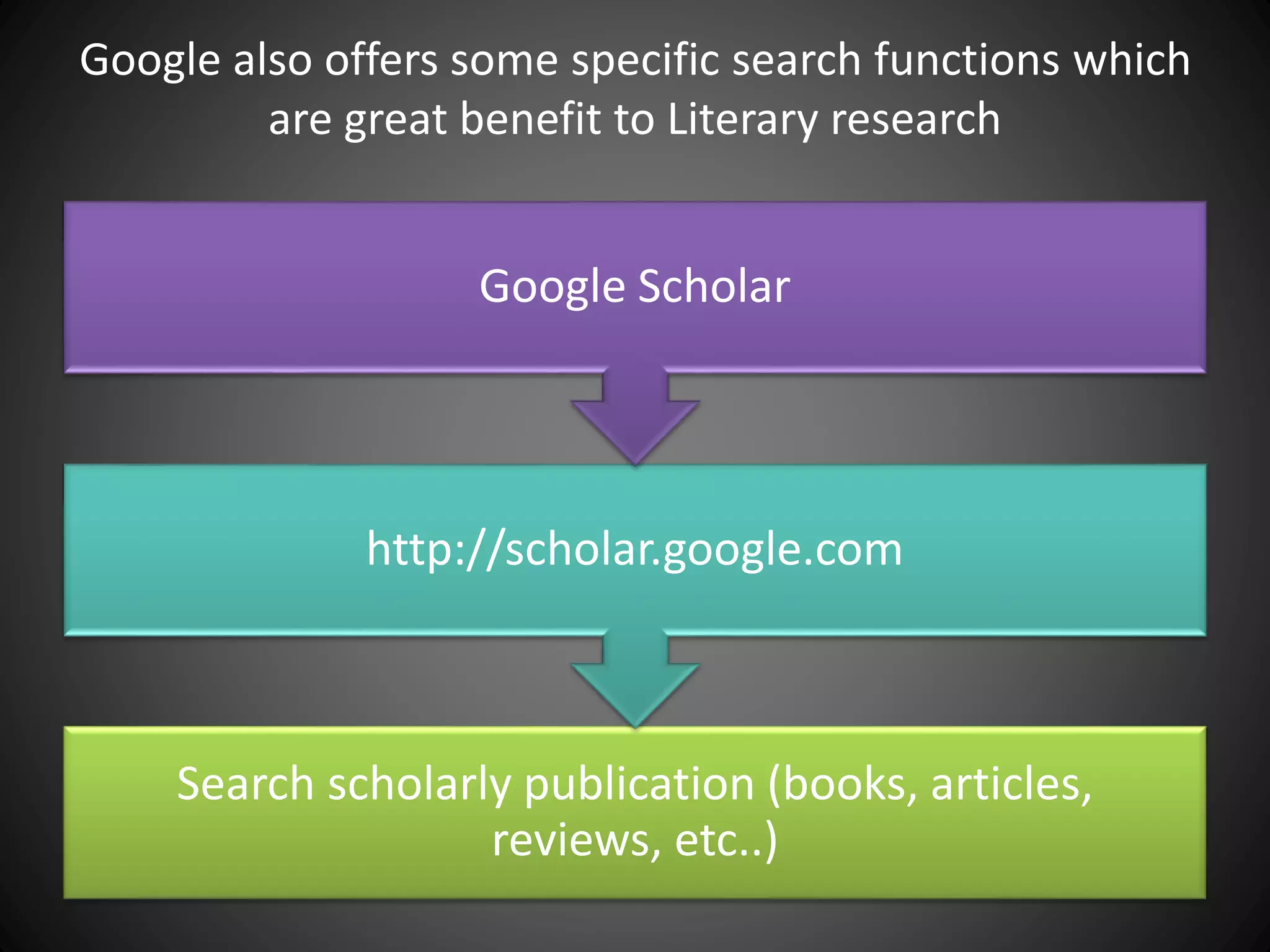
Google also offers some specific search functions which
are great benefit to Literary research
Search scholarly publication (books, articles,
reviews, etc..)
http://scholar.google.com
Google Scholar
Google Book Search : Excellent resource
Google Book Search
(http://books.google.com): remarkable and
constantly growing virtual Library
Copyright material is available in limited
preview,
Non-copyright books sometimes can be read,
downloaded and printed in their entirety
• Google books as there pre-1900 primary
sources, but there are two things you should
bear in mind when using it:
 As a matter of routine, always note the exact bibliographical details of the
book accessed through Google Book Search
 Always record the precise URL for the digitized source, so that you can find
it again without having to repeat the original search.
 Wikipedia and Evaluating data
• Wikipedia is world’s largest open-access
encyclopedia, founded on the collaborative
social knowledge construction or ‘wiki’ model;
it is useful tool for literary researchers.
Author Biography
Indicative Bibliography
Links to relevant external
sites
Discussion forums
Guide: How to use resource is
available at
www.howwikipediaworks.com
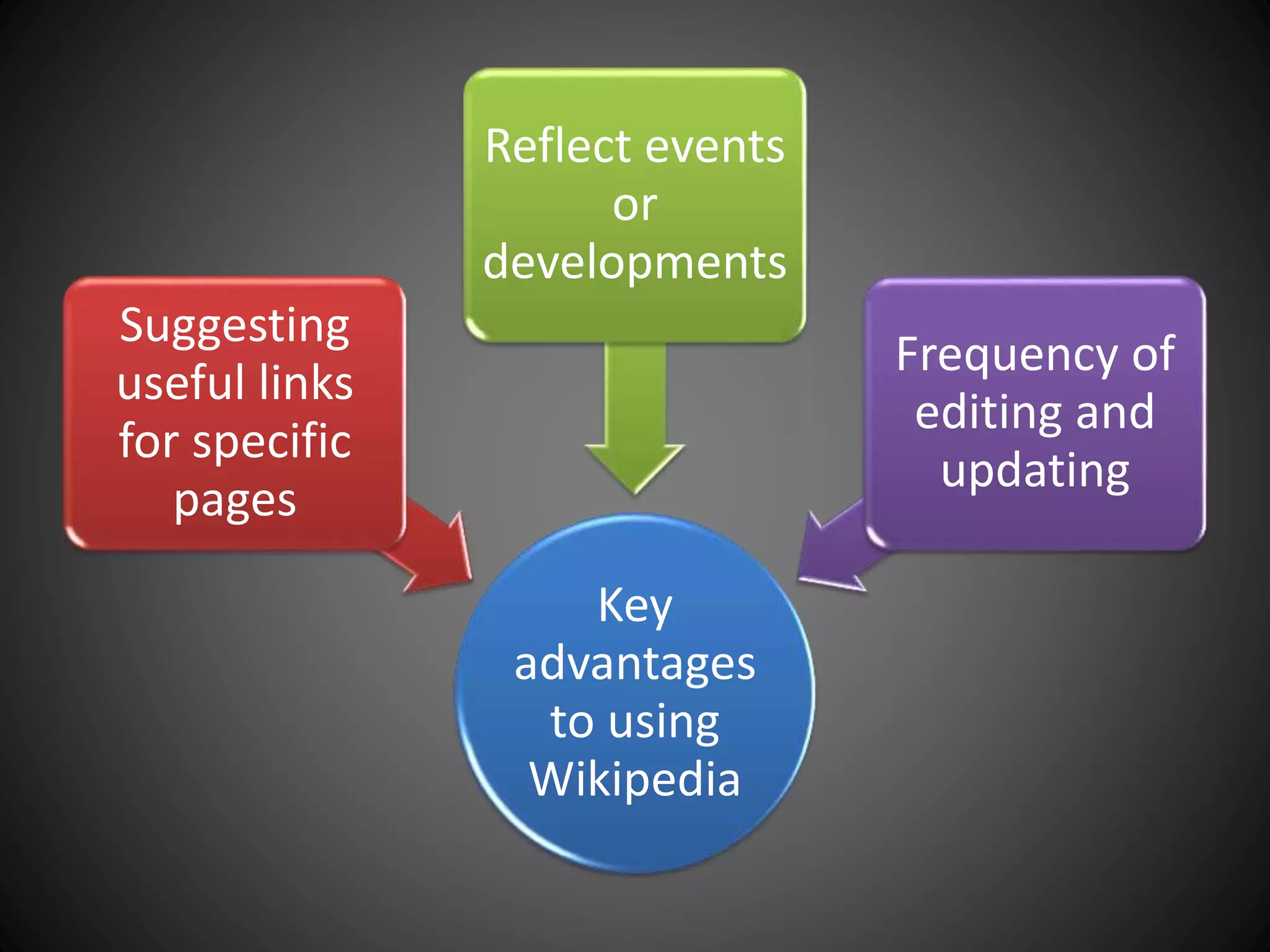
Key
advantages
to using
Wikipedia
Suggesting
useful links
for specific
pages
Reflect events
or
developments
Frequency of
editing and
updating
• The wiki model presents many opportunities,
but also some challenges.
• A small proportion of the material that you
will encounter on Wikipedia will be in
accurate, out of date, poorly referenced or
incorrect. This is not to say that you should
not use Wikipedia, just that you need to
exercise your own comparative evaluative
skills.
• Complete the ‘Judge’ section from Intute’s
Internet For English website (
www.vts.intute.ac.uk/he/tutorial/english)
 Bookmarking and Managing
References
• A number of Web 2.0 tools will help you record and manage
to both electronic and printed matter
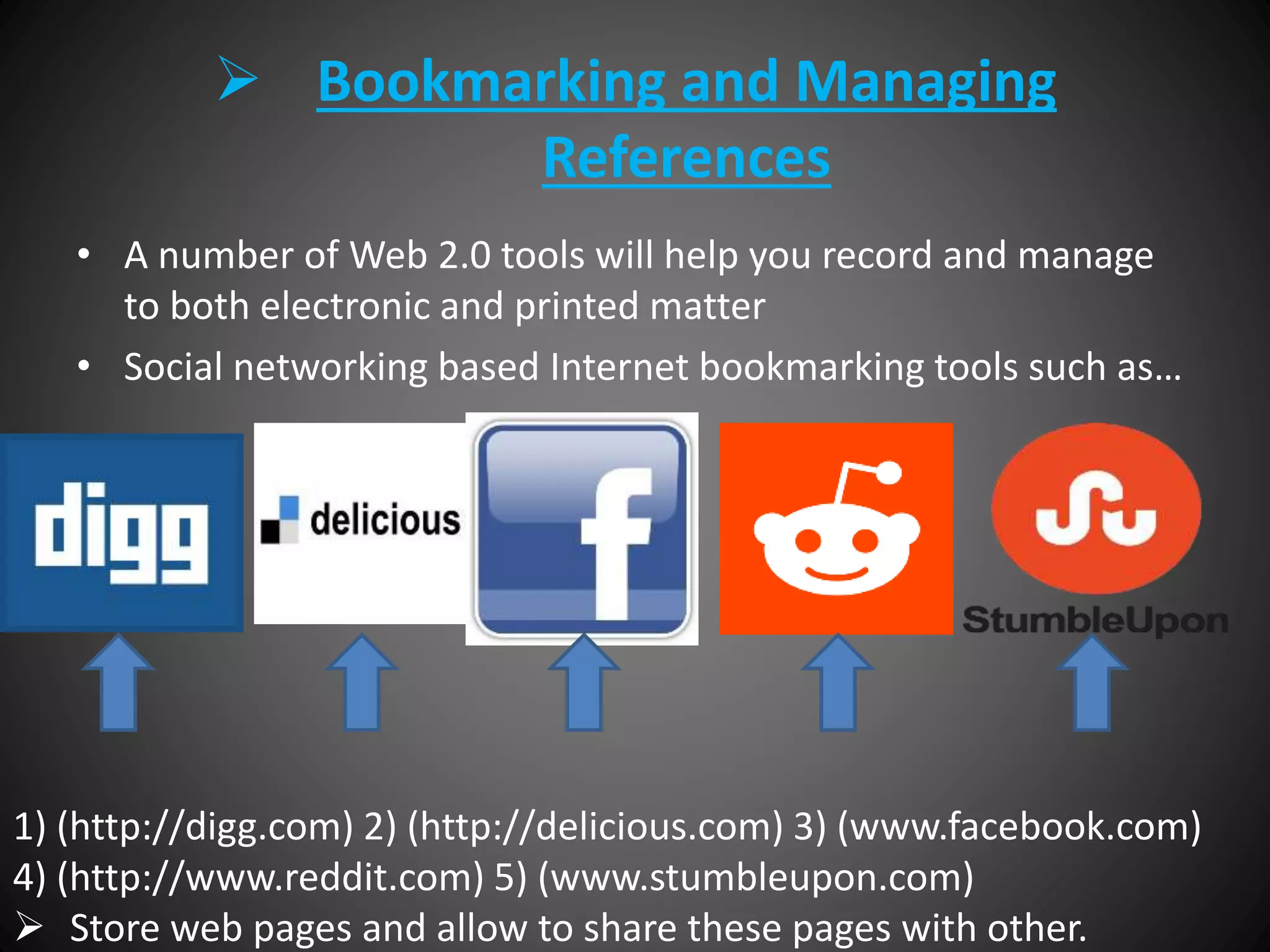
• Social networking based Internet bookmarking tools such as…
1) (http://digg.com) 2) (http://delicious.com) 3) (www.facebook.com)
4) (http://www.reddit.com) 5) (www.stumbleupon.com)
 Store web pages and allow to share these pages with other.
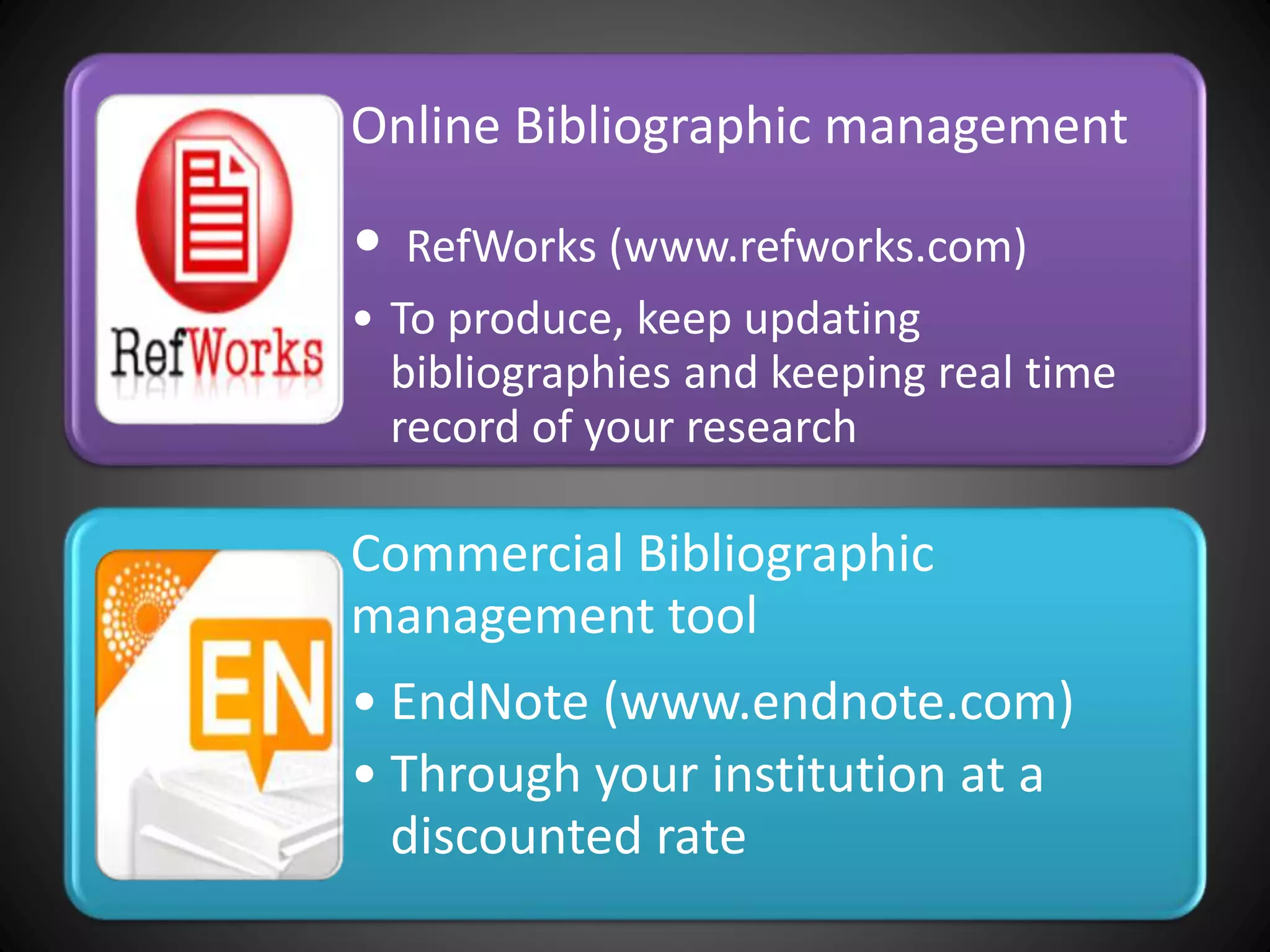
Online Bibliographic management
• RefWorks (www.refworks.com)
• To produce, keep updating
bibliographies and keeping real time
record of your research
Commercial Bibliographic
management tool
• EndNote (www.endnote.com)
• Through your institution at a
discounted rate
 Citing Sources
• There is a serious ethical and legal imperative that
shapes how you use your research.
• Remember that all sources, whether online, printed or
unpublished, need to be cited as fully and as accurately
as possible.
• Do not, for example, assume that a quotation from an
electronic source does not need to be cited as fully as
one from a printed book; each needs to be cited in full.
Bibliography
• Towheed, Shafquat. "Tools and Techniques of Literary
Research." Owens, W R and Deliam Da Sousa Correa.
The Handbook To Literary research. Taylor & Francis
e-Library, 2010. 7-16.
Using online sources for literary purpose

Using online sources for literary purpose

  • 1.
    Name : SolankiPratiksha M. Paper:1.Research Skills: Documentation and Fundamentals of Literary Research Sem: 1. M.Phil (2016-2017) Enrolment No. 206911222017003 Subject :Using Online sources for Literary Purpose  Smt. S.B. Gardi Dept. of English M.K.Bhavnagar University  pratikshasolanki068@gmail.com
  • 2.
    Using Online Sourcefor Literary Purpose
  • 3.
    Introduction • Tools andTechniques needed for successful research work in Literary studies. Electronic Source Printed Source
  • 4.
    Online and Printed Relavant to your research Toidentify and locate material archives Easy to know a range of available sources Being able to keep up to date with subjects Participating online and becoming part of research community Getting confidence, identify, and evaluate primarily material
  • 5.
    Online Sources: ForLiterary Purpose • Online tools, in one form or another, has always been part of the teaching and it is among the resources that teachers use to help facilitate student • Re + Search • Word ‘Research’ is comprises of two words = Re + Search. It means to search again. • Today’s postgraduate students are use and evaluate a wide range of electronic sources. • They have most likely have their own laptops with wifi and able to do multitask. • How the basic principles of online tools that helps to underpin your research, which you can and than apply.
  • 6.
  • 7.
  • 8.
  • 9.
    • “Preparation iskey to effectiveness in scholarly research.” Preparation Collect available online materials Identify what is available online Familiarize yourself with the digital resources
  • 10.
    Getting Started withthe Internet • Using the Internet will be essential to postgraduate research. • The Internet is multimedia resource.  Images  Video Clips  Audio Material • Make sure that you are aware of basic search skills • Manage your browser and understand the terminology in common usage before you start research. • As postgraduate level, develop specific subject skills to optimise your research time
  • 11.
    Develop Internet andsearching skills Evaluating Information Searching for Information Individual work Planning a Search Open access resource Online information skills tutorial: 14 hours Skills in Accessing Finding and Reviewing Information (SAFARI) www.open.ac.uk/safari
  • 12.
    For literary Studies Gainedan excellent over-view of planning and conducting searches and evaluating data Quiz at the end www.vts.intute.ac.uk/he/tutorial/english Intute’s Virtual Training Suit
  • 13.
    Using Google • Googlehas become an indispensable research tool. • As a postgraduate literary researcher: use it frequently • The biggest problem: when conducting a Google search is the sheer number of hits returned
  • 14.
    Date - range Domain Language National Territory Typeof material and File format Number of ways in which you can delimit search
  • 15.
    Using advanced search •Using the advanced search function and entering a specific marks (“. . .”) will greatly improve the accuracy of your search, as it will search for only that particular combination. • Synonym search by placing a tilde (~) mark before your search term. • Specifically exclude something by placing a minus (-) before it or placing plus (+)
  • 16.
    Google also offerssome specific search functions which are great benefit to Literary research Search scholarly publication (books, articles, reviews, etc..) http://scholar.google.com Google Scholar
  • 17.
    Google Book Search: Excellent resource Google Book Search (http://books.google.com): remarkable and constantly growing virtual Library Copyright material is available in limited preview, Non-copyright books sometimes can be read, downloaded and printed in their entirety
  • 18.
    • Google booksas there pre-1900 primary sources, but there are two things you should bear in mind when using it:  As a matter of routine, always note the exact bibliographical details of the book accessed through Google Book Search  Always record the precise URL for the digitized source, so that you can find it again without having to repeat the original search.
  • 19.
     Wikipedia andEvaluating data • Wikipedia is world’s largest open-access encyclopedia, founded on the collaborative social knowledge construction or ‘wiki’ model; it is useful tool for literary researchers.
  • 20.
    Author Biography Indicative Bibliography Linksto relevant external sites Discussion forums Guide: How to use resource is available at www.howwikipediaworks.com
  • 21.
    Key advantages to using Wikipedia Suggesting useful links forspecific pages Reflect events or developments Frequency of editing and updating
  • 22.
    • The wikimodel presents many opportunities, but also some challenges. • A small proportion of the material that you will encounter on Wikipedia will be in accurate, out of date, poorly referenced or incorrect. This is not to say that you should not use Wikipedia, just that you need to exercise your own comparative evaluative skills. • Complete the ‘Judge’ section from Intute’s Internet For English website ( www.vts.intute.ac.uk/he/tutorial/english)
  • 23.
     Bookmarking andManaging References • A number of Web 2.0 tools will help you record and manage to both electronic and printed matter • Social networking based Internet bookmarking tools such as… 1) (http://digg.com) 2) (http://delicious.com) 3) (www.facebook.com) 4) (http://www.reddit.com) 5) (www.stumbleupon.com)  Store web pages and allow to share these pages with other.
  • 24.
    Online Bibliographic management •RefWorks (www.refworks.com) • To produce, keep updating bibliographies and keeping real time record of your research Commercial Bibliographic management tool • EndNote (www.endnote.com) • Through your institution at a discounted rate
  • 25.
     Citing Sources •There is a serious ethical and legal imperative that shapes how you use your research. • Remember that all sources, whether online, printed or unpublished, need to be cited as fully and as accurately as possible. • Do not, for example, assume that a quotation from an electronic source does not need to be cited as fully as one from a printed book; each needs to be cited in full.
  • 26.
    Bibliography • Towheed, Shafquat."Tools and Techniques of Literary Research." Owens, W R and Deliam Da Sousa Correa. The Handbook To Literary research. Taylor & Francis e-Library, 2010. 7-16.