Name : Solanki Pratiksha M.
Roll No : 23
Paper : 7. Literary Theory and
Criticism.
Sem : 2. (2013-2015)
Subject :T.S.Eliot's Tradition and
Individual Talent
Submitted to :
Smt. S.B. Gardi
Dept. of English
Maharaja Krishnakumarsinhji Bhavnagar
University
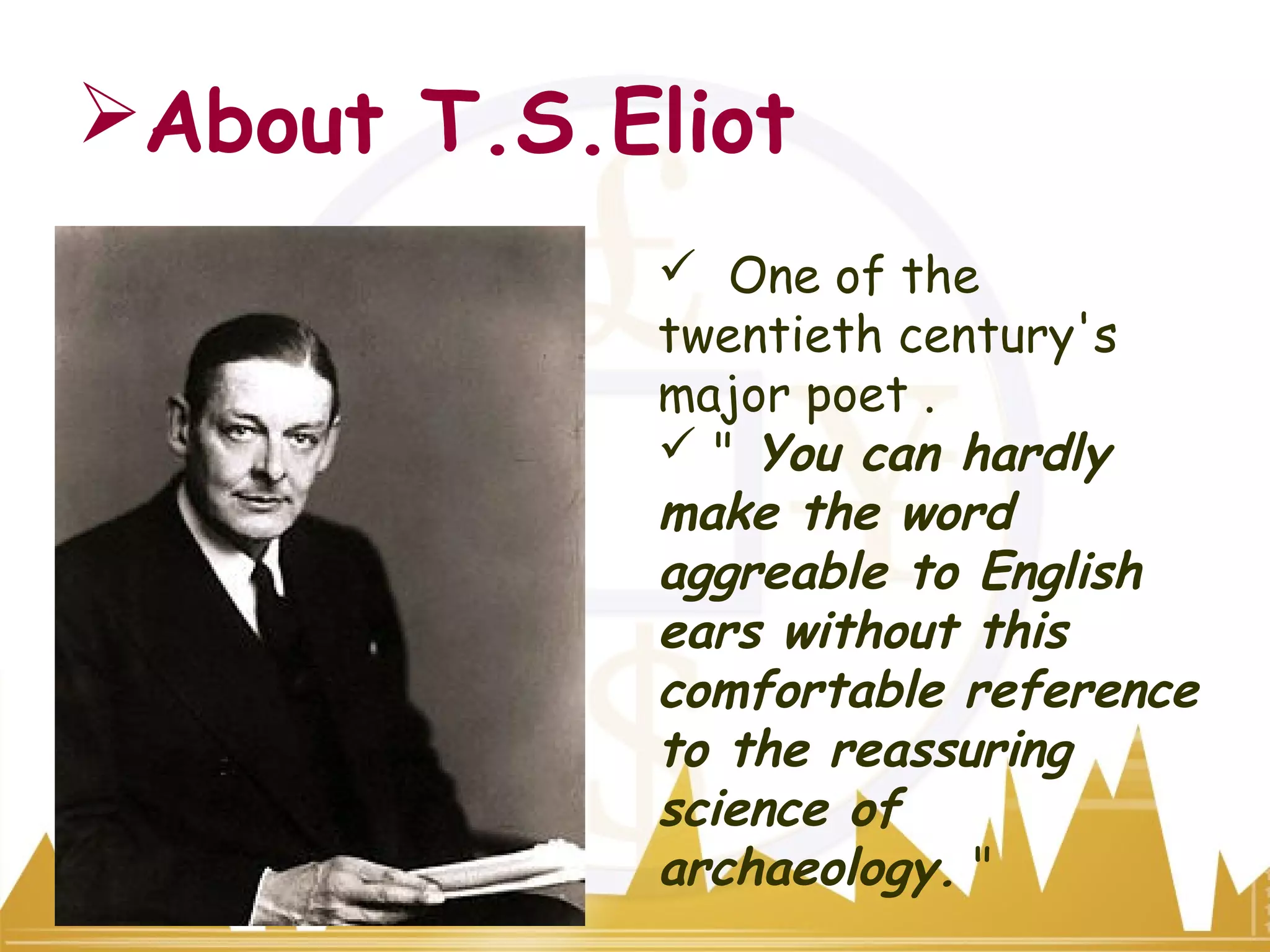
About T.S.Eliot
 One of the
twentieth century's
major poet .
 " You can hardly
make the word
aggreable to English
ears without this
comfortable reference
to the reassuring
science of
archaeology. "
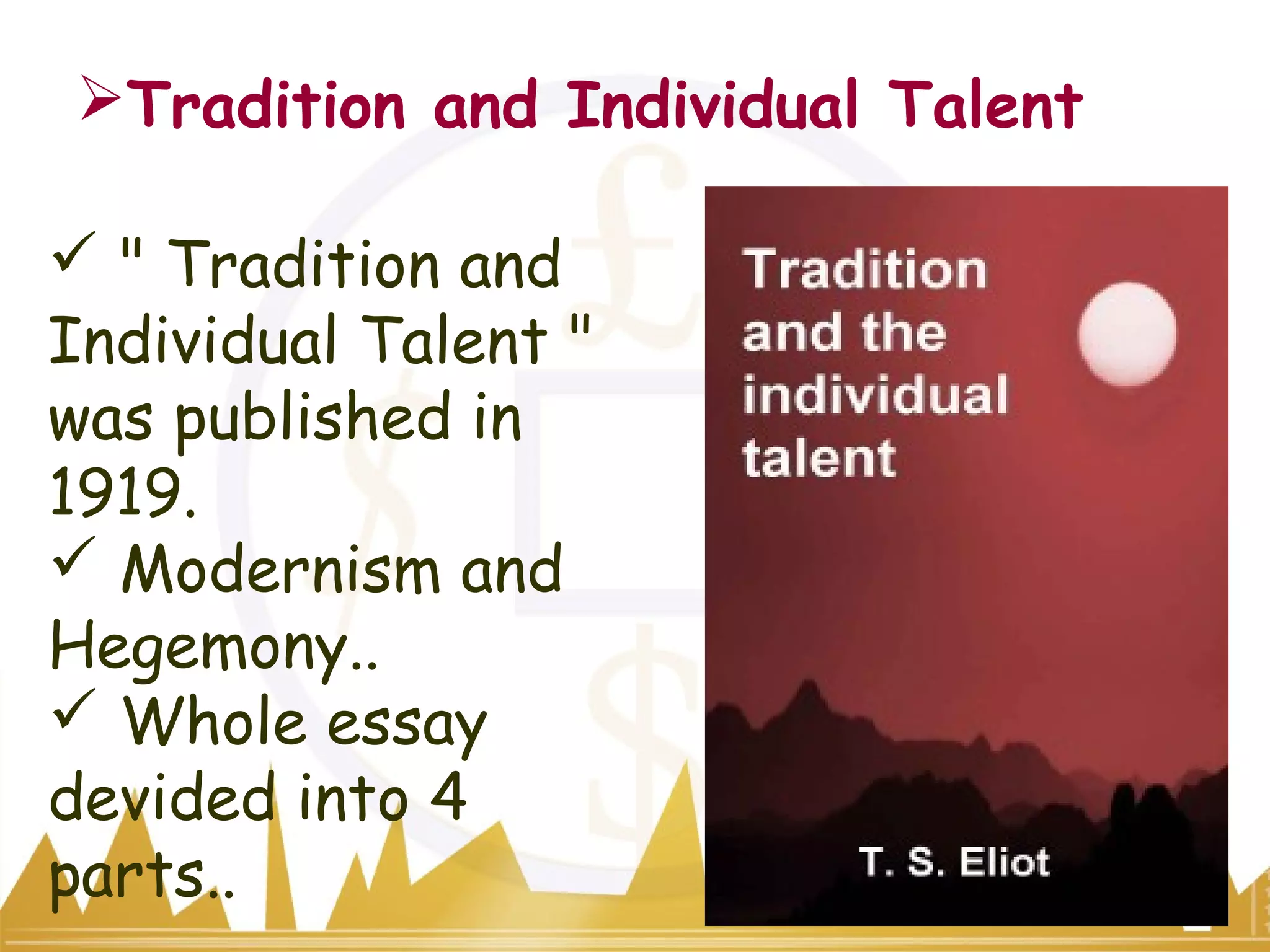
Tradition and Individual Talent
 " Tradition and
Individual Talent "
was published in
1919.
 Modernism and
Hegemony..
 Whole essay
devided into 4
parts..
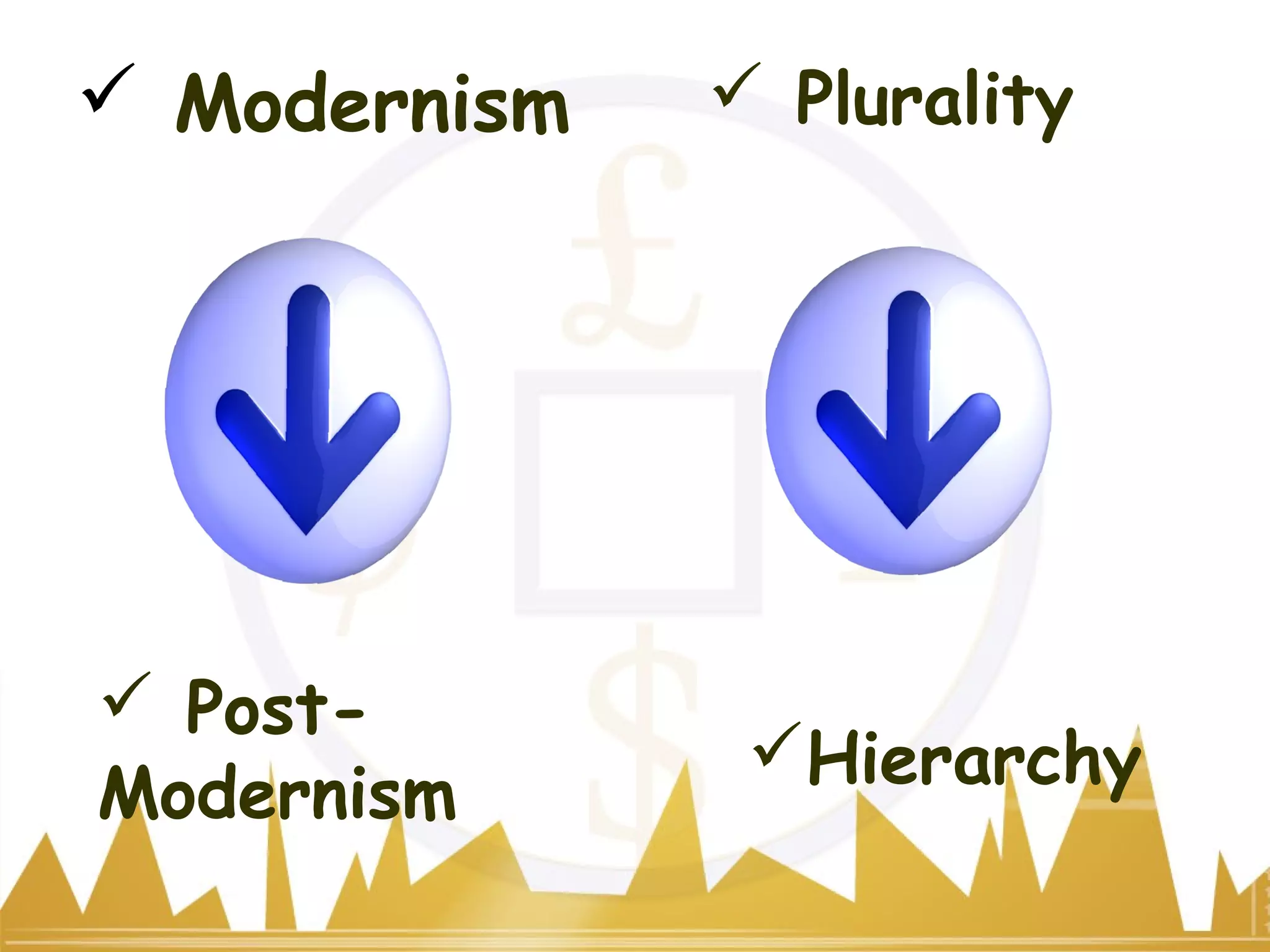
 Modernism
 Post-
Modernism
 Plurality
Hierarchy
 " The dead writers are
remote from us because we
know so much more than they
did.. "
 Eliot's dynamic concept.
" Pastness of Past "
The function of Tradition.
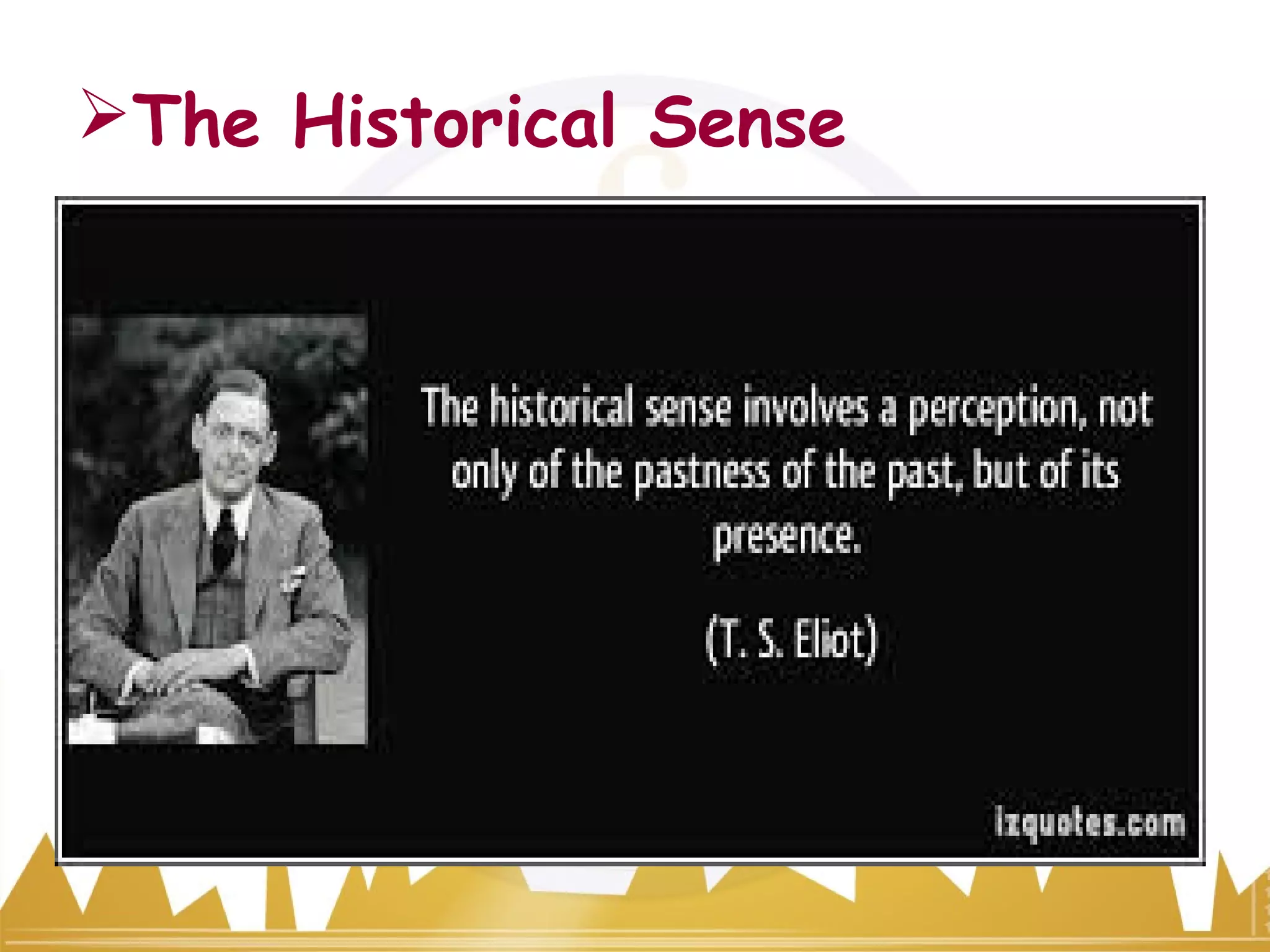
The Historical Sense
Define :
Poetic value and originality.
The past and the present,
Knowledge and experience,
The idea and the real.
 Eliot’s Concept of Depersonalization
or His Theory of Impersonality
The second part of " Tradition and
Individual essay ".
Realted with two movements..
1. Practical Criticism
2. New Criticism
He sees that in this
depersonalization, the art
approaches science.
• “The difference between art and
the event is always absolute” By -
Eliot
 He criticizes Wordsworth’s view.
 There is no question of the poet
expressing his personal emotions.
“It is not in his personal emotions,
the emotions provoked by
particular events in his life, that the
poet is in any way remarkable or
interesting”
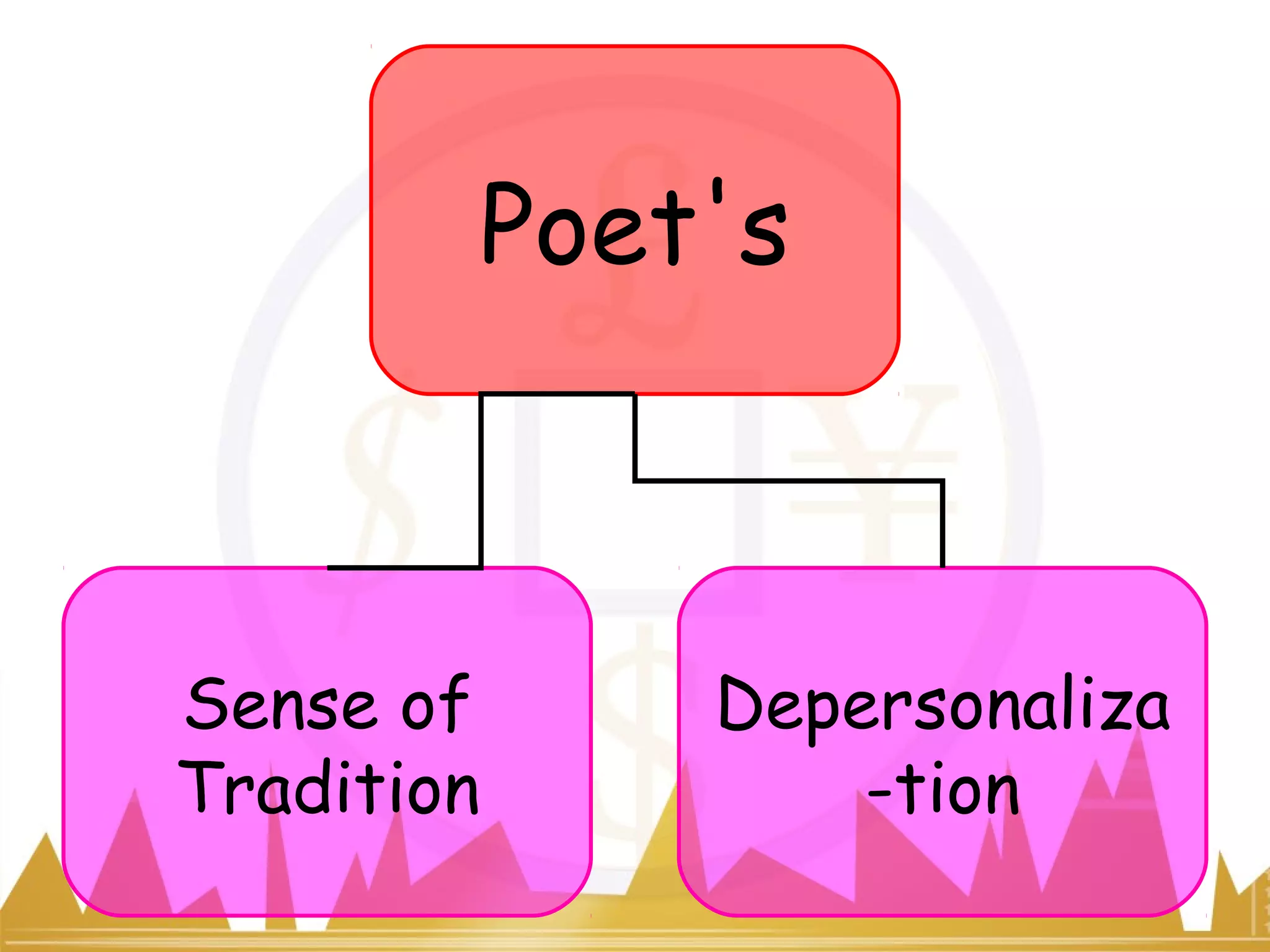
Poet's
Sense of
Tradition
Depersonaliza
-tion
•Thank you so much..

Tradition and Individual Talent - T.S.Eliot

  • 1.
    Name : SolankiPratiksha M. Roll No : 23 Paper : 7. Literary Theory and Criticism. Sem : 2. (2013-2015) Subject :T.S.Eliot's Tradition and Individual Talent Submitted to : Smt. S.B. Gardi Dept. of English Maharaja Krishnakumarsinhji Bhavnagar University
  • 2.
    About T.S.Eliot  Oneof the twentieth century's major poet .  " You can hardly make the word aggreable to English ears without this comfortable reference to the reassuring science of archaeology. "
  • 3.
    Tradition and IndividualTalent  " Tradition and Individual Talent " was published in 1919.  Modernism and Hegemony..  Whole essay devided into 4 parts..
  • 4.
  • 5.
     " Thedead writers are remote from us because we know so much more than they did.. "  Eliot's dynamic concept. " Pastness of Past " The function of Tradition.
  • 6.
  • 7.
    Define : Poetic valueand originality. The past and the present, Knowledge and experience, The idea and the real.
  • 8.
     Eliot’s Conceptof Depersonalization or His Theory of Impersonality The second part of " Tradition and Individual essay ". Realted with two movements.. 1. Practical Criticism 2. New Criticism He sees that in this depersonalization, the art approaches science.
  • 9.
    • “The differencebetween art and the event is always absolute” By - Eliot  He criticizes Wordsworth’s view.  There is no question of the poet expressing his personal emotions. “It is not in his personal emotions, the emotions provoked by particular events in his life, that the poet is in any way remarkable or interesting”
  • 10.
  • 11.