TUSHAR SACHDEVA
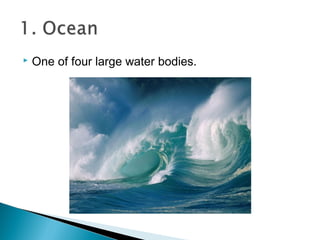
 One of four large water bodies.
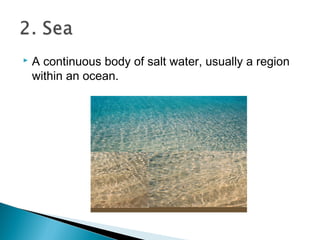
 A continuous body of salt water, usually a region
within an ocean.
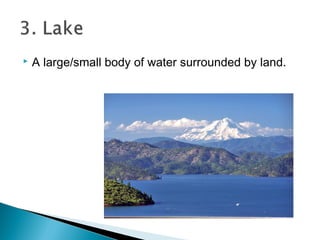
 A large/small body of water surrounded by land.
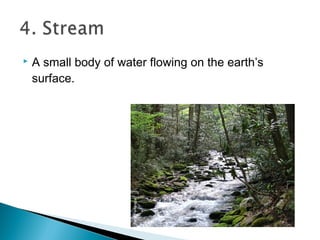
 A small body of water flowing on the earth’s
surface.
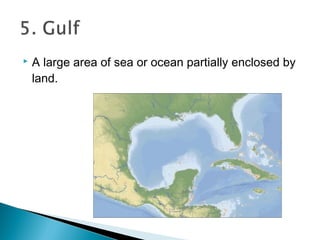
 A large area of sea or ocean partially enclosed by
land.
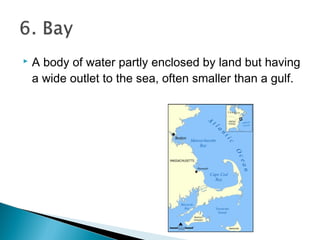
 A body of water partly enclosed by land but having
a wide outlet to the sea, often smaller than a gulf.
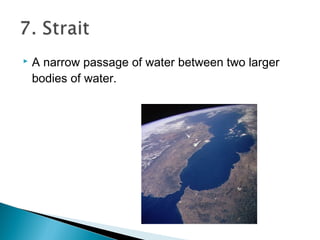
 A narrow passage of water between two larger
bodies of water.
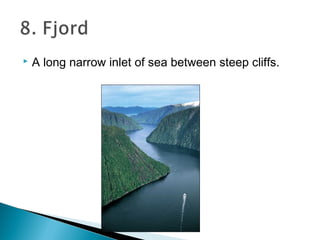
 A long narrow inlet of sea between steep cliffs.
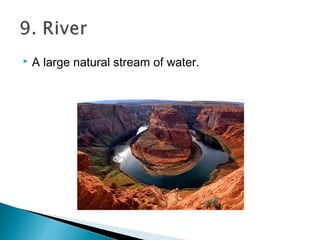
 A large natural stream of water.
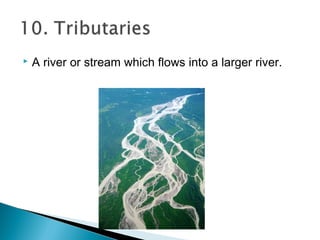
 A river or stream which flows into a larger river.
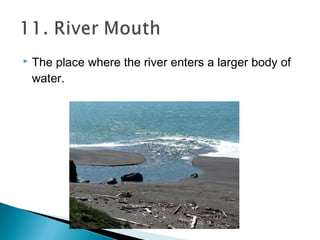
 The place where the river enters a larger body of
water.
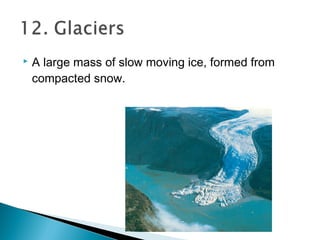
 A large mass of slow moving ice, formed from
compacted snow.
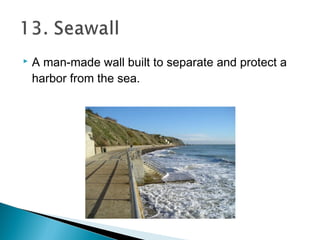
 A man-made wall built to separate and protect a
harbor from the sea.
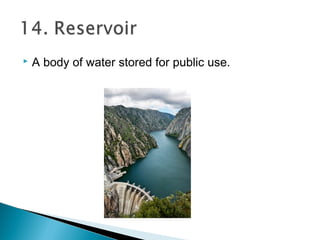
 A body of water stored for public use.
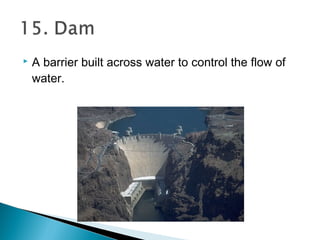
 A barrier built across water to control the flow of
water.
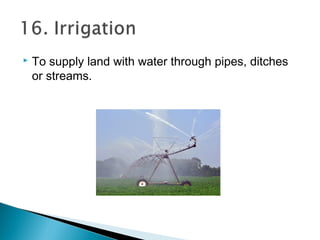
 To supply land with water through pipes, ditches
or streams.
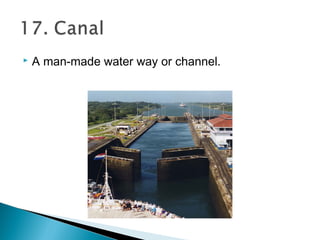
 A man-made water way or channel.
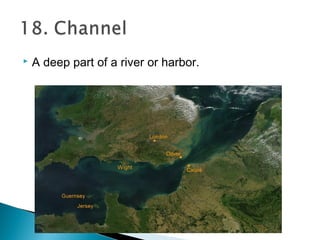
 A deep part of a river or harbor.
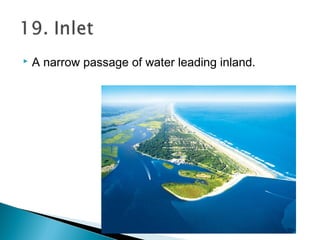
 A narrow passage of water leading inland.
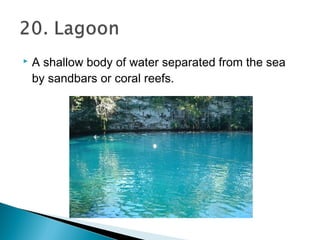
 A shallow body of water separated from the sea
by sandbars or coral reefs.
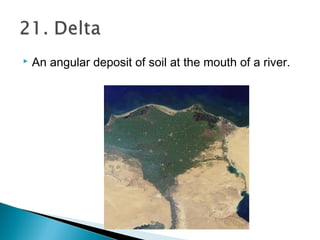
 An angular deposit of soil at the mouth of a river.
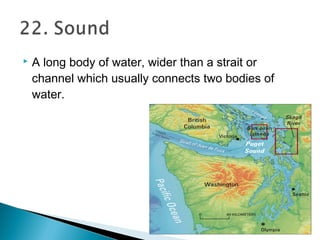
 A long body of water, wider than a strait or
channel which usually connects two bodies of
water.
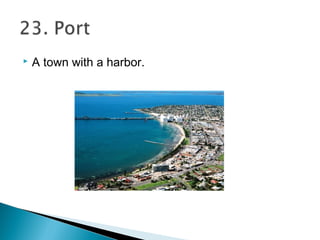
 A town with a harbor.
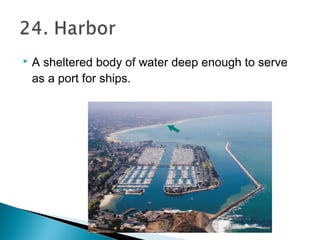
 A sheltered body of water deep enough to serve
as a port for ships.
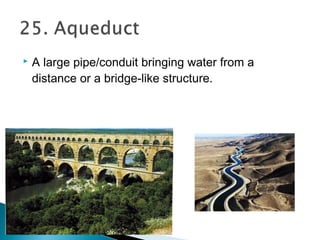
 A large pipe/conduit bringing water from a
distance or a bridge-like structure.
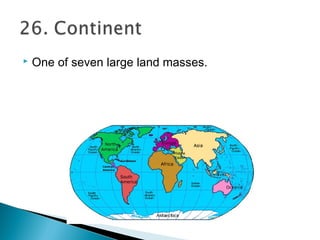
 One of seven large land masses.
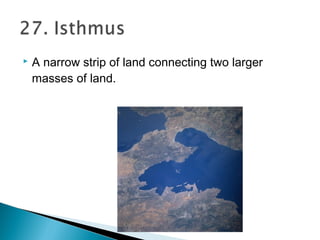
 A narrow strip of land connecting two larger
masses of land.
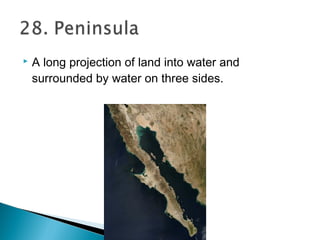
 A long projection of land into water and
surrounded by water on three sides.
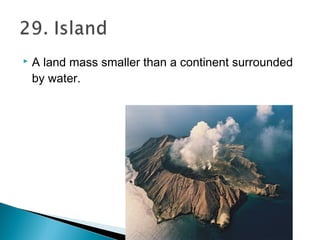
 A land mass smaller than a continent surrounded
by water.
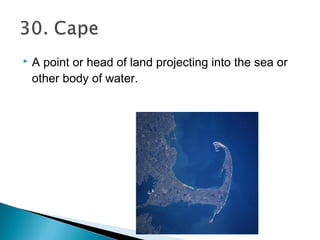
 A point or head of land projecting into the sea or
other body of water.
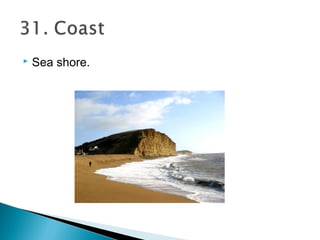
 Sea shore.
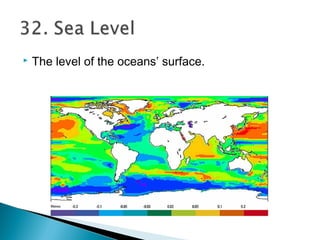
 The level of the oceans’ surface.
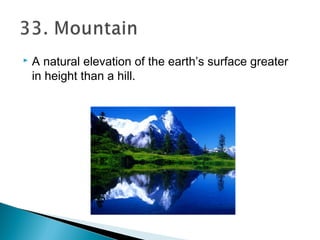
 A natural elevation of the earth’s surface greater
in height than a hill.
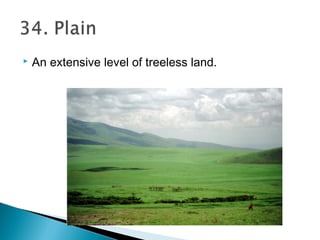
 An extensive level of treeless land.
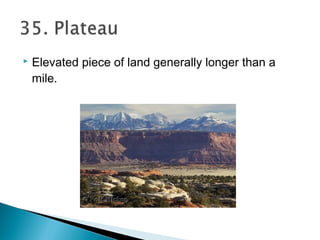
 Elevated piece of land generally longer than a
mile.
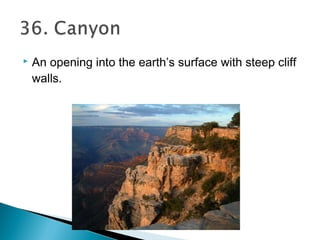
 An opening into the earth’s surface with steep cliff
walls.
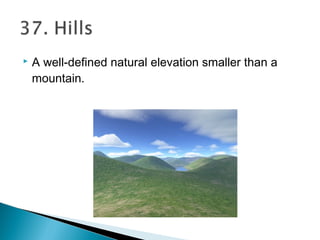
 A well-defined natural elevation smaller than a
mountain.
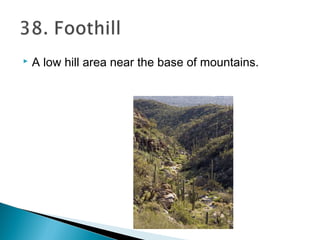
 A low hill area near the base of mountains.
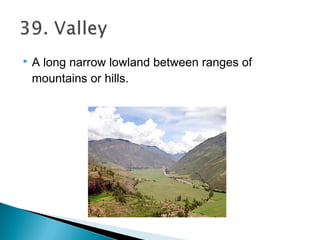
 A long narrow lowland between ranges of
mountains or hills.
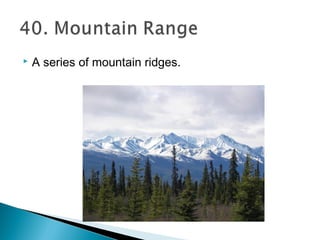
 A series of mountain ridges.
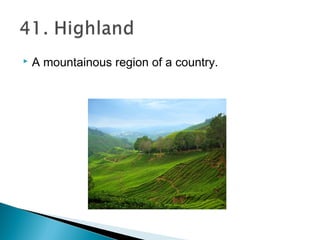
 A mountainous region of a country.
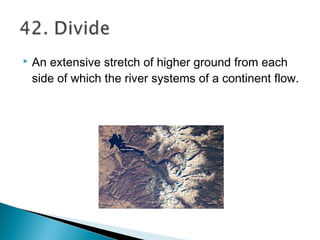
 An extensive stretch of higher ground from each
side of which the river systems of a continent flow.
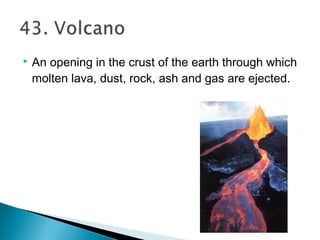
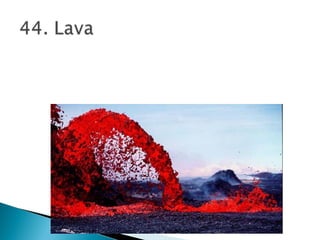
 An opening in the crust of the earth through which
molten lava, dust, rock, ash and gas are ejected.
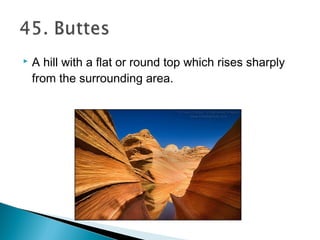
 A hill with a flat or round top which rises sharply
from the surrounding area.
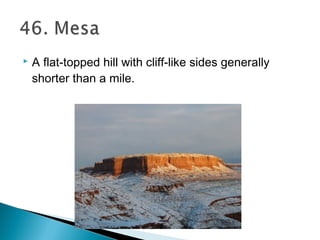
 A flat-topped hill with cliff-like sides generally
shorter than a mile.
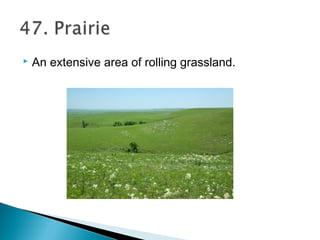
 An extensive area of rolling grassland.
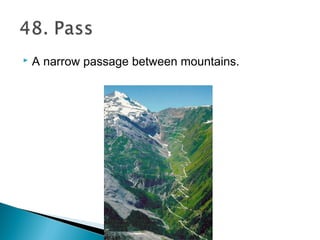
 A narrow passage between mountains.
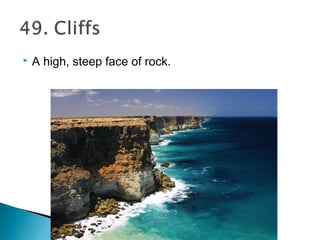
 A high, steep face of rock.
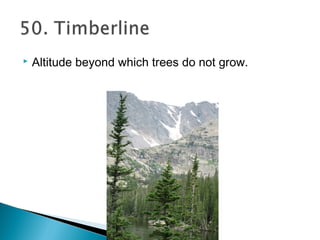
 Altitude beyond which trees do not grow.
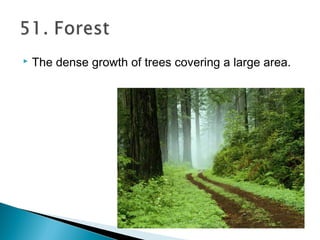
 The dense growth of trees covering a large area.
 An open excavation from which stone is taken.
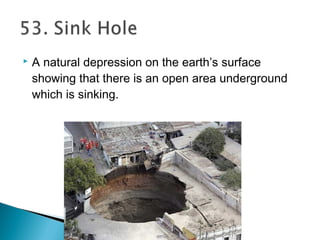
 A natural depression on the earth’s surface
showing that there is an open area underground
which is sinking.
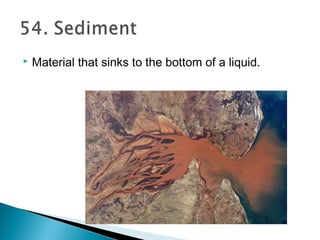
 Material that sinks to the bottom of a liquid.
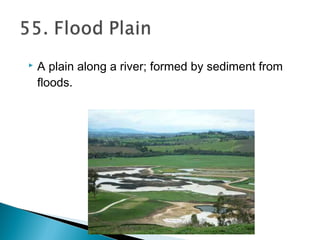
 A plain along a river; formed by sediment from
floods.
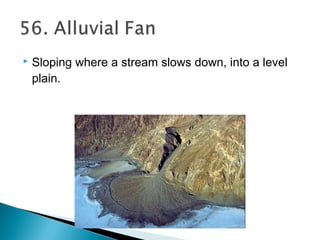
 Sloping where a stream slows down, into a level
plain.
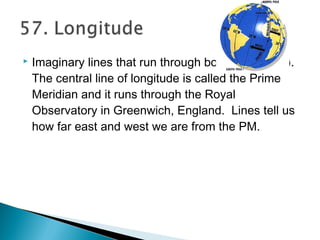
 Imaginary lines that run through both poles (N/S).
The central line of longitude is called the Prime
Meridian and it runs through the Royal
Observatory in Greenwich, England. Lines tell us
how far east and west we are from the PM.
 Imaginary lines which tell us how far north or
south one is from the Equator; the imaginary line
exactly ½ way between N and S poles.
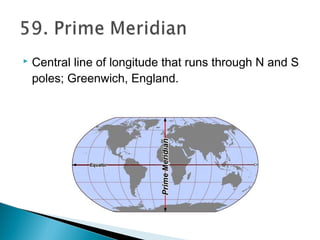
 Central line of longitude that runs through N and S
poles; Greenwich, England.
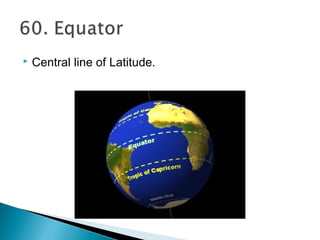
 Central line of Latitude.
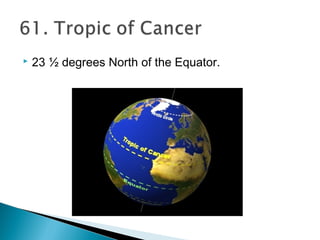
 23 ½ degrees North of the Equator.
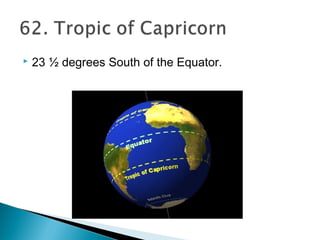
 23 ½ degrees South of the Equator.
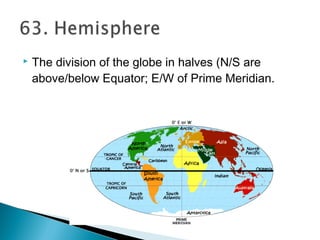
 The division of the globe in halves (N/S are
above/below Equator; E/W of Prime Meridian.

Landforms and water bodies

  • 1.
  • 2.
     One offour large water bodies.
  • 3.
     A continuousbody of salt water, usually a region within an ocean.
  • 4.
     A large/smallbody of water surrounded by land.
  • 5.
     A smallbody of water flowing on the earth’s surface.
  • 6.
     A largearea of sea or ocean partially enclosed by land.
  • 7.
     A bodyof water partly enclosed by land but having a wide outlet to the sea, often smaller than a gulf.
  • 8.
     A narrowpassage of water between two larger bodies of water.
  • 9.
     A longnarrow inlet of sea between steep cliffs.
  • 10.
     A largenatural stream of water.
  • 11.
     A riveror stream which flows into a larger river.
  • 12.
     The placewhere the river enters a larger body of water.
  • 13.
     A largemass of slow moving ice, formed from compacted snow.
  • 14.
     A man-madewall built to separate and protect a harbor from the sea.
  • 15.
     A bodyof water stored for public use.
  • 16.
     A barrierbuilt across water to control the flow of water.
  • 17.
     To supplyland with water through pipes, ditches or streams.
  • 18.
     A man-madewater way or channel.
  • 19.
     A deeppart of a river or harbor.
  • 20.
     A narrowpassage of water leading inland.
  • 21.
     A shallowbody of water separated from the sea by sandbars or coral reefs.
  • 22.
     An angulardeposit of soil at the mouth of a river.
  • 23.
     A longbody of water, wider than a strait or channel which usually connects two bodies of water.
  • 24.
     A townwith a harbor.
  • 25.
     A shelteredbody of water deep enough to serve as a port for ships.
  • 26.
     A largepipe/conduit bringing water from a distance or a bridge-like structure.
  • 27.
     One ofseven large land masses.
  • 28.
     A narrowstrip of land connecting two larger masses of land.
  • 29.
     A longprojection of land into water and surrounded by water on three sides.
  • 30.
     A landmass smaller than a continent surrounded by water.
  • 31.
     A pointor head of land projecting into the sea or other body of water.
  • 32.
  • 33.
     The levelof the oceans’ surface.
  • 34.
     A naturalelevation of the earth’s surface greater in height than a hill.
  • 35.
     An extensivelevel of treeless land.
  • 36.
     Elevated pieceof land generally longer than a mile.
  • 37.
     An openinginto the earth’s surface with steep cliff walls.
  • 38.
     A well-definednatural elevation smaller than a mountain.
  • 39.
     A lowhill area near the base of mountains.
  • 40.
     A longnarrow lowland between ranges of mountains or hills.
  • 41.
     A seriesof mountain ridges.
  • 42.
     A mountainousregion of a country.
  • 43.
     An extensivestretch of higher ground from each side of which the river systems of a continent flow.
  • 44.
     An openingin the crust of the earth through which molten lava, dust, rock, ash and gas are ejected.
  • 46.
     A hillwith a flat or round top which rises sharply from the surrounding area.
  • 47.
     A flat-toppedhill with cliff-like sides generally shorter than a mile.
  • 48.
     An extensivearea of rolling grassland.
  • 49.
     A narrowpassage between mountains.
  • 50.
     A high,steep face of rock.
  • 51.
     Altitude beyondwhich trees do not grow.
  • 52.
     The densegrowth of trees covering a large area.
  • 53.
     An openexcavation from which stone is taken.
  • 54.
     A naturaldepression on the earth’s surface showing that there is an open area underground which is sinking.
  • 55.
     Material thatsinks to the bottom of a liquid.
  • 56.
     A plainalong a river; formed by sediment from floods.
  • 57.
     Sloping wherea stream slows down, into a level plain.
  • 58.
     Imaginary linesthat run through both poles (N/S). The central line of longitude is called the Prime Meridian and it runs through the Royal Observatory in Greenwich, England. Lines tell us how far east and west we are from the PM.
  • 59.
     Imaginary lineswhich tell us how far north or south one is from the Equator; the imaginary line exactly ½ way between N and S poles.
  • 60.
     Central lineof longitude that runs through N and S poles; Greenwich, England.
  • 61.
     Central lineof Latitude.
  • 62.
     23 ½degrees North of the Equator.
  • 63.
     23 ½degrees South of the Equator.
  • 64.
     The divisionof the globe in halves (N/S are above/below Equator; E/W of Prime Meridian.