What are landforms? Landforms are the natural shapes or features. There are many different types of landforms found on the earth.
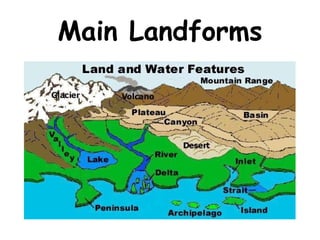
Main Landforms
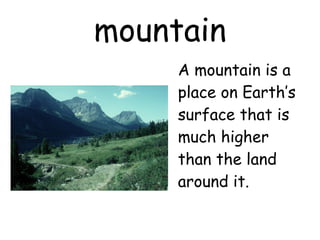
mountain A mountain is a place on Earth’s surface that is much higher than the land around it.                                       
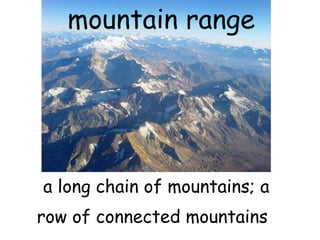
mountain range a long chain of mountains; a row of connected mountains
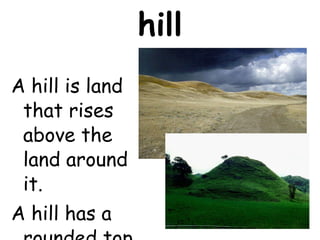
hill A hill is land that rises above the land around it.  A hill has a rounded top.
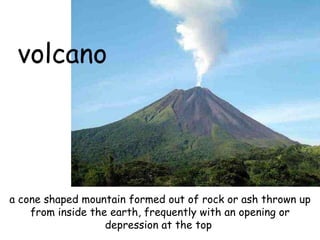
volcano a cone shaped mountain formed out of rock or ash thrown up from inside the earth, frequently with an opening or depression at the top
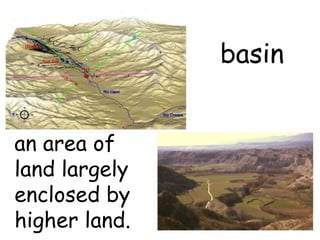
basin an area of land largely enclosed by higher land.
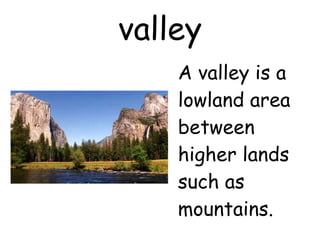
valley A valley is a lowland area between higher lands such as mountains.                                                                
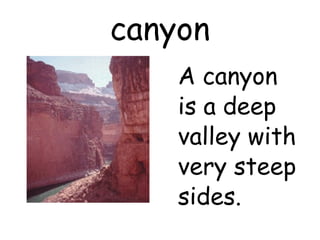
canyon A canyon is a deep valley with very steep sides.                                                          
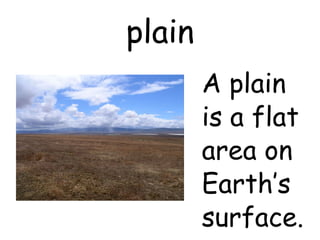
plain A plain is a flat area on Earth’s surface.
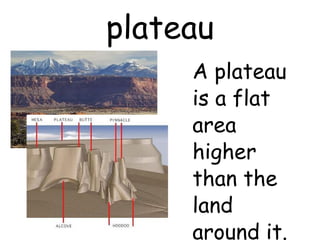
plateau A plateau is a flat area higher than the land around it.
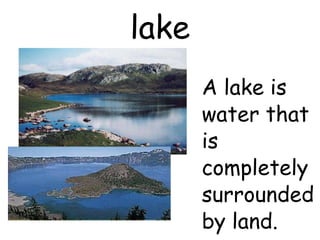
lake A lake is water that is completely surrounded by land.
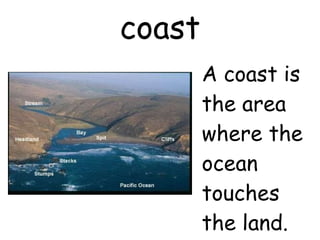
coast A coast is the area where the ocean touches the land.
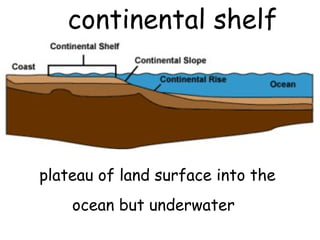
continental shelf plateau of land surface into the ocean but underwater
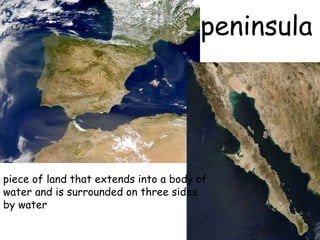
peninsula piece of land that extends into a body of water and is surrounded on three sides by water
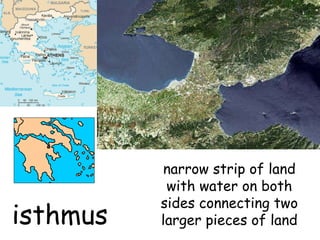
isthmus narrow strip of land with water on both sides connecting two larger pieces of land
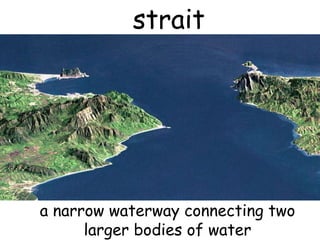
strait a narrow waterway connecting two larger bodies of water
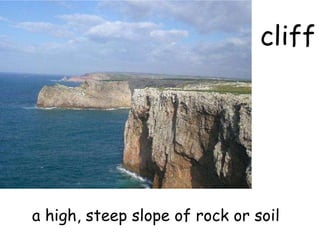
cliff a high, steep slope of rock or soil
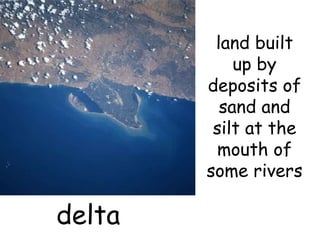
delta land built up by deposits of sand and silt at the mouth of some rivers
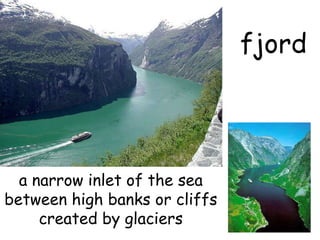
fjord a narrow inlet of the sea between high banks or cliffs created by glaciers
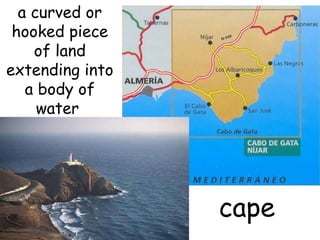
cape a curved or hooked piece of land extending into a body of water
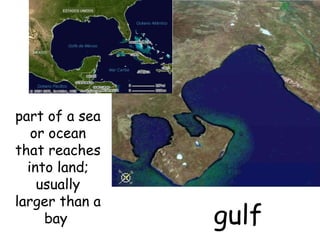
gulf part of a sea or ocean that reaches into land; usually larger than a bay
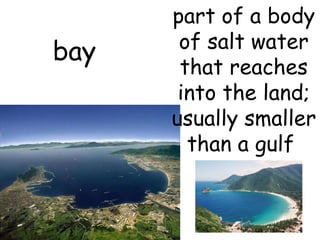
bay part of a body of salt water that reaches into the land; usually smaller than a gulf
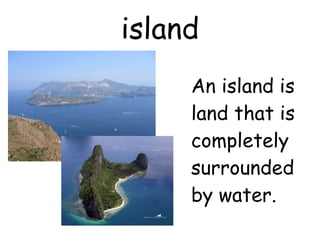
island An island is land that is completely surrounded by water.
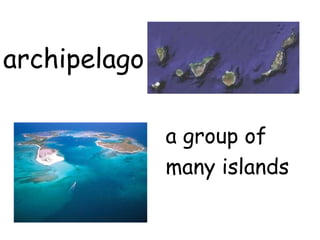
archipelago a group of many islands
OTROS TÉRMINOS GEOGRÁFICOS
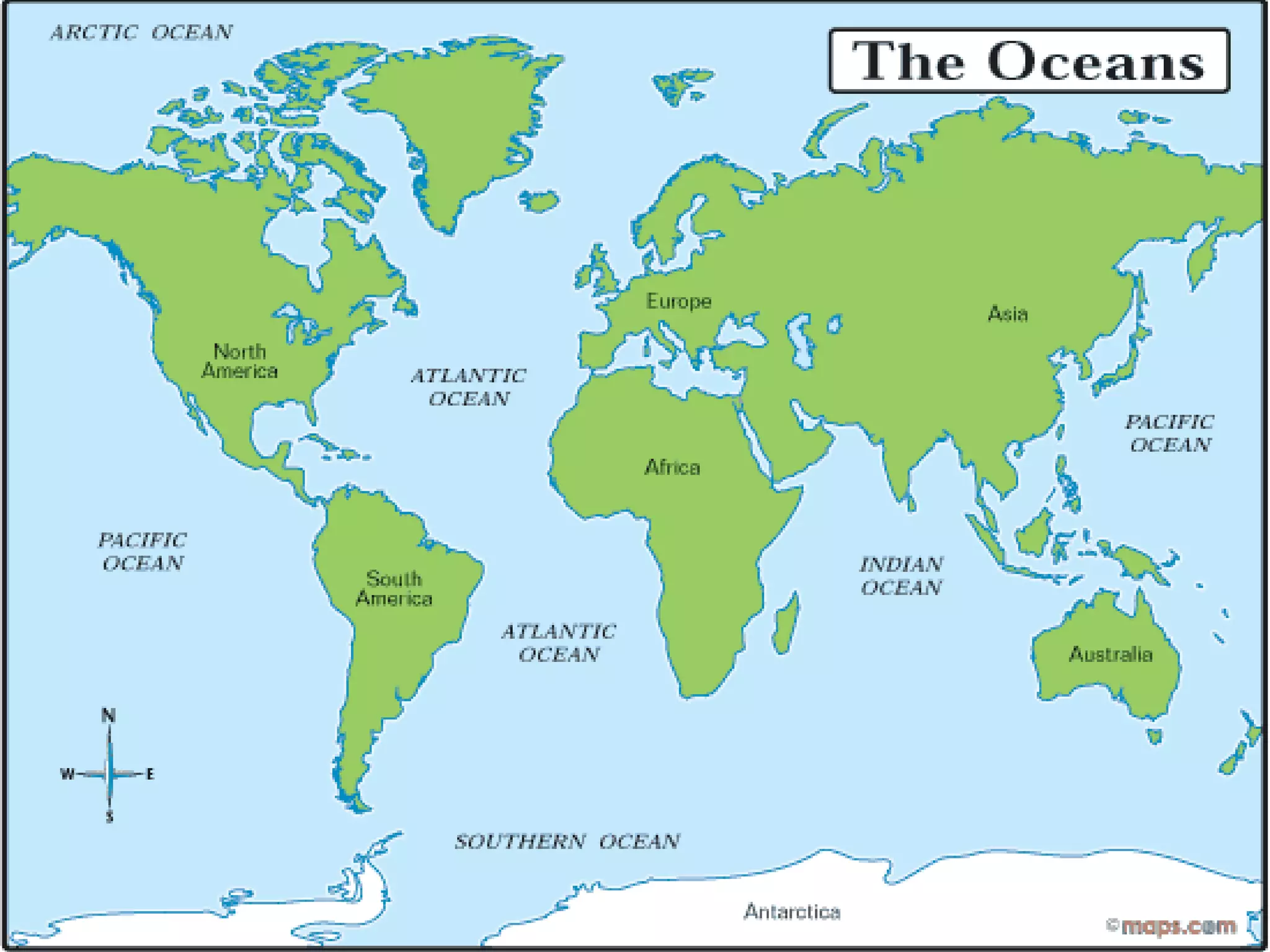
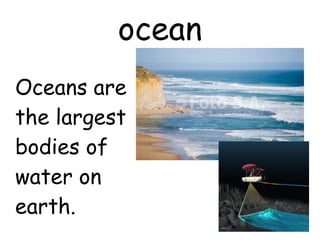
ocean Oceans are the largest bodies of water on earth.
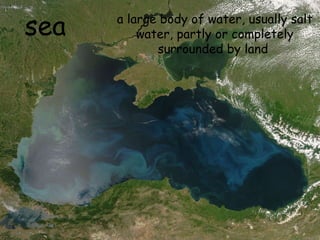
sea a large body of water, usually salt water, partly or completely surrounded by land
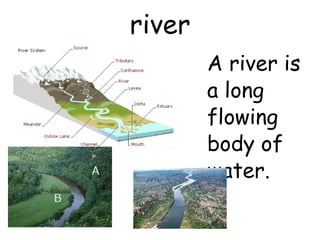
river A river is a long flowing body of water.
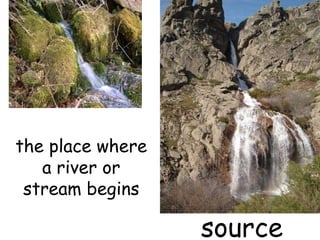
source the place where a river or stream begins
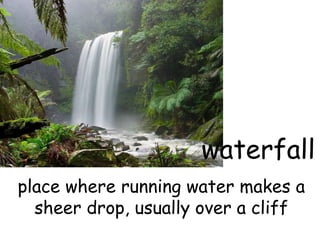
waterfall place where running water makes a sheer drop, usually over a cliff
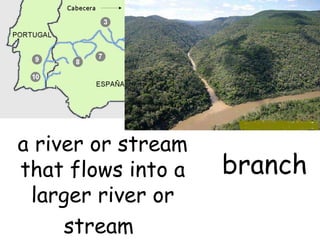
branch a river or stream that flows into a larger river or stream
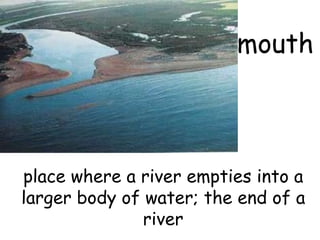
mouth place where a river empties into a larger body of water; the end of a river
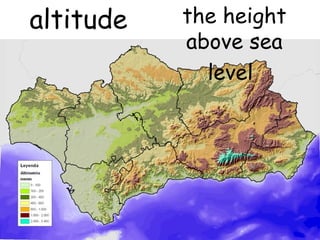
altitude the height above sea level
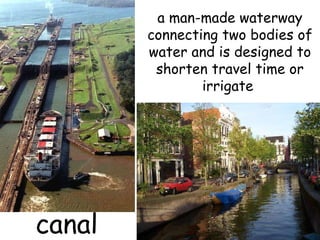
canal a man-made waterway connecting two bodies of water and is designed to shorten travel time or irrigate
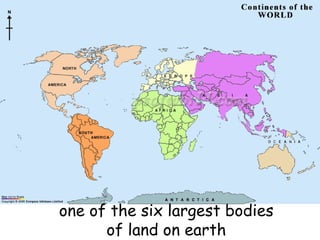
one of the six largest bodies of land on earth
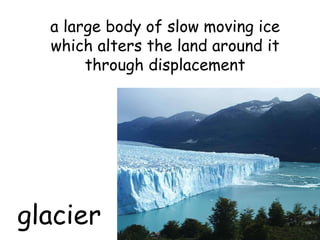
glacier a large body of slow moving ice which alters the land around it through displacement
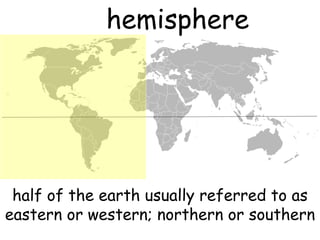
hemisphere half of the earth usually referred to as eastern or western; northern or southern
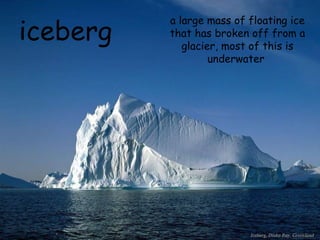
iceberg a large mass of floating ice that has broken off from a glacier, most of this is underwater

Relief

  • 1.
  • 2.
  • 3.
    What are landforms?Landforms are the natural shapes or features. There are many different types of landforms found on the earth.
  • 4.
  • 5.
    mountain A mountainis a place on Earth’s surface that is much higher than the land around it.                                       
  • 6.
    mountain range along chain of mountains; a row of connected mountains
  • 7.
    hill A hillis land that rises above the land around it. A hill has a rounded top.
  • 8.
    volcano a coneshaped mountain formed out of rock or ash thrown up from inside the earth, frequently with an opening or depression at the top
  • 9.
    basin an areaof land largely enclosed by higher land.
  • 10.
    valley A valleyis a lowland area between higher lands such as mountains.                                                             
  • 11.
    canyon A canyonis a deep valley with very steep sides.                                                          
  • 12.
    plain A plainis a flat area on Earth’s surface.
  • 13.
    plateau A plateauis a flat area higher than the land around it.
  • 14.
    lake A lakeis water that is completely surrounded by land.
  • 15.
    coast A coastis the area where the ocean touches the land.
  • 16.
    continental shelf plateauof land surface into the ocean but underwater
  • 17.
    peninsula piece ofland that extends into a body of water and is surrounded on three sides by water
  • 18.
    isthmus narrow stripof land with water on both sides connecting two larger pieces of land
  • 19.
    strait a narrowwaterway connecting two larger bodies of water
  • 20.
    cliff a high,steep slope of rock or soil
  • 21.
    delta land builtup by deposits of sand and silt at the mouth of some rivers
  • 22.
    fjord a narrowinlet of the sea between high banks or cliffs created by glaciers
  • 23.
    cape a curvedor hooked piece of land extending into a body of water
  • 24.
    gulf part ofa sea or ocean that reaches into land; usually larger than a bay
  • 25.
    bay part ofa body of salt water that reaches into the land; usually smaller than a gulf
  • 26.
    island An islandis land that is completely surrounded by water.
  • 27.
    archipelago a groupof many islands
  • 28.
  • 29.
    ocean Oceans arethe largest bodies of water on earth.
  • 30.
    sea a largebody of water, usually salt water, partly or completely surrounded by land
  • 31.
    river A riveris a long flowing body of water.
  • 32.
    source the placewhere a river or stream begins
  • 33.
    waterfall place whererunning water makes a sheer drop, usually over a cliff
  • 34.
    branch a riveror stream that flows into a larger river or stream
  • 35.
    mouth place wherea river empties into a larger body of water; the end of a river
  • 36.
    altitude the heightabove sea level
  • 37.
    canal a man-madewaterway connecting two bodies of water and is designed to shorten travel time or irrigate
  • 38.
    one of thesix largest bodies of land on earth
  • 39.
    glacier a largebody of slow moving ice which alters the land around it through displacement
  • 40.
    hemisphere half ofthe earth usually referred to as eastern or western; northern or southern
  • 41.
    iceberg a largemass of floating ice that has broken off from a glacier, most of this is underwater