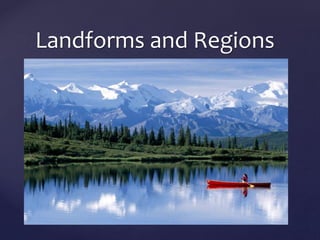
Landforms and Regions 
{
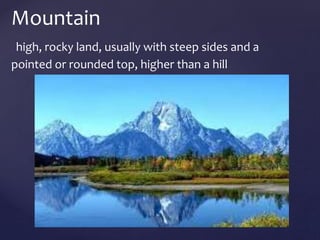
Mountain 
high, rocky land, usually with steep sides and a 
pointed or rounded top, higher than a hill
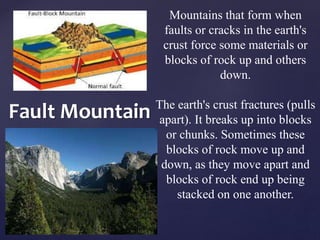
Fault Mountain 
Mountains that form when 
faults or cracks in the earth's 
crust force some materials or 
blocks of rock up and others 
down. 
The earth's crust fractures (pulls 
apart). It breaks up into blocks 
or chunks. Sometimes these 
blocks of rock move up and 
down, as they move apart and 
blocks of rock end up being 
stacked on one another.
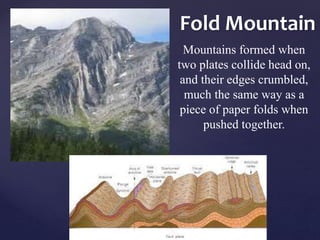
Fold Mountain 
Mountains formed when 
two plates collide head on, 
and their edges crumbled, 
much the same way as a 
piece of paper folds when 
pushed together.
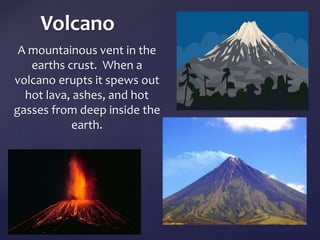
Volcano 
A mountainous vent in the 
earths crust. When a 
volcano erupts it spews out 
hot lava, ashes, and hot 
gasses from deep inside the 
earth.
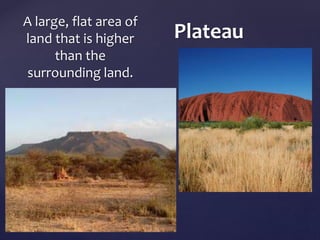
Plateau A large, flat area of 
land that is higher 
than the 
surrounding land.
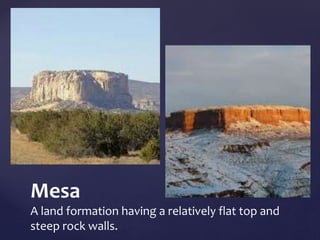
Mesa 
A land formation having a relatively flat top and 
steep rock walls.
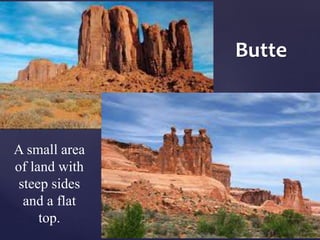
Butte 
A small area 
of land with 
steep sides 
and a flat 
top.
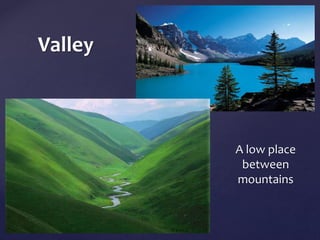
Valley 
A low place 
between 
mountains
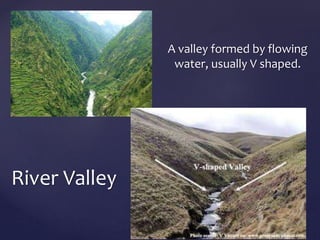
A valley formed by flowing 
water, usually V shaped. 
River Valley
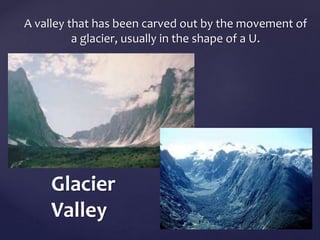
A valley that has been carved out by the movement of 
a glacier, usually in the shape of a U. 
Glacier 
Valley
{ 
	 
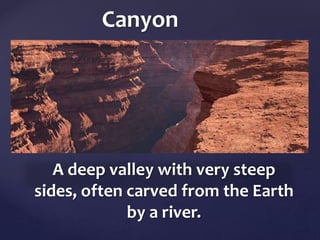
Canyon 
A deep valley with very steep 
sides, often carved from the Earth 
by a river.
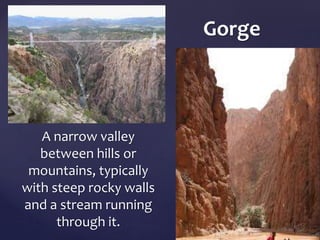
A narrow valley 
between hills or 
mountains, typically 
with steep rocky walls 
and a stream running 
through it. 
Gorge
{ 
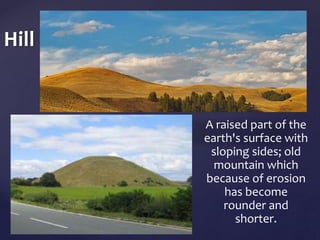
A raised part of the 
earth's surface with 
sloping sides; old 
mountain which 
because of erosion 
	 
has become 
rounder and 
shorter. 
Hill
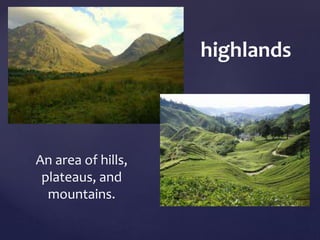
An area of hills, 
plateaus, and 
mountains. 
highlands
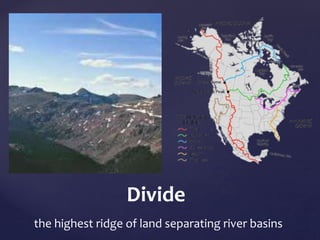
Divide 
the highest ridge of land separating river basins
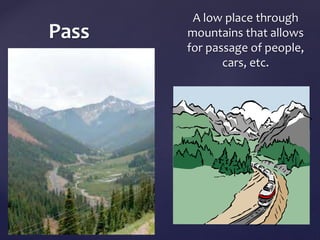
Pass 
A low place through 
mountains that allows 
for passage of people, 
cars, etc.
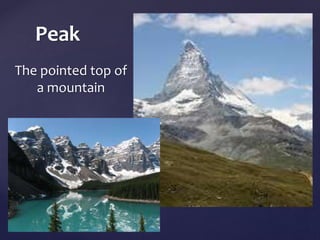
Peak 
The pointed top of 
a mountain
{ 
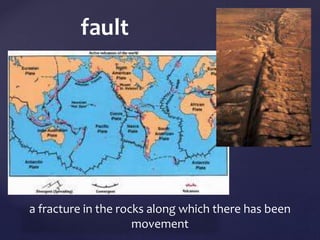
a fracture in the rocks along which there has been 
movement 
fault
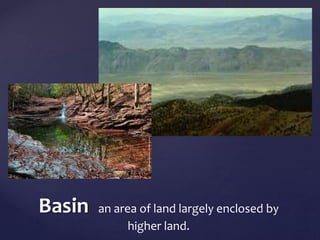
Basin an area of land largely enclosed by 
higher land.
{ 
	 
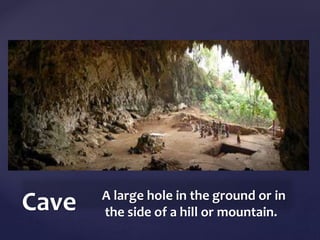
A large hole in the ground or in 
the side of a hill or mountain. Cave
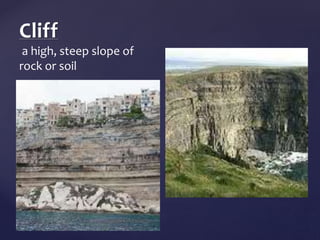
Cliff 
a high, steep slope of 
rock or soil
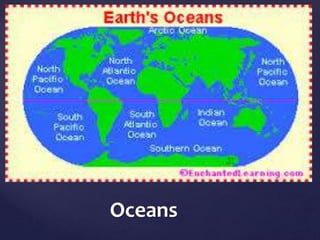
Oceans
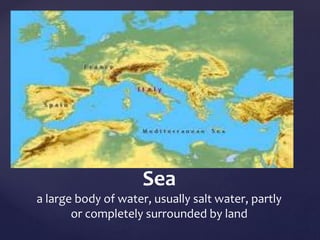
Sea 
a large body of water, usually salt water, partly 
or completely surrounded by land
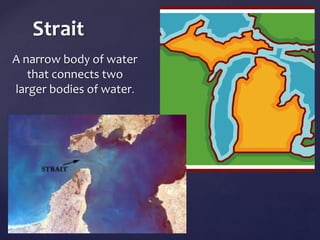
Strait 
A narrow body of water 
that connects two 
larger bodies of water.
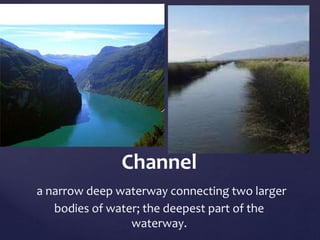
Channel 
a narrow deep waterway connecting two larger 
bodies of water; the deepest part of the 
waterway.
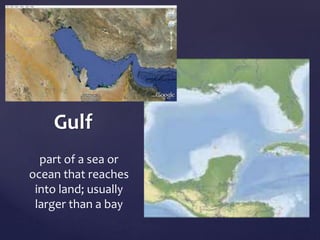
Gulf 
part of a sea or 
ocean that reaches 
into land; usually 
larger than a bay
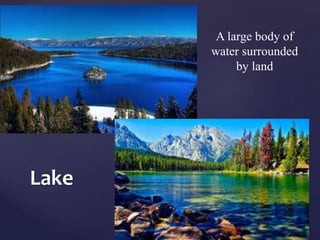
Lake 
A large body of 
water surrounded 
by land
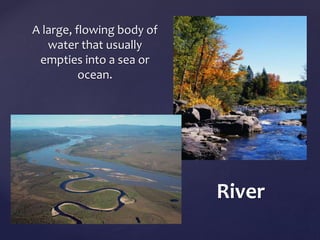
River 
A large, flowing body of 
water that usually 
empties into a sea or 
ocean.
{ 
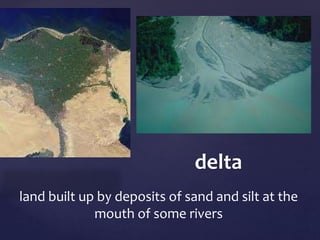
delta 
land built up by deposits of sand and silt at the 
mouth of some rivers
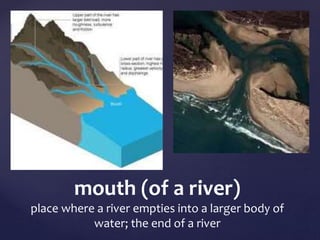
mouth (of a river) 
place where a river empties into a larger body of 
water; the end of a river
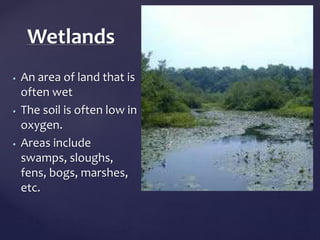
Wetlands 
• An area of land that is 
often wet 
• The soil is often low in 
oxygen. 
• Areas include 
swamps, sloughs, 
fens, bogs, marshes, 
etc.
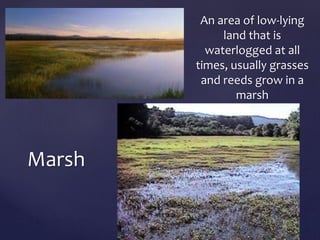
An area of low-lying 
land that is 
waterlogged at all 
times, usually grasses 
and reeds grow in a 
marsh 
Marsh
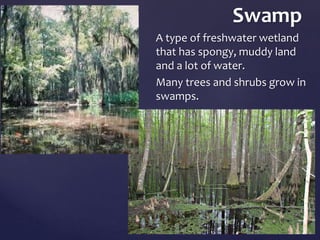
Swamp 
A type of freshwater wetland 
that has spongy, muddy land 
and a lot of water. 
Many trees and shrubs grow in 
swamps.
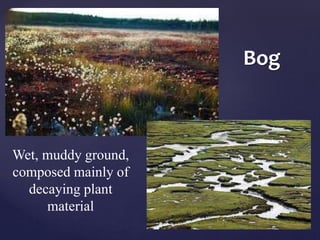
Bog 
Wet, muddy ground, 
composed mainly of 
decaying plant 
material
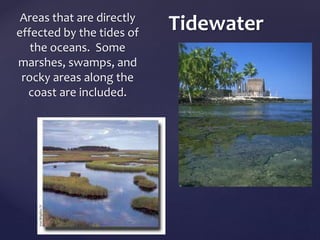
Tidewater Areas that are directly 
effected by the tides of 
the oceans. Some 
marshes, swamps, and 
rocky areas along the 
coast are included.
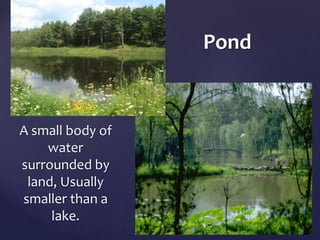
Pond 
A small body of 
water 
surrounded by 
land, Usually 
smaller than a 
lake.
{ 
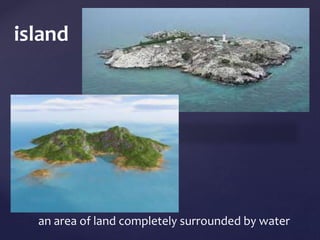
island 
an area of land completely surrounded by water
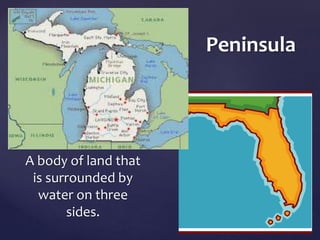
Peninsula 
A body of land that 
is surrounded by 
water on three 
sides.
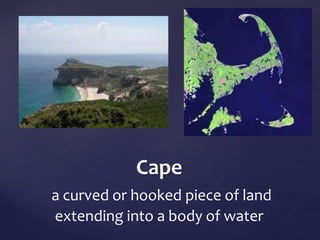
Cape 
a curved or hooked piece of land 
extending into a body of water
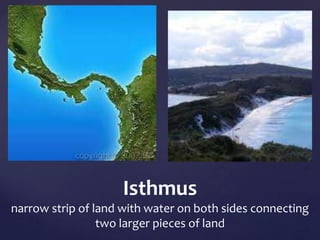
Isthmus 
narrow strip of land with water on both sides connecting 
two larger pieces of land
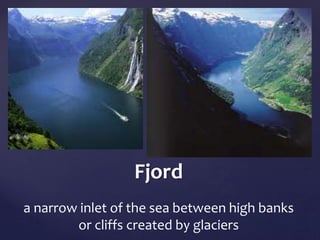
Fjord 
a narrow inlet of the sea between high banks 
or cliffs created by glaciers
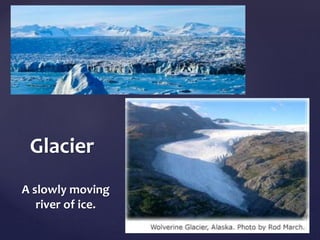
Glacier 
A slowly moving 
river of ice.
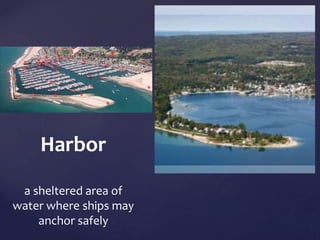
Harbor 
a sheltered area of 
water where ships may 
anchor safely
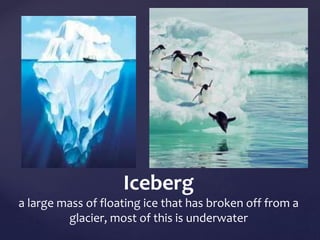
Iceberg 
a large mass of floating ice that has broken off from a 
glacier, most of this is underwater
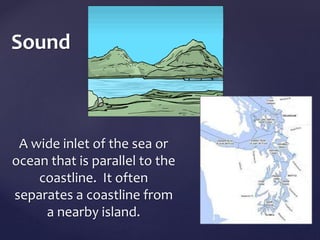
Sound 
A wide inlet of the sea or 
ocean that is parallel to the 
coastline. It often 
separates a coastline from 
a nearby island.
{ 
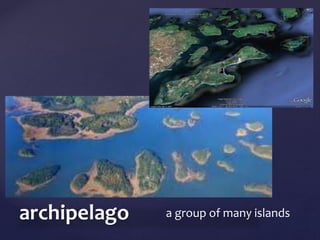
archipelago a group of many islands
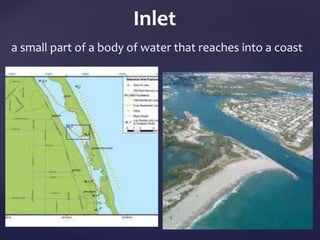
Inlet 
a small part of a body of water that reaches into a coast
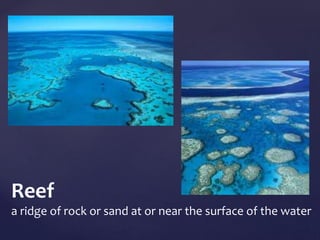
Reef 
a ridge of rock or sand at or near the surface of the water
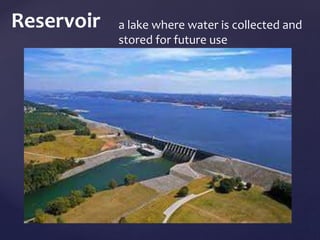
Reservoir a lake where water is collected and 
stored for future use
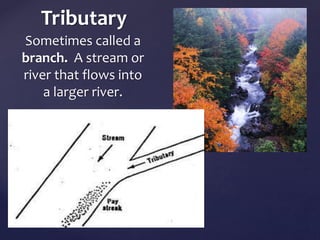
Tributary 
Sometimes called a 
branch. A stream or 
river that flows into 
a larger river.
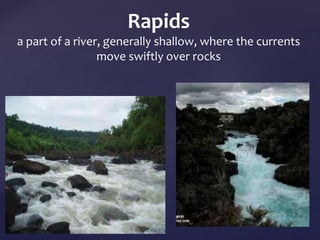
Rapids 
a part of a river, generally shallow, where the currents 
move swiftly over rocks
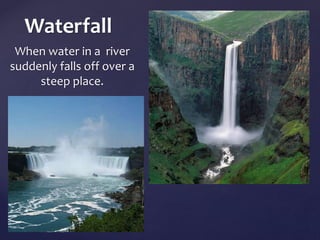
Waterfall 
When water in a river 
suddenly falls off over a 
steep place.
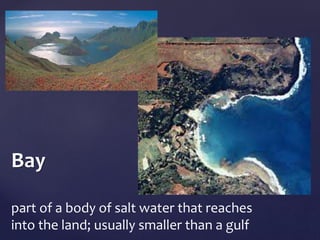
Bay 
part of a body of salt water that reaches 
into the land; usually smaller than a gulf
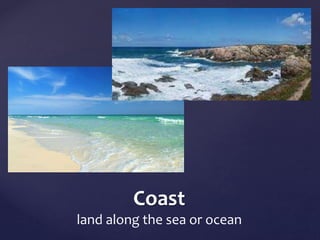
Coast 
land along the sea or ocean
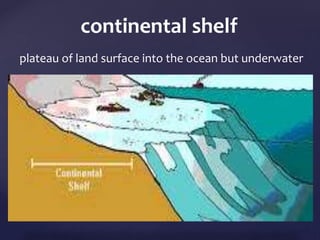
continental shelf 
plateau of land surface into the ocean but underwater 
{
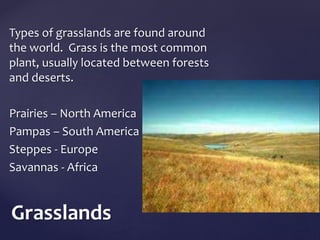
Types of grasslands are found around 
the world. Grass is the most common 
plant, usually located between forests 
and deserts. 
Prairies – North America 
Pampas – South America 
Steppes - Europe 
Savannas - Africa 
Grasslands
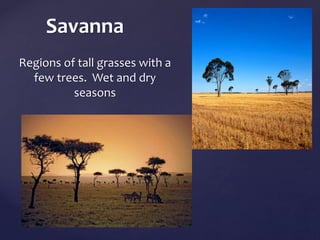
Savanna 
Regions of tall grasses with a 
few trees. Wet and dry 
seasons
{ 
	 
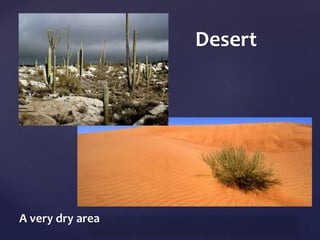
A very dry area 
Desert
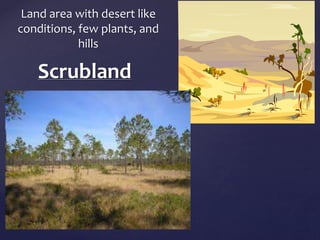
Land area with desert like 
conditions, few plants, and 
hills 
Scrubland
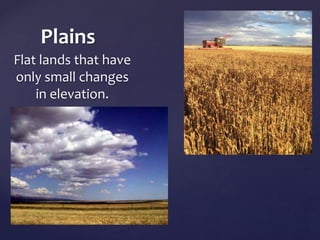
Plains 
Flat lands that have 
only small changes 
in elevation.
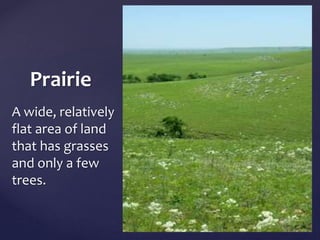
Prairie 
A wide, relatively 
flat area of land 
that has grasses 
and only a few 
trees.
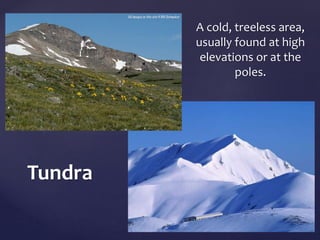
Tundra 
A cold, treeless area, 
usually found at high 
elevations or at the 
poles.
{ 
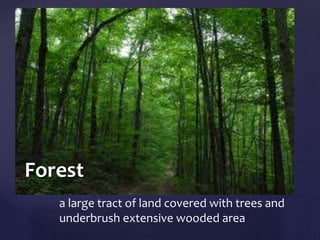
Forest 
a large tract of land covered with trees and 
underbrush extensive wooded area
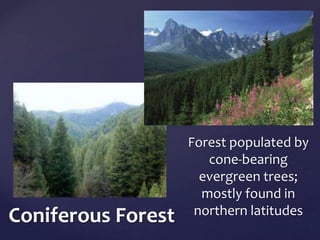
Forest populated by 
cone-bearing 
evergreen trees; 
mostly found in 
Coniferous Forest northern latitudes
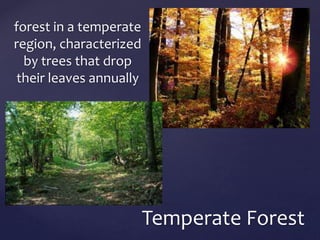
forest in a temperate 
region, characterized 
by trees that drop 
their leaves annually 
Temperate Forest
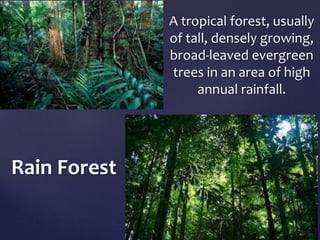
A tropical forest, usually 
of tall, densely growing, 
broad-leaved evergreen 
trees in an area of high 
annual rainfall. 
Rain Forest

Landforms and Regions PowerPoint

  • 1.
  • 2.
    Mountain high, rockyland, usually with steep sides and a pointed or rounded top, higher than a hill
  • 3.
    Fault Mountain Mountainsthat form when faults or cracks in the earth's crust force some materials or blocks of rock up and others down. The earth's crust fractures (pulls apart). It breaks up into blocks or chunks. Sometimes these blocks of rock move up and down, as they move apart and blocks of rock end up being stacked on one another.
  • 4.
    Fold Mountain Mountainsformed when two plates collide head on, and their edges crumbled, much the same way as a piece of paper folds when pushed together.
  • 5.
    Volcano A mountainousvent in the earths crust. When a volcano erupts it spews out hot lava, ashes, and hot gasses from deep inside the earth.
  • 6.
    Plateau A large,flat area of land that is higher than the surrounding land.
  • 7.
    Mesa A landformation having a relatively flat top and steep rock walls.
  • 8.
    Butte A smallarea of land with steep sides and a flat top.
  • 10.
    Valley A lowplace between mountains
  • 11.
    A valley formedby flowing water, usually V shaped. River Valley
  • 12.
    A valley thathas been carved out by the movement of a glacier, usually in the shape of a U. Glacier Valley
  • 13.
    { Canyon A deep valley with very steep sides, often carved from the Earth by a river.
  • 14.
    A narrow valley between hills or mountains, typically with steep rocky walls and a stream running through it. Gorge
  • 15.
    { A raisedpart of the earth's surface with sloping sides; old mountain which because of erosion has become rounder and shorter. Hill
  • 16.
    An area ofhills, plateaus, and mountains. highlands
  • 17.
    Divide the highestridge of land separating river basins
  • 18.
    Pass A lowplace through mountains that allows for passage of people, cars, etc.
  • 19.
    Peak The pointedtop of a mountain
  • 20.
    { a fracturein the rocks along which there has been movement fault
  • 21.
    Basin an areaof land largely enclosed by higher land.
  • 22.
    { Alarge hole in the ground or in the side of a hill or mountain. Cave
  • 23.
    Cliff a high,steep slope of rock or soil
  • 24.
  • 25.
    Sea a largebody of water, usually salt water, partly or completely surrounded by land
  • 26.
    Strait A narrowbody of water that connects two larger bodies of water.
  • 27.
    Channel a narrowdeep waterway connecting two larger bodies of water; the deepest part of the waterway.
  • 28.
    Gulf part ofa sea or ocean that reaches into land; usually larger than a bay
  • 29.
    Lake A largebody of water surrounded by land
  • 30.
    River A large,flowing body of water that usually empties into a sea or ocean.
  • 31.
    { delta landbuilt up by deposits of sand and silt at the mouth of some rivers
  • 32.
    mouth (of ariver) place where a river empties into a larger body of water; the end of a river
  • 33.
    Wetlands • Anarea of land that is often wet • The soil is often low in oxygen. • Areas include swamps, sloughs, fens, bogs, marshes, etc.
  • 34.
    An area oflow-lying land that is waterlogged at all times, usually grasses and reeds grow in a marsh Marsh
  • 35.
    Swamp A typeof freshwater wetland that has spongy, muddy land and a lot of water. Many trees and shrubs grow in swamps.
  • 36.
    Bog Wet, muddyground, composed mainly of decaying plant material
  • 37.
    Tidewater Areas thatare directly effected by the tides of the oceans. Some marshes, swamps, and rocky areas along the coast are included.
  • 38.
    Pond A smallbody of water surrounded by land, Usually smaller than a lake.
  • 39.
    { island anarea of land completely surrounded by water
  • 40.
    Peninsula A bodyof land that is surrounded by water on three sides.
  • 41.
    Cape a curvedor hooked piece of land extending into a body of water
  • 42.
    Isthmus narrow stripof land with water on both sides connecting two larger pieces of land
  • 43.
    Fjord a narrowinlet of the sea between high banks or cliffs created by glaciers
  • 44.
    Glacier A slowlymoving river of ice.
  • 45.
    Harbor a shelteredarea of water where ships may anchor safely
  • 46.
    Iceberg a largemass of floating ice that has broken off from a glacier, most of this is underwater
  • 47.
    Sound A wideinlet of the sea or ocean that is parallel to the coastline. It often separates a coastline from a nearby island.
  • 48.
    { archipelago agroup of many islands
  • 49.
    Inlet a smallpart of a body of water that reaches into a coast
  • 50.
    Reef a ridgeof rock or sand at or near the surface of the water
  • 51.
    Reservoir a lakewhere water is collected and stored for future use
  • 52.
    Tributary Sometimes calleda branch. A stream or river that flows into a larger river.
  • 53.
    Rapids a partof a river, generally shallow, where the currents move swiftly over rocks
  • 54.
    Waterfall When waterin a river suddenly falls off over a steep place.
  • 55.
    Bay part ofa body of salt water that reaches into the land; usually smaller than a gulf
  • 56.
    Coast land alongthe sea or ocean
  • 57.
    continental shelf plateauof land surface into the ocean but underwater {
  • 58.
    Types of grasslandsare found around the world. Grass is the most common plant, usually located between forests and deserts. Prairies – North America Pampas – South America Steppes - Europe Savannas - Africa Grasslands
  • 59.
    Savanna Regions oftall grasses with a few trees. Wet and dry seasons
  • 60.
    { Avery dry area Desert
  • 61.
    Land area withdesert like conditions, few plants, and hills Scrubland
  • 62.
    Plains Flat landsthat have only small changes in elevation.
  • 63.
    Prairie A wide,relatively flat area of land that has grasses and only a few trees.
  • 64.
    Tundra A cold,treeless area, usually found at high elevations or at the poles.
  • 65.
    { Forest alarge tract of land covered with trees and underbrush extensive wooded area
  • 66.
    Forest populated by cone-bearing evergreen trees; mostly found in Coniferous Forest northern latitudes
  • 67.
    forest in atemperate region, characterized by trees that drop their leaves annually Temperate Forest
  • 68.
    A tropical forest,usually of tall, densely growing, broad-leaved evergreen trees in an area of high annual rainfall. Rain Forest