Oregon

Marine Spatial Planning

       Progress Report

     Paul Klarin, Marine Program Coordinator
Department of Land Conservation and Development
                    May 2012
DREADED
 DRAFT
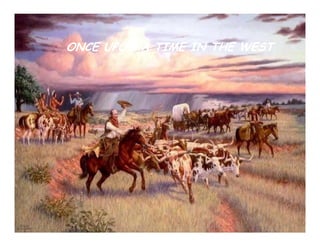
Once upon a time in the wild west…
ONCE UPON A TIME IN THE WEST
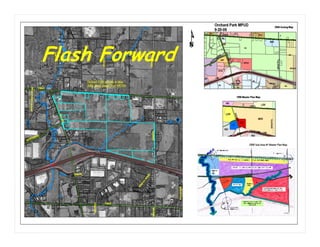
Flash Forward
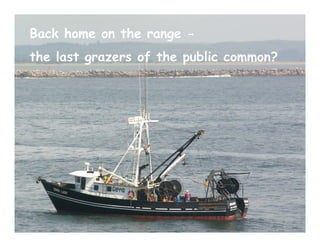
Back home on the range -
the last grazers of the public common?
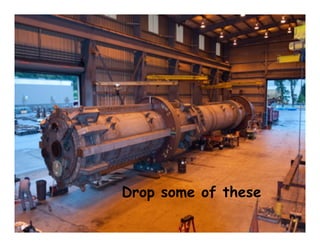
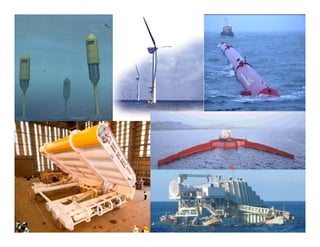
Drop some of these
with cement anchors the size of a 2- car garage…
in the middle of their best fishing grounds…
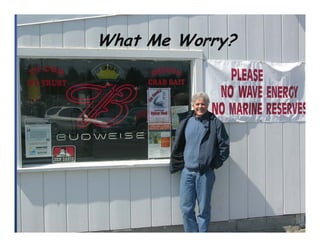
What Me Worry?
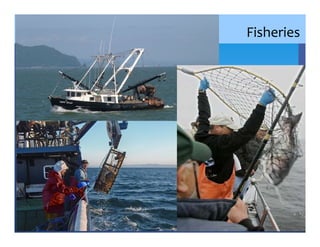
CRAB CHARTER        SALMON


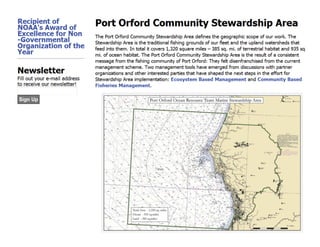
PORT

               Ocean
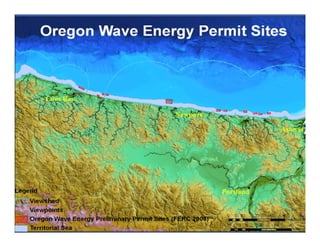
               Power
            Technologies
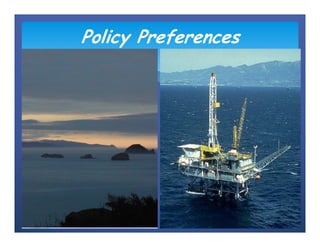
Policy Preferences
Oregon’s Ocean Management Program

    Statewide Land Use     Ocean Resources
     Planning Program    Management Program
         ORS 197              ORS 196


                                 Ocean Policy
    Goal 19                       Advisory
Ocean Resources                    Council


        State Agency       Territorial
         Authorities        Sea Plan
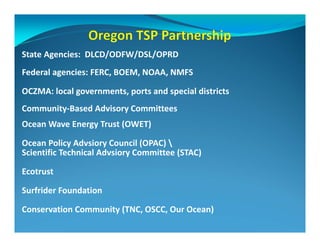
State Agencies:  DLCD/ODFW/DSL/OPRD
Federal agencies: FERC, BOEM, NOAA, NMFS

OCZMA: local governments, ports and special districts
Community‐Based Advisory Committees 
Ocean Wave Energy Trust (OWET)

Ocean Policy Advsiory Council (OPAC) 
Scientific Technical Advsiory Committee (STAC)

Ecotrust

Surfrider Foundation

Conservation Community (TNC, OSCC, Our Ocean)
The Moving Parts of TSP: Technological Roadmap


                                    DLCD – 12/10 - Lanier
Oregon MSP

Seafloor mapping of the
Territorial Sea:

NOAA / Contractors
coordinated by Oregon State
University
- Seafloor mapping workshop
- Priority Areas Selected
- Field work completed 2010
- < 50% of the territorial sea
Oregon MSP
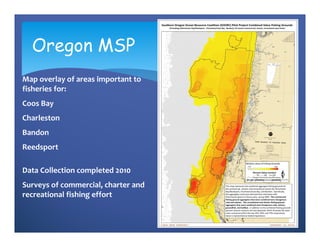
Map overlay of areas important to 
fisheries for: 
Coos Bay
Charleston
Bandon
Reedsport

Data Collection completed 2010
Surveys of commercial, charter and 
recreational fishing effort
Decision‐Support Tools
Areas Important to Fisheries
 a) areas of high catch (e.g., high total pounds landed and high 
  value of landed catch); or

 b) areas where highly valued fish are caught even if in low 
  abundance or by few fishers; or

 c) areas that are important on a seasonal basis; or

 d) areas important to commercial or recreational fishing 
  activities, including those of individual ports or particular fleets; 
  or

 e) habitat areas that support food or prey species important to 
  commercially and recreationally caught fish and shellfish 
  species.
Oregon TSP
Map overlay of areas 
important to fisheries for: 
Astoria
Warrenton
Survey of commercial, 
charter and recreational 
fishing effort
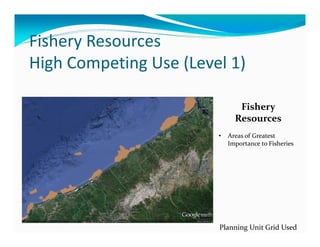
Fishery Resources
High Competing Use (Level 1)

                               Fishery 
                              Resources
                        •   Areas of Greatest 
                            Importance to Fisheries


                        Planning Unit Grid Used
Fishery Resources
Moderate Competing Use (Level 2)

                              Fishery 
                             Resources
                       •   Areas of Great 
                           Importance to Fisheries


                       Planning Unit Grid Used
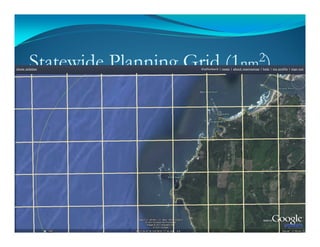
Statewide Planning Grid (1nm2)
Beneficial Uses
Protect and encourage the beneficial uses of ocean resources 
such as navigation, food production, recreation, aesthetic 
enjoyment, and uses of the seafloor provided that such 
activities ‐
do not adversely affect the resources protected in subsection 
1., above (ecological resources and fisheries); 
avoid, to the extent possible, adverse effects on or 
operational conflicts with other ocean uses and activities; 
and 
comply with the applicable requirements of the Oregon TSP.
Beneficial Uses
High Competing Use (Level 1)

               Research               Beneficial Uses
               System        Cables
                                      •   Dredge Material Disposal
                                      •   Commercial Shipping 
                                          Lanes (Deep Draft, 2 mi)
         Shipping                     •   Coastal Discharge Outfall
         Lanes Marine                 •   National Wildlife Refuges
                  Reserves            •   Nearshore Research 
                                          Inventory (OOI, 
                                          NNMREC)
                                      •   OR Islands National 
Cables                                    Wildlife Refuges
                                      •   Marine Managed Areas
                                      •   Telecommunication 
                                          Cables (1000 m)
                                      •   Marine Renewable 
                                          Energy Permits


                                      A       l f      i         d
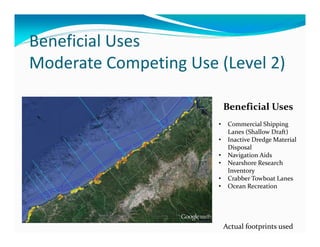
Beneficial Uses
Moderate Competing Use (Level 2)

                           Beneficial Uses
                       •    Commercial Shipping 
                            Lanes (Shallow Draft)
                       •    Inactive Dredge Material 
                            Disposal
                       •    Navigation Aids
                       •    Nearshore Research 
                            Inventory
                       •    Crabber Towboat Lanes
                       •    Ocean Recreation


                           Actual footprints used
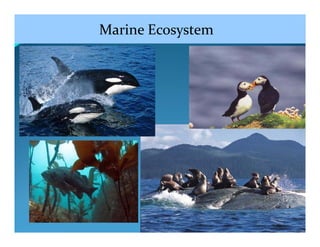
Marine Ecosystem
Fisheries
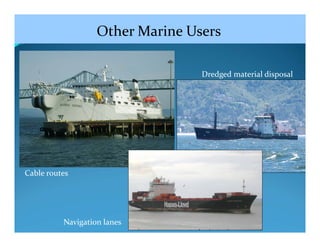
Other Marine Users

                                  Dredged material disposal


Cable routes


          Navigation lanes
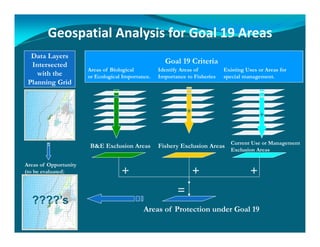
Geospatial Analysis for Goal 19 Areas
  Data Layers
  Intersected                                        Goal 19 Criteria
                       Areas of Biological         Identify Areas of         Existing Uses or Areas for
    with the           or Ecological Importance.   Importance to Fisheries   special management.
 Planning Grid


                                                             +
                                +


                                                                                           +
                       B&E Exclusion Areas         Fishery Exclusion Areas Current Use or Management
                                                                                Exclusion Areas

Areas of Opportunity
(to be evaluated)                   +                           +                       +
                                                          =
  ????’s
                                             Areas of Protection under Goal 19
Planning Grid Overlays
                                                                          Summary
                                                                          Map
Started Here                                                              Layers


                                                                             +
                 GIS


                                       Public
                                       Input
                 Data

LCDC
TSPAC                             OPAC                     Public Input


                        Resource Use
                                        Public Input

                                                       Goal 19
 Public Input


                Draft      Areas                       Areas
                Plan
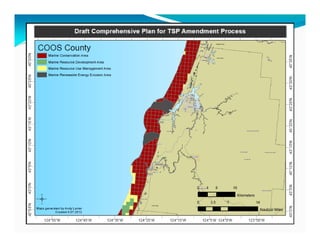
Marine                      Marine                      Marine Resource 
                                                                                               Marine Resource 
  Renewable                Conservation Area                Use Management 
                                                                                              Development Area
Energy Exclusion                                                 Area
     Area
                                Objective: Protect 
                               important, unique,             Objective: To maintain                 Objective: To 
                               or vulnerable Goal             the long term use and                identify areas of 
     Objective: To               19 resources or               health of the area by             least use conflict for 
    protect already                   uses.                   managing for a broad               the development of 
    permitted uses                                               range of Goal 19                 Marine Renewable 
      and special                                              resources and uses.                 Energy Facilities. 
     management 
   areas under Goal 
       19 Ocean                Area identified for the          Maintain the status quo 
      Resources.                protection of Goal 19             for Goal 19 uses and 
                                  Resources.  Any                   resources.  MRE               Minimize impacts of 
                                development in this                development must             development to existing 
                              area must demonstrate                 demonstrate no              users natural resources, 
                                   no reasonably              significant adverse effects,       this is an area that has 
                                foreseeable adverse            to the extent possible, to          been identified for 
                              effects to the identified         those resources or uses.
     No development of                                                                                  testing and 
                                 Goal 19 resources. 
     marine renewable                                                                           development of marine 
       energy will be                                                                              renewable energy.  
     permitted in these 
       distinct areas. 

        Screening              Visual Resource Overlay ‐ Impact Assessment Analysis 
   standards apply 
       to  all areas
                                                  Marine Recreation Overlay Area

     Will not be 
     permitted. 
                             Higher                        Permitting Difficulty Level                             Lower
Once upon a time in the wild west…
ONCE UPON A TIME IN THE WEST
Fisheries
Formula for Success
Political & Policy Framework is in place:
  25 years of state ocean planning:
  ● Statutory direction & expectations
  ● Ocean management policies (in state CZMP)
  ● Tested process (agencies, stakeholders)
  ● Literacy/expectations among the public

Technical Framework is in place:
  ● State agency science/technical capacity
  ● Academic research capacity at OSU/UO, etc
  ● Technical expertise from NGO, university partners
  ● IT capacity within state CZM program    

Partnerships, leveraging, and trust
Benefits of Marine Spatial Planning
For industry and stakeholders:
   Increases certainty for investments
   Reduces costs in time and effort at project scale
   Strengthens industry – industry ties

For government:
   Promotes better decisions
   Streamlines, clarifies decision process
   Reduces the Oops! Factor

For public:
   Provides transparency
   Preserves wide range of public values
Conclusion:
Oregon’s CMSP Process
Takes time
Takes effort
Takes funding
Never Ends
But:
It beats the alternatives (e.g. settlement agreements, lawsuits 
and appeals), and it’s a cost‐effective means of doing business 
because it
‐ Improves certainty for private and public investments;
‐ Reduces (but does not eliminate) political blowback.

Paul Klarin Oregon Marine Spatial Planning Progress Report