Staying Afloat: Adapting Waterfront 
Business to Rising Seas and Extreme Storms
Salve Regina University
Newport, RI
December 10, 2014
Stephen D. Marks
Municipal Manager
City of Hoboken, NJ
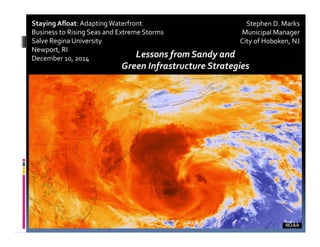
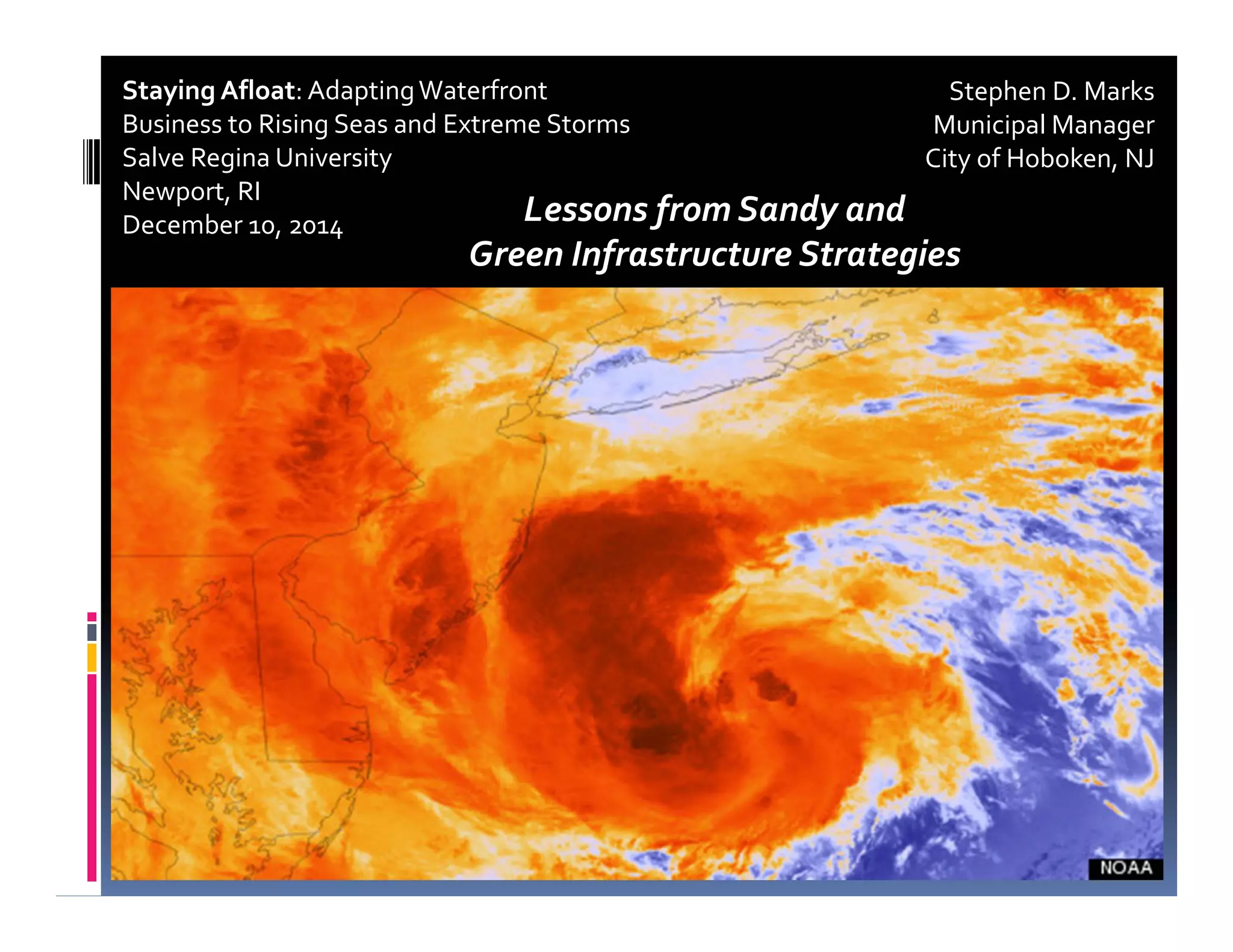
Lessons from Sandy and 
Green Infrastructure Strategies 
Welcome to
Hoboken
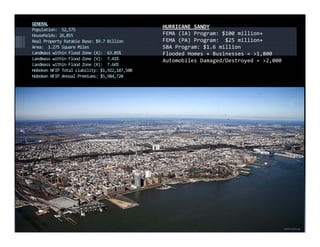
GENERAL
Population:  52,575
Households: 26,855
Real Property Ratable Base: $9.7 Billion
Area:  1.275 Square Miles
Landmass within Flood Zone (A):  63.85%
Landmass within Flood Zone (V):  7.41% 
Landmass within Flood Zone (X):  7.66%
Hoboken NFIP Total Liability: $1,922,187,500
Hoboken NFIP Annual Premiums: $5,984,720
HURRICANE SANDY
FEMA (IA) Program: $100 million+
FEMA (PA) Program:  $25 million+
SBA Program: $1.6 million
Flooded Homes + Businesses = >1,800
Automobiles Damaged/Destroyed = >2,000 
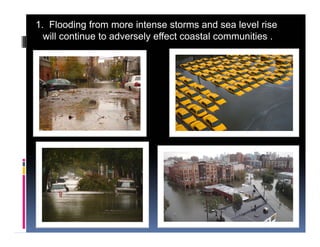
1. Flooding from more intense storms and sea level rise
will continue to adversely effect coastal communities .
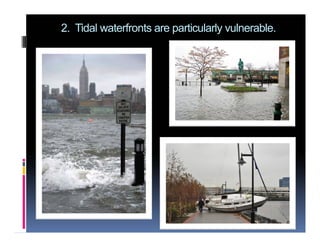
2. Tidal waterfronts are particularly vulnerable.
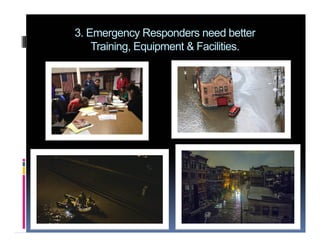
3. Emergency Responders need better
Training, Equipment & Facilities.
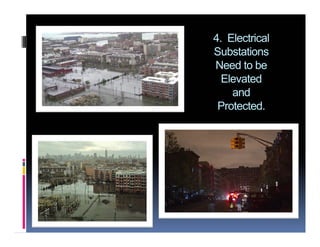
4. Electrical
Substations
Need to be
Elevated
and
Protected.
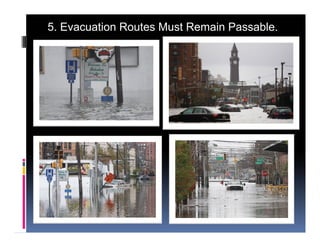
5. Evacuation Routes Must Remain Passable.
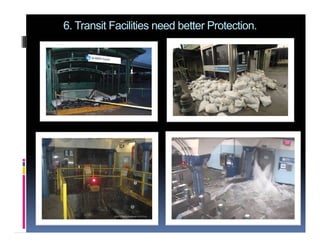
6. Transit Facilities need better Protection.
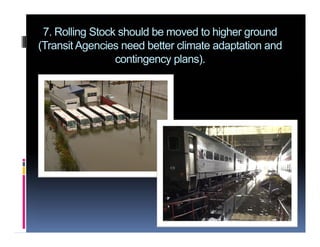
7. Rolling Stock should be moved to higher ground
(Transit Agencies need better climate adaptation and
contingency plans).
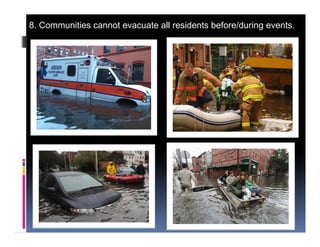
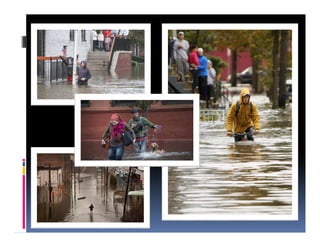
8. Communities cannot evacuate all residents before/during events.
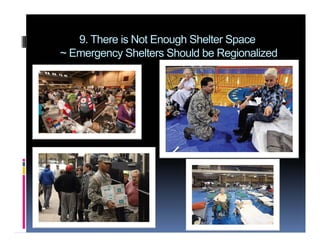
9. There is Not Enough Shelter Space
~ Emergency Shelters Should be Regionalized
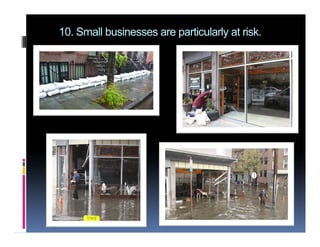
10. Small businesses are particularly at risk.
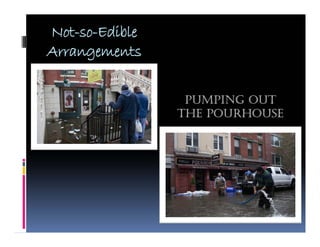
Not-so-Edible
Arrangements
PUMPING OUT
THE POURHOUSE
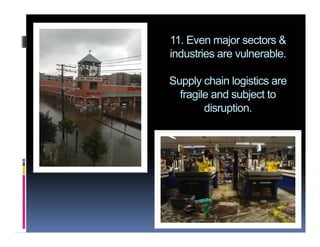
11. Even major sectors &
industries are vulnerable.
Supply chain logistics are
fragile and subject to
disruption.
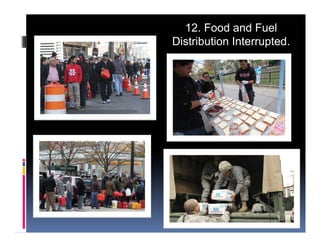
12. Food and Fuel
Distribution Interrupted.
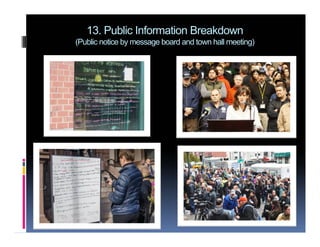
13. Public Information Breakdown
(Public notice by message board and town hall meeting)
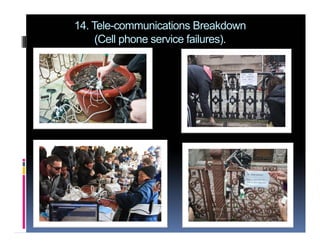
14. Tele-communications Breakdown
(Cell phone service failures).
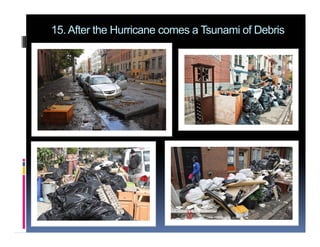
15. After the Hurricane comes a Tsunami of Debris
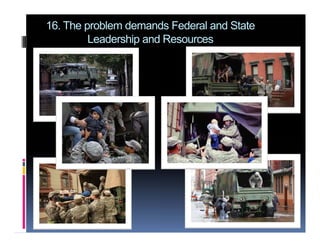
16. The problem demands Federal and State
Leadership and Resources
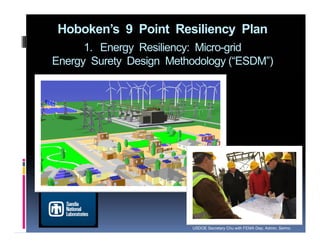
Hoboken’s 9 Point Resiliency Plan
1. Energy Resiliency: Micro-grid
Energy Surety Design Methodology (“ESDM”)
USDOE Secretary Chu with FEMA Dep. Admin. Serino
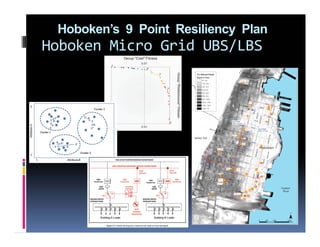
Hoboken Micro Grid UBS/LBS
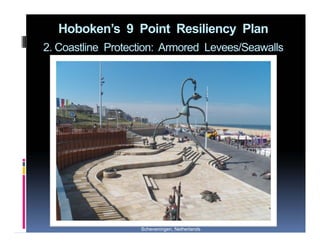
Hoboken’s 9 Point Resiliency Plan
2. Coastline Protection: Armored Levees/Seawalls
Scheveningen, Netherlands
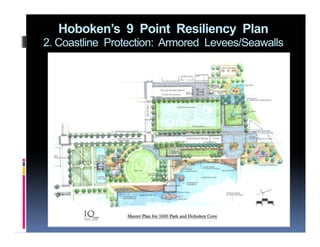
Hoboken’s 9 Point Resiliency Plan
2. Coastline Protection: Armored Levees/Seawalls
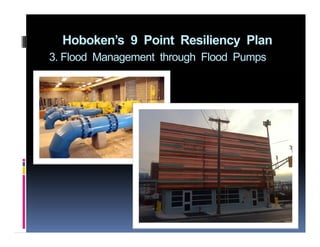
Hoboken’s 9 Point Resiliency Plan
3. Flood Management through Flood Pumps
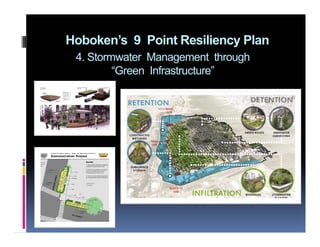
Hoboken’s 9 Point Resiliency Plan
4. Stormwater Management through
“Green Infrastructure”
Hoboken’s 9 Point Resiliency Plan
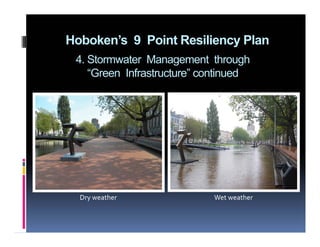
Dry weather Wet weather
4. Stormwater Management through
“Green Infrastructure” continued
Hoboken’s 9 Point Resiliency Plan
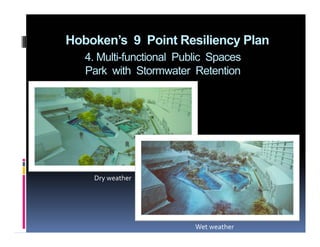
4. Multi-functional Public Spaces
Park with Stormwater Retention
Dry weather
Wet weather
Hoboken’s 9 Point Resiliency Plan
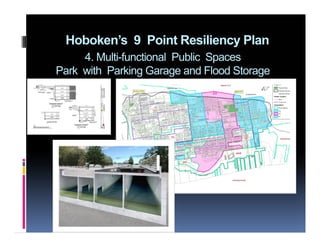
4. Multi-functional Public Spaces
Park with Parking Garage and Flood Storage
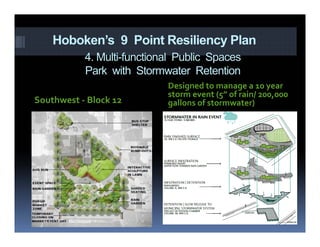
Southwest ‐ Block 12
Designed to manage a 10 year 
storm event (5” of rain/ 200,000 
gallons of stormwater)
Hoboken’s 9 Point Resiliency Plan
4. Multi-functional Public Spaces
Park with Stormwater Retention
Hoboken’s 9 Point Resiliency Plan
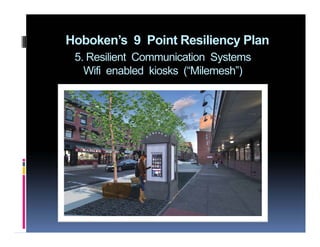
5. Resilient Communication Systems
Wifi enabled kiosks (“Milemesh”)
Hoboken’s 9 Point Resiliency Plan
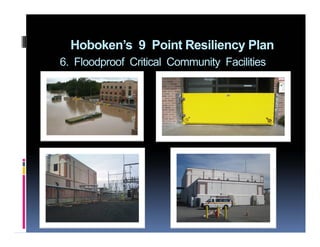
6. Floodproof Critical Community Facilities
Hoboken’s 9 Point Resiliency Plan
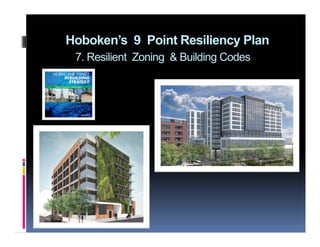
7. Resilient Zoning & Building Codes
Hoboken’s 9 Point Resiliency Plan
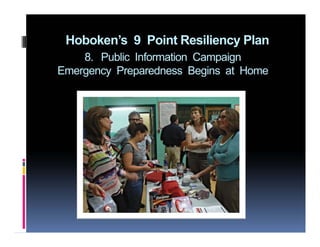
8. Public Information Campaign
Emergency Preparedness Begins at Home
Hoboken’s 9 Point Resiliency Plan
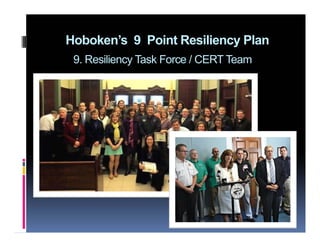
9. Resiliency Task Force / CERT Team
THANK YOU
Stephen D. Marks
@SDMarksNJ

Lessons from Sandy and Green Infrastructure Strategies