THE EMERGENCE OF CMSP IN TEXAS


            Kate Zultner, Texas General Land Office
                International Marine Spatial Planning Symposium
                                                    May 16, 2012
OVERVIEW
    Texas & Coastal Management Program
    Section 309 Program Enhancement Strategy
     Development
    What we are hoping to address through CMSP
    Strategies
    Drivers
    Pathway
    Tools to enhance and be enhanced in this process
    Challenges
THE TEXAS COAST


   Coastal Zone (1/10 of state)= 367 mi of Gulf shoreline, >
    3,300 miles of bays/estuaries , out to 10.3 mi
   More than 1/2 the nation's chemical products & gasoline
    comes from plants along the Texas GIWW
   Commercial fishing brings in more than $150 million of
    fish and shellfish/yr
   18 coastal counties home for 6 million residents (24% of
    state pop.)
TEXAS COASTAL MANAGEMENT PROGRAM

   To ensure the long-term ecological and economic
    productivity of the coast.

   Awards approximately $2.2 million annually in grants

   Eligible for Program Enhancement money – Sec. 309 CZMA

   Contracted HRI (A&M) to conduct 309 Assessment &
    Strategy Report
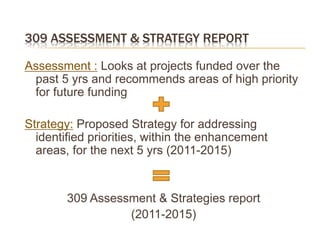
309 ASSESSMENT & STRATEGY REPORT

Assessment : Looks at projects funded over the
 past 5 yrs and recommends areas of high priority
 for future funding

Strategy: Proposed Strategy for addressing
  identified priorities, within the enhancement
  areas, for the next 5 yrs (2011-2015)


        309 Assessment & Strategies report
                  (2011-2015)
CZMA Section 309 Enhancement Areas


Cumulative &           Coastal      Public Access      Wetlands
 Secondary             Hazards
  Impacts


   Ocean            Marine Debris     Energy &        Aquaculture
  Resources                         Government
                                    Facility Siting
Note: Texas cannot create SAMPs
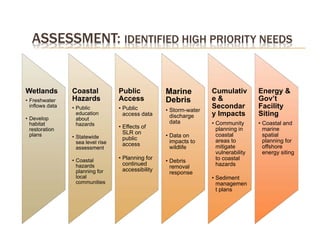
ASSESSMENT: IDENTIFIED HIGH PRIORITY NEEDS


Wetlands         Coastal            Public            Marine          Cumulativ         Energy &
• Freshwater     Hazards            Access            Debris          e&                Gov’t
  inflows data   • Public           • Public          • Storm-water
                                                                      Secondar          Facility
                   education          access data       discharge     y Impacts         Siting
• Develop          about
  habitat          hazards                              data          • Community       • Coastal and
  restoration                       • Effects of                        planning in       marine
  plans                               SLR on                            coastal           spatial
                 • Statewide                          • Data on
                                      public                            areas to          planning for
                   sea level rise                       impacts to
                                      access                            mitigate          offshore
                   assessment                           wildlife
                                                                        vulnerability     energy siting
                 • Coastal          • Planning for                      to coastal
                                                      • Debris
                   hazards            continued                         hazards
                                                        removal
                   planning for       accessibility
                                                        response
                   local                                              • Sediment
                   communities                                          managemen
                                                                        t plans
COASTAL & MARINE SPATIAL PLANNING (CMSP)

   To develop an integrative, adaptive, ecosystem based
    Strategy for pro-active and comprehensive long-term
    planning and management for our coastal resources
       Regulatory/permit streamlining across networked agencies
       Update Resource Mgmt. Codes (RMCs)
       Plan for renewable energy siting (currently wind)
       Coastal hazard mitigation planning
       Habitat/wetlands restoration planning
       Sediment management planning
STRATEGIES
       Use Texas’ marine and coastal natural resources efficiently by
       encouraging responsible and sustainable economic
       development.


       Protect, restore, and enhance the diversity, quality, quantity,
       functions and values of marine and coastal natural resources.


       Provide for enhanced water quality, water supply, healthy
       beaches and safe seafood in our watersheds and coastal areas
       by promoting and implementing sustainable practices on land.

       Allow for adaptability to accommodate changing environmental
       conditions and impacts, including those associated with climate
       change, seal-level rise; and new and emerging uses, advances in
       technology, availability of information and policy changes.


       Support state, regional and national priorities and partnerships.
DRIVERS:
   Secure dedicated funding source for CMP
   Renewable energy (offshore wind leases)
   Coastal resiliency (SLR, storm surge, oil spills, infrastructure
    & asset protection)
   Habitat & wetlands protection & restoration
   CWA penalties/ BP NRDA $ (coordinated approach to
    spending)
   Erosion & sediment management
   Regional (GOMA) and national (NOP) initiatives
HOW DO WE GET THERE?
            Inventory Existing Information on Coastal Resources


                     Information Review & Assessment


                       Determine Data Gaps & Needs


             Analyze Existing Laws, Regulations and Programs


      Examine Texas’s Role in Regional Coastal Management Issues


        Develop Framework for Future Coast-wide Planning Efforts


             Create Central Portal/Platform for this Information

  * Public and local input and technical review will occur throughout these steps
RESOURCE MANAGEMENT CODES
   RMCs assigned to state-owned tracts in Texas bays and estuaries, and
    Gulf waters, representing development guidelines for activities within the
    tracts.
    Codes enhance protection of sensitive natural resources by providing
    recommendations for minimizing adverse impacts from mineral exploration
    and development activities.
NEEDS ASSESSMENT
STATE OF TEXAS OIL SPILL RESPONSE MAPPING
VIEWER
CHALLENGES:

                 Political support (CMP initiated)

                 Stakeholder support/buy-in/ trust

                 Clear and consistent messaging/
                  communications

                 Resource constraints (staff & funds)

                 Data compatibility/acquisition

                 Integrating national, regional and local
                  planning objectives

                 Managing Expectations (reasonable
                  outcomes)
QUESTIONS?

Kate Zultner
Texas General Land Office, Coastal Resources
Kate.zultner@glo.texas.gov

Zultner kate

  • 1.
    THE EMERGENCE OFCMSP IN TEXAS Kate Zultner, Texas General Land Office International Marine Spatial Planning Symposium May 16, 2012
  • 2.
    OVERVIEW  Texas & Coastal Management Program  Section 309 Program Enhancement Strategy Development  What we are hoping to address through CMSP  Strategies  Drivers  Pathway  Tools to enhance and be enhanced in this process  Challenges
  • 3.
    THE TEXAS COAST  Coastal Zone (1/10 of state)= 367 mi of Gulf shoreline, > 3,300 miles of bays/estuaries , out to 10.3 mi  More than 1/2 the nation's chemical products & gasoline comes from plants along the Texas GIWW  Commercial fishing brings in more than $150 million of fish and shellfish/yr  18 coastal counties home for 6 million residents (24% of state pop.)
  • 4.
    TEXAS COASTAL MANAGEMENTPROGRAM  To ensure the long-term ecological and economic productivity of the coast.  Awards approximately $2.2 million annually in grants  Eligible for Program Enhancement money – Sec. 309 CZMA  Contracted HRI (A&M) to conduct 309 Assessment & Strategy Report
  • 5.
    309 ASSESSMENT &STRATEGY REPORT Assessment : Looks at projects funded over the past 5 yrs and recommends areas of high priority for future funding Strategy: Proposed Strategy for addressing identified priorities, within the enhancement areas, for the next 5 yrs (2011-2015) 309 Assessment & Strategies report (2011-2015)
  • 6.
    CZMA Section 309Enhancement Areas Cumulative & Coastal Public Access Wetlands Secondary Hazards Impacts Ocean Marine Debris Energy & Aquaculture Resources Government Facility Siting Note: Texas cannot create SAMPs
  • 7.
    ASSESSMENT: IDENTIFIED HIGHPRIORITY NEEDS Wetlands Coastal Public Marine Cumulativ Energy & • Freshwater Hazards Access Debris e& Gov’t inflows data • Public • Public • Storm-water Secondar Facility education access data discharge y Impacts Siting • Develop about habitat hazards data • Community • Coastal and restoration • Effects of planning in marine plans SLR on coastal spatial • Statewide • Data on public areas to planning for sea level rise impacts to access mitigate offshore assessment wildlife vulnerability energy siting • Coastal • Planning for to coastal • Debris hazards continued hazards removal planning for accessibility response local • Sediment communities managemen t plans
  • 8.
    COASTAL & MARINESPATIAL PLANNING (CMSP)  To develop an integrative, adaptive, ecosystem based Strategy for pro-active and comprehensive long-term planning and management for our coastal resources  Regulatory/permit streamlining across networked agencies  Update Resource Mgmt. Codes (RMCs)  Plan for renewable energy siting (currently wind)  Coastal hazard mitigation planning  Habitat/wetlands restoration planning  Sediment management planning
  • 9.
    STRATEGIES Use Texas’ marine and coastal natural resources efficiently by encouraging responsible and sustainable economic development. Protect, restore, and enhance the diversity, quality, quantity, functions and values of marine and coastal natural resources. Provide for enhanced water quality, water supply, healthy beaches and safe seafood in our watersheds and coastal areas by promoting and implementing sustainable practices on land. Allow for adaptability to accommodate changing environmental conditions and impacts, including those associated with climate change, seal-level rise; and new and emerging uses, advances in technology, availability of information and policy changes. Support state, regional and national priorities and partnerships.
  • 10.
    DRIVERS:  Secure dedicated funding source for CMP  Renewable energy (offshore wind leases)  Coastal resiliency (SLR, storm surge, oil spills, infrastructure & asset protection)  Habitat & wetlands protection & restoration  CWA penalties/ BP NRDA $ (coordinated approach to spending)  Erosion & sediment management  Regional (GOMA) and national (NOP) initiatives
  • 11.
    HOW DO WEGET THERE? Inventory Existing Information on Coastal Resources Information Review & Assessment Determine Data Gaps & Needs Analyze Existing Laws, Regulations and Programs Examine Texas’s Role in Regional Coastal Management Issues Develop Framework for Future Coast-wide Planning Efforts Create Central Portal/Platform for this Information * Public and local input and technical review will occur throughout these steps
  • 12.
    RESOURCE MANAGEMENT CODES  RMCs assigned to state-owned tracts in Texas bays and estuaries, and Gulf waters, representing development guidelines for activities within the tracts.  Codes enhance protection of sensitive natural resources by providing recommendations for minimizing adverse impacts from mineral exploration and development activities.
  • 13.
  • 14.
    STATE OF TEXASOIL SPILL RESPONSE MAPPING VIEWER
  • 15.
    CHALLENGES:  Political support (CMP initiated)  Stakeholder support/buy-in/ trust  Clear and consistent messaging/ communications  Resource constraints (staff & funds)  Data compatibility/acquisition  Integrating national, regional and local planning objectives  Managing Expectations (reasonable outcomes)
  • 16.
    QUESTIONS? Kate Zultner Texas GeneralLand Office, Coastal Resources Kate.zultner@glo.texas.gov