OCEAN PLANNING’S
IMPACT
An economic, environmental,
and social retrospective
2
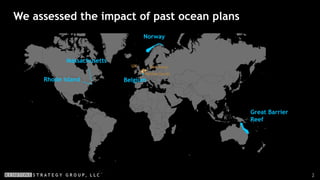
We assessed the impact of past ocean plans
Great Barrier
Reef
Norway
Belgium
Massachusetts
Rhode Island
GermanyUK
Netherlands
3
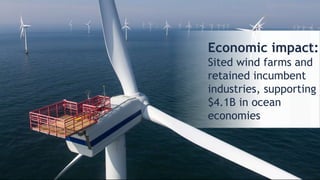
Economic impact:
Sited wind farms and
retained incumbent
industries, supporting
$4.1B in ocean
economies
4
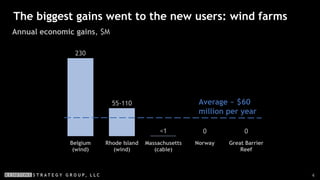
The biggest gains went to the new users: wind farms
230
55-110
<1 0 0
Belgium
(wind)
Rhode Island
(wind)
Massachusetts
(cable)
Norway Great Barrier
Reef
Average ~ $60
million per year
Annual economic gains, $M
5
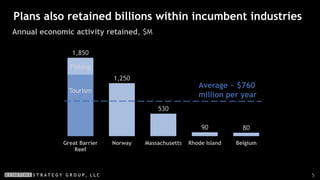
Plans also retained billions within incumbent industries
Annual economic activity retained, $M
1,850
1,250
530
90 80
Great Barrier
Reef
Norway Massachusetts Rhode Island Belgium
Average ~ $760
million per year
Fishing
Tourism
6
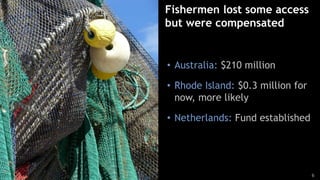
Fishermen lost some access
but were compensated
• Australia: $210 million
• Rhode Island: $0.3 million for
now, more likely
• Netherlands: Fund established
7
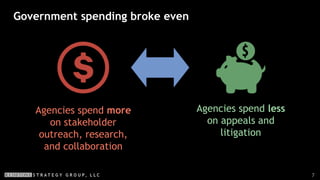
Government spending broke even
Agencies spend more
on stakeholder
outreach, research,
and collaboration
Agencies spend less
on appeals and
litigation
8
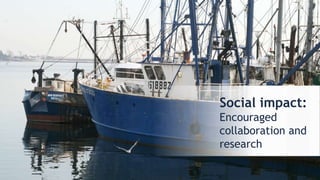
Social impact:
Encouraged
collaboration and
research
9
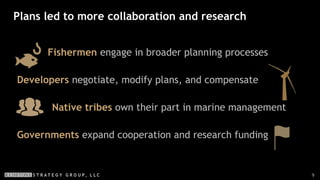
Plans led to more collaboration and research
Fishermen engage in broader planning processes
Developers negotiate, modify plans, and compensate
Governments expand cooperation and research funding
Native tribes own their part in marine management
10
Environmental impact:
Expanded protection to 50%
of the area, cut CO2, and
managed industrial growth
11
Potential future directions for practice and research
• Track newer plans: Of the ~60 possible case study plans, fewer than
half have been approved and implemented, and the vast majority of
those that have only have a few years of results (2014). That should
change in the coming years
• Build in monitoring from the start: Data on impacts is scarce. Most is
first-level results (e.g., square miles of marine protected areas, direct
economic impacts)
• Assess the full suite of impacts: With an expanded dataset and longer
time lapse, future studies could assess the full suite of economic,
environmental, and social impacts, and the efficiencies gained through
better multi-use planning
OCEAN PLANNING’S
IMPACT
An economic, environmental,
and social retrospective
jasonblau@redstonestrategy.com

Ocean Planning's Impact

  • 1.
    OCEAN PLANNING’S IMPACT An economic,environmental, and social retrospective
  • 2.
    2 We assessed theimpact of past ocean plans Great Barrier Reef Norway Belgium Massachusetts Rhode Island GermanyUK Netherlands
  • 3.
    3 Economic impact: Sited windfarms and retained incumbent industries, supporting $4.1B in ocean economies
  • 4.
    4 The biggest gainswent to the new users: wind farms 230 55-110 <1 0 0 Belgium (wind) Rhode Island (wind) Massachusetts (cable) Norway Great Barrier Reef Average ~ $60 million per year Annual economic gains, $M
  • 5.
    5 Plans also retainedbillions within incumbent industries Annual economic activity retained, $M 1,850 1,250 530 90 80 Great Barrier Reef Norway Massachusetts Rhode Island Belgium Average ~ $760 million per year Fishing Tourism
  • 6.
    6 Fishermen lost someaccess but were compensated • Australia: $210 million • Rhode Island: $0.3 million for now, more likely • Netherlands: Fund established
  • 7.
    7 Government spending brokeeven Agencies spend more on stakeholder outreach, research, and collaboration Agencies spend less on appeals and litigation
  • 8.
  • 9.
    9 Plans led tomore collaboration and research Fishermen engage in broader planning processes Developers negotiate, modify plans, and compensate Governments expand cooperation and research funding Native tribes own their part in marine management
  • 10.
    10 Environmental impact: Expanded protectionto 50% of the area, cut CO2, and managed industrial growth
  • 11.
    11 Potential future directionsfor practice and research • Track newer plans: Of the ~60 possible case study plans, fewer than half have been approved and implemented, and the vast majority of those that have only have a few years of results (2014). That should change in the coming years • Build in monitoring from the start: Data on impacts is scarce. Most is first-level results (e.g., square miles of marine protected areas, direct economic impacts) • Assess the full suite of impacts: With an expanded dataset and longer time lapse, future studies could assess the full suite of economic, environmental, and social impacts, and the efficiencies gained through better multi-use planning
  • 12.
    OCEAN PLANNING’S IMPACT An economic,environmental, and social retrospective jasonblau@redstonestrategy.com