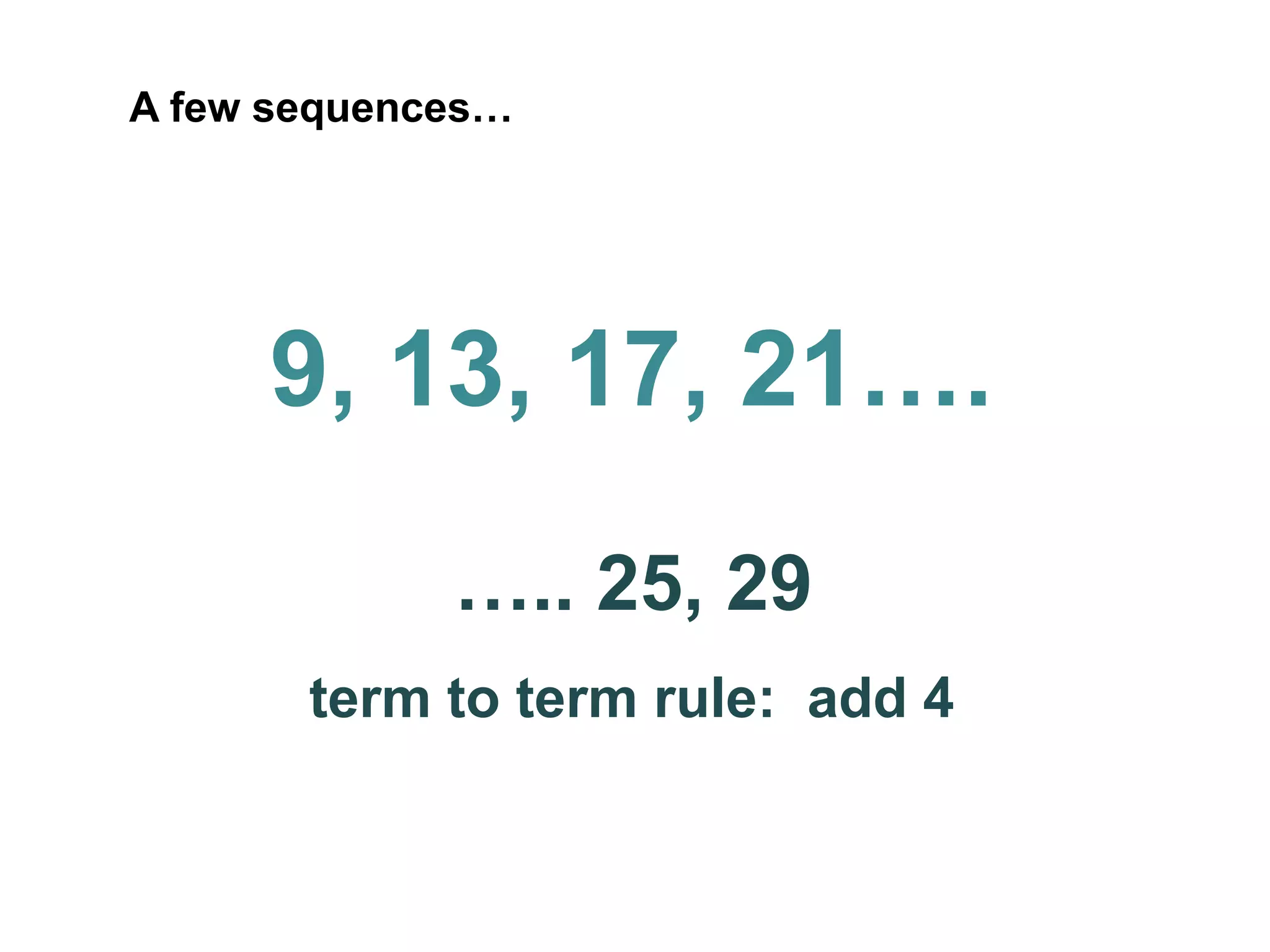
A few sequences…

9, 13, 17, 21….
….. 25, 29
term to term rule: add 4
A few sequences…

20, 15, 10, 5….
….. 0, -5
term to term rule: minus 5
A few sequences…

1, 10, 100, 1000….
….. 10,000, 100,000
term to term rule: x 10
A few sequences…

88, 44, 22, 11….
….. 5.5, 2.75
term to term rule: half
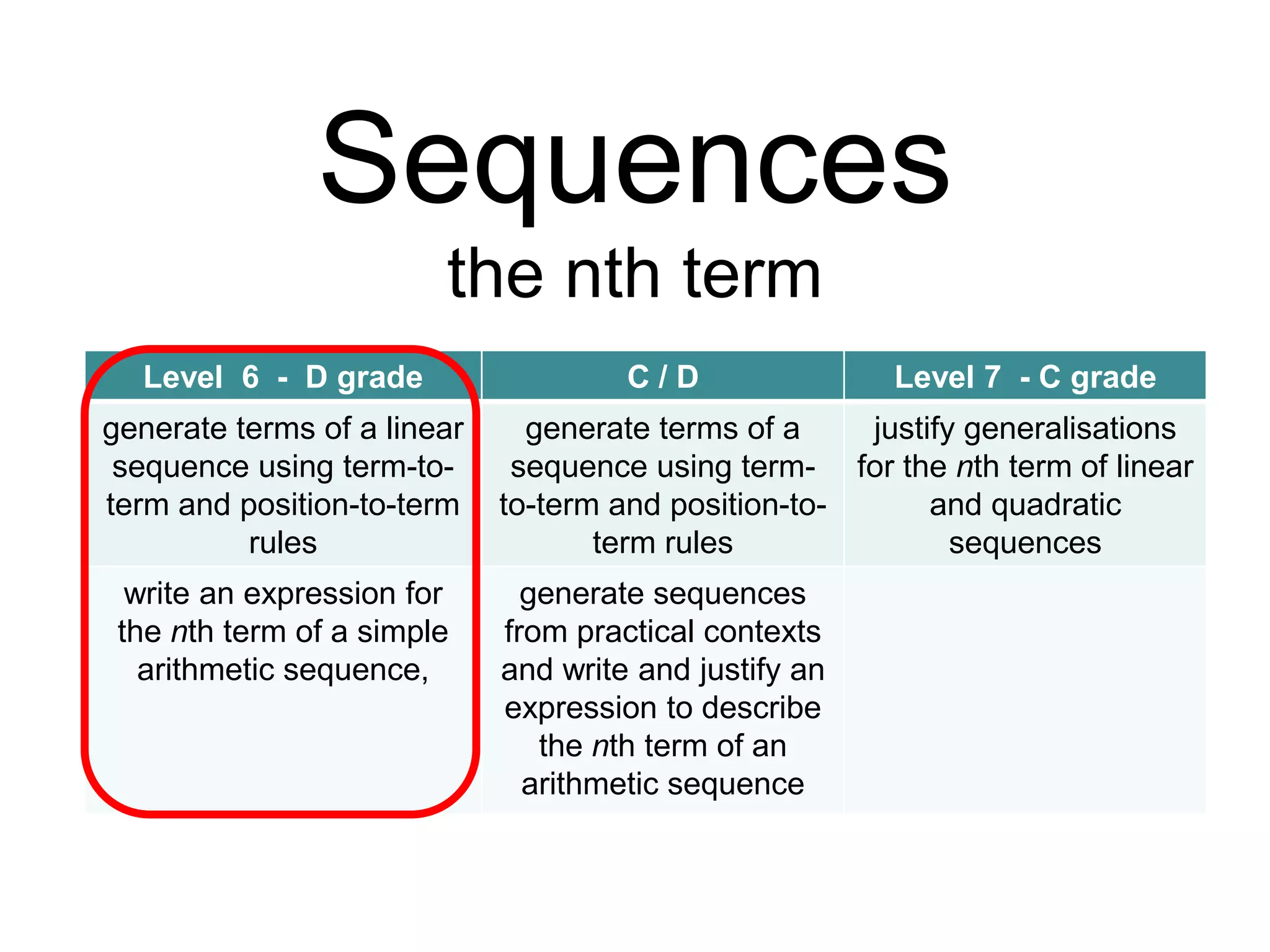
Sequences
the nth term
Level 6 - D grade
generate terms of a linear
sequence using term-toterm and position-to-term
rules
write an expression for
the nth term of a simple
arithmetic sequence,

C/D

Level 7 - C grade

generate terms of a
justify generalisations
sequence using term- for the nth term of linear
to-term and position-toand quadratic
term rules
sequences
generate sequences
from practical contexts
and write and justify an
expression to describe
the nth term of an
arithmetic sequence
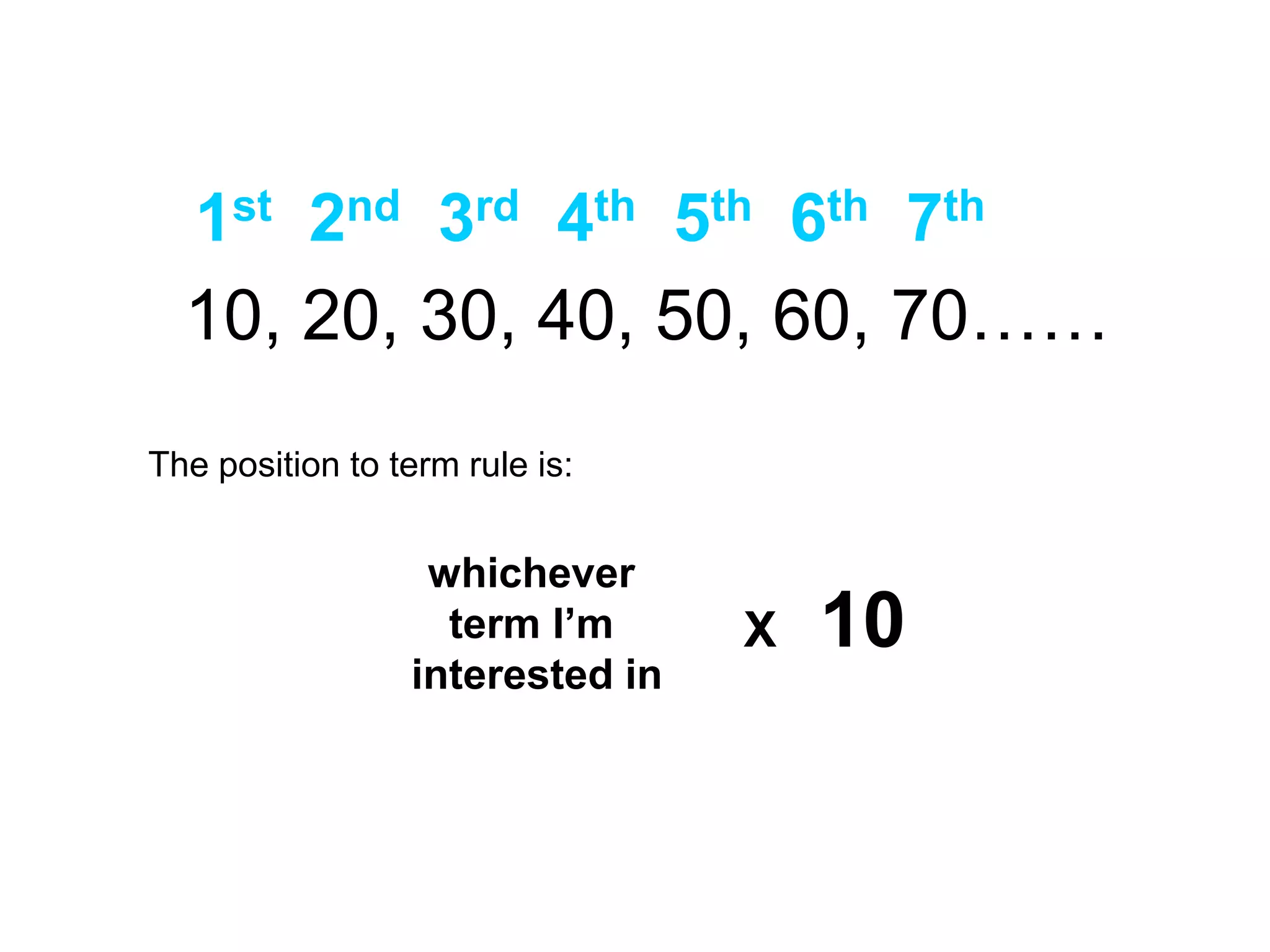
1st 2nd 3rd 4th 5th 6th 7th

10, 20, 30, 40, 50, 60, 70……
The position to term rule is:

whichever
term I’m
interested in

X

10
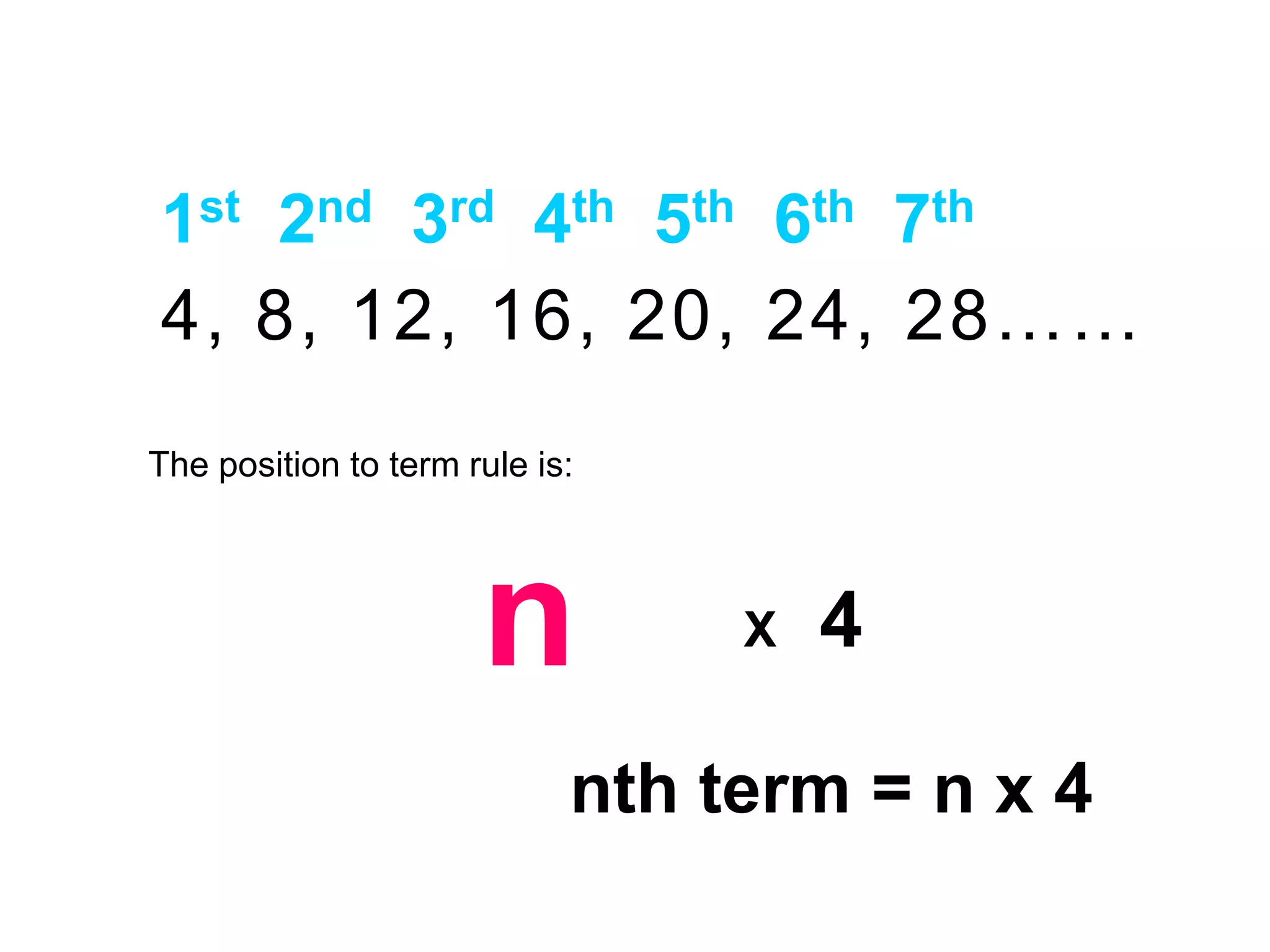
1st 2nd 3rd 4th 5th 6th 7th
4, 8, 12, 16, 20, 24, 28……
The position to term rule is:

n

whichever
term I’m
interested in

X

4

nth term = n x 4
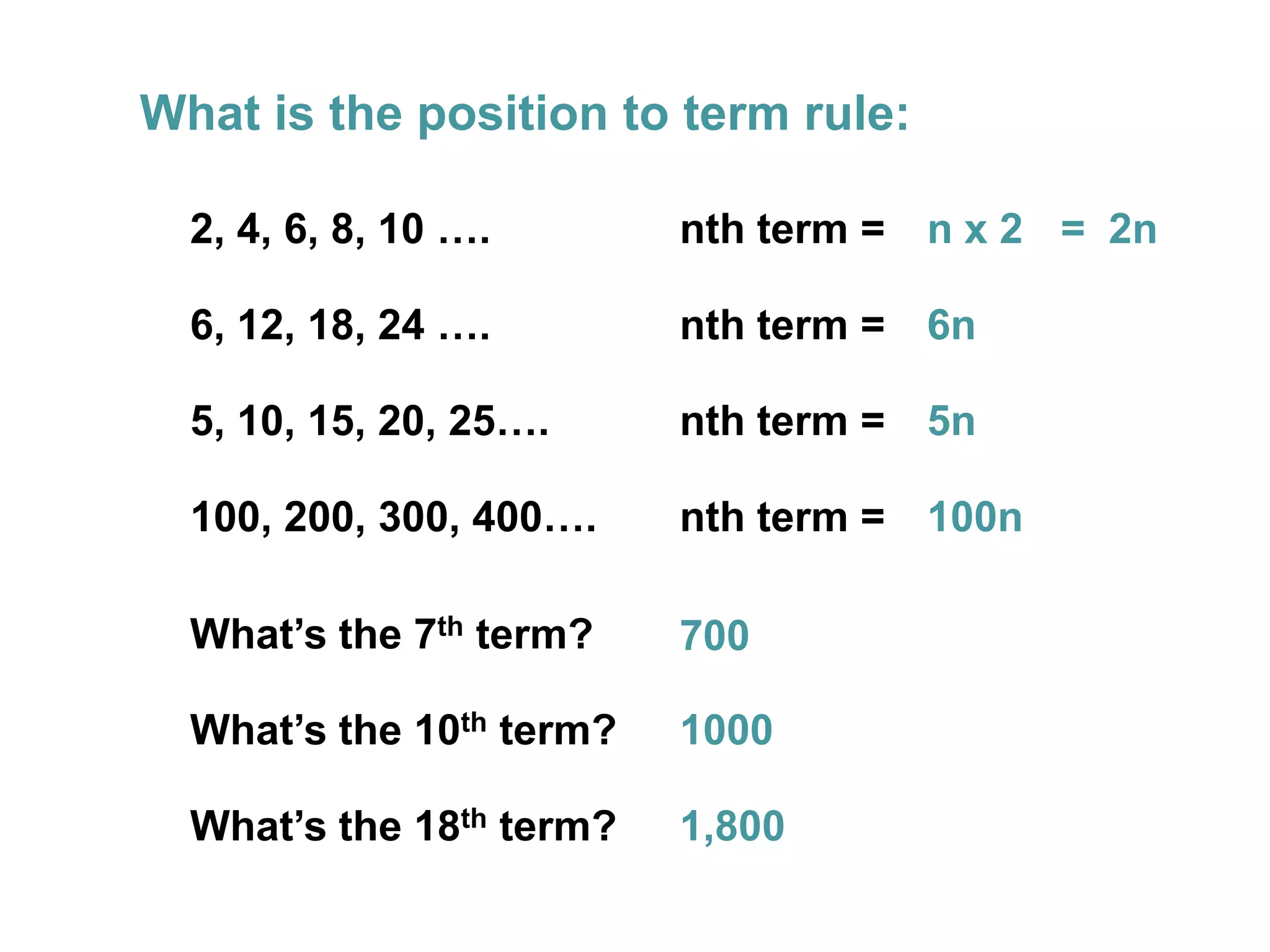
What is the position to term rule:
2, 4, 6, 8, 10 ….

nth term = n x 2 = 2n

6, 12, 18, 24 ….

nth term = 6n

5, 10, 15, 20, 25….

nth term = 5n

100, 200, 300, 400….

nth term = 100n

What’s the 7th term?

700

What’s the 10th term?

1000

What’s the 18th term?

1,800
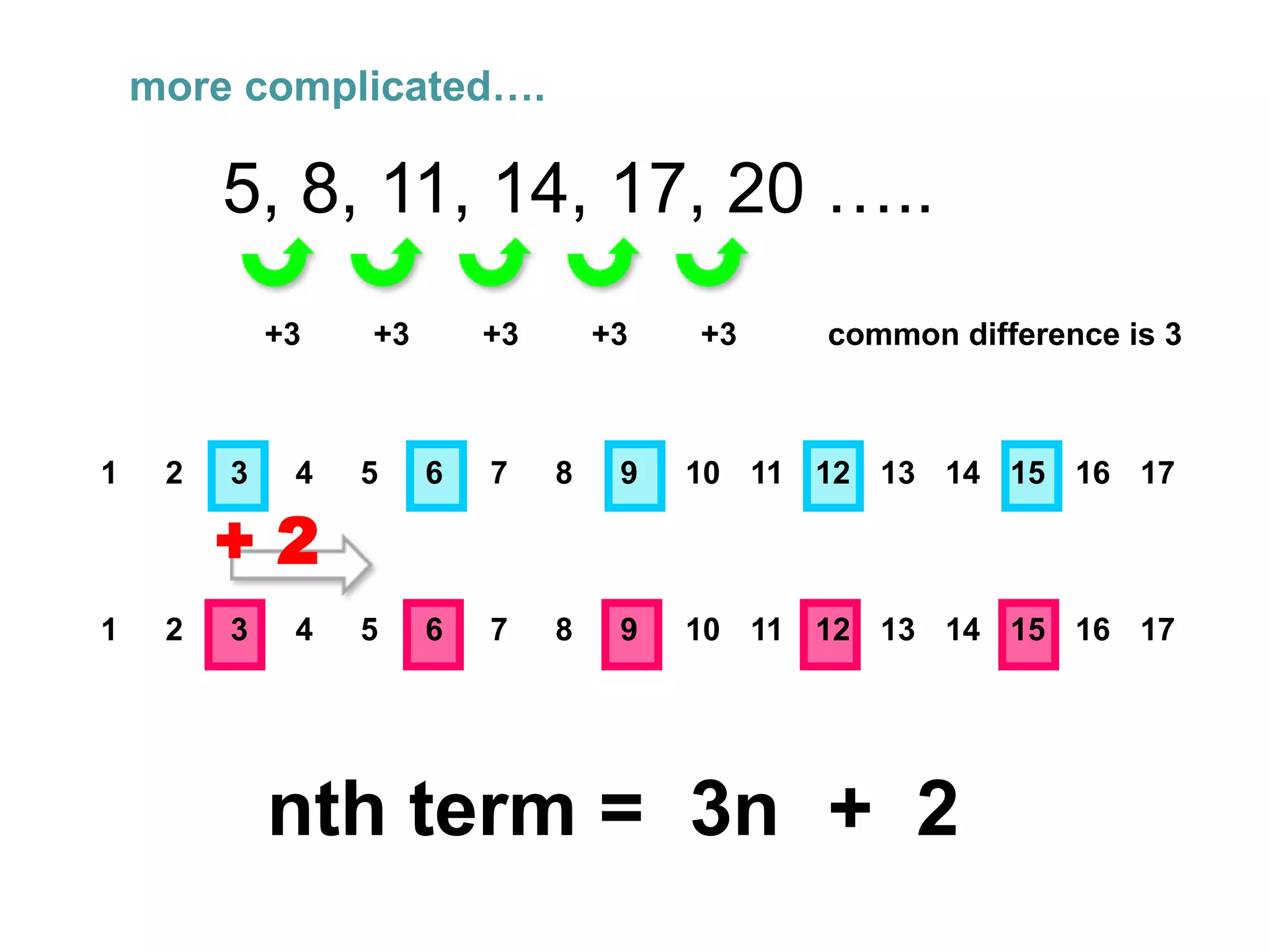
more complicated….

5, 8, 11, 14, 17, 20 …..
+3

1

2

3

4

+3

+3

+3

+3

common difference is 3

5

6

7

8

9

10 11 12 13 14 15 16 17

5

6

7

8

9

10 11 12 13 14 15 16 17

+2
1

2

3

4

nth term = 3n + 2
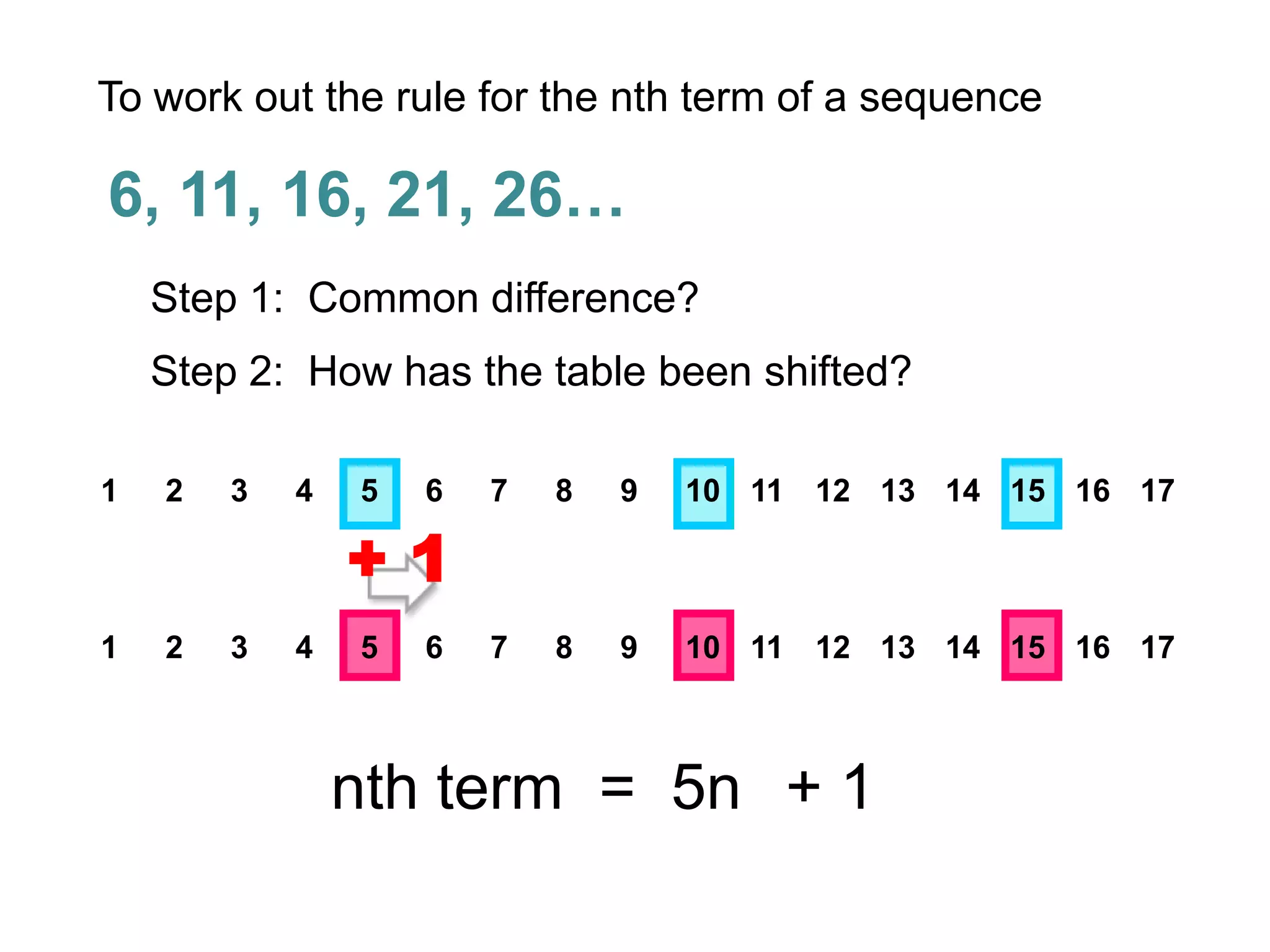
To work out the rule for the nth term of a sequence

6, 11, 16, 21, 26…
Step 1: Common difference?
Step 2: How has the table been shifted?
1

2

3

4

5

6

7

8

9

10 11 12 13 14 15 16 17

7

8

9

10 11 12 13 14 15 16 17

+1
1

2

3

4

5

6

nth term = 5n + 1
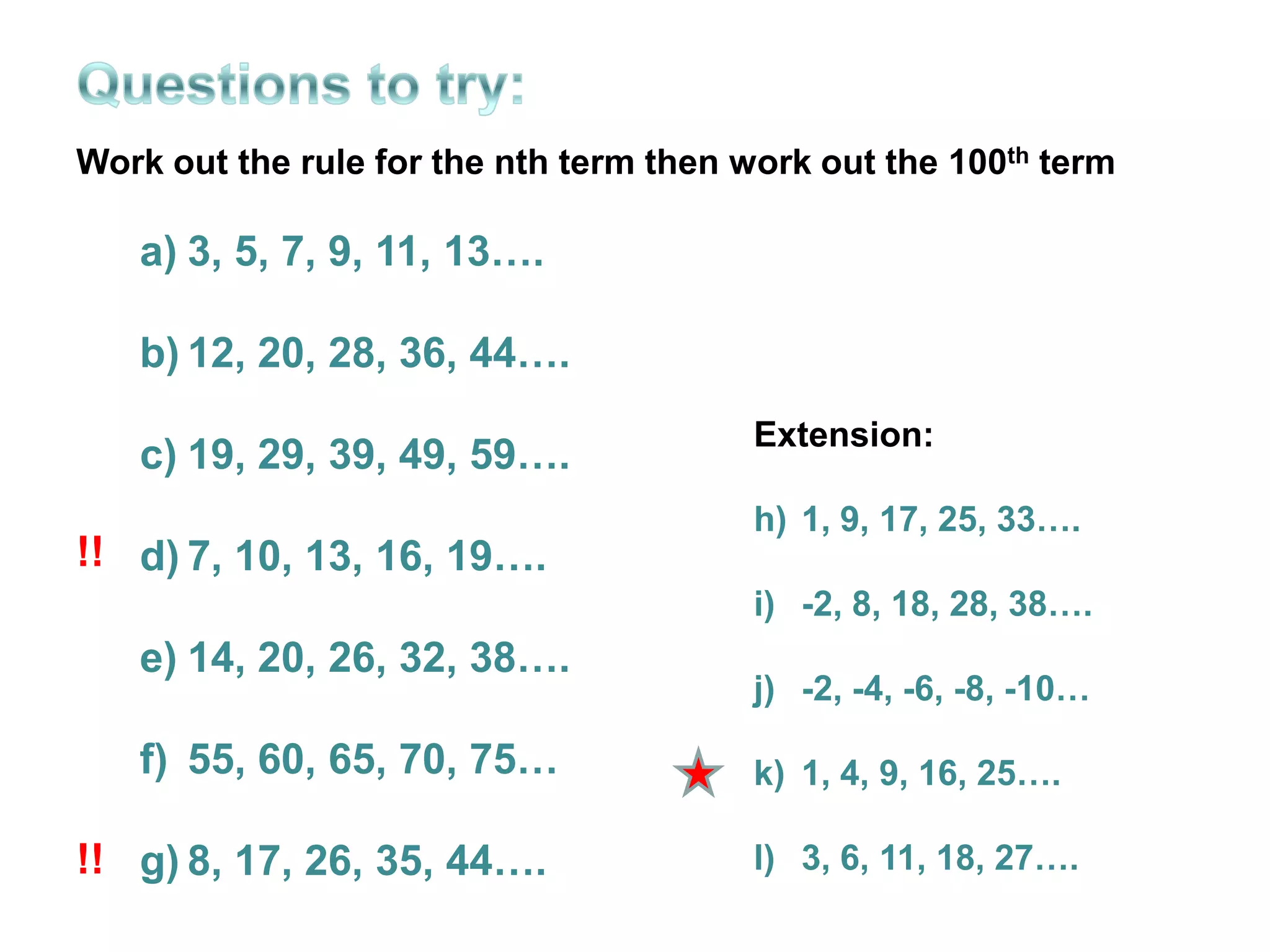
Work out the rule for the nth term then work out the 100th term

a) 3, 5, 7, 9, 11, 13….
b) 12, 20, 28, 36, 44….
c) 19, 29, 39, 49, 59….

!! d) 7, 10, 13, 16, 19….

Extension:
h) 1, 9, 17, 25, 33….
i) -2, 8, 18, 28, 38….

e) 14, 20, 26, 32, 38….

f) 55, 60, 65, 70, 75…
!! g) 8, 17, 26, 35, 44….

j) -2, -4, -6, -8, -10…
k) 1, 4, 9, 16, 25….
l) 3, 6, 11, 18, 27….
You own a taxi company that charges as follows:

• £3.50 for calling the cab
• 20p for every minute of journey time
1. Work out a formula for the cost of a journey that’s n minutes long

2. Use your formula to cost a journey of 2 hours
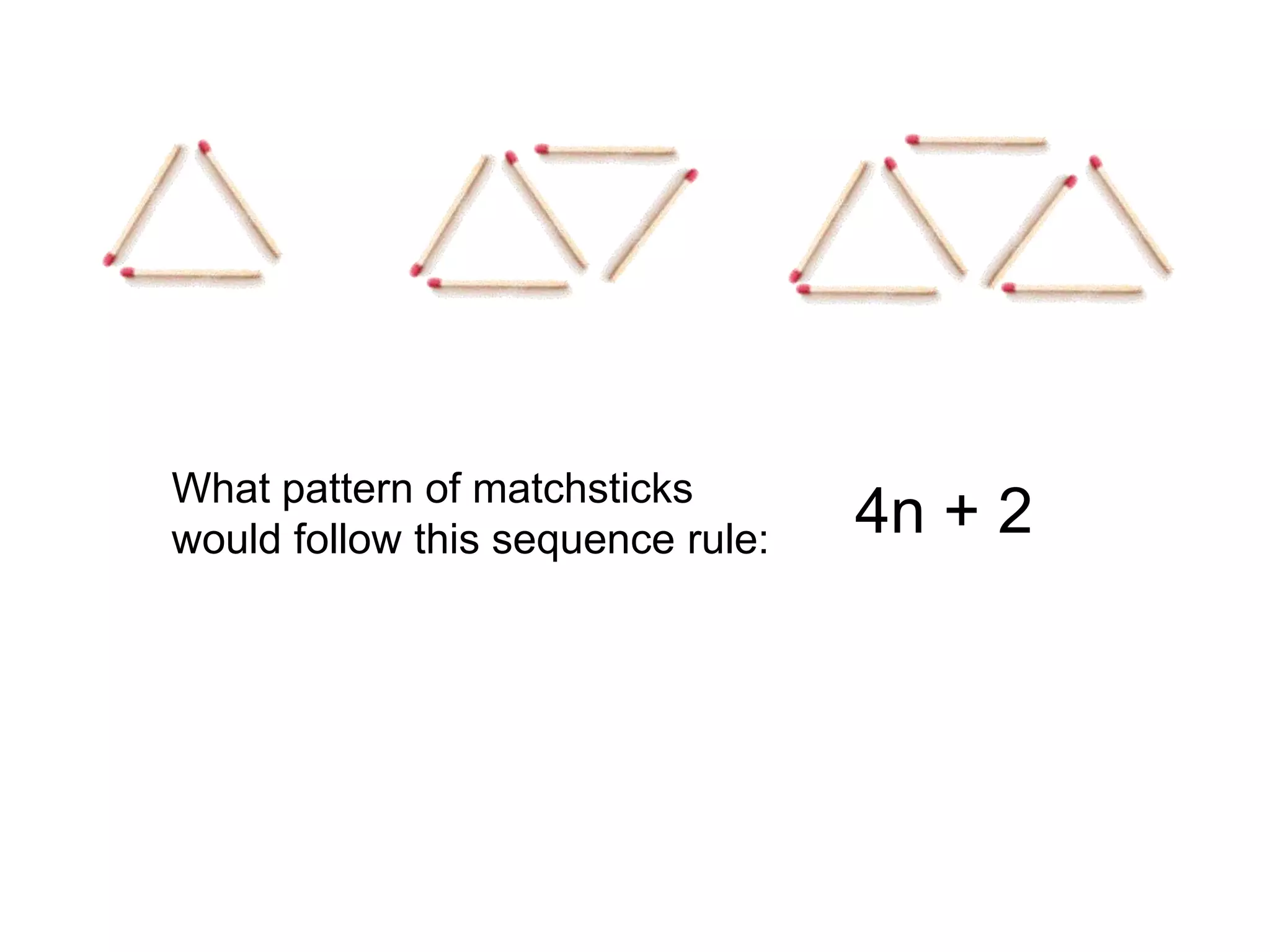
What pattern of matchsticks
would follow this sequence rule:

4n + 2
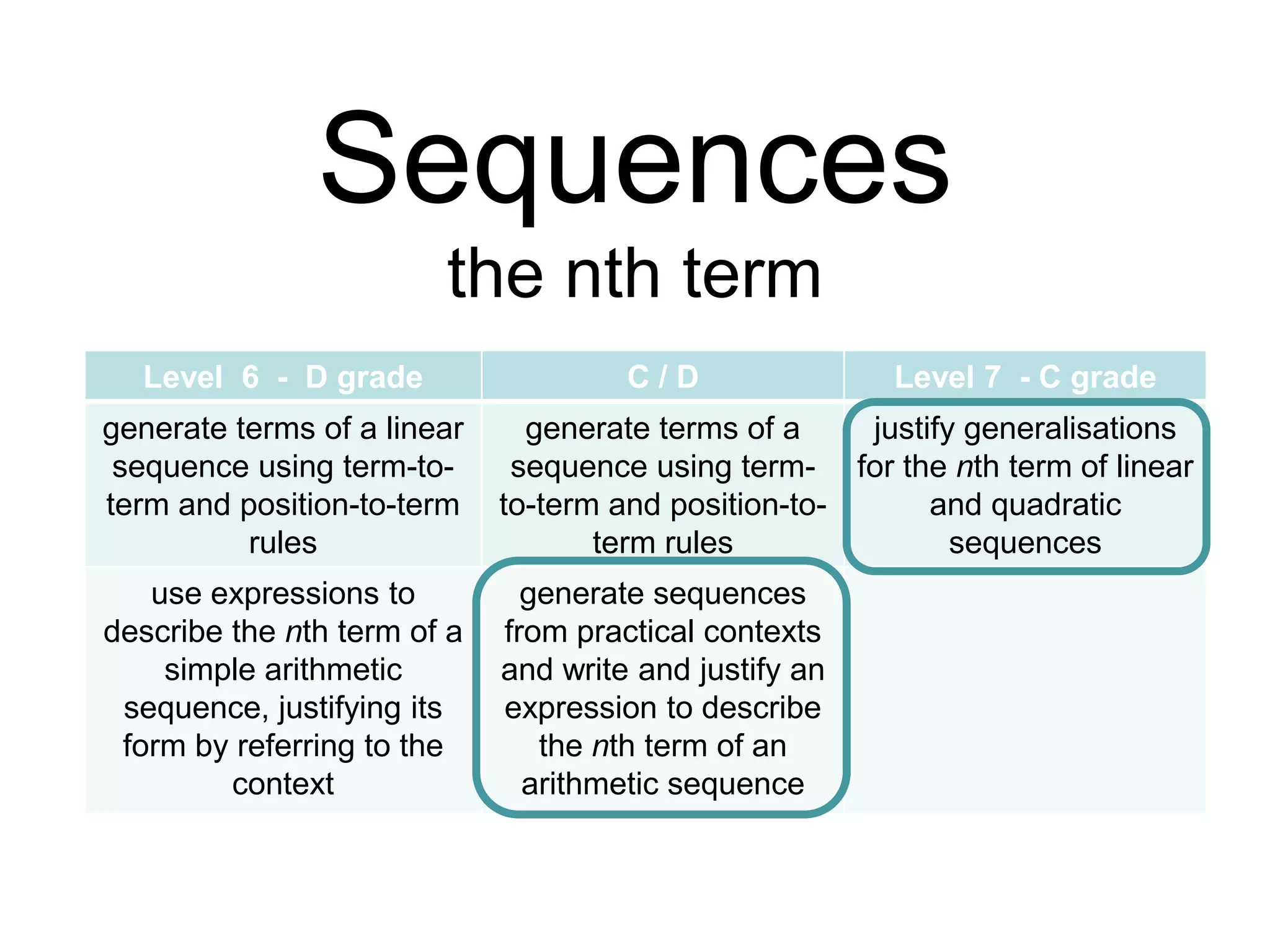
Sequences
the nth term
Level 6 - D grade

C/D

Level 7 - C grade

generate terms of a linear
sequence using term-toterm and position-to-term
rules

generate terms of a
justify generalisations
sequence using term- for the nth term of linear
to-term and position-toand quadratic
term rules
sequences

use expressions to
describe the nth term of a
simple arithmetic
sequence, justifying its
form by referring to the
context

generate sequences
from practical contexts
and write and justify an
expression to describe
the nth term of an
arithmetic sequence
Extension work
T(n) = n2
T(n) = 3n2 + n
T(n) = 4n2 + n – 1
•
•
•
•

For each of these sequences work out the first five terms
What is the first difference?
What is the second difference?
Is there a way of predicting the second difference?

Nth term algebra_level_6

  • 1.
    A few sequences… 9,13, 17, 21…. ….. 25, 29 term to term rule: add 4
  • 2.
    A few sequences… 20,15, 10, 5…. ….. 0, -5 term to term rule: minus 5
  • 3.
    A few sequences… 1,10, 100, 1000…. ….. 10,000, 100,000 term to term rule: x 10
  • 4.
    A few sequences… 88,44, 22, 11…. ….. 5.5, 2.75 term to term rule: half
  • 5.
    Sequences the nth term Level6 - D grade generate terms of a linear sequence using term-toterm and position-to-term rules write an expression for the nth term of a simple arithmetic sequence, C/D Level 7 - C grade generate terms of a justify generalisations sequence using term- for the nth term of linear to-term and position-toand quadratic term rules sequences generate sequences from practical contexts and write and justify an expression to describe the nth term of an arithmetic sequence
  • 6.
    1st 2nd 3rd4th 5th 6th 7th 10, 20, 30, 40, 50, 60, 70…… The position to term rule is: whichever term I’m interested in X 10
  • 7.
    1st 2nd 3rd4th 5th 6th 7th 4, 8, 12, 16, 20, 24, 28…… The position to term rule is: n whichever term I’m interested in X 4 nth term = n x 4
  • 8.
    What is theposition to term rule: 2, 4, 6, 8, 10 …. nth term = n x 2 = 2n 6, 12, 18, 24 …. nth term = 6n 5, 10, 15, 20, 25…. nth term = 5n 100, 200, 300, 400…. nth term = 100n What’s the 7th term? 700 What’s the 10th term? 1000 What’s the 18th term? 1,800
  • 9.
    more complicated…. 5, 8,11, 14, 17, 20 ….. +3 1 2 3 4 +3 +3 +3 +3 common difference is 3 5 6 7 8 9 10 11 12 13 14 15 16 17 5 6 7 8 9 10 11 12 13 14 15 16 17 +2 1 2 3 4 nth term = 3n + 2
  • 10.
    To work outthe rule for the nth term of a sequence 6, 11, 16, 21, 26… Step 1: Common difference? Step 2: How has the table been shifted? 1 2 3 4 5 6 7 8 9 10 11 12 13 14 15 16 17 7 8 9 10 11 12 13 14 15 16 17 +1 1 2 3 4 5 6 nth term = 5n + 1
  • 11.
    Work out therule for the nth term then work out the 100th term a) 3, 5, 7, 9, 11, 13…. b) 12, 20, 28, 36, 44…. c) 19, 29, 39, 49, 59…. !! d) 7, 10, 13, 16, 19…. Extension: h) 1, 9, 17, 25, 33…. i) -2, 8, 18, 28, 38…. e) 14, 20, 26, 32, 38…. f) 55, 60, 65, 70, 75… !! g) 8, 17, 26, 35, 44…. j) -2, -4, -6, -8, -10… k) 1, 4, 9, 16, 25…. l) 3, 6, 11, 18, 27….
  • 12.
    You own ataxi company that charges as follows: • £3.50 for calling the cab • 20p for every minute of journey time 1. Work out a formula for the cost of a journey that’s n minutes long 2. Use your formula to cost a journey of 2 hours
  • 13.
    What pattern ofmatchsticks would follow this sequence rule: 4n + 2
  • 14.
    Sequences the nth term Level6 - D grade C/D Level 7 - C grade generate terms of a linear sequence using term-toterm and position-to-term rules generate terms of a justify generalisations sequence using term- for the nth term of linear to-term and position-toand quadratic term rules sequences use expressions to describe the nth term of a simple arithmetic sequence, justifying its form by referring to the context generate sequences from practical contexts and write and justify an expression to describe the nth term of an arithmetic sequence
  • 15.
    Extension work T(n) =n2 T(n) = 3n2 + n T(n) = 4n2 + n – 1 • • • • For each of these sequences work out the first five terms What is the first difference? What is the second difference? Is there a way of predicting the second difference?

Editor's Notes

  • #6 This is the level we’re hitting today. The harder stuff is marked with a star and will appear towards the end
  • #11 2nd exampleWrite down steps and example
  • #12 2n+1 201, b) 8n+4 804 , c) 10n+9 1009, d) 3n+4 304, e) 6n+8 608, f) 5n+50 550, g) 9n-1 899Extensionh) 8n-7 793,i) 10n-12 988, j) -2n -200, k) n^2 10,000, l) n^2 + 2 10,002
  • #13 Investigation pair work.Try and get them to explain their thinking suggest tackling a ten minute journey first then write the rule.
  • #14 Plenary: draw match sticks on the board what’s this sequenceDraw a sequence that would match this pattern
  • #15 APP: grade yourselves based on what you can do.. If you were managing the stared question that’s hitting C grade
  • #16 Second difference = 2a (ax^2 + bx + c)