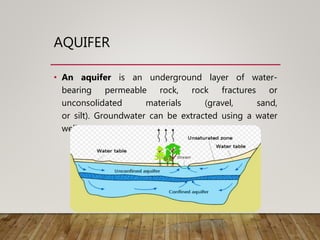
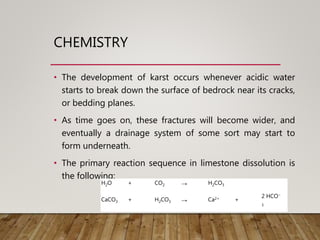
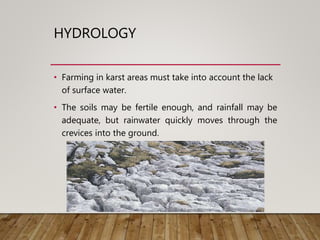
Karst aquifers are underground aquifers formed from the dissolution of soluble rocks like limestone, creating drainage systems with sinkholes and caves. Water flows through enlarged fractures and conduits in the limestone, making karst aquifers highly permeable but also vulnerable to pollution. The dissolution occurs when acidic water reacts with the rock, widening cracks over time and potentially forming underground rivers. Farming can be challenging in karst areas as rainwater flows directly into the ground through crevices rather than remaining as surface water. Keeping pollution out of karst aquifers requires responsible handling and disposal of potential contaminants by citizens in these areas.