A COMMON TOPOGRAPHIC FEATURE EFFECT BY POROSITY AND PERMEABILITY IS……
Karst Topography
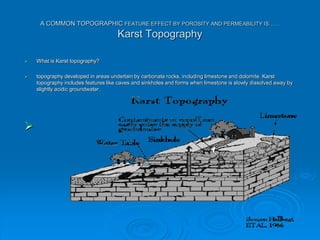
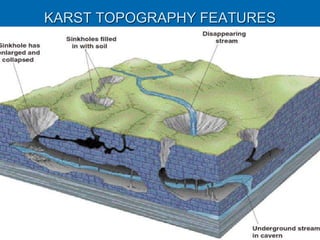
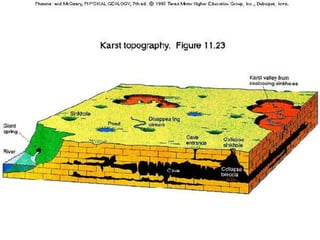
 What is Karst topography?
 topography developed in areas underlain by carbonate rocks, including limestone and dolomite. Karst
topography includes features like caves and sinkholes and forms when limestone is slowly dissolved away by
slightly acidic groundwater.

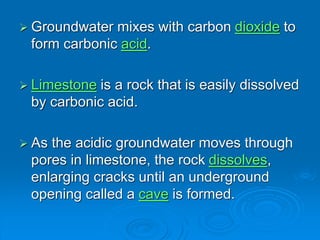
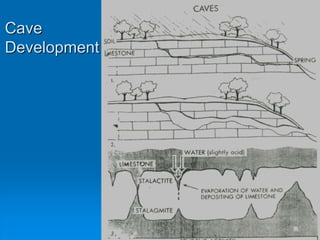
 Groundwater mixes with carbon dioxide to
form carbonic acid.
 Limestone is a rock that is easily dissolved
by carbonic acid.
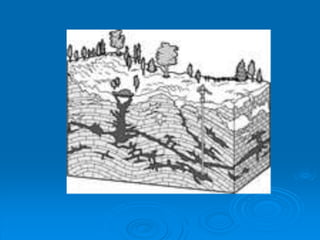
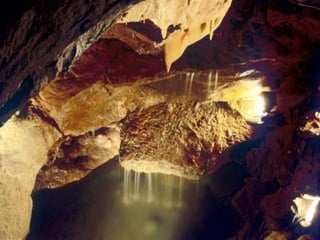
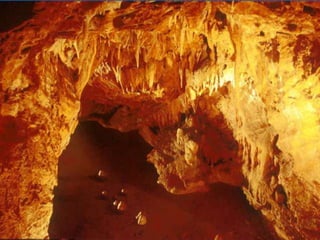
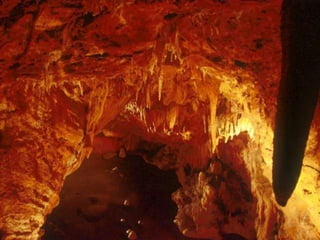
 As the acidic groundwater moves through
pores in limestone, the rock dissolves,
enlarging cracks until an underground
opening called a cave is formed.
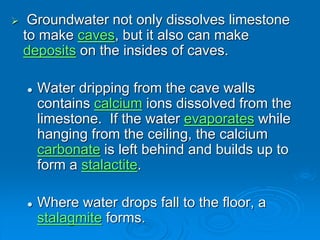
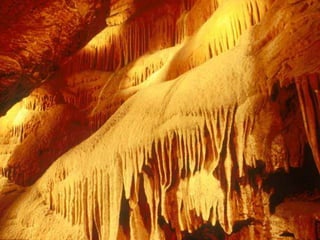
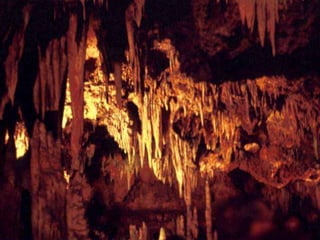
 Groundwater not only dissolves limestone
to make caves, but it also can make
deposits on the insides of caves.
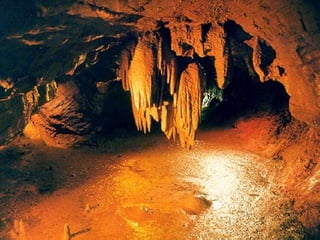
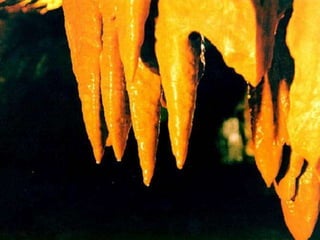
 Water dripping from the cave walls
contains calcium ions dissolved from the
limestone. If the water evaporates while
hanging from the ceiling, the calcium
carbonate is left behind and builds up to
form a stalactite.
 Where water drops fall to the floor, a
stalagmite forms.
Cave
Development
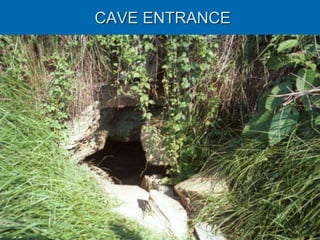
CAVE ENTRANCE
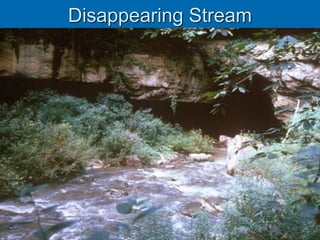
Disappearing Stream
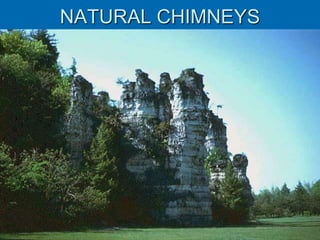
NATURAL CHIMNEYS
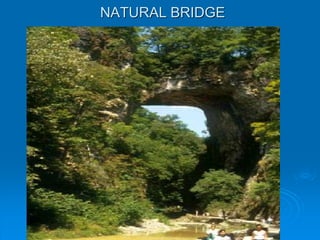
NATURAL BRIDGE
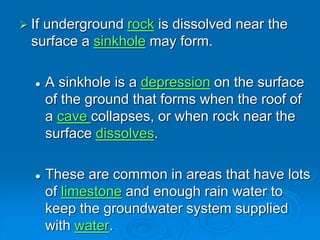
 If underground rock is dissolved near the
surface a sinkhole may form.
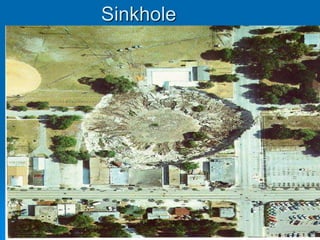
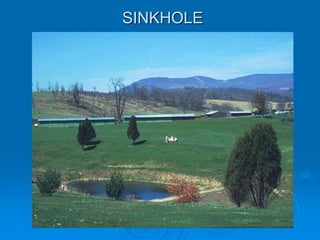
 A sinkhole is a depression on the surface
of the ground that forms when the roof of
a cave collapses, or when rock near the
surface dissolves.
 These are common in areas that have lots
of limestone and enough rain water to
keep the groundwater system supplied
with water.
Sinkhole
SINKHOLE
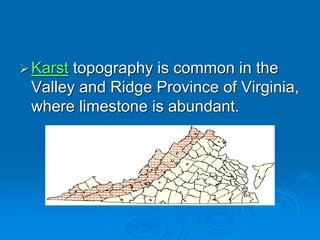
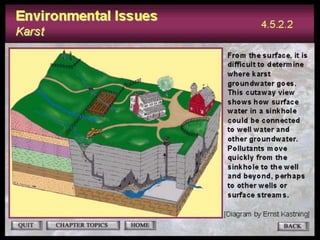
Karst topography is common in the
Valley and Ridge Province of Virginia,
where limestone is abundant.
KARST TOPOGRAPHY FEATURES
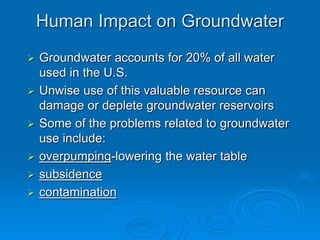
Human Impact on Groundwater
 Groundwater accounts for 20% of all water
used in the U.S.
 Unwise use of this valuable resource can
damage or deplete groundwater reservoirs
 Some of the problems related to groundwater
use include:
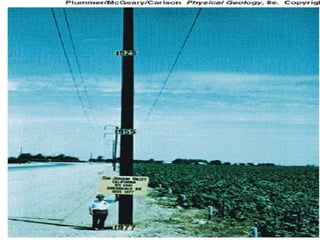
 overpumping-lowering the water table
 subsidence
 contamination
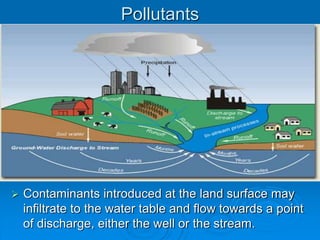
Pollutants
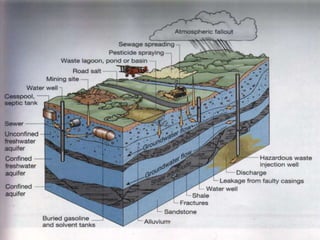
 Contaminants introduced at the land surface may
infiltrate to the water table and flow towards a point
of discharge, either the well or the stream.
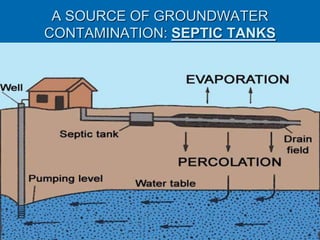
A SOURCE OF GROUNDWATER
CONTAMINATION: SEPTIC TANKS
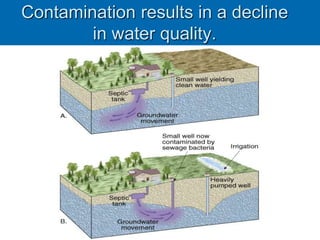
Contamination results in a decline
in water quality.
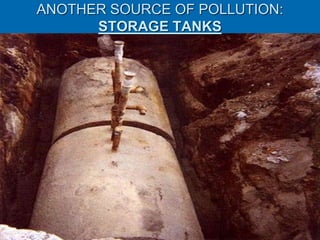
ANOTHER SOURCE OF POLLUTION:
STORAGE TANKS
YET ANOTHER SOURCE OF POLLUTION:
LANDFILLS
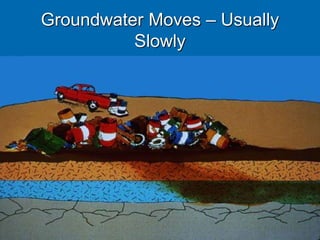
Groundwater Moves – Usually
Slowly
new karst ppt .pptx

new karst ppt .pptx

  • 1.
    A COMMON TOPOGRAPHICFEATURE EFFECT BY POROSITY AND PERMEABILITY IS…… Karst Topography  What is Karst topography?  topography developed in areas underlain by carbonate rocks, including limestone and dolomite. Karst topography includes features like caves and sinkholes and forms when limestone is slowly dissolved away by slightly acidic groundwater. 
  • 3.
     Groundwater mixeswith carbon dioxide to form carbonic acid.  Limestone is a rock that is easily dissolved by carbonic acid.  As the acidic groundwater moves through pores in limestone, the rock dissolves, enlarging cracks until an underground opening called a cave is formed.
  • 4.
     Groundwater notonly dissolves limestone to make caves, but it also can make deposits on the insides of caves.  Water dripping from the cave walls contains calcium ions dissolved from the limestone. If the water evaporates while hanging from the ceiling, the calcium carbonate is left behind and builds up to form a stalactite.  Where water drops fall to the floor, a stalagmite forms.
  • 5.
  • 6.
  • 14.
  • 15.
  • 16.
  • 17.
     If undergroundrock is dissolved near the surface a sinkhole may form.  A sinkhole is a depression on the surface of the ground that forms when the roof of a cave collapses, or when rock near the surface dissolves.  These are common in areas that have lots of limestone and enough rain water to keep the groundwater system supplied with water.
  • 18.
  • 19.
  • 20.
    Karst topography iscommon in the Valley and Ridge Province of Virginia, where limestone is abundant.
  • 21.
  • 23.
    Human Impact onGroundwater  Groundwater accounts for 20% of all water used in the U.S.  Unwise use of this valuable resource can damage or deplete groundwater reservoirs  Some of the problems related to groundwater use include:  overpumping-lowering the water table  subsidence  contamination
  • 25.
    Pollutants  Contaminants introducedat the land surface may infiltrate to the water table and flow towards a point of discharge, either the well or the stream.
  • 26.
    A SOURCE OFGROUNDWATER CONTAMINATION: SEPTIC TANKS
  • 27.
    Contamination results ina decline in water quality.
  • 29.
    ANOTHER SOURCE OFPOLLUTION: STORAGE TANKS
  • 30.
    YET ANOTHER SOURCEOF POLLUTION: LANDFILLS
  • 31.
    Groundwater Moves –Usually Slowly