Downloaded 180 times
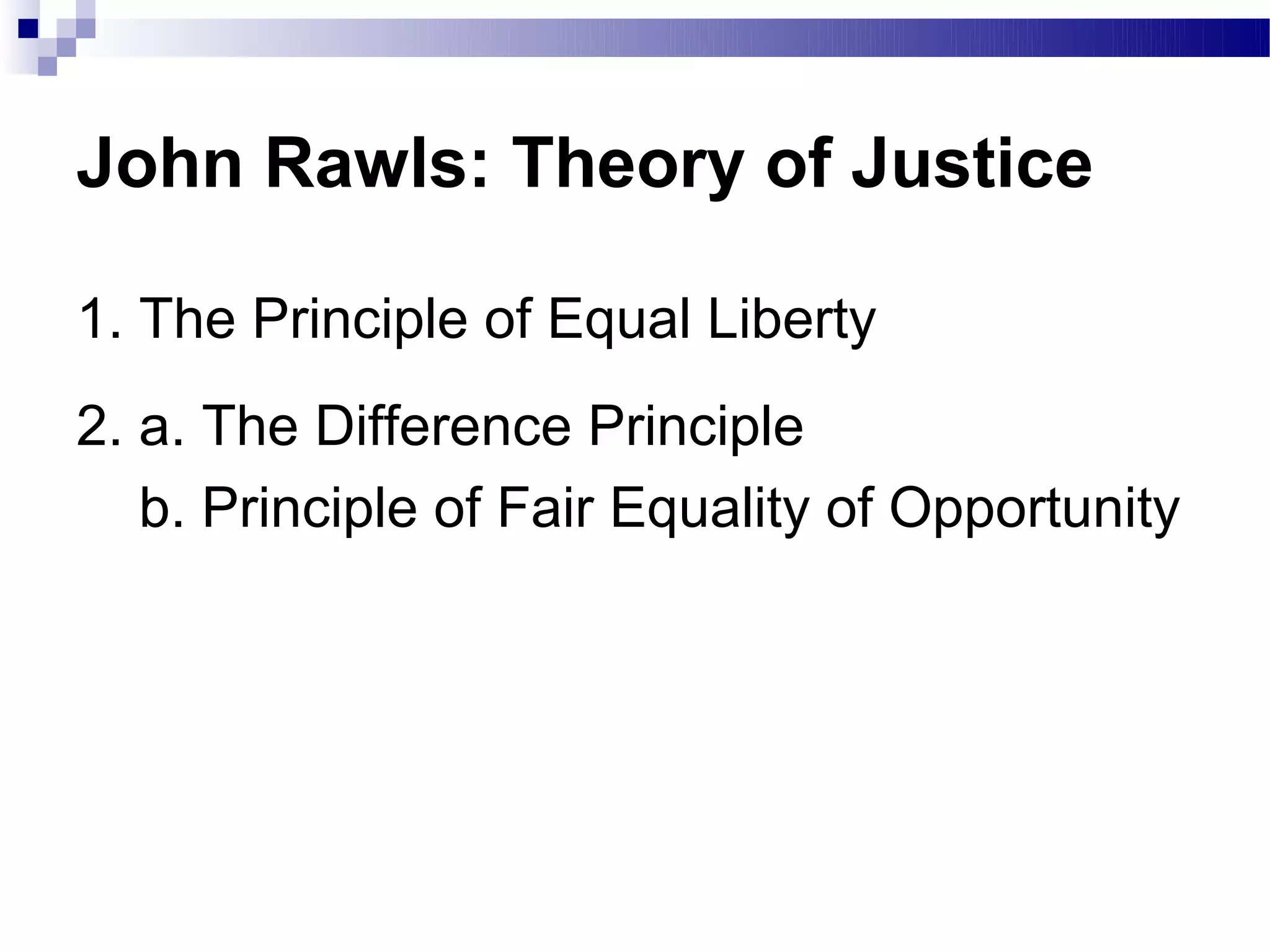
![John Rawls: Theory of Justice
The basis of a society is a set of tacit
agreements. [“social contract”]
The agreed-upon principles must not be
dependent on one’s place in society.
Rawls believed that rational, self-interested
people with roughly similar needs would
choose the following two principles to guide
their moral interactions](https://image.slidesharecdn.com/johnrawls-121006043041-phpapp01/75/John-rawls-1-2048.jpg)
![PART 2: Principle of Fair
Equality of Opportunity
Requires that job qualifications be related to
the job.
There must be equal access to training for
the most desirable jobs.
These principles combine Kant [treating
people as free & equal] & Utilitarianism
[treating people equal]](https://image.slidesharecdn.com/johnrawls-121006043041-phpapp01/75/John-rawls-5-2048.jpg)
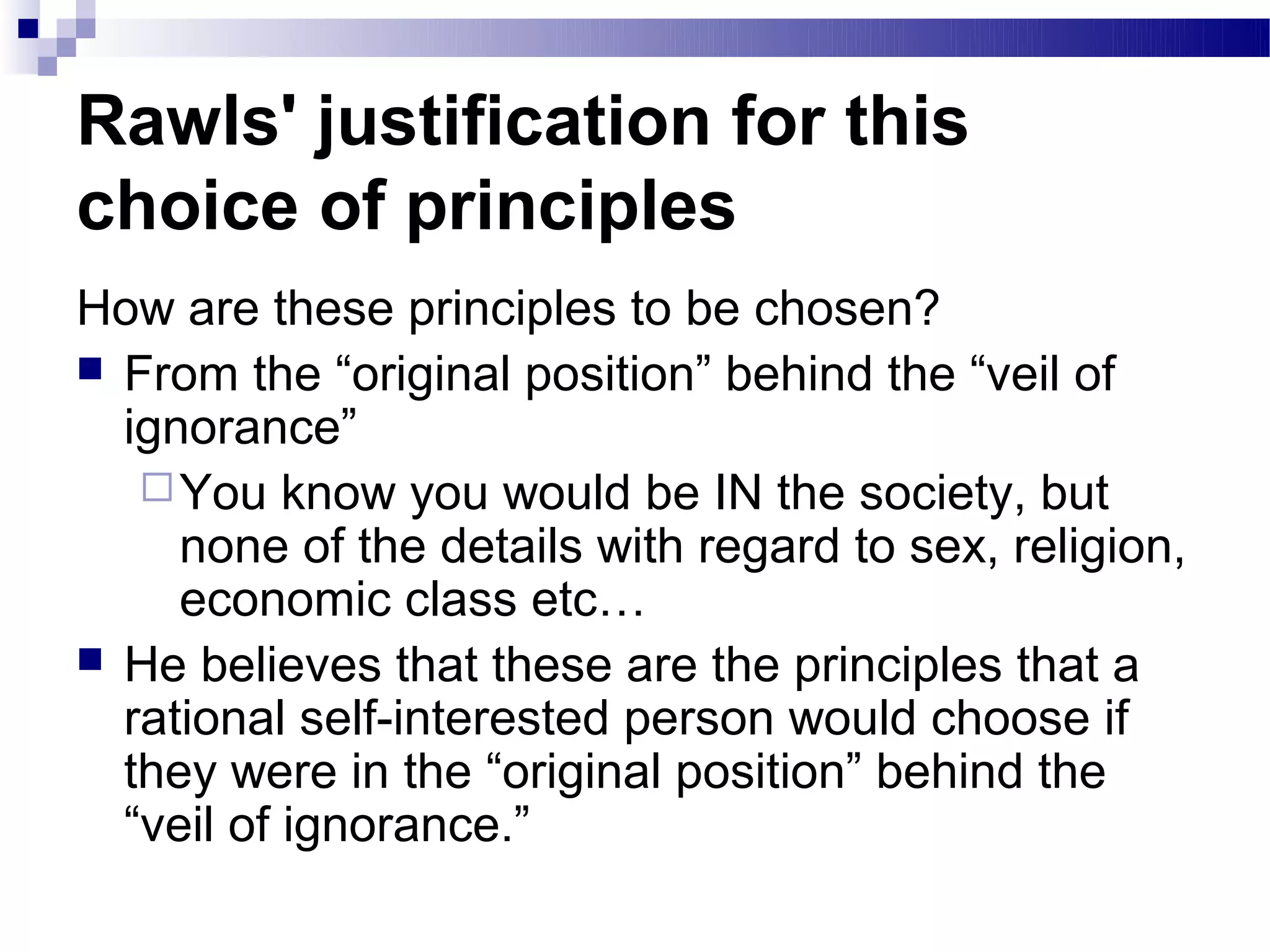
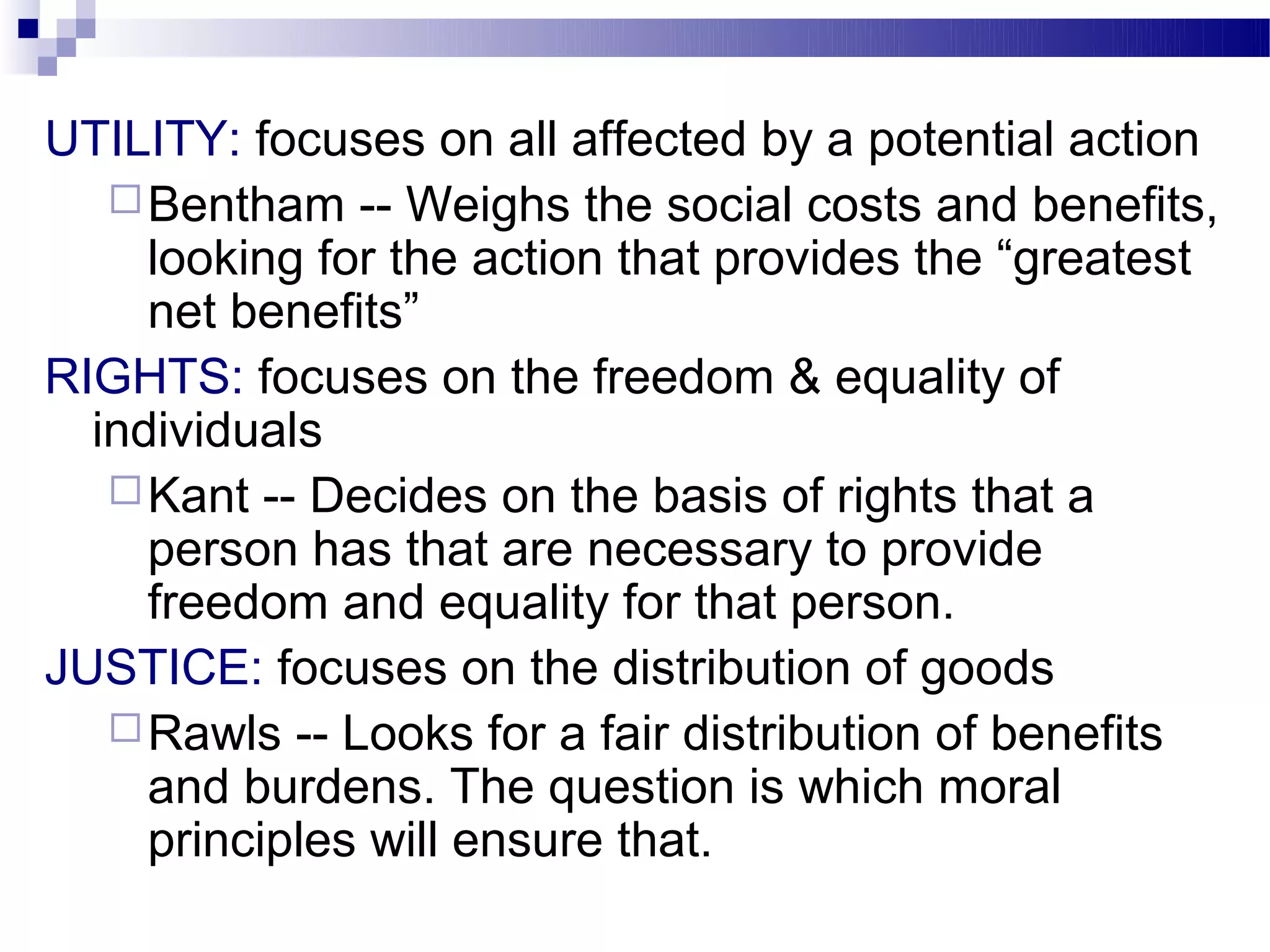
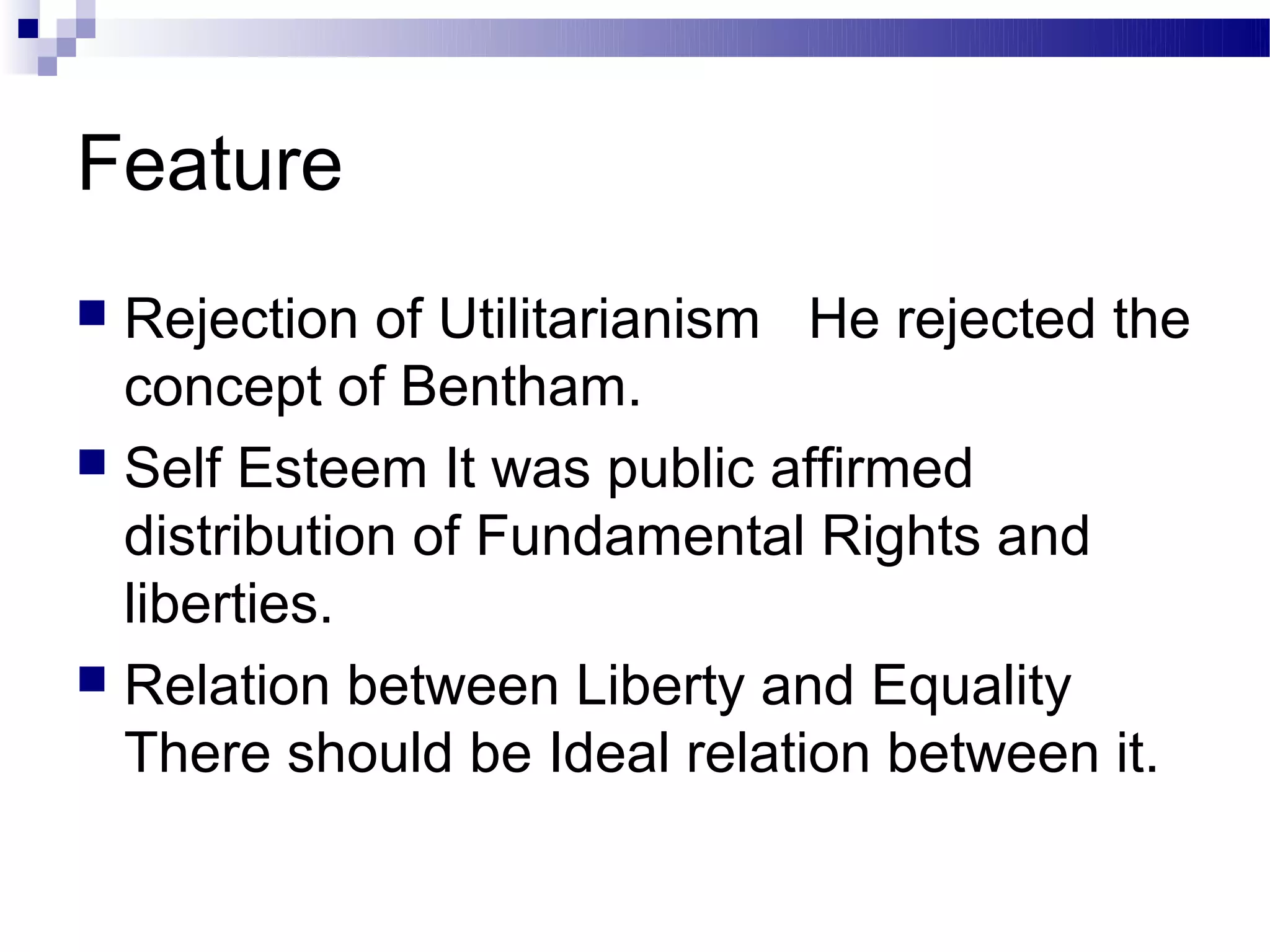
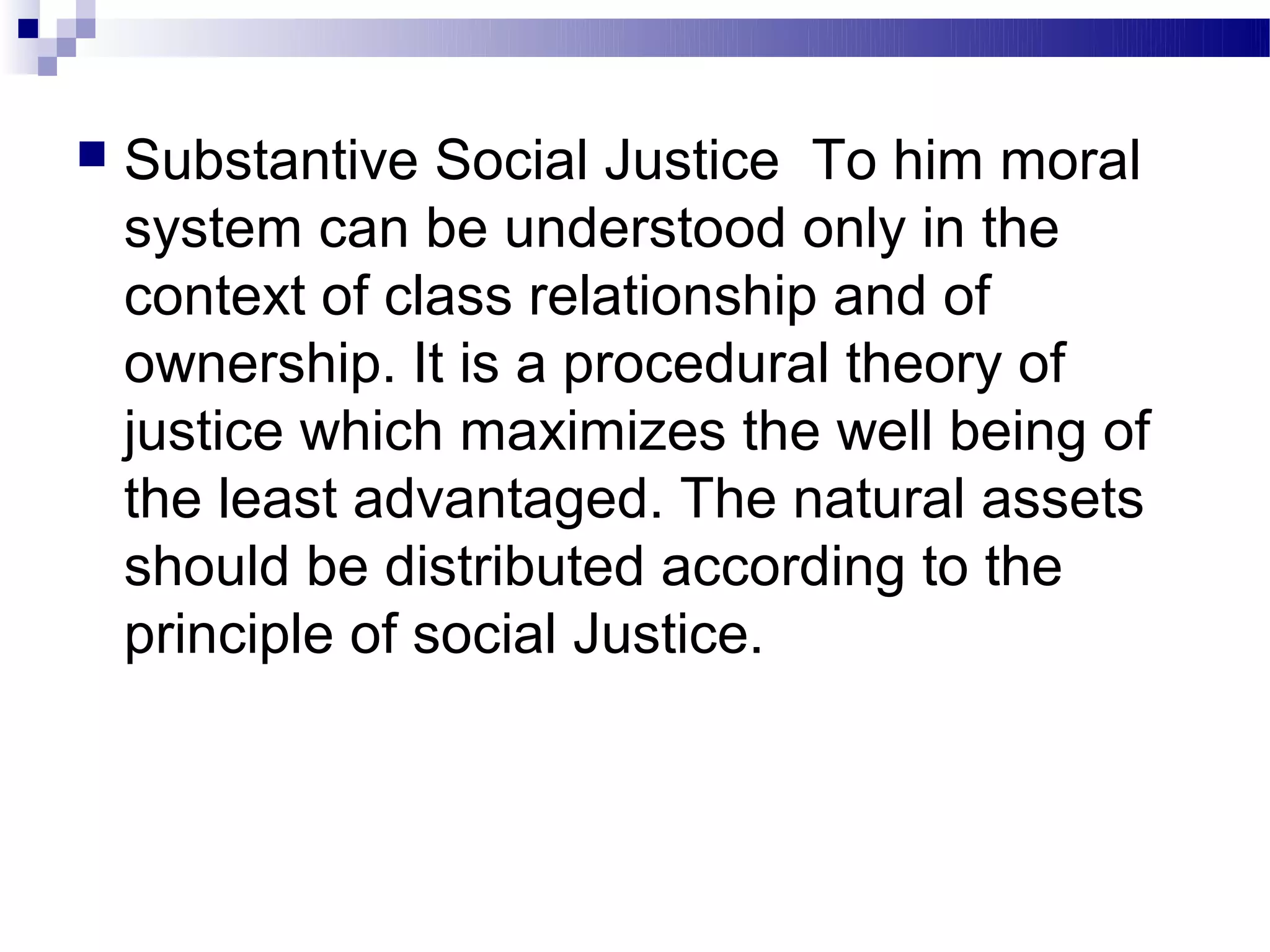
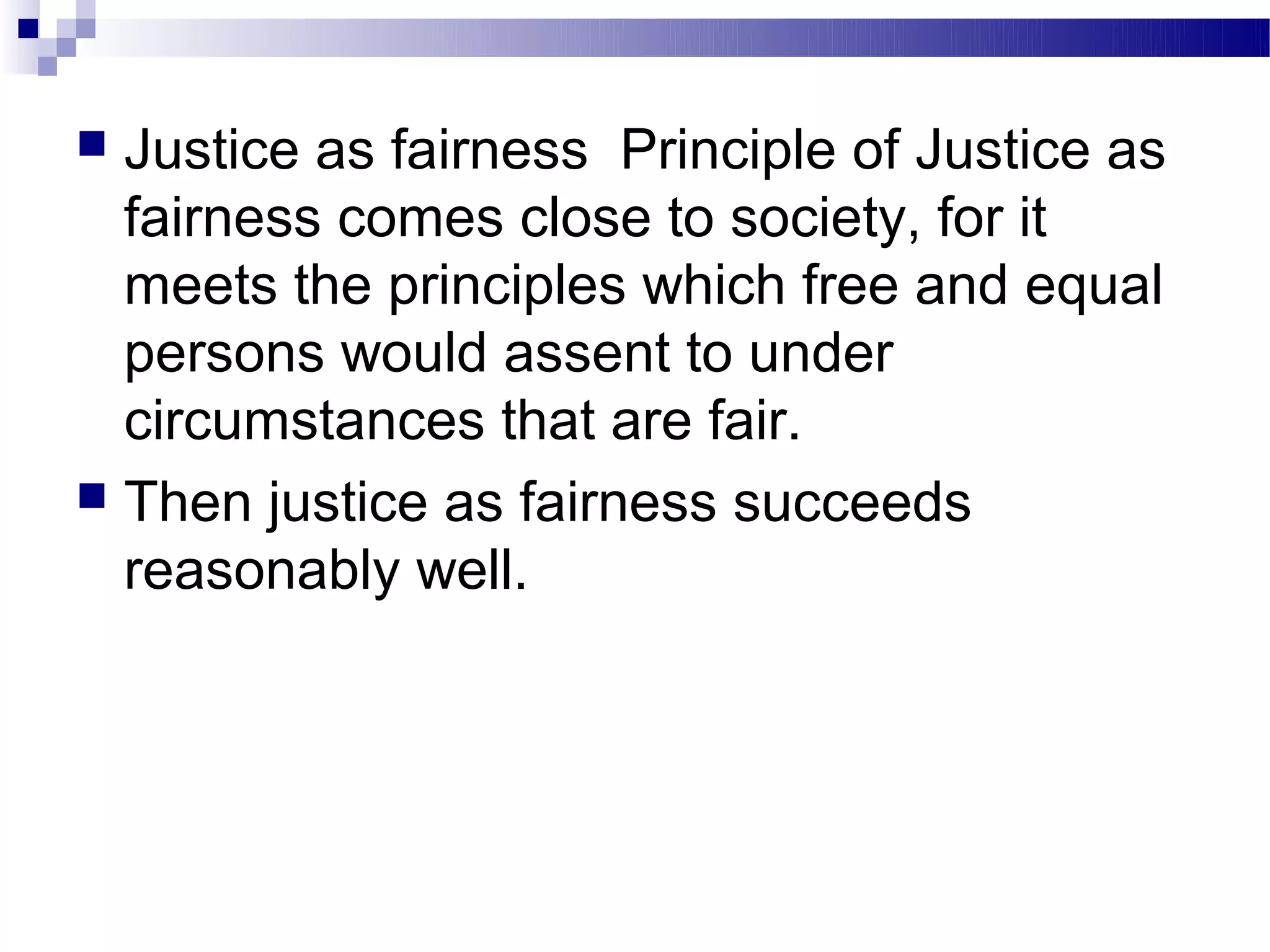

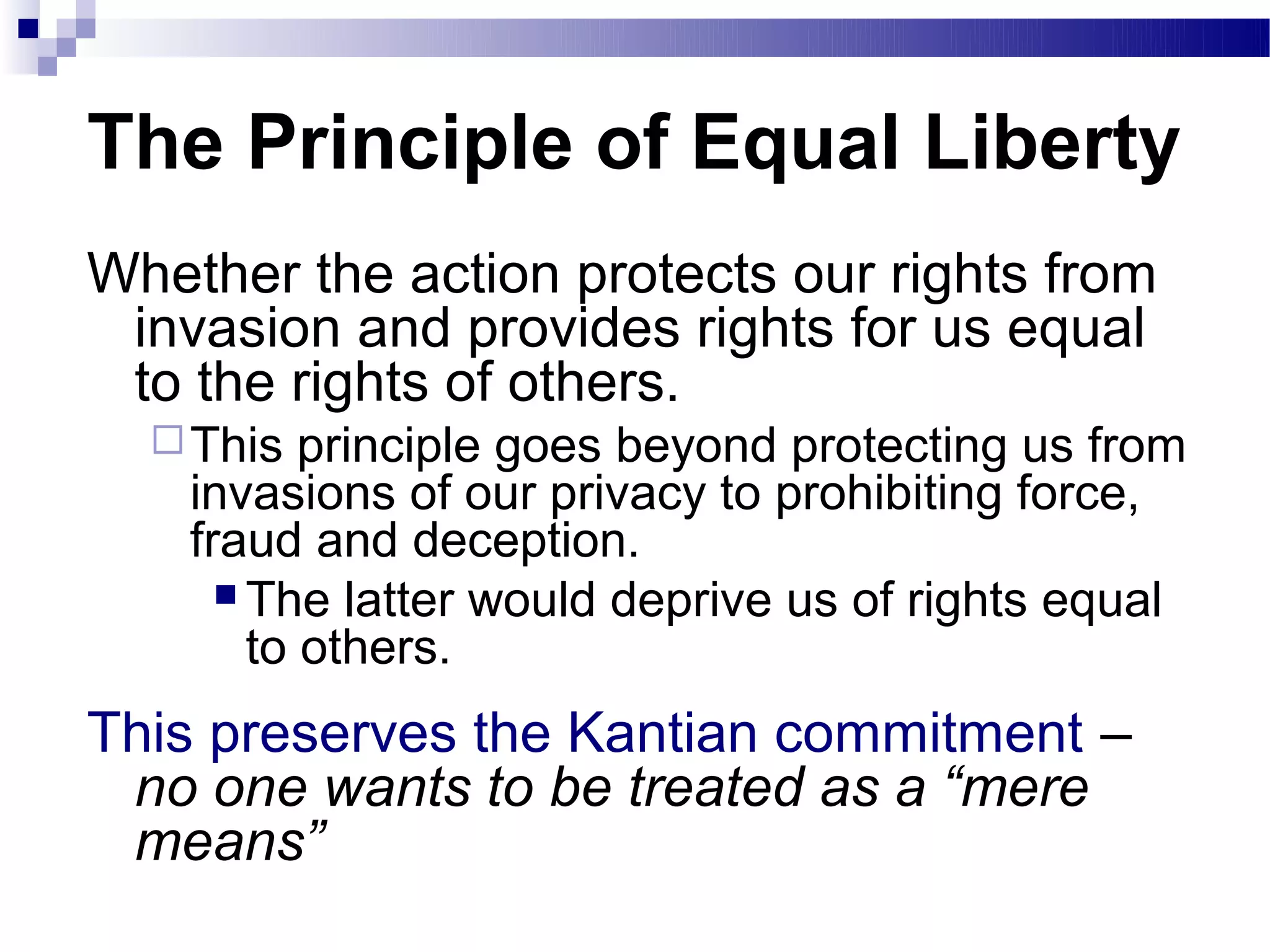
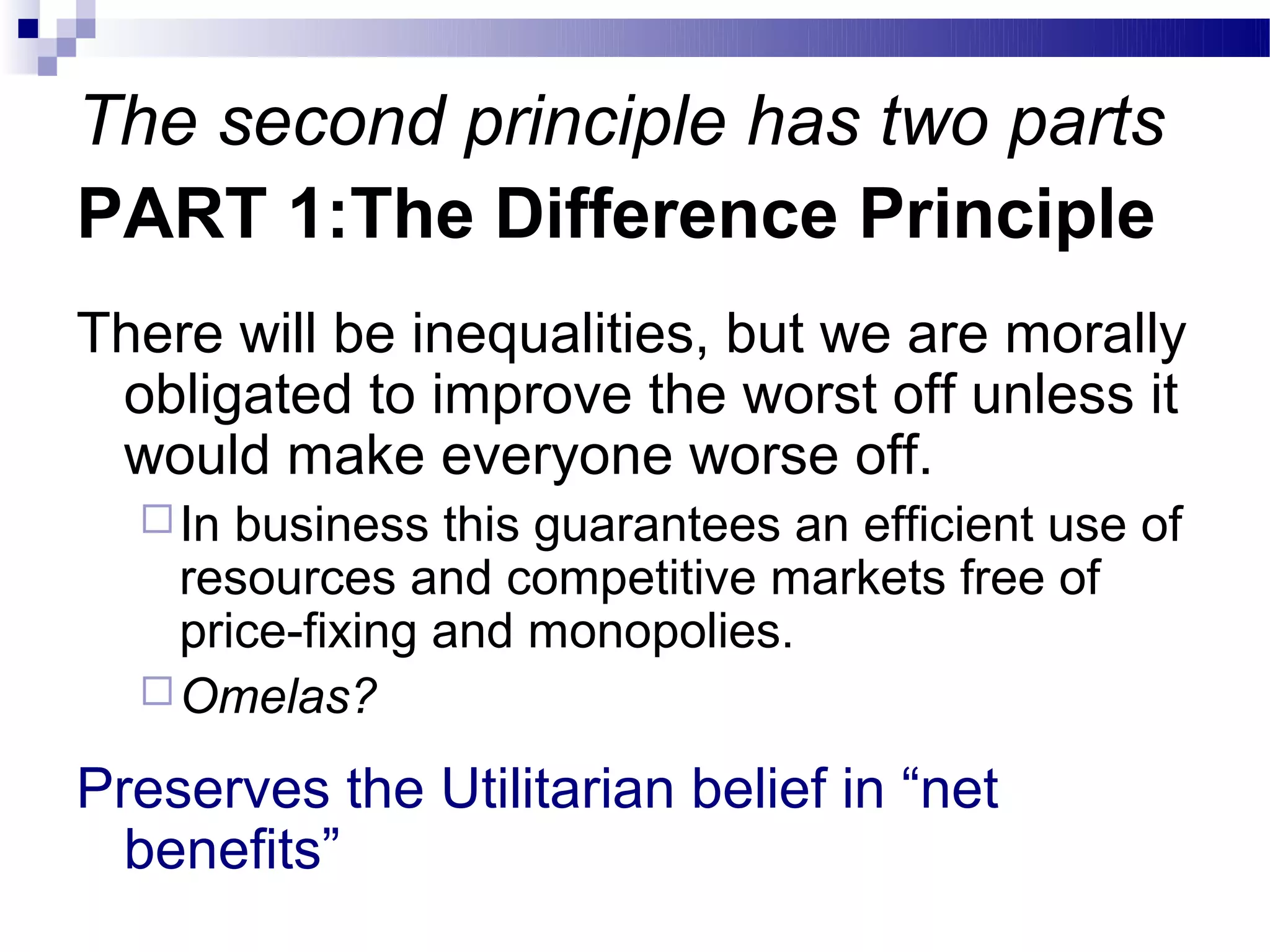
John Rawls proposed a theory of justice based on two principles that he believed rational individuals would choose from behind a "veil of ignorance". The first principle guarantees equal basic liberties for all, while the second, or "difference principle", allows inequalities only if they benefit the least advantaged members of society. Rawls believed his principles combined elements of both deontological and utilitarian ethical theories to establish a fair distribution of rights and resources in a just society.


