AMAR RAUT CHHETRI,
KATHMANDU MEDICAL COLLEGE
AND TEACHING HOSPITAL, NEPAL
JAUNDICE (Pathology)
 Jaundice or icterus refers to the yellow pigmentation
of skin or sclera by bilirubin.
Jaundice is the result of elevated levels of bilirubin in
the blood termed hyperbilirubinaemia.
Normal serum bilirubin concentration 0.3-1.2mg/dl
( 80% of which is unconjugated).
Jaundice becomes clinically evident when the total
serum bilirubin is >2mg/dl.
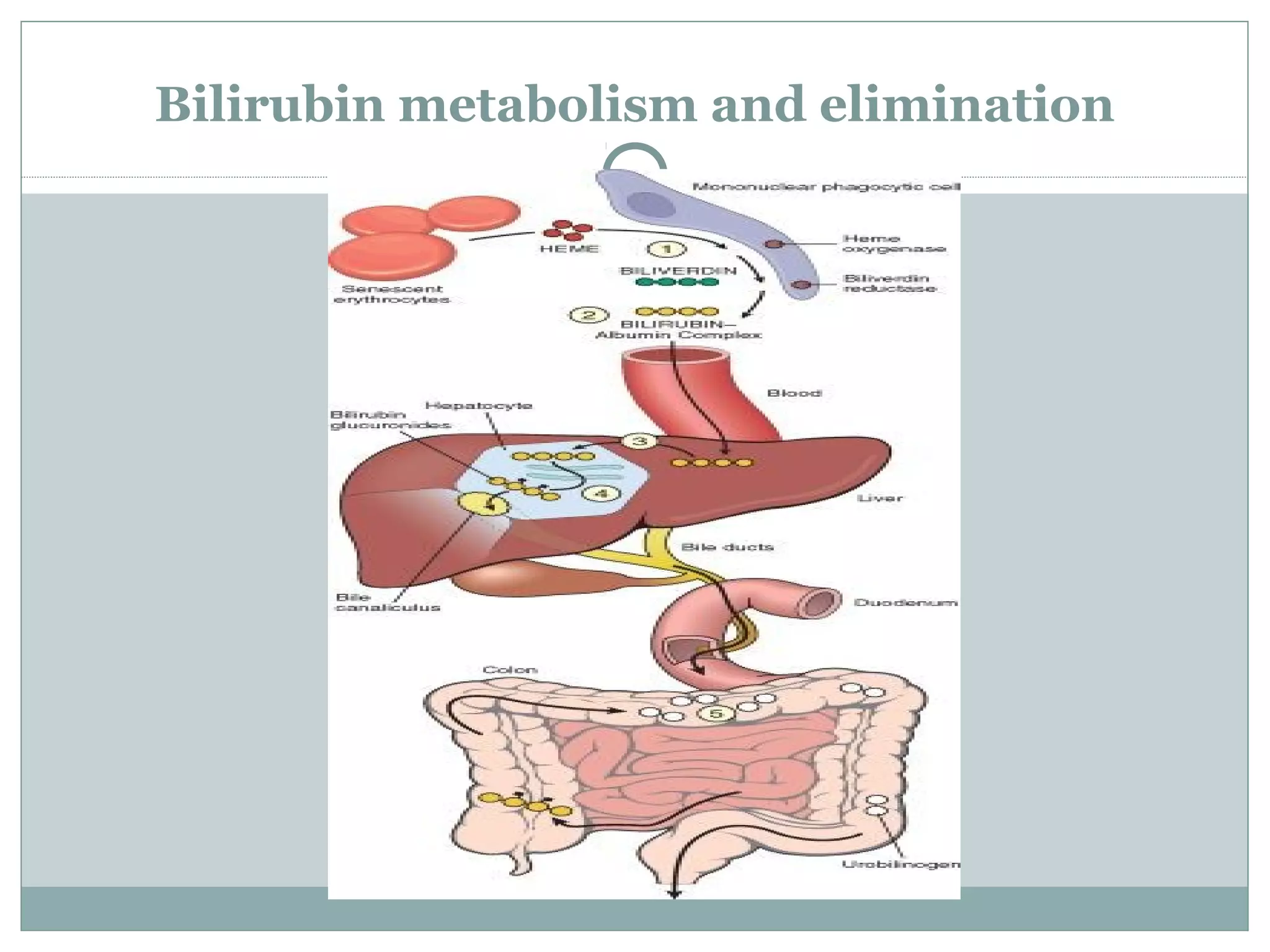
Bilirubin metabolism and elimination
• Sources of unconjugated bilirubin :
Hemoglobin breakdown
Catabolism of other haem containing protein
e.g. :myoglobin & cytochrome containing enzyme.
Ineffective erythropoiesis
• Rate of production of unconjugated
bilirubin 250 to 350 mg/day from
catabolism of haem after removal of its
iron component.
• Bilirubin in the blood is normally almost
all unconjugated.
It is not water soluble.
It is bound to albumin.
It does not pass into urine.
• In the endoplasmic reticulum :
Unconjugated bilirubin by glucoronyl
trasferase  bilirubin mono and di
glucoronide which are : water soluble
exported into bile.
• In the colon :
Conjugated bilirubin is metabolized by
colonic bacteria forming stercobilinogen
which is further oxidized into stercobilin.
Both stercobilinogen and stercobilin are
excreted in the stools.
Small amount of stercobilinogen (4 mg/dl) is
absorbed from the bowel, pass through the liver and
excreted in urine (urobilinogen) which is further
oxidized into urobilin.
Classification
Pre-hepatic (haemolytic) jaundice
Hepatic jaundice
Post-hepatic (obstructive) jaundice
Causes of Jaundice
Predominantly unconjugated
hyperbilirubinemia
Excess production of bilirubin
Hemolytic anemias
Resorption of blood from internal hemorrhage
(e.g., alimentary tract bleeding, hematomas)
Ineffective erythropoiesis (e.g., pernicious
anemia, thalassemia)
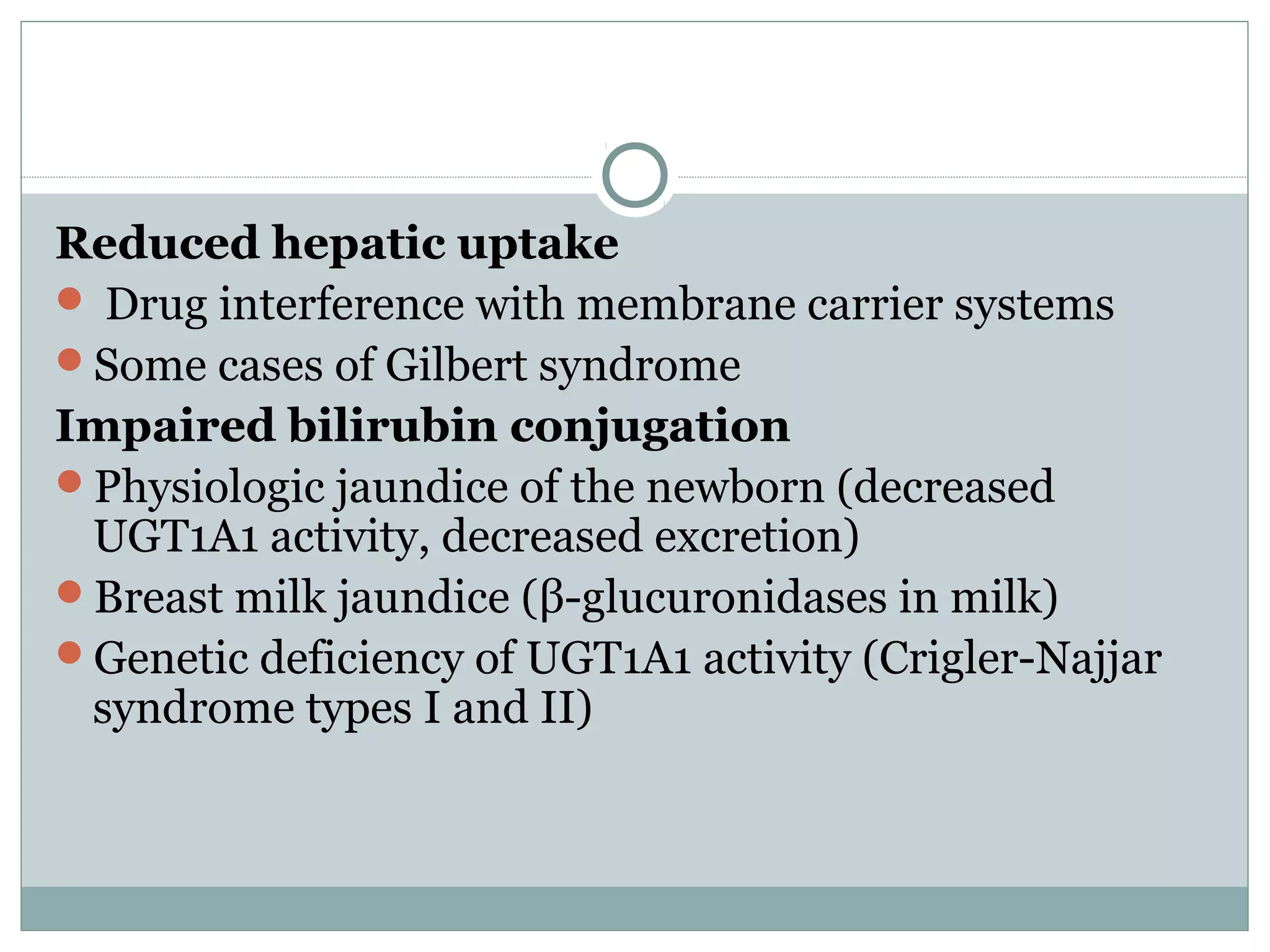
Reduced hepatic uptake
 Drug interference with membrane carrier systems
Some cases of Gilbert syndrome
Impaired bilirubin conjugation
Physiologic jaundice of the newborn (decreased
UGT1A1 activity, decreased excretion)
Breast milk jaundice (β-glucuronidases in milk)
Genetic deficiency of UGT1A1 activity (Crigler-Najjar
syndrome types I and II)
Gilbert syndrome
Diffuse hepatocellular disease (e.g., viral or drug-
induced hepatitis, cirrhosis)
Predominantly conjugated
hyperbilirubinemia
Deficiency of canalicular membrane transporters
(Dubin-Johnson syndrome, Rotor syndrome)
Impaired bile flow
Hemolytic jaundice
Etiology:
• Increased destruction of RBCs or their precursors
leading to increased bilirubin production.
• It is usually mild.
• Healthy liver can excrete a bilirubin load six times
greater than normal before unconjugated bilirubin
accumulates in the plasma.
In haemolytic jaundice:
Increased unconjugated bilirubin, urobilinogen,
stercobilinogen
Clinical features
• Pallor due to anemia.
• Increaed excretion of bilirubin and stercobilinogen
 normal coloured stool or dark stool.
• Increased urobilinogen excretion  urine darkens
on standing.
• Splenomegaly due to excess RE activity.
• Pigment stones.
• Leg ulcers.
Investigations
Biochemical tests:
-Unconjugated bilirubin is high.
-Liver function tests otherwise
normal.
 Blood count : anemia
 Blood film : evidence of hemolysis
Hepatocellular jaundice
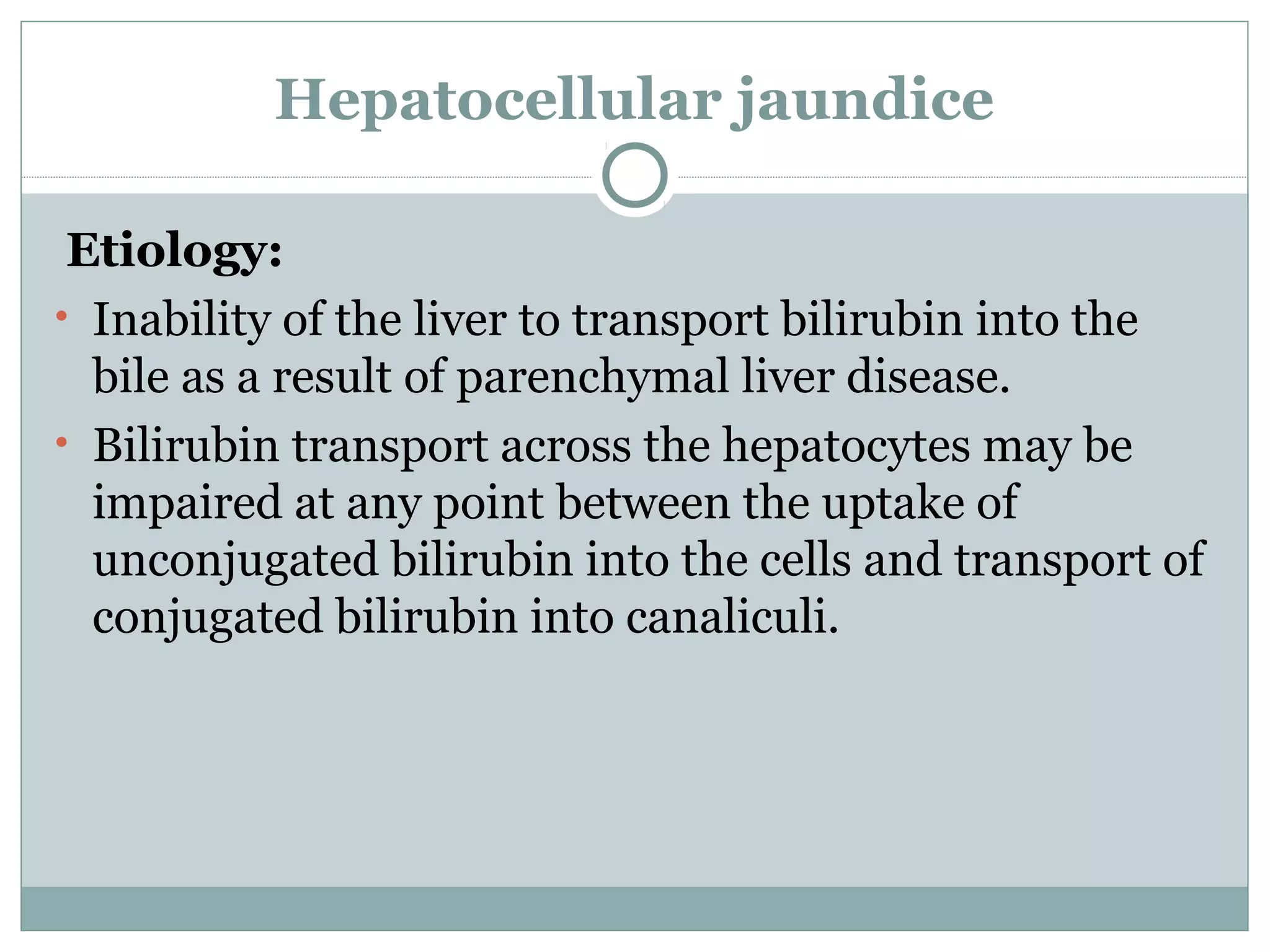
Etiology:
• Inability of the liver to transport bilirubin into the
bile as a result of parenchymal liver disease.
• Bilirubin transport across the hepatocytes may be
impaired at any point between the uptake of
unconjugated bilirubin into the cells and transport of
conjugated bilirubin into canaliculi.
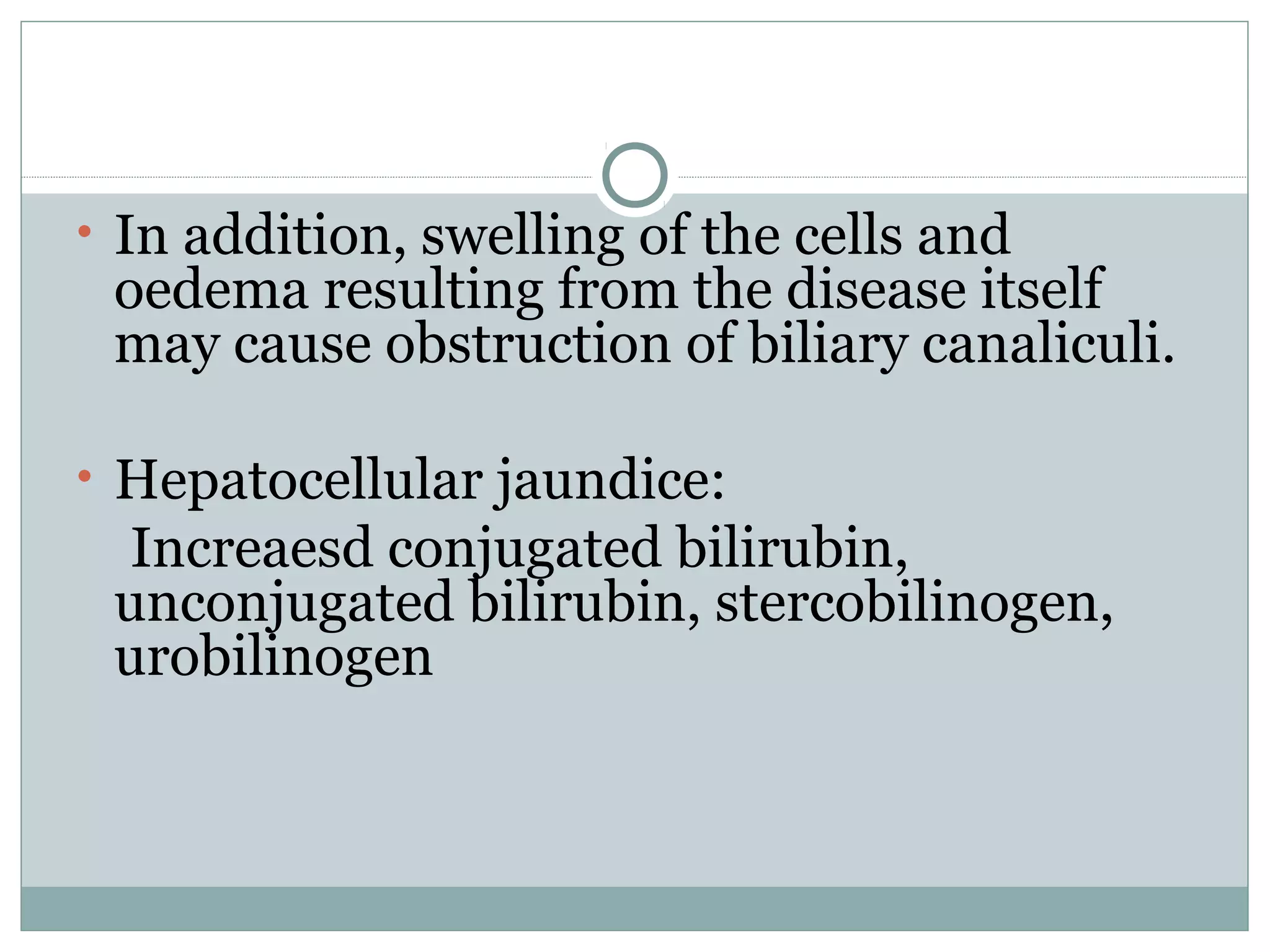
• In addition, swelling of the cells and
oedema resulting from the disease itself
may cause obstruction of biliary canaliculi.
• Hepatocellular jaundice:
Increaesd conjugated bilirubin,
unconjugated bilirubin, stercobilinogen,
urobilinogen
Clinical manifestations
• Lemon yellow jaundice.
• Dark urine.
• +/- manifestations of chronic liver disease:
- Ascites
-Circulatory changes: palmar eryth., spider naevi.
-Endocrine: hair loss, gynecomastia.
-Haemorrahgic tendency.
-Manifestations of hepatic encephalopathy.
-Manifestations of portal hypertension.
-Others: pigmentations, clubbing, low grade fever.
Investigations
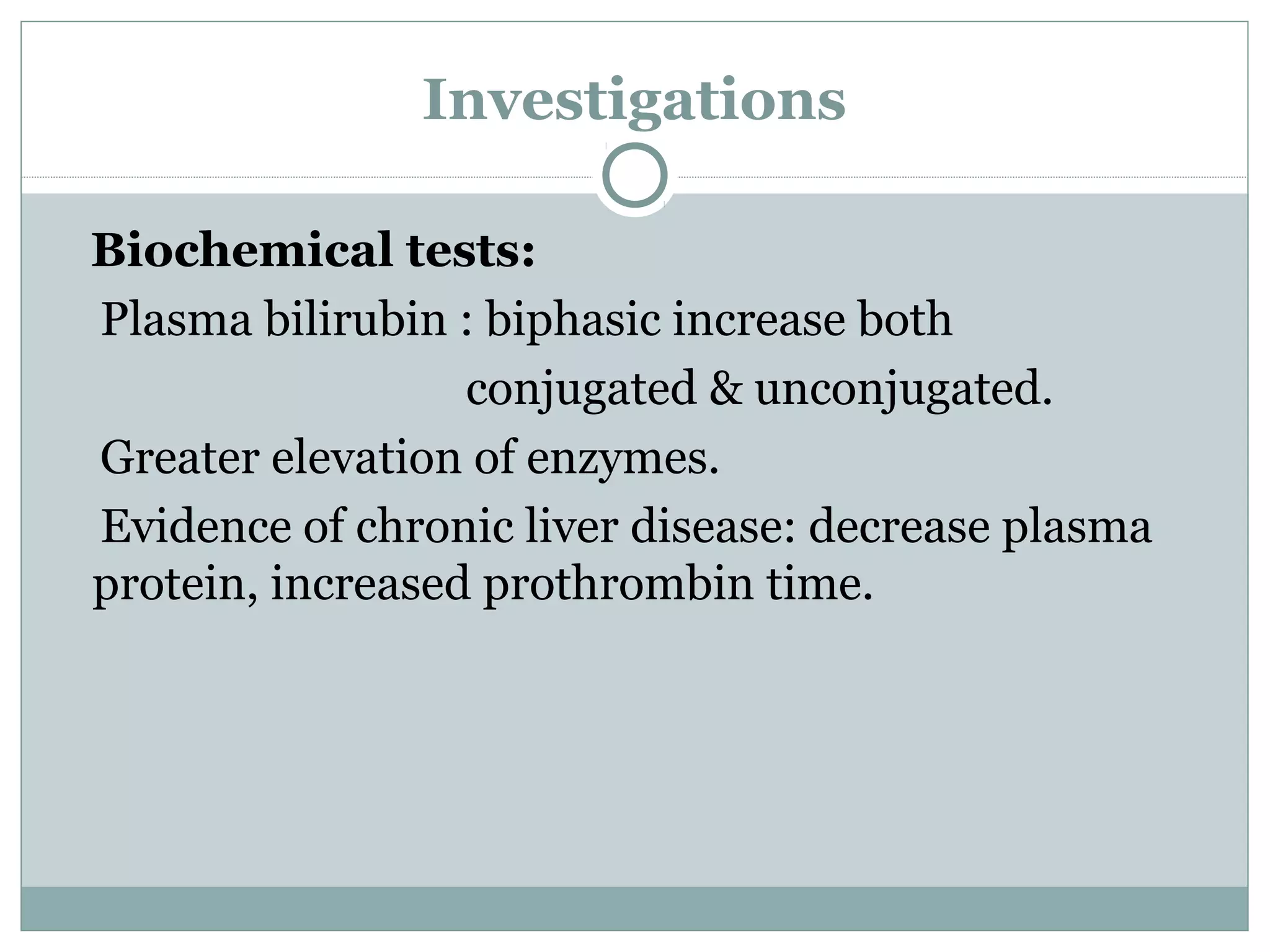
Biochemical tests:
Plasma bilirubin : biphasic increase both
conjugated & unconjugated.
Greater elevation of enzymes.
Evidence of chronic liver disease: decrease plasma
protein, increased prothrombin time.
Cholestatic jaundice
Etiology & pathogenesis:
• Conjugated bilirubin is unable to enter the bile
canaliculi and passes back into blood.
• Failure of clearance of unconjugated bilirubin arriving
at the liver cells.
• Causes:
-Failure of hepatocytes to generate bile flow.
-Obstruction to the bile flow in bile ducts in the portal
tracts.
-Obstruction to bile flow in the extrahepatic bile ducts
between porta-hepatis and papillae of Vater.
Causes of intrahepatic obstruction
• 1 ry biliary cirrhosis
• Auto-immune hepatitis
• 1 ry sclerosing cholangitis
• Alcohol
• Drugs
• Pregnancy
• Viral hepatitis
• Severe bacterial infection
Causes of extrahepatic obstruction
Choledocholithiasis
Carcinoma
Parasitic infection
Traumatic: biliary stricture
In cholestatic jaundice:
-Increased S. bilirubin mainly conjugated.
-Decreased stercobilinogen and stercobilin.
Clinical features
Early: jaundice, pale stools, pruritis.
Late: xanthelasma & xanthomata,
malabsorption, weight loss, steatorrhea,
osteomalacia, bleeding tendency.
In addition to clinical picture of cholangitis
underlying chronic liver disease.
Investigations
Biochemical tests:
-Increased bilirubin mainly conjugated.
-Increased serum bile acids, alk. Phosphatase and
hyperlipidaemia.
Ultrasound to differentiate intra from extra- hepatic
biliary obstruction.
THANKS, Cheers 
www.facebook.com/amarch517
www.twitter.com/amarch517
www.instagram.com/amarch517

Jaundice pathology

  • 1.
    AMAR RAUT CHHETRI, KATHMANDUMEDICAL COLLEGE AND TEACHING HOSPITAL, NEPAL JAUNDICE (Pathology)
  • 2.
     Jaundice oricterus refers to the yellow pigmentation of skin or sclera by bilirubin. Jaundice is the result of elevated levels of bilirubin in the blood termed hyperbilirubinaemia. Normal serum bilirubin concentration 0.3-1.2mg/dl ( 80% of which is unconjugated). Jaundice becomes clinically evident when the total serum bilirubin is >2mg/dl.
  • 3.
  • 4.
    • Sources ofunconjugated bilirubin : Hemoglobin breakdown Catabolism of other haem containing protein e.g. :myoglobin & cytochrome containing enzyme. Ineffective erythropoiesis
  • 5.
    • Rate ofproduction of unconjugated bilirubin 250 to 350 mg/day from catabolism of haem after removal of its iron component. • Bilirubin in the blood is normally almost all unconjugated. It is not water soluble. It is bound to albumin. It does not pass into urine.
  • 6.
    • In theendoplasmic reticulum : Unconjugated bilirubin by glucoronyl trasferase  bilirubin mono and di glucoronide which are : water soluble exported into bile. • In the colon : Conjugated bilirubin is metabolized by colonic bacteria forming stercobilinogen which is further oxidized into stercobilin. Both stercobilinogen and stercobilin are excreted in the stools.
  • 7.
    Small amount ofstercobilinogen (4 mg/dl) is absorbed from the bowel, pass through the liver and excreted in urine (urobilinogen) which is further oxidized into urobilin.
  • 8.
    Classification Pre-hepatic (haemolytic) jaundice Hepaticjaundice Post-hepatic (obstructive) jaundice
  • 9.
    Causes of Jaundice Predominantlyunconjugated hyperbilirubinemia Excess production of bilirubin Hemolytic anemias Resorption of blood from internal hemorrhage (e.g., alimentary tract bleeding, hematomas) Ineffective erythropoiesis (e.g., pernicious anemia, thalassemia)
  • 10.
    Reduced hepatic uptake Drug interference with membrane carrier systems Some cases of Gilbert syndrome Impaired bilirubin conjugation Physiologic jaundice of the newborn (decreased UGT1A1 activity, decreased excretion) Breast milk jaundice (β-glucuronidases in milk) Genetic deficiency of UGT1A1 activity (Crigler-Najjar syndrome types I and II)
  • 11.
    Gilbert syndrome Diffuse hepatocellulardisease (e.g., viral or drug- induced hepatitis, cirrhosis) Predominantly conjugated hyperbilirubinemia Deficiency of canalicular membrane transporters (Dubin-Johnson syndrome, Rotor syndrome) Impaired bile flow
  • 12.
    Hemolytic jaundice Etiology: • Increaseddestruction of RBCs or their precursors leading to increased bilirubin production. • It is usually mild. • Healthy liver can excrete a bilirubin load six times greater than normal before unconjugated bilirubin accumulates in the plasma.
  • 13.
    In haemolytic jaundice: Increasedunconjugated bilirubin, urobilinogen, stercobilinogen
  • 14.
    Clinical features • Pallordue to anemia. • Increaed excretion of bilirubin and stercobilinogen  normal coloured stool or dark stool. • Increased urobilinogen excretion  urine darkens on standing. • Splenomegaly due to excess RE activity. • Pigment stones. • Leg ulcers.
  • 15.
    Investigations Biochemical tests: -Unconjugated bilirubinis high. -Liver function tests otherwise normal.  Blood count : anemia  Blood film : evidence of hemolysis
  • 16.
    Hepatocellular jaundice Etiology: • Inabilityof the liver to transport bilirubin into the bile as a result of parenchymal liver disease. • Bilirubin transport across the hepatocytes may be impaired at any point between the uptake of unconjugated bilirubin into the cells and transport of conjugated bilirubin into canaliculi.
  • 17.
    • In addition,swelling of the cells and oedema resulting from the disease itself may cause obstruction of biliary canaliculi. • Hepatocellular jaundice: Increaesd conjugated bilirubin, unconjugated bilirubin, stercobilinogen, urobilinogen
  • 18.
    Clinical manifestations • Lemonyellow jaundice. • Dark urine. • +/- manifestations of chronic liver disease: - Ascites -Circulatory changes: palmar eryth., spider naevi. -Endocrine: hair loss, gynecomastia. -Haemorrahgic tendency. -Manifestations of hepatic encephalopathy. -Manifestations of portal hypertension. -Others: pigmentations, clubbing, low grade fever.
  • 19.
    Investigations Biochemical tests: Plasma bilirubin: biphasic increase both conjugated & unconjugated. Greater elevation of enzymes. Evidence of chronic liver disease: decrease plasma protein, increased prothrombin time.
  • 20.
    Cholestatic jaundice Etiology &pathogenesis: • Conjugated bilirubin is unable to enter the bile canaliculi and passes back into blood. • Failure of clearance of unconjugated bilirubin arriving at the liver cells. • Causes: -Failure of hepatocytes to generate bile flow. -Obstruction to the bile flow in bile ducts in the portal tracts. -Obstruction to bile flow in the extrahepatic bile ducts between porta-hepatis and papillae of Vater.
  • 21.
    Causes of intrahepaticobstruction • 1 ry biliary cirrhosis • Auto-immune hepatitis • 1 ry sclerosing cholangitis • Alcohol • Drugs • Pregnancy • Viral hepatitis • Severe bacterial infection
  • 22.
    Causes of extrahepaticobstruction Choledocholithiasis Carcinoma Parasitic infection Traumatic: biliary stricture
  • 23.
    In cholestatic jaundice: -IncreasedS. bilirubin mainly conjugated. -Decreased stercobilinogen and stercobilin.
  • 24.
    Clinical features Early: jaundice,pale stools, pruritis. Late: xanthelasma & xanthomata, malabsorption, weight loss, steatorrhea, osteomalacia, bleeding tendency. In addition to clinical picture of cholangitis underlying chronic liver disease.
  • 25.
    Investigations Biochemical tests: -Increased bilirubinmainly conjugated. -Increased serum bile acids, alk. Phosphatase and hyperlipidaemia. Ultrasound to differentiate intra from extra- hepatic biliary obstruction.
  • 26.