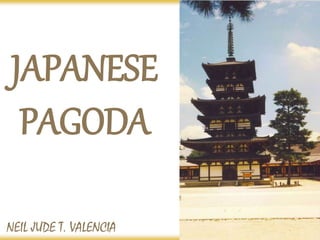
JAPANESE
PAGODA
NEIL JUDE T. VALENCIA
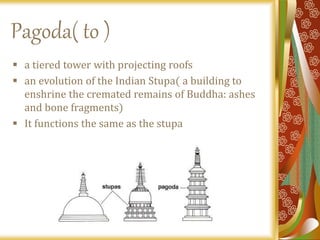
Pagoda( to )
 a tiered tower with projecting roofs
 an evolution of the Indian Stupa( a building to
enshrine the cremated remains of Buddha: ashes
and bone fragments)
 It functions the same as the stupa
Pagoda and Stupa Differences
 one can actually enter a pagoda. Remember
that a stupa is a solid dome and the way to
venerate the Buddha was not to go inside (since
that is impossible) but instead to
circumambulate the mound
 pagoda emphasizes verticality even
more(Japanese believes that taller structure
better communicated the idea that the pagoda is
acting as a link between the mortal and
heavenly realms, as the structure reaches for
the sky
History
 After the stupa migrated with Buddhism from
ancient India to China, the structure became
taller and developed layers or tiers
 When Buddhism was introduced from China to
Japan, the layered pavilions and pagodas of
China influenced the way the Japanese
designed and built pagodas
TYPES OF JAPANESE PAGODA
1. WOODEN PAGODA
2. STONE PAGODA
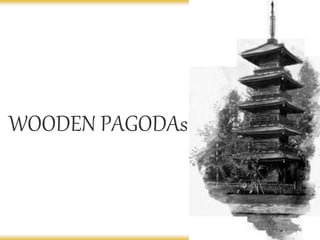
WOODEN PAGODAs
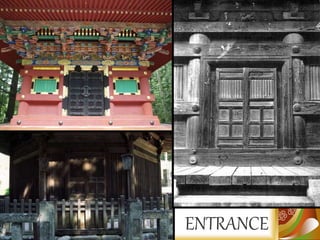
ENTRANCE
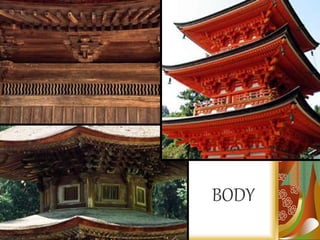
BODY
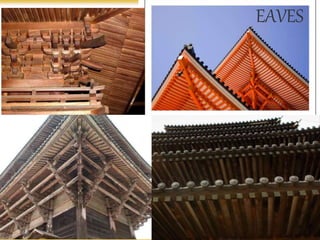
EAVES
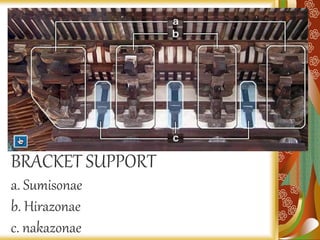
BRACKET SUPPORT
a. Sumisonae
b. Hirazonae
c. nakazonae
BRACKET SUPPORT
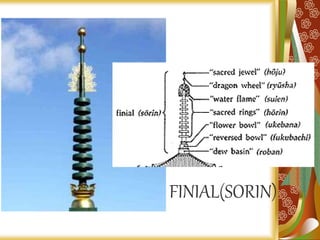
FINIAL(SORIN)
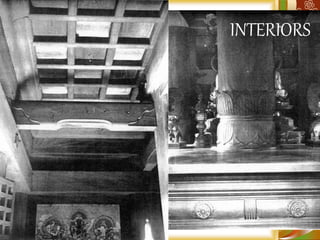
INTERIORS
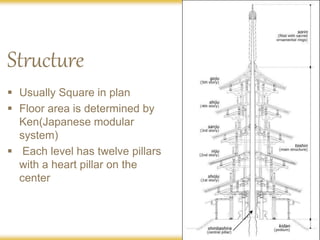
Structure
 Usually Square in plan
 Floor area is determined by
Ken(Japanese modular
system)
 Each level has twelve pillars
with a heart pillar on the
center
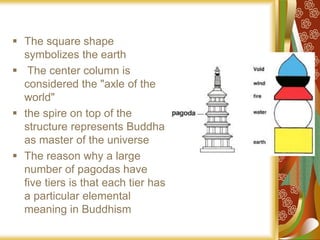
 The square shape
symbolizes the earth
 The center column is
considered the "axle of the
world"
 the spire on top of the
structure represents Buddha
as master of the universe
 The reason why a large
number of pagodas have
five tiers is that each tier has
a particular elemental
meaning in Buddhism
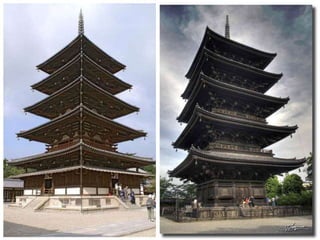
Each of its levels, ascending, is slightly smaller
than the last, resulting in a pyramid-like structure
that is topped by a spire
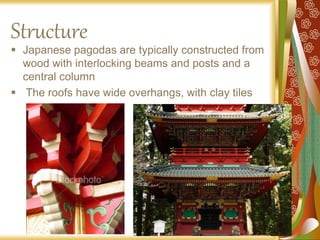
Structure
 Japanese pagodas are typically constructed from
wood with interlocking beams and posts and a
central column
 The roofs have wide overhangs, with clay tiles
Construction
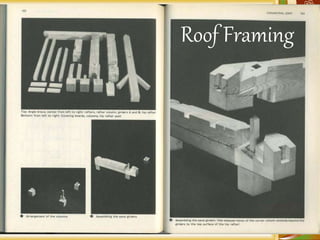
Roof Framing
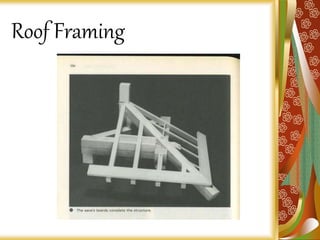
Roof Framing
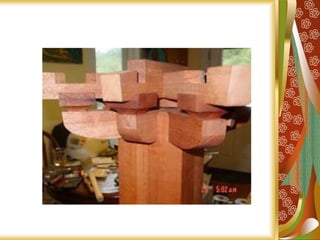
Roof Framing
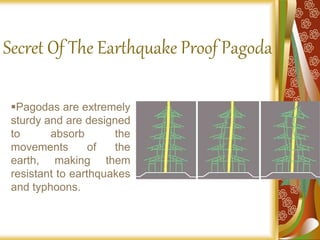
Secret Of The Earthquake Proof Pagoda
Pagodas are extremely
sturdy and are designed
to absorb the
movements of the
earth, making them
resistant to earthquakes
and typhoons.
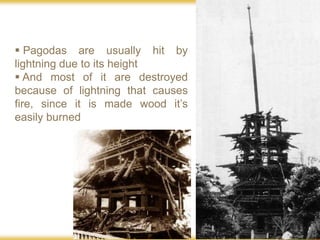
 Pagodas are usually hit by
lightning due to its height
 And most of it are destroyed
because of lightning that causes
fire, since it is made wood it’s
easily burned
Pagodas of Japan
Gojunoto
5-story pagoda
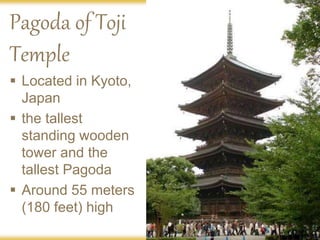
Pagoda of Toji
Temple
 Located in Kyoto,
Japan
 the tallest
standing wooden
tower and the
tallest Pagoda
 Around 55 meters
(180 feet) high
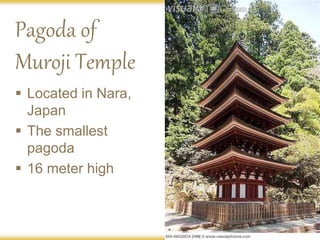
Pagoda of
Muroji Temple
 Located in Nara,
Japan
 The smallest
pagoda
 16 meter high
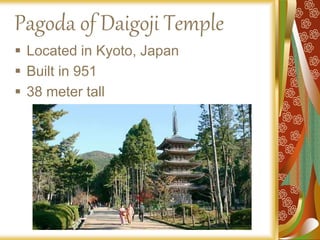
Pagoda of Daigoji Temple
 Located in Kyoto, Japan
 Built in 951
 38 meter tall
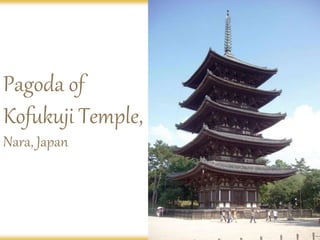
Pagoda of
Kofukuji Temple,
Nara, Japan
Sanjunoto
3-story pagoda
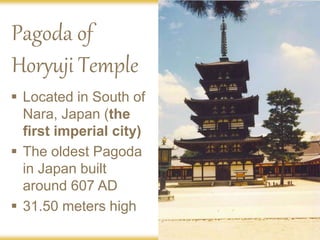
Pagoda of
Horyuji Temple
 Located in South of
Nara, Japan (the
first imperial city)
 The oldest Pagoda
in Japan built
around 607 AD
 31.50 meters high
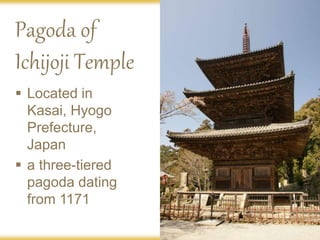
Pagoda of
Ichijoji Temple
 Located in
Kasai, Hyogo
Prefecture,
Japan
 a three-tiered
pagoda dating
from 1171
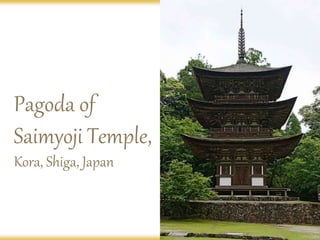
Pagoda of
Saimyoji Temple,
Kora, Shiga, Japan
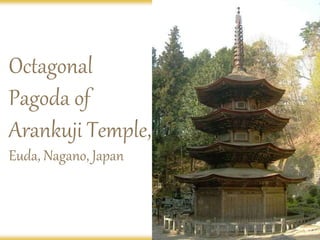
Octagonal
Pagoda of
Arankuji Temple,
Euda, Nagano, Japan
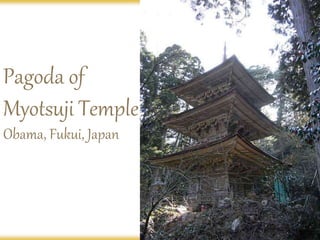
Pagoda of
Myotsuji Temple,
Obama, Fukui, Japan
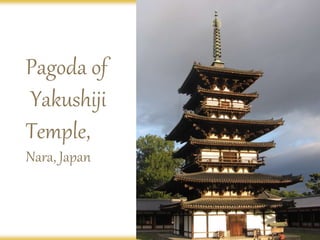
Pagoda of
Yakushiji
Temple,
Nara, Japan
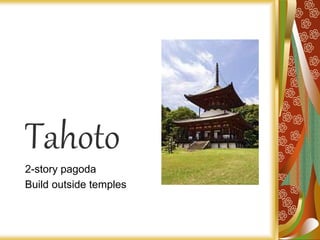
Tahoto
2-story pagoda
Build outside temples
Stone Pagodas(sekito)
 generic term for pagodas or stupas made of
stone
 always have an odd number of stories
 Solid, smaller than wooden pagodas and act as
a kind of monument/grave
 Now, these pagodas act as garden decorations
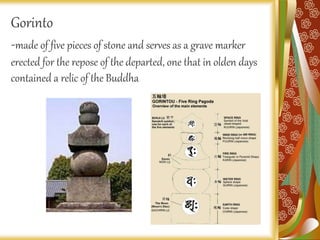
Gorinto
-made of five pieces of stone and serves as a grave marker
erected for the repose of the departed, one that in olden days
contained a relic of the Buddha
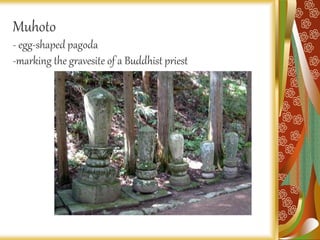
Muhoto
- egg-shaped pagoda
-marking the gravesite of a Buddhist priest
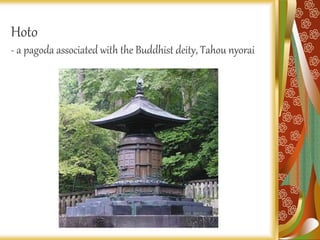
Hoto
- a pagoda associated with the Buddhist deity, Tahou nyorai
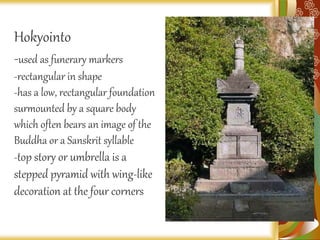
Hokyointo
-used as funerary markers
-rectangular in shape
-has a low, rectangular foundation
surmounted by a square body
which often bears an image of the
Buddha or a Sanskrit syllable
-top story or umbrella is a
stepped pyramid with wing-like
decoration at the four corners
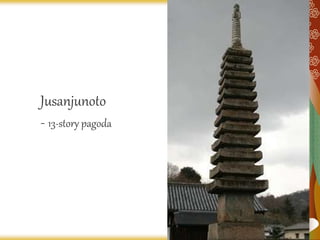
Jusanjunoto
- 13-story pagoda
THE END 

Japanese pagoda