Comparative Analysis:
Baroque and Rococo
Aloyon
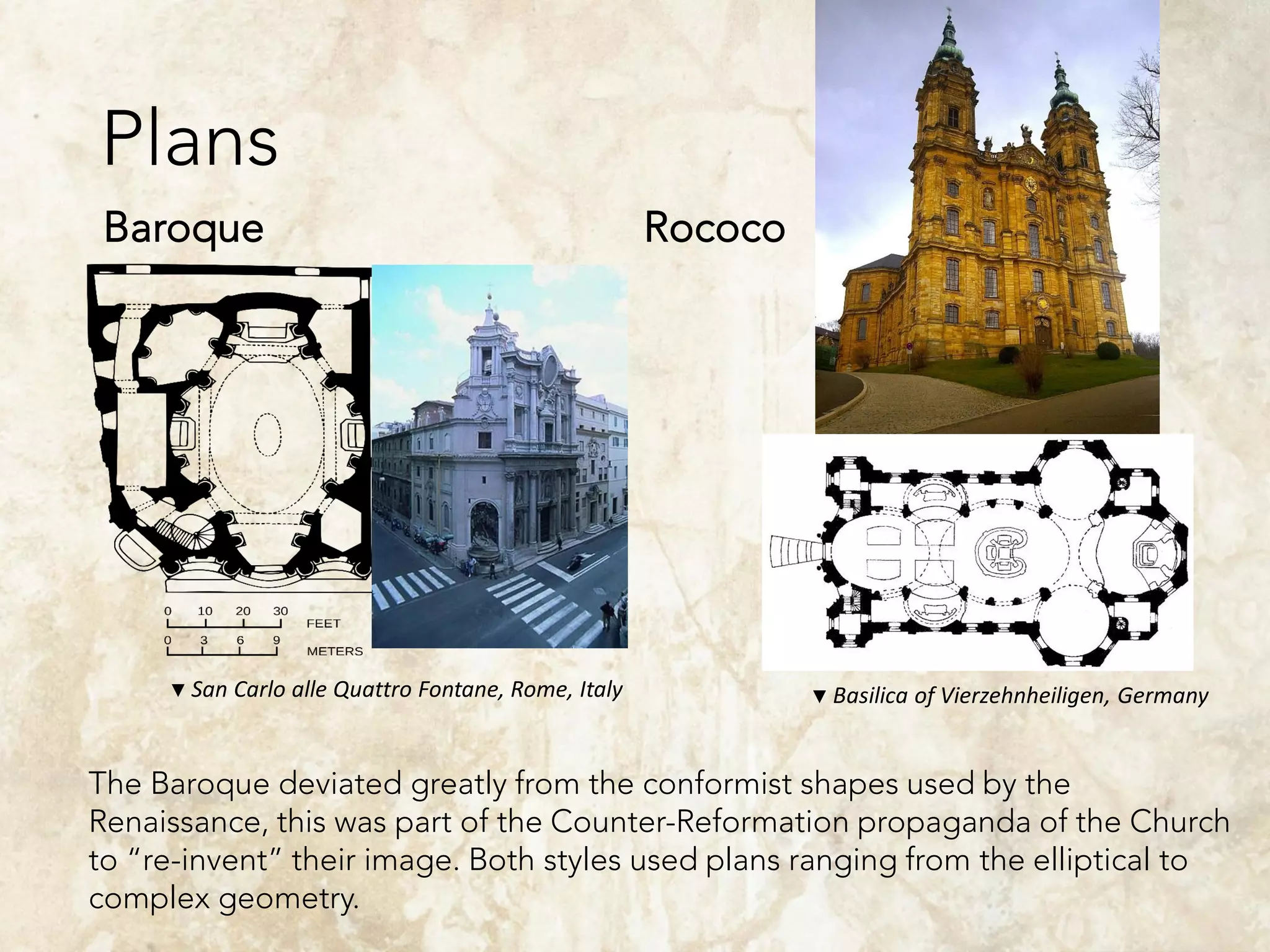
Plans
Baroque
▼ Basilica of Vierzehnheiligen, Germany
Rococo
The Baroque deviated greatly from the conformist shapes used by the
Renaissance, this was part of the Counter-Reformation propaganda of the Church
to “re-invent” their image. Both styles used plans ranging from the elliptical to
complex geometry.
▼ San Carlo alle Quattro Fontane, Rome, Italy
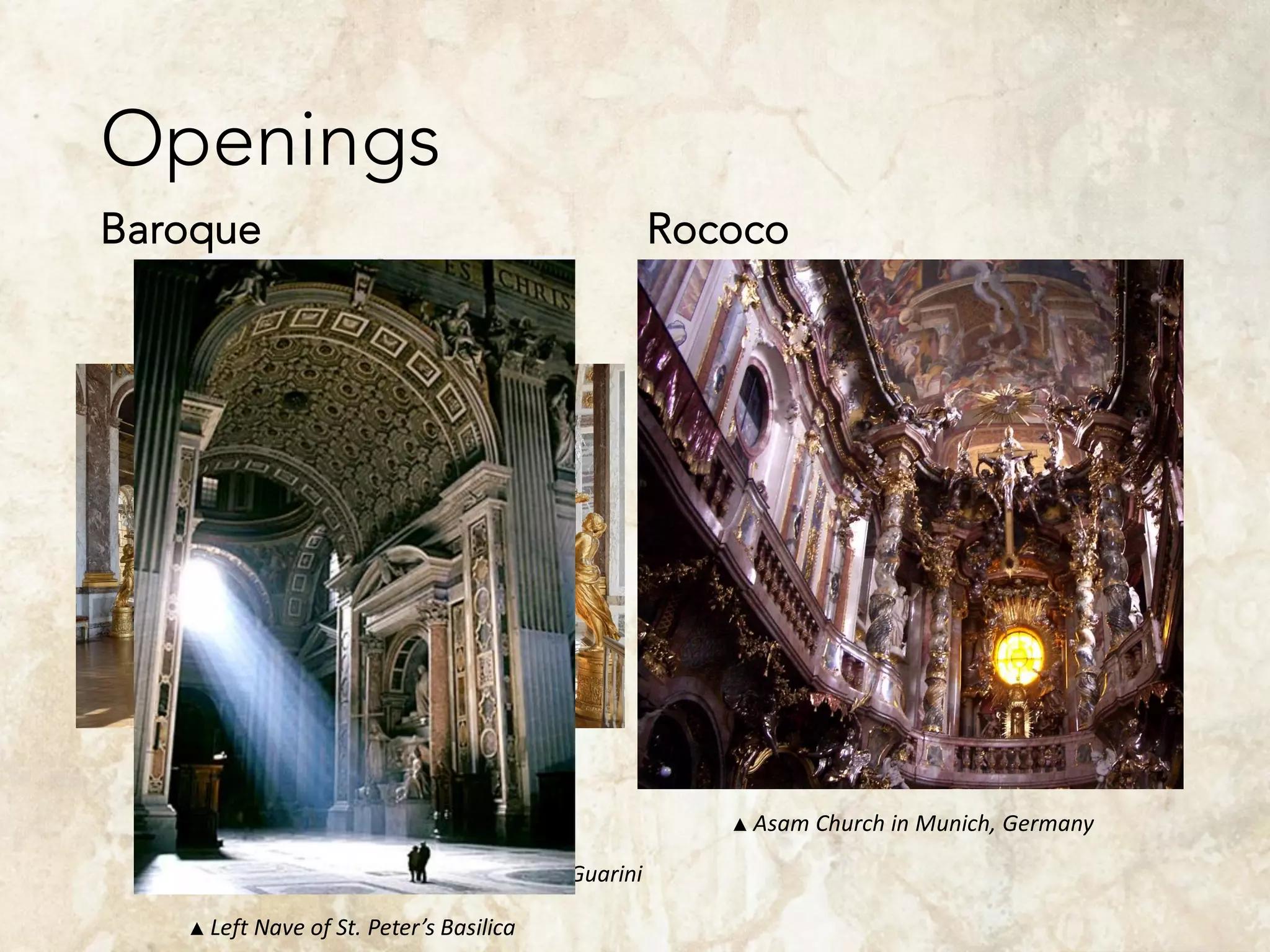
Openings
Rococo
▲ The dome of the of the Holy Shroud by Guarini
Baroque
▲ Left Nave of St. Peter’s Basilica
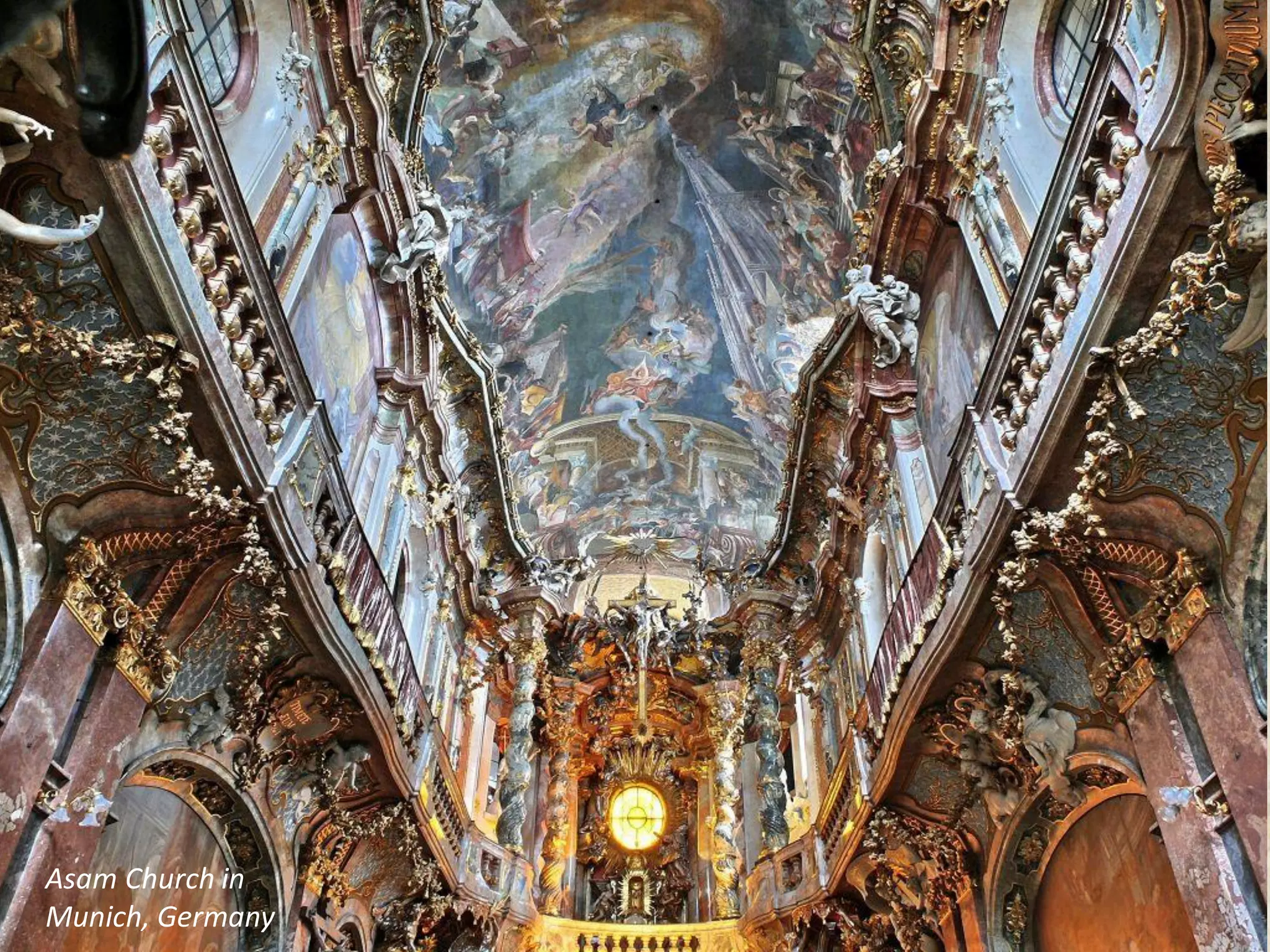
▲ Asam Church in Munich, Germany
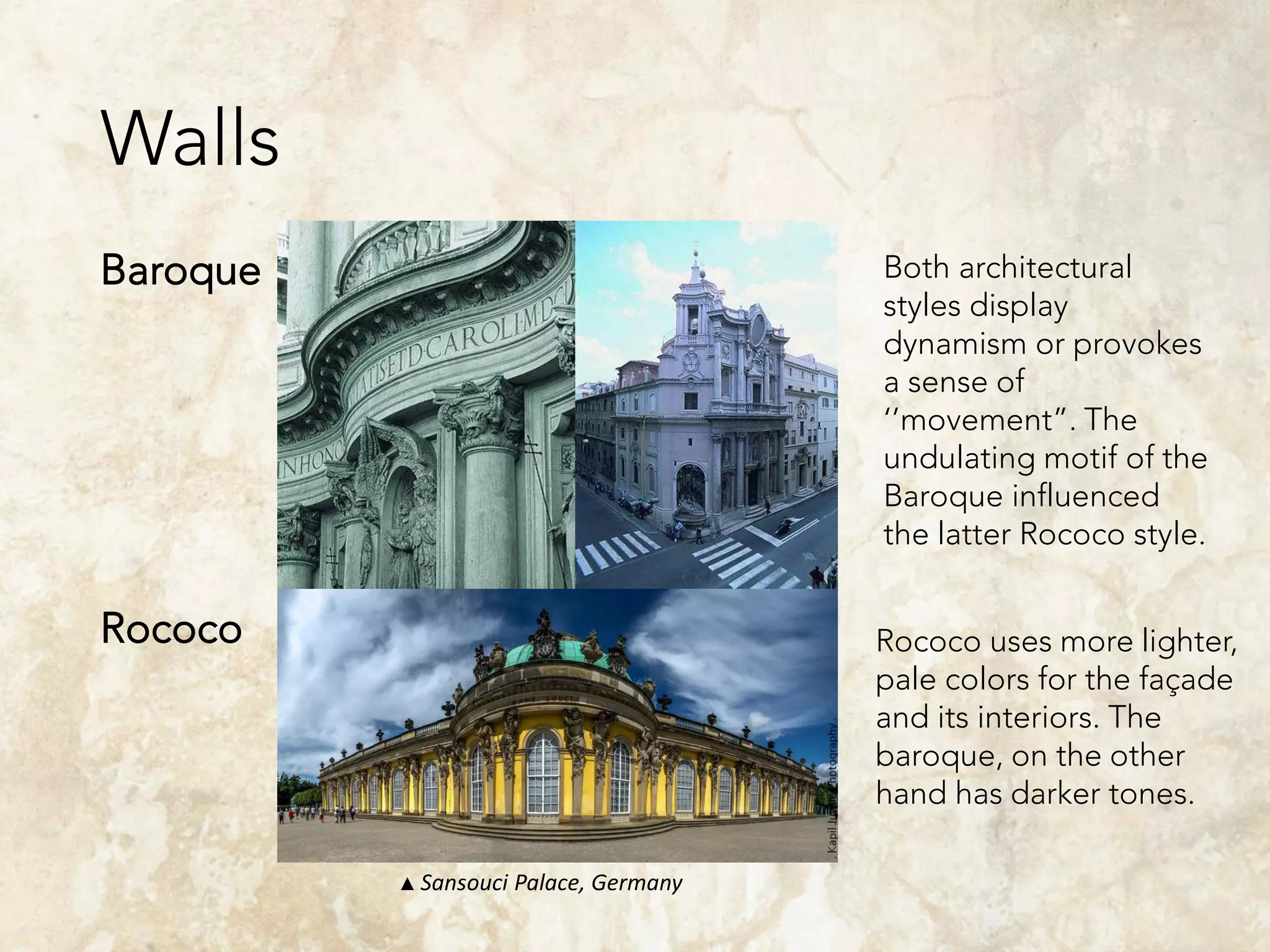
Walls
Baroque
Rococo
Both architectural
styles display
dynamism or provokes
a sense of
‘’movement”. The
undulating motif of the
Baroque influenced
the latter Rococo style.
Rococo uses more lighter,
pale colors for the façade
and its interiors. The
baroque, on the other
hand has darker tones.
▲ Sansouci Palace, Germany
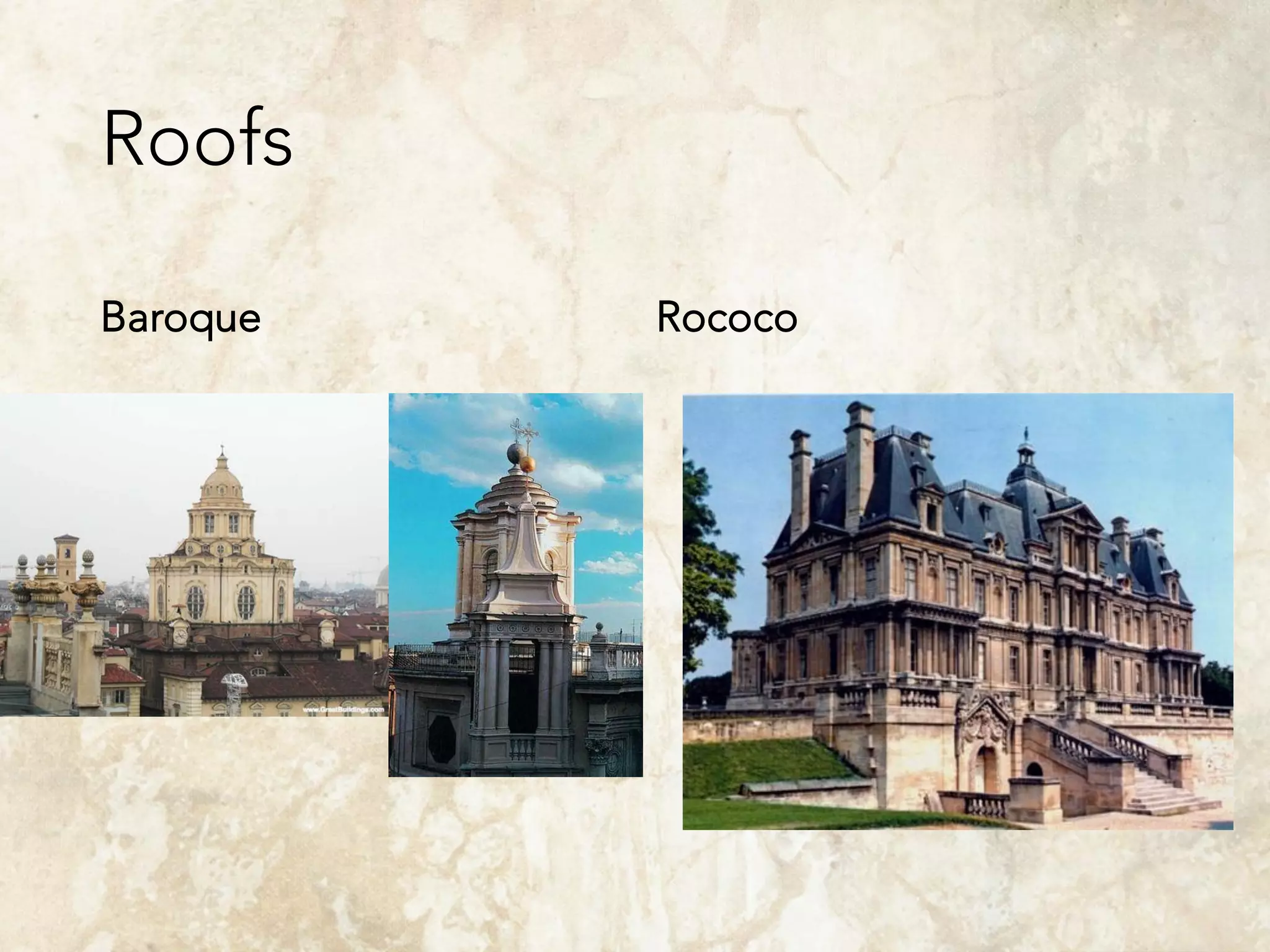
Roofs
Baroque Rococo
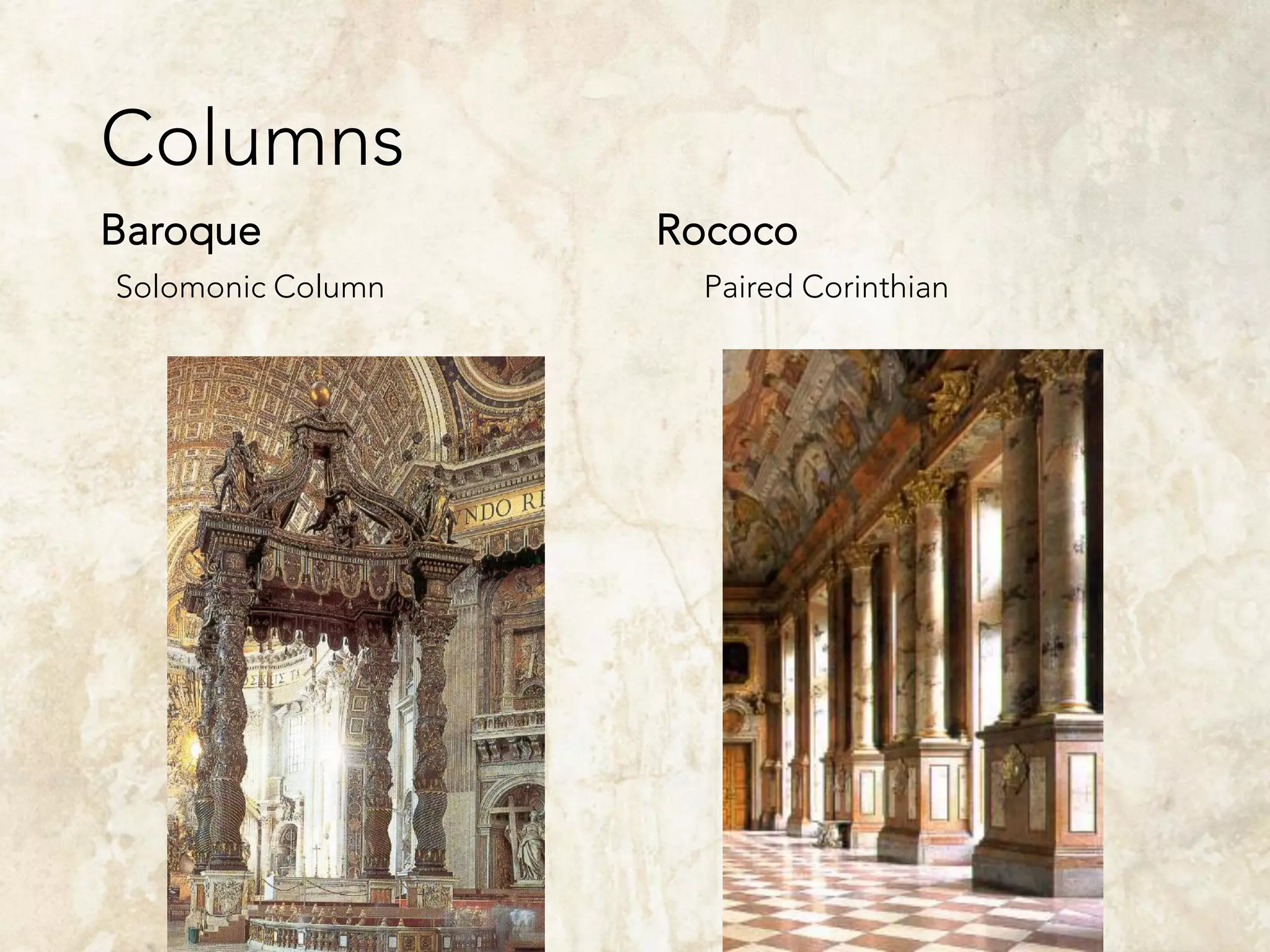
Columns
Baroque Rococo
Solomonic Column Paired Corinthian
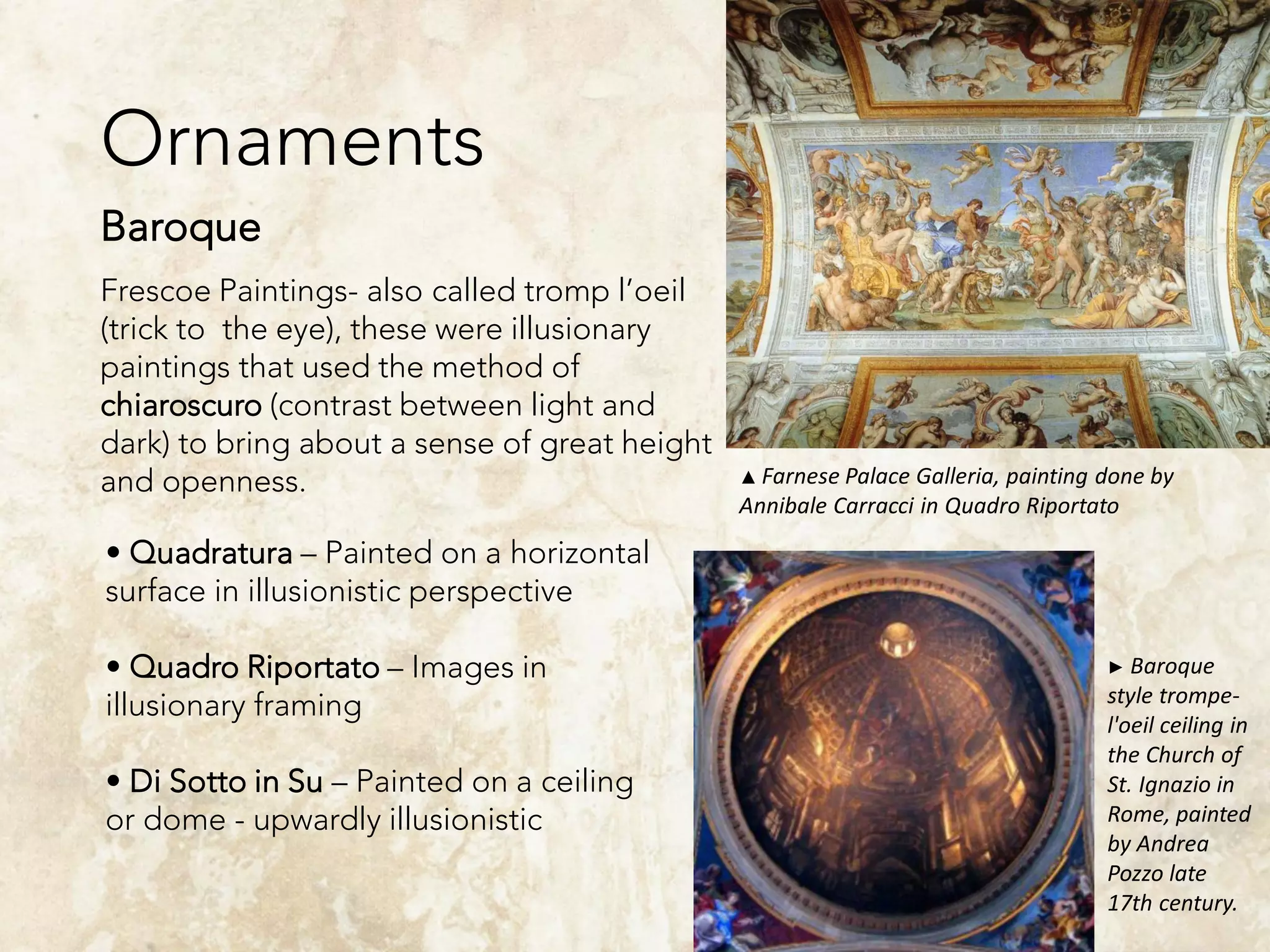
Ornaments
Baroque
Frescoe Paintings- also called tromp l’oeil
(trick to the eye), these were illusionary
paintings that used the method of
chiaroscuro (contrast between light and
dark) to bring about a sense of great height
and openness.
• Quadratura – Painted on a horizontal
surface in illusionistic perspective
• Quadro Riportato – Images in
illusionary framing
• Di Sotto in Su – Painted on a ceiling
or dome - upwardly illusionistic
▲ Farnese Palace Galleria, painting done by
Annibale Carracci in Quadro Riportato
► Baroque
style trompe-
l'oeil ceiling in
the Church of
St. Ignazio in
Rome, painted
by Andrea
Pozzo late
17th century.
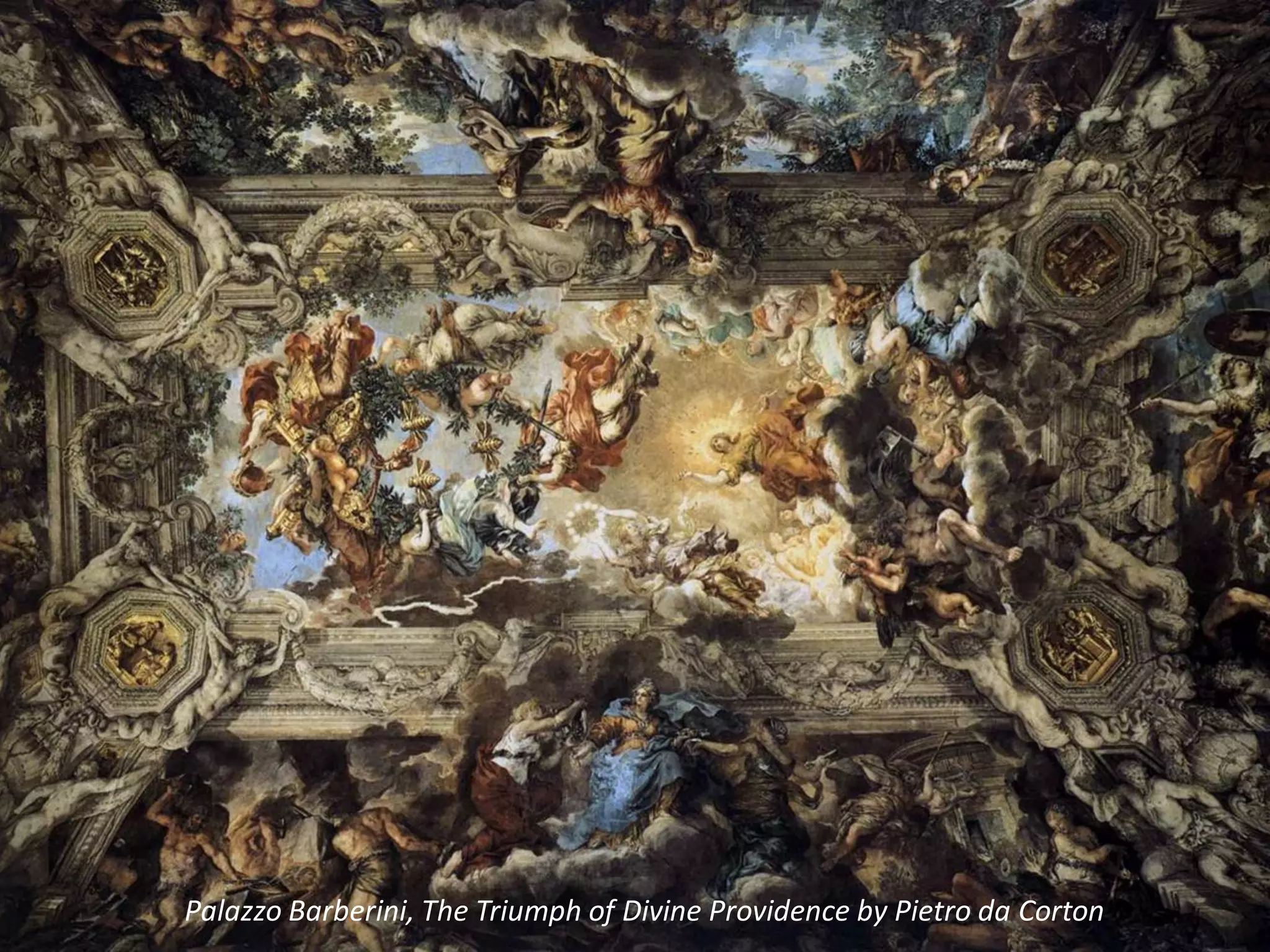
Palazzo Barberini, The Triumph of Divine Providence by Pietro da Corton
Ornaments
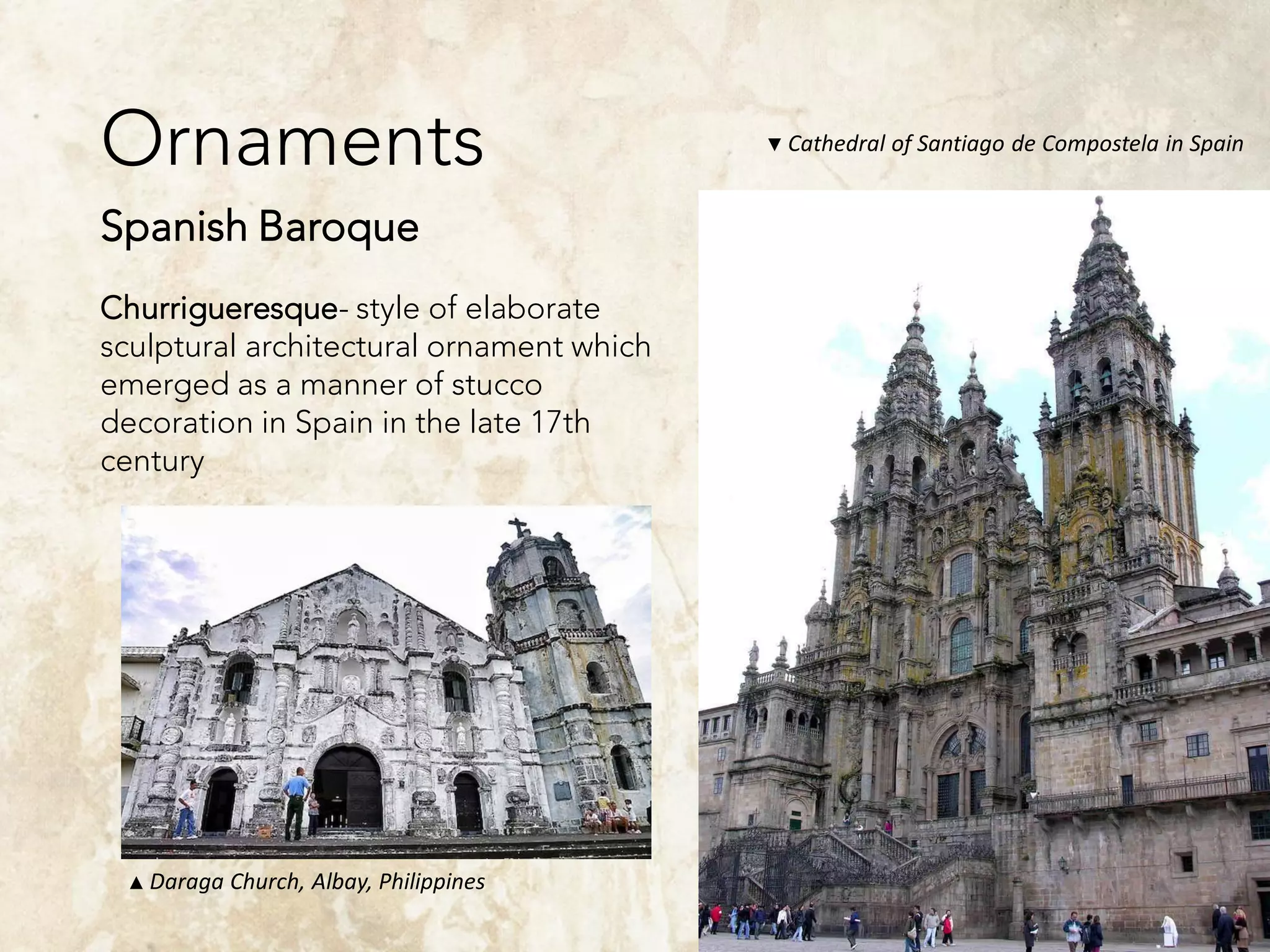
Spanish Baroque
Churrigueresque- style of elaborate
sculptural architectural ornament which
emerged as a manner of stucco
decoration in Spain in the late 17th
century
▼ Cathedral of Santiago de Compostela in Spain
▲ Daraga Church, Albay, Philippines
Ornaments
Rococo
Frescoe paintings- much like the Baroque, but with lighter mood and color.
▲ St. Charles Church, Vienna
Asam Church in
Munich, Germany
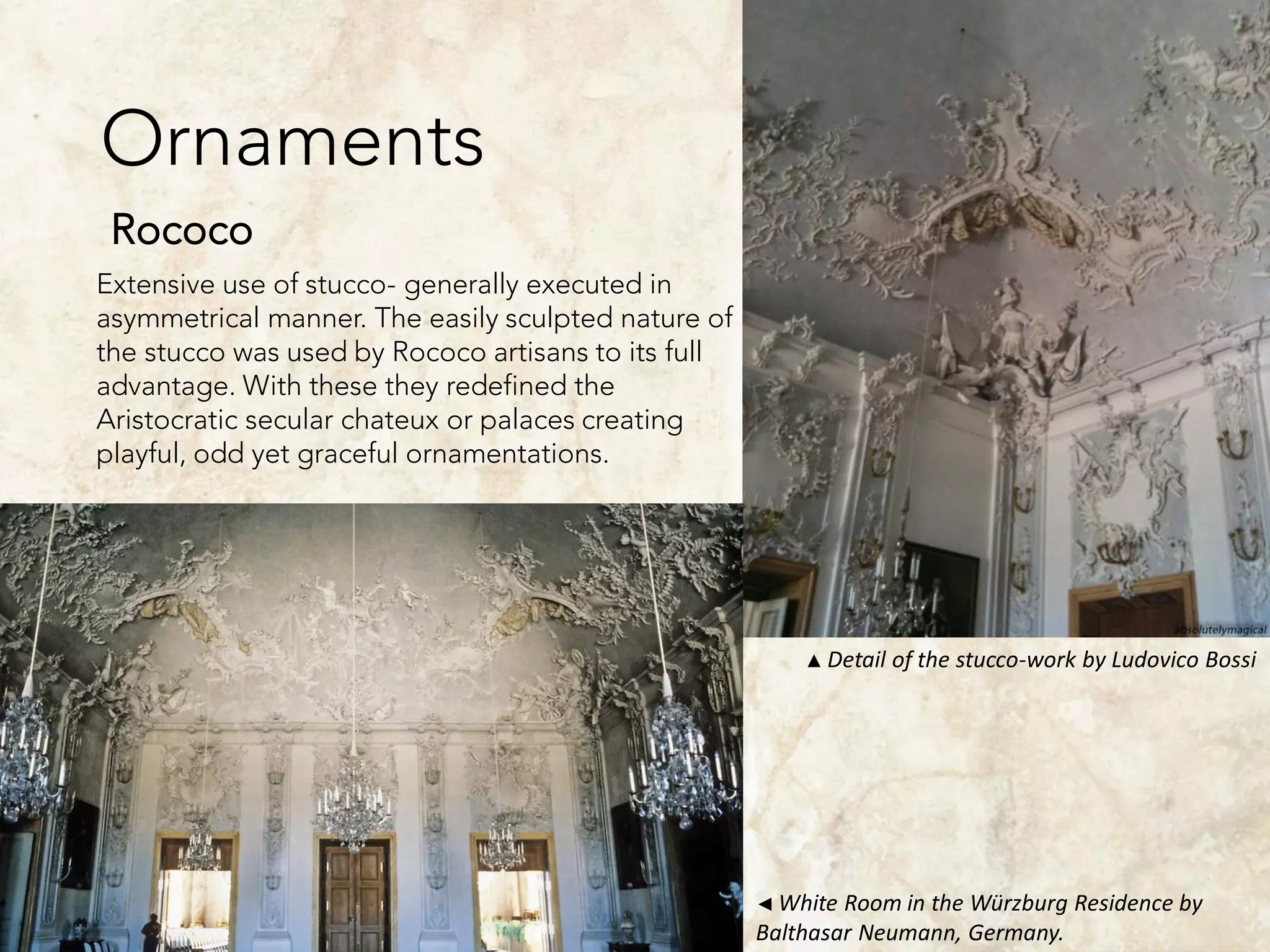
Ornaments
Rococo
Extensive use of stucco- generally executed in
asymmetrical manner. The easily sculpted nature of
the stucco was used by Rococo artisans to its full
advantage. With these they redefined the
Aristocratic secular chateux or palaces creating
playful, odd yet graceful ornamentations.
▲ Detail of the stucco-work by Ludovico Bossi
◄ White Room in the Würzburg Residence by
Balthasar Neumann, Germany.
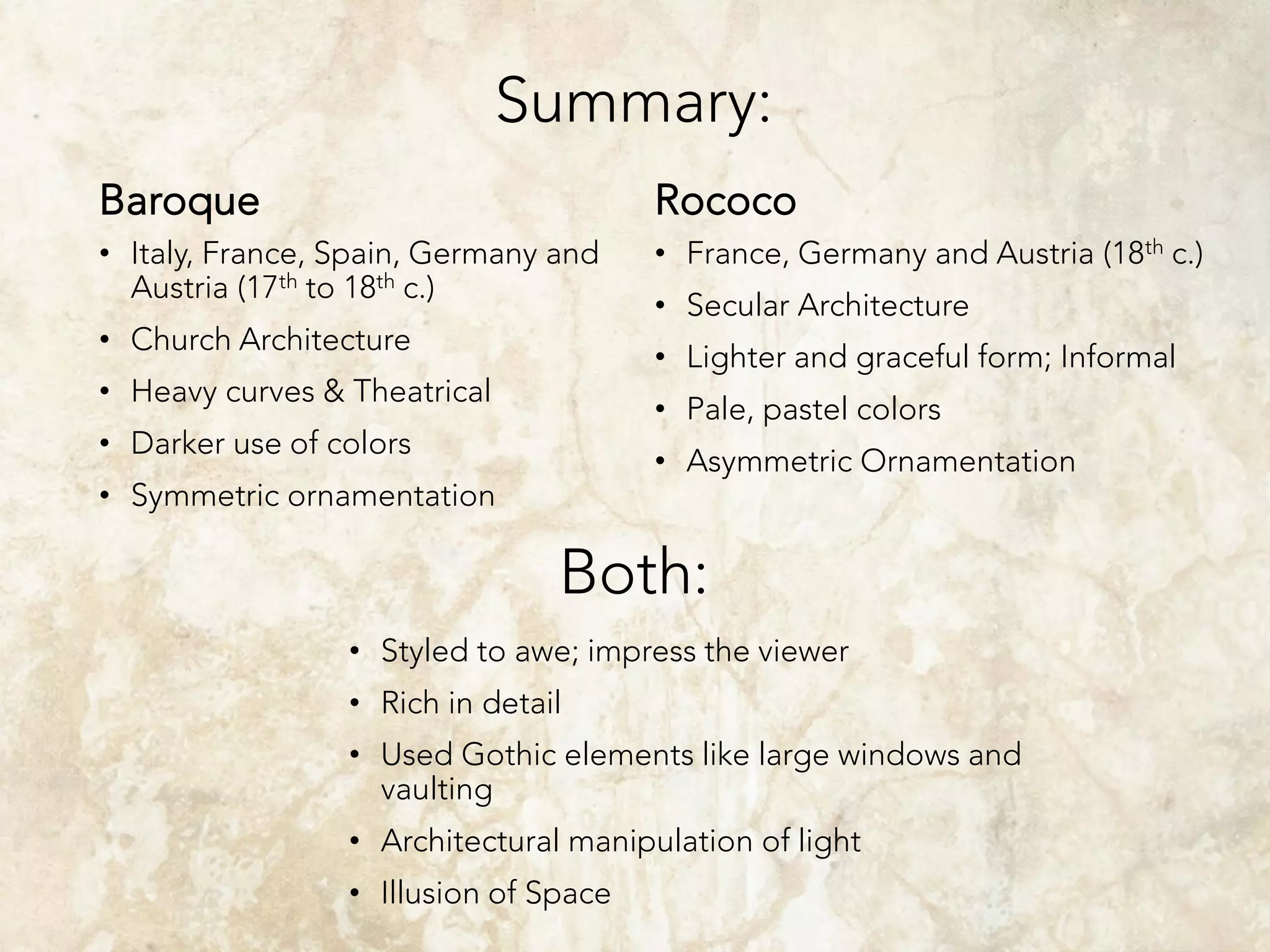
Summary:
Baroque Rococo
• France, Germany and Austria (18th c.)
• Secular Architecture
• Lighter and graceful form; Informal
• Pale, pastel colors
• Asymmetric Ornamentation
• Italy, France, Spain, Germany and
Austria (17th to 18th c.)
• Church Architecture
• Heavy curves & Theatrical
• Darker use of colors
• Symmetric ornamentation
• Styled to awe; impress the viewer
• Rich in detail
• Used Gothic elements like large windows and
vaulting
• Architectural manipulation of light
• Illusion of Space
Both:
END

Comparative Analysis of Baroque and Rococco Architecture

  • 1.
  • 2.
    Plans Baroque ▼ Basilica ofVierzehnheiligen, Germany Rococo The Baroque deviated greatly from the conformist shapes used by the Renaissance, this was part of the Counter-Reformation propaganda of the Church to “re-invent” their image. Both styles used plans ranging from the elliptical to complex geometry. ▼ San Carlo alle Quattro Fontane, Rome, Italy
  • 3.
    Openings Rococo ▲ The domeof the of the Holy Shroud by Guarini Baroque ▲ Left Nave of St. Peter’s Basilica ▲ Asam Church in Munich, Germany
  • 4.
    Walls Baroque Rococo Both architectural styles display dynamismor provokes a sense of ‘’movement”. The undulating motif of the Baroque influenced the latter Rococo style. Rococo uses more lighter, pale colors for the façade and its interiors. The baroque, on the other hand has darker tones. ▲ Sansouci Palace, Germany
  • 5.
  • 6.
  • 7.
    Ornaments Baroque Frescoe Paintings- alsocalled tromp l’oeil (trick to the eye), these were illusionary paintings that used the method of chiaroscuro (contrast between light and dark) to bring about a sense of great height and openness. • Quadratura – Painted on a horizontal surface in illusionistic perspective • Quadro Riportato – Images in illusionary framing • Di Sotto in Su – Painted on a ceiling or dome - upwardly illusionistic ▲ Farnese Palace Galleria, painting done by Annibale Carracci in Quadro Riportato ► Baroque style trompe- l'oeil ceiling in the Church of St. Ignazio in Rome, painted by Andrea Pozzo late 17th century.
  • 8.
    Palazzo Barberini, TheTriumph of Divine Providence by Pietro da Corton
  • 9.
    Ornaments Spanish Baroque Churrigueresque- styleof elaborate sculptural architectural ornament which emerged as a manner of stucco decoration in Spain in the late 17th century ▼ Cathedral of Santiago de Compostela in Spain ▲ Daraga Church, Albay, Philippines
  • 10.
    Ornaments Rococo Frescoe paintings- muchlike the Baroque, but with lighter mood and color. ▲ St. Charles Church, Vienna Asam Church in Munich, Germany
  • 11.
    Ornaments Rococo Extensive use ofstucco- generally executed in asymmetrical manner. The easily sculpted nature of the stucco was used by Rococo artisans to its full advantage. With these they redefined the Aristocratic secular chateux or palaces creating playful, odd yet graceful ornamentations. ▲ Detail of the stucco-work by Ludovico Bossi ◄ White Room in the Würzburg Residence by Balthasar Neumann, Germany.
  • 12.
    Summary: Baroque Rococo • France,Germany and Austria (18th c.) • Secular Architecture • Lighter and graceful form; Informal • Pale, pastel colors • Asymmetric Ornamentation • Italy, France, Spain, Germany and Austria (17th to 18th c.) • Church Architecture • Heavy curves & Theatrical • Darker use of colors • Symmetric ornamentation • Styled to awe; impress the viewer • Rich in detail • Used Gothic elements like large windows and vaulting • Architectural manipulation of light • Illusion of Space Both:
  • 13.