

We all love stories
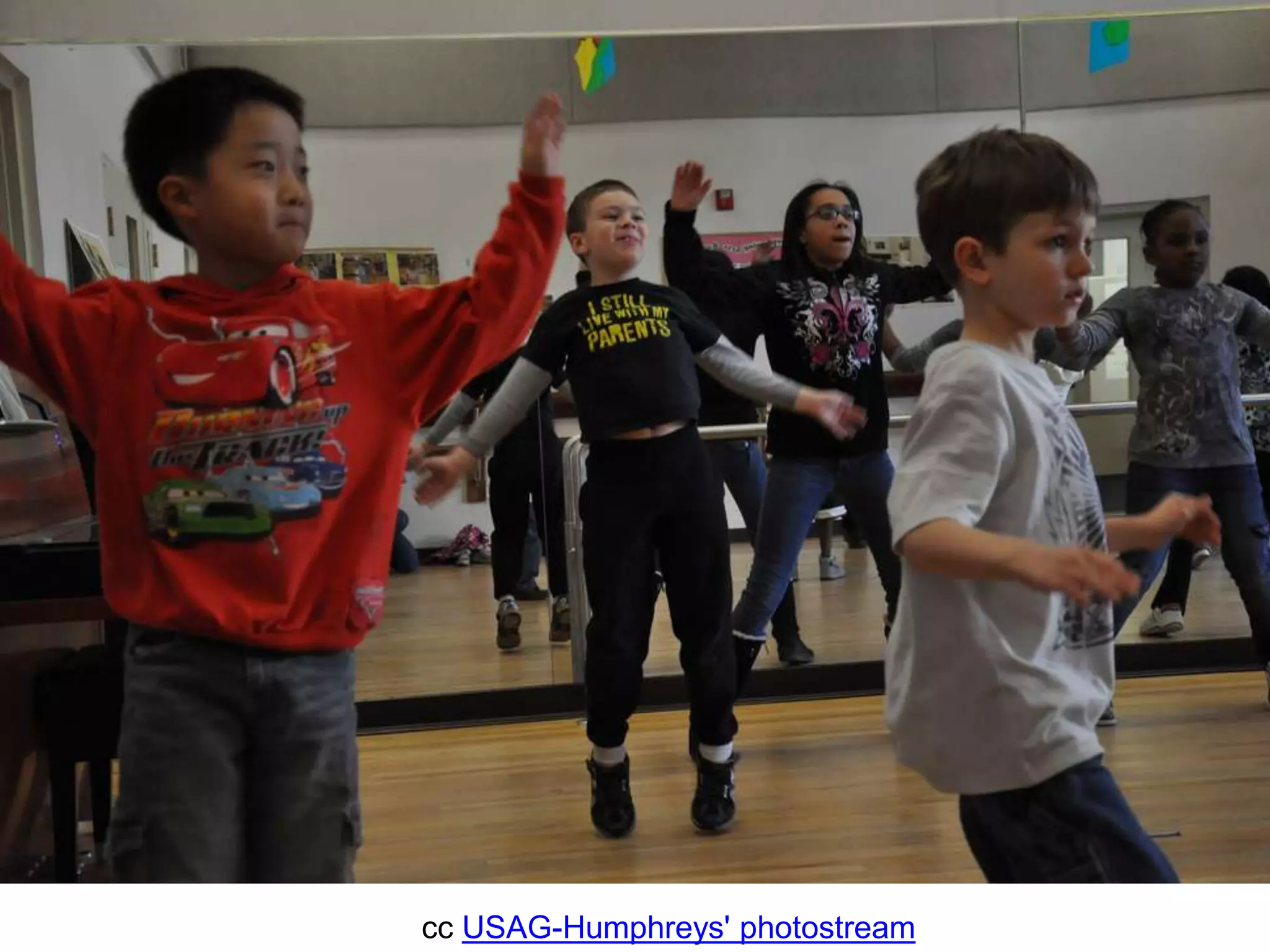
What are the
characteristics of
our target audience?
cc USAG-Humphreys' photostream
Types of stories
folktales, fairy
tales, fables, myths, legends,
adventure, fantasy, family, a
nimal, tall tales, trickster
tales, scary stories… (the list
goes on)
Examples of what children need when they are
learning to read (from Sheila Drew)
• Enjoyable stories
• Authentic contexts, not contrived by adults
• Rich visual images that make sense and can support the
reading of the text
• Play with words and sounds
• Not necessarily ‘real’, but logically developed – 'nonsense that
makes sense‘
• Text that has visual qualities
• ‘Matching relations’ – rhyme, rhythm, repetition, similar
elements, different elements, setting rules and breaking them
etc.
• Suspense and danger (can be frightened / take risks within
the safety of the story)
• Beginning, middle and end … always?
Finding inspiration
for a story
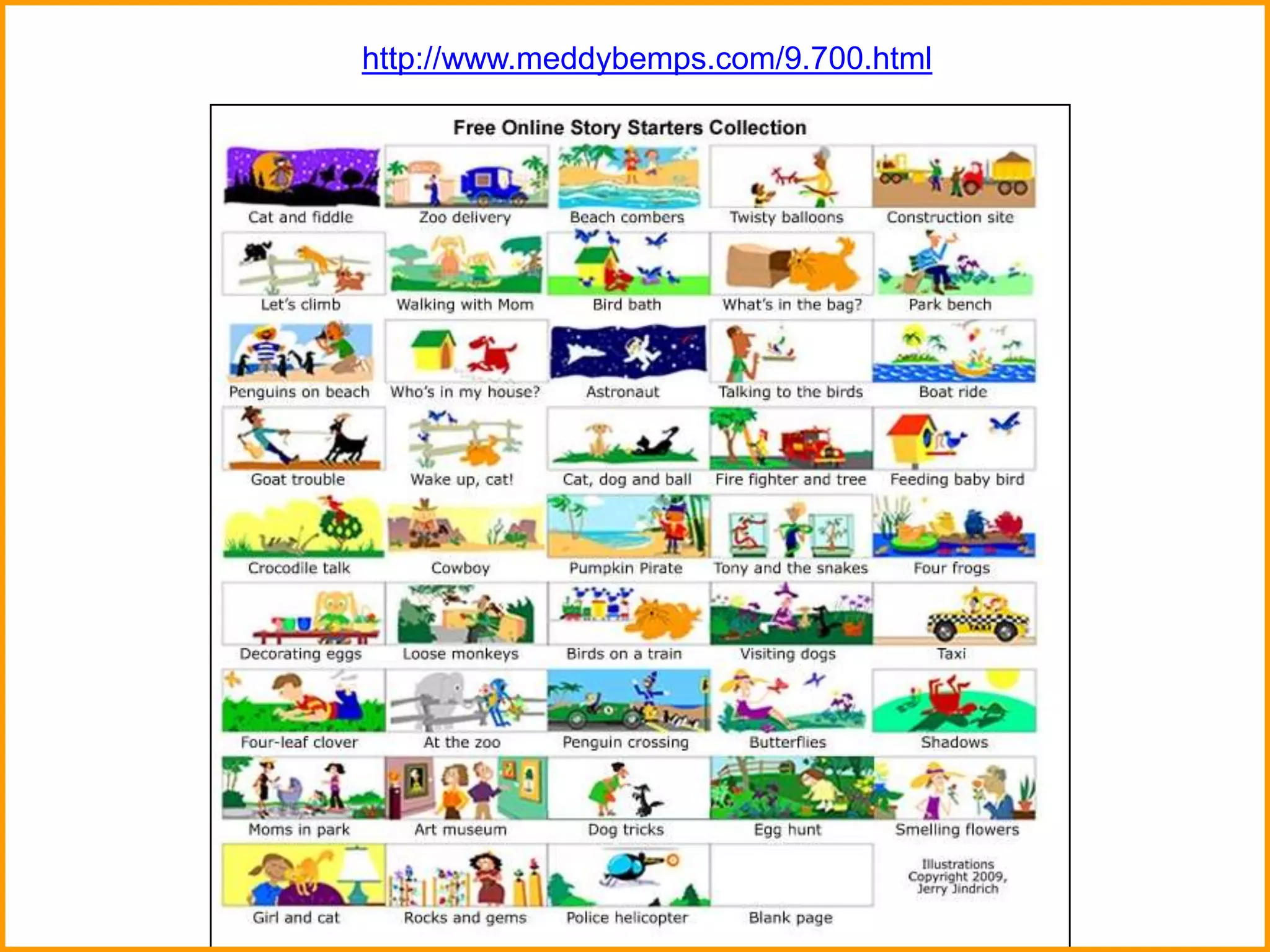
http://www.meddybemps.com/9.700.html
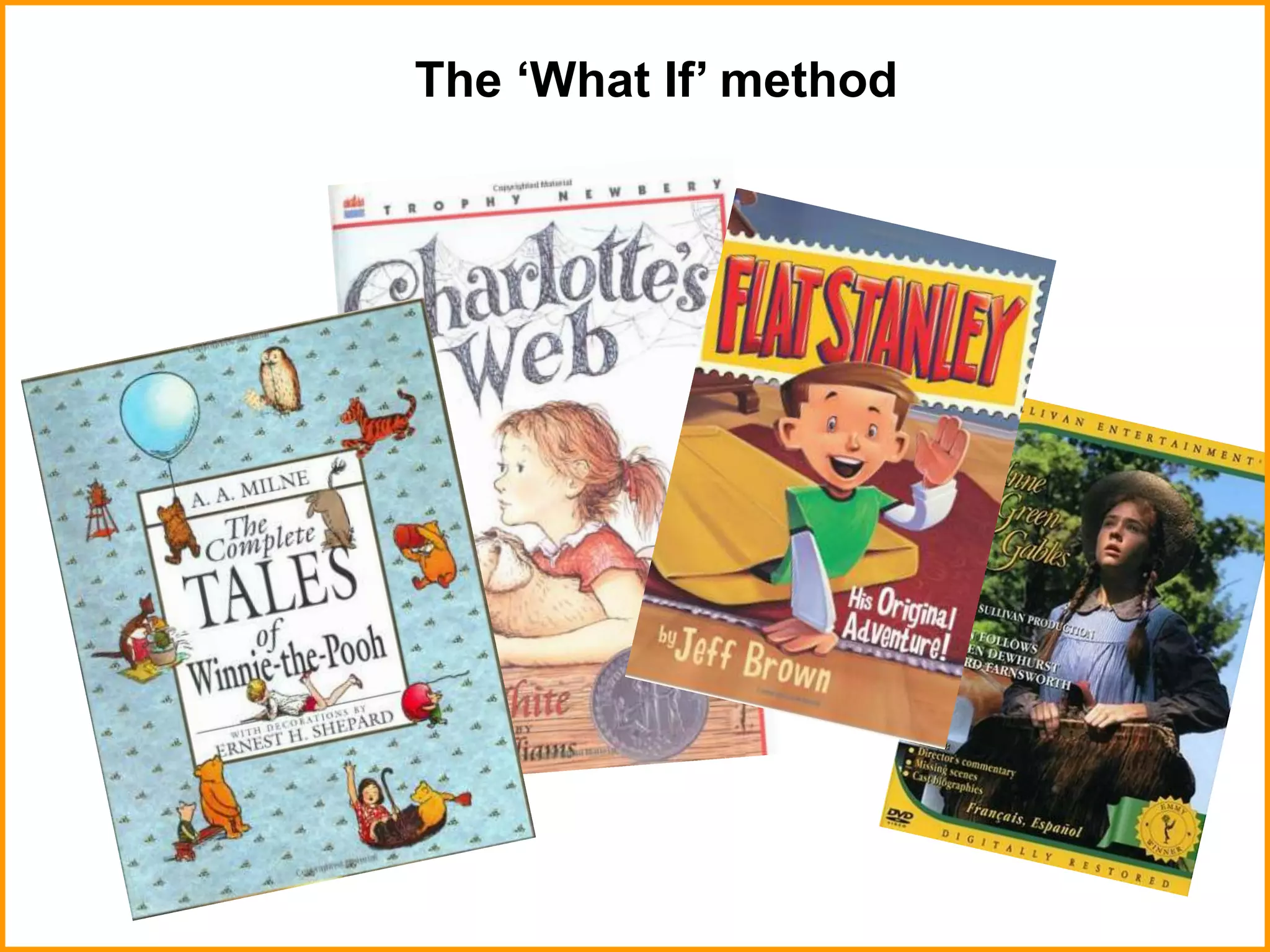
The ‘What If’ method
An example of using
‘free writing’ with
a class
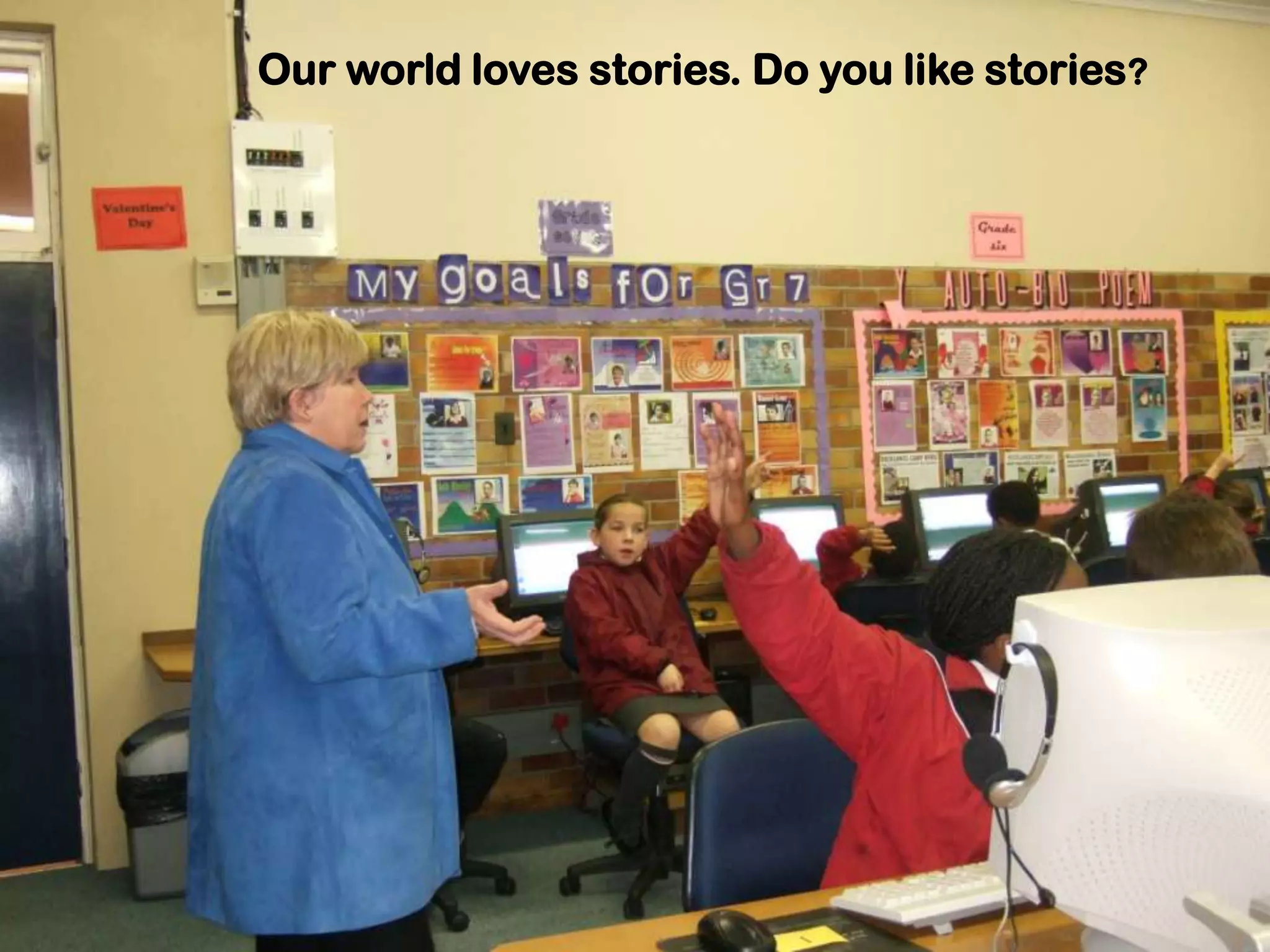
Our world loves stories. Do you like stories?
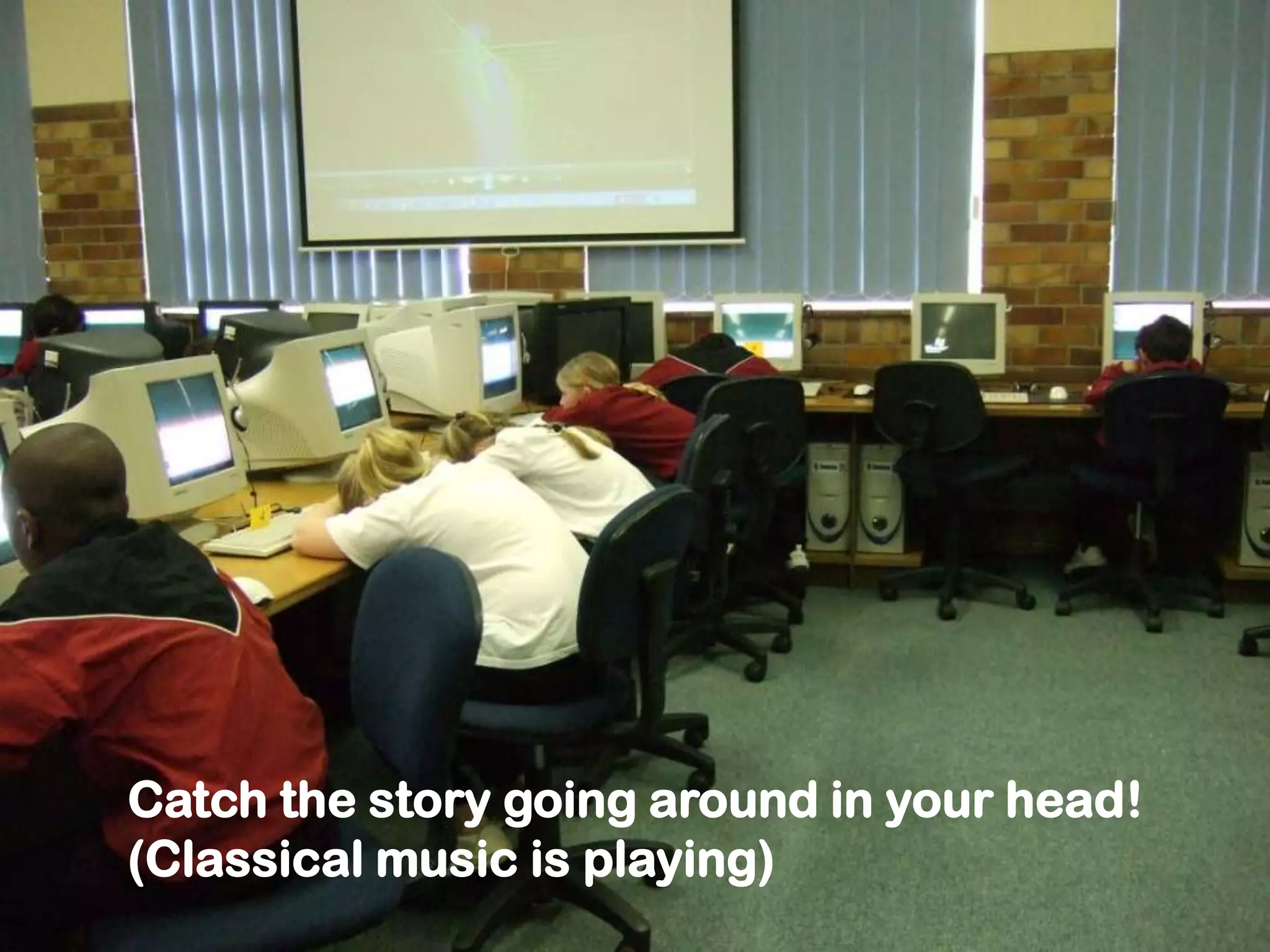
Catch the story going around in your head!
(Classical music is playing)
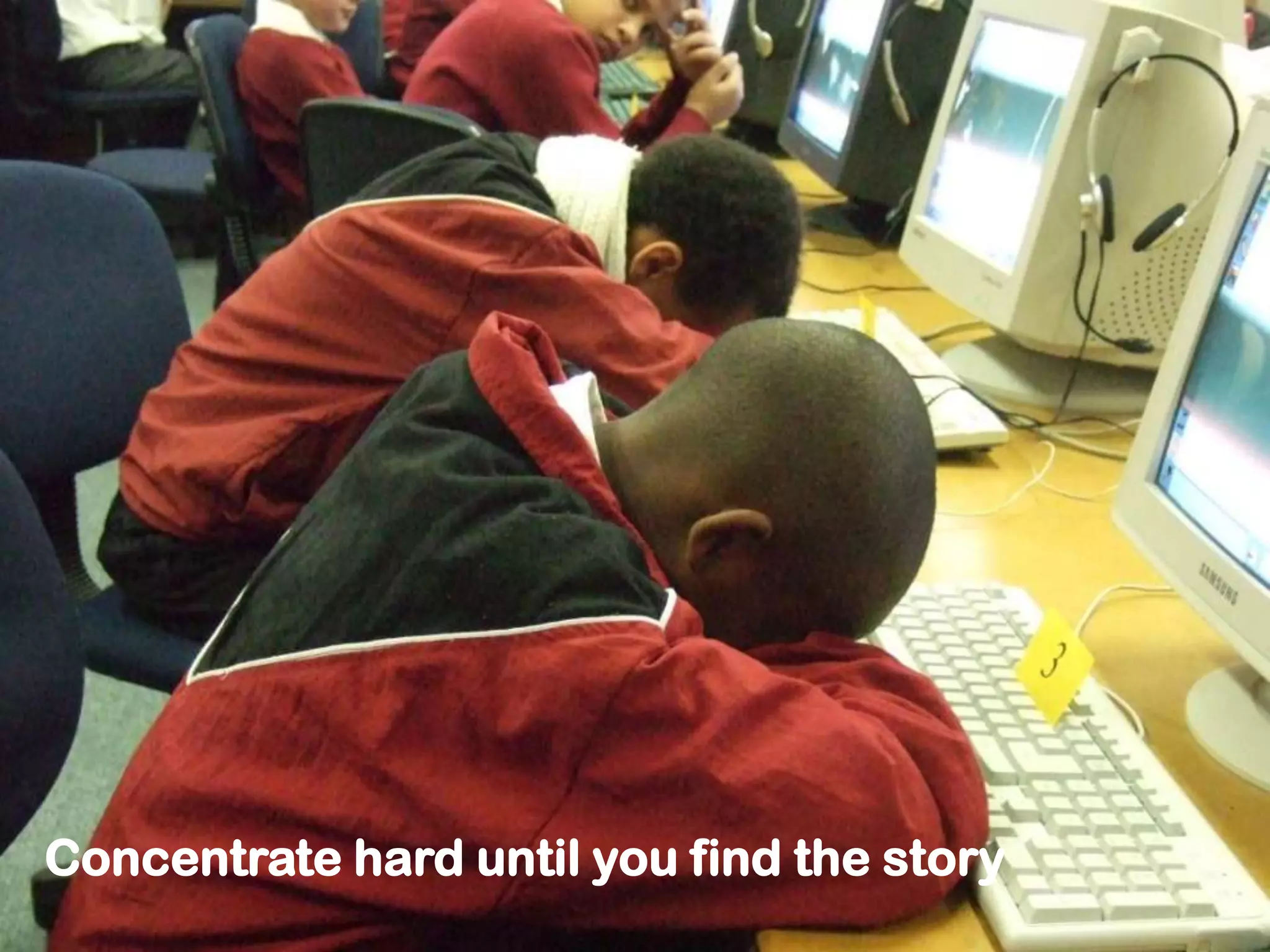
Concentrate hard until you find the story
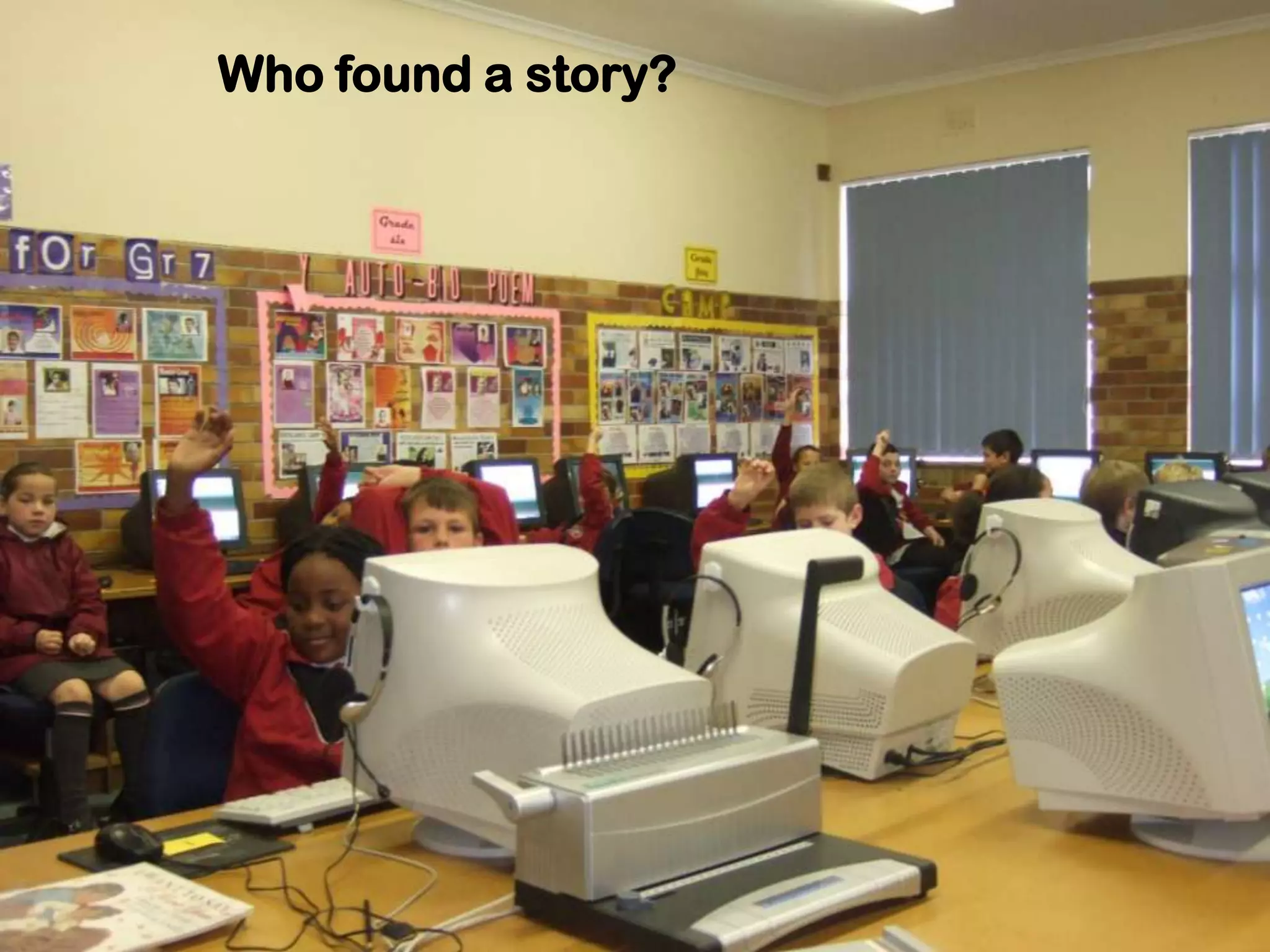
Who found a story?
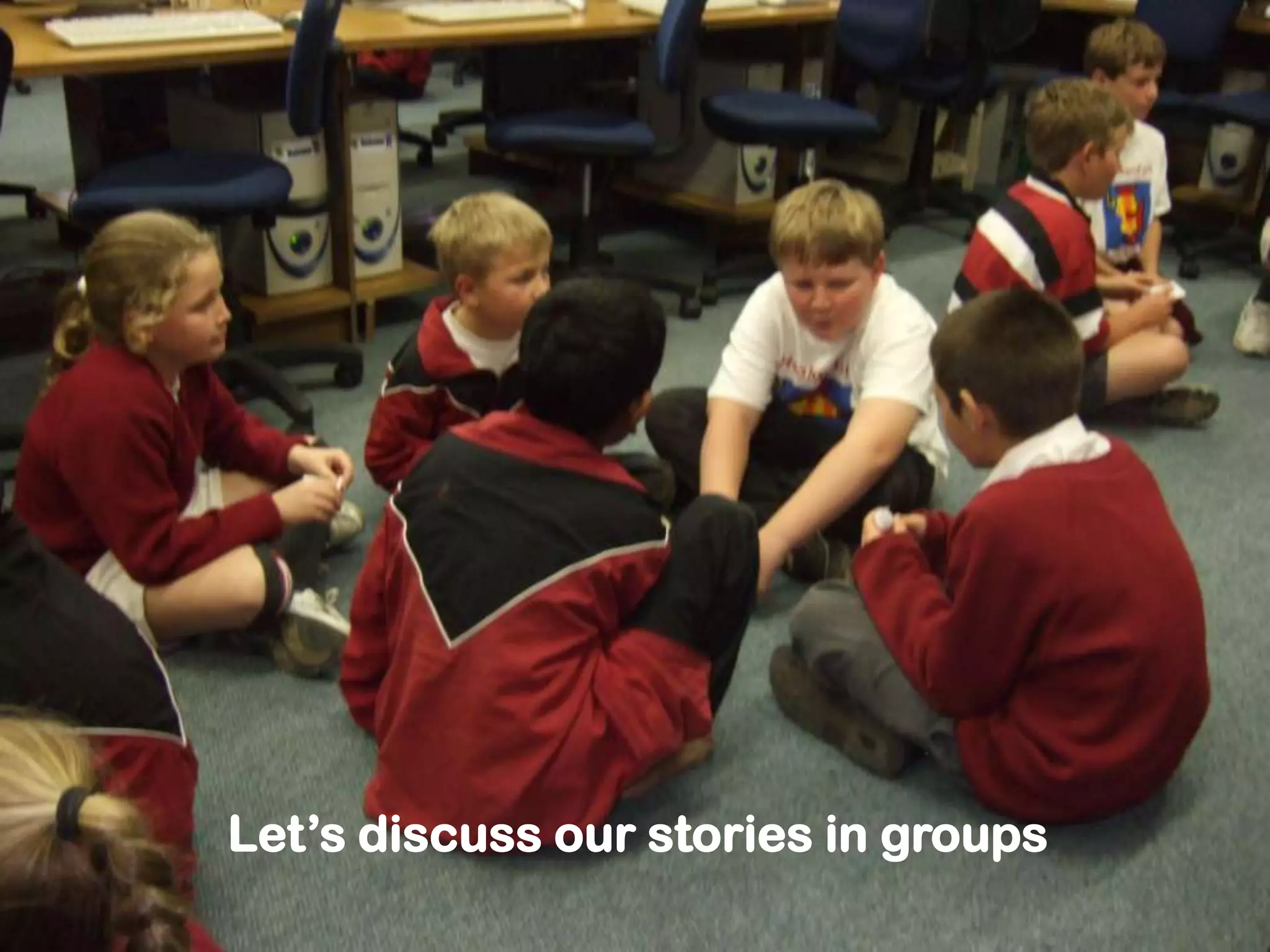
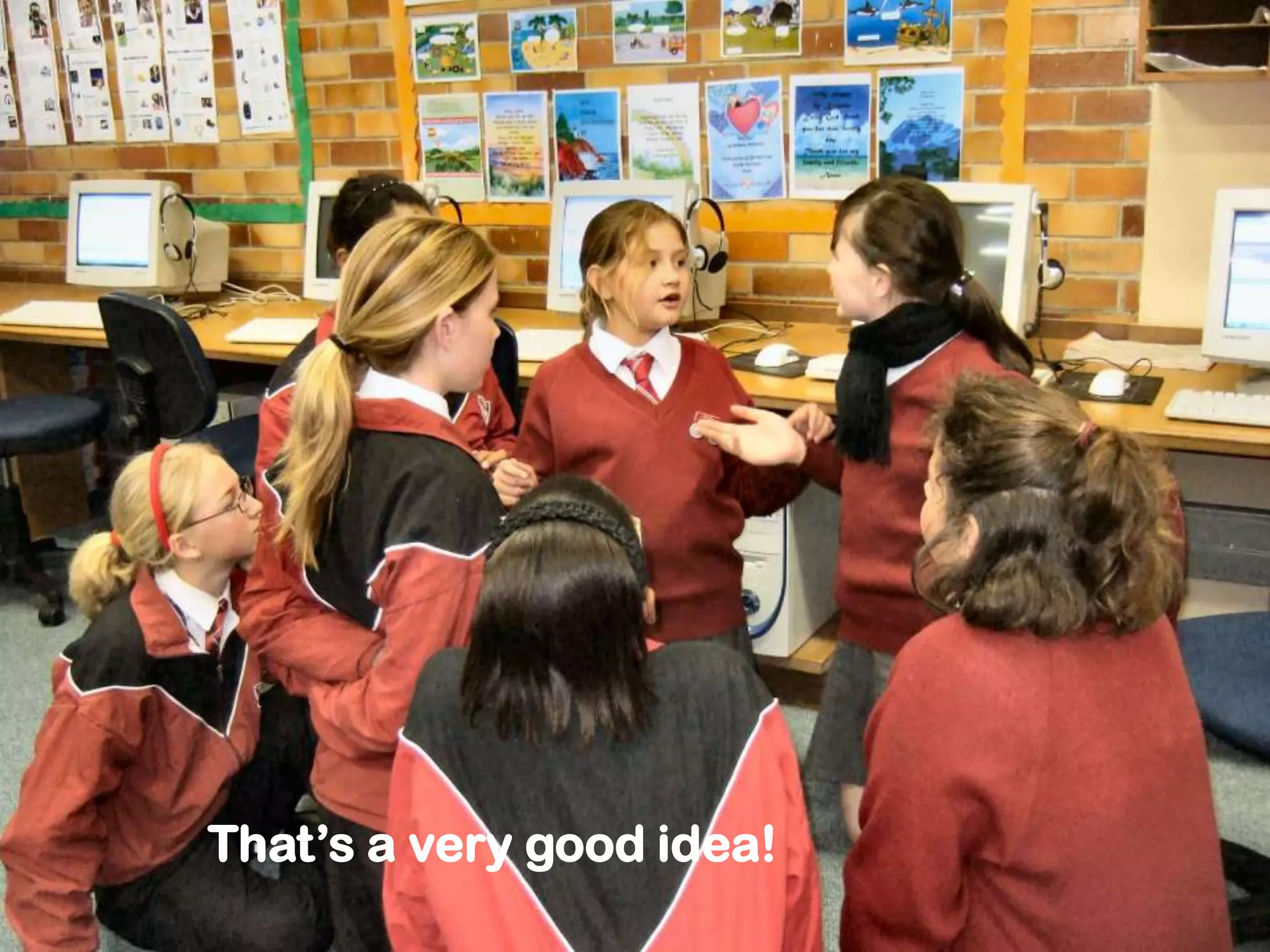
Let’s discuss our stories in groups
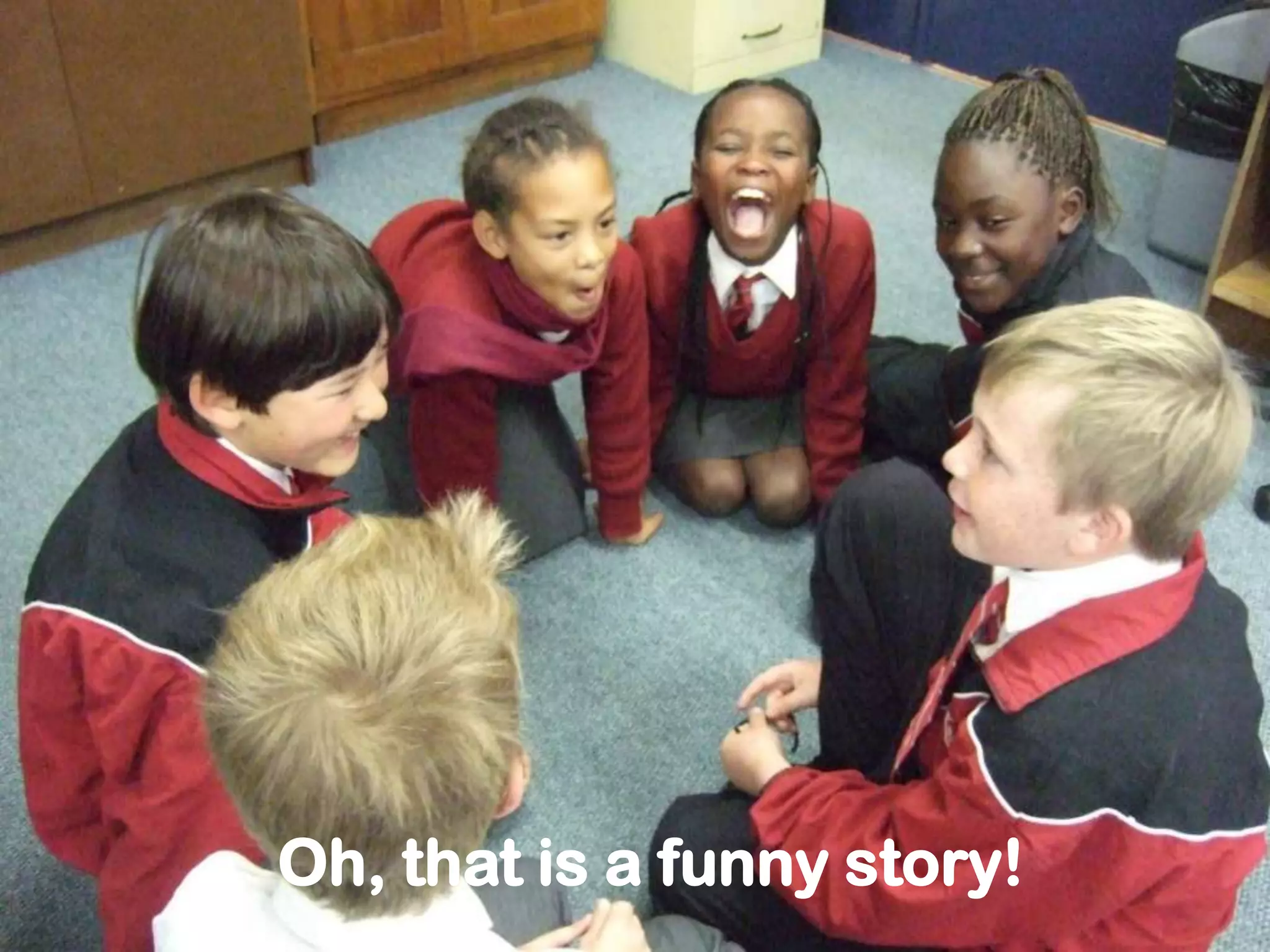
Oh, that is a funny story!
That’s a very good idea!
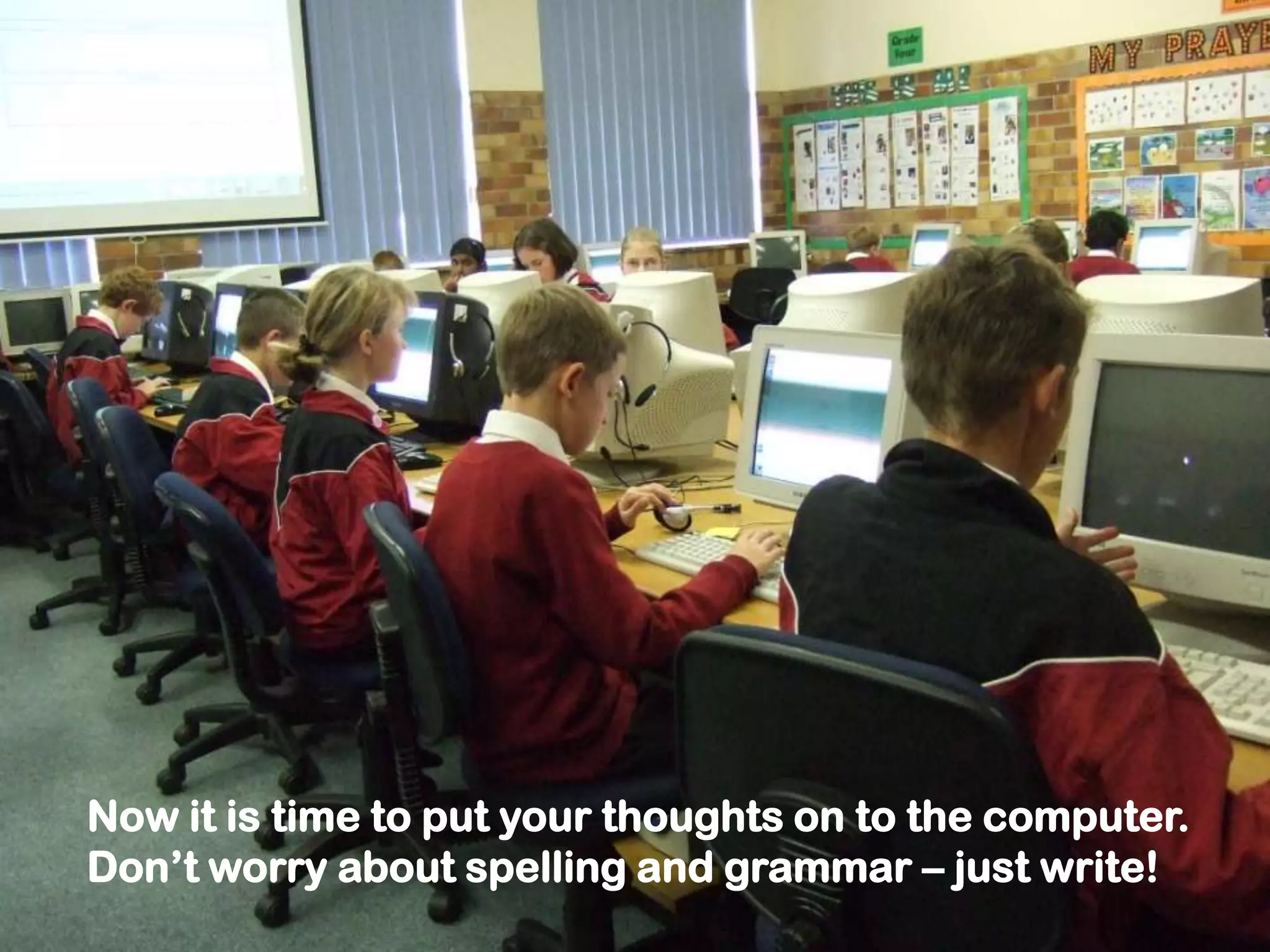
Now it is time to put your thoughts on to the computer.
Don’t worry about spelling and grammar – just write!
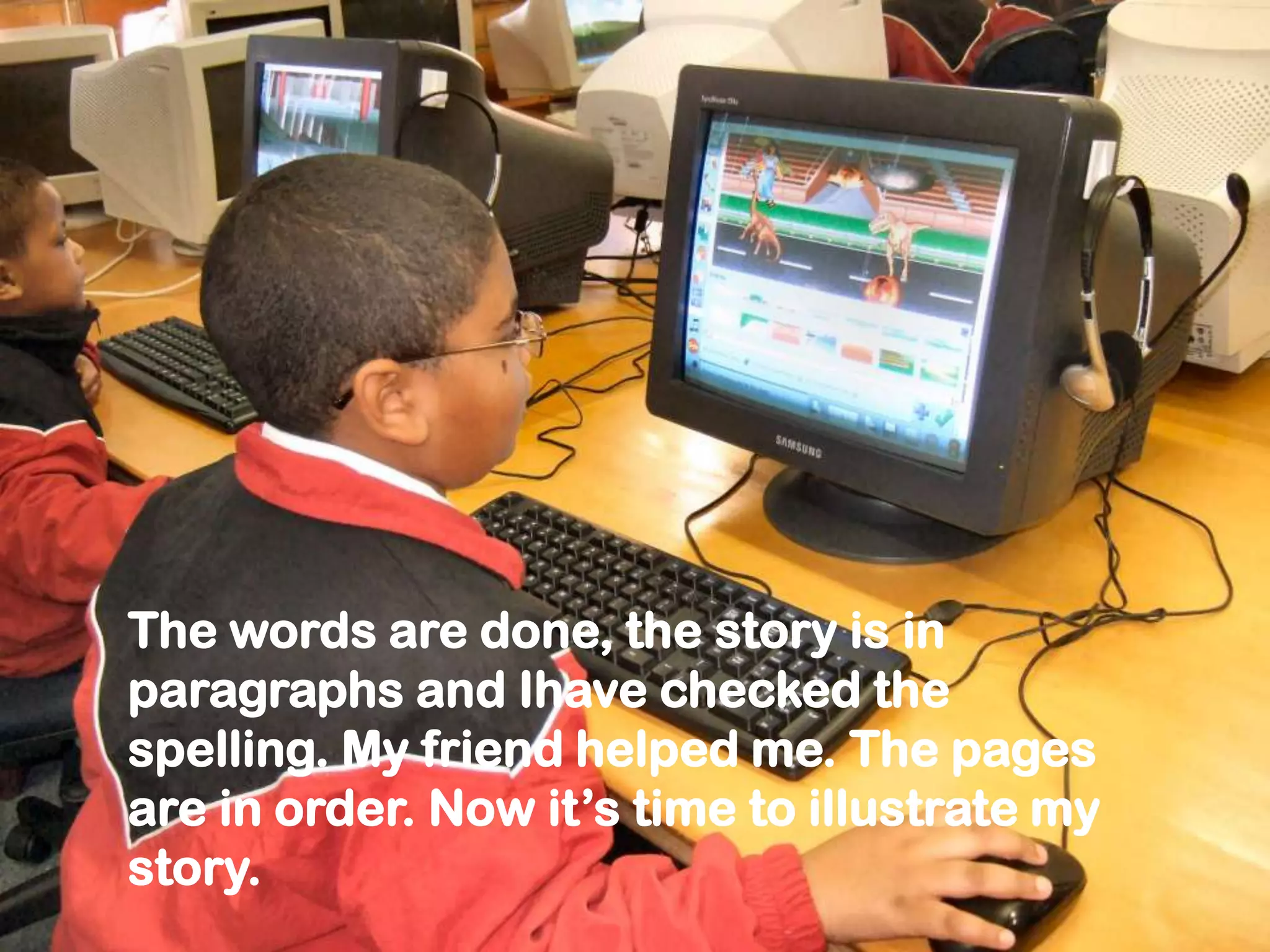
The words are done, the story is in
paragraphs and Ihave checked the
spelling. My friend helped me. The pages
are in order. Now it’s time to illustrate my
story.
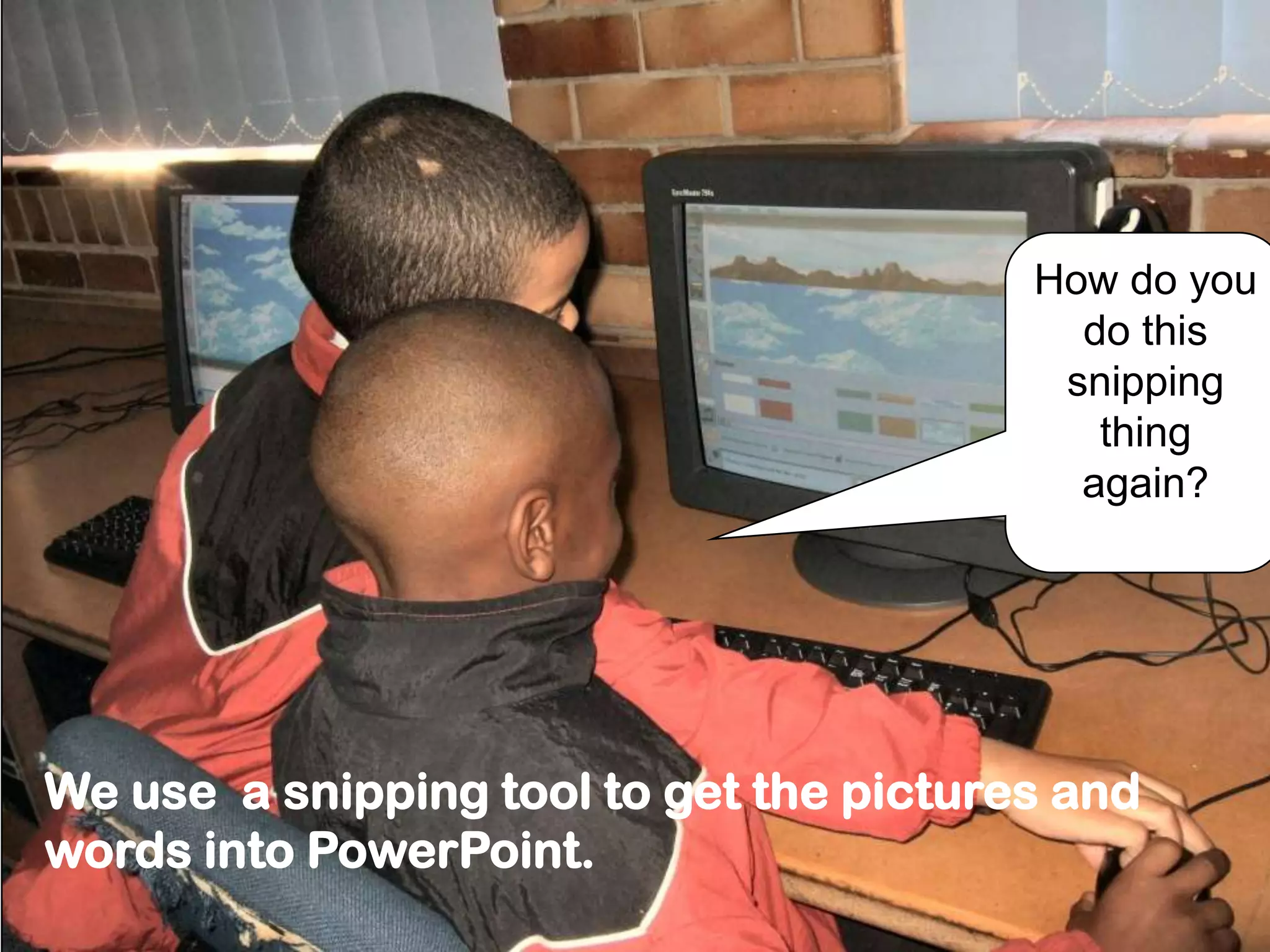
How do you
do this
snipping
thing
again?
We use a snipping tool to get the pictures and
words into PowerPoint.
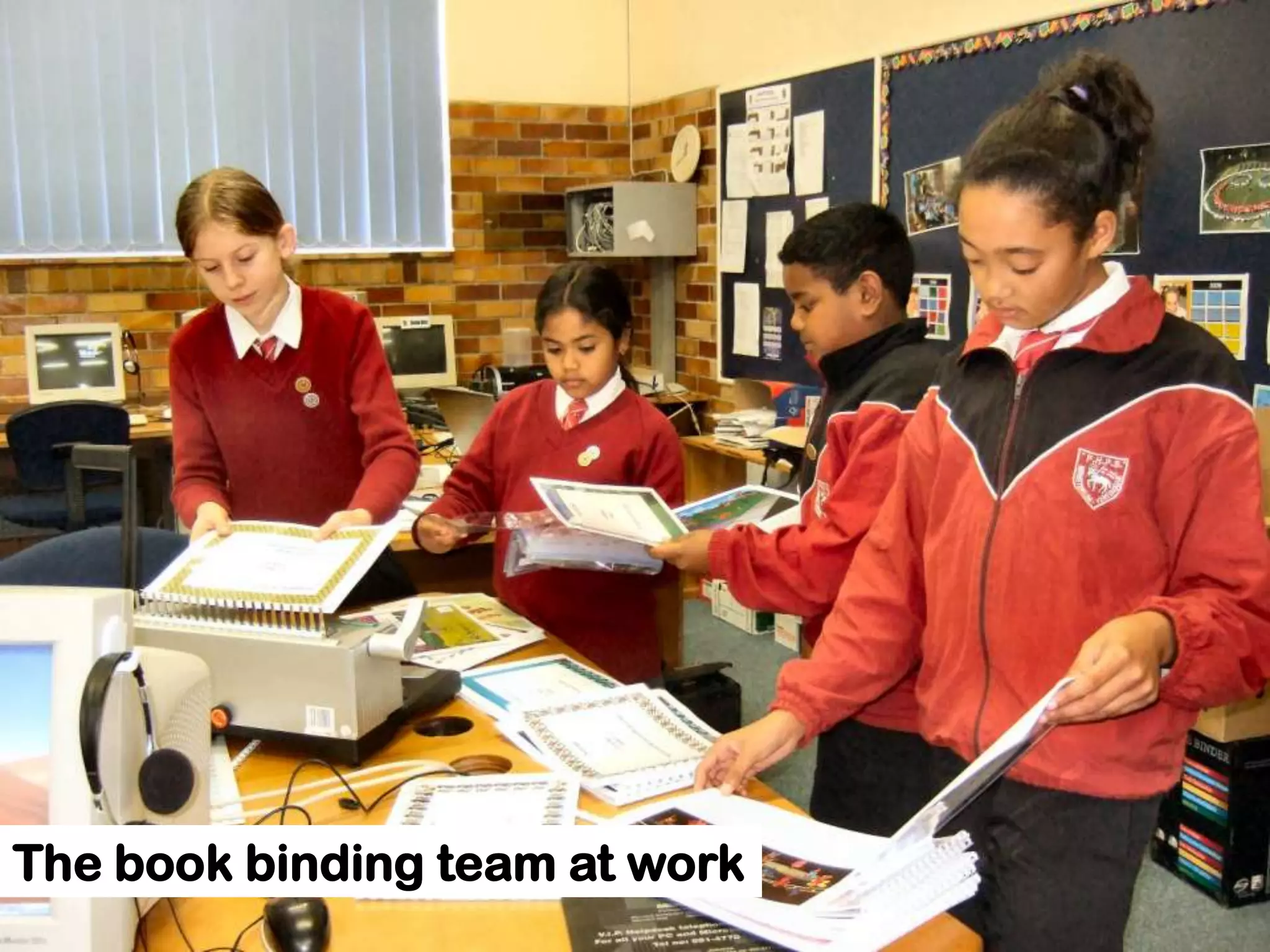
The book binding team at work
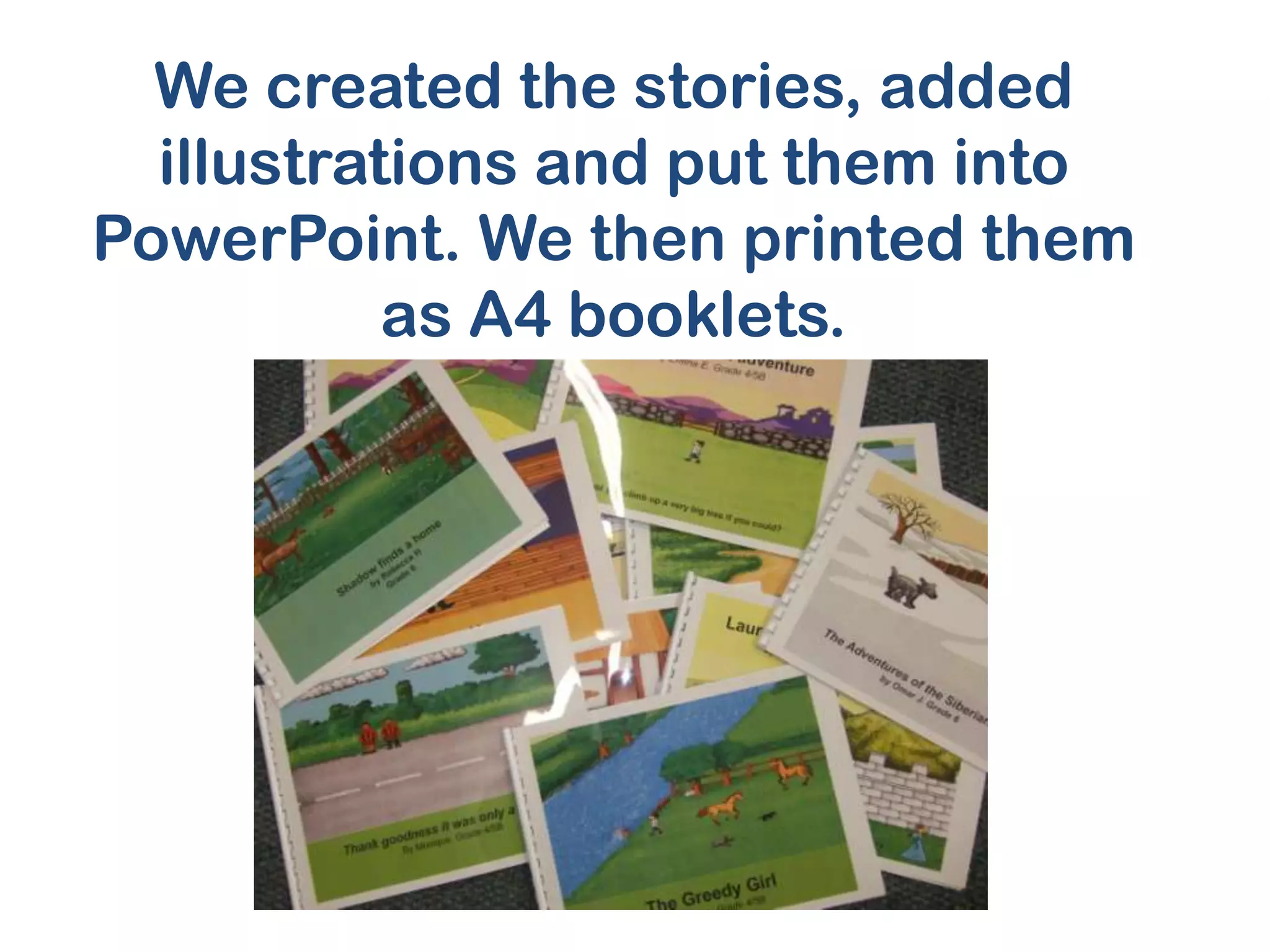
We created the stories, added
illustrations and put them into
PowerPoint. We then printed them
as A4 booklets.
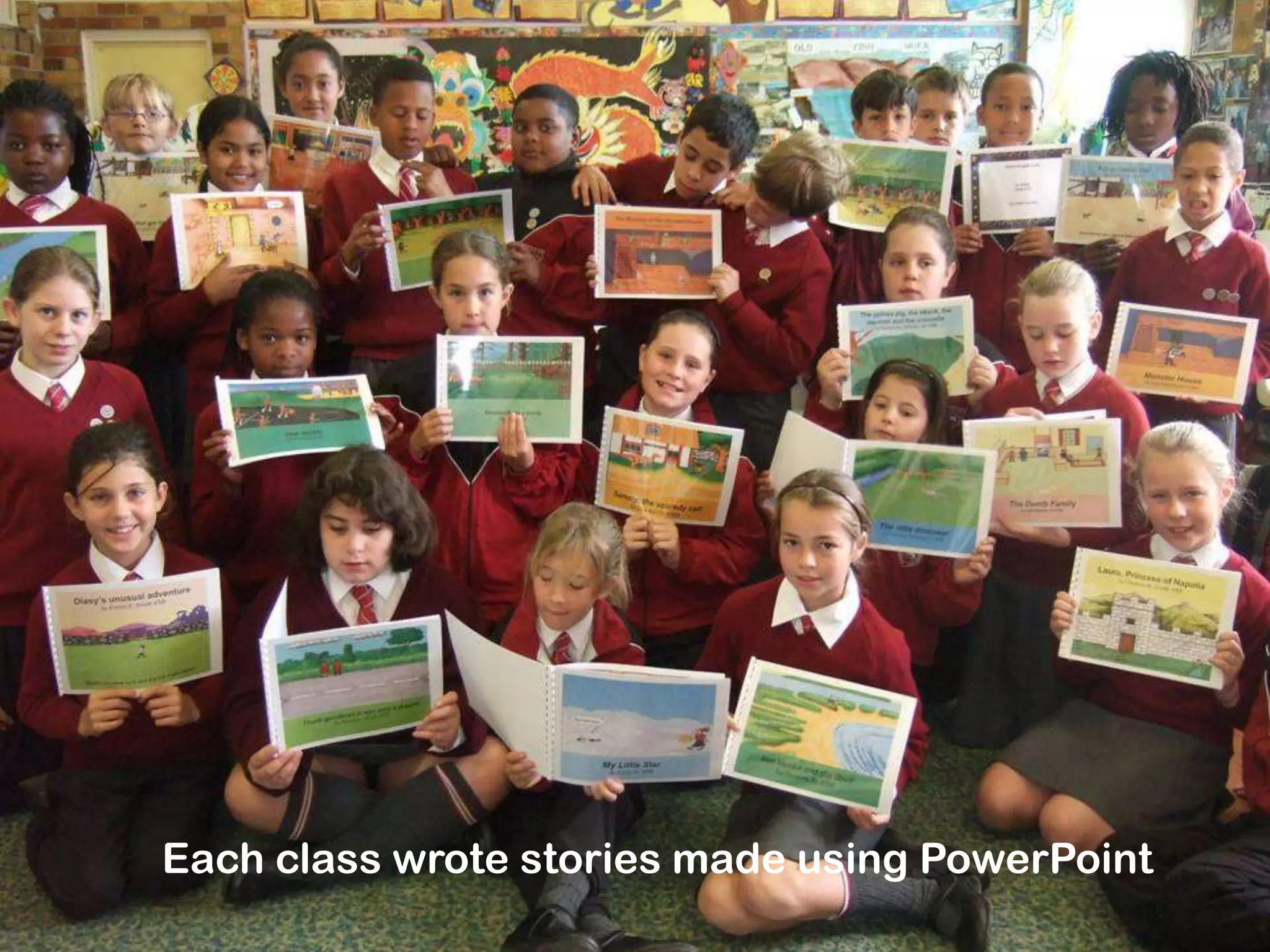
Each class wrote stories made using PowerPoint
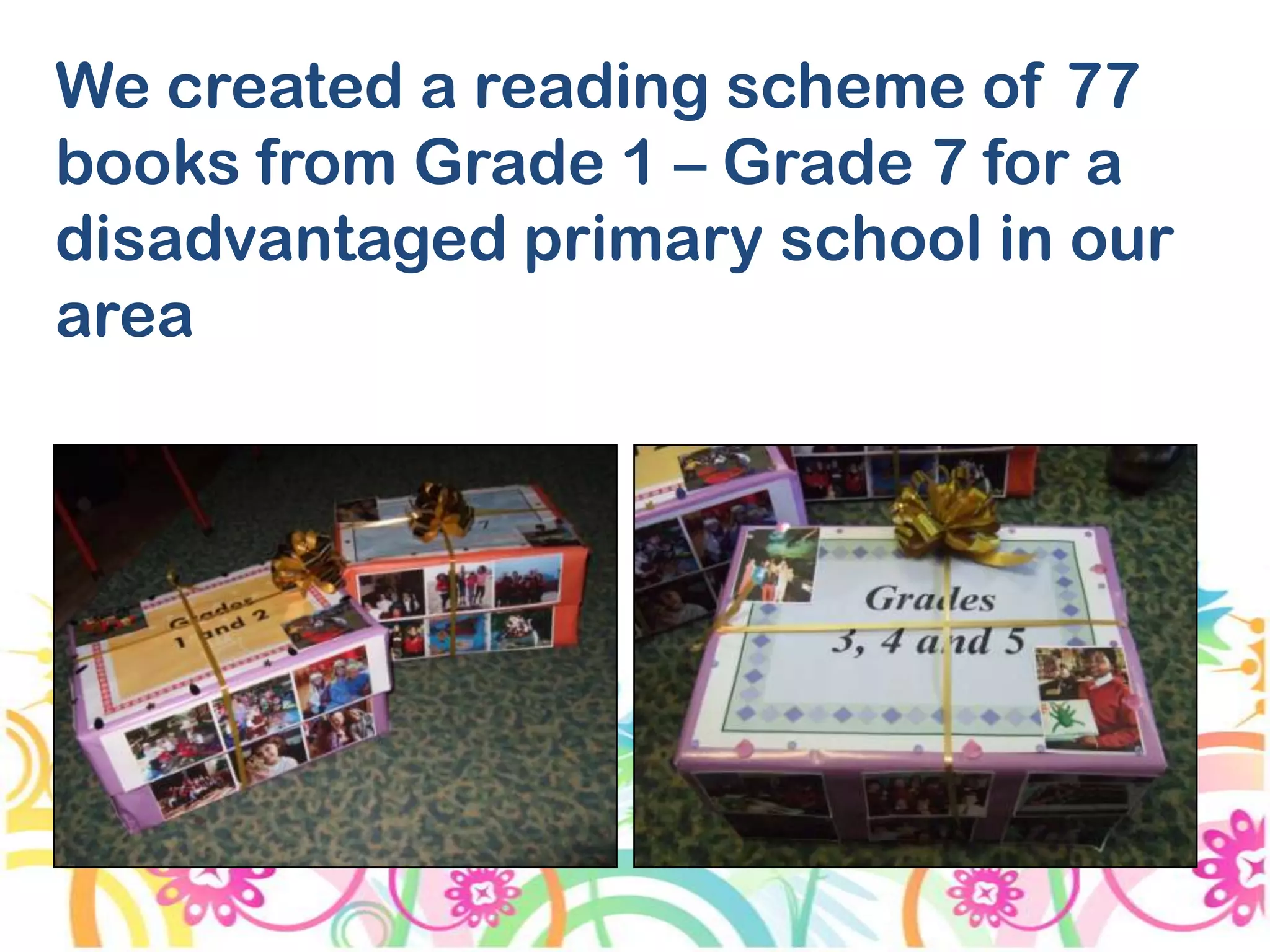
We created a reading scheme of 77
books from Grade 1 – Grade 7 for a
disadvantaged primary school in our
area
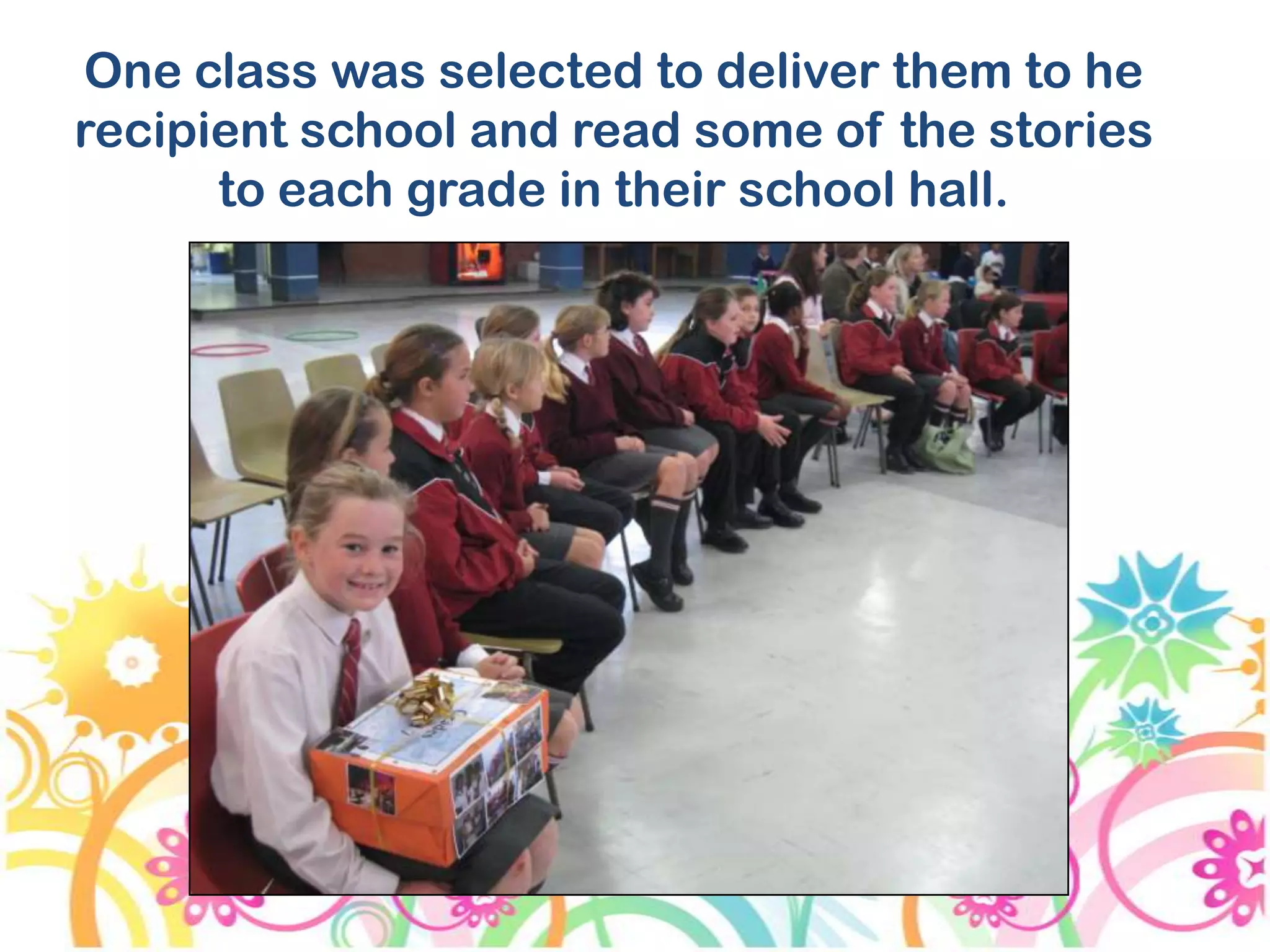
One class was selected to deliver them to he
recipient school and read some of the stories
to each grade in their school hall.
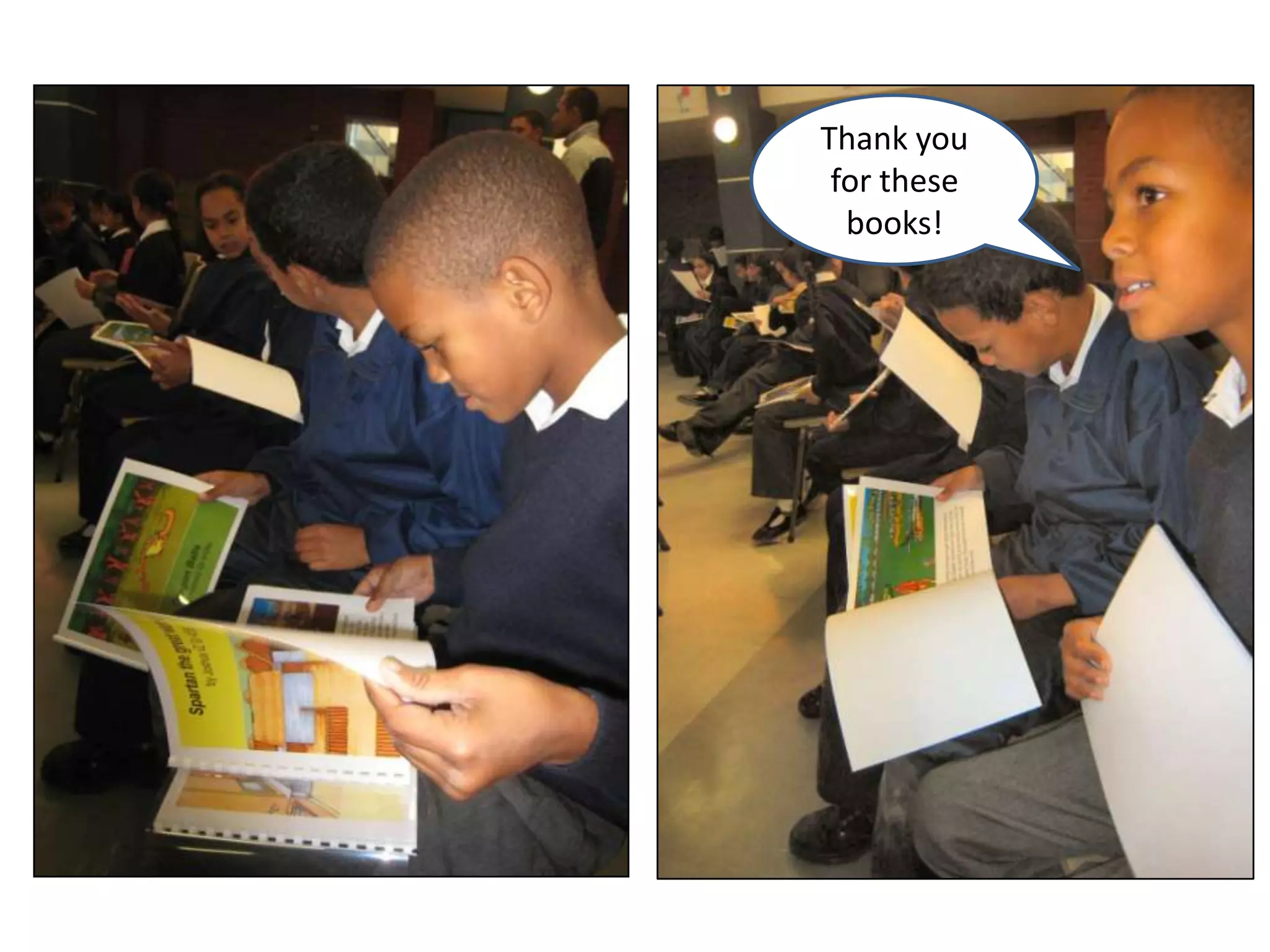
Thank you
for these
books!
Adding structure to
your story
The main elements of a
story in a simple form
Plot
Character/s
Conflict and resolution
Theme
Setting
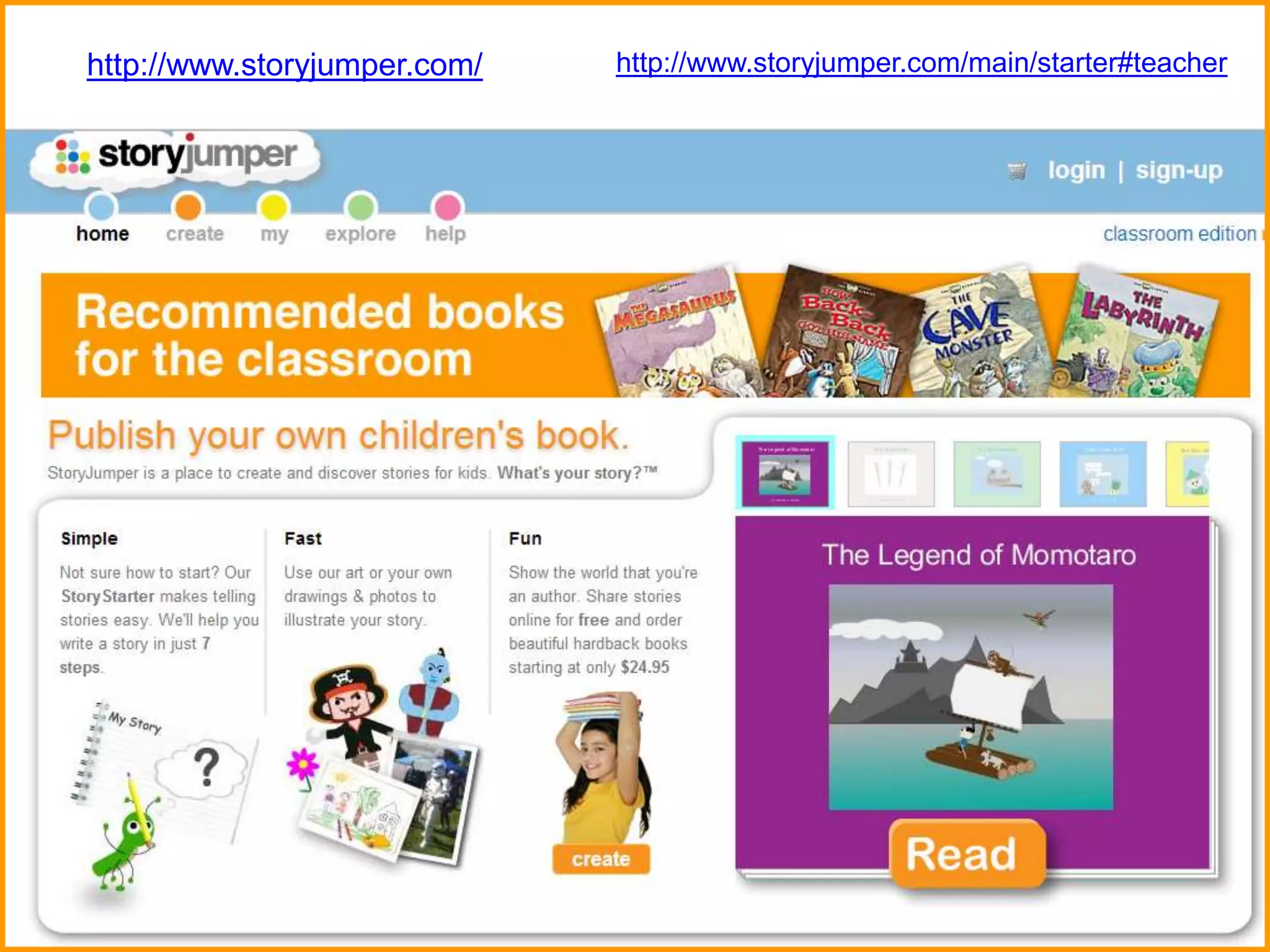
http://www.storyjumper.com/ http://www.storyjumper.com/main/starter#teacher
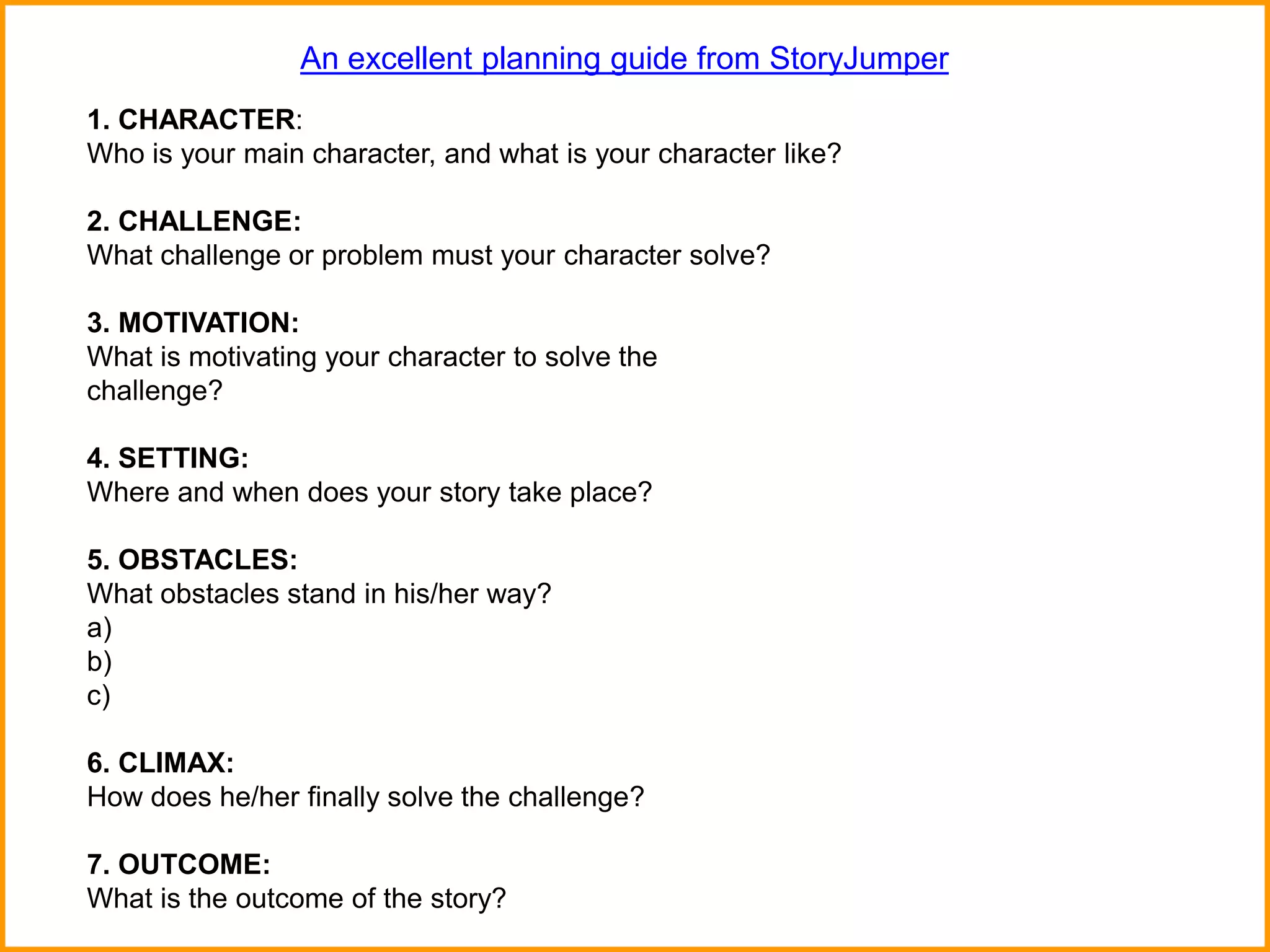
1. CHARACTER:
Who is your main character, and what is your character like?
2. CHALLENGE:
What challenge or problem must your character solve?
3. MOTIVATION:
What is motivating your character to solve the
challenge?
4. SETTING:
Where and when does your story take place?
5. OBSTACLES:
What obstacles stand in his/her way?
a)
b)
c)
6. CLIMAX:
How does he/her finally solve the challenge?
7. OUTCOME:
What is the outcome of the story?
An excellent planning guide from StoryJumper
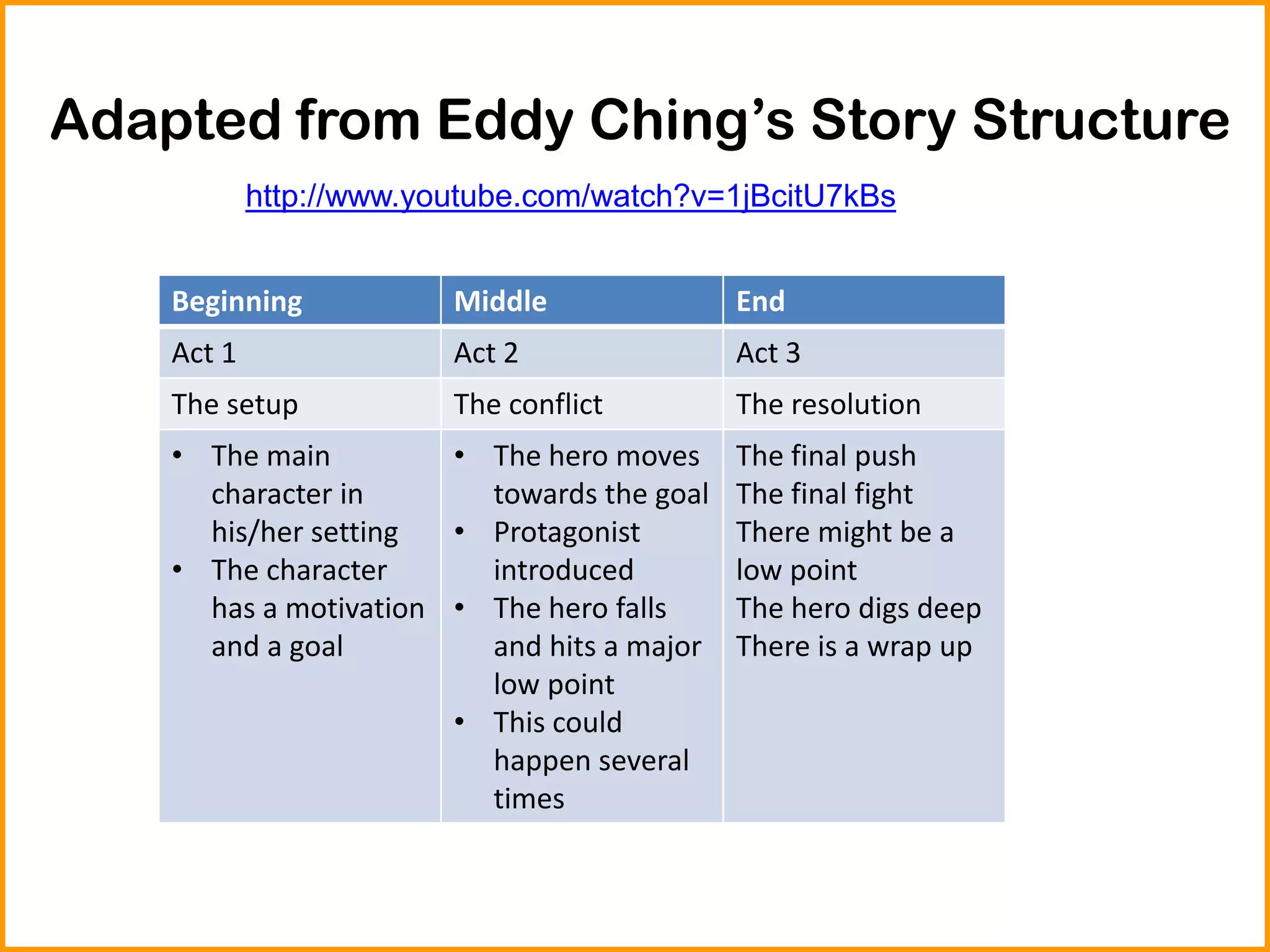
Beginning Middle End
Act 1 Act 2 Act 3
The setup The conflict The resolution
• The main
character in
his/her setting
• The character
has a motivation
and a goal
• The hero moves
towards the goal
• Protagonist
introduced
• The hero falls
and hits a major
low point
• This could
happen several
times
The final push
The final fight
There might be a
low point
The hero digs deep
There is a wrap up
Adapted from Eddy Ching’s Story Structure
http://www.youtube.com/watch?v=1jBcitU7kBs
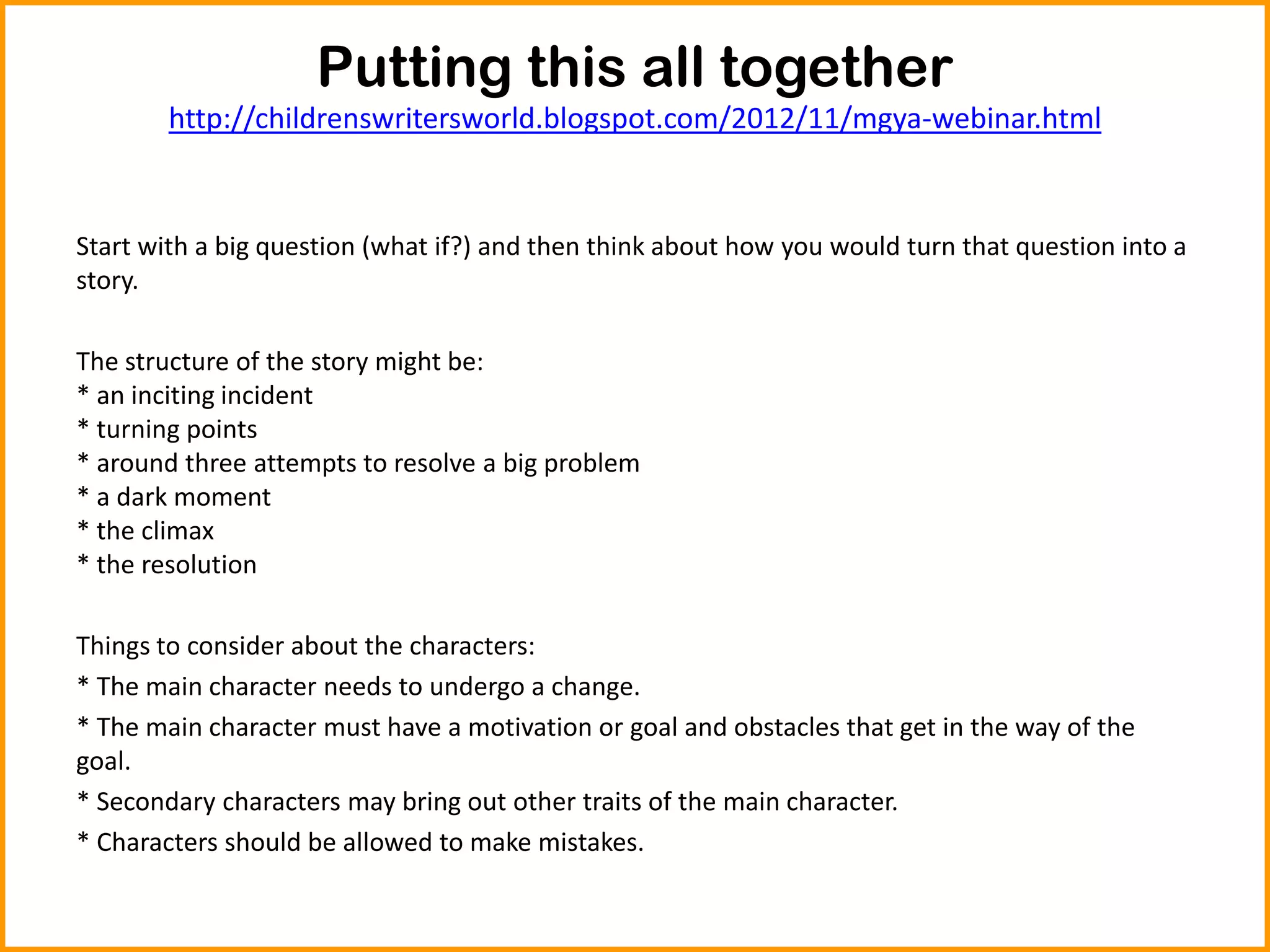
Putting this all together
http://childrenswritersworld.blogspot.com/2012/11/mgya-webinar.html
Start with a big question (what if?) and then think about how you would turn that question into a
story.
The structure of the story might be:
* an inciting incident
* turning points
* around three attempts to resolve a big problem
* a dark moment
* the climax
* the resolution
Things to consider about the characters:
* The main character needs to undergo a change.
* The main character must have a motivation or goal and obstacles that get in the way of the
goal.
* Secondary characters may bring out other traits of the main character.
* Characters should be allowed to make mistakes.
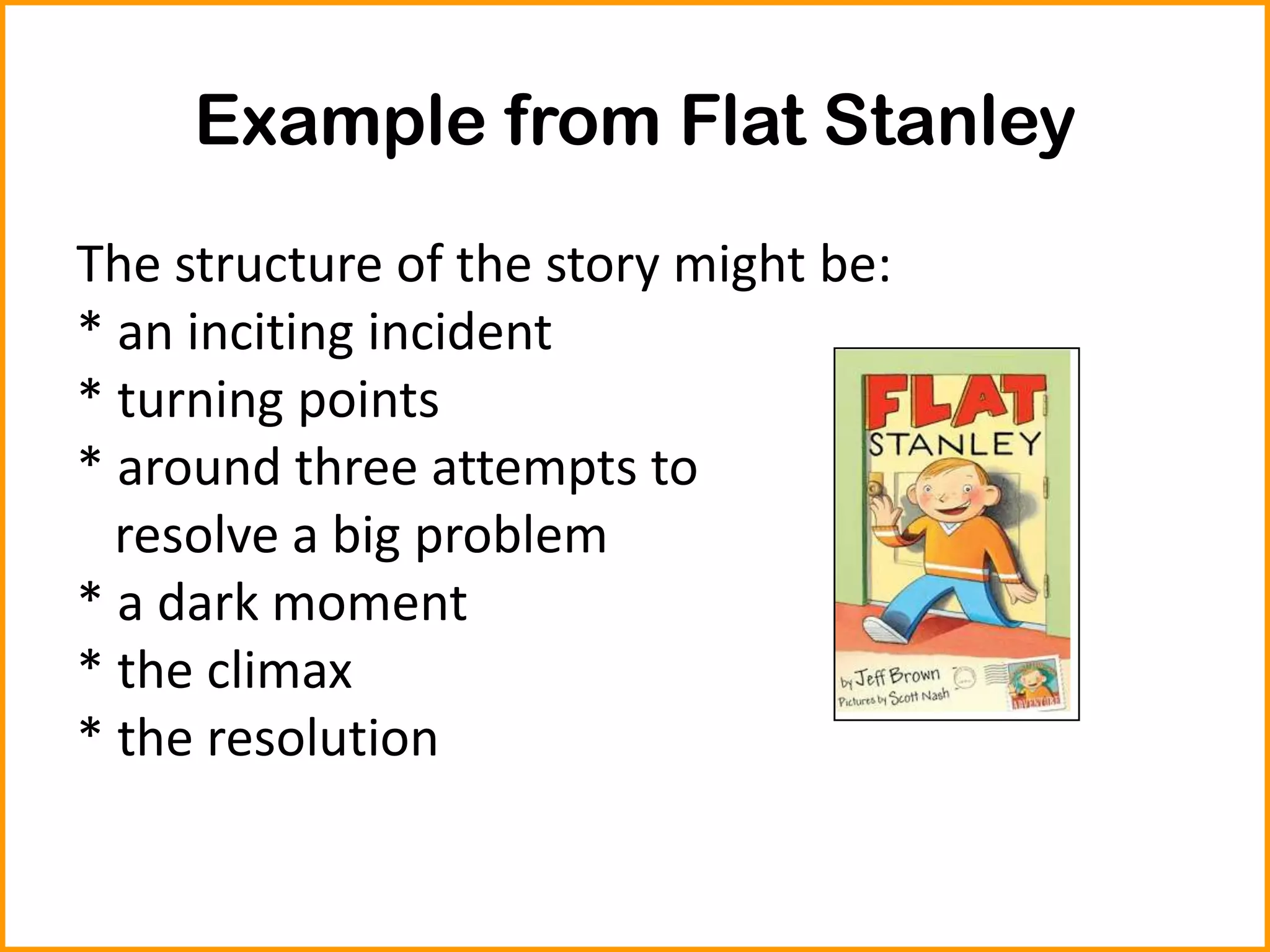
Example from Flat Stanley
The structure of the story might be:
* an inciting incident
* turning points
* around three attempts to
resolve a big problem
* a dark moment
* the climax
* the resolution
What is required by the African
Storybook Project
In a separate blogpost we’ll talk about:
• Length
• How to gauge the level of Grade 3 reader
• You can write the story in another language as
long as you send us a separate translation.
• etc
Thank you!

Its time to write our stories

  • 3.
    We all lovestories
  • 4.
    What are the characteristicsof our target audience?
  • 5.
  • 6.
    Types of stories folktales,fairy tales, fables, myths, legends, adventure, fantasy, family, a nimal, tall tales, trickster tales, scary stories… (the list goes on)
  • 7.
    Examples of whatchildren need when they are learning to read (from Sheila Drew) • Enjoyable stories • Authentic contexts, not contrived by adults • Rich visual images that make sense and can support the reading of the text • Play with words and sounds • Not necessarily ‘real’, but logically developed – 'nonsense that makes sense‘ • Text that has visual qualities • ‘Matching relations’ – rhyme, rhythm, repetition, similar elements, different elements, setting rules and breaking them etc. • Suspense and danger (can be frightened / take risks within the safety of the story) • Beginning, middle and end … always?
  • 8.
  • 9.
  • 10.
  • 11.
    An example ofusing ‘free writing’ with a class
  • 12.
    Our world lovesstories. Do you like stories?
  • 13.
    Catch the storygoing around in your head! (Classical music is playing)
  • 14.
    Concentrate hard untilyou find the story
  • 15.
  • 16.
    Let’s discuss ourstories in groups
  • 17.
    Oh, that isa funny story!
  • 18.
    That’s a verygood idea!
  • 19.
    Now it istime to put your thoughts on to the computer. Don’t worry about spelling and grammar – just write!
  • 20.
    The words aredone, the story is in paragraphs and Ihave checked the spelling. My friend helped me. The pages are in order. Now it’s time to illustrate my story.
  • 21.
    How do you dothis snipping thing again? We use a snipping tool to get the pictures and words into PowerPoint.
  • 22.
    The book bindingteam at work
  • 23.
    We created thestories, added illustrations and put them into PowerPoint. We then printed them as A4 booklets.
  • 24.
    Each class wrotestories made using PowerPoint
  • 25.
    We created areading scheme of 77 books from Grade 1 – Grade 7 for a disadvantaged primary school in our area
  • 26.
    One class wasselected to deliver them to he recipient school and read some of the stories to each grade in their school hall.
  • 27.
  • 28.
  • 29.
    The main elementsof a story in a simple form Plot Character/s Conflict and resolution Theme Setting
  • 30.
  • 31.
    1. CHARACTER: Who isyour main character, and what is your character like? 2. CHALLENGE: What challenge or problem must your character solve? 3. MOTIVATION: What is motivating your character to solve the challenge? 4. SETTING: Where and when does your story take place? 5. OBSTACLES: What obstacles stand in his/her way? a) b) c) 6. CLIMAX: How does he/her finally solve the challenge? 7. OUTCOME: What is the outcome of the story? An excellent planning guide from StoryJumper
  • 32.
    Beginning Middle End Act1 Act 2 Act 3 The setup The conflict The resolution • The main character in his/her setting • The character has a motivation and a goal • The hero moves towards the goal • Protagonist introduced • The hero falls and hits a major low point • This could happen several times The final push The final fight There might be a low point The hero digs deep There is a wrap up Adapted from Eddy Ching’s Story Structure http://www.youtube.com/watch?v=1jBcitU7kBs
  • 33.
    Putting this alltogether http://childrenswritersworld.blogspot.com/2012/11/mgya-webinar.html Start with a big question (what if?) and then think about how you would turn that question into a story. The structure of the story might be: * an inciting incident * turning points * around three attempts to resolve a big problem * a dark moment * the climax * the resolution Things to consider about the characters: * The main character needs to undergo a change. * The main character must have a motivation or goal and obstacles that get in the way of the goal. * Secondary characters may bring out other traits of the main character. * Characters should be allowed to make mistakes.
  • 34.
    Example from FlatStanley The structure of the story might be: * an inciting incident * turning points * around three attempts to resolve a big problem * a dark moment * the climax * the resolution
  • 35.
    What is requiredby the African Storybook Project In a separate blogpost we’ll talk about: • Length • How to gauge the level of Grade 3 reader • You can write the story in another language as long as you send us a separate translation. • etc
  • 36.

Editor's Notes

  • #4 Add a picture of primary pad or ether pad
  • #24 Add pictures of the class making the books
  • #25 I want to get to the cheap way of doing story writing