Elements
of a
Short Story
Ms. Walsh
Elements of a Short Story:
• Setting
• Plot
• Conflict
• Character
• Point of View
Walsh Publishing Co. 2009
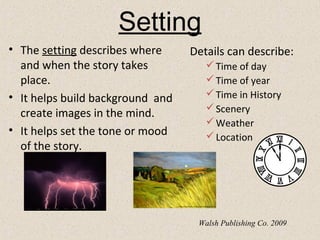
Setting
Walsh Publishing Co. 2009
Setting
Details can describe:
Time of day
Time of year
Time in History
Scenery
Weather
Location
• The setting describes where
and when the story takes
place.
• It helps build background and
create images in the mind.
• It helps set the tone or mood
of the story.
Walsh Publishing Co. 2009
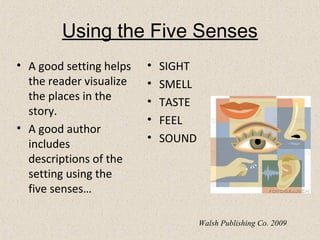
Using the Five Senses
• A good setting helps
the reader visualize
the places in the
story.
• A good author
includes
descriptions of the
setting using the
five senses…
• SIGHT
• SMELL
• TASTE
• FEEL
• SOUND
Walsh Publishing Co. 2009
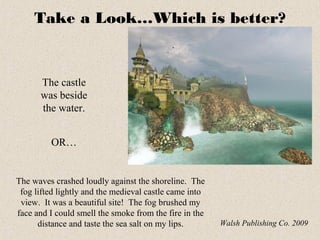
Take a Look…Which is better?
The castle
was beside
the water.
The waves crashed loudly against the shoreline. The
fog lifted lightly and the medieval castle came into
view. It was a beautiful site! The fog brushed my
face and I could smell the smoke from the fire in the
distance and taste the sea salt on my lips. Walsh Publishing Co. 2009
OR…
Your Turn…
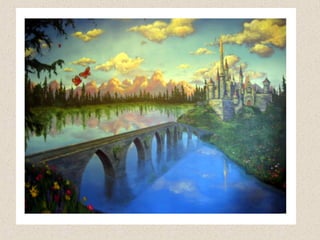
• On the next slide, there is a picture of a setting.
• In your own words, write a detailed description
of the setting in your picture. Include many
adjectives and don’t forget to include
descriptions for each of the five senses: see,
hear, feel, smell, taste
Walsh Publishing Co. 2009
Characters
Walsh Publishing Co. 2009
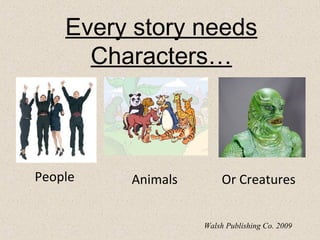
Every story needs
Characters…
People Animals Or Creatures
Walsh Publishing Co. 2009
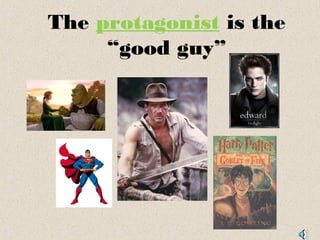
The protagonist is the
“good guy”
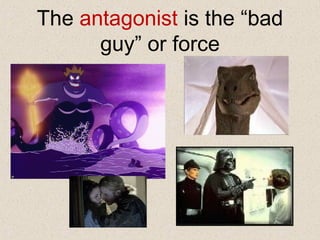
The antagonist is the “bad
guy” or force
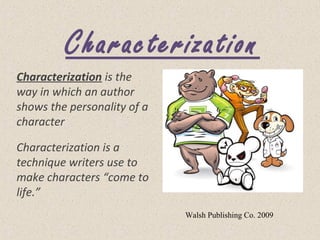
Characterization
Characterization is the
way in which an author
shows the personality of a
character
Characterization is a
technique writers use to
make characters “come to
life.”
Walsh Publishing Co. 2009
Characterization
Characters are people or animals in a story.
A writer can tell you directly about a character…
(Freddy was very competitive)
Or
A writer can tell you indirectly about a character…
(Two days before the game, Freddy gathered his
teammates and laid out his plan. Then he looked at them
and said, “We are going to win this one. No excuses.”)
Direct
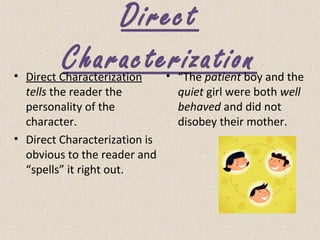
Characterization• Direct Characterization
tells the reader the
personality of the
character.
• Direct Characterization is
obvious to the reader and
“spells” it right out.
• “The patient boy and the
quiet girl were both well
behaved and did not
disobey their mother.
Indirect
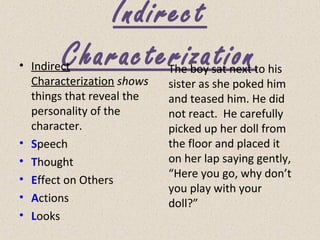
Characterization• Indirect
Characterization shows
things that reveal the
personality of the
character.
• Speech
• Thought
• Effect on Others
• Actions
• Looks
The boy sat next to his
sister as she poked him
and teased him. He did
not react. He carefully
picked up her doll from
the floor and placed it
on her lap saying gently,
“Here you go, why don’t
you play with your
doll?”
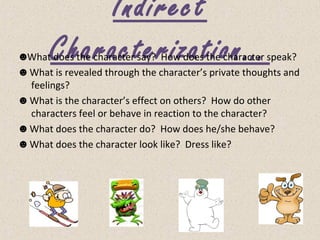
Indirect
Characterization…☻What does the character say? How does the character speak?
☻ What is revealed through the character’s private thoughts and
feelings?
☻ What is the character’s effect on others? How do other
characters feel or behave in reaction to the character?
☻ What does the character do? How does he/she behave?
☻ What does the character look like? Dress like?
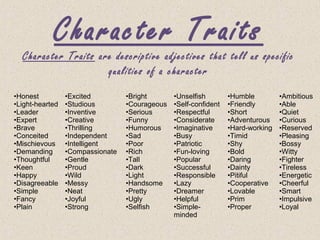
Character Traits
Character Traits are descriptive adjectives that tell us specific
qualities of a character
•Honest
•Light-hearted
•Leader
•Expert
•Brave
•Conceited
•Mischievous
•Demanding
•Thoughtful
•Keen
•Happy
•Disagreeable
•Simple
•Fancy
•Plain
•Excited
•Studious
•Inventive
•Creative
•Thrilling
•Independent
•Intelligent
•Compassionate
•Gentle
•Proud
•Wild
•Messy
•Neat
•Joyful
•Strong
•Bright
•Courageous
•Serious
•Funny
•Humorous
•Sad
•Poor
•Rich
•Tall
•Dark
•Light
•Handsome
•Pretty
•Ugly
•Selfish
•Unselfish
•Self-confident
•Respectful
•Considerate
•Imaginative
•Busy
•Patriotic
•Fun-loving
•Popular
•Successful
•Responsible
•Lazy
•Dreamer
•Helpful
•Simple-
minded
•Humble
•Friendly
•Short
•Adventurous
•Hard-working
•Timid
•Shy
•Bold
•Daring
•Dainty
•Pitiful
•Cooperative
•Lovable
•Prim
•Proper
•Ambitious
•Able
•Quiet
•Curious
•Reserved
•Pleasing
•Bossy
•Witty
•Fighter
•Tireless
•Energetic
•Cheerful
•Smart
•Impulsive
•Loyal
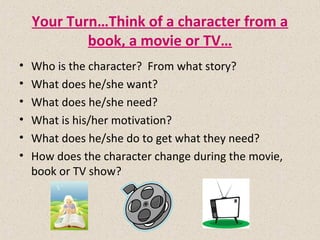
Your Turn…Think of a character from a
book, a movie or TV…
• Who is the character? From what story?
• What does he/she want?
• What does he/she need?
• What is his/her motivation?
• What does he/she do to get what they need?
• How does the character change during the movie,
book or TV show?
Plot
Walsh Publishing Co. 2009
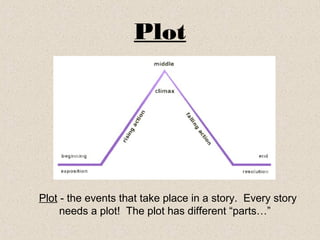
Plot
Plot - the events that take place in a story. Every story
needs a plot! The plot has different “parts…”
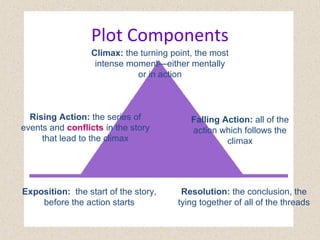
Exposition: the start of the story,
before the action starts
Rising Action: the series of
events and conflicts in the story
that lead to the climax
Climax: the turning point, the most
intense moment—either mentally
or in action
Falling Action: all of the
action which follows the
climax
Resolution: the conclusion, the
tying together of all of the threads
Plot Components
The climax is the most exciting
part!!
Special Techniques of Plot…Special Techniques of Plot…
Suspense- excitement or tension
Flashback- interrupts the normal sequence of
events to tell about something that happened
in the past
Surprise Ending- conclusion that reader does
not expect
And…Foreshadowing…
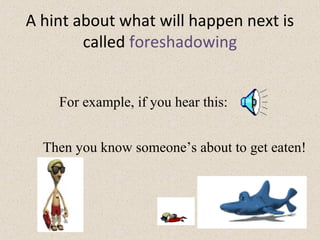
A hint about what will happen next is
called foreshadowing
For example, if you hear this:
Then you know someone’s about to get eaten!
Conflict
Walsh Publishing Co. 2009
Conflict
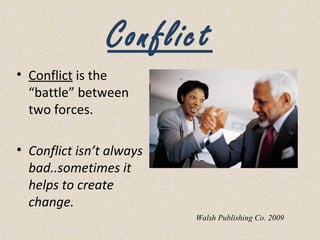
• Conflict is the
“battle” between
two forces.
• Conflict isn’t always
bad..sometimes it
helps to create
change.
Walsh Publishing Co. 2009
Conflict
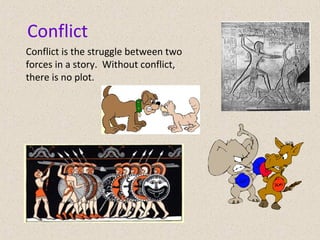
Conflict is the struggle between two
forces in a story. Without conflict,
there is no plot.
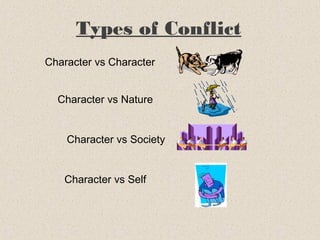
Types of Conflict
Character vs Nature
Character vs Society
Character vs Self
Character vs Character
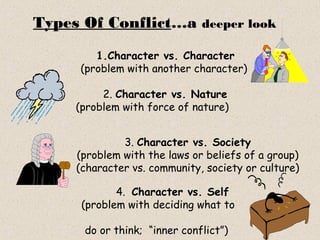
Types Of Conflict…a deeper look
1.Character vs. Character
(problem with another character)
3. Character vs. Society
(problem with the laws or beliefs of a group)
(character vs. community, society or culture)
2. Character vs. Nature
(problem with force of nature)
4. Character vs. Self
(problem with deciding what to
do or think; “inner conflict”)
Your turn…
What’s a well-known movie that has…
Character vs. Character Conflict
Character vs. Nature Conflict
Character vs. Society
Character vs. Self
Story Making
• Each person is going to begin a story by writing only one
complete sentence. (For instance: Once upon a time on a
very dark and stormy night, all the lights blew out in
Peter's house.) The person to the right of you will read the
sentence before them and proceed to write the next
sentence. Continue passing the papers to the right, having
them add only one new sentence each time they receive a
paper. The more sentences in the story, the longer writing
time is needed. Continue this process until each person
receives her/his initial paper with her/his beginning
sentence.
• Once each person has received his/her initial paper, s/he
should read the story and write one concluding sentence.
Each person will then read his/her story aloud to the class.
ASSIGNMENT
• Read and analyze the story; Makato and the
Cowrie Shell and identify the plot of the story.
Write in 1/2 crosswise sheet of paper.

Elements of-a-story-powerpoint1

  • 1.
  • 2.
    Elements of aShort Story: • Setting • Plot • Conflict • Character • Point of View Walsh Publishing Co. 2009
  • 3.
  • 4.
    Setting Details can describe: Timeof day Time of year Time in History Scenery Weather Location • The setting describes where and when the story takes place. • It helps build background and create images in the mind. • It helps set the tone or mood of the story. Walsh Publishing Co. 2009
  • 5.
    Using the FiveSenses • A good setting helps the reader visualize the places in the story. • A good author includes descriptions of the setting using the five senses… • SIGHT • SMELL • TASTE • FEEL • SOUND Walsh Publishing Co. 2009
  • 6.
    Take a Look…Whichis better? The castle was beside the water. The waves crashed loudly against the shoreline. The fog lifted lightly and the medieval castle came into view. It was a beautiful site! The fog brushed my face and I could smell the smoke from the fire in the distance and taste the sea salt on my lips. Walsh Publishing Co. 2009 OR…
  • 7.
    Your Turn… • Onthe next slide, there is a picture of a setting. • In your own words, write a detailed description of the setting in your picture. Include many adjectives and don’t forget to include descriptions for each of the five senses: see, hear, feel, smell, taste Walsh Publishing Co. 2009
  • 9.
  • 10.
    Every story needs Characters… PeopleAnimals Or Creatures Walsh Publishing Co. 2009
  • 11.
    The protagonist isthe “good guy”
  • 12.
    The antagonist isthe “bad guy” or force
  • 13.
    Characterization Characterization is the wayin which an author shows the personality of a character Characterization is a technique writers use to make characters “come to life.” Walsh Publishing Co. 2009
  • 14.
    Characterization Characters are peopleor animals in a story. A writer can tell you directly about a character… (Freddy was very competitive) Or A writer can tell you indirectly about a character… (Two days before the game, Freddy gathered his teammates and laid out his plan. Then he looked at them and said, “We are going to win this one. No excuses.”)
  • 15.
    Direct Characterization• Direct Characterization tellsthe reader the personality of the character. • Direct Characterization is obvious to the reader and “spells” it right out. • “The patient boy and the quiet girl were both well behaved and did not disobey their mother.
  • 16.
    Indirect Characterization• Indirect Characterization shows thingsthat reveal the personality of the character. • Speech • Thought • Effect on Others • Actions • Looks The boy sat next to his sister as she poked him and teased him. He did not react. He carefully picked up her doll from the floor and placed it on her lap saying gently, “Here you go, why don’t you play with your doll?”
  • 17.
    Indirect Characterization…☻What does thecharacter say? How does the character speak? ☻ What is revealed through the character’s private thoughts and feelings? ☻ What is the character’s effect on others? How do other characters feel or behave in reaction to the character? ☻ What does the character do? How does he/she behave? ☻ What does the character look like? Dress like?
  • 18.
    Character Traits Character Traitsare descriptive adjectives that tell us specific qualities of a character •Honest •Light-hearted •Leader •Expert •Brave •Conceited •Mischievous •Demanding •Thoughtful •Keen •Happy •Disagreeable •Simple •Fancy •Plain •Excited •Studious •Inventive •Creative •Thrilling •Independent •Intelligent •Compassionate •Gentle •Proud •Wild •Messy •Neat •Joyful •Strong •Bright •Courageous •Serious •Funny •Humorous •Sad •Poor •Rich •Tall •Dark •Light •Handsome •Pretty •Ugly •Selfish •Unselfish •Self-confident •Respectful •Considerate •Imaginative •Busy •Patriotic •Fun-loving •Popular •Successful •Responsible •Lazy •Dreamer •Helpful •Simple- minded •Humble •Friendly •Short •Adventurous •Hard-working •Timid •Shy •Bold •Daring •Dainty •Pitiful •Cooperative •Lovable •Prim •Proper •Ambitious •Able •Quiet •Curious •Reserved •Pleasing •Bossy •Witty •Fighter •Tireless •Energetic •Cheerful •Smart •Impulsive •Loyal
  • 19.
    Your Turn…Think ofa character from a book, a movie or TV… • Who is the character? From what story? • What does he/she want? • What does he/she need? • What is his/her motivation? • What does he/she do to get what they need? • How does the character change during the movie, book or TV show?
  • 20.
  • 21.
    Plot Plot - theevents that take place in a story. Every story needs a plot! The plot has different “parts…”
  • 22.
    Exposition: the startof the story, before the action starts Rising Action: the series of events and conflicts in the story that lead to the climax Climax: the turning point, the most intense moment—either mentally or in action Falling Action: all of the action which follows the climax Resolution: the conclusion, the tying together of all of the threads Plot Components
  • 23.
    The climax isthe most exciting part!!
  • 24.
    Special Techniques ofPlot…Special Techniques of Plot… Suspense- excitement or tension Flashback- interrupts the normal sequence of events to tell about something that happened in the past Surprise Ending- conclusion that reader does not expect And…Foreshadowing…
  • 25.
    A hint aboutwhat will happen next is called foreshadowing For example, if you hear this: Then you know someone’s about to get eaten!
  • 26.
  • 27.
    Conflict • Conflict isthe “battle” between two forces. • Conflict isn’t always bad..sometimes it helps to create change. Walsh Publishing Co. 2009
  • 28.
    Conflict Conflict is thestruggle between two forces in a story. Without conflict, there is no plot.
  • 29.
    Types of Conflict Charactervs Nature Character vs Society Character vs Self Character vs Character
  • 30.
    Types Of Conflict…adeeper look 1.Character vs. Character (problem with another character) 3. Character vs. Society (problem with the laws or beliefs of a group) (character vs. community, society or culture) 2. Character vs. Nature (problem with force of nature) 4. Character vs. Self (problem with deciding what to do or think; “inner conflict”)
  • 31.
    Your turn… What’s awell-known movie that has… Character vs. Character Conflict Character vs. Nature Conflict Character vs. Society Character vs. Self
  • 33.
    Story Making • Eachperson is going to begin a story by writing only one complete sentence. (For instance: Once upon a time on a very dark and stormy night, all the lights blew out in Peter's house.) The person to the right of you will read the sentence before them and proceed to write the next sentence. Continue passing the papers to the right, having them add only one new sentence each time they receive a paper. The more sentences in the story, the longer writing time is needed. Continue this process until each person receives her/his initial paper with her/his beginning sentence. • Once each person has received his/her initial paper, s/he should read the story and write one concluding sentence. Each person will then read his/her story aloud to the class.
  • 34.
    ASSIGNMENT • Read andanalyze the story; Makato and the Cowrie Shell and identify the plot of the story. Write in 1/2 crosswise sheet of paper.

Editor's Notes

  • #23 Exposition: The mood and conditions existing at the beginning of the story. The setting is identified. The main characters with their positions, circumstances and relationships to one another are established. The exciting force or initial conflict is introduced. Sometimes called the “Narrative HOOK” this begins the conflict that continues throughout the story. Rising Action: The series of events, conflicts, and crises in the story that lead up to the climax, providing the progressive intensity, and complicate the conflict. Climax: The turning point of the story. A crucial event takes place and from this point forward, the protagonist moves toward his inevitable end. The event may be either an action or a mental decision that the protagonist makes. Falling Action: The events occurring from the time of the climax to the end of the story. The main character may encounter more conflicts in this part of the story, but the end is inevitable. Resolution/Denouement: The tying up of loose ends and all of the threads in the story. The conclusion. The hero character either emerges triumphant or is defeated at this point.