Setting
Time and place of the story
  When and where the story happens


  Examples:

  1912, Venus, the future

  Can a story have multiple settings?
Character
Person, animal, natural force, or object in the
 story
Different types of characters:
  Flat—one personality trait
  Round—has many different personality traits
  Static—never change
  Dynamic—develops and grows during the story
  Main—more important characters
  Minor—less important characters
Protagonist—the main character of the story;
 the good guy

Antagonist—the force or person in conflict with
 the main character; the bad guy
Characterization
How the author makes the character come alive
  Does this by providing physical descriptions,
   character traits, thoughts, and feelings
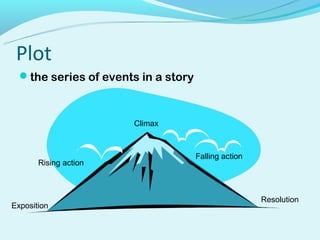
Plot
  the series of events in a story


                       Climax


                                     Falling action
       Rising action


                                                      Resolution
Exposition
Exposition (introduction)—beginning of a story
 that gives background information, introduces
 characters, and sometimes introduces conflict

Rising action—more complex actions occur,
 problems are more complicated, and a desire to
 find out what happens next is created
Climax—when the intensity of the story reaches
 a peak and a turning point in action occurs that
 affects the outcome of the story

Falling action—intensity of the story subsides
 and the results of the major events wind down
 and are described

Resolution—the ending of the story when the
 problem or conflict is solved
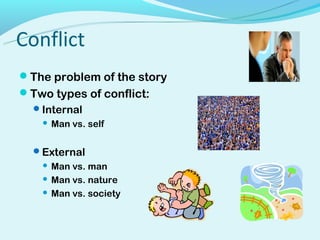
Conflict
The problem of the story
Two types of conflict:
  Internal
       Man vs. self

  External
     Man vs. man
     Man vs. nature

     Man vs. society
Theme
 The lesson you learn or the moral of the story
 The main idea the author wishes to share with the
  reader
 The subject of the story is not the same as the
  theme of the story
   Theme cannot be love—what about love?
   Theme is not usually stated directly in the story
Point of View
Who is telling the story
  First Person –a character in the story is telling
    the story.
       I, me
  Third Person – someone else is telling the story
    Third person limited—narrator only knows one
     character’s thoughts and feelings
    Third person omniscient—all knowing; told by someone
     who knows the thoughts and feelings of every character
     in the story

Short story notes powerpoint

  • 2.
    Setting Time and placeof the story When and where the story happens Examples: 1912, Venus, the future Can a story have multiple settings?
  • 3.
    Character Person, animal, naturalforce, or object in the story Different types of characters: Flat—one personality trait Round—has many different personality traits Static—never change Dynamic—develops and grows during the story Main—more important characters Minor—less important characters
  • 4.
    Protagonist—the main characterof the story; the good guy Antagonist—the force or person in conflict with the main character; the bad guy
  • 5.
    Characterization How the authormakes the character come alive Does this by providing physical descriptions, character traits, thoughts, and feelings
  • 6.
    Plot theseries of events in a story Climax Falling action Rising action Resolution Exposition
  • 7.
    Exposition (introduction)—beginning ofa story that gives background information, introduces characters, and sometimes introduces conflict Rising action—more complex actions occur, problems are more complicated, and a desire to find out what happens next is created
  • 8.
    Climax—when the intensityof the story reaches a peak and a turning point in action occurs that affects the outcome of the story Falling action—intensity of the story subsides and the results of the major events wind down and are described Resolution—the ending of the story when the problem or conflict is solved
  • 9.
    Conflict The problem ofthe story Two types of conflict: Internal  Man vs. self External  Man vs. man  Man vs. nature  Man vs. society
  • 10.
    Theme The lessonyou learn or the moral of the story The main idea the author wishes to share with the reader The subject of the story is not the same as the theme of the story  Theme cannot be love—what about love?  Theme is not usually stated directly in the story
  • 11.
    Point of View Whois telling the story First Person –a character in the story is telling the story.  I, me Third Person – someone else is telling the story  Third person limited—narrator only knows one character’s thoughts and feelings  Third person omniscient—all knowing; told by someone who knows the thoughts and feelings of every character in the story